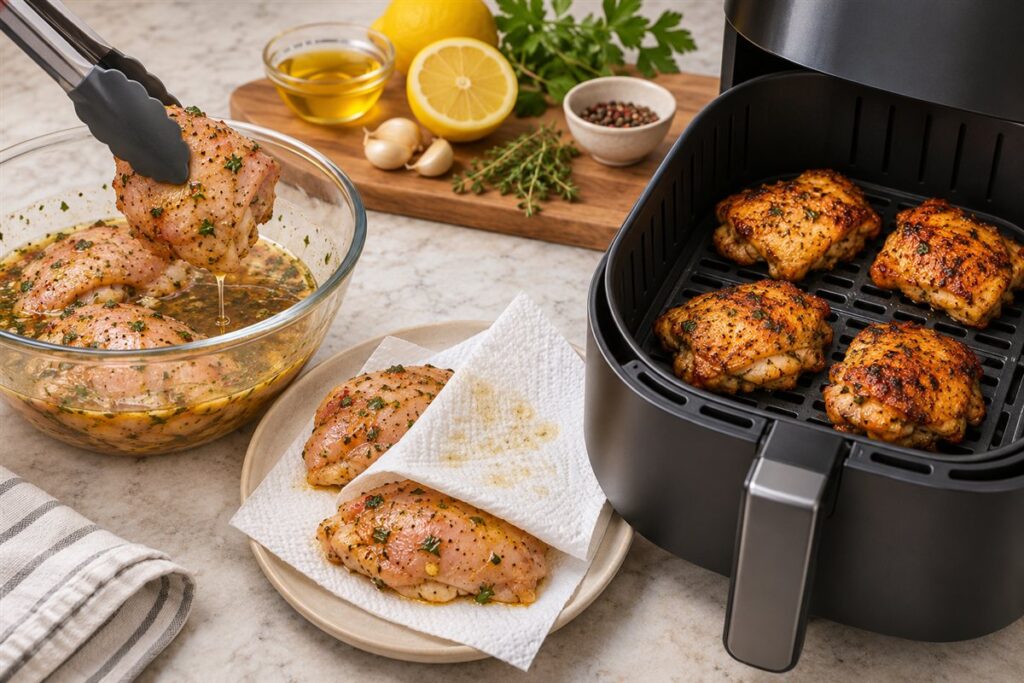
To air fry marinated food, lift it out of the liquid, let the extra drip off and pat the surface dry before cooking. That small step helps browning and cuts down on smoke. Use a medium temperature to begin, check partway through, and add any sugary glaze near the end.
Why Marinade Needs Special Handling
Hot air dries and browns the surface of food. If the surface is wet, it steams first, so browning is delayed. Liquid dripping into the drawer can also spit or smoke, especially when the marinade contains oil or sugar. Draining first solves most of this.
Types of Marinade
- Oil and herb: easy to use; drain well to avoid pooling.
- Acidic, with citrus or vinegar: brightens flavor but do not leave food in it too long, as the texture can turn soft.
- Yogurt-based: clings to food; wipe off the excess for a lighter coat.
- Sweet or sticky: prone to scorching; see the glaze tip below.
Steps
- Marinate food in the fridge for the time your recipe suggests.
- Lift it out and let the liquid drip off for a minute.
- Pat the surface with a paper towel until just damp.
- Arrange the food in a single layer, with space between pieces.
- Cook at a medium setting, checking partway through and turning once.
- Brush on any sweet glaze during the last few minutes.
- Check that the food is cooked through before serving.
Loose Time Ranges
| Food type | Loose range | Note |
|---|---|---|
| Chicken pieces | Roughly 15 to 25 minutes | Thicker cuts take longer |
| Vegetables | Roughly 8 to 15 minutes | Cut pieces evenly |
| Shrimp | Roughly 5 to 8 minutes | Watch closely |
| Thin steaks or chops | Roughly 8 to 15 minutes | Turn once |
These ranges are only a rough guide, since models and cuts vary. Check the maker’s guide and use a food thermometer if you are unsure.
Cleanup Tips
Marinade residue can bake on, so wash the basket soon after cooking. A rack helps keep food above any drips. Follow the maker’s manual and safety instructions, and let the unit cool before cleaning.
Flavor Without the Mess
If you want strong flavor but less dripping, try a thicker marinade or a dry rub with a small amount of oil. Dry rubs stay on the surface and brown nicely. Do not reuse marinade that has touched raw meat as a sauce unless it has been boiled first.
Cut food to an even thickness so the outside does not darken before the inside is ready. Thin pieces take on marinade faster, so shorten the soak for them. Very long soaks are rarely needed, and a few hours in the fridge is a common habit.
Choosing Cuts That Take a Marinade Well
Marinades behave differently depending on the food. Thin or small pieces, such as chicken tenders, shrimp, sliced vegetables and cubed tofu, absorb flavor on the surface quickly. Thick cuts and bone-in pieces take more time, and the flavor stays mostly near the outside. Knowing this helps you decide how long to marinate and how to cut the food.
Uniform pieces are a good idea. If one piece is much thicker than the rest, it will take longer to cook and may stay underdone while the others dry out. Trim, slice or flatten pieces so they are similar in thickness. For meats with a lot of surface fat, trim excess to reduce flare-ups and smoke.
Also think about texture. Lean cuts can dry out in hot, fast air, and a marinade with some oil can help, though it should be drained well before cooking. Fatty cuts such as thighs or ribs are more forgiving. Vegetables with high water content, such as zucchini or mushrooms, release liquid and may not brown well if they sit in a wet marinade, so use a short soak or a dry rub instead. Plan your marinade around what the food needs, not just what flavor you want.
Food Safety When Marinating
Marinating raw meat, poultry or seafood has some safety rules. Always keep food in the refrigerator while it marinates, not on the counter, and use a covered, non-reactive container or a sealed bag. Follow current food safety guidance for how long raw foods can sit, and do not leave them for extended periods without a reason.
Do not reuse a marinade that has touched raw meat as a sauce unless you boil it first, and even then consider setting aside a fresh portion before the raw food goes in. That reserved portion can be used for basting or serving. Use separate utensils, plates and cutting boards for raw and cooked foods.
- Wash hands and surfaces after handling raw marinated food.
- Discard used marinade rather than pouring it back over cooked food.
- Use a thermometer to check poultry and other meats for doneness.
- Be cautious with acidic marinades and seafood, since long soaks can change texture.
Marinating times vary by food and recipe, so follow the guidance in your recipe and keep it on the shorter side if unsure.
Balancing Acid, Salt, Sugar and Oil
A marinade works through a few building blocks. Acid, such as citrus juice or vinegar, adds brightness and can affect texture. Salt seasons the food and helps it hold moisture. Sugar adds sweetness and promotes browning but can burn quickly in strong airflow. Oil carries flavor and helps heat transfer, but too much can drip and smoke.
Because an air fryer’s heat is intense, balance matters. A marinade high in sugar, honey or syrup may scorch before the food is cooked, so use less sugar or add sweet glazes in the last few minutes. High acid for a long time can make some foods mushy, particularly fish and shrimp.
Think about thickness. A thin, runny marinade tends to run off and leave little flavor, while a thicker paste stays on the surface and gives more punch. Aromatics such as garlic and herbs can burn in dry heat, so wipe off large pieces before cooking. Taste the marinade before adding raw food, since you cannot safely taste it afterward. If it seems too sharp or salty, adjust before using. Keep notes so you can reproduce the version that worked.
Getting Browning and Crisp Edges
Wet food does not brown well. Moisture on the surface turns to steam, and the food stays pale. After marinating, lift pieces out and let the excess drip off, then pat them gently with paper towels. You want flavor to stay on the surface, but not a pool of liquid.
Arrange food in a single layer with space between pieces. Overcrowding traps steam and leads to soft, pale results. If your unit allows, preheat for a few minutes first so the food begins to sear when it goes in. A light brush of oil on lean food can help, but a heavy coat will drip.
Check progress and turn once or twice, depending on the food. Brown spots and dry-looking edges are good signs, while a glossy wet surface suggests it needs more time or a drier start. For a final glaze, brush a thin layer of sauce at the end and cook for a short while longer. If the surface darkens too much before the middle is done, lower the setting and extend the cook. A thermometer is the safest guide for meat doneness.
Make-Ahead and Freezer Marinating
Marinating ahead can save time on busy nights. You can combine food and marinade in a freezer-safe bag, squeeze out air, and freeze flat. As it thaws in the refrigerator, it marinates. This works well for portions such as chicken pieces or tofu cubes. Label the bag with the date and contents.
Thaw frozen marinated food completely in the refrigerator, not on the counter. Cooking from partly frozen can give uneven results, with a cooked outside and a cold center. After thawing, drain and pat dry as you would with fresh. Cook within the time suggested by food safety guidance.
Some ingredients do not freeze well in marinades. Fresh herbs can darken, and acidic marinades can alter texture over long periods. If you plan to freeze, keep the acid lower and add fresh ingredients after cooking. Check the container and bag for safety markings suited to freezing. Also remember that a freezer bag with a heavy marinade can leak, so place it on a tray. Make small test batches until you find a combination your family enjoys, and then repeat it.
FAQ
Should I put the marinade in the basket?
No. Leave the extra liquid behind. It will spit, smoke or burn in the drawer.
Why is my marinated food pale?
The surface was probably too wet or the basket too full. Pat dry and give it more space.
How long should I marinate food before air frying?
It depends on the food and the marinade. Thin or small pieces need less time, and acidic marinades can change texture if left too long, so follow your recipe and keep it in the refrigerator.
Should I wipe off the marinade before cooking?
Drain excess liquid and pat the food lightly dry. Leave a thin layer of flavor on the surface but remove pooled liquid and large pieces of garlic or herbs that can burn.
Can I reuse leftover marinade as a sauce?
Not if it touched raw meat, unless you boil it thoroughly first. A safer choice is to set aside a fresh portion before adding raw food.
Why does my marinade smoke in the air fryer?
Oil, sugar and drips can burn on the hot surfaces. Drain the food well, reduce sugar, and clean the basket and drawer regularly.
Is a dry rub better than a wet marinade?
A dry rub is often easier to brown and cleaner to cook. A wet marinade adds moisture and flavor but needs more draining and drying.
Can I marinate in the basket?
It is better to marinate in a separate covered container in the refrigerator. Use the basket only for cooking.
Does marinating tenderize meat?
Some ingredients affect surface texture, but a marinade mainly adds flavor. Thick cuts may remain firm inside, so cook them until safe and consider slicing thinner.
The Short Version
Drain, pat dry, cook in a single layer and glaze late. Treat time ranges as loose guides and check doneness at the end.