Disclosure: As an Amazon Associate, airfryerkitchensupply.com earns from qualifying purchases. Links to Amazon on this page are affiliate links; they cost you nothing extra. Listing details such as price and availability change often, so check the current Amazon listing before you buy.
The best water absorbing rugs have a soft, dense top layer that draws moisture in, a backing that keeps the rug in place, and a size that covers the spot where the water actually lands. Chenille, microfibre, cotton and memory foam are the materials to look for. Below are six real products that suit wet entries, bathroom floors and laundry rooms, with honest notes on how each is built and where it falls short.
The list is based on maker listings and published specifications. You will find a quick picks table, a full section on each product, a comparison table, a buying checklist, advice on choosing absorbent bath rugs and utility mats, a short care guide, the mistakes that waste money, and answers to the questions that hold buyers back.


In this guide
Quick Picks for Wet Spots
| If you want | Our pick | Why it leads | Link |
|---|---|---|---|
| Best overall for a wet entry | Gorilla Grip Absorbent Chenille Door Mat | Soft chenille top for muddy shoes and wet feet | Check on Amazon |
| Best for utility rooms | DEXI Indoor Doormat Absorbent | Low-profile mat for laundry rooms and mudrooms | Check on Amazon |
| Best value-for-money wording | Mohawk Home Cotton Reversible Bath Rug | Simple cotton rug that suits a bathroom | Check on Amazon |
| Best premium comfort | Yimobra Memory Foam Bath Mat | Cushioned foam feel underfoot | Check on Amazon |
| Best for quick drying | OLANLY Quick Dry Bath Mat | Thin microfibre style that dries between uses | Check on Amazon |
| Best for a plush bathroom | Smiry Luxury Bath Rug | Thick, soft pile for a spa-style look | Check on Amazon |
How We Chose These Rugs
An absorbent rug is judged by what it does when the floor is wet. It should take up water from feet or shoes, it should not slide around, and it should be easy to clean and dry. So we looked for products whose makers describe absorbent materials such as chenille, microfibre, cotton and memory foam, for backing designs intended to hold the rug in place, and for options that can be washed or shaken out. We also wanted a spread across the entry, the bathroom and the laundry room.
Everything here comes from manufacturer listings and published specifications. We have not handled these products, and we do not publish ratings or scores. We make no promise about how much water a particular mat will absorb, so read the care notes and the size details in each listing.
Absorbency is easy to claim and hard to judge from a photo, so we kept the descriptions practical. For each product you will see the kind of space it suits, three features the maker lists, one honest limitation and a clear choose or skip line. If two products seem close, let the location decide: entry mats should be sturdy and washable, bath rugs should be comfortable and quick to dry, and utility mats should be flat.
The 6 Best Water Absorbing Rugs
Gorilla Grip Absorbent Chenille Door Mat
Who it suits: households that want a soft, absorbent mat inside the front or back door to catch drips from wet shoes, boots and paws. Gorilla Grip makes a range of mats and rugs with a rubber-style backing, and the chenille doormat is built for indoor entries.
Chenille is a good fibre for this job because its many loops catch and hold moisture. Placed just inside the door, a mat like this keeps water from spreading over a hard floor. It is also easy to move to a laundry room or beside a sink when the seasons change.
- A chenille top layer is designed to take up moisture from shoes and feet.
- A backing described by the maker as grippy helps hold the mat in place.
- Machine-washable according to the maker, which simplifies cleaning.
Honest limitation: a doormat is limited in size, so a big muddy entry may need two mats or a longer runner. Check the dimensions in the listing.
Choose it if you want a soft, absorbent indoor entry mat. Skip it if you need to scrape heavy mud off boots, which a rougher outdoor mat does better.

DEXI Indoor Doormat Absorbent Non Slip Entrance Rug
Who it suits: owners of a mudroom, laundry room or back entry who want a low, easy-to-wash mat. DEXI sells a range of indoor doormats and runners with a microfibre-style top, and they are widely available in several sizes and colours.
The low profile is an advantage in a utility space. Doors open easily over it, it does not catch on a washing machine door or a shoe rack, and it can be tossed in the wash when it gets grubby. It is a practical, unfussy choice for spaces where function matters more than looks.
- A thin, flat profile that does not catch on doors or appliances.
- Offered in several sizes, including runners for longer entries.
- Designed for easy machine washing, according to the maker.
Honest limitation: a thin mat has less capacity than a thick one, so it works best for light to moderate moisture. Heavy puddles will need a thicker mat.
Choose it if you want a flat, washable utility mat. Skip it if you want a deep, plush feel.
Mohawk Home Cotton Reversible Bath Rug
Who it suits: shoppers who prefer a traditional cotton bath rug for beside the tub or shower. Mohawk Home is a well-known home textile maker, and this reversible cotton rug is a simple, familiar format.
Cotton is a classic absorbent fibre, and a reversible design lets you flip the rug for a fresh side. It is a sensible, quiet choice if you want something that blends into a bathroom without a statement look. It also suits a laundry room where you want a basic, washable rug.
- A cotton construction that is known for taking up water.
- A reversible design that gives two usable sides.
- A simple look that suits most bathroom colour schemes.
Honest limitation: cotton can take longer to dry than microfibre. Hang the rug up between uses and follow the care label.
Choose it if you like cotton and a simple look. Skip it if you want fast drying or a thick cushion.
Yimobra Memory Foam Bath Mat
Who it suits: people who want something comfortable to stand on after a shower. Yimobra sells memory foam bath mats with a soft top layer and a backing intended to keep the mat in place on smooth floors.
Memory foam gives a cushioned feel that suits a bathroom with cold tile. It is a comfort product first, with the soft top designed to take up moisture. If you stand at the sink for a while, the cushion is also welcome. It is best placed where it can dry between uses.
- A cushioned foam feel for comfort on hard floors.
- A soft surface that is designed to take up water from feet.
- Offered in several colours and sizes to suit a bathroom scheme.
Honest limitation: foam mats can take longer to dry through the core, so lift or hang them regularly, and follow the care label closely.
Choose it if comfort underfoot is your goal. Skip it if you need a mat for heavy, muddy foot traffic.

OLANLY Quick Dry Bath Mat
Who it suits: buyers who want a thin mat that dries between uses. OLANLY sells quick-dry bath mats, including microfibre and diatomite-style options, that are popular in bathrooms where the floor is wet daily.
A thin construction means the mat spends less time damp, and some designs are made to be hung over a tub edge. It is a tidy choice for a shared bathroom, a small space or a rental where you want a mat that dries and looks neat.
- A thin, quick-drying design that suits daily use.
- Easy to hang or lay flat to dry after use.
- A neat look that suits modern and small bathrooms.
Honest limitation: thin mats have less cushion than foam or thick chenille, and details differ across the OLANLY range. Check the listing for the specific style and size.
Choose it if you want a mat that dries fast. Skip it if you want a thick, cosy feel.
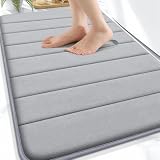
Smiry Luxury Bath Rug
Who it suits: shoppers who want a plush, spa-style bathroom rug with a thick pile. Smiry sells soft shaggy and chenille-style bath rugs in many colours, and they are popular for primary bathrooms.
A thick, soft rug draws attention to the floor and gives the bathroom a finished look. It suits a vanity or a bathtub zone where you stand for a few minutes. It pairs well with towels in a matching colour.
- A plush, thick pile for a spa-style feel.
- Many colours to match towels and decor.
- Typically sold in several sizes and in sets.
Honest limitation: a thick pile is slower to dry and heavier when wet, so it may need more frequent washing and a good hanging spot.
Choose it if you want a luxurious bathroom rug. Skip it if you want something light that you can wash and dry fast.
Water Absorbing Rug Comparison Table
| Product | Material note | Key feature | Best use | Link |
|---|---|---|---|---|
| Gorilla Grip Chenille Door Mat | Chenille top | Soft absorbent surface | Wet indoor entries | Check on Amazon |
| DEXI Indoor Doormat | Microfibre style | Low and washable | Laundry and mudrooms | Check on Amazon |
| Mohawk Home Cotton Reversible | Cotton | Two-sided | Simple bathrooms | Check on Amazon |
| Yimobra Memory Foam | Foam with soft top | Cushioned | Comfort at the vanity | Check on Amazon |
| OLANLY Quick Dry | Thin quick-dry style | Dries between uses | Small, shared bathrooms | Check on Amazon |
| Smiry Luxury Bath Rug | Plush pile | Thick and soft | Primary bathrooms | Check on Amazon |
How to Choose a Water Absorbing Rug
Run through this checklist before you buy.
- Pick the location first: entry, bathroom, laundry or kitchen. Each needs a different thickness and size.
- Choose the material that fits. Chenille and microfibre take up water well, cotton is traditional, and memory foam is for comfort.
- Measure the area where water lands, and add a little for margin.
- Check the backing description and the notes about the floor type.
- Look for machine-washable labels if you expect to clean often.
- Think about drying. A thick rug takes longer to dry than a thin one.
- Match the colour to the room, and pick a mid-tone for entries where dirt shows.
- Read the return policy and the care instructions before you order.
Best Water Absorbent Bath Rugs: What to Look For
A bath rug has two jobs: it should take up the water that drips from feet and towels, and it should feel good to stand on. Chenille and microfibre are common choices because their many fine loops catch moisture. Cotton is a long-standing option. Memory foam adds cushion, and quick-dry mats focus on a thin build.
Think about how the bathroom is used. A busy family bathroom may need two or three mats so one can dry while another is in use. A guest bathroom may do well with one plush rug. Choose a size that covers the spot where people step out of the shower, and keep it away from places where water pools.
Rugs for Wet Entries and Mudrooms
An entry mat works in two stages. First, an outdoor mat outside the door scrapes off mud and heavy dirt. Second, an absorbent indoor mat inside the door takes up moisture from soles. Using both keeps your floor much cleaner. A chenille mat like the Gorilla Grip suits the indoor role, while a flat DEXI-style mat fits tight spaces under a door.
If you have a long entry, use a runner. Keep a boot tray beside the mat for wet shoes, and shake the mat outside regularly. In winter, plan to wash the indoor mat more often.
Laundry Rooms and Utility Spaces
In a laundry room, the main risk is a small leak or drip around the machine, plus damp feet. A low mat in front of the machines catches drips and offers a softer standing surface. Choose a washable style that lies flat, so doors open easily. If you stand for a while at a utility sink, a cushioned mat helps comfort, but be sure it dries well.
Do not rely on any mat as a leak solution. If you suspect a leak, check the machine and hoses, and call a qualified professional. A mat is for everyday drips, not repairs.
Whatever the spot, check that the floor beneath is clean and dry before you lay the mat. Dirt trapped under a backing can wear the floor finish, and a damp floor makes any mat slide more. A quick wipe when you change the mat is enough, and it is a good moment to rotate your spare.
Size and Placement
For a bath rug, a size around 17 x 24 inches suits beside a tub, and a longer runner suits a double vanity. For an entry, a mat about 20 x 30 inches is a common small size, and larger or runner formats suit wider doors. Place the mat so the first step lands on it, and leave a small gap from walls so it lies flat.
Check the door swing. A thick mat can catch the bottom of a door, so a low profile is wise in tight spaces. Measure the clearance if you are unsure.
Kitchen Sinks, Pet Bowls and Other Wet Corners
Entries and bathrooms are the obvious places for an absorbent rug, but they are not the only ones. A mat in front of the kitchen sink catches the drips that run down your arms while you wash up, and it gives your feet some comfort on hard floors. Under a pet bowl, a washable mat catches splashes from enthusiastic drinkers. In a kids’ bathroom or beside a bath, a rug that dries quickly is more useful than a thick one that stays damp.
The same rules apply in every wet corner. Pick a flat or low-profile mat if doors or drawers pass over it, choose a washable style so you can refresh it regularly, and keep a spare so one can dry while the other works. Matching colours across rooms keeps the home tidy, and buying two of the same mat is often simpler than hunting for a second that matches.
Materials Explained: Chenille, Microfibre, Cotton and Foam
Chenille is made of soft, looped yarn with a lot of surface area, so it feels cosy and holds moisture in its fibres. Microfibre uses very fine synthetic strands, and it tends to feel smooth and to dry quickly. Cotton is a natural fibre with a familiar towel-like feel, and it takes up water well but can take longer to dry. Memory foam mats use a foam core under a soft cover, which makes them very comfortable but slower to dry through.
None of these is best for everyone. If you want speed, choose microfibre. If you want a soft feel and a reliable entry mat, choose chenille. If you like natural fibres, choose cotton. If comfort is most important, choose foam. Always read the listing for the exact construction, because maker descriptions vary across lines.
Washing and Drying Absorbent Rugs
Follow each maker’s label. Many absorbent mats can be machine washed on a gentle cycle and dried flat or on a low setting, but some foam styles need more careful handling. Shake the mat before washing to remove grit, and wash it with similar items. Avoid products that the label warns against, such as fabric softener on microfibre, which can reduce absorbency.
Between washes, hang the mat over a rail so air reaches both sides. Rotating two mats is a good habit in a busy bathroom.
It also helps to keep expectations realistic. Any mat has a limit to how much water it can hold, and once it is full it stops helping. If a spot gets wet every day, plan on two mats in rotation, and treat the washing routine as part of owning the mat. With that habit in place, the products above will keep a floor drier and tidier for a long time.
Common Buying Mistakes
- Buying a thick rug for a spot that needs to dry quickly.
- Choosing a mat that is too small for the area where water lands.
- Ignoring the backing and the floor type.
- Skipping the care label.
- Using only an indoor mat and no outdoor scraper at a muddy entry.
One last tip: buy for the room you have, not the room in the photo. Measure the spot, note the door swing, decide how often you are willing to wash, and only then choose a colour. That order of decisions saves most returns, and it makes the final pick much quicker.
Final Recommendation
Here is how we would match each buyer.
- For a wet indoor entry: Gorilla Grip Absorbent Chenille Door Mat.
- For a laundry or mudroom: DEXI Indoor Doormat Absorbent Non Slip Entrance Rug.
- For a simple cotton bath rug: Mohawk Home Cotton Reversible Bath Rug.
- For cushioned comfort: Yimobra Memory Foam Bath Mat.
- For quick drying: OLANLY Quick Dry Bath Mat.
- For a plush bathroom: Smiry Luxury Bath Rug.
If you want our top two, the Gorilla Grip chenille mat suits most wet entries, and the DEXI mat is the flexible choice for laundry rooms and tight spaces. Open the listings, check the sizes and read the care notes.
Going Deeper: What Really Matters When Choosing a Water Absorbing Rug
Choosing well for soaking up water in entries, bathrooms and utility spaces starts with where the water actually lands in your home, not with a photograph of a spa bathroom. The best test of an absorbent rug is not the first splash but the hundredth — how it washes, dries and keeps its grip over months of wet feet. Before you compare individual models, write down the three jobs the rug must do most often. For one household that might be catching entry drips from shoes and paws, washing weekly without fuss and lying flat under a swinging door. For another it might be cushioning cold bathroom tiles, drying fully between showers and looking calm beside the tub. Ranking those jobs in order makes every later decision simpler, because you can judge each option against your own list instead of against marketing language.
Next, think about fit in the broadest sense. Fit means the physical spot, of course — measuring where feet land, checking door clearance and the swing of appliance doors — but it also means fit with your routine. How often will the mat be shaken, washed, hung and swapped? Who brings the water in: children, dogs, gardeners, swimmers? A choice that suits a quiet guest bathroom can disappoint at a busy back door, and the reverse is equally true. Being honest about that difference early prevents the most common kind of regret: buying something well made that simply answers the wrong brief.
Materials deserve slow attention. Read the listing description carefully and separate what is stated from what is merely suggested by photographs. Look for clear information about the top material, the backing, whether the mat is machine washable, and what drying the maker recommends. If a detail that matters to you is not stated, treat it as unknown rather than assuming the best. Absorbency claims are especially easy to inflate in a headline, so judge by construction: many fine loops or fibres give water somewhere to go, while a smooth, sealed surface mostly moves water around. The backing matters just as much, because a mat that slides on a wet floor is worse than a thinner mat that stays put.
Finally, plan for the whole effort of ownership. Where will the mat hang to dry? Do you have room for a spare in rotation, and a laundry routine that can absorb a bulky wet rug in winter? Does the floor beneath need protection, and is the backing suited to your floor type? Counting those small companions before you order avoids the frustration of a mat that cannot be used properly on the day it arrives, and it turns a hopeful purchase into a small, working system.
Everyday Scenarios: Wet Spots in Real Homes
Consider a typical wet day first. Water arrives in short, unplanned moments — shoes at the door, a shower before work, the dog’s bowl refilled, a load of laundry carried dripping from the machine. A good mat copes with those moments without ceremony: it is already in the right place, it takes the water in, and it does not slide when a wet foot lands in a hurry. Then picture the harder stretches: a week of rain, a houseful of guests, children bathing nightly. Testing your shortlist mentally against both rhythms — the single splash and the sodden week — reveals weaknesses that one dry afternoon hides.
Guests change the equation. Visitors step out of the shower onto whatever is there, hang wet towels over your best rug and walk through the entry without wiping their feet twice. Choose mats that forgive that treatment: washable, quick to dry, and grippy enough that a guest never feels one move underfoot. In a guest bathroom, a plush rug is a pleasure; at a guest entry in mud season, the forgiving workhorse mat is the kinder choice, because nobody has to think about it.
Homes with children or pets add another layer, and usually another mat. Paws and small boots bring in more water and grit than adult shoes, and they bring it further into the house, so the absorbent zone often needs to be longer than you first think — a runner rather than a small mat. At bath time, water travels surprisingly far from the tub, so place the rug where splashes actually land, not only where feet step out. A washable mat in those zones, washed without resentment, protects both the floor and your patience.
Seasons matter too. The entry that is dusty in summer becomes a mud trap in winter, and the bathroom mat that dries in an hour in a heated spring bathroom can stay damp all day in a cold, steamy one. Plan for your wettest season: more washing, more rotation, perhaps a second mat bought at the same time so the pair can alternate. When you review the options in this guide, keep asking which one suits your home at its wettest, not only on the pleasant day you are shopping.
Placement, Washing and Drying: The Routine That Makes It Work
When your mat arrives, give setup proper time instead of tossing it down between other jobs. Start with a clean, completely dry floor, because grit trapped under a backing wears the finish and damp beneath a mat defeats its grip. Lay the mat, check that doors swing clear and that the first step from the tub, shower or doorway lands squarely on it, and view the colour in the room’s real light before you cut any tags or discard packaging. If the mat arrives folded with creases, let it rest flat as the maker directs rather than forcing it.
Placement is a care decision as much as a practical one. Keep absorbent mats out of standing water: they are sponges, not plugs, and a mat left sitting in a puddle stays saturated and starts to smell. In the bathroom, hang the mat over the tub edge or a rail after the morning rush so both faces air; at the entry, lift and shake it outside whenever the weather allows. That daily airing, more than any material, is what keeps an absorbent rug fresh, because a mat that dries fully between uses starts every day with its full capacity available.
For washing, follow the label for the specific material and treat the warnings as real. Shake out grit first so it does not grind through the wash, avoid fabric softener where the maker warns against it — it can coat fine fibres and reduce absorbency — and dry the mat completely before it goes back down, flat or on a low setting as directed. Foam-core mats need the most patience here: a surface that feels dry can hide a damp core, and putting it back early is how musty smells begin.
Build a tiny maintenance rhythm. Keep a spare mat for each busy spot and rotate them on wash day, so no mat is rushed back damp. Once a month, wipe the floor beneath each mat, check the backing for wear or cracking, and confirm the mat still grips when the floor is dry. When a mat’s top stays flat and tired, its backing loses hold, or a smell survives a proper wash and full dry, it has done its service — replacing it restores the whole spot’s function in a way no amount of extra cleaning will.
How the Picks in This Guide Compare in Practice
The options reviewed above were chosen to cover different priorities rather than to repeat the same idea several times, and the most useful comparison is by priority, not by order on the page. In this guide that range runs from options such as Gorilla Grip Absorbent Chenille Door Mat and DEXI Indoor Doormat Absorbent Non Slip Entrance Rug through to Smiry Luxury Bath Rug, each reviewed in full above with its own strengths and limitation. Read each review’s strengths against your own ranked list: the pick whose strengths match your top two priorities is usually a better buy for you than a pick with a longer list of strengths you will rarely use. Pay equal attention to each review’s stated limitation, because a limitation that touches something you do every day matters far more than a strength you will enjoy twice a year.
Think about the trade-offs honestly. The Gorilla Grip chenille mat is the soft, capacious entry specialist, but a single doormat size cannot cover a big muddy hall. The DEXI mat is the flat, washable utility champion, yet its thin build holds less water than a thick rug. The Mohawk cotton reversible is the traditional, familiar choice, but cotton dries more slowly than microfibre. The Yimobra foam mat is the comfort winner at the vanity, but its core is the slowest to dry. The OLANLY quick-dry is the fastest back into service, with the least cushion. None of those trade-offs makes a product good or bad — they simply point different buyers in different directions.
If you are torn between two picks, run a final tie-break based on your spot and routine rather than appearance alone. Which one fits the measured wet zone with margin to spare? Which one’s washing and drying routine matches the time and space you genuinely have? Which backing suits your floor? Those practical answers tend to predict satisfaction months later far better than a first impression does. And if neither pick clears those questions comfortably, consider splitting the job — a flat washable mat where doors swing, a plusher one where people stand — rather than forcing one mat to do everything.
One more comparison habit helps: re-read the review of your leading pick and deliberately look for the sentence that argues against it. Every honest review in this guide includes a limitation or a skip-if note. If that counter-argument describes your traffic, your floor or your laundry habits, take it seriously and move to the next pick. If it describes a situation you will rarely face, you can set it aside with confidence. Choosing this way — strengths matched to priorities, limitations checked against real life — is how a shortlist becomes a decision you do not revisit.
Measuring, Planning and Avoiding the Usual Regrets
Measure before you order, and measure the wet zone, not just the room. Stand where you stand: step out of the shower, come in from the garden, pause at the sink, and notice where the water actually lands and how far it travels. Mark that area with a towel for a day if you are unsure; the towel will show you the true footprint far better than a guess. Then measure door clearance at the same spot, because the perfect mat in the wrong thickness becomes a daily annoyance every time the door catches it.
Leave margin in your plan. A mat that only just covers the splash zone lets water escape at every edge, while a slightly larger one — or a runner where the path is long — keeps the whole event contained. Equally, avoid covering so much floor that the mat sits in a puddle zone or blocks a drain; absorbent mats work on drips and splashes, not standing water. If one spot floods regularly, fix the water first and let the mat handle the everyday rest.
Order of decisions matters. Settle location and size first, then drying speed and washing routine, then material and thickness, and only then colour. Reversing that order — falling for a spa look before checking whether you have anywhere to hang a thick rug — is behind a large share of returns and of musty-bathroom complaints. If you are choosing between a quick-dry mat and a plush one, decide how the bathroom or entry is actually used before comparing colours, because the two briefs lead to different products.
Keep your paperwork and expectations tidy. Save the listing details, size and care instructions and order confirmation somewhere you can find them, note the returns conditions before you buy, and check the mat promptly on arrival. If something is wrong — a size far from the description, a backing that will not grip your floor, damage in transit — photograph it before use and contact the seller promptly. Most problems are simplest to resolve in the first days, before the mat has been washed and lived on.
Finally, give the choice a fair settling period before judging it, and let that period include genuinely wet days. An absorbent mat cannot be judged on a dry afternoon: live with it through a rainy week and a busy bathroom weekend, wash it once, dry it fully, and then review it against the job list you wrote at the start. Judged that way — against your own brief, after real use — most good purchases confirm themselves, and the rare wrong one becomes obvious for a clear, fixable reason.
Capacity, Drying Speed and Grip: The Three-Way Balance
Every absorbent rug trades three qualities against each other, and understanding the triangle helps you read any listing in this category. Capacity is how much water the mat can hold before it is full: thick chenille, cotton and plush piles hold the most. Drying speed is how fast it gives that water back to the air: thin microfibre and quick-dry constructions win here, thick foam cores lose. Grip is how reliably it stays where you put it on your particular floor, and it depends on the backing and on the floor beneath being clean and dry.
No mat leads on all three, so the skill is choosing which corner of the triangle your spot needs. A busy entry with constant small splashes needs drying speed and grip more than raw capacity, because the mat must recover between arrivals. A bathroom used once or twice a day can trade drying speed for capacity and comfort, since it has hours to air. A laundry room needs grip and flatness above all, with enough capacity for drips. Decide your corner first, and the shortlist in this guide sorts itself.
The routine you keep moves the balance, too. A thick, high-capacity rug in a home that hangs it daily and rotates a spare behaves like a fast-drying rug in practice, because it always starts the day empty. The same rug in a home that leaves it flat and damp behaves like a sponge that never empties. When a mat disappoints, it is worth asking whether the product or the routine is at fault — often a hook by the door and a spare in the cupboard fix what a new purchase would not.
A Short Note on Floors: Tile, Wood, Vinyl and Stone
The floor beneath the mat changes what you should buy. On glazed tile and stone, water sits on the surface and a mat’s grip matters most, because a sliding mat on wet tile is a genuine hazard; keep the floor clean and dry underneath and choose a backing made for smooth floors. On vinyl and laminate, avoid leaving any mat saturated in place for long stretches, and lift it during the weekly clean so the surface beneath dries fully. On wood, be the most careful of all: water that creeps under a mat and sits against boards or finish does quiet damage, so the hang-it-daily habit is not optional, and a mat that dries fast serves a wood floor better than a thirsty one that dries slowly.
Radiant-heated floors add one more consideration: gentle warmth helps a mat dry, which is a gift, but check the mat maker’s guidance about heat and backings before relying on it, and never use the floor’s heat to bake a foam mat dry against its care label. In every case the rule is the same — the mat manages the water on top; your routine manages the water underneath.
If you are furnishing several wet spots at once, buy in the order the water flows: the outdoor scraper first, the entry mat second, then bathroom and laundry mats, and only then the decorative plush rug for the quietest room. That sequence protects the floors that matter most, keeps the budget pointed at function before finish, and means every mat you add later is a comfort rather than a rescue. Homes built up in that order rarely struggle with wet floors, because each layer was chosen for the job it actually does.
Related guides
Frequently Asked Questions
What material absorbs the most water?
Chenille, microfibre and cotton are all known for taking up water. The best choice depends on whether you value speed of drying, softness or traditional feel.
Can I machine wash these rugs?
Many can be washed, but follow the label for each product, especially for foam styles.
How do I keep a bath rug from sliding?
Choose a rug with a backing designed to hold on your floor type, and keep the floor beneath clean and dry.
What size bath rug should I buy?
Around 17 x 24 inches suits beside a tub, and a runner suits a double vanity. Measure your space first.
How often should I wash an entry mat?
It depends on use. In wet or muddy seasons, wash it more often, following the care label.
Will a thick mat catch my door?
It can. Choose a low profile if clearance is tight, and measure before you order.
Is memory foam good for a bathroom?
It is comfortable, but it can dry slowly. Lift or hang it regularly and follow the care label.
How long should a good absorbent mat last?
Longevity depends on material, traffic and how faithfully it is washed and fully dried. A mat that is rotated with a spare, aired daily and washed by its label will usually serve far longer than one left damp in place. Judge it by performance rather than age: when the top no longer takes up water well, the backing stops gripping, or a smell survives a proper wash and complete dry, it is time to replace it, whatever the calendar says.
What should I check first when my mat arrives?
Lay it on a clean, dry floor and check it before use. Compare the size, material and backing against the listing, confirm doors swing clear over it, and stand on it where it will live to feel the grip and thickness. Photograph anything damaged or different from the description before washing or using it, while an exchange is still simple, and keep the packaging until you are sure the size and profile suit the spot.
How do I decide between two very similar mats?
Return to the job list you wrote before shopping and score each mat only on your top three priorities. Then compare the stated limitation of each: the limitation you would encounter least often is the safer compromise. Check practical fit next — drying speed, washing routine and backing against your floor — because those factors predict satisfaction months later better than small differences in look. If still tied, choose the one you can wash and dry most easily, since that is the chore you will repeat most.
Do I need two mats for one bathroom or entry?
For any spot that gets wet daily, two mats in rotation is the single most useful habit in this category. One works while the other washes and dries fully, so no mat is ever rushed back damp, and each lasts longer for the rest. Buying the same mat twice keeps the look consistent and the care routine identical. For a rarely used guest bathroom, one mat is plenty; save the pair for the rooms that earn it.
Can I use an absorbent mat outside the front door?
The mats in this guide are indoor products, and they work best as the second stage inside the door, after an outdoor scraper mat has taken off mud and grit. Left outside, an absorbent mat stays saturated, dries slowly and ages fast. If your entry has no outdoor mat, add a rough scraper outside first — it protects the indoor mat, the floor and your washing routine all at once.


