The best sous vide cookers hold water at an exact temperature for hours, and that precision is what makes the technique worth learning. A steak cooked sous vide comes out at the same doneness from edge to edge, chicken stays juicy instead of drying out, and eggs, fish and vegetables all gain a consistency that is hard to reach any other way. The six cookers below are all immersion circulators verified through the site catalog: they clamp onto a pot, circulate heated water, and hold the temperature steady while the food cooks sealed in a bag. Whether you want app control and guided recipes or a simple dial with no accounts at all, one of these six will fit.
Sous vide sounds technical, but the routine is simple. Fill a pot with water, clip the cooker on, set the temperature and time, seal the food in a bag, and drop it in. The cooker does the rest, and because the water never goes above the target temperature, the food cannot overcook in the usual way. A quick sear in a hot pan at the end builds the crust. The main choices are power, capacity, control style and whether you want Wi-Fi and an app. Cooks who already slow cook may also like our guides to slow cookers and slow cookers for busy families, which cover the same low-and-slow patience with a different tool.
In this guide
Quick picks: best suvee cookers
| # | Product | Where to buy |
|---|---|---|
| 1 | Anova Culinary Sous Vide Precision Cooker 3.0 | Check on Amazon |
| 2 | Inkbird ISV-100W Sous Vide Cooker | Check on Amazon |
| 3 | Greater Goods Sous Vide Cooker | Check on Amazon |
| 4 | Breville Joule Turbo Sous Vide Machine BSV600PSS | Check on Amazon |
| 5 | Anova Culinary Sous Vide Precision Cooker Pro | Check on Amazon |
| 6 | Inkbird Sous Vide Cooker Bundle with Vacuum Sealer | Check on Amazon |
How the picks were chosen
Each cooker below was checked against the same four tests. First, temperature accuracy and stability: a sous vide cooker that drifts by a degree or two defeats the purpose, so precise control and steady circulation counted most. Second, power and capacity: the wattage and the volume of water the cooker can handle decide whether it suits a small pot for two or a large container for a party. Third, control style: some cooks want an app with recipes and remote control, others want a dial and a display with no accounts, and both styles are represented here. Fourth, build and cleanup: a removable skirt, a sturdy clamp and a display that is easy to read at the counter all matter over hundreds of cooks. Bundles were judged on the cooker first, with the extra parts treated as a bonus rather than the reason to buy.
Best sous vide cookers: what to look for
Start with wattage. A 1000 to 1200 watt cooker heats a pot faster and holds temperature in a larger container than a weaker one, which matters when you cook for a crowd or start with cold tap water. Next, check the temperature range and accuracy: a range that covers roughly 77 to 210 degrees Fahrenheit handles everything from delicate fish to long brisket cooks, and accuracy to a fraction of a degree is what keeps results repeatable. Then decide on control. App-connected cookers offer remote monitoring, preset recipes and guided cooks, while app-free cookers offer privacy, simplicity and no subscription. Finally, check the clamp and the minimum water depth, because a cooker that does not fit your pots is a cooker you will not use. Capacity claims assume a covered container, so a lid or a cover helps any cooker hold temperature on a long cook.
Finally, every check was made against the verified catalog details rather than marketing claims. Wattage, temperature ranges, timer limits and included parts were taken from the listing data itself, and any product whose listing did not support the claim in its name was set aside. That matters for sous vide more than for most cooking methods, because the whole technique depends on numbers: the temperature must be exact, the timer must run long enough, and the clamp must fit the pot. A cooker that lists a real accuracy figure and a real timer earned its place; one that only promises perfect results without the numbers did not.
The picks at a glance
| Product | Type | Standout detail |
|---|---|---|
| Anova Culinary Sous Vide Precision Cooker 3.0 | Immersion circulator | 1100 watts, Wi-Fi, two-line touchscreen |
| Inkbird ISV-100W Sous Vide Cooker | Immersion circulator | 1000 watts, Wi-Fi app, 14 preset recipes |
| Greater Goods Sous Vide Cooker | Immersion circulator | 1100 watts, dial control, no app needed |
| Breville Joule Turbo Sous Vide Machine BSV600PSS | Immersion circulator | 1100 watts, Turbo mode, Autopilot |
| Anova Culinary Sous Vide Precision Cooker Pro | Immersion circulator | 1200 watts, heats up to 100 liters |
| Inkbird Sous Vide Cooker Bundle with Vacuum Sealer | Cooker and sealer bundle | 1000-watt cooker plus vacuum sealer |


Anova Culinary Sous Vide Precision Cooker 3.0
The Anova Precision Cooker 3.0 is the third generation of the cooker that brought sous vide into home kitchens, and the improvements are practical rather than decorative. The verified details list 1100 watts, dual-band Wi-Fi for steadier connectivity, a two-line touchscreen that shows time and temperature at a glance, an adjustable clamp that fits nearly any pot deep enough to meet the minimum water line, and a removable stainless steel skirt that twists off for cleaning by hand or in the dishwasher. That combination covers the whole routine: clip it on, set the cook on the cooker or in the free app, and let the circulator hold the bath steady. The app offers thousands of recipes and remote monitoring, which suits cooks who like guidance, although the maker notes that some educational content and cooking guides sit behind a subscription. The free app still controls time and temperature directly. For most buyers this is the default choice: a well-supported, well-built circulator from the brand that defined the category, with enough power for family-size baths and a display that stays readable across the kitchen.
Key specs
- 1100 watts, stainless steel construction
- Dual-band Wi-Fi with two-line touchscreen display
- Adjustable clamp fits nearly any deep-enough pot
- Removable stainless steel skirt, dishwasher-safe
- Free Anova app for time and temperature control
Strengths
- Third-generation flagship with the most refined controls in this guide
- Dual-band Wi-Fi and a readable touchscreen make setup quick
- Removable skirt makes cleaning simple after long cooks
Trade-offs
- Some app content, including guided recipes, sits behind a subscription
- No preset recipe count is listed in the verified details
- Wi-Fi setup adds a step that app-free cookers skip entirely
Who it fits: Cooks who want the best-known sous vide brand with app control, a clear display and a proven track record.
Best for: everyday sous vide cooking with app control and reliable accuracy
Not suited for: cooks who want zero apps, accounts or subscriptions
Check price on Amazon: Anova Culinary Sous Vide Precision Cooker 3.0

Inkbird ISV-100W Sous Vide Cooker
The Inkbird ISV-100W, sold under the NKBIRD name in its listing title, is the best starter pick for cooks who want an app without a steep learning curve. The verified details list a 1000-watt heater, Wi-Fi control through the Inkbird app, 14 free preset recipes, a temperature range of 77 to 210 degrees Fahrenheit with 0.1-degree accuracy, a timer up to 99 hours, and operation under 40 decibels. That last number matters more than it sounds: a quiet circulator can run overnight without disturbing the household, which is when many of the best sous vide cooks happen. The self-calibration function lets the owner fine-tune the reading against a trusted thermometer, which keeps results consistent over years of use. The touchscreen is clear, the clamp fits standard pots, and the presets give a new cook a safe starting point for steak, chicken and fish. The limits are modest: Wi-Fi connects only on 2.4 GHz networks, and 1000 watts heats a large bath a little slower than the stronger picks. Neither is a problem for the typical pot on a home counter, and the combination of accuracy, quiet running and guided presets makes this the easiest first cooker in the guide.
Key specs
- 1000 watts, fast heating for baths up to 15 liters
- Wi-Fi and app remote control on 2.4 GHz networks
- Temperature range 77 to 210 degrees Fahrenheit, 0.1-degree accuracy
- 14 free preset recipes, timer up to 99 hours
- Operates under 40 decibels; self-calibration function included
Strengths
- Strong accuracy and a wide temperature range for the class
- Quiet operation suits overnight cooks
- Preset recipes and calibration help beginners get reliable results fast
Trade-offs
- Wi-Fi works only on 2.4 GHz networks
- 1000 watts heats slightly slower than the 1100 and 1200 watt picks
- App control is the main interface for remote features
Who it fits: First-time sous vide cooks who want app control, presets and quiet overnight operation at a friendly level of complexity.
Best for: first sous vide cooker with guided presets and remote control
Not suited for: cooks with only 5 GHz Wi-Fi or who want a screen-only cooker
Check price on Amazon: Inkbird ISV-100W Sous Vide Cooker

Greater Goods Sous Vide Cooker
The Greater Goods sous vide cooker is the pick for cooks who look at a connected appliance and think the connection is a drawback. The verified details are refreshingly plain: 1100 watts, a single dial, a large bright LED display angled toward the cook, a temperature range of 68 to 203 degrees Fahrenheit, a timer from one minute to 99 hours, and no app, Wi-Fi, Bluetooth, accounts or pairing anywhere in the process. Twist the dial, press to confirm, and the cooker holds the bath steady while continuous circulation moves heated water around the food. A brushless motor keeps it quiet, a calibration feature lets the owner fine-tune the reading, and the maker backs it with five years of coverage and a support team based in St. Louis. The status light is color-coded so the state of the cook is visible across the kitchen, and the low-water cutoff stops heating if the bath runs low. The trade-offs are the absence of remote control and app recipes, and setting steps of half a degree rather than a tenth. For cooks who set a temperature, walk away, and come back hours later, those are not trade-offs at all, and this is the most relaxing cooker in the guide to own.
Key specs
- 1100 watts, handles baths up to 15 liters
- No app or Wi-Fi needed; single-dial control
- Temperature range 68 to 203 degrees Fahrenheit, 0.5-degree steps
- Quiet brushless motor, stainless steel cover
- Timer from 1 minute to 99 hours; 5-year coverage
Strengths
- No accounts, pairing or subscriptions of any kind
- Simple twist-and-press dial with a large angled LED display
- Quiet brushless motor and long coverage give confidence for years of use
Trade-offs
- No remote control or app recipes
- 0.5-degree setting steps are coarser than the 0.1-degree picks
- Dial-only control is slower to set for cooks who change settings often
Who it fits: Cooks who want sous vide without an app, and anyone who values simplicity, quiet running and long-term support over connectivity.
Best for: simple, private sous vide cooking with no phone required
Not suited for: cooks who want remote monitoring or guided app recipes
Check price on Amazon: Greater Goods Sous Vide Cooker

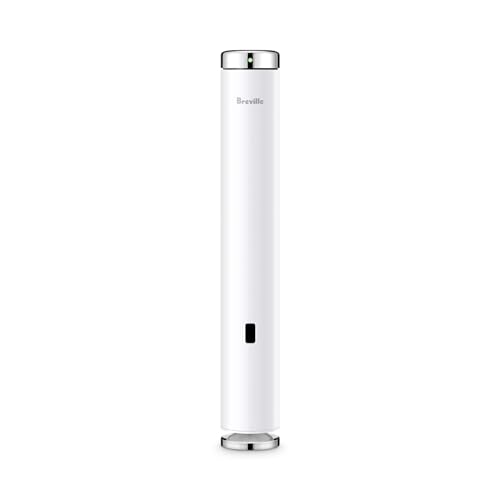
Breville Joule Turbo Sous Vide Machine BSV600PSS
The Breville Joule Turbo BSV600PSS is the fastest cooker in this guide, and speed is its whole argument. The verified details describe an 1100-watt immersion circulator with a Turbo feature that uses app-based algorithms to cook proteins in about half the usual time, an Autopilot mode that handles the cook once the food is in the bath, visual doneness selection from rare to well done, and a Prime Time feature that holds food at its best until the household is ready to eat. The Joule app carries cook guides with times and temperatures checked by the Breville test kitchen, plus guided recipes that walk through a full dish rather than a single ingredient. The polished stainless steel body is compact, which helps in kitchens where drawer space is limited. The trade-off is dependence on the app: the Turbo mode and the guided features live in the phone, so cooks who prefer a screen on the cooker itself will find this one less direct. The temperature range and timer limits are also not listed in the verified details, so buyers should check the app for the extremes. For a household that wants sous vide on a weeknight rather than only on weekends, the time saving is real, and the guided doneness choices make the first cooks far less intimidating.
Key specs
- 1100 watts with Turbo mode that cooks up to twice as fast
- Autopilot mode and visual doneness selection
- Wi-Fi enabled, controlled through the Joule app
- Prime Time feature holds food at its best until serving
- Cook guides and guided recipes from the Breville test kitchen
Strengths
- Turbo mode cuts cooking time substantially on proteins
- Autopilot and visual doneness remove guesswork for beginners
- Compact, polished stainless steel design stores easily
Trade-offs
- App control is central, so the phone is part of the routine
- No temperature range or timer limits are listed in the verified details
- Turbo speed depends on the app algorithms and a connection
Who it fits: Busy cooks who want sous vide results in less time and like guided, app-led cooking with clear doneness choices.
Best for: fast weeknight sous vide with guided cooking and doneness control
Not suited for: cooks who want a screen on the cooker itself or offline control
Check price on Amazon: Breville Joule Turbo Sous Vide Machine BSV600PSS
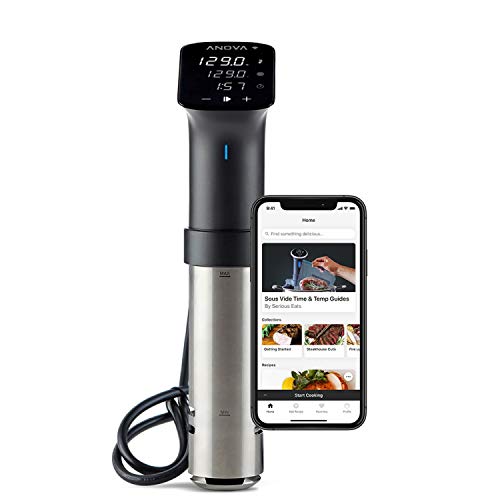
Anova Culinary Sous Vide Precision Cooker Pro
The Anova Precision Cooker Pro is the professional pick, and its verified details read like a specification sheet rather than a sales pitch. It delivers 1200 watts, heats up to 100 liters of water in a covered container, and is rated to run for a minimum of 10,000 hours straight without shutting down. The stainless steel body is drop tested and IPX-7 rated, which means a fall to the floor or a dunk under water will not end the cook. The app gives access to thousands of free recipes and remote monitoring, and the built-in controls allow manual cooking without the phone. For a home cook, the honest question is whether that durability is needed. A household that cooks sous vide once a week for two people will never use 100 liters of capacity or 10,000 hours of runtime. A household that hosts often, batch-cooks proteins for the week, or runs 48-hour brisket cooks will use every bit of it. The Pro is the cooker to buy when sous vide is a habit rather than an experiment, and when the cost of a failed cook is a ruined dinner for guests rather than a quiet night in.
Key specs
- 1200 watts, the most powerful circulator in this guide
- Heats up to 100 liters in a covered container
- Rated for a minimum of 10,000 hours of continuous running
- Stainless steel body, drop tested and IPX-7 rated
- Manual controls plus app control with thousands of free recipes
Strengths
- Most powerful and most durable cooker here, built for heavy use
- Handles very large baths for parties and batch cooking
- Drop and water resistance give real insurance against kitchen accidents
Trade-offs
- Larger and heavier than the home-focused picks
- Power beyond what a small pot for two will ever need
- Pro-level durability comes with a more serious presence on the counter
Who it fits: Serious cooks, frequent hosts and anyone who runs long or large sous vide cooks and wants a circulator that will not quit.
Best for: large-batch and long-duration sous vide cooking with maximum power
Not suited for: occasional cooks with a small pot and a tight budget of space
Check price on Amazon: Anova Culinary Sous Vide Precision Cooker Pro

Inkbird Sous Vide Cooker Bundle with Vacuum Sealer
The Inkbird bundle answers the question every new sous vide cook asks first: how do I seal the food. The verified details list a 1000-watt ISV-100W sous vide cooker with 14 preset recipes and Wi-Fi app control, plus a vacuum sealer with 80 kPa suction, five modes covering dry, moist, jar sealing and vacuum sealing, a built-in cutter, a bag roll, five vacuum bags and an air suction hose. The cooker itself matches the standalone ISV-100W in this guide, with the same temperature range, accuracy and 99-hour timer, so the bundle does not ask the buyer to accept a weaker circulator. The sealer handles the rest of the routine and earns its keep beyond sous vide, sealing leftovers, grains, fruit and marinated meat for storage. The trade-offs are space and duplication: two appliances need more storage than one, and a cook who already owns a good sealer gains nothing from the second one. For a cook starting from zero, though, the bundle removes the extra shopping trip and the uncertainty about which bags and sealer to buy, and that convenience is worth more than the sum of its parts.
Key specs
- 1000-watt sous vide cooker ISV-100W with 14 preset recipes
- Vacuum sealer with 80 kPa suction, five sealing modes
- Includes bag roll, five vacuum bags and an air suction hose
- Built-in bag cutter on the sealer
- Wi-Fi app control for the cooker, timer up to 99 hours
Strengths
- Complete starter kit: cooker, sealer, bags and hose in one box
- Sealer covers dry, moist, jar and vacuum modes for many foods
- Good value for a cook starting sous vide from nothing
Trade-offs
- The sealer is a bonus, not a premium standalone machine
- Two appliances mean more counter and storage space
- Cooker Wi-Fi works only on 2.4 GHz networks
Who it fits: New sous vide cooks who own no vacuum sealer yet and want the full setup in a single purchase.
Best for: starting sous vide from scratch with cooker and sealer together
Not suited for: cooks who already own a good vacuum sealer
Check price on Amazon: Inkbird Sous Vide Cooker Bundle with Vacuum Sealer
Buying guide: how to choose a sous vide cooker
Power and bath size
Match wattage to the container. A 1000-watt cooker handles a standard stockpot for two to four people without strain. A 1100 or 1200 watt cooker heats faster and holds temperature in larger containers, which matters for parties and batch cooking. A lid or cover on the container helps any cooker, because it cuts heat loss and evaporation on long cooks.
Control style: app or dial
App cookers offer remote monitoring, presets and guided recipes, and they suit cooks who like to start a cook from another room. Dial cookers offer direct control with no accounts, no updates and no subscription, and they suit cooks who want the appliance to simply work. Neither style is more accurate by itself; the choice is about how you like to cook.
Temperature range and accuracy
Check that the range covers the foods you cook. A span from roughly 77 to 210 degrees Fahrenheit covers fish, eggs, chicken, steak and long brisket cooks. Accuracy to a tenth of a degree gives repeatable results, while half-degree steps are fine for most home cooking. Calibration features help over time, since any sensor can drift.
Clamp, skirt and cleanup
A sturdy adjustable clamp keeps the cooker secure on pots of different thicknesses, and a removable skirt makes cleaning simple after a long cook. A display that angles toward the cook and is readable from a few steps away saves constant bending. These details sound small until the fiftieth cook, when they decide whether the cooker feels like a tool or a chore.
App, subscription and privacy
Check what the app asks for before buying an app-connected cooker. Some apps control time and temperature for free and keep recipes free, while others put guided recipes and cooking content behind a subscription. A cooker that works fully from its own controls costs nothing extra and keeps cooking even if the app changes, while an app-led cooker depends on the phone and the account. Neither choice is wrong, but the buyer should know which one they are making before the cooker arrives.
How to use and care for your sous vide cooker
Fill a pot or container with water, clip the cooker so the water sits between the minimum and maximum lines, and set the temperature and time. Season the food, seal it in a bag with as little air as possible, and lower the bag into the bath once the water reaches temperature. When the timer ends, remove the bag, pat the food very dry, and sear it quickly in a hot pan for color and crust. For care, wipe the cooker after each session, detach the skirt regularly and wash it, and descale occasionally if the household has hard water, following the maker guidance. Store the cooker dry and upright, and keep the clamp free of dried food so it grips firmly next time.
Common mistakes to avoid
The most common mistake is skipping the sear, which leaves a perfectly cooked but pale and unappetizing surface. The second is sealing a bag with too much air, which makes it float and cook unevenly, so press the air out or use a sealer. The third is overcrowding the bath, which blocks circulation and leaves cold spots. The fourth is choosing a temperature from a vague memory rather than a reliable guide, since a few degrees decide the difference between medium-rare and medium. Finally, do not leave a cooked bag sitting in a cooling bath for hours after the timer ends; remove it, chill it if you are saving it, or serve it while it is at its best.
Getting the best results from sous vide
The technique rewards patience and punishes shortcuts. Start with a good seal: press the air out of the bag or use a vacuum sealer, because air in the bag makes it float and the food cooks unevenly. Clip the bag to the side of the pot if it tries to float, and keep the food fully submerged so the water reaches every surface. Set the temperature from a reliable guide rather than a guess, because a few degrees decide the difference between medium-rare and medium, and the whole point of the method is that precision.
Do not skip the sear. A steak that comes out of the bag is perfectly cooked and pale, and a minute in a very hot pan builds the crust and the flavor that make it look and taste finished. Pat the food very dry before searing, because moisture on the surface turns to steam and stops the crust from forming. A hot pan, a little oil and a short time are enough; the food is already cooked, so the sear is about the surface only.
Plan the timing backwards from the meal. Sous vide is forgiving about finishing late, because the food holds at temperature, but it is not forgiving about starting late. A thick steak needs an hour or two, a brisket needs a day or more, and the best results come from giving the cook the full time it needs rather than rushing it. Use the waiting time to prepare sides, and the meal will come together with far less stress than a conventional cook.
Sous vide times and temperatures by food
Use these as starting points from standard sous vide guidance, and adjust to taste. A steak cooks well at around 130 degrees Fahrenheit for one to two hours for medium-rare, with longer times for thicker cuts. Chicken breasts do well at around 150 degrees for one to two hours, which keeps them juicy without any pinkness. Fish is delicate and cooks fast, often at around 125 degrees for 30 to 45 minutes, while firm vegetables benefit from around 183 degrees for about an hour.
Eggs reward experimentation: a soft, jammy egg comes from around 167 degrees for about 13 minutes, while a fully set egg with a creamy yolk comes from around 145 degrees for about 45 minutes. Tough cuts are where sous vide truly shines: a brisket at around 155 degrees for 24 to 36 hours turns tender while staying juicy, and pork shoulder behaves the same way. Always check a reliable guide for the exact food and thickness, keep the bag submerged, and finish with a sear where the food benefits from it.
Bags, sealing and food safety
The bag is as important as the cooker, because it is what keeps the water out and the flavor in. Use bags made for sous vide or for freezer storage, and avoid thin sandwich bags that can split during a long cook. A vacuum sealer gives the tightest seal and the most even cooking, because it removes nearly all the air, and the Inkbird bundle in this guide includes one for exactly that reason. The water-displacement method works well without a sealer: lower the open bag into the water slowly, let the water push the air out, and seal the top just before it goes under.
Food safety in sous vide comes down to temperature and time together, not temperature alone. The food must reach the target temperature and hold it long enough for the heat to work through the thickest part, and a reliable guide gives the time for each food and thickness. Never cook food that has been left at room temperature for hours, and never reuse a bag that held raw meat without washing it thoroughly. Keep the bath clean, change the water between cooks, and wipe the cooker after each session.
Floating bags are the most common problem, and they are easy to fix. A bag floats when air is trapped inside, so press the air out before sealing, or clip the bag to the side of the pot so it stays submerged. A small weight or a rack can hold the bag down on a long cook. Check the water level during a long cook, because evaporation lowers it, and top it up with hot water if it drops near the minimum line. With a good seal and a submerged bag, the technique is safe, repeatable and forgiving.
After the cook, handle the bag with care. The food inside is hot and the bag may hold juices, so open it over a plate or a tray. Save the juices: they make an excellent base for a pan sauce, and discarding them wastes flavor. If the food is not being served at once, chill the sealed bag quickly in ice water and refrigerate it, then reheat it in the bath at the serving temperature when the meal is ready.
Our recommendation
For most cooks, the Anova Precision Cooker 3.0 is the pick to buy first: it is accurate, well supported, and easy to use with or without the app. First-time cooks who want presets and quiet running should choose the Inkbird ISV-100W, and cooks who want no app at all should choose the Greater Goods cooker for its dial and its long coverage. The Breville Joule Turbo suits busy households that want faster cooks and guided doneness, the Anova Pro suits serious batch cooks, and the Inkbird bundle suits anyone starting from zero. Whichever you choose, set the temperature with care, seal the bag well, and finish with a hot sear.
Buy the cooker that matches how you like to cook rather than the one with the longest feature list. A cook who sets a temperature and walks away for hours will be happier with a dial and a display than with an app full of recipes they never open, while a cook who likes guidance will use the app-led models far more. Power, accuracy and the clamp matter most; everything else is a preference, and the best cooker is the one that gets used every week.
Frequently asked questions
Is sous vide safe?
Yes, when the food is sealed properly and cooked at the right temperature for the right time. The sealed bag keeps the food in contact with water at a steady temperature, and finishing with a sear adds safety and flavor. Follow reliable time and temperature guides for each food.
Do I need a vacuum sealer for sous vide?
It helps, but it is not required to start. A sturdy zip bag with the air pressed out works for many cooks, and the water-displacement method removes most of the remaining air. A sealer becomes worth it when you cook often or store food in bags.
How long does a sous vide cook take?
It depends on thickness and temperature. A steak may take one to two hours, chicken a similar time, and a brisket can run a day or two. The timer on these cookers runs up to 99 hours, and the food stays at the target temperature without overcooking in the usual way.
Can I cook frozen food sous vide?
Yes. Add extra time, usually about half as long again as the fresh cook time, and make sure the bag stays submerged. The gentle, even heat handles frozen food well, which is one of the technique strengths.
What container should I use?
Any deep pot works to start. For larger or longer cooks, a dedicated container with a lid holds temperature better and loses less water to evaporation. Check the minimum water depth for your cooker before choosing a container.
Can I leave a sous vide cooker running overnight?
Yes, and overnight cooks are one of the strengths of the method. Use a covered container to reduce evaporation, check the water level before bed, and choose a quiet cooker if the kitchen is near a bedroom. The food stays at the target temperature and cannot overcook in the usual way, so a long cook is safe when the setup is sound.
Can I cook vegetables sous vide?
Yes, and vegetables benefit from the precise temperature control. Most vegetables cook well at around 183 degrees Fahrenheit for about an hour, which keeps them tender without turning them soft. Carrots, beets and potatoes all work well, and the sealed bag keeps their flavor concentrated.


