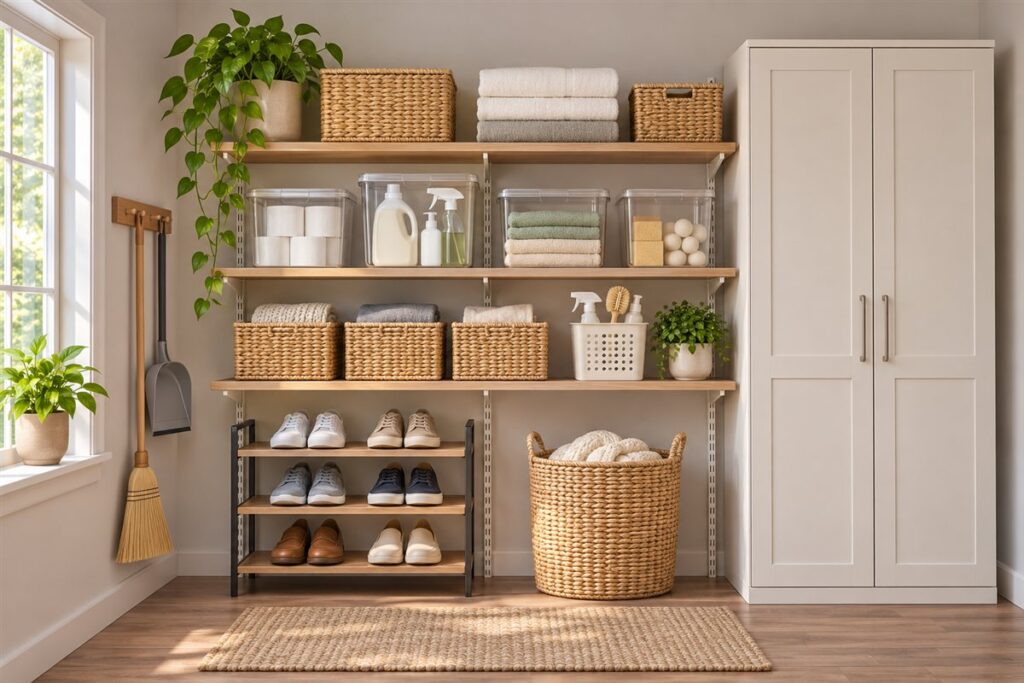
Shed storage solutions are the shelves, racks, hooks, bins and cabinets that turn a crowded outbuilding into a space where you can find a trowel in seconds. The right mix uses wall and ceiling space first, so the floor stays clear for the mower and larger tools. This guide covers what to weigh before you buy.
These solutions suit anyone with a garden shed, garage corner or backyard storage unit. We have not used these products ourselves. Our picks compare listing information and maker descriptions, so read each listing closely before you decide.
As an Amazon Associate we earn from qualifying purchases. Links on this site are affiliate links, and they do not change the information we give.
What to Look For
| Factor | Why it matters | What to check |
|---|---|---|
| Material | Sheds can be damp and temperature swings are common | Look for coated steel, resin or treated wood in the maker’s description |
| Load capacity | Heavy pots, bags and tools need a sturdy shelf | Compare the stated weight limit per shelf or hook |
| Size and footprint | It must fit your shed door and interior | Measure your space and compare listed dimensions |
| Mounting method | Wall systems and freestanding units suit different sheds | Check whether it needs drilling, rails or anchors |
| Adjustability | Needs change with the seasons | Look for movable shelves, hooks or rail pieces |
| Assembly | Complex builds take time and may need extra tools | Read the included hardware and instructions notes |
| Warranty | Shows how much the maker stands behind the product | Read the warranty terms in the listing |
Setup and Care Tips
- Sort your items first and decide what you use weekly, seasonally or rarely.
- Store frequently used tools at hand height and keep heavy items low.
- Lift metal items off damp floors with pallets or low shelves.
- Wipe tools dry before hanging them to help limit rust.
- Check the fixings once a season and tighten any that have loosened.
Mistakes to Avoid
- Buying before measuring the door opening and interior.
- Ignoring the weight limit stated for each shelf.
- Filling the floor and leaving no walking space.
- Choosing materials that are not meant for damp, outdoor use.
- Skipping the assembly notes in the listing.
Planning Zones Inside the Shed
Before you buy any shelf or rack, decide how the shed will be used. Divide the space into zones based on what you store and how often you reach for it. A zone near the door suits daily or weekly tools, such as a trowel, gloves, a hose nozzle, and a small rake. A middle zone can hold seasonal gear like pruning tools, fertilizer, and pots. The back and top zones are best for rarely used items, such as holiday decorations, spare parts, or winter equipment.
Think about the movement of heavy or awkward items. A mower, wheelbarrow, or bicycle needs a clear path in and out, so keep that lane free and plan storage around it. Tall tools like shovels and brooms work well against a wall on hooks or a rail, while long items such as ladders may need a horizontal rack near the ceiling. Chemicals, fuel, and sharp tools need separate, secure places, ideally away from children and pets.
A rough sketch on paper helps. Draw the floor plan, mark the door and any windows, and note where the walls and roof framing are. Then place the zones and check that doors and lids can open fully. Taking inventory before you buy tells you whether you need many small hooks, a few deep shelves, or a mix. This planning step costs nothing and avoids buying fixtures that do not suit your space.
Shelves, Racks, Hooks, and Bins Compared
Shed storage comes in several forms, and each does a different job. Open shelves hold boxes, pots, and cans, and let you see what you have. They suit items that you want to grab quickly. Freestanding shelving units are easy to move, while wall-mounted shelves free up floor space but need a solid wall or frame to carry the load.
- Wall rails and hooks: Good for long-handled tools, hoses, and extension cords. Moveable hooks let you rearrange as your tools change.
- Pegboard or slat panels: Offer flexible layouts with accessories, but check the load rating of the hooks and the fixing of the panels.
- Ceiling racks: Use dead space above head height for lightweight, seasonal items. Check the framing before fixing.
- Cabinets with doors: Keep dust and damp off items and can be lockable, which suits chemicals and sharp tools.
- Bins and crates: Group small items and protect them. Clear lids help you see what is inside.
- Corner units: Make use of awkward corners where a regular shelf does not fit.
Mix types for the best result. Use rails for tall tools, shelves for boxes, and bins for small items, and keep the floor clear for large equipment. Label shelves and bins so that everyone in the household can put things back.
Protecting Contents from Damp and Pests
Sheds are prone to damp, temperature swings, and visitors. A few simple steps protect what you store. Lift items off the floor, using shelves, pallets, or racks, so that moisture from the ground does not reach them. Leave gaps between boxes and the walls to allow air to circulate, and avoid pressing items against cold or damp surfaces.
Choose containers with tight lids for anything sensitive. Seeds, fertilizer, soil mixes, pet food, and bird seed are all attractive to mice and insects, so use solid, lidded bins, ideally made of hard plastic or metal. Fabrics, cushions, and paper are particularly vulnerable to damp and mildew, so wrap them well or store them elsewhere. Silica gel packs or moisture absorbers may help in small enclosed spaces, but follow their directions.
Tools need special care. Clean off soil and dry blades before putting them away, and wipe metal parts with a light oil if the maker suggests it. Store batteries and fuel according to the instructions, away from heat and living areas. Check the shed for leaks, gaps, and signs of animals each season. Good ventilation helps prevent mold, so do not block vents with stored items. If you notice persistent damp, address the cause with repairs or drainage rather than relying on storage alone.
Safety and Load Management
A well-organized shed is also a safer one. Heavy items belong low, where they cannot fall on you. Keep lighter items up high, and use a step stool rather than reaching or climbing shelves. Check the weight limit of each shelf, hook, and rail, and do not exceed it, remembering that the limit may assume an even spread of weight. Anchor tall units to the wall, if the maker recommends it, to prevent tipping.
Keep walkways clear. Cords, hoses, and tools left on the floor cause trips and falls, especially in low light. Good lighting helps, whether from a window, a battery light, or a safe, correctly installed fixture. Sharp tools should have guards or be stored with blades facing away from the walkway. Chemicals should stay in their original labeled containers, in a locked cabinet if there are children nearby.
Think about fire and fuel safety. Keep fuel containers away from heat sources, pilot lights, and electrical outlets, and follow local rules on quantities and storage. Store rags with oil or solvents according to guidance, since they can be a fire risk. Keep a fire extinguisher suitable for the contents nearby if possible. A quick safety check each season takes minutes and can prevent injuries and damage.
Budget Tiers and Growing the System
You do not have to do everything at once. A basic tier includes a few sturdy hooks, a rail, and one or two shelves, and these can transform a messy shed. Mid-tier systems add modular panels, cabinets, and better bins, giving more flexibility and protection. A higher tier might include a full wall system, lockable cabinets, and custom shelving built to fit, which suits larger sheds or heavy use.
Start with the problem that bothers you most. If tools are piled in a corner, begin with wall rails. If small items vanish, start with bins and shelves. Buy one piece, use it for a few weeks, and see what else you need. This approach avoids paying for storage you do not use and lets your system grow with your needs.
When you buy, compare the stated materials and finishes, and look at the load limits again. Check that parts are available if you expand later, since modular systems are easier to grow if you stay with the same kind of fittings. Read the assembly instructions in the listing, and make sure you have the necessary tools. Finally, keep your measurements handy and leave some empty space, since you will almost certainly acquire more things.
FAQ
What is the best way to organize a small shed?
Use vertical space first, with wall rails, hooks and shelves, and keep the floor for large items. Group similar tools together so each has a set place.
Should shed shelves be freestanding or wall mounted?
It depends on your shed. Freestanding units need no drilling, while wall systems save floor space. Check your wall construction and the maker’s mounting guidance.
How do I stop tools from rusting in a shed?
Clean and dry them before storing, and keep them off damp floors. Ventilate the shed, and wipe metal parts with a light oil if the maker advises it.
What is the best way to store long-handled tools?
Wall rails or hooks keep them upright and off the floor. A wall-mounted rack with spaced slots stops them tangling.
Can I use pegboard in a shed?
Yes, if it is fixed securely and suited to damp conditions. Check the load rating of the hooks and consider water-resistant materials.
How should I store chemicals and fuel?
Keep them in original, labeled containers in a secure place away from heat and children. Follow the maker's instructions and local rules.
How can I keep mice out of stored items?
Use tightly lidded hard containers, keep food items out of the shed, and seal gaps in the structure. Check regularly for signs of animals.
Is it worth buying shelving with adjustable heights?
It is helpful if your storage needs change with the seasons. Adjustable shelves let you fit tall items now and small boxes later.
The Short Version
The right shed storage makes everything easy to find and keeps the floor clear. Measure first, compare materials and weight limits, read the warranty, and choose the system that matches what you actually store.