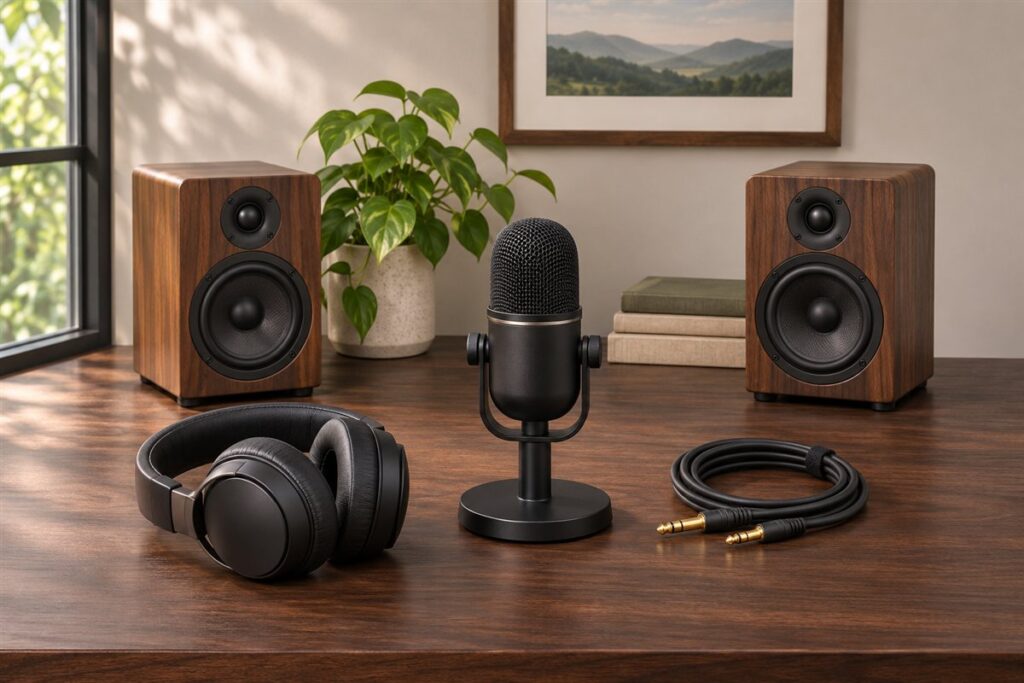
An open-back gaming headset has ear cups with vents or grilles that let air and sound pass through, which gives a wider, more natural sound space. We have not used these products ourselves, so this guide does not rank anything. It shows you how to compare sound, microphone and comfort so you can choose a headset for your desk.
Begin with your room. Open-back designs leak sound out and let outside noise in, so they suit quiet spaces better than shared or noisy ones. Players who value directional audio often like the wide soundstage, but makers describe sound in their own terms, so read those descriptions as claims. Next, look at the connection, such as a wired plug, USB or a separate sound card, and check what your console or PC supports. Microphone type matters, as do weight, clamp force and ear pad material for long sessions. Consider the cable length and whether the mic detaches. A note about where you play will help you use the table below.
As an Amazon Associate we earn from qualifying purchases. Links on this site are affiliate links, and they do not change the information we give.
What to Look For
| Factor | Why it matters | What to check |
|---|---|---|
| Driver size and tuning | It shapes detail, bass and the sense of space. | Read the stated driver size and the maker’s tuning notes. |
| Connection | It must match your PC, console or audio gear. | Compare 3.5 mm, USB and any adapter or amp needs. |
| Microphone | Clear voice chat helps team play. | Check whether it is detachable, flexible and has a mute option. |
| Comfort and weight | Long sessions need a light, balanced fit. | Look at headband design, clamp force and pad material. |
| Sound leakage | Open cups let sound out and noise in. | Think about housemates, roommates and room noise. |
| Cable and build | Daily use puts strain on cables and hinges. | Check cable length, material and replacement parts. |
Setup and Care Tips
- Connect the headset and choose it as the input and output device in your settings.
- Adjust the headband until the pads rest comfortably on your head.
- Keep the volume at a comfortable level and take breaks during long sessions.
- Wipe the pads and grilles gently with a dry cloth.
- Store the headset on a stand to protect the headband and cable.
Mistakes to Avoid
- Choosing an open-back design for a noisy or shared room.
- Ignoring what connections your console or PC supports.
- Judging a headset by driver size alone.
- Overlooking weight and clamp force.
- Assuming the microphone will match a standalone mic.
FAQ
Are open-back headsets good for gaming?
Many players like the wide, airy sound. They work best in quiet rooms where leakage does not matter to anyone nearby.
Do I need an amplifier?
Some higher-impedance models benefit from one, while many gaming models work with a basic output. Check the maker’s notes.
The Short Version
Think about your room first, then compare connection, microphone and comfort. Read sound descriptions as claims and choose a headset that fits your setup. Think about the games you play, how long your sessions last and whether you also want to use the headset for music or video, then pick the model whose features suit those habits.