A multi-fuel outdoor oven is a high-heat backyard oven that can burn more than one fuel, usually wood and charcoal, with gas available through a burner or a dual-fuel design. This flexibility lets you cook pizza, flatbreads and roasted dishes with real flame or with the convenience of gas. Most of these ovens use a stone baking floor and an insulated shell, which hold heat well and cook a pizza in a short time once fully preheated.
The six models below are well-known outdoor ovens from established brands. We have not used these products ourselves, so confirm the fuel options, included accessories and sizes on the current listing before buying. In several cases the gas burner is sold separately, so read the listing closely. Heat and speed claims are the makers’ own. Fuel choice changes how you cook. Wood gives flavor but needs tending, charcoal is steadier, and gas is quick and clean. If you want to switch between them, look for a design that says so clearly, and check whether a conversion accessory is part of the box or a separate item.
As an Amazon Associate we earn from qualifying purchases. Links below are affiliate links, and they do not change the product information we give.
What to Look For
| Feature | Why it matters |
|---|---|
| Fuel options | Check which fuels are built in and which need an add-on |
| Size | Cooking surface decides pizza size and how many you can cook |
| Weight | Heavier ovens hold heat well but are harder to move |
| Accessories | A peel, a cover and a gas burner may be sold separately |
In this guide
Specs at a Glance
| Model | Fuels | Size class | Notes |
|---|---|---|---|
| Ooni Karu 12 | Wood and charcoal; gas burner sold separately | 12-inch pizza class; confirm listing | Portable body with a stone floor |
| Ooni Karu 16 | Wood and charcoal; gas burner sold separately | 16-inch class; confirm listing | Larger stone and glass door on many versions |
| Gozney Dome | Dual fuel, wood and gas | Larger class; confirm listing | Insulated dome shell with a door |
| Gozney Tread | Gas and wood options | Mid class; confirm listing | Portable build with fuel choices |
| Bertello Outdoor Pizza Oven | Wood, charcoal and gas options | 12-inch class; confirm listing | Compact body; gas attachment sold with some versions |
| Solo Stove Pi | Wood, with a gas accessory | Compact class; confirm listing | Stainless body and stone |
The 6 Best Multi-Fuel Outdoor Ovens

Top pickBest for backyard cooks wanting fuel choice
1. Ooni Karu 12
A portable multi-fuel oven that runs on wood or charcoal and can accept a gas burner add-on. It is a common first pick for backyard pizza.
Suits: backyard cooks wanting fuel choice. Strengths: portable build and strong heat. Weaknesses: burner is a separate item. Skip it if you want only gas.


Best for families and entertainers
2. Ooni Karu 16
A larger version of the Karu design, with more cooking room for bigger pizzas and roasts. It is heavier than the 12-inch model.
Suits: families and entertainers. Strengths: extra cooking space. Weaknesses: more weight and bulk. Skip it if you need a very portable oven.


Best for serious outdoor cooks
3. Gozney Dome
A dome-shaped oven that works with wood or gas options. Its insulated build is made to hold heat for pizza and roasting.
Suits: serious outdoor cooks. Strengths: dual-fuel flexibility and heat retention. Weaknesses: large size and weight. Skip it if you want a small portable oven.


Best for patios and travel
4. Gozney Tread
A newer portable outdoor oven from Gozney that supports more than one fuel. Check the listing for current fuel details and accessories.
Suits: patios and travel. Strengths: fuel flexibility in a smaller form. Weaknesses: details vary by version. Skip it if you prefer an established older model.
Best for small yards and camping
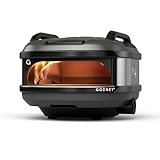
5. Bertello Outdoor Pizza Oven
A compact outdoor oven that can use wood, charcoal or gas through an accessory. It is designed for small patios and campsites.
Suits: small yards and camping. Strengths: good flexibility in a small body. Weaknesses: specs vary by version. Skip it if you need big-batch cooking.
View Bertello Outdoor Pizza Oven on Amazon

Best for patio pizza nights
6. Solo Stove Pi
A stainless steel outdoor oven made for wood-fired pizza, with a gas burner accessory sold on some listings. Its look and build target patio entertaining.
Suits: patio pizza nights. Strengths: a clean modern look. Weaknesses: the gas accessory is sold separately. Skip it if you want charcoal ease.

Care and Setup
- Preheat the stone fully before the first pizza goes in.
- Brush the stone gently and avoid water on a hot floor.
- Cover the oven when cool to protect it from rain.
- Store fuel dry and keep the burner clean of debris.
Mistakes to Avoid
- Rushing the preheat, which causes burnt tops and raw crusts.
- Using lighter fluid or the wrong fuel for the oven.
- Placing the oven on a flammable surface.
- Buying without checking whether the gas burner is included.
Wood, Charcoal and Gas Compared
Each fuel changes how an outdoor oven feels to use, so choose according to the cooking you want to do. Wood is the classic choice. It lights quickly, makes a lively flame that licks across the ceiling of the oven and adds a smoky aroma. It also needs the most attention, because the fire burns down and has to be fed with small pieces regularly. Dry hardwood is the usual recommendation, while damp or resinous wood makes heavy smoke and uneven heat.
Charcoal gives a steadier, longer burn with less tending. It can be mixed with wood to build a base of embers and add flame. Charcoal takes longer to catch and, depending on the oven design, may produce less flame to cook the top of a pizza. Gas is the most convenient. You turn it on, wait for the oven to heat and adjust the flame with a dial. There is little ash, no smoke from the fuel itself and the heat is easy to repeat, though you lose the wood flavor. Some ovens need a separate burner for gas, as the listings here note.
- Choose wood if you enjoy tending a fire and want flavor.
- Choose charcoal for steadier heat with less feeding.
- Choose gas for fast, repeatable weeknight cooking.
- Choose multi-fuel if you want flexibility, but confirm what ships in the box.
Fuel also affects cost and storage, since bottled gas and bags of wood or charcoal each need a dry place to sit.
Managing the Fire and the Preheat
Preheating is more than turning the oven on. The stone, the walls and the air must all come up to temperature, and a stone that is not fully heated will leave a pale, doughy base. Follow the manual’s suggested preheat time, then check the floor with an infrared thermometer if you own one. Different ovens recommend different temperatures, so read the maker’s guidance for your model.
With wood or charcoal, start with a small fire and add fuel in stages. Let it grow before piling on more, and keep the flame to one side or the back so you have a clear baking area. Dry fuel and good airflow help the fire stay clean. When you cook, the flame provides top heat while the stone cooks the bottom, so you will turn the pizza to even out the result.
- Use a turning peel or a long, narrow tool to rotate pizzas.
- Sweep the stone between pizzas with a brush.
- Add fuel in small amounts to avoid temperature swings.
- Keep dough and toppings simple when you start, since high heat cooks quickly.
Expect a learning curve. A few practice pizzas will teach you more about your oven than any article.
Cooking Beyond Pizza
A hot, enclosed oven is useful for more than pizza. Flatbreads and naan cook in a minute or two when the stone is hot. Roasted vegetables, fish, sausages and small cuts of meat can be cooked in a cast-iron pan or dish that tolerates direct heat. Because the oven reaches very high temperatures, many of these foods benefit from being cooked after the fire has dropped slightly, when the heat is more moderate.
Techniques differ from a kitchen oven. A fast, hot oven browns the outside quickly, so thicker foods may need a lower flame or a longer time away from the strongest heat. Cooking in cast iron helps control the heat, and dishes can be moved to the cooler end of the oven or removed and covered to finish. If your oven has a door or chimney control, learn how it affects airflow and temperature.
- Use heavy cast iron or other cookware that the maker says is safe at high heat. Avoid nonstick coatings.
- Use long tools and heat-proof gloves.
- Check food with a thermometer rather than guessing by color.
- Do not put in glass or ceramic dishes unless they are rated for the heat.
As a general rule, the smaller ovens suit pizzas and flatbreads best, while larger domed models leave more room for pans.
Placement, Clearance and Local Rules
Where you set up the oven matters for safety and performance. Use a sturdy, level, non-combustible surface that can handle both weight and heat, and keep the oven well away from walls, fences, overhanging branches and buildings. Many makers specify minimum distances in the manual, and they apply to the sides, back and above the oven. Never use these ovens indoors, in a garage or under a covered patio, because smoke and carbon monoxide can build up.
Check the weight on the listing. Heavier ovens hold heat well but need a robust stand or table, and you should not place one on a lightweight folding table. Wind affects the fire, so a sheltered but open position helps without trapping smoke. Keep children and pets away, since the exterior can stay hot long after cooking.
- Check local rules on open fires, smoke and fire bans, particularly in dry weather or multi-unit housing.
- Keep a bucket of sand or a fire extinguisher rated for the fuel you use nearby.
- Do not move the oven while it is hot.
- Think about your neighbors, as wood smoke can drift.
If you are unsure, ask your landlord or local fire department before buying.
Upkeep, Gas Checks and Wear Signs
Outdoor ovens need basic upkeep to last. Let the oven cool fully, then remove ash with a metal scoop and put it in a metal container. Brush the stone, but avoid water or oils on a hot floor, as moisture can crack a baking stone. Wipe the exterior with a mild cleaner, and cover the oven once it is cool to keep out rain. Spots and discoloration on the stone are normal and generally cosmetic.
If your oven uses gas, check the connections whenever you change the cylinder or move the oven. A common method is to brush soapy water over the connections and look for bubbles, with the gas on and the burner off. Bubbles can indicate a leak. Turn off the gas and fix the connection or contact the maker if you find one. Inspect the hose and regulator for cracks, and use only parts approved for your model.
- Replace a stone that has broken apart or has deep cracks that expose the floor.
- Replace a burner that lights unevenly, even after cleaning.
- Store gas cylinders upright, outdoors and away from heat.
- Read the manual for winter care and storage.
A cover, dry fuel storage and a regular clean make a big difference to how long the oven remains in good shape.
Setting Up Your First Fire in a Multi-Fuel Oven
A first firing is a learning session, not a dinner party. Ovens that burn wood, charcoal or gas respond differently to airflow, fuel size and timing, and a calm practice round teaches you how yours behaves. Read the manual first, then work through the steps with a simple dough or even just a few vegetables so nothing important is at stake.
- Place the oven on a stable, non-combustible stand, with the clearances the maker states.
- Lay a small bed of fuel, using the type and size the manual recommends.
- Light the fuel with the method the maker approves, and avoid liquid accelerants.
- Allow the oven to come up to heat slowly, rather than piling on extra fuel.
- Watch the stone surface and the flame, and adjust vents or the gas dial as needed.
- When finished, let the fire burn down and let the oven cool before covering it.
Keep a notebook of what you try. Small changes in fuel amount or loading time can make a big difference.
Tools and Accessories Worth Adding to the Kit
An oven alone will not make good pizza or roasted vegetables. A few simple tools make the process safer and give you better control.
- Metal and wooden peels: A thin metal peel slides under a pie easily, and a wooden one works well for launching with a dusting of flour.
- Turning peel: A small round paddle lets you rotate food in a hot oven without burning your hand.
- Infrared thermometer: Gives a fast reading of the stone surface, which is more useful than the air temperature.
- Ash tools: A small shovel and brush for clearing coals and dust.
- Cast iron or metal pans: Handy for roasts, vegetables and breakfast dishes. Check heat limits for handles.
- Heat-resistant gloves: Protect your hands and forearms near the opening.
Look for accessories made for your oven size, since the door opening limits what will fit.
Weather, Wind and Where the Smoke Goes
Outdoor ovens respond to the weather more than indoor ones do. Wind can push flames and smoke in unexpected directions, cold air makes the stone take longer to warm, and rain can ruin stored fuel. Think about the way the oven is oriented in your yard.
| Condition | Effect | What to do |
|---|---|---|
| Strong wind | Uneven heating and blown embers | Turn the opening away from the wind and add a windbreak that stays clear of the oven |
| Cold weather | Longer warm-up and faster heat loss | Allow extra time and keep fuel dry and close |
| Wet weather | Damp fuel and slippery surfaces | Cover the oven when cool and store fuel indoors |
| Dry spells | Higher fire risk from sparks | Check local fire guidance and keep water nearby |
Seasoning, Curing and the First Few Burns
Many ovens, especially refractory or insulated ones, ask for a gentle curing process before full-temperature use. The manual describes how long to run low fires and how to raise heat in steps. Skipping this can cause cracks or moisture damage in some materials. Follow the instructions closely, and be patient with a new oven.
Foods That Suit Short, Intense Cooking Sessions
Pizza is the famous use, but a very hot oven is a flexible tool once you learn its rhythm. High heat browns quickly, so foods that benefit from a fast, fierce sear do especially well. Slower dishes can work too when the fire has burned down to a gentler heat, and many owners finish a session by using the leftover warmth. Always check the maker’s guidance for the maximum cooking temperature of any pan or dish you place inside.
- Flatbreads and focaccia: Quick to bake, and they show off the char from a live fire.
- Roasted vegetables: Peppers, squash and onions blister nicely in a hot, dry space.
- Fish and shellfish: Short cooking in a pan or on a plank, watched closely.
- Skillet dishes: Cast iron pans can go in for sizzling appetizers or dips.
- Bread: After the flames die down, residual heat can bake loaves and rolls.
- Roasts and chops: Possible in a lower, steadier heat with a thermometer and attention.
Whatever you cook, keep a close watch. Food moves from perfect to burnt in moments, so stay by the oven, rotate often and have your tools ready before you launch the first item.
Multi-Fuel Outdoor Oven FAQ
What does multi-fuel mean?
It means the oven can burn more than one fuel. Some include gas, while others need an accessory for it.
Which fuel is easiest?
Gas is quickest and cleanest. Wood and charcoal need tending but add flavor.
Can these ovens bake more than pizza?
Yes, many handle flatbreads, roasted vegetables and small cast-iron dishes.
Are they safe for a small patio?
Follow clearance guidance in the manual and use them outdoors only.
How long does an outdoor oven take to preheat?
It varies by oven, fuel and weather, so follow the maker's guidance in the manual. A fully heated stone is more important than speed, and an infrared thermometer can help you check.
What wood should I use?
Dry hardwood is the usual recommendation, cut small enough for the oven. Avoid damp, painted, treated or resinous wood, and follow the manual.
Can I use lump charcoal or briquettes?
Many ovens accept charcoal, but the manual will say which type and how much. Do not use lighter fluid unless the maker allows it.
Do I need a gas burner as well?
Only if you want gas. Some listings sell the burner separately, so check what is included and whether it fits your specific model.
Can I leave the oven outside all year?
Check the manual. Covers help, but moisture, frost and heavy weather can damage some ovens, so you may need to store it in a dry place in the off-season.
Why is the bottom of my pizza burnt but the top pale?
The stone may be too hot relative to the flame, or the pizza stays in one position too long. Rotate it more often, adjust the fire and let the stone drop slightly in temperature between pizzas.
Can I cook in cast iron in the oven?
Often yes, because cast iron handles high heat. Avoid nonstick coatings and handles that can melt, and check the maker's guidance.
How do I clean the stone?
Let it cool, brush off debris and avoid water or soap. Dark marks are normal and do not need scrubbing.
The Short Version
For fuel choice and portability, the Ooni Karu 12. For more room, the Karu 16. For a dome build, the Gozney Dome. For a portable newer design, the Gozney Tread. For small yards, the Bertello. For a stainless look, the Solo Stove Pi.
How the Picks in This Guide Compare, Buyer to Buyer
Specifications only take you so far with multi-fuel outdoor ovens. What decides satisfaction is how each pick’s strengths line up with your routine, and how much its trade-offs matter in your home. The notes below revisit every pick already reviewed above — no new models, no new claims — and frame each one around the buyer it suits and the compromise it asks for, so you can shortlist with confidence before checking the current listing.
Ooni Karu 12: who it really suits
As the review above describes, this pick suits backyard cooks wanting fuel choice. Its stated strength is portable build and strong heat, and that is the quality to weigh first: if that strength answers your main frustration with your current setup, this is probably your pick. The honest limitation given above is burner is a separate item, so consider whether that drawback touches your daily routine or only an edge case you rarely meet. The review’s own guidance is to skip it if you want only gas. View Ooni Karu 12 on Amazon — in that case, one of the other picks in this guide almost certainly fits better, and the comparison notes here will point you to it.
Ooni Karu 16: who it really suits
As the review above describes, this pick suits families and entertainers. Its stated strength is extra cooking space, and that is the quality to weigh first: if that strength answers your main frustration with your current setup, this is probably your pick. The honest limitation given above is more weight and bulk, so consider whether that drawback touches your daily routine or only an edge case you rarely meet. The review’s own guidance is to skip it if you need a very portable oven. View Ooni Karu 16 on Amazon — in that case, one of the other picks in this guide almost certainly fits better, and the comparison notes here will point you to it.
Gozney Dome: who it really suits
As the review above describes, this pick suits serious outdoor cooks. Its stated strength is dual-fuel flexibility and heat retention, and that is the quality to weigh first: if that strength answers your main frustration with your current setup, this is probably your pick. The honest limitation given above is large size and weight, so consider whether that drawback touches your daily routine or only an edge case you rarely meet. The review’s own guidance is to skip it if you want a small portable oven. View Gozney Dome on Amazon — in that case, one of the other picks in this guide almost certainly fits better, and the comparison notes here will point you to it.
Gozney Tread: who it really suits
As the review above describes, this pick suits patios and travel. Its stated strength is fuel flexibility in a smaller form, and that is the quality to weigh first: if that strength answers your main frustration with your current setup, this is probably your pick. The honest limitation given above is details vary by version, so consider whether that drawback touches your daily routine or only an edge case you rarely meet. The review’s own guidance is to skip it if you prefer an established older model. View Gozney Tread on Amazon — in that case, one of the other picks in this guide almost certainly fits better, and the comparison notes here will point you to it.
Bertello Outdoor Pizza Oven: who it really suits
As the review above describes, this pick suits small yards and camping. Its stated strength is good flexibility in a small body, and that is the quality to weigh first: if that strength answers your main frustration with your current setup, this is probably your pick. The honest limitation given above is specs vary by version, so consider whether that drawback touches your daily routine or only an edge case you rarely meet. The review’s own guidance is to skip it if you need big-batch cooking. View Bertello Outdoor Pizza Oven on Amazon — in that case, one of the other picks in this guide almost certainly fits better, and the comparison notes here will point you to it.
Solo Stove Pi: who it really suits
As the review above describes, this pick suits patio pizza nights. Its stated strength is a clean modern look, and that is the quality to weigh first: if that strength answers your main frustration with your current setup, this is probably your pick. The honest limitation given above is the gas accessory is sold separately, so consider whether that drawback touches your daily routine or only an edge case you rarely meet. The review’s own guidance is to skip it if you want charcoal ease. View Solo Stove Pi on Amazon — in that case, one of the other picks in this guide almost certainly fits better, and the comparison notes here will point you to it.
Read across the six notes and a pattern emerges: there is rarely a single best choice among multi-fuel outdoor ovens, only a best match. Owners who stay satisfied are the ones who chose by their dominant use — the meal, drink, room or routine that happens every day — and accepted a weakness in an area they seldom touch. Choose the same way, and verify the current listing’s dimensions and features before ordering, because line-ups and details change over time.
Buying Criteria in Depth: Multi-Fuel Outdoor Ovens
The short feature table near the top of this guide is the summary; this section is the reasoning behind it. Each criterion below is one of the checks experienced buyers run before ordering multi-fuel outdoor ovens, explained in the order that matters — fit and function first, features second, ownership costs last. Work through them against your own home and the right pick usually identifies itself.
Fuel flexibility: what ‘multi-fuel’ really means
Outdoor ovens that burn wood, charcoal and gas — or pellets in some designs — promise freedom, but the fuels are not interchangeable experiences. Wood gives the classic live-fire flavour and the highest heat with the most management; charcoal is steadier and easier to hold; gas is instant, clean and repeatable at the cost of some character. Check how each pick in this guide converts between fuels: some need a separate burner accessory, some swap a fuel tray, and performance on the secondary fuel is not always equal to the primary. Buy for the fuel you will use most, and treat the others as genuine but secondary options.
Heat: ceiling temperature and the floor that matters
Pizza lives or dies by the cooking floor: it must store enough heat to crisp a base in a short bake without scorching it, then recover between pizzas. Stone and cordierite floors behave differently from steel, and thickness matters more than headline peak temperature. For roasting and baking beyond pizza, evenness and a usable middle temperature range matter more than the maximum. Read each pick’s description for floor material and thickness where stated, and be wary of judging by peak temperature alone — an oven that hits a huge number but loses its floor heat after one pizza will frustrate a family pizza night.
Size: pizzas per hour and the second job
Oven sizes are quoted by pizza diameter, but think in throughput and versatility. A smaller oven cooks one pizza at a time beautifully and heats fast with little fuel; a larger one handles bigger pizzas, a cast-iron pan of vegetables or a whole spatchcock chicken, at the cost of longer preheats and more fuel. If pizza night means six pizzas for friends, the recovery time between bakes matters as much as the diameter. If the oven’s second job — roasting, baking bread, searing steaks on a cast-iron plate — is half its purpose, favour the cavity that fits your pans, not just your pizzas.
Build, weather and where it will live
An outdoor oven faces rain, frost and fierce internal heat, so materials decide lifespan: powder-coated steel, stainless in varying grades, insulation quality and the design of chimneys and doors. Check whether the oven is meant to live outdoors under a cover or be carried in after use, whether legs fold or a stand is needed, and how the weight splits between carry-in-one and fixed-in-place. A cover bought on day one, a dry storage spot and a pre-season inspection turn a fair-weather toy into a five-year appliance. Local rules about outdoor fires and smoke apply too — check them before the first burn, not after a neighbour does.
Multi-Fuel Outdoor Ovens in Real Life: Common Situations
Guides are written in general terms, but buying decisions are personal. The situations below describe the households and routines that multi-fuel outdoor ovens are actually bought for. Find the one closest to yours and borrow its priorities — it is a faster route to the right pick than comparing every feature on every model.
Family pizza night, run like a system
The oven is the easy part; the system around it decides success. Set up a station: dough balls proofed and ready, toppings in bowls, flour or semolina for dusting, a peel you have practised with, and a landing zone for finished pizzas. Preheat the floor thoroughly, launch decisively, turn the pizza partway for even colour, and let the floor recover briefly between bakes. Assign roles — one person stretches, one launches and turns, one cuts and serves — and a small oven feeds a crowd happily in waves. The picks in this guide all run this system; they differ in pace and capacity, not in kind.
Roasting and baking beyond pizza
An outdoor oven at moderate heat is a superb roaster: chicken with crisp skin, trays of vegetables, flatbreads, even a fruit crumble as the fire dies. Use cast-iron pans that fit the cavity, manage the fire down rather than up for these jobs, and rely on a thermometer rather than the flame’s appearance. Bread bakers value a door and a heat-soaked floor for loaves with real crust. If this broader cooking appeals, favour picks described as versatile and controllable over those tuned purely for maximum pizza heat, and plan your pan collection around the cavity you choose.
Small gardens, patios and portable cooking
Compact outdoor ovens bring live-fire cooking to spaces a masonry oven could never enter. Tabletop models need a genuinely heatproof, stable surface and clearance from walls and overhangs; portable models travel to campsites and friends’ gardens, subject to site rules. Think about smoke direction and neighbours, store fuel dry and nearby, and keep the whole setup — oven, fuel, tools — within a few steps so using it is never an expedition. At this scale the oven that gets lit on a Tuesday evening is the right one, whatever its specification.
The keen cook’s high-heat repertoire
For cooks chasing leopard-spotted crusts and ninety-second bakes, the discipline is fire management: dry hardwood in the right size, a floor verified hot with an infrared thermometer, dough at the right hydration and temperature, and a confident launch. These ovens reward practice visibly — your tenth pizza will shame your first — and the learning curve is part of the pleasure. If that craft appeals, choose the pick with the fuel system and floor that suit the style, and budget for the thermometer and a decent peel alongside the oven itself.
Setup, Care and Keeping It Working Well
Ownership is the longer half of any appliance purchase. The guidance below covers the setup habits, routine care and storage practices that keep multi-fuel outdoor ovens performing as they did on the first week — all of it general practice for this type of product, with the maker’s manual for your exact model always taking precedence where the two differ.
(‘Ash, soot and the clean burn’, ‘Let ash cool completely before removing it, and dispose of it in a metal container, because ash insulates embers for far longer than intuition suggests. Brush the cooking floor once cool — never quench a hot stone floor with water, which can crack it — and wipe soot from the mouth and chimney so airflow stays free. A clean-burning fire of dry wood leaves little residue; damp wood and smouldering fires coat everything in creosote and flavour food with it. Fuel quality is a cleaning strategy as much as a cooking one: dry, seasoned hardwood is the whole secret.’)
(‘Gas burners and connections, where fitted’, “For ovens with a gas option, treat the burner like any gas appliance: inspect hoses and connections each season, test joints with soapy water when you reconnect, keep burner ports clear of debris and spiders, and never leave a connected bottle in a hot or enclosed space. Switch fully back to the maker’s instructions when converting between fuels — jets, regulators and burner positions are fuel-specific. If gas ignition becomes unreliable or flames burn lazy and yellow, stop and have the burner serviced rather than persisting; outdoor appliances deserve the same respect as indoor ones.”)
(‘Covers, storage and the off-season’, “A breathable, fitted cover protects a resident oven from rain while letting moisture escape; a sealed plastic sheet traps condensation and rusts what it covers. Where possible, store the oven under a roof for winter, clean and dry, with the floor stone removed and stored flat and dry if the maker recommends it. Before the first spring cook, inspect for rust, clear the chimney, check gas parts if fitted, and run a gentle first fire to drive off damp before cooking. Ten minutes of spring care prevents the season’s first pizza tasting of storage.”)
More Questions Buyers Ask About Multi-Fuel Outdoor Ovens
How long does an outdoor oven take to preheat?
It depends on size, fuel and target temperature: compact gas models reach pizza heat fastest, wood-fired ovens take longer because the floor itself must soak up heat, not just the air. The common beginner’s error is cooking on a hot flame with a cold floor, which burns toppings while the base stays pale. An infrared thermometer aimed at the floor centre removes the guesswork and is the single most useful accessory for these ovens. Follow the maker’s guidance for your model and verify with the floor, not the clock.
Can I cook in an outdoor oven in the rain or wind?
Light rain with the oven under some shelter is manageable for many models, but water on a fiercely hot floor or into a fire is best avoided, and electrical or gas components must stay dry per the manual. Wind is the bigger enemy: it steals heat, bends flames and makes temperatures erratic. Position the oven sheltered, mouth away from the prevailing wind, and allow longer preheats. In genuinely bad weather, the honest answer is to postpone — live-fire cooking is an outdoor pleasure, not an endurance test.
What fuel gives the best pizza flavour?
Wood is the traditional answer and does add a subtle smoky note, especially to the crust’s charred edges, but at pizza temperatures the bake is so fast that the difference between a clean wood fire and gas is smaller than romantics claim. Dough quality, fermentation and a properly hot floor contribute far more to the result than the fuel label. Choose the fuel by your lifestyle — time, storage, local rules, how often you will light it — and master the dough; the flavour follows.
Do I need a stand or a special table?
The oven needs a stable, level, heatproof surface at a comfortable working height, with room beside it for peels, trays and landing pizzas. Purpose stands suit their ovens exactly and often add storage and mobility; a sturdy metal or masonry table can serve if it is genuinely heatproof and strong enough for the oven’s weight, which is considerable on larger models. Never use a plastic or wooden table unless the maker explicitly approves it for that model. Height matters more than looks: you will launch pizzas at this surface all evening.
How do I stop pizzas sticking to the peel?
Use a light dusting of flour or, better, semolina on the peel, build the pizza quickly once it is on the peel, and give the peel a gentle shake before launching to confirm the pizza moves freely. Wet toppings and long waits are the enemies — a dressed pizza sitting on the peel glues itself down. Many cooks stretch and top the dough on a floured surface, then transfer it to the peel at the last moment. If a pizza does stick, lift an edge and blow a puff of air under it or add a pinch more flour rather than forcing the launch.
What else can I cook besides pizza?
Almost anything that suits fierce or moderate heat in a pan or on a tray: steaks and chops seared in cast iron, whole fish, flatbreads, roast vegetables, chicken portions, baked pasta in a suitable dish and fruit desserts as the heat falls. The technique is fire management — cook roasts as the oven descends through temperatures rather than at full pizza blast. A door, where fitted or available, widens the repertoire toward baking. Start with pizza, learn your oven’s heat curve, and the rest of the menu reveals itself over a season.
Keep a simple fire kit together: dry kindling, natural firelighters, a blow poker or bellows if your style uses one, long matches or a reliable lighter, and a metal bucket for ash. Having the kit in one box removes the friction from lighting the oven, and friction — not temperature, not dough — is what decides whether an outdoor oven gets used weekly or monthly.
An infrared thermometer and a turning peel are the two accessories that change results immediately. The thermometer tells you the floor’s truth; the small turning peel lets you rotate pizzas without dragging them out and losing heat. Everything else — fancy peels, brush sets, dough tools — can arrive gradually as your cooking asks for it.
Learn your oven’s cooling curve deliberately once: note what it cooks well at full heat, what suits it twenty minutes later, and what the dying fire does beautifully at the end. A whole evening’s menu — pizzas, then roast vegetables, then a crumble — can ride that single curve, which is how outdoor ovens have been used for centuries.
Finally, invite people. These ovens are social machines: the fire draws a crowd, the pizzas arrive in waves, and nobody expects restaurant pacing. The best accessory any outdoor oven can have is a standing Friday arrangement that makes lighting it the default rather than the exception.
A Practical Decision Framework for Multi-Fuel Outdoor Ovens
When several picks in a guide all look capable, decide in three passes. First, eliminate on fit: any model whose dimensions, capacity or installation style cannot work in your space is out, however attractive its features. Second, rank the survivors by your dominant use — the job this appliance will do most weeks — using the comparison notes above, because a pick that excels at your everyday task beats one that excels at a task you perform twice a year. Third, break any remaining tie with ownership factors: cleaning effort, availability of spare parts, control simplicity for everyone in the household and how the design will age in your kitchen or garden. Three passes, in that order, resolve most shortlists of multi-fuel outdoor ovens without regret.
It also helps to write down, before you look at any listing, the three things your current setup does worst. Buyers shop most successfully when they shop against a named frustration — too small, too slow, too loud, too fiddly to clean — rather than against an abstract idea of the best. Hold each candidate among multi-fuel outdoor ovens up against those three frustrations in turn. The right pick is the one that removes at least two of them without introducing a new one you will meet daily. If no pick removes any of them, the honest conclusion is that your current appliance is better than you thought, and the money is better kept.
Checking the Current Listing Before You Order
Models in any guide to multi-fuel outdoor ovens are revised quietly over time: capacities are restated, accessories move in or out of the box, and control layouts change between production runs. Before ordering, read the current listing for the exact dimensions including handles and doors, the included accessories, the electrical or fuel requirements and the warranty terms for your region. Confirm that the version described matches the version reviewed here, and check what the maker’s own page says where the two differ — the maker is the authority on their current production. This five-minute check prevents the most common disappointment in appliance buying, which is not choosing the wrong model but receiving a different variant of the right one.