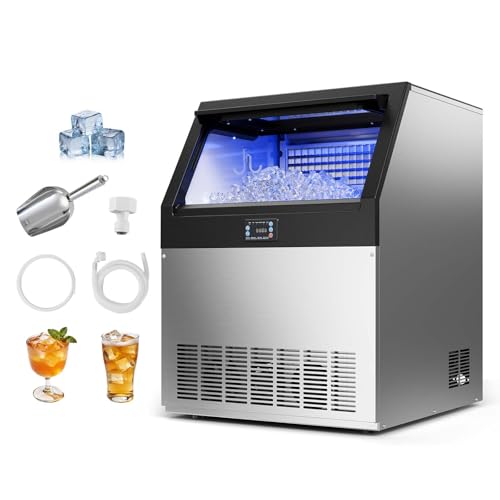
Ice is an ingredient, not an afterthought. Every cube that drops into a glass carries whatever the water carried with it — the chlorine tang from a municipal line, the flat mineral taste of a hard-water well, the faint sediment that settles out of older plumbing. When that water freezes inside a refrigerator ice maker, a countertop machine, or a plumbed-in nugget maker, the flaws do not disappear. They concentrate at the center of the cube, which is why the last sip of a drink so often tastes worse than the first. An inline water filter sits quietly on the small line feeding the ice maker, and it is one of the cheapest, least glamorous, most effective upgrades a kitchen can get.
This guide may earn an affiliate commission when you buy through links on this page, at no extra cost to you. That support keeps our kitchen research and guides free to read, and it never changes which products we include or how we describe them.
We looked at inline filters built specifically for refrigerator and ice maker water lines — the slim cartridges that splice into a quarter-inch line behind the fridge or under a sink — and compared them on the things that actually decide whether you will be happy six months from now: what the media inside removes, how the fittings behave under real household pressure, how much flow the ice maker loses, and how honestly the change interval matches real-world use. Six filters earned a place below. They are not interchangeable, and the right one depends on whether your problem is taste, scale, sediment, or a countertop machine with no filter of its own.
In this guide
Quick picks: best inline water filters for ice makers
| # | Product | Where to buy |
|---|---|---|
| 1 | 3M Aqua-Pure AP717 | Check on Amazon |
| 2 | Culligan IC-100A | Check on Amazon |
| 3 | EcoPure EPINL30 | Check on Amazon |
| 4 | GE GXRTQR | Check on Amazon |
| 5 | iSpring ICEK | Check on Amazon |
| 6 | Waterdrop Inline Filter | Check on Amazon |
Why ice exposes bad water faster than a glass does
Pour a glass of tap water and most people taste it once, briefly, diluted by everything else in the drink. Ice works differently. As water freezes in a tray or on an evaporator plate, dissolved minerals and gases are pushed ahead of the freezing front and trapped in the last part of the cube to solidify. That is the white, cloudy core you see in home-frozen cubes, and it is the most concentrated sip in the glass. When the cube melts into coffee, lemonade, or a good bourbon, it releases that concentrated center slowly, so off-flavors arrive gradually and linger. Clear, well-filtered water freezes into a harder, slower-melting cube with a neutral taste, which is why bars that care about drinks start with water, not with the spirit.
There is a second, less visible reason to filter: the machine itself. Ice makers are small, precise appliances with narrow water passages, a solenoid inlet valve with a fine screen, and an evaporator or mold where minerals deposit every single cycle. Hard water leaves calcium and magnesium behind as scale, and scale is cumulative. It coats the evaporator plate so cubes release slowly or stick, it narrows the inlet so harvests get smaller, and it insulates heating elements on machines that use a brief warming cycle to drop the cubes. Manufacturers quietly assume reasonably soft, clean water. Feed a machine unfiltered hard water for two or three years and the repair bill that follows usually costs many times what a decade of inline cartridges would have.
Sediment matters too, especially after any plumbing work in the house or street. A burst of rust or grit that a faucet aerator shrugs off can lodge in an ice maker inlet screen and starve the machine, producing hollow, undersized cubes that look like a mechanical failure but are really a plumbing one. A basic inline cartridge with sediment capability is cheap insurance against that whole category of service calls.
What an inline filter can and cannot do
Most ice maker inline filters use activated carbon, sometimes blended with a sediment wrap or a scale-inhibiting media. Carbon is excellent at the jobs that matter most for ice: it adsorbs chlorine and chloramine byproducts that make cubes smell like a swimming pool, it strips many of the organic compounds behind musty or earthy tastes, and it polishes the water so cubes freeze clearer. A sediment stage catches rust, sand, and pipe scale before they reach the inlet valve. Some cartridges add polyphosphate or a similar inhibitor that keeps dissolved hardness from bonding to the evaporator as readily — it does not soften the water, but it slows the crust.
Be clear about the limits, because marketing rarely is. A standard inline carbon cartridge does not meaningfully remove dissolved minerals, so it will not turn very hard water soft or drop the total dissolved solids to near zero the way a reverse osmosis system does. If your cubes are cloudy mainly because of high mineral content, a carbon filter improves taste a great deal and clarity somewhat; true glass-clear, directional-freeze style cubes also depend on the machine and the water’s mineral load. An inline filter also is not a purifier: unless a specific model is independently certified for cyst or lead reduction, do not count on it for safety-critical contaminant removal. Its job is better ice and a longer-lived machine, and at that job it is very good.
One more expectation to set: flow. An ice maker fills its mold in seconds through a small valve, and a restrictive filter — especially a clogging one near the end of its life — can stretch that fill or shrink it. Most healthy cartridges pass water freely enough that the machine never notices. The problems start when a filter is left in place for years, slowly loading with sediment until the ice maker is effectively drinking through a straw. Nearly every “my ice maker suddenly makes tiny cubes” story that ends with a filter has that shape. The fix is boring: change the cartridge on schedule, which is why honest change intervals feature so heavily in the picks below.
What to look for in an inline filter for an ice maker
Filter media and what it targets
Read past the word “filter” and ask what is inside. Granular activated carbon is the workhorse: generous carbon volume generally means better taste reduction and a longer useful life, because there is more surface area to exhaust. Carbon block media packs the carbon tighter, adding finer sediment capture at some cost to flow. A blended cartridge that pairs a sediment pre-layer with carbon is the safer all-rounder for older homes, where rust and grit arrive uninvited. If scale is your main enemy — white crust on the evaporator, cubes that stick — look for a cartridge that adds a scale inhibitor and says so plainly. If your complaint is purely a chemical taste on city water, a good carbon cartridge without extras is simpler and often cheaper to keep replacing.
Fittings: compression, push-fit, and the leak question
More inline filter misery comes from fittings than from filtration. The classic setup uses compression fittings that bite onto a quarter-inch copper or plastic line; installed with patience and a firm hand, they are dependable for years. Push-fit (quick-connect) fittings are faster and friendlier, especially in the cramped, half-dark space behind a refrigerator, but they demand a clean, square cut on the tubing and a fully seated insertion — a tube pushed in almost all the way is a slow leak waiting for a holiday weekend. Some cartridges ship with both styles or with built-in push-fit ports on the body, which removes two joints from the system entirely. Whatever style you choose, plan the install so the cartridge sits somewhere you can see and reach: a filter you cannot inspect is a filter you will forget, and a forgotten filter eventually becomes either a clog or a leak.
Capacity claims and honest change intervals
Manufacturers state capacity in gallons and in months, and the months number is the one to obey. A cartridge rated for a large gallon figure in a household that only feeds an ice maker might take years to reach that volume — but carbon media should still be replaced on a time schedule, because a damp cartridge sitting in a warm utility space does not age gracefully, and taste performance fades long before the gallon counter runs out. For most households, changing the ice maker filter every six to twelve months depending on the model is the rhythm that keeps cubes tasting clean. If your water is hard or sediment-heavy, lean toward the shorter end. Write the install date on the cartridge body with a marker the day you fit it; memory is not a maintenance system.
Flow rate and ice maker fill behavior
Inline cartridges publish a service flow figure, and for an ice maker almost any healthy cartridge exceeds what the inlet valve asks for. What matters more is how gracefully the filter ages: a design with a sediment pre-layer tends to keep flowing as it loads, while a fine, tight media can fall off a cliff. If your machine lets you hear the fill, learn its normal sound. A fill that grows longer or thinner over the months is the filter asking to be changed, weeks before the cubes themselves shrink.
Certifications and materials
Independent certification to recognized standards for material safety and for chlorine, taste, and odor reduction is a meaningful signal that a cartridge does what its box claims, and food-grade housing materials matter for something that touches drinking water around the clock. Not every good filter carries every certification, and this guide does not treat a missing badge as disqualifying — but where a model has been independently verified for the claims it makes, we say so, and where claims rest on the maker’s word alone, we say that too.
Where the filter will live
Finally, picture the actual space. Behind most refrigerators there is room for a slim cartridge lying along the line, but not much more. Under a sink there is usually space to mount a bracket, which makes changes cleaner. For a countertop ice maker fed from a saddle valve or a sink line, an accessible under-sink position beats a hidden one every time, because you will actually change it. Measure the line, confirm it is quarter-inch (the near-universal size for ice makers), and check whether you need a short length of new tubing to give the cartridge a sensible home. The best filter is the one that fits your plumbing, your water complaint, and your willingness to maintain it — in that order.
The six inline filters we would fit to an ice maker
Each pick below solves a slightly different version of the problem. One is the dependable classic for refrigerator ice makers, one is the budget-friendly workhorse, one leans into scale, one is made for easy push-fit installs, one suits high-use households and plumbed countertop machines, and one is the compact option for tight spaces. Read the trade-offs as carefully as the strengths — with filters, the compromise you accept is the one you live with for a year at a time.

3M Aqua-Pure AP717 Inline Water Filter
The Aqua-Pure AP717 is the filter that plumbers and appliance techs have reached for since long before inline filtration was fashionable, and its staying power is not nostalgia. It is a well-made cartridge from a company whose main business is filtration, built around activated carbon with a design aimed squarely at refrigerator ice makers and water dispensers. In use, its signature is consistency: chlorine taste and odor drop away cleanly, cubes come out neutral, and that performance holds across the cartridge’s service life instead of falling off early the way bargain cartridges often do.
What sets the AP717 apart in a line of similar-looking white cylinders is build quality you can feel. The housing is rigid, the threads and fitting surfaces are cleanly finished, and it tolerates the pressure cycling of a household line — water hammer from a washing machine valve, the daily on-off of the ice maker itself — without complaint. For a component that will sit pressurized and forgotten behind a refrigerator for a year, that sturdiness is not a luxury. It is the whole point.
Strengths. Taste and odor reduction is this cartridge’s home turf: city water that made cubes smell faintly of the treatment plant comes out of the AP717 tasting like water and nothing else. It handles sediment respectably for a carbon-focused design, protecting the inlet valve screen from the everyday grit of an older home. The cartridge has a long track record in exactly this application, which means its real-world lifespan is well understood — households routinely get the full stated service interval with ice that still tastes clean at the end of it. It also plays well with both fridge ice makers and plumbed countertop machines, since its flow characteristics suit the short, modest fills those machines make.
Trade-offs. The AP717 traditionally uses compression-style connections rather than tool-free push fittings, so installation asks for a little more care: a square cut, a properly seated ferrule, and a patient tightening hand. First-timers can absolutely do it, but it is a twenty-minute job done carefully rather than a five-minute job done casually. It is also a taste-and-sediment filter, not a scale solution — if your core problem is a crusty evaporator and cubes welded into their mold, this cartridge improves the water without directly attacking hardness deposits, and you may want to weigh the scale discussion further down this guide before deciding. Finally, it sits at the more premium end of this category, which is fair for its build but worth knowing if you maintain several machines.
Who it suits. Choose the AP717 if you want the fit-and-forget classic: a refrigerator ice maker on municipal water, a household that notices chlorine in its drinks, or anyone who has been burned by a flimsy no-name cartridge and wants the dependable option. It is also the pick we would hand a careful DIYer who is comfortable with compression fittings and wants to do the job once, properly. If your water is kind and your complaint is taste, this is the benchmark the rest of the list is measured against — plan on a year of unremarkable, exactly-right ice when you check price on Amazon.
Check price on Amazon: 3M Aqua-Pure AP717

Culligan IC-100A Inline Icemaker and Refrigerator Filter
Culligan built its name on household water, and the IC-100A is its straightforward answer for ice makers and refrigerator dispensers: a slim inline cartridge designed to reduce chlorine taste and odor along with the sediment that shortens an ice maker’s patience. It is one of the most widely available cartridges in this category, stocked and understood everywhere, and there is real value in that ordinariness — when change time comes, you will never struggle to find the replacement or the instructions.
The IC-100A’s character is practical rather than premium. The cartridge does its work quietly, cubes taste clean, and the whole proposition is priced and built for households that view a filter as a consumable, not a hobby. For a first inline filter — the one you fit after realizing your fridge has no internal cartridge, or after a tech suggests one during a repair — it is a sensible, low-drama starting point.
Strengths. Availability is a genuine strength: this is the cartridge most likely to be on a shelf near you and the one most appliance advice threads assume you have. Its taste performance on chlorinated city water is solid and immediate; the pool-water note in the cubes goes away. The slim body fits the tight run behind most refrigerators without rerouting the line, and the cartridge’s modest demands on flow mean ice makers fill normally throughout its life when it is changed on schedule. For households on a budget who still want a name-brand cartridge from a water-treatment company rather than a mystery import, the IC-100A threads that needle well.
Trade-offs. The honest compromise here is capacity and refinement. In hard or sediment-heavy water, this cartridge loads faster than the premium picks, and the household that stretches it past its interval will taste the fade — cubes slowly regain a municipal flatness that creeps up rather than announcing itself. Its sediment handling is adequate rather than generous, so homes with visibly gritty water may find it clogging toward the end of its life, with fill times stretching before taste noticeably changes. The housing and fittings are functional rather than overbuilt; treat the connections gently during changes and avoid overtightening, which is good advice everywhere but especially here.
Who it suits. The IC-100A suits the pragmatic household: a standard fridge ice maker on city water, a rental where you want better ice without a project, or a first-time inline filter buyer who wants a known name and an easy replacement routine. It also makes sense as the cartridge you keep a spare of, precisely because spares are easy to find. Mark the change date on the body, keep the interval honest, and it will repay you with clean-tasting cubes — when you are ready to order its replacement and want to buy the change ahead so the swap never gets postponed, check price on Amazon.
Check price on Amazon: Culligan IC-100A

EcoPure EPINL30 Inline Refrigerator and Icemaker Filter
EcoPure sells water treatment through the big home-improvement channels, and the EPINL30 is its inline cartridge for refrigerators and ice makers — a universal-fit design meant to work with any brand of fridge, which matters more than it sounds. A large share of refrigerators, especially older and budget models, ship without any internal filter at all, and their owners assume better ice requires a new appliance. The EPINL30 is the standing rebuttal: splice it into the feed line and the plainest fridge in the world starts making filtered ice.
Its design brief is breadth. The cartridge targets the common complaints — chlorine taste and odor, sediment, and the general flatness of untreated tap water — and it is made to be installed by a homeowner with basic tools in the course of a Saturday morning. EcoPure’s wider ecosystem of softeners and filters also means the brand’s guidance on change intervals is written for real households rather than laboratory conditions.
Strengths. Universality leads: if your refrigerator lacks a filter bay, or takes an expensive proprietary cartridge you resent buying, an inline like this one bypasses the whole problem and usually costs less per year than the factory option. Taste improvement on treated municipal water is clear and quick, and the cartridge’s sediment capability gives the ice maker’s inlet valve a layer of protection it otherwise never gets. Installation is well within homeowner territory, and the cartridge’s size tucks behind most fridges without drama. For households pairing it with an EcoPure softener upstream, it is the natural finishing stage for the ice line specifically.
Trade-offs. A universal cartridge is, by definition, not optimized for any single machine, and the EPINL30’s performance profile is balanced rather than best-in-class at any one thing: the scale-focused and premium taste picks on this list each beat it at their specialty. Its interval discipline matters — on hard water, taste fade arrives if you stretch the change, so this is a cartridge to swap on the calendar, not on symptoms. And like most inline cartridges at its level, it does not soften water or remove dissolved minerals, so extremely hard well water will still leave its mark on the evaporator over the years, just more slowly and with much better-tasting cubes in the meantime.
Who it suits. Pick the EPINL30 if your fridge has no filter of its own, if you are tired of paying for a proprietary in-fridge cartridge, or if you want one dependable inline that can move with you from appliance to appliance. It is a particularly good answer for a second fridge — the garage or basement unit whose ice everyone uses at parties and nobody maintains. Give that forgotten machine a cartridge and a change date written on its side, and start it on a routine its ice has never had when you check price on Amazon.
Check price on Amazon: EcoPure EPINL30

GE GXRTQR SmartWater Inline Water Filtration System
GE Appliances sells an enormous number of refrigerators, and the GXRTQR exists for the many owners whose model has no internal filter: it is GE’s own inline filtration system for ice makers and dispensers, designed to reduce lead, chlorine taste and odor, asbestos, and other contaminants beyond the basic taste cartridges. That broader reduction list is the reason it earns its own slot here — it is the pick for households whose concern runs past flavor into what is actually in the water.
Because it comes from the appliance maker itself, the GXRTQR also carries a certain reassurance for owners of GE fridges: the flow and pressure behavior were specified by the same company that built the ice maker drinking through it. In practice it behaves like a grown-up taste cartridge with a wider remit, and it has been a default recommendation in GE’s own documentation for unfiltered models for years.
Strengths. The contaminant brief is the headline: where the simpler cartridges on this list promise taste, odor, and sediment improvement, the GE system is independently verified for a longer list that includes lead reduction, which matters in homes with older service lines or solder. Taste performance is correspondingly strong — chlorine disappears, and water through the dispenser tastes clean enough that people often end up drinking more of it, not just freezing it. The cartridge’s service interval is generous for the category when water quality is decent, and its compatibility story is simple for GE owners while remaining usable on other brands’ lines, since the connection is the same quarter-inch world as everything else here.
Trade-offs. Broader filtration usually means a somewhat denser media bed, and households with marginal water pressure or a long, restrictive run to the fridge should be a little more attentive: a healthy cartridge flows fine, but as it loads, fill behavior is where you will notice it first. The GXRTQR also tends to cost more than the basic taste cartridges, which is the fair price of the extra verified reductions but makes the “keep a spare on the shelf” habit slightly pricier. And if your water is already clean and your only complaint was a mild chlorine note, this system is arguably more filter than your ice needed — the simpler picks will make you just as happy.
Who it suits. Choose the GXRTQR if you own an unfiltered GE refrigerator, if your home’s plumbing age makes lead a live concern, or if the same line feeds both the ice maker and a drinking dispenser and you want one cartridge doing verified duty for both. It is the cautious household’s pick: less about squeezing the last nuance of taste and more about documented reduction from the appliance’s own maker. Fit it, date it, and let it work — when the first cartridge goes in, make sure the replacement rhythm starts with the genuine article and check price on Amazon.
Check price on Amazon: GE GXRTQR
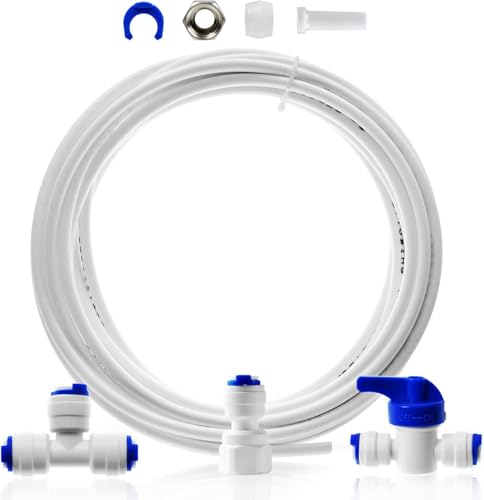
iSpring ICEK Inline Water Filter for Refrigerator and Ice Maker
iSpring made its reputation with reverse osmosis systems, and the ICEK is its compact inline answer for the refrigerator line — notable because it is frequently sold as a complete kit with the tubing and fittings a first-time installer actually needs, rather than a bare cartridge and a shrug. It is built for the two jobs ice cares about: cleaning up taste with carbon filtration, and doing it at a flow that keeps ice makers and dispensers behaving normally.
The kit framing matters. The most common failure in DIY inline installs is not the cartridge, it is the missing five-dollar fitting discovered at nine in the evening with the fridge pulled out and the water off. A package that anticipates the whole job — cartridge, line, connectors — respects the installer’s Saturday, and it is a large part of why this pick has such a following among first-time filter owners and people plumbing water to countertop ice makers that arrived with no filtration at all.
Strengths. Convenience leads: push-style connections make the physical install quick and forgiving, and the included hardware covers the typical refrigerator and countertop-machine scenarios without a second trip to the store. Taste results are exactly what carbon promises — chlorine and stale notes gone, cubes freezing neutral and clear enough that drinks stop picking up a background flavor as they dilute. iSpring’s background in larger systems shows in the details: clear stated capacities, sensible change guidance, and a cartridge that holds its flow well through its service life, which keeps plumbed nugget and bullet-ice machines cycling at their normal pace.
Trade-offs. The kit’s generosity cuts both ways: you may pay for tubing and fittings you already own if you are replacing an existing inline, making the bare-cartridge picks marginally leaner for repeat changes. Push-fit convenience also demands the discipline described earlier — square cuts, fully seated tubes — because the same ease that makes installation fast makes a half-seated tube easy to overlook. And as a taste-focused carbon cartridge, it does not add scale inhibition, so very hard water households fighting evaporator crust should still look at the scale-leaning pick on this list or pair filtration with the descaling routine their machine’s manual describes.
Who it suits. The ICEK suits first-time installers, owners of countertop ice makers being plumbed in for the first time, and anyone who values a complete box over a scavenger hunt. It is also a tidy solution for a fridge and a nearby coffee station sharing one filtered line philosophy — clean water at the point where drinks are actually made. If your project starts from bare copper and good intentions, start here: order the kit, set aside half an hour, and do it before the weekend you plan to pull the fridge out — check price on Amazon.
Check price on Amazon: iSpring ICEK

Waterdrop Inline Water Filter for Refrigerator and Ice Maker
Waterdrop has become one of the most recognizable names in home filtration by making cartridges that are easy to buy, easy to fit, and easy to replace, and its inline refrigerator and ice maker filter follows that formula faithfully. It is a slim carbon cartridge aimed at chlorine taste, odor, and sediment, designed to disappear behind the fridge and be swapped on a simple rhythm — the kind of product that succeeds by removing every excuse not to have a filter at all.
What distinguishes it in daily life is the replacement experience. Inline filters fail socially before they fail mechanically: people postpone changes because the last one was fiddly. Waterdrop’s design language — clear orientation, quick connections on common variants, and packaging that tells you the interval in plain language — is built to keep the habit intact, and for ice quality the habit is the product.
Strengths. Ease is the headline strength: installation is among the least intimidating in this roundup, and the swap at change time is a few minutes of work, which means it actually happens on schedule in real households. Taste cleanup on municipal water is prompt and noticeable, and the cartridge’s flow behavior suits ice makers well, with fills staying normal across its life when changed on time. Its slim profile is also genuinely useful in the shallow space behind many modern fridges, where a bulkier cartridge body can end up pinched against the wall or the line — a quiet install problem this design mostly avoids.
Trade-offs. The convenience-first design means a somewhat smaller media volume than the largest cartridges here, so heavy-use households — big families cycling a fridge ice maker constantly, plus a countertop machine on the same line — may find themselves changing it at the shorter end of its interval to keep taste at its best. Its brief is taste and sediment, not scale and not the wider verified contaminant list of the GE pick, so it should be chosen for the job it claims rather than stretched into others. Finally, with several similar-looking variants in the maker’s catalog, take a moment when reordering to match the exact model you installed; the right cartridge is the one whose fittings match what is already on your line.
Who it suits. Choose the Waterdrop if your priority is a filter you will genuinely maintain: renters improving a landlord’s fridge, busy households that need the change to take minutes, and anyone whose current situation is “no filter at all because the old one was a nuisance.” It is the habit-forming pick, and for ice that is tasted every day, a good filter changed on time beats a great filter changed late — so fit it, put the next change in your calendar before the first cube drops, and check price on Amazon.
Check price on Amazon: Waterdrop Inline Filter
Side-by-side comparison
The table below summarizes the picks qualitatively. There are no scores here on purpose: the right choice is the one whose strengths line up with your water and your machine.
| Filter | Main strength | Media focus | Install style | Best for |
|---|---|---|---|---|
| 3M Aqua-Pure AP717 | Consistent taste performance and sturdy build | Activated carbon with sediment handling | Compression fittings, careful install | Fit-and-forget quality on city water |
| Culligan IC-100A | Availability and no-drama ownership | Carbon for taste, odor, and sediment | Slim body for tight fridge runs | Budget-minded first inline filter |
| EcoPure EPINL30 | Universal fit for unfiltered fridges | Balanced carbon and sediment | Homeowner-friendly universal setup | Fridges with no internal cartridge |
| GE GXRTQR | Broader verified contaminant reduction | Carbon with extended reduction list | Standard quarter-inch line install | Older plumbing and dual ice/dispenser duty |
| iSpring ICEK | Complete kit for first-time installs | Carbon taste filtration, steady flow | Push-style connections, hardware included | Countertop machines and new plumbing runs |
| Waterdrop Inline | Easiest changes, habit-friendly design | Carbon for taste, odor, and sediment | Quick connections, slim profile | Renters and busy households |
Installing an inline filter without flooding the kitchen
Every install follows the same calm sequence. First, shut off the water to the ice maker line — usually a small valve under the sink, behind the fridge, or in the basement below — and dispense or dump the pressure by running the dispenser or opening the line carefully into a towel-lined bowl. Pull the refrigerator out far enough to work without kinking the line, and take a photo of the existing run before you touch anything; future you, mid-install, will be grateful.
Cut the line where the cartridge will live, choosing a spot you can reach at change time, not merely the spot closest to the fridge. Make the cut square with a proper tubing cutter rather than a utility knife, because angled cuts are the leading cause of weeping push-fit joints. Fit the cartridge in the direction of flow — there is always an arrow, and installing one backwards is a rite of passage best skipped — then seat each connection fully: ferrules snug on compression fittings, tubes pushed home until they stop on push-fits, with a gentle tug to confirm.
Before pushing the fridge back, turn the water on slowly and watch every joint for a full minute, then again after the ice maker has cycled a few times and line pressure has settled. Run the first batch of ice to the sink rather than the glass: a new carbon cartridge sheds harmless fine particles at first, and the inaugural cubes can look gray-flecked. Dump the first full bin, wipe the cartridge date onto its body with a marker, and slide the fridge home with enough line slack that the cartridge is not pinched. Total time for most kitchens is well under an hour, most of it spent cleaning the dust bunnies the fridge was hiding.
One last habit separates a dry install from a damp discovery: check the joints again the next day. Most fitting weeps are not dramatic failures but slow seeps that appear only after the line has sat at full pressure overnight and the fridge has rolled back against the wall, shifting the run slightly. A dry paper towel pressed around each connection is a better leak detector than a glance — it shows moisture you cannot see on a fitting in shadow. Thirty seconds with a towel on day two is the cheapest insurance in this entire guide, and it is the step professionals build into the job even when the first inspection looks perfect.
Replacement rhythm: the whole secret, such as it is
If this guide has a thesis, it is that inline filters succeed or fail on the calendar. Carbon does not stop working all at once; it fades, and because ice is tasted diluted and cold, the fade hides until one day the cubes simply taste like the tap again and scale has been quietly re-establishing itself for months. The manufacturers’ intervals — commonly six months for compact cartridges, up to a year for larger ones under gentle conditions — assume average water. Households with hard water, visible sediment, or a machine that makes ice for a crowd should shorten, not stretch.
Build the reminder into something you already do: the same week you change a furnace filter or swap a smoke alarm battery, change the ice line cartridge. Keep the spare bought ahead, because a change that requires a shopping trip becomes a change deferred. And when you swap, read the old cartridge: heavy brown loading tells you sediment is your story and a pre-filter may be worth adding upstream; a clean cartridge with faded taste tells you chlorine load is high and the interval, not the product, needs adjusting. The filter is a diary of your water, if you glance at it on the way to the bin.
Matching the filter to your water supply
The same cartridge behaves like three different products depending on what feeds it, so it is worth a moment on the three supplies most kitchens draw from. Municipal water arrives treated, and its signature problem is the treatment itself: chlorine or chloramine dosed to keep the water safe on its journey becomes, in your glass, a faint chemical note that freezing concentrates. Carbon is superb at this job, which is why every pick on this list handles city water well and why city households can choose mostly on fittings, interval, and budget. If your city uses chloramine rather than free chlorine, know that it is a little more stubborn for carbon to reduce; a cartridge with generous carbon volume, changed on time, handles it better than a minimal one changed late.
Well water writes its own rules. It usually carries no chlorine, so taste complaints shift to earthiness, sulfur notes, or a general flatness, and it often brings sediment and hardness along uninvited — iron staining in sinks is the visible cousin of what is happening inside your ice line. For a well household, the sediment side of a cartridge stops being a bonus and becomes the main event: choose a design with a real sediment stage, expect to change it at the shorter end of every interval, and consider a whole-house sediment filter upstream if the inline cartridge keeps loading early. That pattern — an inline filter dying young, repeatedly — is information about your water, not a defect in the cartridge.
Hard water from either source is the third case, and the one where expectations need the most care. Dissolved calcium and magnesium pass through carbon untouched, so no cartridge here will soften your water; what filtration can do is remove the sediment that gives scale a foothold, improve taste so the mineral character is less muddled, and, in designs that include an inhibitor, slow the rate at which hardness plates onto the evaporator. The honest hard-water strategy is layered: filter for taste and sediment, descale the machine on the maker’s schedule, and if scale is destroying appliances across the house, solve it at the house level with softening and let the inline cartridge go back to being a taste filter. Expecting a twenty-dollar cartridge to do a softener’s job is how people conclude, wrongly, that filtration does not work.
A note for plumbed countertop and undercounter machines
Everything above was written with refrigerator ice makers in mind, but the fastest-growing audience for inline filters owns something else: a plumbed countertop nugget maker, or a built-in undercounter machine making clear cubes for a home bar. These appliances drink from the same quarter-inch line and suffer the same water, with two differences worth planning around. First, throughput: a nugget maker serving a household of ice chewers can pass several times the water of a fridge dispenser, so cartridges age by gallons faster than the calendar suggests — track both clocks and obey whichever arrives first. Second, warranty: several makers of undercounter clear-ice machines state plainly that scale damage from unfiltered hard water is not a manufacturing defect, which turns a modest cartridge into the cheapest warranty protection you will ever buy.
Placement also changes. An undercounter machine usually offers a serviceable cavity behind or beneath it where a cartridge can be mounted upright on a bracket — take that option, because a filter lying loose on a cabinet floor migrates, kinks lines, and hides its own slow leaks. For a countertop machine fed from a sink line, put the cartridge under the sink where you will see it weekly rather than behind the machine where you will see it never. In both cases, leave enough slack line to pull the cartridge out for its change without disconnecting anything else; the five minutes that saves is the difference between a change done on schedule and a change deferred to a season that never comes.
Reading your ice: a short troubleshooting guide
Ice is a diagnostic tool that refills itself daily, and most of its messages point back to the water or the filter rather than the machine. Cloudy centers with a chemical taste say the supply’s chlorine is arriving unfiltered — either there is no cartridge, or the one fitted is exhausted. Cubes that have shrunk over a month, or turned hollow and fragile, usually mean restricted flow: check the filter’s age first, then the inlet screen, before suspecting the machine. A sudden change right after street or house plumbing work is sediment until proven otherwise, and it is the strongest argument for never running an ice maker unfiltered in an older home.
Off-odors deserve their own word, because owners often blame the water for what the bin did. Ice is a sponge for its environment: cubes stored for weeks near strong-smelling food absorb those odors in the bin, and no filter upstream can prevent it. If fresh cubes taste clean and older ones taste like the freezer, the fix is turnover — dump stale ice, wash the bin, and let the machine rebuild its supply — not a new cartridge. Conversely, if even fresh cubes carry a musty note on well water, that is the filter asking for help, and earthy tastes arriving earlier each cycle are a reliable sign the interval needs shortening.
White flakes in a glass of meltwater are the last common report, and they are almost always mineral: as cubes melt, the calcium that was suspended in the frozen water precipitates into visible flecks. They are harmless and they are information — your water is hard enough that scale management, not taste, should drive your choices. A filter still earns its place in that kitchen by protecting the inlet and improving flavor, but pair it with the machine’s descaling routine and the flakes will tell you, cycle by cycle, whether the routine is keeping up.
Frequently asked questions
Will an inline filter make my ice completely clear?
It will make it noticeably clearer, especially if chlorine and sediment were part of your cloudiness, but complete glass-like clarity also depends on dissolved minerals and on how your machine freezes. Refrigerator ice makers freeze from the outside in a mold, trapping whatever the water holds at the cube’s center; lowering what the water holds shrinks that cloudy core, sometimes dramatically. If your water is very hard, expect taste to improve fully and clarity to improve substantially rather than absolutely — and know that the slower scale buildup is quietly the bigger win.
Can one inline filter feed both the ice maker and the water dispenser?
Yes — in most refrigerators both draw from the same feed line, so a single inline cartridge placed before the split serves both, which is one of the quiet bargains of inline filtration: the drinking water improves along with the ice. Place the cartridge where the whole line passes, typically behind the fridge or under the sink before any tee, and size your expectations accordingly: a line feeding both ice and daily drinking water works the cartridge harder, so lean toward the shorter end of its change interval.
How do I know the filter is exhausted before the cubes shrink?
Taste is the earliest instrument you own: fill a glass with melted ice from the current bin and sip it at room temperature, where flavors are harder to hide. If the municipal tang is back, the carbon is spent regardless of what the calendar says. The second signal is fill behavior — an ice maker that sounds like it is filling longer, or cubes trending smaller and hollower across a few cycles, is often drinking through a loaded cartridge. Both signals say the same thing: change it now rather than diagnosing the machine.
My countertop ice maker has no water line. Can I still use an inline filter?
Only if you plumb it — inline cartridges need a pressurized line to push water through the media, so a pour-in reservoir machine cannot use one directly. The workaround many owners choose is to filter the fill water instead: a faucet filter or pitcher for the water you pour in delivers most of the taste benefit and reduces what the machine must evaporate and deposit. If you are switching to a plumbed countertop model, the iSpring kit pick above exists largely for your situation, since those machines typically arrive with no filtration of their own.
Does an inline filter remove the need to clean the ice maker?
No, and believing so is how machines get funky. Filtration reduces what arrives — chlorine, sediment, some scale potential — but the bin, chute, and water-contact surfaces still live in a cold, damp environment that rewards an occasional cleaning with the maker’s recommended solution. Think of the filter as reducing the rate of everything you clean: less scale to dissolve, less sediment to flush, less off-taste baked into the ice between cleanings. Filter on schedule and clean on schedule, and the machine will outlast the kitchen around it.
The bottom line
Six cartridges, six slightly different promises. The 3M Aqua-Pure AP717 is the benchmark for consistent taste and build. The Culligan IC-100A is the easy, everywhere-available workhorse. The EcoPure EPINL30 gives unfiltered fridges a universal route in. The GE GXRTQR brings the broadest verified reduction list for cautious households. The iSpring ICEK wraps the job in a first-timer-friendly kit, and the Waterdrop makes the replacement habit nearly effortless. Any of them, changed on time, will make ice that disappears into a drink the way ice should — present in the temperature, absent in the taste.
Pick by your water’s actual complaint, write the date on the cartridge, and let the quietest appliance upgrade in the kitchen do its work one clear cube at a time.