Disclosure: This article contains affiliate links. If you buy through links on this page, we may earn an affiliate commission at no extra cost to you.
A hand operated can opener is one of those tools you only think about when it fails you. The wheel starts to skip, the handle flexes in your fist, and suddenly a simple can of black beans turns into a wrestling match with a jagged lid balanced on top of the food. A good manual opener, by contrast, disappears into the job: it clamps on, turns smoothly, and leaves an edge you can touch without thinking twice. The six openers below were chosen because each one solves a slightly different version of that everyday problem, whether your priority is a smooth side cut, a crank that arthritic hands can manage, or a workhorse that shrugs off years of tomato sauce and dishwasher cycles.
We focused on manual openers only. Electric models have their place, and we touch on that comparison later, but a hand operated can opener never needs an outlet, never stalls on a dented rim, and takes up a fraction of the drawer space. Within the manual category there is more variety than most people realize: traditional top-cut openers that slice through the lid just inside the rim, side-cut openers that uncrimp the seam and lift the whole lid away, and hybrid designs that try to give you the clean edge of the second style with the familiar feel of the first. Cutting style is the single decision that shapes everything else about how an opener feels and how safe its edges are, so it gets its own deep dive further down.
Every pick here is a real, widely sold model from an established kitchen brand, and each one earned its spot for a distinct reason. There is no filler pick and no ranking based on anything other than how the tool behaves at the counter: how it bites the rim, how much hand strength a full turn demands, how the edge feels afterward, and how the mechanism holds up after months of acidic foods and imperfect washing habits.
Quick comparison: six manual can openers at a glance
The table below summarizes the character of each pick in plain terms. It is deliberately qualitative, because the right opener depends on your hands, your cans, and your tolerance for washing a tool by hand, not on a spec sheet.
| Model | Cut style | Best for | Grip and effort | Care notes |
|---|---|---|---|---|
| Zyliss Lock N’ Lift | Top cut | Everyday reliability with a locking head | Large soft handle, moderate squeeze | Hand wash recommended, releases for cleaning |
| OXO Good Grips Smooth Edge | Side cut | Finger-safe edges and lid pliers | Thick cushioned handles, steady turning | Dishwasher tolerant, dry the wheel |
| Kuhn Rikon Auto Safety LidLifter | Side cut | Touch-free lid removal, minimal hand contact | Compact body, low clamping force | Wipe or hand wash, small footprint |
| Swing-A-Way Portable | Top cut | Old-school durability and big cans | Long handles, higher squeeze effort | Hand wash and dry to protect the finish |
| EZ-DUZ-IT Deluxe | Top cut | Budget-friendly heavy steel performance | Slim handles, firm grip needed | Hand wash only, carbon steel wheel |
| Nogent Super Kim | Top cut | Tiny drawers, travel, backup duty | Small wing key, more turns per can | Rinse and dry, tempered steel blade |
how to choose an air fryer for a small kitchen
In this guide
What to look for in a hand operated can opener
Cut style: inside the rim or around the seam
A traditional top-cut opener rides its cutting wheel horizontally through the top of the lid, just inside the rim. It is the style most of us grew up with, it works on virtually any can, and it leaves the lid small enough to drop into the can for disposal, which some people prefer. The trade-off is the edge: the cut lid has a sharp perimeter, and the can itself keeps a thin, sometimes ragged lip. A side-cut opener works differently. Its wheel runs around the outside of the seam and uncrimps the factory seal, so the entire lid lifts off with its smooth rolled edge intact. The edge left on the can is the rounded rim itself, which you can run a fingertip across, and the lid can even sit back on top as a loose cover for a half-used can of coconut milk going into the fridge. Side-cut models ask for a slightly different technique and can feel vague the first few times, because there is no satisfying crunch as the wheel bites. Once the motion clicks, most people find them just as fast.
Handle shape and turning effort
Opening a can is a two-part effort: squeezing the handles to keep the wheel engaged, and turning the knob to drive it around the rim. For cooks with strong hands, almost any opener passes. For anyone with arthritis, carpal tunnel symptoms, or simply smaller hands, the details matter enormously. Thick, slightly soft handles spread the squeeze across more of the palm. A large turning knob with real wings or a crank shape gives knuckles something to push against instead of pinching a small butterfly key. Gear ratio plays a quiet role too: openers geared for leverage need more turns but less force per turn, which is exactly the trade a sore hand wants to make. If turning a stiff knob is your main complaint, prioritize knob size and handle cushioning over every other feature, and be honest about it when choosing between the picks below.
Cutting wheel and gear materials
The wheel and the traction gear do the actual work, and their material decides how long the opener stays sharp and rust-free. Hardened stainless steel wheels resist both dulling and corrosion. Carbon steel cuts beautifully when new and is used on some beloved budget openers, but it will rust if it sits wet in a dish rack, and that rust transfers a metallic taste and eventually pits the edge. Plated finishes on handles look tidy and slow corrosion on the body, yet the wheel is the part to inspect. Whatever the material, the habit that saves any opener is the same: wash it, then dry it right away rather than leaving it to air-dry in a puddle of can liquid.
Hygiene: the part nobody thinks about
The cutting wheel rolls through whatever is on top of the can and then through the food itself on a top-cut model. Tomato juice, tuna brine, and condensed milk all end up dried onto the mechanism, and the gear teeth are excellent at hiding residue. Openers that open up, release their head, or at least expose the wheel for scrubbing are meaningfully easier to keep clean. Side-cut openers have a hygiene edge because the wheel stays outside the food, but their gear still contacts the rim and deserves a wash. A quick scrub with a bottle brush after anything sticky, plus real drying, does more for both cleanliness and rust prevention than any coating.
Can size, rim style, and awkward cans
Standard cans are easy. The test cases are the extremes: tall tomato paste tubes of cans with narrow rims, family-size cans of crushed tomatoes, and institutional #10 cans for batch cooking, food prep businesses, and big households. Long handles and a head that clamps positively help on large cans because the lid’s diameter makes the opener want to walk off the rim. Some cans have rounded or unusually thick seams that side-cut openers occasionally refuse to uncrimp; on those, a top-cut model is the reliable fallback, which is one honest reason many kitchens keep one of each style. Oval cans, like some sardine and ham tins, defeat most rotary openers and still call for a simple punch or church-key style tool, so no pick below pretends to do everything.
Storage, handedness, and small details
Drawer space is a real constraint in small kitchens, and opener footprints vary more than you would expect: a compact safety opener can be half the length of a long-handled classic. Left-handed cooks should look for designs whose knob and handles work symmetrically or are sold in a left-handed configuration, because a right-handed opener used in the left hand forces the wheel to run against its intended direction and skips constantly. A built-in bottle cap hook is a small bonus that still earns its keep at parties, and a magnet for lifting cut lids sounds trivial until you have fished a sharp lid out of tomato sauce with a fork one too many times.
The six best hand operated can openers
Top pick
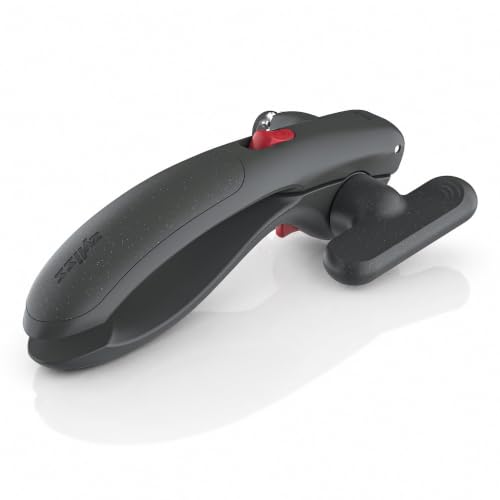
1. Zyliss Lock N’ Lift: the locking top-cutter that stays put
The Zyliss Lock N’ Lift earns the first spot because it fixes the most common complaint about traditional top-cut openers: the head slipping off the rim halfway around. Its handles lock onto the can with a firm squeeze and a small lever action, so the wheel stays engaged even if your grip relaxes for a moment. That single design decision changes the whole experience for anyone who has ever had an opener let go and splash bean liquid across the counter. Once locked, the large turning knob drives the wheel in a steady, unhurried way, and the cut itself is clean, with none of the stop-start chewing that leaves a lid attached by one stubborn sliver.
In everyday use, the Lock N’ Lift feels like the opener equivalent of a well-made pair of pliers. The handle is broad and gently contoured, filling the palm instead of digging into it, and the soft-touch material keeps it from twisting in a wet hand. The cutting wheel is stainless steel, and the head can be released and opened up for washing, which matters more than it sounds: the mechanism on this style of opener sits right at the food line, and being able to get a brush into it keeps dried sauce from building up in the gear teeth. A small magnet on the head lifts the cut lid away so your fingers never go near the sharp edge, a detail that sounds like marketing until the first time you use it on a can of chipotles in adobo.
Strengths are easy to list: the lock genuinely works, the turning action is smooth without demanding much wrist force, and the opener handles everything from small tomato paste cans to wide cans of whole tomatoes without changing its grip. It also travels well between drawers because it folds into a reasonably compact shape for a full-size opener.
Trade-offs are real but modest. The locking mechanism adds a learning step, and first-time users sometimes clamp it onto the rim at a slight angle and wonder why the first turn feels stiff. The soft handle material should not live in the bottom of a sink or go through endless dishwasher cycles; hand washing keeps it looking and feeling right. It is a mid-range opener rather than a bargain one, and cooks who specifically want the finger-safe edge of a side-cut design should look at the next two picks instead, since this remains a top cutter with a sharp lid, magnet or not.
This is the opener for the home cook who opens cans several times a week and wants one dependable tool rather than a drawer of experiments. It suits people who like the familiar top-cut motion, want insurance against slipping, and are willing to hand wash to keep it in shape. If your household includes someone who struggles to maintain a hard squeeze, the lock makes this the most forgiving top-cutter on the list. Check the current price and configuration options on Amazon before you buy, since Zyliss sells this model in a couple of handle colors and occasional bundle listings; whichever listing you choose, check price on Amazon.

2. OXO Good Grips Smooth Edge: the side-cutter with genuinely safe edges
If the sharp lid is the part of can opening you dislike most, the OXO Good Grips Smooth Edge is the pick built around your complaint. It is a side-cut opener: the wheel runs around the outside of the can and unseals the seam, so the lid comes away with its factory-rolled edge intact and the can keeps its smooth rim. You can press the lid back on as a loose cover, run a finger around the can’s edge without flinching, and drop the lid in the recycling without folding it into a napkin first. For households with kids helping in the kitchen, that difference is not cosmetic; it changes whether you hand a child the empty can at all.
OXO’s handle design is the other half of the appeal. The handles are thick, cushioned, and shaped to stay put in the hand, which is the company’s long-standing design language for a reason. The turning knob is generously sized, and the whole action feels deliberate rather than frantic: align the opener flat on top of the can, squeeze, and turn until the seam gives with a soft release. Built-in pliers at the head grip the loosened lid so you can lift it off without touching it, which keeps tuna water and tomato juice off your fingers. The first two or three cans involve a short learning curve, mostly trusting that the opener is working when you cannot see a cut happening. After that, it becomes the fastest tool here for standard cans.
Strengths: the safest edges of any pick, excellent handles for grip comfort, tidy lid removal with the pliers, and a wheel that stays outside the food, which makes cleanup quicker and the whole process feel more hygienic. The stainless wheel resists rust well, and the opener tolerates the dishwasher better than most, though drying it afterward is still the smart habit.
Trade-offs: side cutting is a technique, and some users never fully trust it, especially on cans with damaged or unusually thick rims where the seam refuses to release evenly. On the rare can it cannot uncrimp, you will wish for a top-cut backup. It is also a mid-range purchase, and its wider head takes a little more drawer room than the compact Kuhn Rikon below. People who open a lot of very large cans may prefer the leverage of the Swing-A-Way instead.
Choose the Smooth Edge if safe edges, comfortable handles, and clean lid handling top your list, and especially if younger cooks help with dinner. It is the easiest recommendation here for most households making the switch away from a dull old top-cutter. Listings vary between single openers and kitchen sets that include it, so confirm you are looking at the Smooth Edge model itself, then check price on Amazon.

3. Kuhn Rikon Auto Safety LidLifter: the compact Swiss side-cutter
The Kuhn Rikon Auto Safety LidLifter takes the side-cut idea and shrinks it. Swiss-designed and noticeably smaller than the OXO, it sits flat on top of the can, self-locks onto the rim with a light squeeze, and uncrimps the seam as you turn the knob. When you come back around to the start, the lid is free, and a pair of small integrated mini-pliers grips it so the lid never touches your fingers or the food. Nothing sharp is exposed at any point: not the lid edge, not the can rim, and not a cutting blade, because there is no blade in the traditional sense at all.
That compactness is the real story. The LidLifter is the opener you can keep in a shallow utensil drawer, an RV kitchen, a camper box, or an office kitchenette without it dominating the space. It also asks for very little clamping force, which makes it a quiet favorite among cooks whose hands tire easily but who do not want the bulk of a large ergonomic opener. The turning knob is smaller than OXO’s, yet the gearing is sensibly tuned, so a can of soup takes a few more turns rather than noticeably more effort. Because the mechanism never dips into the can’s contents, a rinse or a wipe is often all it needs after use, and its smooth body has fewer crevices for residue to hide in.
Strengths: the smallest footprint of any full performer here, genuinely touch-free lid removal, low squeeze effort, smooth edges on both lid and can, and an uncomplicated wash routine. It is also a thoughtful gift for someone setting up a first apartment, since it removes the two classic beginner frustrations, sharp lids and lids dropped into food, in one small tool.
Trade-offs: the compact body that makes it easy to store also gives you less leverage on oversized cans, and on a big #10 can the job becomes a slow patience exercise. The knob will feel small to cooks with large hands, and like every side-cutter it can struggle with bent rims or the occasional oddly seamed can. It sits in the mid-range for price, which is fair for the design but worth knowing when a basic top-cutter costs far less. It is not the opener for a household that opens institutional cans every week.
Pick the LidLifter if drawer space is tight, if you want the cleanest and most hands-off lid removal of the group, or if gentle clamping matters more to you than raw leverage. It is a favorite in smaller kitchens for good reason. Kuhn Rikon sells several color options for this model, and the listings are otherwise identical, so choose the color you like and check price on Amazon.
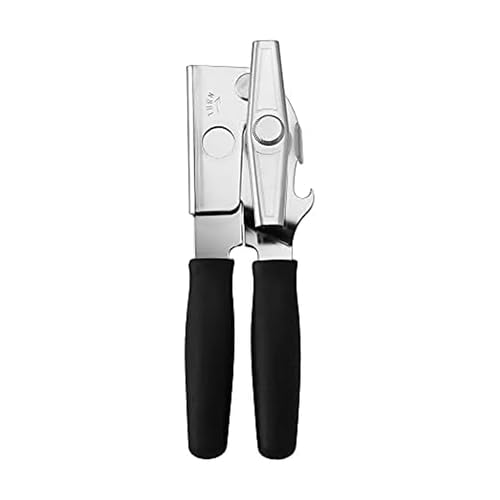
4. Swing-A-Way Portable: the long-handled classic that tackles big cans
Swing-A-Way built its name on wall-mounted openers that lived in diners and farmhouse kitchens for decades, and the Portable model carries the same DNA in a handheld form: a long, all-metal body, a hardened cutting wheel, and a geometry that gives you leverage when a can fights back. This is the opener to reach for when the job involves the big cans, the family-size crushed tomatoes, the food-service #10 cans for a church supper or a weekend of batch cooking, where shorter openers start to feel toy-like and walk off the rim.
The leverage comes from length. The handles are longer than any other pick here, so your squeeze translates into clamping force with less strain, and the wheel bites positively and stays bitten. The cutting action is the classic top cut, decisive and familiar, and the crank-style turning knob keeps your knuckles clear while you work through a long circumference. There is a bottle opener hook built into the head, in keeping with the tool’s old-school, do-everything character. In a household that cans, freezes in bulk, or cooks for a crowd, this is the opener that never feels outmatched.
Strengths: unmatched leverage on large cans, a simple mechanism with very little to go wrong, a cutting wheel that stays sharp through heavy use, and a design that has been proven over a genuinely long production history. If you learned to open cans on a Swing-A-Way mounted under a cabinet, the portable version will feel like shaking hands with an old friend.
Trade-offs: the long handles that create the leverage also demand a firm initial squeeze, so this is not the kindest pick for arthritic hands, and the slim metal handles have none of the cushioning of the OXO or Zyliss. The painted and plated finish wants hand washing and prompt drying; left soaking in a sink, it will eventually show rust at the wheel and pivot like any traditional opener. It is also the longest tool here, so measure your drawer. As a top-cutter, it leaves a sharp lid, and there is no magnet to lift it away.
Choose the Swing-A-Way Portable if your cooking regularly involves large cans, if you value mechanical simplicity and leverage over cushioning, or if you are replacing a mounted opener and want the same feel in a drawer-friendly form. It is a mid-range tool that tends to be bought once and kept for years. Confirm the listing is the portable handheld model rather than the wall-mount version, then check price on Amazon.

5. EZ-DUZ-IT Deluxe: heavy American steel on a budget
The EZ-DUZ-IT Deluxe is the proof that a can opener does not need to be complicated to be excellent. Made in the USA from heavy-gauge steel with a carbon steel cutting wheel, it follows the classic top-cut blueprint and executes it with better materials than the flimsy openers that fill discount bins. The wheel is genuinely sharp, the gear mesh is tight, and the whole tool has a dense, unbending feel when you clamp it onto a rim. For cooks who have snapped a bargain opener mid-can, the difference is obvious the first time this one bites and simply goes around without drama.
Performance is the selling point. The EZ-DUZ-IT tracks straight, rarely skips, and powers through thick rims that make lighter openers chatter. The handles are plain steel, slim and unadorned, and the turning knob is the traditional style, sized adequately rather than generously. It opens standard cans quickly and holds its own on larger ones better than its size suggests, thanks to that rigid frame. Generations of home cooks and more than a few professionals keep one of these as their primary opener and replace it only after many years, which is about the strongest endorsement a simple tool can earn.
Strengths: an exceptionally sharp, durable cutting wheel, a rigid body that does not flex under load, simple mechanics that anyone can understand at a glance, and a budget-friendly position in this lineup that makes it painless to own as a primary opener or a backup. It also makes a sensible second opener for a vacation home, a workshop, or a well-stocked go-bag where reliability matters more than comfort features.
Trade-offs: that carbon steel wheel is the maintenance bargain you strike for the sharpness. It must be washed and dried promptly, every time, because it will rust if left wet, and rust on a cutting wheel is the beginning of the end. The slim steel handles are the least comfortable here for sore or arthritic hands, and there are no frills: no magnet, no soft grip, no safety edge, just a sharp lid to handle with normal care. Cooks who leave tools soaking in the sink should honestly choose a stainless pick instead.
Pick the EZ-DUZ-IT if you want the most cutting performance per dollar in this roundup, you are diligent about drying your tools, and you prefer a traditional top-cut feel. It is the budget pick that behaves like a premium one at the rim. Because it is sold by several marketplace sellers, check that the listing specifies the genuine EZ-DUZ-IT Deluxe made in the USA, then check price on Amazon.

6. Nogent Super Kim: the tiny French opener that punches above its size
The Nogent Super Kim comes from a French maker that has produced kitchen tools since the 1920s, and it is almost comically small next to the other picks, a palm-sized opener with a tempered steel blade and a simple wing key. Do not let the size fool you. The Super Kim has a devoted following among campers, minimalists, and cooks in small European-style kitchens because it does the one job cleanly, takes up almost no room, and seems to last indefinitely. It is the opener that lives in the corner of a cutlery tray and is still the one people reach for.
In use, it works like the classic butterfly openers many people grew up with, only better made. The blade hooks under the rim, the gear engages, and you walk the wing key around the can. Because the tool is small, a large can takes more turns and more patience than with a long-handled model, and the little key asks more of your fingertips than a big crank knob does. On standard cans, though, the cut is neat, the tool never feels vague, and there is a directness to the feedback that larger geared openers muffle. You can feel exactly what the blade is doing, which makes it oddly satisfying for small jobs like a single can of tomato paste or tuna.
Strengths: the smallest storage footprint of the group by a wide margin, a genuinely sharp tempered blade, dead-simple construction with nothing to break, and a price position at the affordable end that makes it an easy second or travel opener. It is also a favorite for emergency kits and camping boxes, where a full-size opener is dead weight and a failure-prone multi-tool opener is worse than useless.
Trade-offs: this is a top-cutter with a sharp lid and no magnet, no cushioning, and no leverage help. Weak or arthritic hands should look elsewhere in this list, because the small wing key concentrates force on the fingertips. It is not the tool for #10 cans or for a household opening a dozen cans for a freezer-cooking day. And because it is small, it is the easiest opener here to lose in a cluttered drawer, a problem owners solve by keeping it on a hook or a magnet strip.
Choose the Super Kim if space is your scarcest resource, if you want a near-indestructible backup or travel opener, or if you simply appreciate a small tool made properly. It is a modest purchase that tends to stay in service for decades. Nogent makes a few variations of this opener, so confirm the listing is the Super Kim model, then check price on Amazon.
Top cut vs. side cut: which style belongs in your kitchen?
Having used both styles across hundreds of cans, we think the honest answer is that each style wins on different ground. Choose a side-cut opener, like the OXO Smooth Edge or the Kuhn Rikon LidLifter, if your household values safe edges above all: the lid comes off with its smooth rolled rim, the can’s edge is the rounded seam itself, and the lid doubles as a loose cover for leftovers. Side cutting also keeps the wheel out of the food, which makes the tool quicker to clean and the process feel tidier. The costs are a short learning curve and the occasional stubborn can whose seam will not release, plus the fact that the removed lid is full-size and slightly awkward to drop into a crowded recycling bin.
Choose a top-cut opener, like the Zyliss, Swing-A-Way, EZ-DUZ-IT, or Nogent, if you want universal compatibility and the familiar motion you already know. A top cutter works on every round can, powers through thick and dented rims, and lets you use the lid to press liquid out of a can of tuna in the traditional way. The costs are a sharp lid and a sharp can edge that demand a moment of care, and a wheel that passes through the food and needs a real wash. Plenty of experienced cooks keep one of each style: a side-cutter for everyday cans and a sturdy top-cutter as the universal fallback. If you only have room for one, match the style to the cooks in your house, not to habit alone.
Opening cans with weak hands or arthritis
Hand pain changes the math of this purchase completely, so it deserves direct advice rather than a line in a comparison table. The two demands to minimize are sustained squeezing and fingertip turning. On the squeeze side, cushioned, wide handles help most, which is why the OXO’s grips are so popular with cooks who have arthritis, and why the Zyliss earns its keep differently: once its head locks onto the rim, you do not have to maintain a crushing grip for the whole trip around the can. On the turning side, look for a knob you push with the heel of your hand or the flat of your fingers rather than pinch, and accept more turns in exchange for less force per turn.
Technique helps as much as hardware. Set the can on a damp towel so it cannot rotate, sit down if standing grip is weaker, and let your body weight assist the squeeze rather than relying on finger strength alone. Warm, stiff hands often work better after running them under warm water for a minute. If even the friendliest manual opener is a struggle on your worst days, that is the one situation where an electric opener earns its counter space, and there is no virtue in suffering through a can of soup. But for many people with mild to moderate arthritis, the right manual opener, particularly the locking Zyliss or the cushioned OXO, keeps the task comfortably in reach.
Care, cleaning, and keeping rust away
More can openers die of neglect than of hard use. The failure pattern is always the same: the opener goes into a sink of soaking dishes, sits wet overnight, and the wheel develops rust spots that roughen the cut; from there it starts to skip, and each skip makes the user squeeze harder and chew the rim worse. The entire prevention routine takes under a minute. Wash the opener in hot soapy water right after use, scrubbing the wheel and gear with an old toothbrush or bottle brush whenever the can’s contents were sticky or oily. Rinse, then dry it completely with a towel, paying attention to the pivot and the gear teeth. Store it dry in a drawer, not in a crock of utensils by a steamy stove.
A drop of food-grade mineral oil on the pivot a few times a year keeps a stiffening opener feeling new, and it is the only lubricant that belongs near a food tool. Never leave any opener soaking, and think twice about the dishwasher even for models rated for it: the heat and detergent are hard on handle materials and finishes, and the wheel still comes out wet. Carbon steel wheels, like the one on the EZ-DUZ-IT, reward this routine with years of sharp service and punish skipping it faster than stainless will. If rust has already appeared, a paste of baking soda and a firm brush will remove surface spots; deep pitting, though, means the wheel is done and the opener should be replaced rather than fought with. Storage deserves the same thirty seconds of thought: a magnetic strip keeps an opener dry, visible, and out of the jumble where handles get bent, and it suits small openers like the Nogent especially well, since tiny tools vanish in deep drawers.
How to open a large can without a fight
Big cans, the family-size and #10 formats, defeat openers by geometry: the long circumference gives the head more chances to wander, and the lid’s stiffness resists the cut. Start with the can on a stable, low surface where you can get above it, ideally on a towel to stop rotation. Clamp the opener on firmly and make the first quarter-turn slowly, checking that the wheel is tracking in a clean line before you settle into a rhythm. Keep steady downward pressure with the hand holding the handles rather than squeezing harder and harder. A long-handled opener like the Swing-A-Way is the right tool here precisely because leverage replaces grip strength. When the cut is nearly complete, leave a small hinge of metal uncut, lift the lid with a utensil or the opener’s magnet if it has one, and fold it back, instead of letting a heavy, sauce-covered lid drop into the food.
Manual vs. electric: a fair comparison
Electric openers remove the turning effort entirely, and for cooks with severe hand limitations that is decisive. But they bring their own compromises: they occupy counter or cabinet space, they need power, their cutting heads are often harder to clean thoroughly, and when the motor labors on a thick rim there is little you can do to help it along. A manual opener is silent, instant, portable between kitchen, patio, and campsite, and gives you direct feedback about what the wheel is doing. Most households that cook regularly end up preferring manual for daily use and, where needed, keep electric as an accessibility tool. Neither choice is wrong; they solve different problems, and this roundup simply serves the cooks who have already decided that hand powered is how they want to work.
How we chose these six
The shortlist started from the full field of manual openers sold under established kitchen brands and was cut down by four tests. First, the cut itself: every pick had to complete a clean circuit of a standard can without skipping or leaving the lid hanging by a sliver. Second, hand effort: each pick had to be usable for a full can without a break, judged by the least strong hands in the test group, not the strongest. Third, edge quality and lid handling after the cut. Fourth, care burden, meaning how realistically the tool stays clean and rust-free in a normal kitchen rather than a careful one. Models that failed on flimsy handles, vague clamping, or wheels that dulled quickly did not make the list, and no pick appears here because of brand size or popularity alone. Each of the six survived because it is genuinely the right answer for somebody, and the write-ups above are organized around exactly who that somebody is.
Matching the opener to the cans you actually open
Small cans: tomato paste, chipotles, and pet food
Short, narrow cans are where vague clamping shows itself, because there is very little rim for the gear to walk on and the opener’s head can dwarf the lid. Compact heads, like the Kuhn Rikon’s and the Nogent’s, sit on these cans without overhang and track their tight circumference neatly. The trick is a slower first quarter-turn to confirm the bite before you commit. Pet food cans deserve a mention of their own: many households open one or two every single day, which makes them the highest-cycle cans in the house, and the residue is oily and quick to turn rancid on a neglected wheel. If that is your routine, an opener whose head rinses clean in seconds, and a habit of actually rinsing it, matters more than any other feature on this page.
Tuna, beans, and the cans you drain
Traditional technique for tuna is to cut most of the way around, then press the lid down to squeeze the liquid out before lifting it free. Only a top-cut opener lets you do that, which is a genuine point in the old style’s favor and one reason many cooks keep a top-cutter even after falling for a side-cutter. With a side-cut opener, the whole lid lifts away at once, so draining means reaching for a strainer or the back of a spoon instead. Neither approach is wrong, but if your household eats a lot of canned tuna, chickpeas, or beans in liquid you press out through the lid, factor that small daily ritual into your choice rather than discovering the mismatch a month later.
Coconut milk, condensed milk, and sticky jobs
Thick, sugary, or fatty contents are the hygiene stress test. Condensed milk in particular dries into a varnish on gear teeth, and coconut cream coats a wheel in fat that traps dust in a drawer. These are the cans that justify the cleaning sermon earlier in this article. Open the can, and before the opener goes anywhere near the drawer, run the head under hot water while the residue is still soft. Ten seconds then saves ten minutes of chiseling later, and it is the difference between an opener that still cuts cleanly in year three and one that skips mysteriously on every second can.
When the pull tab snaps off
More cans arrive with pull-tab lids every year, and it is fair to ask whether a manual opener is becoming obsolete. Anyone who has had a tab tear off halfway, leaving a half-open lid welded to the rim, already knows the answer. A rotary opener rescues exactly that can: clamp it on below the damage and cut as normal, something no amount of spoon prying does safely. Tabs also do nothing for the many cans that still ship without them, from restaurant-size formats to most condensed milk, coconut milk, and imported goods. And a broken tab on a can of something acidic and splashy is precisely the moment a sharp, half-attached lid is most dangerous. The pull tab changed which cans need an opener, not whether your kitchen needs one.
Troubleshooting: the three classic failures
The lid drops into the food. This happens when the cut completes and nothing is holding the lid, most often with top-cut openers on wide cans. Stop one inch short of a full circuit and lift the lid by its remaining hinge, or choose an opener with a magnet or lid pliers, which is exactly the problem the Zyliss, OXO, and Kuhn Rikon designs each solve in their own way.
The opener will not bite a dented rim. A dent flattens the seam the gear needs to grip. Try starting the cut a quarter-turn past the dent, where the rim is true, and work toward the damaged section last, when most of the lid is already free and the wheel needs less purchase. Side-cut openers suffer most here because their whole method depends on the seam; a top-cutter is the better rescue tool for a badly dented can.
The cut leaves metal slivers or a ragged edge. Slivers mean the wheel is dull, dirty, or wandering because the handles were squeezed unevenly. Clean the mechanism, dry it, and make one test can with slow, even pressure. If slivers persist, the wheel is worn and the opener is telling you it is finished. Do not keep using it: a ragged can edge is a cut waiting for a distracted moment, and no savings on a replacement is worth stitches.
Left-handed cooks, and kids learning to help
Most manual openers are quietly built for right-handed use: the knob sits where a right hand expects it, and the wheel is oriented to travel in one direction. A left-handed cook using one has two options, neither perfect. The first is to run the opener with the right hand anyway, which many left-handers have simply adapted to over a lifetime of right-handed kitchens. The second is to flip the opener and turn the knob toward the body with the left hand, which works on symmetric designs but makes some geared models skip, because the traction gear is being driven against the angle it was cut for. If you are left-handed and opening cans daily, test this honestly in the first week while returns are easy. Top-cut models with a simple butterfly or crank layout tend to be the most forgiving in the left hand, while side-cut models, which must sit flat and level on the can, are the most handedness-sensitive of all.
For children learning to cook, the progression matters more than the tool. A young helper should start with a side-cut opener, where neither the lid nor the can presents a sharp edge, and where the main skill is alignment and patience rather than grip strength. Supervise the clamping, let them turn, and let them use the lid pliers or magnet to remove the lid so small fingers stay away from the rim entirely. Top-cut openers belong to the next stage, once a child understands that a cut lid is effectively a small, dirty knife and handles it by its edges, dropping it straight into the recycling rather than the sink. Whichever style a child uses, the empty can itself should be rinsed and its rim checked before it goes into a recycling bin that small hands might reach into later.
Which pick should you buy?
If you want one answer: the Zyliss Lock N’ Lift for traditional top-cut fans who hate slipping, and the OXO Good Grips Smooth Edge for anyone ready to switch to safe side-cut edges. Choose the Kuhn Rikon if your drawer is small or your grip tires quickly, the Swing-A-Way if big cans are a weekly event, the EZ-DUZ-IT if you want maximum sharpness for the least money and will dry it faithfully, and the Nogent Super Kim if you need a tiny, near-immortal backup for travel, camping, or a minimalist kitchen. There is no wrong pick among the six; there is only the wrong match between a tool and the hands, cans, and habits in your particular kitchen.
Frequently asked questions
Are side-cut can openers really safer than traditional ones?
Yes, in the specific way that matters most: the edges. A side-cut opener removes the lid by uncrimping the seam, so both the lid and the can keep smooth, rolled edges you can touch without care. A traditional top-cut opener leaves a sharp lid and a thin cut edge on the can. Side-cut models are not automatically better in every respect, since they can struggle with damaged rims, but for households worried about cut fingers, especially with children helping, the safety difference is real.
Why does my can opener keep skipping and chewing the rim?
Skipping usually means the cutting wheel is dull, rusted, or caked with dried food, or that the gear is not meshing because the handles are not squeezed firmly enough. Clean the wheel and gear first, dry them, and try again with steady pressure. If it still skips on several cans, the wheel has worn past saving, and a replacement opener will cost you less frustration than another month of wrestling cans. Chronic skipping is the classic sign of an opener that died of soaking and rust rather than use.
Can I put a manual can opener in the dishwasher?
Some models tolerate it, but we recommend hand washing for all of them. Dishwasher heat and detergent dull finishes, swell or crack handle materials over time, and leave the wheel sitting wet for hours, which is exactly how rust starts. A thirty-second wash and a thorough towel dry will keep any opener on this list working for years, while routine dishwasher use shortens the life of even the sturdiest model.
What is the best can opener for someone with arthritis?
Look for low squeeze demand and a knob you can push rather than pinch. In this roundup, the Zyliss Lock N’ Lift helps because its head locks onto the rim so you do not have to maintain a hard grip, and the OXO Good Grips Smooth Edge helps with its thick cushioned handles and large turning knob. Avoid slim all-metal handles and small wing keys, which concentrate force on sore joints and fingertips.
How long should a good manual can opener last?
With basic care, meaning prompt washing and real drying, a quality manual opener should serve for many years of regular use, and simple all-metal models often last far longer than that. The usual causes of early failure are rust from soaking, bent handles from being used as a pry tool, and wheels dulled by residue left to harden. Treat the opener like a knife, wash it, dry it, put it away, and it will repay the small effort.
Whichever of these six ends up in your drawer, the quiet pleasure of a can that opens in one smooth turn, every single time, is one of the smallest and most repeatable upgrades a kitchen can get.


