Few garages have a disposal, but some have a wet bar, a second kitchen or a utility sink where food scraps end up. In that setting a disposal has to cope with cold air and long idle periods, and it needs a clear drain connection. A simple, widely sold model is easier to repair than a specialty one.
The six disposals below are straightforward continuous feed units in light to mid power. We have not used these products ourselves, so confirm horsepower, included parts and sink fit on the current listing before buying. Check local plumbing code, since a garage drain may have different rules.
As an Amazon Associate we earn from qualifying purchases. Links below are affiliate links, and they do not change the product information we give.
What to Look For
| Feature | Why it matters |
|---|---|
| Drain access | Make sure the sink has a standard drain opening and a proper trap |
| Power | Half horsepower is usually plenty for occasional scraps |
| Electrical | A garage needs a safe outlet or switch, ideally on a protected circuit |
| Cold climate | Pipes and seals can be stressed in an unheated garage |
| Parts | Common models are easier to repair or replace |
In this guide
Specs at a Glance
| Product | Type | Key trait | Note |
|---|---|---|---|
| Waste King L-2600 | 1/2 HP, continuous feed | Light duty | Confirm cord included |
| InSinkErator Badger 1 | 1/3 HP, continuous feed | Entry-level, light unit | Basic grinding power |
| InSinkErator Badger 5 | 1/2 HP, continuous feed | Common replacement | Widely stocked parts |
| Waste King Legend Series L-8000 | 1 HP, continuous feed | Strong grind, value | Confirm cord included |
| GE GFC520V | 1/2 HP, continuous feed | Light to moderate use | Confirm included parts |
| Moen Prep Series GX50C | 1/2 HP, continuous feed | Entry-tier Moen | Light-duty power |
The 6 Best Garbage Disposals for Garages
Top pickBest for a garage wet bar with light use
1. Waste King L-2600
A 1/2 horsepower continuous feed unit from Waste King, a light-duty option that is often sold with a power cord for plug-in installation. Check the listing to confirm.
Suits: a garage wet bar with light use. Strengths: a modest motor and simple installation. Weaknesses: limited power for tough scraps. Skip it if you need a confirmed cord on arrival.


Best for occasional scraps at a utility sink
2. InSinkErator Badger 1
A long-running entry-level InSinkErator, generally listed at 1/3 horsepower with continuous feed. It is a small, light unit aimed at everyday scraps and simple swap-in replacements.
Suits: occasional scraps at a utility sink. Strengths: a small, light body. Weaknesses: basic grinding power only. Skip it if you cook frequently out there.


Best for a second kitchen in the garage
3. InSinkErator Badger 5
A long-running InSinkErator mainstay, generally listed at 1/2 horsepower with continuous feed. It handles ordinary food scraps and has a large following among installers.
Suits: a second kitchen in the garage. Strengths: a familiar design with common parts. Weaknesses: more noise than insulated models. Skip it if you want a quiet unit.

Best for a garage kitchen with heavier use
4. Waste King Legend Series L-8000
A 1 horsepower continuous feed unit from Waste King, popular with budget-minded buyers who want strong grinding. It is commonly sold with a power cord, so confirm that on the listing.
Suits: a garage kitchen with heavier use. Strengths: one horsepower on a budget. Weaknesses: included parts vary by listing. Skip it if you only grind a few scraps now and then.
View Waste King Legend L-8000 on Amazon
Best for light to moderate use
5. GE GFC520V
A 1/2 horsepower continuous feed disposer from GE, aimed at light to moderate daily use. Confirm on the listing what mounting hardware and cord are included.
Suits: light to moderate use. Strengths: a familiar appliance brand. Weaknesses: included hardware varies by listing. Skip it if you do not want to buy extra parts.
Best for a simple replacement for a utility sink
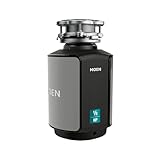
6. Moen Prep Series GX50C
A 1/2 horsepower continuous feed unit from Moen, whose Prep Series is its entry tier. It comes from a faucet maker many owners already know.
Suits: a simple replacement for a utility sink. Strengths: a recognized brand name. Weaknesses: light-duty power only. Skip it if you grind fibrous scraps often.
Care and Setup
- Check the trap and seals for leaks once the weather turns cold.
- Run cold water well after every use to clear the line.
- Cover the unit’s wiring and switch from dust and moisture.
- Run the disposal now and then, since long idle stretches can cause rust.
Mistakes to Avoid
- Installing in a garage drain without checking local plumbing rules.
- Letting pipes freeze in an unheated space.
- Plugging into an outlet that is not rated for wet areas.
- Putting grease or large bones down the drain.
Is a Garage Disposal a Good Idea for Your Setup?
Before comparing models, decide whether a disposal belongs in a garage sink at all. It makes sense where food waste is a regular part of the activity, such as a wet bar, a second kitchen, a workshop with a break area, or a utility sink used to prep produce, fish or game. If the sink only handles paint rinse water, tool cleaning or muddy boots, a disposal is not suitable and can be damaged by grit and debris.
A disposal also changes what your drain must handle. Ground food waste adds solids to the line, and a drain that serves a garage may be longer, flatter or older than a kitchen drain. A line with poor slope or a small diameter can clog. Ask whether the drain connects to a municipal sewer or a septic system, because some septic setups are sensitive to extra solids and the system maker or a local professional can advise.
Consider the alternatives. A good sink strainer and a compost or trash bin handle scraps without any plumbing risk. If you only occasionally have a few scraps, the added cost, electrical work and maintenance of a disposal may not be justified. If you do choose one, treat it as a light-duty appliance and keep the expectations modest. Think about who will use it, how often, and what will go down it, because the answers decide the power level and features that matter.
Plumbing Code, Trap and Venting Checks
Garage plumbing is where the most surprises occur. Many jurisdictions have specific rules for drains in garages, including whether a floor drain or sink may connect to the sanitary sewer, whether an oil or sand interceptor is required, and what type of trap and venting must be used. These rules vary widely, so contact the local building department or a licensed plumber before buying anything.
A disposal needs a standard sink flange opening, typically the same size as a kitchen sink drain. Check that your utility sink has this type of opening, as some are made with smaller drains or with a different mounting style. The disposal’s discharge connects to a trap, then to the drain line. The trap must hold water to block sewer gas, and a dry trap in a rarely used garage sink will let odors in, so run water occasionally.
Proper venting matters too. A drain without a vent can gurgle, drain slowly or siphon the trap dry. If the garage sink was added informally, ask a plumber to inspect it. Check the drain slope and the pipe size as well. If you plan a dishwasher connection, which is rare in a garage but possible in a second kitchen, the disposal needs a knockout plug removed, according to its manual. Getting the plumbing right at the start prevents leaks and clogs that are hard to fix later in a cold space.
Electrical Safety in a Garage
A disposal combines water and electricity, so wiring deserves care. Many garage outlets are not on a protected circuit, and the damp, dusty environment adds risk. Local electrical rules commonly require ground fault protection for garage outlets and for outlets near sinks, so ask an electrician what applies to you.
Some disposals are sold with a power cord for a plug-in connection, while others are meant to be hardwired through a junction box on the unit. The listing shows what is included, and the manual describes the wiring approach. Whichever you choose, use a switch located away from the sink, within reach but not where someone could touch water and the switch together. Wall switches, air switches and batch-feed switches each have their own approach, so match the switch to the type of disposal you buy.
Check the unit’s amperage against the circuit, and avoid sharing it with heavy tools or a freezer that might trip the breaker. Do not use extension cords or power strips with a disposal. Keep the plug or junction box off the floor and away from splashes. If you are unsure about any of the electrical work, hire a licensed electrician. This is one project where a shortcut can lead to a shock or a fire, and an inspector may need to approve the work.
Power Level, Feed Type and Noise
For a garage, power is a trade-off between capability and demands. A lower-horsepower unit is lighter, easier to mount and draws less current, and it suits soft scraps, fruit and vegetable trimmings. A higher-horsepower unit grinds tougher scraps more finely and is less likely to jam, but it is heavier and may be louder. Match the power to what you will put through it, and do not buy more than you need.
Continuous feed units run while you add scraps with the water running, which suits quick, casual use. Batch feed units run only when a stopper is in place, which is a safety feature that some people prefer when children are around. Check which type the listing describes, because the switch and stopper differ.
Noise matters in a garage, particularly if it adjoins living space. Models with more insulation run quieter, and the mounting system affects vibration. A garage with hard walls and a concrete floor amplifies sound, so it can feel louder than the same unit would in a kitchen cabinet. Look at the mounting parts, which include a gasket or cushion that reduces vibration. Also consider weight, since a large unit hanging from a sink flange needs a sturdy sink and good support. Read the manual to see what can and cannot be ground, and keep that list near the sink.
Cold Weather Care and Long Idle Periods
Garages can be cold, damp and unattended for weeks, and a disposal has to survive that. Freezing is the main danger, since water in the trap, pipes and disposal body can expand and crack parts. If the garage can drop below freezing, keep the space heated, insulate exposed pipes, or drain the line and disconnect the unit during the cold season. Ask the maker whether the unit has any low-temperature guidance.
Idle disposals can corrode. A rarely used grinder may develop rust on the flywheel or the grind chamber, and the seals can dry out. Running the unit briefly with cold water every so often helps keep parts moving and the trap full. Do not rely on it for cleaning out a drain, and do not run the disposal dry.
Odors build up when scraps sit in the chamber. Grind small amounts, run plenty of cold water afterward, and clean the chamber with ice and a little citrus peel or a cleaner recommended by the maker. Avoid putting grease, coffee grounds in large amounts, fibrous scraps, bones, pits, shells or non-food items into the unit, as the manual advises. Watch for signs it is time to replace the unit, such as leaks at the seams, humming without grinding, repeated jams, rust-colored water and unusual noises. A leak at the housing usually means replacement rather than repair.
A Checklist Before You Add a Disposal to a Garage Sink
A garage or utility sink is a different setting from a kitchen, so a short checklist saves you from surprises. Walk the space with a notepad and answer each point honestly.
- Confirm the drain type. Check whether the sink drains to a sewer line or to a septic system, since some septic owners are advised to avoid disposals.
- Measure the space under the sink. A disposal hangs below the drain opening and needs clear room for the unit and its discharge pipe.
- Look at the sink outlet. Disposals expect a standard sink flange, and utility sinks sometimes use a different size.
- Find the power source. You need a suitable outlet or a switched connection, installed to local rules.
- Think about what goes down. A garage sink may handle scraps from a bar or a workshop meal, not from heavy daily cooking.
- Consider the climate. An unheated garage means cold pipes, and that affects how you use and store the unit.
If any of these points is unclear, ask a licensed plumber or electrician before buying.
Do You Actually Need a Disposal Here?
Before spending money, ask what a disposal would solve. In many garages, the main use of the sink is rinsing tools, washing hands or filling buckets, and a disposal adds little. If you only occasionally rinse a plate, a simple drain strainer may do the job and keep scraps out of the trap.
A disposal makes more sense if the space acts as a second kitchen, a game-day bar or a prep area for canning or fish cleaning. In those cases scraps pile up quickly and a disposal saves trips to the bin.
Think about the alternatives too. A compost pail, a trash can with a lid or a sink strainer can handle small amounts of food waste without any plumbing changes. Weigh the cost, the installation work and the noise against how often you would really use it.
Disposal Types Compared for Utility Spaces
Two main designs exist, and each fits a different garage routine.
| Type | How it works | Good fit for |
|---|---|---|
| Continuous feed | You switch it on, then feed scraps steadily | Regular use and quick cleanup |
| Batch feed | It runs only when the stopper is in place | Households that want an extra layer of control |
| Lower horsepower | Smaller motor, lighter body | Occasional light scraps |
| Higher horsepower | Stronger motor, more weight and noise | Heavier or tougher waste |
For a space where children or visitors may wander, batch feed designs add a measure of control. For a bar sink that sees steady use, continuous feed is more convenient. Match the type to the behavior of the people who will use it.
Know When to Call a Professional
Disposal installation touches plumbing and electricity, and both carry real risk. Garages often have concrete floors, older wiring and outlets that were not designed for kitchen appliances. Follow the maker’s installation guide, and do not skip any safety step.
Call a licensed plumber if you need to change the drain, add a trap, adjust venting or connect a dishwasher line. Call a licensed electrician if you need a new circuit, a switch or a protected outlet. Local codes differ, and a professional knows what applies to your area.
Never put your hand into a disposal, even when it is switched off. Use tongs or pliers to remove objects, and cut power at the source first.
Reading a Listing With Garage Use in Mind
Product pages describe kitchen use by default, so read them with your own conditions in mind. Look at the stated motor strength, grind chamber material and jam resistance features. Check the weight and the mounting system, because a heavy unit hangs from the sink flange and needs good support. Confirm the electrical requirement and whether a power cord is included, since some units arrive without one. Look at the cold weather notes in the manual, and ask the seller if they are missing.
Whatever you decide, keep the manual with the unit, write the install date on it and note the model number. If the garage freezes, drain the line and follow the maker’s guidance for winter, because trapped water in a cold trap can crack parts.
Choosing With Confidence: The Criteria That Actually Decide It
Choosing a garbage disposal is mostly about matching the machine to your plumbing, your cooking and your cabinet — in that order. Start under the sink: measure the space, note the position of the drain and the dishwasher connection if you have one, and check whether there is an electrical outlet in the cabinet or whether the unit will need to be hardwired. A disposal that does not fit the cabinet geometry, or that leaves no room for the trap and the cleaning bottles that also live there, is the wrong disposal no matter how well it grinds.
Motor power and grind stages decide how the machine copes with your real waste. Light-duty cooking — vegetable peelings, plate scrapings, the occasional lemon half — is handled comfortably by the smaller motors. Households that cook from scratch daily, deal with fibrous vegetables, or regularly clear several plates at once will feel the difference in a stronger motor and a finer, multi-stage grind, which reduces the load on your pipes as well as the noise of struggle. Buy for your heaviest normal week, not for the single toughest item you can imagine, because no domestic disposal is built for bones by the bucketful or a pan of grease.
Feed type is a genuine fork in the road. Continuous-feed models run while you feed them, controlled by a switch, and suit households that clear up in volume. Batch-feed models only run with their stopper in place and a twist to start, which some households prefer for safety around children and for the discipline it imposes on feeding speed. Neither is better in the abstract; the right choice follows who uses the kitchen and how your household actually clears plates after a meal.
Noise, materials and warranty finish the decision. Grind components in stainless steel resist corrosion far better than plainer metals, and sound insulation varies enormously between a basic unit that announces itself through the floor and a well-insulated model you can talk over. Since a disposal is plumbed in and slightly awkward to swap, the warranty length is a useful proxy for how long the maker expects it to live — and a longer warranty on the specific model you are comparing is real information, not marketing noise.
Real Homes, Real Routines
Everyday family clearing-up
The disposal’s busiest moment is the ten minutes after a family meal: plates scraped, pans soaked, small spills of everything. A machine that starts instantly, takes a steady stream of mixed scraps with cold water running, and clears without drama is what this pattern needs. Power in reserve matters here less for any single item than for the total volume moving through in a short window without the sink backing up.
keen cooks and from-scratch kitchens
Cooking from scratch generates the fibrous, stringy, starchy waste that tests a disposal: celery strings, onion skins, herb stems, potato peelings in quantity. The lessons are technique as much as hardware — feed fibrous waste gradually, mixed with sturdier scraps, keep cold water running throughout and for a short while after, and let the machine finish each mouthful before the next. A finer grind stage helps, but feeding discipline is what separates a happy disposal from a jammed one.
Light-use and second kitchens
In a utility room, a granny flat, a holiday home or a garage sink, the disposal may run twice a week and sit idle between visits. For these, simplicity and corrosion resistance outrank raw power: a straightforward unit, flushed with cold water at each use and run briefly on every visit so seals stay wet and moving parts stay free, will outlast a powerful machine neglected in the same spot. Idle disposals fail from stillness, not work.
Use, Cleaning and Day-to-Day Care
Daily care is three habits. Always run cold water — before, during and for a short run after grinding — because cold water keeps fats solid so they are chopped and flushed rather than melted onto pipe walls further down. Feed in small amounts and let the machine clear between handfuls. And run the disposal regularly even in quiet weeks; a machine that sits unused for months can seize, and its seals dry out, so a brief weekly run with water is genuine maintenance, not superstition.
Cleaning is simple and needs no special products. A tray of ice cubes ground with cold water scours the grind chamber walls; citrus peel run through occasionally leaves the sink smelling like a kitchen rather than a bin. For a deeper freshen, a small amount of bicarbonate followed by a gentle vinegar rinse is the traditional routine — let it foam, flush well with cold water, and never mix chemical drain cleaners with a disposal, which can splash dangerously and damage seals and components. Never pour bleach or caustic cleaners into the unit.
Know the two classic faults and their safe fixes. A humming unit that does not spin has usually jammed on something hard: switch off at the wall, check for an overload reset button on the unit’s underside, and free the plate only with the maker’s tool or an appropriate hex key in the underside socket, turning it back and forth — never with your fingers inside the chamber, ever, even with the power off. A leak needs locating before tightening: leaks at the top flange, the dishwasher inlet and the discharge elbow each have different causes, and a drip ignored becomes a cabinet floor ruined quietly over months.
Where Buyers Commonly Go Wrong
The most expensive mistake is treating the disposal as a bin. Grease poured in warm sets in the pipes beyond the unit; rice, pasta and coffee grounds swell or settle into a sludge that traps other waste; stringy fibres wrap the works. The disposal is for the residue that clings to plates and boards after the bin has taken the bulk — scrape to the bin first, then let the machine handle what is left, and both the unit and your drains will live longer.
Installation mistakes cause the other half of regrets: a flange sealed carelessly that leaks from day one, a dishwasher knock-out plug left in so the dishwasher floods the counter, a discharge pipe aligned so the unit vibrates against the cabinet. If you are fitting it yourself, work slowly through the maker’s sequence, test with water and a torch before the first grind, and check again a week later. If any part of the job involves altering wiring or pipework you are unsure of, that is the moment for a plumber or electrician, not for optimism.
Running a Disposal Well: A Step-by-Step Routine
Step 1: Start with cold water
Turn on a strong stream of cold water before the disposal starts, every time, without exception. Cold water is the system’s transport and its protection: it carries ground waste through the trap and keeps any fat in the waste firm enough to be chopped and flushed rather than melted onto your pipes. Making this the first move of a fixed sequence is how it becomes automatic for everyone in the household.
Step 2: Switch on, then feed slowly
Start the motor before food goes in, and feed in small handfuls, letting each clear before the next. A disposal fed gradually grinds finer, runs quieter and never faces the solid plug of waste that causes jams and sink back-ups. Think of it as feeding a machine at the speed it eats, not emptying a plate at the speed you tip it — the difference is a few seconds and a great deal of plumbing.
Step 3: Keep the bulk for the bin
Before the plate reaches the sink, the bin should already have taken the bones, the bulk peelings, the cooking fat and anything stringy in quantity. The disposal’s job is the residue — what clings, what is left, what would otherwise be rinsed down an unprotected drain. Households that scrape first use their disposals for a decade without a jam; households that treat the unit as a bin meet their plumber on a first-name basis.
Step 4: Flush after the grind
When the chamber sounds clear, keep the motor and the cold water running briefly, then water alone for a few more seconds, so ground particles are carried well past the trap into the main run. Switching everything off the moment the noise stops leaves a slurry sitting in the trap to ferment quietly. The flush is the step everyone skips and the one that decides whether the sink smells like a kitchen or a drain.
Step 5: Freshen weekly, inspect monthly
Once a week, grind a tray of ice with cold water and follow it with citrus peel if you have it; the ice scours the chamber and the citrus leaves the sink honest. Once a month, scrub the splash guard top and underside, and shine a torch under the unit to check for the first beading of a leak. Caught at a drip, a leak is a washer; caught at a warped cabinet floor, it is a renovation.
How the Picks on This List Compare
Six products made this list of garbage disposals for garages, and they are not six versions of the same idea. The reviews above judge each one on its own terms; this section is about the shape of the list as a whole, so you can see where your own priorities land before you commit. Read it alongside the individual reviews and the specs table near the top of the page, which together contain every fact you need — this comparison adds no new claims about the products, it simply arranges the decision.
The list opens with Waste King L-2600 and InSinkErator Badger 1. These are the two the editors put first, and for most readers the honest shortlist starts here: read their two reviews back to back and note which one’s strengths match the job you described in the buying criteria above. If either fits your space, your habits and your constraints, you can stop early with confidence — the rest of the list exists for readers whose situation is more specific.
The remaining picks — InSinkErator Badger 5, Waste King Legend Series L-8000, GE GFC520V, Moen Prep Series GX50C — earn their places by serving narrower briefs: a tighter space, a heavier workload, a particular installation, a preference for one design approach over another. That is not a polite way of saying they are worse. For the reader whose kitchen matches one of those briefs, the fourth or sixth pick may be the only correct answer on the page, while the top pick would be a daily frustration. Matching the brief matters more than matching the ranking.
A practical way to finish the decision: take the two or three criteria that the earlier sections identified as decisive for garbage disposals for garages — the measurements, the capacity question, the one feature your household will use daily — and score only your shortlist against only those. Buyers who compare everything against everything end up with a spreadsheet and no decision; buyers who compare their shortlist against their own two or three decisive criteria end up with the right product and a quiet kitchen.
What Using It Day to Day Is Really Like
A garage or workshop sink disposal lives in the harshest conditions of any on this page: cold winters, dust, intermittent use and plumbing that may run on long, shallow falls. Choose corrosion resistance and simplicity, and build the habits that suit the location — run it briefly with cold water on every visit so seals stay wet and the plate stays free, especially through winter when an idle, damp unit is most likely to seize. Check that the garage drain run can actually carry ground waste without settling in a long flat section, and if the sink doubles for workshop duties, be strict about what never goes near it: solvents, paints and workshop chemicals belong nowhere near a disposal or its drain.
Whatever the brochures promise, ownership of the right choice for garbage disposals for garages settles into a routine within a month: the features you use daily become invisible, the one compromise you accepted becomes the thing you plan around, and the details that decided the purchase — a measurement, a control you liked, a layout that fit your habits — quietly prove themselves several times a day. That is why this guide weights fit and habits so heavily over headline specifications. A product that matches your routine disappears into your life in the best way; a product that fights it will be renegotiated at every use, and no specification on a box makes up for that.
A Final Checklist Before You Buy
Before you order, run through this short list. It takes five minutes and prevents most of the regrets readers write in about garbage disposals for garages.
- Measure the space — and the route to it — one final time, and compare the numbers against the specific model, not the category average.
- Write down the two or three jobs your choice for garbage disposals for garages must do weekly, and confirm the model you picked is the one whose review answers those jobs.
- Check what the installation needs — power, plumbing, ventilation, clearances — and decide honestly which parts are DIY and which are a professional’s.
- Confirm what is included and what is not, so any fitting, cord, connector or accessory the job needs is ordered with the product, not discovered without it.
- Read the warranty terms for the specific model and keep the paperwork somewhere findable; a decade-long appliance deserves a filed receipt.
- Plan the first week: where it goes, what it replaces, and the one habit — cleaning, checking, rotating — that will keep it at its best.
Long-Term Ownership: What Year Three Looks Like
Products for garbage disposals for garages are rarely replaced on a schedule; they are replaced when a small annoyance becomes a daily one. Planning for year three at the buying stage means asking unglamorous questions now: which parts wear, which parts are replaceable, and whether the maker supports the model with spares and a service network you can actually reach. A product whose wearing parts are cheap and available stays young for a decade; one built as a sealed mystery becomes landfill at the first tired component, however well it performed in month one.
Keep the paperwork and the habits that protect the purchase. Register the warranty, keep the receipt somewhere findable, and note the model details in your phone. Then run the simple maintenance rhythm the care sections above describe — none of it is heroic, and that is the point. Almost every premature failure in this category traces back to skipped basics: a filter never changed, a seal never cleaned, a small leak left to become a big one. Ten minutes on a schedule outperforms a weekend of rescue work every single time.
Finally, judge the purchase by the routine it creates. The right choice for garbage disposals for garages disappears into daily life: it is used without thought, cleaned without dread and trusted without checking. If, a month in, you are still working around your purchase — still measuring twice, still apologising for it to guests, still keeping the old workaround alive — that is information worth acting on while returns and warranties are still on your side. Good buying is not just choosing well; it is noticing early when you have not.
Garbage Disposals for Garages FAQ
Is a disposal allowed on a garage drain?
It depends on local code and the drain setup. Check with your local building office or a plumber.
Do I need a special unit for cold weather?
Most disposals are not designed for freezing conditions. Keep the space above freezing or drain the line.
How much power does a garage unit need?
Occasional scraps need only a half horsepower unit. Heavier use benefits from more.
Can I plug it in instead of hardwiring?
Some models are sold with a cord. Confirm what the listing includes and follow local electrical rules.
Can a garage disposal go on a septic system?
Some septic systems tolerate disposals and others do not. Ask the system's installer or a local professional, and check local rules.
What can I safely put down a garage disposal?
Follow the list in the manual, which generally means soft food scraps with plenty of cold water. Avoid grease, bones, fibrous items and anything that is not food.
Do I need a GFCI outlet?
Local electrical codes often require ground fault protection in garages and near sinks. Ask an electrician what applies to your area.
Is continuous feed or batch feed better?
Continuous feed is faster and more convenient, while batch feed adds a stopper-based safety step. The right choice depends on who uses it.
Will a disposal work in an unheated garage?
Only if the plumbing is protected from freezing. Keep the space above freezing or drain the line during cold spells.
Why does my disposal smell?
Scraps may be sitting in the chamber, or the trap may be dry. Run cold water, clean the chamber and top up the trap.
How long should a disposal last?
Lifespan depends on use, water quality and care, and the maker does not promise a figure. Check the warranty term on the listing.
What should I do if the disposal stops mid-grind?
Turn the switch off and let the motor stop completely. Check whether the overload protector has tripped — many units have a small reset button underneath — and press it once the unit has cooled. If the plate is jammed, free it with the maker’s wrench or hex key from underneath, remove the obstruction with tongs, then restore power and test with cold water running. If it trips repeatedly, the cause is mechanical or electrical and deserves a professional look.
Can I run hot water while grinding?
Use cold water for grinding, always. Cold water keeps any fats in the waste firm so the machine chops them into particles small enough to flush away. Hot water melts fat into a liquid that coats the inside of your pipes further along, where it cools, sets and gradually narrows the pipe — the classic slow blockage that appears months later and gets blamed on everything except the habit that caused it.
How long should I run the water afterwards?
Keep cold water running for a short while after the grinding sound clears — long enough to carry the ground particles past the trap and into the main drain run. Turning everything off the instant the chamber empties leaves ground waste sitting in the trap, where it decomposes and smells. A brief flush is cheap insurance against both odours and build-up.
Are disposals safe around children?
They are as safe as the household’s habits. The chamber has no exposed blades — food is ground by centrifugal force against a serrated ring — but fingers should never enter it, and children should be taught that the disposal is an adult tool like the oven. Batch-feed models, which only run with the stopper locked in, give some families extra peace of mind, and switching at the wall adds another layer.
Why does my sink gurgle or drain slowly after installing a disposal?
Slow drainage after an installation usually points to alignment: the discharge run should fall steadily away from the unit without dips where ground waste can settle, and the trap should be correctly seated. Gurgling can also mean the venting of the drain run is being asked to cope with a new appliance. Check the simple alignment issues first; persistent problems are a plumber’s ten-minute diagnosis and worth paying for before they become a blockage.
Can a disposal handle ice and citrus?
Yes — both are traditional maintenance foods. Ice cubes scour the grind chamber as they shatter, and citrus peel freshens the unit as it is ground. Neither substitutes for the cold-water habit, and neither should be fed in huge quantities at once. Bones and very hard items are a different matter: follow the maker’s guidance for your model rather than testing its limits for entertainment.
What does a disposal need electrically?
It needs a suitable supply in or near the cabinet — either an outlet for a corded model or a hardwired connection made by someone competent — and a switch arrangement that suits your kitchen, whether a wall switch, an air switch in the worktop, or a batch-feed stopper that does the job. If your cabinet has no power at all, that installation step, not the unit choice, is what to arrange first.
How do I keep the splash guard from smelling?
The rubber splash guard at the sink opening is the most neglected part of the whole system: its underside collects a film of ground food that never gets rinsed. Lift the flaps and scrub them with a brush and soapy water as part of your weekly clean, top and bottom. Most ‘disposal smells’ that survive ice and citrus live exactly there, inches from your nose.
Can I grind eggshells and coffee grounds?
Occasional eggshells pass through without drama, but the folk belief that they sharpen anything is a myth — the grind plate has no blades to sharpen. Coffee grounds are better kept out as a habit: they do not harm the unit itself, but they settle in traps and low spots in pipework and contribute to the sludge that causes slow drains. The bin and the compost are the right homes for both in quantity.
Why does the disposal smell like a drain some days?
Because, in part, it is one: the chamber and trap hold a film of past meals. The routine that fixes it is mechanical, not chemical — ice ground with cold water, the splash guard scrubbed top and underside, and a proper flush after every use so waste does not sit in the trap. Smells that survive that routine usually live further down the pipe run and deserve a plumber’s camera rather than another bottle of anything.
Is it normal for the unit to vibrate?
A hum of working vibration is normal; shaking that rattles the sink or walks objects across the counter is not. Excess vibration usually means an unbalanced load — something hard being thrown around the chamber — a loose mounting, or a worn unit nearing its end. Stop, clear the chamber safely, check the mounting is snug, and if the shaking persists on ordinary waste, have it looked at before it loosens its own seals.
What happens if a utensil falls in?
Switch off immediately and retrieve it with tongs or pliers — never fingers, even with the power off, because a loaded plate can shift. Inspect the utensil and, if it was ground against, check the unit runs freely by turning the plate from beneath with the maker’s tool before restoring power. Most utensil incidents end with a bent fork and no damage, provided the machine was stopped fast.
How do I prepare the disposal for a holiday?
Run it clean before you leave: a good grind of ice, a long cold-water flush, and the splash guard scrubbed, so nothing is left to ripen in the trap while the house is empty. Leave the cabinet dry and the unit switched off at the wall if that is your household’s practice for appliances. On return, run cold water and the unit briefly before the first real load, to rewet seals and confirm all is well.
The Short Version
For light use, the Waste King L-2600 or Badger 1. For a familiar mainstay, the Badger 5. For heavier use, the Waste King L-8000. For a GE option, the GFC520V. For a simple Moen swap, the Prep Series GX50C.