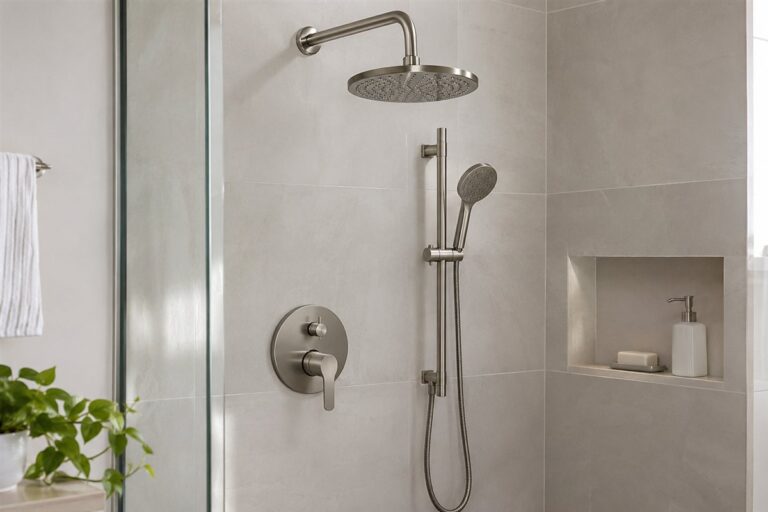
Frameless shower doors use thick glass panels held by hinges and clips instead of a full metal frame, which gives a clean, open look. This page is a buying guide, not a list built from personal use. We have not used these products ourselves, so everything below is about how to choose by features and construction.
Begin with careful measurements of your opening and the way the door should swing. Walls that are slightly out of level can change which style works. The table below walks through the main factors, and the sections after it cover installation planning, care and common errors.
As an Amazon Associate we earn from qualifying purchases. Links on this site are affiliate links, and they do not change the information we give.
In this guide
Quick Picks
| Pick | Product | Best For |
|---|---|---|
| Best for wide openings | DreamLine Unidoor 57-58 in. Frameless Hinged Shower Door (SHDR-20577210-09) | Door plus inline panel layouts |
| Best sliding door | VIGO Elan E-Class Sliding Frameless Shower Door (VG6021STCL6476) | Tight bathrooms with no swing room |
| Best curved style | DreamLine Aqua Ultra 45 in. Frameless Hinged Shower Door (SHDR-3445720-04) | European curved-door look |
| Best for narrow openings | DreamLine Unidoor 30-31 in. Frameless Hinged Shower Door (SHDR-20307210-09) | Small alcoves and walk-in showers |
| Best pivot design | SUNNY SHOWER Pivot Shower Door 48 in. W x 75 in. H | Two-way swing on simpler hardware |
Our Picks

1. DreamLine Unidoor 57-58 in. Frameless Hinged Shower Door — Best for wide openings
The Unidoor in this size pairs a swing door with a fixed inline panel, so it covers a 57 to 58 inch opening at 72 inches high, a layout that suits the wide alcoves the guide above describes. The glass is 3/8 inch (10 mm) certified tempered, and the door hangs on solid brass wall-to-glass self-closing hinges, with a support arm steadying the inline panel. DreamLine allows up to 1 inch of adjustment for width or out-of-plumb walls, which gives some room for the uneven openings the measuring section warns about, and the door is reversible for a right or left opening. This listing is the satin black finish, so check it against your faucets before ordering. Because the hinges carry the full panel weight, the maker requires wall studs or other solid reinforcement behind the finished wall, and replacement seals are the wear item to plan for.

2. VIGO Elan E-Class Sliding Frameless Shower Door — Best sliding door for tight bathrooms
Where the swing-clearance section rules out a hinged door, this VIGO slides instead. The Elan E-Class fits openings from 60 to 64 inches wide and stands 76 inches tall, taller than the common 72 inch doors. Panels are 3/8 inch (10 mm) clear tempered glass certified to ANSI Z97.1 and 16 CFR 1201, hung from a top structural rail on rollers. VIGO’s RollerDisk rollers adjust up to 3/8 inch to align the door with out-of-plumb walls, and the installation is reversible for a left or right opening. Hardware is 304 stainless steel, and a threshold plus full-length seal strips handle the water control the guide says frameless doors depend on. VIGO backs the door with a limited lifetime warranty. Two people are needed for installation, and the rail can be cut to fit, so measure the opening at several points first, as the guide’s measuring section advises.
View VIGO Elan E-Class Sliding Shower Door on Amazon

3. DreamLine Aqua Ultra 45 in. Frameless Hinged Shower Door — Best curved European style
The Aqua Ultra takes a different layout from the straight doors above: a stationary panel with a curved swing door attached, in the European style DreamLine uses across the Aqua range. This model is 45 inches wide and 72 inches high, in brushed nickel. The glass is 5/16 inch (8 mm) tempered clear glass, thinner and lighter than the 3/8 inch panels on the Unidoor and VIGO picks, which matters for hinge load and for handling during installation. Solid brass hinges carry the door, and the design allows 1/4 inch of out-of-plumb adjustment. The curved door swings outward, so it still needs clear floor space, and the panel does not provide wall-to-wall coverage, a point the maker states plainly. The same Aqua design is offered in tub heights, which makes this a useful reference point if your opening is a tub-shower rather than a walk-in.

4. DreamLine Unidoor 30-31 in. Frameless Hinged Shower Door — Best for narrow alcove openings
Not every opening needs a door and panel combination. This Unidoor is a single swing door sized for a 30 to 31 inch opening at 72 inches high, which fits the smaller alcoves and walk-in showers where a wide two-piece layout would be wasted. It uses the same 3/8 inch (10 mm) certified tempered glass as the larger Unidoor, with solid brass wall-to-glass self-closing hinges and a reversible fit for right or left opening. This listing is the satin black finish. The narrow size range is the thing to respect: frameless glass has very little give, so measure the width at the top, middle and bottom as the guide describes and compare the smallest figure with the maker’s range before ordering. With fewer panels there are fewer sealing points, and the bottom sweep remains the part to inspect and replace as it wears.
View DreamLine Unidoor 30-31 in. Shower Door on Amazon

5. SUNNY SHOWER Pivot Shower Door 48 in. W x 75 in. H — Best pivot design
This door rotates on pivot points at the top and bottom instead of side hinges, and the maker describes it as a double-swing design, so it can open in both directions, useful when a vanity or towel bar limits a one-way swing. At 48 inches wide and 75 inches high it is taller than the standard 72 inch doors in this list, and the width is adjustable within its stated range for a simpler fit. The glass is 1/4 inch (6 mm) tempered, thinner than the 3/8 inch glass on the DreamLine and VIGO picks, which keeps the panel lighter but puts it in a simpler hardware tier, and this listing has a chrome finish. Pivot doors need accurate alignment at the floor and the top fixing, so check both surfaces for level during planning, and confirm how the seals and sweep are supplied before you order.

What to Look For
| Factor | Why it matters | What to check |
|---|---|---|
| Opening size | Decides whether the door fits at all | Measure width and height at several points and compare with the maker’s range |
| Glass thickness | Affects weight and feel | Look at the thickness the maker lists and the type of glass used |
| Door style | Shapes how it opens in your room | Compare hinged, pivot and sliding styles against the clearance outside the shower |
| Hardware | Carries the weight of the panel | Check hinge and handle material, finish and the load the maker lists |
| Seals and sweeps | Help keep water in the shower | Look for a bottom sweep and edge seals that can be replaced |
| Cleaning | Keeps glass looking clear | See whether the maker mentions a protective coating and how to care for it |
Setup and Care Tips
- Check that your walls are level and plumb before you order, and note any gaps.
- Plan for two people when handling glass panels, and follow the maker’s instructions closely.
- Use the hardware that comes with the door unless the manual says otherwise.
- Wipe the glass after use with a squeegee or soft cloth to limit water spots.
- Clean hinges and seals gently with mild soap and check them from time to time.
Mistakes to Avoid
- Measuring only once, at one point, on walls that are not perfectly straight.
- Choosing a hinged door where there is no room for it to swing.
- Ignoring how the hardware finish matches the faucets and fixtures.
- Using harsh abrasive cleaners on coatings or metal finishes.
- Overlooking replaceable seals, which are often the first parts to wear.
Measuring the Opening and Reading Your Walls
Frameless glass has very little give, so the opening decides everything. Measure the width at the top, middle and bottom, and measure the height on both sides and in the center. Write every number down. If the figures differ, the smallest width is usually the one to compare with a maker’s size range, but read the listing, because some makers state which measurement they want. Also note the thickness of any tile lip, the depth of the curb and whether the curb is flat or sloped.
Next, check the walls with a level. Hold it vertically against each wall where the hinges or channel will sit, and note how far the wall leans over the height of the door. Many makers allow a small amount of out-of-plumb, and some include adjustable hinges, wall jambs or extra sealing strips to cover gaps. The allowance is different for each product, so look for the figure in the manual or the listing and do not assume it.
Finally, look at what is behind the wall. Glass hardware needs solid backing, and tile over drywall or a hollow surround may limit where fixings can go. If you are unsure what is behind the tile, ask the installer or the maker before ordering. A door that is cut or ordered to a wrong size is often a final sale, so it is worth repeating the measurements on a different day to confirm them.
Leave a note of any items that could clash with the swing, such as a towel bar, a niche shelf, a toilet or a vanity. These details are easy to forget while you are focused on the glass itself.
Glass Type, Edges and Finish Options
Most frameless doors use tempered glass, which is treated so that it breaks into small pieces and not sharp shards. Check that the listing says the glass is tempered or safety glass, and look at any marking the maker describes. The thickness varies by product, and thicker glass generally feels more solid but weighs more, which puts more load on the hinges and the wall. Match the glass to the hardware rating the maker gives instead of choosing thickness alone.
Clear glass is the most common choice. Some listings offer low-iron glass, which the maker describes as having less of a green tint at the edges, as well as frosted, etched or patterned options for privacy. Privacy glass changes how the bathroom looks and how easy it is to wipe, so read the cleaning notes. Textured surfaces can hold soap film in the grooves.
Look at the edges. Polished edges feel smoother and look cleaner than rough ground edges, and the listing may mention rounded corners. Glass with a factory protective coating may be easier to wipe, but the maker’s own care notes will tell you which cleaners are safe, since some coatings do not tolerate abrasive pads.
Finishes on the hardware, such as chrome, brushed nickel, matte black or bronze tones, should be compared with your faucet and shower head. Perfect matching is not required, but picking a clear contrast or a close match usually looks more intentional than two near-misses.
Panel Layouts and Swing Choices Compared
Frameless doors come in several layouts, and each suits a different bathroom. A single hinged door on a fixed panel is common for walk-in showers and alcoves. The panel stays still and the door swings out, so you need clear floor space outside. Some hinges swing both ways, which helps if the door needs to open toward a wall or away from it, but check what the maker states about the swing direction.
Pivot doors rotate on points at the top and bottom instead of hinges on the side. They can look striking and suit wider openings, but they need accurate floor and ceiling or curb alignment. Sliding or bypass frameless styles slide along a top rail and are a good fit when there is no room for a swinging door. They do bring a track or rail, so the look is not fully frameless, and the track can collect residue.
Some openings need a return panel, which is a side piece set at a right angle to the door, to keep water in. Others need only an inline panel. A tub shower often needs a fixed panel plus a door, while a corner shower may use two doors or a door and a return. Count the number of glass pieces, since each one adds weight, cost and sealing points.
Before choosing, stand in the shower and imagine the door open. Where would a wet towel hang? Can you reach the controls without getting soaked? These small questions shape which layout feels natural.
Hardware Quality and Keeping Water In
With no frame, the hinges and clamps carry the whole door, so they deserve close reading. Look for solid metal construction and a stated weight rating for the hinges, and make sure the rating covers the glass size and thickness you plan to use. Adjustable hinges can help correct small alignment problems after installation. Handles and pulls vary from towel bars to simple knobs. A long bar is easier to grab with wet hands, while a small knob is neat but can be slippery.
Water control relies on seals. A bottom sweep, a vinyl strip along the hinge side and a magnetic or clear strip where the door meets the panel work together. Because frameless doors have small gaps by design, a tiny amount of water escaping near the edges is not unusual. Slope the curb toward the drain, keep the shower head angled away from the opening, and read the maker notes on how well the seals are designed to work.
Check that sweeps and strips are sold as replacements. These parts wear and discolor, and being able to swap them without replacing the door extends its life. Also look at how the hardware handles hard water, since mineral deposits can pit some finishes if left. Wiping the metal as well as the glass after showers keeps it looking fresh.
Ask whether the hardware is shipped with the door or sold separately. Some glass is listed alone, which means hinges, handle and seals are extra, and that changes the real price of the setup.
Installation Planning and Signs of Wear
Glass doors are heavy and fragile at the edges, so plan the delivery as well as the install. Measure the path from the entry to the bathroom, and have a clear floor ready. Many makers advise two or more people to lift panels, with gloves and soft padding on the floor, and they recommend keeping the glass upright and away from tile edges until it is in place. Never lean glass against a hard corner.
Decide early whether to hire a pro. A professional can handle uneven walls, drill tile without cracking it, and apply silicone cleanly. If you plan to do it yourself, read the whole manual first, gather the tools it lists and check whether a drill bit for tile or glass is required. Let any silicone cure for the time the maker states before using the shower.
Keep paperwork and parts. Warranty terms differ, and some require professional installation or proof of purchase, so check them before opening the box. Inspect every panel on arrival for chips at the edges and report damage right away, following the seller’s return instructions.
Over the years, watch for signs that something needs attention: a door that drags or no longer closes evenly, hinges that loosen, seals that are cracked or moldy, or any chip or crack in the glass. A chipped edge on tempered glass can be a safety concern, so stop using the shower and contact the maker or a glass professional. Tightening screws gently and replacing seals are usually simple maintenance steps.
Choosing a frameless shower door in More Depth
The shortlists and tables earlier in this guide narrow the field, but the final choice between similar frameless shower doors usually comes down to a handful of practical details that listings present unevenly. The points below dig into those details one at a time. None of them requires specialist knowledge; they require an honest look at your space, your routine and the people who will share the purchase with you. Work through them in order and you will usually find that one of the picks above separates itself from the rest for reasons that have nothing to do with marketing.
Measure the Opening Like a Professional
Frameless glass has almost no adjustment built in, so the opening measurements decide everything. Measure width at top, middle and bottom, check walls for plumb, and note any bow or slope; older bathrooms are rarely square. A door sized for the widest point will gap at the narrowest. If your measurements vary noticeably, that is information to give the supplier before ordering, not a detail to hope the hinges absorb. Treat this as a deciding factor only when it matches how you will actually use the purchase week after week, not just on the first day. A feature that solves a problem you genuinely have is worth prioritising, while the same feature is wasted money and extra bulk when your routine never calls on it. Compare the picks above on this point before you look at anything else on the listing.
Hinged, Sliding or Pivot: Match the Room
Hinged doors need clear swing space and reward it with a wide, solid entry. Sliding doors need none and suit tight bathrooms where a swinging panel would hit a vanity or toilet. Pivot doors split the difference, swinging both ways on simpler hardware. Walk the room and act out the swing before choosing; the right mechanism is the one your bathroom geometry allows, not the one in the nicest photograph. It helps to decide your position on this before you start comparing models, because listings are written to make every version sound essential. Write down what your space, your routine and your household actually demand, then check each pick against that short list. Anything that fails a genuine requirement can be crossed off early, which makes the remaining choice much simpler.
Glass Thickness and Hardware Weight
Thicker glass feels substantial and flexes less, but it is heavier, which loads hinges, walls and the person installing it. The wall behind the hinges must be solid or properly reinforced; glass hung on weak fixings is a long-term problem no sealant fixes. Check what hardware is included, what it is made of, and whether replacement seals and rollers are available for sliding models. Shoppers often notice this detail only after the first week of use, when returning or exchanging is at its most inconvenient. Reading the product description and the manual-style information on the listing with this one point in mind takes a few minutes and prevents the most common source of disappointment. When two picks look equal elsewhere, let this be the tie-breaker.
Seals, Sweeps and Honest Water Expectations
Frameless doors are not sealed like framed ones: they rely on close-fitting glass, vinyl seals and a bottom sweep to keep water in, and a small amount of mist or the odd droplet escaping is normal in this style. A properly sloped shower floor and threshold do more for dry bathroom floors than any door. Buy expecting very good water control, not a submarine hatch, and you will judge the result fairly. There is usually a trade-off hiding here, and the honest version of it is that you cannot maximise everything at once. Decide which side of the trade-off suits your home and accept the compromise on the other side deliberately rather than discovering it later. The picks in this guide differ from each other on exactly this kind of point, which is what makes the comparison table worth a second look.
Opening Direction and Daily Use
Think about who uses the shower and how: a door that opens outwards is safer for anyone who might need help, handles and towel hooks should be reachable from outside, and the handle itself should be comfortable with wet hands. In family bathrooms, robust handles and hardware that tolerate being grabbed firmly matter more than the most minimal designer option. A practical way to judge this is to picture the busiest, least convenient day on which you will still want the product to work well. If it copes with that day, it will cope with ordinary days easily. If it only works when everything is calm, tidy and unhurried, it will frustrate you in real life no matter how good it looks in photographs.
A frameless shower door in Real Life: Situations Worth Planning For
Specifications and feature lists only tell half the story. The other half is how a frameless shower door fits the situations your household actually creates, including the awkward ones that never appear in product photographs. These are the scenarios readers most often say they wish they had thought about before ordering.
A Small Alcove Shower
Narrow openings suit a single hinged or pivot door, and the gain over a curtain in light and feel is dramatic in a small room. Measure obsessively, because small alcoves in older homes are often the least square. A door made for the actual opening, with seals sized to it, will outperform a premium door forced into the wrong gap. In this situation the differences between the picks stop being abstract and become easy to rank, because one or two features suddenly matter more than everything else on the list.
A Tight Bathroom With No Swing Room
When a vanity, toilet or radiator sits where a door would swing, sliding glass is the practical answer. Check the track arrangement and how the panels overlap, think about cleaning access to the full width, and confirm the opening left when the panel slides is wide enough for comfortable entry, including for anyone less mobile. Planning for this case in advance usually costs nothing, but discovering the mismatch after purchase is what leads to returns, workarounds and money spent twice.
A Walk-In Style Shower
Wider openings may combine a door with a fixed inline panel, which gives the open, architectural look while keeping a door for water control. The fixed panel needs solid fixing at wall and floor, and the junction between panels is where seals and alignment matter most. This layout rewards professional measurement most of all. If this sounds like your household, weight the buying criteria above toward durability and ease of everyday handling rather than toward the longest feature list.
Replacing a Curtain or Framed Door
Upgrading from a curtain changes light, warmth and splash behaviour all at once, and most people never go back. Before ordering, check the threshold or floor edge the door will sit on, the wall surfaces the hardware will fix into, and whether the existing shower floor slopes correctly toward the drain, because the new door will reveal any slope problem the curtain hid. In this situation the differences between the picks stop being abstract and become easy to rank, because one or two features suddenly matter more than everything else on the list.
Getting Set Up and Using It Well, Step by Step
The order below follows the sequence most owners settle into after the first few uses. It avoids the two classic beginner errors: rushing the first setup, and only reading the instructions after something has already gone wrong.
Step 1: Measure three times, in three places. Record width at top, middle and bottom, height, and how far walls are from plumb. Photograph the opening with the tape in shot for reference when ordering.
Step 2: Confirm what is included. Check the listing for glass, hinges or rollers, seals, sweeps, handles and fixings, and what you must supply yourself, including suitable wall plugs for your wall type.
Step 3: Plan the installation help. Glass panels are heavy and awkward; arrange a second person and a clear route from door to bathroom before the panel comes out of its packaging.
Step 4: Prepare the opening. Clean the threshold and walls, remove old sealant, and mark fixing positions using the supplied template or measurements, checking levels at every stage.
Step 5: Fit hardware before final positioning. Follow the maker’s sequence exactly: frameless systems are fitted in an order that lets you adjust before the weight is fully on the hinges or track.
Step 6: Seal, cure and test gently. Apply sealant where the instructions direct, let it cure for the full stated time, then test with a gentle shower, checking seals and the sweep before full use.
Care, Cleaning and Long-Term Ownership
Frameless glass stays beautiful with a squeegee habit and little else. A thirty-second squeegee after showering removes the water that would otherwise dry into spots, and it is worth more than any cleaner. Weekly, wash glass with a mild cleaner and a soft cloth; avoid abrasive pads and harsh descalers on any coated glass, and check what the maker says about their coating before using vinegar-based products.
Hardware and seals need a glance now and then. Tighten hinge and handle screws gently if they develop play, keep sliding tracks free of grit and hair so rollers run smoothly, and inspect vinyl seals and the bottom sweep for splits or flattening, since these inexpensive parts do most of the water control. Replacing a tired sweep takes minutes and restores performance that people often blame on the door itself.
Ventilation protects everything in the room, glass included. Run the extractor or open a window after showers so seals and sealant dry out; mould grows on sealant and in track corners where water sits, not on the glass. Wipe the threshold and the bottom edge of the door where water collects, and treat any blackening of sealant early with a bathroom mould cleaner suitable for the surfaces involved.
How the Picks Compare With Each Other
Readers often ask for the picks to be set directly against one another rather than described one at a time. The comparison below uses only what this guide has already said about each model: its position in the Quick Picks table, the job it is listed as best for, and the strengths and limits covered in its review above. It is a way of double-checking a shortlist, not a new ranking.
DreamLine Unidoor 57-58 in. Frameless Hinged Shower Door (SHDR-20577210-09) appears in the Quick Picks table as the choice for door plus inline panel layouts. The door-plus-panel format makes it the choice for wider openings where a single door cannot reach, giving that built-in look. If that description matches the job you described for yourself in the criteria sections above, it is the natural starting point; if it does not, the honest answer is that a neighbouring pick will serve you better even if this one caught your eye first. Re-read its full review above with your own situation in mind before deciding, because the limitation noted there matters more to some households than to others.
VIGO Elan E-Class Sliding Frameless Shower Door (VG6021STCL6476) appears in the Quick Picks table as the choice for tight bathrooms with no swing room. Sliding is the whole point here: it trades a wide entry for zero swing clearance, which in a small bathroom is the right trade. If that description matches the job you described for yourself in the criteria sections above, it is the natural starting point; if it does not, the honest answer is that a neighbouring pick will serve you better even if this one caught your eye first. Re-read its full review above with your own situation in mind before deciding, because the limitation noted there matters more to some households than to others.
DreamLine Aqua Ultra 45 in. Frameless Hinged Shower Door (SHDR-3445720-04) appears in the Quick Picks table as the choice for european curved-door look. The curved design is a style-led pick, so it suits buyers renovating around a particular European look. If that description matches the job you described for yourself in the criteria sections above, it is the natural starting point; if it does not, the honest answer is that a neighbouring pick will serve you better even if this one caught your eye first. Re-read its full review above with your own situation in mind before deciding, because the limitation noted there matters more to some households than to others.
DreamLine Unidoor 30-31 in. Frameless Hinged Shower Door (SHDR-20307210-09) appears in the Quick Picks table as the choice for small alcoves and walk-in showers. A narrower single door for small alcoves, where the larger formats simply do not apply. If that description matches the job you described for yourself in the criteria sections above, it is the natural starting point; if it does not, the honest answer is that a neighbouring pick will serve you better even if this one caught your eye first. Re-read its full review above with your own situation in mind before deciding, because the limitation noted there matters more to some households than to others.
SUNNY SHOWER Pivot Shower Door 48 in. W x 75 in. H appears in the Quick Picks table as the choice for two-way swing on simpler hardware. The pivot mechanism and simpler hardware pitch it at straightforward installs and two-way swing convenience. If that description matches the job you described for yourself in the criteria sections above, it is the natural starting point; if it does not, the honest answer is that a neighbouring pick will serve you better even if this one caught your eye first. Re-read its full review above with your own situation in mind before deciding, because the limitation noted there matters more to some households than to others.
Ownership Details Worth Settling Early
Budget for the whole project, not only the glass. Measurement, possible professional fitting, sealant, new fixings for your wall type, and sometimes a new threshold or floor correction all belong in the true cost, and a project budgeted honestly at the start does not stall halfway with the bathroom out of action. Get the fitting quote before ordering the door where you can, so the two decisions inform each other.
Think ahead to hardware spares while the model is current. A spare bottom sweep and a set of seals bought now cost little and store flat, and they guarantee that in five years a worn seal is a ten-minute job rather than a hunt for parts for a discontinued line. Keep the model’s exact reference with your house paperwork, because ‘the 45-inch one’ will not identify it to a supplier later.
One last ownership habit separates satisfied buyers from frustrated ones in this category: keep the manual, the receipt and a note of the exact model name together from day one. A frameless shower door ownership involves small questions over the years, about a replacement part, a setting, a cleaning product or a warranty term, and every one of them is answered faster when the paperwork is findable. Photograph the specification label with your phone as a backup. It takes two minutes on the first day and saves an afternoon of searching at some point in the product’s life, usually the afternoon when something has just gone wrong and patience is shortest.
It is also worth deciding, before the purchase arrives, where its accessories and consumables will live. A frameless shower door ownership always accumulates small companions: tools, spares, cleaning items, attachments or paperwork, and when they have a home the routine stays tidy and the product stays easy to use. When they do not, they migrate into drawers and boxes and are effectively lost. A single labelled box or shelf section near where the product is used is the whole system, and setting it up on delivery day is far easier than retrofitting order onto a year of drift.
FAQ
Are frameless doors harder to clean?
They have fewer metal tracks and edges where residue gathers, so many people find wiping them simpler. Regular squeegee use still helps, as does wiping the hardware so mineral spots do not build up.
Can I install one myself?
That depends on your experience and the weight of the glass. Many makers recommend professional installation, so read the manual, compare the steps with your skill and tools, and decide ahead of time.
What is the difference between a frameless and a semi-frameless door?
Frameless doors use thick glass with only hinges and clips holding it, while semi-frameless doors add a metal frame around part of the glass, often at the top or sides. Semi-frameless styles may use thinner glass. Check the listing wording, since makers use these terms in slightly different ways.
Do frameless doors leak?
Some small leakage near the hinge side or bottom edge can happen because the gaps are part of the design. Good seals, a sloped curb and a well-aimed shower head reduce it. Read the maker's notes on seals and the recommended curb setup.
Can I use a frameless door on a tub?
Many makers offer tub versions, usually with a fixed panel and a door. You must measure the tub rim and wall height carefully, and check that the model is listed for tub use. A curved or sloped tub rim may need a specific design.
Does the glass need special cleaning products?
Often a mild soap or a glass cleaner the maker approves is enough. Abrasive pads and strong chemicals can harm coatings and metal finishes. Follow the care instructions in your manual and test any new cleaner on a small corner.
What does low-iron glass mean?
Makers use the term for glass with less iron content, which they say reduces the greenish tint seen on thick clear glass edges. It is mainly a look choice. Compare the description in each listing and see the glass in person if the color matters to you.
How do I know the door will clear my fixtures?
Mark the full swing arc on the floor with tape and check for towel bars, vanities and toilets in the way. Compare it with the swing clearance in the listing. If space is tight, consider a sliding or inward-and-outward swinging style.
What should I do if a panel arrives damaged?
Do not install it. Photograph the damage, keep the packaging and contact the seller promptly, following their return or replacement process. Glass with chips or cracks can be unsafe, and installing it may affect warranty coverage.
Will a frameless door leak?
A correctly measured and installed frameless door keeps the overwhelming majority of water in the shower, using close glass tolerances, seals and a bottom sweep. It is not hermetically sealed like a framed door, so a little mist or an occasional droplet near the hinge side is normal for the style. Floor slope toward the drain and a sound threshold matter as much as the door.
How thick should the glass be?
Listings will state the glass thickness for each model, and thicker glass feels more rigid and premium while adding weight that hinges and walls must support. What matters for a buyer is matching the model to an opening and wall that suit it, and having the installation done properly. If you are unsure whether your walls can carry a heavy door, ask before ordering rather than after delivery.
Can I install a frameless door on a bath instead of a shower tray?
Some panels and doors are designed for bath edges, but a shower door made for a tray or tiled threshold may not seal or swing correctly on a narrow, curved bath rim. Check the product’s stated application, the width and flatness of the surface it will sit on, and the swing clearance. Bath screens are a related but distinct product for good reason.
How do I clean the track on a sliding model?
Vacuum or brush out grit and hair first, then wash the track with warm soapy water and an old toothbrush for the corners. Keep the drain holes in the track clear so water escapes instead of pooling. Clean rollers benefit from running freely; if a panel starts dragging, clean and inspect before forcing it, since forced panels damage rollers and seals.
Do frameless doors need professional installation?
Confident DIY installers fit them successfully, but the work is unforgiving: heavy glass, precise drilling into tile, and almost no adjustment if measurements are off. Many buyers use a professional for measurement and fitting and consider it part of the product cost. If you self-install, follow the maker’s instructions exactly and never rush the sealant curing time.
What should I check before the glass arrives?
Confirm the opening measurements one final time, the swing or slide clearance, the wall material where hinges or track will fix, and that you have the right drill bits and fixings for tile and masonry. Arrange help for lifting, protect the floor along the carry route, and keep the packaging until the door is fitted and working.
How long does installation take?
Fitting itself is typically a matter of hours once the glass and hardware are on site, but the project includes measuring, ordering, manufacturing or delivery time, and sealant curing before the shower can be used. Plan the bathroom to be out of service for the fitting day plus the curing period the installer specifies, and do not schedule it the morning guests arrive.
Can a frameless door be fitted to a shower with a seat or grab rails?
Often yes, provided the door’s swing or slide does not clash with them and the fixings avoid the rail positions. Measure the full arrangement, including how the door opens for someone using the seat or rails, and discuss it with the supplier before ordering. Accessibility features and frameless glass coexist happily when they are planned together rather than discovered together.
The Short Version
Measure carefully, pick a door style that fits your room, and look closely at hardware and seals. Plan the installation before you buy so the glass and the opening work together. Check the maker’s size range, read the notes on glass type and finish, and think about who will handle the heavy panels. Careful reading now saves returns later.
Related Guides
- 6 Best Shower Doors for Tubs: Frameless and Sliding (2026)
- How to Choose the Best Shower Doors: Buyer's Guide (2026)
- How to Choose the Best Storm Doors: Buyer's Guide (2026)
- How to Choose the Best Shower Systems: Buyer's Guide (2026)
- How to Choose the Best Dog Doors: Buyer's Guide (2026)