An electric slow cooker simmers food gently for hours, so you can add ingredients in the morning and come home to dinner. It works well for stews, pulled pork, chili and roasts. The best electric slow cookers heat evenly, have a snug lid and clean up without a fight.
The six models below range from a simple manual cooker to programmable and multi-function units. We have not used these products ourselves, so confirm the capacity, lid style and included parts on the current listing before buying. Pick a size that matches your usual batch.
As an Amazon Associate we earn from qualifying purchases. Links below are affiliate links, and they do not change the product information we give.
What to Look For
| Feature | Why it matters |
|---|---|
| Capacity | Six quarts suits a family; larger crocks suit roasts and parties |
| Controls | Manual dials are simple; programmable timers help while you are out |
| Lid | A tight lid keeps moisture in and may include a clasp for travel |
| Insert | Removable stoneware is easy to wash and often dishwasher-safe |
| Warm setting | A warm mode keeps food ready after cooking ends |
| Price tier | More features usually cost more, so pick only what you will use |
In this guide
Specs at a Glance
| Cooker | Control style | Size note | Notes |
|---|---|---|---|
| Crock-Pot 7-Quart Manual | Manual dial | 7-quart class | Stoneware crock |
| Hamilton Beach Set n Forget | Programmable | 6-quart class | Temperature probe |
| Hamilton Beach Stay or Go | Manual or digital | 6-quart class | Locking lid |
| Cuisinart Cook Central | Multi-function | 6-quart class | Brown and steam |
| KitchenAid 6-Quart | Digital timer | 6-quart class | Ceramic insert |
| Proctor Silex Easy Reach | Manual dial | 8-quart class | Large handles |
The 6 Best Electric Slow Cookers

Top pickBest for large families and big roasts
1. Crock-Pot 7-Quart Oval Manual Slow Cooker
A classic manual slow cooker with a removable stoneware crock, a glass lid and a simple dial for low, high and warm. It has a roomy oval shape for roasts.
Suits: large families and big roasts. Strengths: simple, durable design. Weaknesses: no timer. Skip it if you want programmable control.

Best for cooks who want a hands-off option
2. Hamilton Beach Set ‘n Forget Programmable Slow Cooker
A programmable slow cooker with a probe that senses food temperature and switches to warm when done. It has a clip-down lid for travel.
Suits: cooks who want a hands-off option. Strengths: a temperature probe. Weaknesses: more parts to track. Skip it if you want a plain dial.
View Hamilton Beach Set ‘n Forget Programmable Slow Cooker on Amazon

Best for potlucks and parties
3. Hamilton Beach Stay or Go Slow Cooker
A slow cooker with a locking lid and handles for taking dishes to potlucks. It is a long-running design for easy transport.
Suits: potlucks and parties. Strengths: a lid that locks for travel. Weaknesses: the gasket needs cleaning. Skip it if you never leave home with food.

Best for those who sear before slow cooking
4. Cuisinart MSC-600 3-in-1 Cook Central
A multi-function cooker that slow cooks, browns and steams in a single unit. The saute function lets you sear in the same pot.
Suits: those who sear before slow cooking. Strengths: multi-use pot. Weaknesses: more costly than a basic cooker. Skip it if you want the simplest option.

Best for style-minded home cooks
5. KitchenAid 6-Quart Slow Cooker with Mealtime Scheduler
A polished slow cooker with a digital scheduler and a ceramic insert, designed to look at home on a stylish countertop.
Suits: style-minded home cooks. Strengths: a premium look and controls. Weaknesses: a heavier price tier. Skip it if you want a basic crock.
View KitchenAid 6-Quart Slow Cooker with Mealtime Scheduler on Amazon
Best for families on a budget
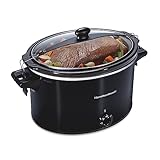
6. Proctor Silex Easy Reach Slow Cooker
A budget-friendly slow cooker with large handles and a glass lid, made for family-size meals. It focuses on simple use.
Suits: families on a budget. Strengths: simple, large size. Weaknesses: few features. Skip it if you want a timer.
View Proctor Silex Easy Reach Slow Cooker on Amazon
Care and Setup
- Wash the stoneware by hand or in the dishwasher if the maker allows.
- Let the crock cool before washing to avoid cracking.
- Wipe the base with a damp cloth and never submerge it.
- Store the lid beside the cooker to keep it safe.
- Check the cord and plug for wear before use.
Mistakes to Avoid
- Lifting the lid often and losing heat.
- Overfilling past the recommended line.
- Putting a cold crock on a hot surface.
- Skipping the browning step that builds flavor.
- Cooking dairy too early so it curdles.
Low, High and Warm: How the Settings Really Differ
Most slow cookers offer low, high and warm. Low and high usually reach a similar simmering temperature in the end; the difference is how fast they get there. High gets the contents to a simmer sooner, so the food finishes in roughly half the time of a low setting. Warm is not for cooking. It holds finished food at a safe serving temperature, and it should not be used to heat up cold food.
Which one to use depends on the cut and the recipe. Tough, collagen-rich cuts such as shoulder, shank and brisket benefit from long, gentle time on low, because the connective tissue breaks down gradually into a tender texture. Leaner meats, poultry breasts and fish can overcook and turn dry or stringy, so they need shorter times. Beans, root vegetables and dense ingredients often take longer than meat, so cut them small and place them on the bottom, nearer the heat.
- Check the manual for the recommended time ranges, as models heat differently.
- Adjust older recipes if your cooker runs hotter than the one the recipe was written for.
- Learn how your own cooker behaves by checking a dish early the first few times.
- Use a food thermometer for meat to confirm it has reached a safe temperature.
Programmable models automate the switch from cooking to warm, which prevents overcooking if you are delayed.
Choosing the Shape, Size and Fill Level
Capacity labels are quart classes, but food safety and results depend on the fill. Most makers advise filling a slow cooker somewhere between about half and three-quarters full, so the contents heat evenly and the lid sits properly. A large crock with a small batch can scorch or dry out, while one filled to the top may not reach a safe temperature properly or may bubble over.
Shape matters too. Round crocks suit soups, stews, dips and chilli, and they heat evenly around the walls. Oval crocks fit long roasts, racks of ribs and whole chickens, but take a bit more counter room. If you cook for one or two, a smaller pot makes better sense, since leftovers and a mostly empty crock are both a poor fit.
- Pick a size based on the most common batch you cook, rather than the biggest party.
- Check the interior dimensions if you plan to cook a particular roast or poultry.
- Measure the cupboard where you will store it, since crocks are bulky.
- Confirm the weight, because a full stoneware crock can be heavy to lift.
If you often batch cook for freezing, a larger capacity cooker may pay off. If you mostly cook small meals, a compact one will heat faster and be easier to wash.
Insert Material, Lids and Travel Features
The insert is where the cooking happens. Stoneware and ceramic inserts distribute heat gently and are often removable, so you can wash them in the sink. They can crack with sudden temperature changes, so avoid putting a cold crock into a hot base or a hot crock onto a cold surface. Aluminium or metal inserts with a nonstick coating can brown food on a stovetop on some models, but they need gentler utensils and care of the coating.
Lids affect results. Glass lids let you check progress without lifting, which keeps heat in. A snug fit holds in moisture, which is why recipes warn against lifting the lid too often; each lift can add substantial cooking time. Some lids have a rubber gasket and locking clips for carrying food to a gathering. If you plan to travel with your cooker, a locking lid, secure handles and a base with a spot to wrap the cord are worth having.
- Check whether the insert can go in the dishwasher and the oven, if you want that.
- Look at handle size and shape, particularly for a heavy crock.
- Note whether the lid is dishwasher safe, and how the gasket is cleaned.
- Find out whether replacement parts, such as an insert or lid, are sold.
Never wrap the cord tightly around a hot base, and do not transport the cooker while it is hot.
Food Safety and Timing Habits
Slow cooking is gentle, so good habits matter. Start with food that has been refrigerated and, for most makers, thawed. A large frozen block can spend too long in the temperature range where bacteria grow before it gets hot. Use the thermometer to verify that meat has reached a safe internal temperature, and follow the manual’s guidance on what is safe for your model.
Think about the order of ingredients. Brown meat first if you want a deeper flavour, and deglaze the pan so the browned bits go into the pot. Place hard vegetables low and tender ones higher. Add dairy, fresh herbs and delicate seafood near the end so they do not curdle or turn dull, and stir in thickeners such as cornflour towards the finish.
- Do not use the warm setting to reheat leftovers from cold.
- Refrigerate leftovers promptly in shallow containers instead of leaving them in the crock.
- Do not leave cooked food sitting for hours without heat.
- Keep red kidney beans and similar legumes in line with the recipe’s guidance, since some need boiling first.
If power cuts out during cooking and you are not sure how long it was off, it is safer to discard the food than to risk it.
Care, Lifespan and Replacement Signs
With sensible care, a slow cooker can last for many years. Let the crock cool before cleaning, soak stuck-on food instead of scraping with metal, and dry it fully before storing. Wipe the heating base with a damp cloth, and keep the cord and plug dry. Store the lid so it does not chip the crock rim, ideally resting separately.
Stains and mineral marks on stoneware can often be removed with baking soda and warm water. Avoid abrasive powders on glazed surfaces, and do not use the crock on a stovetop or under a broiler unless the maker approves it.
Signs it may be time to replace the cooker include:
- Cracks, crazing or deep chips in the crock, which can harbour bacteria and may break further.
- A lid that no longer seats properly, or a loose or broken handle.
- Food that routinely cooks far faster or slower than before, which suggests the heating element or sensor is off.
- Damage to the cord, the plug or the base, or a power switch that works unreliably.
Check the warranty details on the listing, as they often cover the base but not the crock.
A Checklist Before You Choose a Slow Cooker
Slow cookers seem simple, yet a few features make a real difference to everyday use. Work through these points before you decide.
- Capacity. Match the stated size to your household and to the biggest roast or batch you expect to cook.
- Controls. Decide whether you prefer dials and switches or a digital panel with a timer.
- Insert. Check whether the insert lifts out for washing and whether it is suitable for the oven, as the maker describes.
- Lid. A glass lid lets you see the food. A locking lid helps with transport.
- Handles. Look for sturdy, cool touch handles on the base and insert.
- Cord. A cord that stores neatly is handy in a small kitchen.
- Cleaning guidance. Read which parts may go in the dishwasher.
The maker’s manual normally spells out exact guidance, so keep it accessible after you buy.
Manual, Programmable and Multi-Function Models Compared
| Type | How you use it | Strength | Trade-off |
|---|---|---|---|
| Manual dial | Choose a setting and turn it off yourself | Simple and dependable | Needs you to be home to switch it |
| Programmable | Set a cook time, then it moves to warm | Fits a work schedule | More buttons and a panel to maintain |
| Multi-function | Sear, steam or saute in the same pot | Fewer pans to wash | Larger and more complex |
Your daily routine should guide the choice. If you are home during cooking, a manual unit is fine. If you leave for work, a timer that switches to warm removes the need to rush back.
Adapting Recipes for a Slow Cooker
Recipes written for the oven or stove often need adjusting. Liquids do not evaporate much under a lid, so reduce the stock or water compared with a stovetop recipe. Delicate ingredients such as fresh herbs, dairy and quick cooking vegetables are best added toward the end.
Cut ingredients into similar sizes so they finish together. Root vegetables take longer than meat in many recipes, so place them near the bottom, close to the heat. Follow the recipe from a trusted source, and refer to your manual for the maximum fill level.
Browning meat first adds depth of flavor, though it is optional. If you do, deglaze the pan with a splash of liquid and add that to the cooker. Keep a notepad of changes you make, such as less salt or more spice, so your own versions improve over time.
Cooking for a Crowd and Taking Food Out
Slow cookers are popular for potlucks and gatherings because they hold food at serving temperature with little effort. Plan how you will transport the cooker, and secure the lid. A towel or a box with sides stops it from sliding in the car. Follow official food safety guidance on holding times and temperatures when you serve food over several hours.
Bring a serving spoon, a cord extension if the venue permits, and a spare dish for leftovers. Label the contents, especially for guests with dietary needs.
Looking After the Stoneware and Base
Treat the insert gently. Let it cool before washing to reduce the risk of cracking, and avoid sudden temperature changes such as placing a cold insert onto a hot base. Never immerse the base in water, and wipe it with a damp cloth. Check for cracks or chips, and replace the insert if you see damage.
Planning a Week of Slow Cooker Meals
A slow cooker shines when you plan around it. Pick one or two cooking days and decide what each batch will become. A pot of shredded meat can turn into tacos on one night, a sandwich filling on another and a topping for baked potatoes later in the week. A big pot of beans or lentils can feed soups, salads and side dishes.
Prepare ingredients the evening before when you can. Chop vegetables, measure spices and keep the cooler items in the fridge in separate containers. In the morning, you only need to combine everything in the insert and switch on the unit. Check the manual first, because some makers say not to fill the insert with cold food straight from the fridge and then begin a long cook, while others have no such limit. Follow what your maker says.
Write the plan on a small list on the fridge door. It saves you from deciding at the end of a long day, and it reduces food waste because you buy only what the plan needs. When a recipe works well, note the date, the amounts and any changes. A short collection of reliable meals becomes the backbone of your routine, and the cooker earns its place on the counter.
Finally, keep a few staples ready for flexible cooking, such as stock, canned tomatoes, dried beans and onions. These make it easier to put a meal together on short notice and let the machine do the slow work for you.
Choosing a Electric slow cooker Around How You Really Cook
Choosing a electric slow cooker means deciding which jobs you want one appliance to absorb . Pressure cookers trade time for attention at the start: once the lid is sealed, they largely look after themselves. Slow cookers trade speed for complete hands-off gentleness. Multi-cookers try to cover both, plus rice, steaming, and more, in a single pot. Be honest about your week. A household that needs dinner fast on weeknights lives differently from one that wants a stew waiting after work, and the picks above lean in different directions for exactly that reason.
Capacity is the decision people most often get wrong. Too small, and a family meal or a batch of soup does not fit, especially since pressure cooking needs headroom for liquid and foam. Too large, and the pot takes over the counter, small portions cook awkwardly, and washing up feels disproportionate. Think in terms of your biggest regular meal and your most common one, and compare them with the capacities described in the listings above. Remember that stated capacity is the pot size, not the sensible fill level for every cooking method.
Controls and programmes deserve a sceptical eye. A long list of preset buttons looks impressive, but most owners use a handful: pressure cook, saute, slow cook, rice, and keep warm cover the great majority of real meals. What matters more is whether the controls are clear, whether manual adjustment is easy, and whether the lid, sealing ring, and inner pot feel straightforward to handle and clean. If other people in the household will use the electric slow cooker, choose the interface the least confident cook can manage.
Finally, consider the ecosystem around the pot: the inner pot material and whether it suits your cleaning habits, the availability of a spare sealing ring, and whether the lid design fits your storage. These unglamorous details decide whether the appliance becomes a daily tool or a cupboard resident. The descriptions above note pot types and lid styles for each pick, so use them when you compare.
Where a Electric slow cooker Earns Its Keep
Weeknight dinners under time pressure
Pressure cooking turns dried beans, tough cuts, and frozen starts into realistic weeknight options. The pattern that works is simple: build flavour with a quick saute where the model allows it, seal the lid, and use the cooking time to make the sides and clear the counter. For busy households this rhythm, more than any single recipe, is what a electric slow cooker is really selling.
Set-and-forget meals for workdays
Slow cooking suits the opposite schedule: ten minutes of preparation in the morning for a meal that waits patiently. It is forgiving of cheaper cuts and deep flavours, and it asks only that you respect fill levels and food safety, keeping perishable ingredients refrigerated until cooking starts rather than sitting in the pot for hours beforehand.
Batch cooking and feeding a crowd
A larger pot earns its space when you cook once and eat several times: soups, curries, pulled meats, and grains all scale well. Cool leftovers promptly, refrigerate them in shallow containers, and label them with the date. Batch cooking also spreads the washing up, which is part of why owners of a good-sized electric slow cooker tend to use it more, not less.
Small households and simple meals
A compact model is not a compromise if your meals are modest: rice for two, a small stew, or steamed vegetables alongside something else. Smaller pots heat and pressurise quickly and wash easily. The trick is choosing the small size deliberately, for the meals you actually cook, rather than discovering it cannot handle the one big dish you make every month.
Setup, Placement and Safety Basics
Unbox your electric slow cooker and wash the inner pot, lid components, and accessories as the manual directs before the first meal. Every design has its own arrangement of valves, rings, and condensation collectors, and ten minutes spent learning where they sit and how they come apart will save confusion later. Do the water test if the manufacturer recommends one: it proves the pot seals and pressurises, teaches you the sounds and steam behaviour that are normal, and means your first real meal is not also your first experiment.
Set the appliance up on a stable, heat-resistant surface with room above it, because steam releases from the valve and should not fire directly into the underside of cabinets. Keep the cord short and tidy, away from the sink and the hob. Decide where the lid will rest during serving before you start cooking; a lid dripping condensation across the counter is a small annoyance that a planned landing spot eliminates.
Read the safety guidance in the manual properly, once, even if you have used a similar appliance before. Modern electric pressure cookers have layered safety systems, but they rely on the user keeping valves clear, rings seated, and fill levels sensible. Knowing what normal steam release looks and sounds like is what keeps you calm and competent the first time you use the quick release on a pot of soup.
Getting the Best From It Day to Day
Good results come from respecting how these appliances cook. In a pressure cooker, liquid is not optional: steam is the medium, so recipes need enough thin liquid, and thick sauces should be thinned or layered so they do not scorch on the base. Build thickness at the end of cooking rather than the beginning. In a slow cooker, resist lifting the lid, because each peek dumps the accumulated heat and adds noticeably to the cooking time.
Layer ingredients thoughtfully. Dense vegetables that need the most cooking go near the heat, delicate items go in later or on top, and dairy and fresh herbs generally join at the end in both methods. Use the saute function, where fitted, to brown meat and soften onions before the main cook; it is the single easiest way to deepen flavour, and it happens in the same pot, so the washing up does not grow.
Learn the release methods if you pressure cook. Natural release suits foamy foods, large cuts, and anything where a sudden boil would spray starch through the valve. Quick release suits vegetables and delicate foods that overcook in minutes. The manual for your model explains which release it expects for which foods, and following that guidance is the difference between a clean counter and a starchy fountain. Whatever the method, keep hands and face away from the steam path.
Cleaning, Care and Storage
Cleaning a electric slow cooker well is mostly about the lid and the ring. Wash the inner pot after every use, and clean the lid components as the manual directs, paying attention to the valve area and any anti-block shield, because trapped food there affects the next cook. Sealing rings absorb odours from strongly spiced meals; many owners keep a spare ring and rotate between a savoury and a neutral one, which is a cheap fix for cheesecake that tastes faintly of curry.
Let everything dry fully before reassembly, especially the ring and the lid recesses, so moisture does not sit against metal or in seals. Check the ring regularly for cracks, stretching, or a persistent looseness, and replace it when it no longer seals reliably rather than compensating with extra water and hope. Wipe the exterior and the rim of the housing where condensation and drips collect, and empty the condensation collector if your model has one.
For the inner pot, avoid harsh scouring that damages coatings or finishes, and deal with stuck-on food by soaking rather than force. If a pot has cooked something that scorched, a soak and a gentle paste of bicarbonate of soda, where the manufacturer allows it, usually lifts the residue. Store the appliance with the lid resting as the manual suggests, which helps the ring keep its shape and lets any residual moisture escape.
How the Picks in This Guide Compare
The six picks above are not six versions of the same idea, and comparing them well means comparing them against your own routine rather than against each other in the abstract. Work through them in the order presented, and for each one ask the same three questions: does its style and size fit my space, does the way it works fit the food I cook most, and would its cleaning and storage routine fit my patience? A electric slow cooker that scores well on all three for your household is a better buy than one that wins on a single headline feature.
Consider the Crock-Pot 7-Quart Oval Manual Slow Cooker. Its description above sets out who it suits and where its limits lie, so measure it against your biggest regular cooking occasion and your smallest everyday one. If it handles the big occasion comfortably but feels oversized for the everyday, decide which of those two days matters more to you, because that judgement, not the feature list, is what owners end up living with.
Consider the Hamilton Beach Set ‘n Forget Programmable Slow Cooker. Its description above sets out who it suits and where its limits lie, so measure it against your biggest regular cooking occasion and your smallest everyday one. If it handles the big occasion comfortably but feels oversized for the everyday, decide which of those two days matters more to you, because that judgement, not the feature list, is what owners end up living with.
Consider the Hamilton Beach Stay or Go Slow Cooker. Its description above sets out who it suits and where its limits lie, so measure it against your biggest regular cooking occasion and your smallest everyday one. If it handles the big occasion comfortably but feels oversized for the everyday, decide which of those two days matters more to you, because that judgement, not the feature list, is what owners end up living with.
Consider the Cuisinart MSC-600 3-in-1 Cook Central. Its description above sets out who it suits and where its limits lie, so measure it against your biggest regular cooking occasion and your smallest everyday one. If it handles the big occasion comfortably but feels oversized for the everyday, decide which of those two days matters more to you, because that judgement, not the feature list, is what owners end up living with.
Consider the KitchenAid 6-Quart Slow Cooker with Mealtime Scheduler. Its description above sets out who it suits and where its limits lie, so measure it against your biggest regular cooking occasion and your smallest everyday one. If it handles the big occasion comfortably but feels oversized for the everyday, decide which of those two days matters more to you, because that judgement, not the feature list, is what owners end up living with.
Consider the Proctor Silex Easy Reach Slow Cooker. Its description above sets out who it suits and where its limits lie, so measure it against your biggest regular cooking occasion and your smallest everyday one. If it handles the big occasion comfortably but feels oversized for the everyday, decide which of those two days matters more to you, because that judgement, not the feature list, is what owners end up living with.
If you are torn between two of the picks, choose by the routine you will repeat most often: the setup you will do weekly, the parts you will wash, and the space the electric slow cooker will occupy when it is not in use. Features impress on the first day; routines decide satisfaction in the sixth month.
Problems Worth Knowing About
The pot will not come to pressure
Check the simple causes first: the sealing ring seated correctly, the valve turned to the sealing position, enough thin liquid in the pot, and the lid fully closed. A ring that is old, stretched, or carrying food residue is the most frequent culprit, followed by sauces that are too thick to boil freely.
Food scorches on the base
Scorching usually means the liquid was too thick, too sugary, or too scarce, or that deglazing after sauteing was skipped. Scrape the base clean with liquid before sealing, layer thick ingredients on top of thinner ones, and stir only after cooking if the recipe allows. The pot is reporting a physics problem, not failing you.
Slow-cooked meals come out watery
Slow cookers trap moisture, so recipes written for the hob often need less liquid. Lift the lid as little as possible, and if a sauce needs thickening, reduce it briefly at the end with the lid off or finish it in a pan. Adding delicate vegetables later in the cook also keeps textures distinct.
Lingering smells in the ring or lid
Wash and air-dry the ring separately, store the lid upside down or ajar as the manual suggests, and rotate a spare ring for strongly flavoured dishes. Persistent odour in a ring that is also losing its seal is a sign to replace it.
Two Habits That Make the Biggest Difference
A spare sealing ring and a second inner pot sound like dull purchases, but together they change how the appliance fits your life. The spare ring solves odour transfer and the day a ring fails mid-week, and a second pot means tonight’s leftovers can sit in the refrigerator while tomorrow’s meal cooks. When you compare the picks above, it is worth checking which accessories each design offers, because the cost of ownership is more than the machine itself.
Keep a short list on the kitchen wall of the three or four dishes your household makes most, with the settings and times that worked in your pot. Every model behaves slightly differently, and your own notes in your own kitchen are worth more than any chart written for a different appliance. Within a month the list makes the cooker genuinely thoughtless to use, which is the real promise of this category.
A Slower, More Careful Way to Decide
There is a slower way to choose a electric slow cooker that works better than comparing feature lists, and it starts with a week of honest observation. Notice what you cook, how many people you cook for, and where the friction appears: the pan that never fits, the breakfast that takes three batches, the cleanup that puts you off starting. Write those moments down, because they are the specification that matters. A electric slow cooker chosen against your real friction points will satisfy you in a way that one chosen against an idealised version of your cooking never will, and the picks above can then be read as answers to specific problems rather than as a league table.
Next, walk the physical reality of your space with a tape measure and your phone camera. Record the dimensions, the position of sockets, the clearance above and around the counter, and anything that would complicate delivery or installation. Photograph the area where the sealing ring, lid and inner pot will need attention, because that is where ownership is won or lost: the part you must clean, fill, empty, or store decides whether the appliance stays pleasant. Compare those photographs and measurements against the descriptions in this guide before you order, and most of the classic disappointments in this category simply never happen.
Then think about the second year, not the first week. In the second year the novelty has gone, and what remains is the routine: how long setup takes when you are tired, whether spare parts and replacement pieces for the sealing ring, lid and inner pot are easy to obtain, and whether the appliance still suits a household that may have changed around it. Designs that age well share a pattern: few parts, obvious controls, cleaning that does not need special products, and a manual that answers questions plainly. When two picks above look equal, the one with the calmer second year is usually the right choice.
Making the First Sessions Count
For your first sessions, keep the stakes deliberately low and cook a pot of soup or stew rather than the most ambitious dish you know. The first outings teach you the appliance’s temperament: how it heats, how it responds when you adjust it, and what its normal sounds and smells are. Treat anything unexpected as information, check it against the manual, and adjust one thing at a time on the next attempt. Cooks who rush to a celebration meal on day one often blame the appliance for what is really unfamiliarity, while a couple of low-pressure practice runs turn the same appliance into a trusted tool.
Finally, build the small routine that keeps the appliance ready: a fixed home for it and its accessories, a two-minute tidy after each use rather than a monthly excavation, and a note of the settings and timings that worked for your regular dishes. Readiness is the hidden feature in this whole category. A electric slow cooker that is clean, complete, and where you expect it to be gets used on ordinary Tuesdays, and ordinary Tuesdays are where good kitchen equipment quietly earns back its cost many times over.
Electric Slow Cooker FAQ
What size slow cooker should I buy?
A six quart class suits most families. Choose seven or eight quarts for large roasts or parties.
Can I leave one on while I am out?
Slow cookers are designed for long cooking, but follow the maker’s safety guidance and keep the cord and base clear of clutter.
Is it okay to cook frozen meat?
Many makers advise thawing first for food safety. Check the manual for each cooker.
Do programmable models matter?
A timer and warm setting prevent overcooking while you are away, so they help on busy days.
How do I stop food from drying out?
Keep the lid on, fill the crock at least half full and avoid overlong cook times. Trim excess fat only after cooking.
Do I need to add liquid to a slow cooker?
Usually a little, because the lid traps moisture and meats and vegetables release juices. Many recipes need less liquid than stovetop versions, so follow the recipe rather than covering the food.
Can I cook rice or pasta in it?
It is possible with the right recipe, but both can turn mushy over long cooking. Add them near the end or follow a recipe developed for slow cookers.
Why does my food taste bland?
Long cooking can dull seasoning and fresh herbs. Brown the meat first, season at the start and again at the end, and add acid or fresh herbs before serving.
Can I put the stoneware in the oven or freezer?
Only if the maker says so. Many inserts tolerate the oven but not sudden temperature changes, so check the manual before use.
Is it safe to use a liner bag?
Some makers sell or approve liners for easier cleanup. Check the cooker's manual and the liner's heat rating before using them.
How do I thicken a watery stew?
Remove the lid for the last part of cooking, or stir in a cornflour slurry. A smaller amount of liquid at the start also helps.
Should I stir while it cooks?
Usually not. Lifting the lid lets out heat and extends the cook time, so stir only if the recipe asks, or near the end.
How full can I fill the pot?
Follow the fill lines and guidance in the manual for your model, and remember that pressure cooking needs more headroom than slow cooking because liquids bubble and foam. Foods that expand, such as beans and grains, need the most conservative fill of all.
Can I open the lid to check the food?
In a slow cooker you can, but each look costs heat and time, so check sparingly and late. In a pressure cooker you cannot open the lid while it is pressurised, and you should never try to force it; wait for the pressure to release fully as the design intends.
Is it safe to leave a slow cooker on while I am out?
Slow cookers are designed for unattended cooking, and many households use them that way. Set the appliance on a clear, heat-safe surface, keep the cord tidy, follow the manual’s guidance, and make sure perishable ingredients go in fresh and cold rather than sitting at room temperature first.
Why does pressure cooking take longer than the recipe time?
The stated cooking time is the time at pressure. The pot also needs time to come up to pressure at the start and to release it at the end, and both depend on how full and how cold the contents are. Build that into your schedule and the method will feel predictable rather than slow.
Can I cook frozen meat?
Pressure cookers handle many frozen items well with added time, which is one of their great conveniences, while slow cookers are a poor choice for starting from frozen because food spends too long in the temperature range where bacteria thrive. Follow the guidance for your model and reliable food safety advice.
What is the first thing I should cook in a new cooker?
Choose something forgiving and useful: a soup, a batch of beans, or a simple stew. You learn the controls, the sounds, and the release behaviour on a meal that tolerates small errors, and you finish with something worth eating.
How long should a electric slow cooker last?
That depends far more on use and care than on the badge. Appliances in this category that are cleaned as the manual directs, used within their intended job, and stored dry and complete generally serve for years, while neglected ones fail early regardless of quality. Treat the care routine in this guide as part of the purchase, and judge any pick above by whether you will actually keep that routine.
What should I do on the first day I use my new electric slow cooker?
Read the manual’s setup and safety pages, wash the parts it identifies, and run the simplest version of the job the appliance exists for. Keep the session short, note what surprised you, and resist judging the purchase on a single first attempt. Familiarity over the next few sessions is a fairer test, and most early frustrations turn out to be technique that a little practice fixes.
The Short Version
For a classic roomy crock, the Crock-Pot 7-Quart. For a hands-off probe, the Hamilton Beach Set n Forget. For travel, the Hamilton Beach Stay or Go. For searing in the pot, the Cuisinart Cook Central. For a stylish counter, the KitchenAid. For a family-size budget pick, the Proctor Silex.


