A countertop pizza oven brings pizzeria-style baking into the home kitchen. Electric models heat a stone or plate and bake a pie in minutes, with more control than a regular oven. They suit people who make pizza often and want a crisp crust without lighting a fire. Because the oven lives on the counter, size, venting and cleanup matter as much as top temperature.
The six ovens below include high-heat electric models and simpler countertop units. We have not used these products ourselves, so confirm the power, the size and the pizza capacity on the current listing before you buy. Heat and speed claims are the makers’ own.
As an Amazon Associate we earn from qualifying purchases. Links below are affiliate links, and they do not change the product information we give.
What to Look For
| Feature | Why it matters |
|---|---|
| Heat | Higher temperatures give crispier crusts and shorter bake times |
| Control | Adjustable top and bottom heat helps with different styles |
| Size | Check the maximum pizza diameter against your favorite recipe |
| Cleanup | Removable stones and trays make wiping simple |
| Counter space | Measure height and depth, including ventilation space |
| Dough | A hotter oven suits thin, fast-baking dough; cooler ovens suit thicker crusts |
In this guide
Specs at a Glance
| Model | Type | Controls | Notes |
|---|---|---|---|
| Breville Smart Oven Pizzaiolo | Electric stone oven | Digital controls with presets | Pizza-focused design |
| Ooni Volt 12 | Electric | Dial and display | Compact electric pizza oven |
| Presto Pizzazz Plus | Rotating tray oven | Simple knobs | Budget-friendly |
| Piezano Pizza Oven | Electric stone oven | Simple controls | Compact, entry-level |
| Wisco 421 Pizza Oven | Countertop deck oven | Simple controls | Commercial-style approach |
| Chefman Indoor Pizza Oven | Electric | Simple controls | Compact |
The 6 Best Countertop Pizza Ovens for Home Chefs
Top pickBest for pizza obsessives
1. Breville Smart Oven Pizzaiolo
An electric pizza oven with a stone, built to bake at very high heat with controls for crust, top and bottom. A common pick for serious pizza makers.
Suits: pizza obsessives. Strengths: strong heat and detailed controls. Weaknesses: a high cost of entry. Skip it if you only bake pizza now and then.

Best for an apartment cook
2. Ooni Volt 12 Electric Pizza Oven
A compact electric oven from a respected pizza brand with a stone and quick preheat. It can be used indoors or on a covered patio per the maker.
Suits: an apartment cook. Strengths: a small size and no fire. Weaknesses: needs a power outlet. Skip it if you want live-fire flavor.

Best for frozen pizzas and snacks
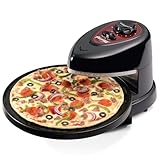
3. Presto Pizzazz Plus Rotating Oven
A rotating-tray countertop oven that bakes frozen or fresh pizzas and snacks with heating elements above and below.
Suits: frozen pizzas and snacks. Strengths: a simple setup and rotating tray. Weaknesses: limited control and heat. Skip it if you want a stone-baked crust.
Best for a casual home cook
4. Piezano Pizza Oven by Granitestone
A compact electric stone oven aimed at a smaller budget. It bakes a small pie in a short time.
Suits: a casual home cook. Strengths: a compact size and low cost. Weaknesses: limited capacity. Skip it if you want pro-level heat.

Best for a serious pizza hobbyist
5. Wisco 421 Pizza Oven
A countertop deck-style oven used in some small commercial kitchens. Check the listing for the exact size and voltage.
Suits: a serious pizza hobbyist. Strengths: heavy-duty build. Weaknesses: bulky on a counter. Skip it if you have a small counter.

Best for small households
6. Chefman Indoor Pizza Oven
A compact electric pizza oven with a stone for baking personal pies. Confirm the exact model and size on the listing.
Suits: small households. Strengths: a small footprint. Weaknesses: limited pizza size. Skip it if you bake for a crowd.

Care and Setup
- Let the stone cool before wiping.
- Do not soak a pizza stone in water.
- Use parchment only if the maker allows it.
- Keep the vents clear while it runs.
- Brush off crumbs and flour after each use.
- Wipe the exterior with a soft damp cloth.
- Store the stone inside the oven only if the maker says that is safe.
Mistakes to Avoid
- Skipping preheat.
- Overloading the pizza.
- Using the wrong dough hydration.
- Putting the oven under a low cabinet.
- Using too much sauce, which makes a soggy center.
- Opening the door too often during the bake.
Dough, Hydration and Crust Style
The oven is only half of a good pizza. The dough decides the texture, and different crust styles suit different machines. A thin, crisp crust bakes fast at high heat, and it needs a dough with moderate water content that can be stretched thin without tearing. A thicker, chewier crust uses a wetter dough and benefits from a slightly longer bake at a more moderate temperature, which lets the center cook through before the outside darkens. Pan-style and frozen pizzas are designed for ordinary oven heat and may burn on a very hot stone.
Hydration is the ratio of water to flour in a dough, and it affects handling. Higher hydration doughs produce an open, airy crumb but are sticky and harder to shape. Lower hydration doughs are easier to handle and bake with a firmer bite. If you are new to pizza, start with a moderate hydration recipe and work up as your skills improve. Let the dough ferment and rest as the recipe directs, since a slow rise in the refrigerator develops flavor and makes the dough easier to stretch. Bring the dough to room temperature before shaping, so it relaxes and does not spring back.
- Flour matters: higher-protein flour gives a chewier crust, while softer flour gives a tender one.
- Do not overwork the dough, since tight gluten makes it shrink as you stretch.
- Use a light dusting of flour or semolina on the peel to help the pizza slide.
- Match dough ball size to the oven’s maximum pizza diameter.
Keep notes on each batch, so you can tweak hydration, rest time and bake time for your own oven.
Top and Bottom Heat Balance
A pizza needs two kinds of heat at once. The base must be crisp and cooked through, and the top must melt cheese and brown without drying out the toppings. In a countertop oven, this balance comes from separate heating elements above and below the stone, and some models let you adjust them independently. If the bottom is too hot, the crust burns before the toppings are ready. If the top is too hot, the cheese browns and the toppings dry while the dough stays pale and soft.
Learn the oven’s habits with a few test bakes. Try a plain pizza with cheese and see how the crust and top look. If the base is pale, preheat longer so the stone is fully hot. If the top is pale and the base is dark, adjust the heat balance if the controls allow it, or move the pizza to a different rack position. Pizza presets are a good starting point, but they are not a substitute for watching the pizza and adjusting by sight.
- Preheat the stone for the full time the maker recommends.
- Use fewer toppings and cut them small, since wet or heavy toppings slow the bake.
- Rotate the pizza partway through if one side browns faster.
- Do not open the door often, since small ovens lose heat quickly.
Ovens with higher heat bake in a shorter time and give a crisper crust with leopard-spot browning, but they need quick handling and a well-prepared dough. Lower-heat ovens are more forgiving but give a different texture.
Ventilation, Clearance and Indoor Use
Countertop pizza ovens put out a lot of heat, and they need breathing room. Check the manual for required space above, behind and at the sides, and keep the oven away from walls, cabinets and curtains. Do not place it under a low cabinet, because rising heat can damage the cabinet and trap hot air around the unit. Use a heat-resistant, level surface that can bear the weight, and leave the vents open so air can flow.
Smoke is another consideration. Flour, cornmeal and oil can burn on a very hot stone, and cheese or sauce that drips can smoke. In a small kitchen this can set off a smoke alarm, so run the range hood or open a window, and keep the stone clean. Use only the oil and parchment types the maker allows, since parchment may not tolerate the highest temperatures. Some ovens are built for indoor use and others are intended for outdoor or covered use, so read the listing and the manual carefully before placing one in your kitchen.
- Plug the oven directly into a suitable outlet, since these units draw significant power.
- Avoid sharing the circuit with other high-power appliances.
- Keep the cord away from the hot oven body.
- Let the oven cool fully before moving or storing it.
If you rent or share a kitchen, check the rules on appliances and ventilation.
Peels, Stones and Useful Accessories
A few simple tools make a real difference. A peel is the paddle you use to move a pizza into and out of the oven. A wooden peel is good for building and launching the pizza, since dough slides well on lightly floured wood. A thin metal peel is useful for turning and retrieving the pizza from the oven. Choose a size that suits the oven opening and the pizza size, and check that the handle length lets you reach the back of the stone without leaning over hot air.
The stone itself deserves care. Pizza stones can crack from sudden temperature changes, so follow the maker’s preheat and cooling instructions, and never place a cold stone into a hot oven or pour water on a hot stone. Stains and dark spots are normal and do not affect performance. Do not use soap, as the porous stone absorbs it, and avoid soaking. A stiff brush or scraper removes residue once the stone is cool. If your oven uses a metal plate or a steel baking surface, follow its cleaning guidance, which is different from that for stone.
- A bench scraper helps portion and handle dough.
- A pizza cutter or large knife speeds up serving.
- An infrared thermometer can check the stone’s surface temperature, if you want to track it.
- A dough container with a lid supports a slow rise.
Check whether the oven includes a peel, and what size it is, before buying extra tools.
Size, Capacity and Everyday Cleanup
Pizza size is the practical limit of a countertop oven. Check the largest pizza diameter that fits, and compare it with the serving you want. A small pie feeds one or two people, so larger gatherings mean baking in batches, and each bake needs a few minutes plus time to reheat the stone if the manual says so. If you often feed a crowd, think about the pace you can manage, since the person at the oven cannot also be at the table. Also check the interior height if you like thicker crusts or toppings, since low-roofed ovens may not fit them.
Cleanup is easier when you manage mess as you go. Brush loose flour and crumbs off the stone after it cools, and wipe the interior with a damp cloth when it is cool. Empty or wipe any crumb tray, and clean the exterior with a soft cloth. Do not use abrasive pads on coated surfaces, and never submerge the oven. Keep the vents clear of dust, and check that the door and glass are clean for viewing the bake.
Signs it is time to repair or replace:
- The stone is cracked or crumbling, or the heating element is damaged.
- The oven no longer reaches its usual temperature or heats unevenly.
- The door does not close properly or the glass is cracked.
- The cord, plug or controls are damaged.
Replacement stones and parts may be sold by the maker, so check before replacing the whole oven.
Your First Pizza Night: A Simple Game Plan
A new oven rewards a calm first session. Plan the evening so that the oven, the dough and the toppings are all ready before you shape the first pie.
- Read the manual and note any first-use instructions, such as a burn-in or warm-up run.
- Give the dough time to come to a workable temperature, following your recipe.
- Set out toppings in small bowls, cut thin and kept modest in quantity.
- Prepare a clean surface, a dusting of flour or semolina, and a peel or flat tray for transfers.
- Let the oven preheat for as long as the maker recommends before the first pizza goes in.
- Cook one pizza, observe how the top and bottom brown, and adjust before making the next one.
Treat the first pie as a calibration run. Every oven has its own habits, and a plain cheese pizza is an easy way to learn them.
Topping Choices That Work Well in Compact Ovens
Compact ovens often cook quickly, so toppings should be ready to finish at the same pace as the crust. Heavy, wet ingredients can make a thin crust soggy and slow the cook.
- Use a thin layer of sauce so the crust can crisp.
- Pat fresh mozzarella dry before using it.
- Pre-cook watery vegetables if your recipe calls for it.
- Slice meats thinly so they heat through quickly.
- Add delicate herbs after baking, not before.
Less is usually better. A restrained pizza lifts easily onto the peel, slides cleanly into the oven and finishes evenly. When you want something heavier, build it slowly across several pies and keep notes on what worked.
Cleaning and Caring for a Pizza Oven Between Uses
Flour dust, cheese drips and burnt crumbs collect quickly in a compact pizza oven. A short routine after each session keeps the surfaces in good shape.
Always unplug the oven and let it cool fully before cleaning. Brush loose crumbs from the stone or baking surface with a soft brush, and wipe interior walls and exterior panels as the manual describes. Avoid soaking a stone or using soap on it unless the maker says it is safe, since porous materials can absorb liquids. Check the heating elements and door seals now and then for any visible damage, and contact the maker if something looks wrong.
Store the oven in a dry spot with the cord loosely coiled, and keep the peel and brush nearby so the whole kit stays together.
Terms You Will Meet in Pizza Oven Listings
- Cordierite: a heat-resistant ceramic often used for baking stones.
- Hydration: the ratio of water to flour in a dough.
- Leopard spotting: the dark flecks that appear on a well-baked crust.
- Peel: a flat paddle for moving pizza in and out of the oven.
Troubleshooting Common Pizza Problems
| What you see | Possible cause | Try this |
|---|---|---|
| Pale, soft bottom | Stone or surface not hot enough | Allow a longer preheat |
| Dough sticks to the peel | Too little flour or slow assembly | Dust the peel and work faster |
| Top browns before the base | Heat balance leans toward the top | Check the manual for settings and rack position |
| Crust tears when stretched | Dough too cold or overworked | Rest it longer and handle gently |
| Uneven cooking | Pizza placed off-center | Center it and turn it if the maker allows |
Change only one thing at a time, so you can tell which adjustment made the difference.
Choosing Countertop pizza ovens for home chefs: What Actually Matters
A countertop pizza oven succeeds or fails on heat: how hot it gets, how evenly that heat reaches the top and the base at the same time, and how fast it recovers between pizzas. The base, stone, steel, or coated deck, decides the crust’s underside, so look for a base material that absorbs and returns heat steadily rather than flashing hot and fading. The top heat must be strong enough to blister cheese and char edges in the same short window the base needs to crisp. When those two heats are balanced, pizza cooks in minutes; when they are not, you get the classic failures of burnt top and raw base, or crisp base and pale cheese.
Size means pizza diameter, but also working room. An oven that takes a large pizza needs a peel that fits its door, a landing space beside it, and a cook who can launch a topped dough through its opening without drama. Smaller ovens trade diameter for speed of preheat, counter friendliness, and often a more even bake for the personal pizzas most households actually make. Be honest about your format: family pizza night may be four personal pizzas cooked in quick succession, each customized, rather than one giant pie. In that rhythm, recovery time between bakes matters more than maximum diameter.
Controls and construction shape the ritual. A clear temperature setting, a timer you trust, and a door or opening that lets you watch without dumping heat make the short, intense bake manageable. The exterior will get hot, so handles, feet, and clearances matter, especially in a home kitchen. Consider how the base removes for cleaning, because flour and cheese will bake onto it, and how the oven stores, since a pizza oven is often a weekend appliance. The best model is the one whose heat you can learn and whose size fits your counter and your crowd.
How Countertop pizza ovens for home chefs Fit Real Routines
Family pizza night, customized for everyone
Countertop pizza ovens shine when everyone wants something different. Set up a topping station, stretch doughs in advance and rest them on floured parchment or peels, and cook in a steady rhythm, one pizza in while the next is topped. Personal pizzas forgive beginners: a slightly uneven shape still tastes wonderful, and each eater’s pizza is exactly theirs. Keep toppings light and relatively dry, because a small hot oven punishes overloaded, wet pizzas with soggy centers. By the third pizza your hands know the dough, and the evening runs like a small, happy restaurant.
Weeknight pizza from dough to table, fast
With dough ready, from the fridge, a dough ball proofed earlier, or a good bought base, a countertop pizza oven turns pizza into a weeknight food rather than a project. The oven preheats while you prepare toppings, and the bake itself is minutes. The habits that make it work are mise en place and restraint: sauce spread thin, cheese grated and ready, vegetables pre-cooked if they carry much water. A quick salad alongside, and the whole meal is faster than delivery, hotter than delivery, and exactly as crisp as you like it.
Beyond pizza: flatbreads, roasting, and finishing
A very hot small oven is useful beyond pizza. Flatbreads puff and blister, vegetables char at the edges, chicken thighs finish with crisp skin, and gratins and baked pasta get the fierce top heat that makes them golden. Cheese on toast, nachos, and reheated pizza slices all prefer this intense, dry heat to any other appliance. Respect the oven’s power with sturdy pans rated for the temperature and keep sugary or fatty items watched, because minutes matter at these heats. Owners who explore beyond pizza usually find the oven working several times a week.
A Home Chef’s Approach to Pizza
Serious home pizza cooks treat the oven as one instrument in a system that includes dough fermentation, topping preparation, and timing. The oven’s fierce heat rewards dough that has been given time: a slow-fermented dough stretches without tearing, bakes with a puffed, blistered rim, and tastes like bread rather than a vehicle. Build a weekly rhythm, mix dough on one day, bake on another, and the oven’s minutes-long contribution becomes the easiest part. Keep a log of hydration, fermentation time, temperature, and bake time; pizza improvement is mostly record-keeping.
Technique at the oven separates good from great. Launch decisively, watch the base before the top, and turn the pizza if your oven bakes unevenly front to back, using a small peel or tongs once the base has set. Learn your oven’s recovery between pizzas and pace your shaping to it, so dough waits for heat rather than heat waiting for dough. Finish pizzas on a rack, season after the bake where the ingredient deserves it, fresh herbs, good oil, and slice with a tool that does not drag the cheese. The oven provides the fire; the chef provides the discipline.
Setup, Daily Use, and Getting the Best Results
Place the oven on a stable, heat-resistant surface with the clearances the maker specifies, away from anything that minds fierce radiant heat, and give yourself a landing zone of the same toughness beside it. Run the first heat-up empty as directed to clear new-oven smells, and learn the preheat honestly: the dial or light may say ready before the base has absorbed enough heat, and pizza exposes that difference immediately. Many owners give the base extra minutes beyond the ready signal for the first pizza, then enjoy fast recovery for the rest.
Dough craft matters as much as the oven. Bring dough to room temperature so it stretches without fighting back, use just enough flour or semolina on the peel for the pizza to slide, and build the pizza on the peel only at the last moment so the dough does not stick as it waits. Launch with a confident, short shuffle rather than a push, and resist opening or moving the pizza until the base has set. These are skills of two or three sessions, not talents, and every pizza cook’s first launches are imperfect. The oven forgives; the dough teaches.
Organize toppings and tools before the oven is hot, because the bake will not wait for you to find the basil. A peel that fits, a cutter, a brush for sweeping flour from the base between pizzas, and a cooling rack for finished pies make the rhythm smooth. Sweep or brush the base between bakes once loose flour starts to scorch, since burnt flour flavors the next pizza. Keep a rhythm of small cleanups and the oven stays sweet through a long session instead of accumulating the bitter notes of old, burnt debris.
Care, Cleaning, and Keeping It Working Well
The base is the part to protect. Let it cool before cleaning, brush off flour and debris, and scrape baked-on cheese gently once cold rather than attacking it hot. Most pizza bases should not be soaked or soaped unless the maker says so, because porous materials drink water and detergent and return both as flavors and steam cracks later. The fierce heat is itself a cleaning ally: much of what lands on the base carbonizes and brushes away. Wipe the oven’s other surfaces once cool, and keep vents and the door area free of the flour dust that pizza making generates generously.
Watch performance for the small drifts that matter. If bases brown less than they did, the base may need a longer heat soak, or residue may be insulating it. If tops race ahead, your dough may be thinner, your toppings drier, or the oven simply hotter than your last session’s setting; these ovens are sensitive to their inputs, which is what makes them good. Keep brief notes on dough, temperature, and time for your best pizzas. Pizza rewards record-keeping disproportionately, because the variables are few and the feedback is delicious.
Common Mistakes and How to Avoid Them
Wet toppings are the first enemy. Fresh mozzarella that has not been drained, raw vegetables full of water, and sauce ladled on thick all release moisture into a bake too short to evaporate it, and the center stays soupy while the edges char. Drain, pre-cook, and spread thin. The second enemy is an overloaded pizza, which insulates its own center. In a countertop pizza oven, restraint is not a compromise; it is the technique. Fewer toppings, evenly spread, cook through and let the crust be the main event it should be.
Launching and timing mistakes follow. A pizza built too early on the peel sticks and lands folded; a timid launch tears the base; opening the oven repeatedly in the first minute dumps the heat the crust needed. Build late, launch confidently, and watch through the window or opening rather than intervening. Finally, do not cut the pizza on the oven’s base or a good board with a rocker that damages surfaces, and do not slide a finished pizza onto a cold plate where steam softens the underside: a rack for the first minute keeps the crust you worked for.
How the Picks in This Guide Compare
Comparison only makes sense against your own priorities, so use this section as a decision exercise rather than a ranking. The picks above were chosen to cover different needs within countertop pizza ovens for home chefs: different sizes, styles, and strengths for different kitchens. Read across them with your space measurements, your regular recipes, and your cleaning tolerance in hand, and the shortlist usually narrows itself to one or two. What follows revisits each pick in turn and frames the question you should ask of it.
Breville Smart Oven Pizzaiolo earns its place in this line-up for the role set out in its review above. When you weigh it against the neighbouring picks, compare what the reviews themselves say about what it does well, where its limits are, and the kind of cooking it suits. The right choice is rarely the most elaborate option; it is the one whose strengths match your weekly routine rather than your most ambitious day, and whose handling and care you will be happy with long after the novelty fades.
Ooni Volt 12 Electric Pizza Oven is the pick to study closely if its purpose in this guide matches the job you most need done. Read its section alongside the picks either side of it, and notice the trade-offs the guide describes: every design in this category gives something to get something. If the compromise it makes is one you would happily make too, that is a strong signal. If its strengths answer a problem you do not have, a simpler pick further down the list will probably serve you better.
With Presto Pizzazz Plus Rotating Oven, the decision is about fit for your household rather than rank. Its review above explains the cooking it is built for; your task is to be honest about how often that cooking happens in your kitchen. A pick used three times a week at the centre of your routine is worth more than a technically broader one used monthly. Check also the practicalities the review raises, size, handling, and care, because those are the details still shaping your satisfaction a year from now.
Piezano Pizza Oven by Granitestone represents one answer to the question this guide is asking, and the other picks represent others. Compare them by the criteria that opened this article: how they fit your space, how they behave in the cooking you repeat, and how they clean and store afterwards. If you find yourself torn between this pick and another, choose by the tie-breaker of daily friction: the one that will be easier to reach for, easier to wash, and easier to live with usually wins the year, whatever wins the afternoon.
Wisco 421 Pizza Oven earns its place in this line-up for the role set out in its review above. When you weigh it against the neighbouring picks, compare what the reviews themselves say about what it does well, where its limits are, and the kind of cooking it suits. The right choice is rarely the most elaborate option; it is the one whose strengths match your weekly routine rather than your most ambitious day, and whose handling and care you will be happy with long after the novelty fades.
Chefman Indoor Pizza Oven is the pick to study closely if its purpose in this guide matches the job you most need done. Read its section alongside the picks either side of it, and notice the trade-offs the guide describes: every design in this category gives something to get something. If the compromise it makes is one you would happily make too, that is a strong signal. If its strengths answer a problem you do not have, a simpler pick further down the list will probably serve you better.
More Practical Notes on Countertop pizza ovens for home chefs
Keep a house dough standard and your pizza nights become effortless. Whether it is a recipe you mix in the morning, dough from a bakery, or a freezer stock of your own balls, consistency in the dough removes the biggest variable and lets you learn the oven itself. Freeze dough in individual portions, thaw in the fridge overnight and then on the counter, and a pizza night can be declared at lunchtime. The oven is the fast part of pizza; the dough calendar is the part worth organizing.
Think about who eats and how they gather when you choose size. A couple making two personal pizzas wants different things from a family of six or a host whose parties run on pizza. Throughput, the pizzas per hour your oven and your hands can sustain, matters more than any single pizza’s diameter for a crowd. Practice your rhythm on a quiet evening before performing it for guests, and set the topping station where guests can build their own, which is both entertainment and labor shared.
Finally, judge the oven after a month of Fridays rather than the first exciting weekend. By then you will know its true preheat, its hot spots, and your dough’s best timing in it, and the pizzas will show it. The models in this guide differ in heat, base material, and size; the right one is the one whose crust you love and whose routine fits your counter and your crowd. Pizza is a craft of small repetitions, and a good countertop oven makes the repetitions a pleasure.
Where countertop pizza ovens for home chefs sit in the kitchen deserves the same care as the purchase itself. Appliances earn their keep when they are reachable at the moment of need, with a clear landing space beside them and a socket they do not share with a tangle of other demands. Before committing to a position, walk through the task the appliance serves, from fetching ingredients to setting down something hot, and check the route for obstacles and crossings. Five minutes of this rehearsal prevents the daily irritations, a door that opens against a wall, a cord across the sink, that quietly turn a good appliance into a resented one.
Read the manual once, properly, before the appliance’s first week is out. Manuals are unfashionable and irreplaceable: they hold the clearances, the cleaning products to avoid, the error signals, and the small capabilities the marketing never mentioned. Keep it, or its digital copy, where the household can find it, and note the model and serial details in the same place. When something behaves oddly in year three, the answer is usually in those pages, and the household that can find its manuals solves problems in minutes instead of weekends.
Energy and water habits around countertop pizza ovens for home chefs are unglamorous and cumulative. Run appliances at their efficient loads rather than in dribs and drabs where the design allows, keep seals, filters, and vents clean so the machine does not labor against its own neglect, and switch off at the socket where the design expects it rather than leaving everything in standby forever. None of this asks for sacrifice; it asks for rhythm. The households that get the lowest bills and the longest appliance lives are rarely the most frugal, just the most consistent.
Teach the whole household the appliance’s few rules and its ordinary routine. Shared appliances fail at the boundaries between users: one person’s shortcut becomes another’s mystery fault. A short conversation, or a note on the fridge door covering what goes in, what never does, and what to do when a cycle ends, aligns everyone. Children old enough to use countertop pizza ovens for home chefs are old enough to learn their care, and guests are happier with a sentence of guidance than with anxious hovering. An appliance the whole house understands is an appliance that lasts.
Keep a small log for the first season: what you cooked or processed, the settings that worked, and the one thing you would change. Appliances have personalities, and published guidance is written for an average kitchen that is not yours. Your own notes, rack positions, timings, doses, and quantities for your regular tasks, become the real manual within a dozen uses. This is the least technological advice in this guide and the most valuable: the difference between owners who love their appliances and owners who tolerate them is usually a page of notes.
Pizza Oven FAQ
Can I use a countertop pizza oven for other foods?
Many can bake flatbread or reheat slices. Follow the manual for each.
How hot do countertop pizza ovens get?
It varies widely by model, from an ordinary oven range to far hotter. Check the listing for the stated maximum.
Can I cook more than pizza?
Many ovens also handle flatbreads, calzones and roasted vegetables, though a regular oven is better for large dishes.
What dough works best?
A well-rested dough at room temperature stretches easily and bakes evenly.
Do I need a pizza peel?
A peel makes loading easier and is usually worth buying.
Is electric as good as wood-fired?
Electric is easier. Wood-fired adds a smoky flavor.
Do I need to preheat a countertop pizza oven?
Yes. The stone needs time to heat fully for a crisp base. Follow the manual, and do not rely only on the indicator light. Extra minutes of preheat often improve the crust.
Why is my pizza crust pale on the bottom?
The stone may not have preheated long enough, or the dough may be too wet or too thick. Preheat longer, use less sauce and toppings and check the bottom heat setting if your oven has one.
Why does the top brown before the bottom is done?
The top heat may be too strong for the dough and toppings. Adjust the heat balance if possible, use a rack position that favors the bottom or reduce moist toppings.
Can I bake frozen pizza in a pizza oven?
Many can, but frozen pizzas are made for ordinary oven temperatures and may burn on a very hot stone. Follow the oven's manual and the pizza's package instructions.
How do I keep the oven from smoking?
Brush off excess flour and cornmeal, avoid dripping sauce or oil, and clean the stone regularly. Ventilate the kitchen, and use only parchment and oils that the maker allows.
What is the best way to move the pizza into the oven?
Build the pizza on a lightly floured peel, shake it to check that it slides, then launch it with a quick forward motion. Do not leave a built pizza sitting on the peel for long.
How long can I store dough?
Many doughs keep for a day or two in the refrigerator, and some recipes use longer cold fermentation. Follow your recipe, and let the dough warm up before stretching.
Why is my pizza base soggy in the middle?
The usual causes are a base that was not fully heat-soaked before the first pizza, wet toppings, or too much sauce. Give the oven extra preheat time, drain fresh cheese and wet vegetables, spread sauce thinly, and keep toppings moderate. If later pizzas in a session are better than the first, preheat was the issue, and the fix is patience.
How do I stop the pizza sticking to the peel?
Use a light, even dusting of flour or semolina on the peel, build the pizza quickly once the dough is on it, and give the peel a gentle shake before launching to confirm the pizza moves. If it sticks in a spot, lift the edge and add a pinch of flour beneath. A pizza left sitting on the peel while toppings are debated will stick; timing is part of the recipe.
Can I use store-bought dough and bases?
Yes, and they are a sensible way to learn the oven. Let dough reach room temperature before stretching, and expect bought bases to bake a little faster than fresh dough. Judge doneness by the base’s color and crispness rather than the package time, because a countertop pizza oven’s heat differs from a domestic oven’s.
What else can I cook in a pizza oven?
Flatbreads, roast vegetables, chicken portions, baked pasta and gratins, nachos, and reheated pizza all enjoy the intense top-and-base heat. Use pans rated for the oven’s temperatures, watch fatty and sugary foods closely, and remember that everything cooks faster than in a conventional oven. Start with sturdy foods while you learn your oven’s pace.
How do I clean cheese that has baked onto the base?
Let the oven cool completely, then lift debris with a brush or a gentle scraper. Do not pour water onto a hot base or soak a porous stone unless the maker allows it. Much of what remains will carbonize at the next full preheat and brush away afterwards. Persistent heavy build-up is a sign to sweep the base between pizzas during long sessions.
Why does the first pizza take longer than the rest?
Because the oven’s air reaches temperature before its base has absorbed a full store of heat. The first pizza draws on that store and finds it incomplete. Extra preheat time before the first launch, beyond the ready indicator, is the standard fix, after which the oven’s quick recovery makes subsequent pizzas fast and consistent.
How do I get a puffy, blistered crust at home?
Start with well-fermented dough at room temperature, an oven and base fully heat-soaked, and a confident launch that keeps the rim’s air intact: stretch by hand rather than rolling, which preserves the gas in the edge. Keep toppings light and dry, and bake without opening or moving the pizza until the base sets. Most failed rims are dough or handling issues, not oven issues.
Should I turn the pizza during the bake?
If your oven bakes evenly, you may not need to. If one side consistently colors faster, a single turn halfway through the bake, once the base has set enough to move without tearing, evens it out. Use a small turning peel or tongs, work quickly to keep the heat in, and note in your log whether your oven needs the turn at its usual temperature.
The Short Version
For serious pizza, the Breville Pizzaiolo. For a compact electric option, the Ooni Volt 12. For frozen pies, the Presto. For a budget start, the Piezano. For a deck-style oven, the Wisco. For a small household, the Chefman.