A cooling towel is a thin, engineered fabric that you wet, wring out and snap or shake. As the water evaporates, the cloth feels cool against your skin. They are popular with runners, golfers, job-site workers and anyone who spends time outside when the weather turns hot.
The six options here include classic towels, a pad-style cloth and neck or bandana wraps. We have not used these products ourselves, so treat this as a shortlist from general product knowledge. Confirm the size, fabric and current details on the listing before buying, and remember that cooling works best in dry air.
As an Amazon Associate we earn from qualifying purchases. Links below are affiliate links, and they do not change the product information we give.
What to Look For
| Feature | Why it matters |
|---|---|
| Form | A flat towel is versatile; a neck wrap or bandana stays put while you move |
| Fabric | Hyper-evaporative or PVA-type cloth holds water and releases it slowly |
| Size | Larger cloths cool more skin but are harder to carry |
| Humidity | Evaporative cooling is weaker in very humid air |
In this guide
Specs at a Glance
| Towel | Form | Type | Notes |
|---|---|---|---|
| Mission Original Cooling Towel | Flat towel | Evaporative fabric | Well-known sports brand |
| Frogg Toggs Chilly Pad | Flat cloth | PVA-style chamois | Comes with a storage tube |
| Ergodyne Chill-Its 6602 | Towel | Evaporative PVA | Work-gear brand |
| Ergodyne Chill-Its 6700 Bandana | Bandana wrap | Evaporative | Tie closure for the neck |
| Nike Cooling Towel | Small towel | Cooling fabric | Athletic brand |
| Frogg Toggs Chilly Sport | Cloth | Evaporative | Sport-sized cooling cloth |
The 6 Best Cooling Towels

Top pickBest for general use outdoors
1. Mission Original Cooling Towel
A flat, lightweight towel from a sun-and-heat sports brand. You wet it, wring it and wipe or drape it, and it is meant to feel cool for a good while afterward.
Suits: general use outdoors. Strengths: a known name in the category. Weaknesses: must be re-wet as it dries. Skip it if you want something that ties on.

Best for hot weather in the car, at the lake or in the field
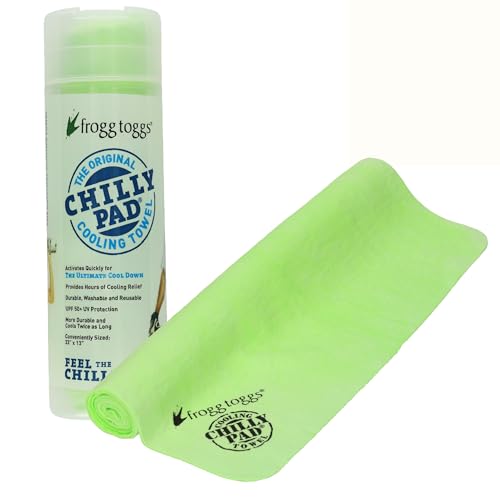
2. Frogg Toggs Chilly Pad Cooling Towel
A chamois-style cloth with a soft, damp-sponge feel. It usually ships in a small tube so you can keep it wet and carry it in a bag or cup holder.
Suits: hot weather in the car, at the lake or in the field. Strengths: a rolled storage tube. Weaknesses: the fabric feels different from a normal towel. Skip it if you want a cotton feel.

Best for job sites and yard work
3. Ergodyne Chill-Its 6602 Cooling Towel
A cooling towel from a company that makes gear for work crews. The cloth is a PVA-type material that stays damp and is sized to drape around the neck or wipe off sweat.
Suits: job sites and yard work. Strengths: made with heavy daily use in mind. Weaknesses: plain, with few styles. Skip it if color choice matters.

Best for hands-free neck cooling
4. Ergodyne Chill-Its 6700 Cooling Bandana
A neck-style cooling bandana with a tie closure, so it stays in place on the move. It is a good fit for people who find a loose towel annoying when walking or working.
Suits: hands-free neck cooling. Strengths: stays on without holding. Weaknesses: only covers the neck. Skip it if you want to wipe your face.
View Ergodyne Chill-Its 6700 Bandana on Amazon

Best for athletes who want a brand-name towel
5. Nike Cooling Towel
A small athletic towel from a major sports brand, built for workouts and training sessions. Check the current listing for the exact model name and size.
Suits: athletes who want a brand-name towel. Strengths: a simple, sport-first design. Weaknesses: models change from season to season. Skip it if you need a very large cloth.


Best for carrying in a pocket or gym bag
6. Frogg Toggs Chilly Sport Cooling Cloth
A sport-sized cloth in the same family as the Chilly Pad. Look at the listing for the current size, since sport versions are usually shorter and easier to stash.
Suits: carrying in a pocket or gym bag. Strengths: compact. Weaknesses: less coverage. Skip it if you want a long neck wrap.

Care and Setup
- Soak in cool water and wring out well before use.
- Snap or shake it to activate the cooling effect if the maker suggests it.
- Rinse after sweaty use and let it air dry.
- Skip detergent and softener unless the maker allows them.
Mistakes to Avoid
- Leaving it wadded up while damp, which can cause odor.
- Expecting full cooling in very humid air.
- Using ice-cold water on bare skin for long stretches.
- Skipping a bag or tube when you carry it wet.
How Evaporative Cooling Works and When It Fails
A cooling towel does not contain a chemical coolant. It holds water in a fabric that releases it gradually, and as water evaporates from the surface it draws heat from the cloth and from the skin underneath. This is the same basic principle behind sweating. Because it relies on evaporation, the towel works best in warm, dry or breezy conditions and loses effect in very humid air, where water evaporates slowly.
This is why people in dry climates often report better results than people in damp, muggy places. If the air is already saturated, the towel may feel cool at first from the water temperature and then simply feel wet. Wind or a fan can help, since moving air speeds up evaporation. Direct sunlight reduces the effect, so drape the towel in shade where possible.
Understand the limits. A cooling towel makes you feel more comfortable and gives some relief, but it does not replace water, shade, rest or sun protection. It cannot treat heat illness. If you or someone else shows signs of heat exhaustion or heat stroke, such as confusion, a very high body temperature, fainting or a lack of sweating, seek urgent medical help rather than relying on a towel. Use the towel as one part of a sensible hot-weather plan that includes drinking fluids, taking breaks and wearing suitable clothing.
Fabric and Construction Differences
Cooling towels fall into a few broad fabric groups. Some are made from synthetic microfiber with a texture designed to hold water and release it slowly. Others use a PVA-style material that feels like a chamois or a damp sponge. A few use blended or knitted fabrics that feel more like an ordinary sports towel. Each type has a different feel, speed of drying and way of handling sweat.
PVA-style cloths tend to stay damp for a long time and feel noticeably cold when wet, but they can feel stiff when dry and need to be re-wet before use. Microfiber types are softer and often more comfortable for wiping the face, though they may dry faster. Thicker fabrics hold more water but take longer to dry after use, which affects storage and odor.
- Check the listing for the fabric name and care instructions.
- Look at the stitching and edges, which can fray with heavy use.
- Pay attention to whether the cloth is described as UV protective and treat such claims as the maker’s own.
- Consider skin sensitivity, since some fabrics feel rough against skin.
If you have sensitive skin, try the towel on a small area first. Also check whether the fabric is intended for sweat, face and neck, or for draping over the shoulders, because designs vary.
Choosing Size and Wearing Style
Size decides how much skin the towel can cover. A long, narrow towel can drape over the neck and shoulders, wipe the face and be used as a head cover. A small sport-sized cloth is easier to stash but gives less coverage. Large cloths cool more area but take longer to dry and are harder to carry in a bag.
Wearing style matters when you are active. A flat towel needs to be held, tucked or draped, and it may slip while running or working. A neck wrap or bandana with a tie closure stays in place and leaves your hands free, which suits walking, hiking, gardening and job-site work. On the other hand, a bandana only covers the neck, so it is less useful for wiping sweat from your face.
Think about where you will use it. Golfers may want a towel that clips to a bag, runners may prefer a lightweight neck wrap and outdoor workers may want a durable cloth that handles dust and dirt. Check whether the towel comes with a case, clip or tube, since storing it damp requires something that will not trap moisture or leak onto other items. For commuting or travel, a zip bag and a small hook can be handy. Pick the form you will actually take with you, since a towel left at home does no good.
Using It Well for the Best Results
Preparation affects performance. Soak the towel in cool water until it is fully wet, then wring it out thoroughly so it is damp rather than dripping. Follow the maker’s instructions, as some suggest snapping or shaking the cloth to activate it. Place it where blood flow is near the surface, such as the back of the neck, the forehead or the shoulders, and fold or drape it so air can reach part of the surface.
Re-wet the towel when it feels dry. Avoid ice-cold water on bare skin for long stretches, since extreme cold can be uncomfortable and does not make evaporative cooling work better. Keep the towel out of direct sun when you are not using it, and carry a small water bottle for re-wetting during long outings.
Combine the towel with other measures. Take breaks in shade, wear light, loose clothing and a hat, drink fluids regularly, and plan strenuous activity for cooler parts of the day. For children, older adults and people with health conditions, take extra care in heat and follow medical advice. Never place a wet towel over the face in a way that restricts breathing. If you are using the towel in a car, do not leave it in a sealed space where it can get warm and develop odors. A little attention to how you use it can help you get the most from a simple tool.
Washing, Odor Control and When to Replace It
Damp fabric left in a bag can develop a musty smell, so care matters. Rinse the towel with fresh water after sweaty use, wring it out and hang it to air dry before storing it. If the maker says it can be machine washed, use mild settings. Many makers advise against detergent and fabric softener because residues can reduce the towel’s ability to hold and release water, so check the instructions before using either.
If odors develop, rinse and air dry in a well-ventilated spot, and avoid leaving the towel balled up or sealed while wet. Some people allow it to dry fully between uses. If your towel came with a tube or container, keep it clean and let both dry before closing them. A towel used for sunscreen-heavy skin can pick up oils, so rinse it more often.
Replace the towel when the fabric becomes frayed, thin or stiff, when it no longer holds water as it did, or when odors will not go away after a careful rinse. A cloth that feels slimy or shows mold should be discarded. Lighter, budget-friendly options are fine for occasional outings, while sturdier ones may suit daily outdoor work. Because performance depends on weather and care, judge replacement by how the towel behaves in your regular conditions rather than by a fixed timeline.
Pick the Right Format: A Quick Checklist
Cooling towels, pads and neck wraps all work by holding moisture and releasing it slowly, but they suit different situations. Before you choose among the options above, think about how and where you will use the item.
- Decide where it will sit. A neck wrap stays in place hands-free, a towel can be draped over shoulders or used to wipe skin, and a pad can rest under a hat or on the back of the neck.
- Think about activity level. Walking, gardening or sports need something that stays put, while a day at a ballgame may call for a lightweight wrap.
- Check the size. A longer towel offers more options, while a short one is easier to carry.
- Look at the fabric description and how it is meant to be activated, usually by wetting and wringing it out.
- Consider whether you want a closure, such as snaps or a loop, or an open towel you can tie as you like.
- Check the carrying case or pouch, since a damp towel needs a place to live in your bag.
- Read the care instructions, including wash cycles and drying advice.
Match your choice to your routine. Someone who works outdoors may want a durable wrap, while a gym visitor might prefer a thin towel that dries quickly between sets.
Towel, Pad and Neck Wrap Compared
The table below summarizes the broad differences between the three formats.
| Format | How it is used | Strength | Consider |
|---|---|---|---|
| Cooling towel | Wet, wring, drape or wipe | Versatile, can be used many ways | May need re-wetting |
| Cooling pad | Rests against the neck or head | Compact, stays in place under a hat | Smaller surface area |
| Neck wrap | Wrapped around the neck | Hands-free comfort | May feel bulky on warm days |
Many people keep a towel in a bag and a wrap near the door. The best choice is the one you will actually have with you when the weather turns warm.
Using a Cooling Towel Well
Follow the maker’s instructions for activation. Typically you soak the towel in water, wring out the excess and snap or shake it, then place it on the skin or drape it where you want it. Re-wet it when it dries out. Use clean water, and if you are outdoors, make sure the water you use is safe for skin contact. The cooling effect depends on humidity and airflow, so results may differ from one day to the next.
Do not rely on a towel as a substitute for shade, rest or drinking water. In very hot conditions, follow guidance from official health authorities about heat, and seek help if someone becomes unwell.
Washing, Drying and Odors
A damp towel stored in a closed pouch can develop odors, so rinse it after use, wring it out and let it air dry before packing it away. Wash it according to the care label, often with mild soap and without fabric softener, which can coat fibers and reduce absorbency. Avoid bleach unless the maker allows it. Dry flat or hang it in a shaded, ventilated area, and check the care sheet before using a machine dryer.
Replace the towel if it stays damp and smelly after washing, or if the fabric becomes thin or fraying.
Reading a Cooling Towel Listing
Look for the dimensions, the fabric type, the weight and the care instructions. Check what comes in the package, such as a pouch or clip. Read the description of how the product is meant to be used, and be cautious about extreme claims like keeps you cool for hours in any weather. Real-life performance depends on the conditions.
Where These Items Are Handy
- Garden work and yard chores.
- Hiking and walking trips.
- Outdoor sports events and fairs.
- Gym sessions and fitness classes.
- Travel in warm cities.
Pack one in a day bag and keep a small water bottle with it, so you can rewet when needed.
Cooling Towel Mistakes to Avoid
A cooling towel is simple, yet small errors can leave it feeling less useful. Keep these points in mind.
- Skipping the wetting step, since most designs work only when damp.
- Leaving the towel in a sealed bag or bag pocket for days, which can lead to a musty smell.
- Using strong detergent or fabric softener when the maker advises against it.
- Expecting the same feel in very humid air, where evaporation slows down.
- Wearing a towel that is too small to rest on the neck or forehead comfortably.
Follow the care card for washing, wringing and storage, and rinse after sweaty use.
Where Each Format Fits: A Simple Table
Choose the form that matches the activity and how you move.
| Format | Good for | Keep in mind |
|---|---|---|
| Long towel | Draping over shoulders or a neck | Can swing while you move |
| Bandana | Head or neck wear on a job site | Smaller surface to cool |
| Flat pad | Resting on a chair or a pet bed area | Less portable |
| Sport cloth | Gym, golf and hiking | Check the clip or loop |
On the way home, let the towel air out before you put it away.
Buying Decision Guide by Situation
Match the towel to the setting rather than to a feature list. Think about where you will wear it and how long you will be active.
- Outdoor work: a bandana or neck wrap that stays in place while you move.
- Running or gym sessions: a lightweight sport cloth with a clip or loop.
- Hot sidelines and events: a longer towel you can drape and re-wet.
- Travel: a compact towel that dries quickly and packs small.
How the Picks in This Guide Compare With Each Other
A list of six good options only helps if you can narrow it down, so use this section to turn the six cooling towels above into a shortlist of two. The method is simple and it works for almost any product in this guide. First, decide the one job your cooling towel must do well every single day. Second, read the earlier section on each pick and note its stated strength and its stated limitation in a few words. Third, remove any pick whose limitation clashes with that main job. What remains is usually a genuine choice between two designs rather than a guess between six.
Mission Original Cooling Towel. Treat this pick as the reference point for its style in the list above. The section on it earlier in this guide sets out who it suits, what it does well and where it falls short, so compare every other option against those three points before you decide. If the limitation named there would bother you every day, cross it off early and save your time. If the strength named there matches the job you actually need done, it deserves a place on your final shortlist of two.
Frogg Toggs Chilly Pad Cooling Towel. This option makes most sense when its described strengths line up with your room, your routine and the people who will use it daily. Read its earlier section once more and underline, in your mind, the one detail that matters most to you, whether that is size, material, storage, comfort or ease of cleaning. Then check that same detail on the listing itself, because listings change and the current page is the final word on what you will receive.
Ergodyne Chill-Its 6602 Cooling Towel. Buyers often overlook this kind of middle option because it is neither the simplest nor the most elaborate choice in the guide. That can be a mistake. A balanced pick usually asks for fewer compromises in daily use, even if it wins no single category outright. Compare it honestly against the pick above and the pick below it in this guide, and judge it on the full week of use it will get rather than on one standout feature.
Ergodyne Chill-Its 6700 Cooling Bandana. Treat this pick as the reference point for its style in the list above. The section on it earlier in this guide sets out who it suits, what it does well and where it falls short, so compare every other option against those three points before you decide. If the limitation named there would bother you every day, cross it off early and save your time. If the strength named there matches the job you actually need done, it deserves a place on your final shortlist of two.
Nike Cooling Towel. This option makes most sense when its described strengths line up with your room, your routine and the people who will use it daily. Read its earlier section once more and underline, in your mind, the one detail that matters most to you, whether that is size, material, storage, comfort or ease of cleaning. Then check that same detail on the listing itself, because listings change and the current page is the final word on what you will receive.
Frogg Toggs Chilly Sport Cooling Cloth. Buyers often overlook this kind of middle option because it is neither the simplest nor the most elaborate choice in the guide. That can be a mistake. A balanced pick usually asks for fewer compromises in daily use, even if it wins no single category outright. Compare it honestly against the pick above and the pick below it in this guide, and judge it on the full week of use it will get rather than on one standout feature.
When two picks still look equal after that exercise, let the practical details decide. Check the measurements given on each listing against the space you measured at home. Check what the listing says about assembly, installation or first use, and how much of that work falls on you. Check the care instructions, because a cooling towel that needs gentle handling will not suit a busy household no matter how good it looks in photos. The pick that fits your space, your routine and your patience is the right one, even if another pick looks better on paper.
Understanding Fabric, Weave and Weight Claims
Listings describe towels with a tangle of terms, but three things decide how a towel behaves: the fibre, the weave and the weight of the cloth. Long staple cotton fibres feel smoother and shed less lint, while shorter fibres can feel fluffy at first and thin out sooner. Bamboo and blended cloths often feel silky and dry quickly. Microfibre feels different again, light, smooth and very quick to dry, which suits travel and sport even if it lacks the plush feel of a bath towel.
Weave changes absorbency and drying time in opposite directions. A dense terry loop soaks up a lot of water and feels luxurious, but it also holds that water and dries slowly in a humid bathroom. A waffle or flat weave holds less, feels lighter and dries far faster, which is why quick dry designs use it. Neither is better. Match the weave to your laundry rhythm: households that wash often can enjoy heavy terry, while small bathrooms and travel kits favour fast drying weaves.
Weight numbers on listings are a guide, not a promise. A heavier towel is not automatically a better towel, because fibre quality and weave matter as much as bulk. Use weight to predict drying time and shelf space rather than quality. A very heavy towel in a bathroom with no heated rail may still be damp at the next shower, while a mid weight towel in a ventilated room will be dry, fresh and ready.
Choosing for Your Household and Routine
Count the users before you count the towels. A household that showers morning and night needs a deeper rotation than one that showers once a day, because a towel needs time to dry fully between uses to stay fresh. As a working rule, each person benefits from at least two towels in rotation for the body, plus separate hand and face cloths that can be changed more often. Buying one excellent towel and using it constantly serves you worse than owning several good ones.
Different jobs want different towels. A large bath sheet wraps the whole body and suits people who dislike the gap a standard towel leaves, while a standard size is easier to wash, dry and store. Gym and travel towels earn their place by packing small and drying on a hook in a hotel bathroom. Beach towels need length for lying on and a surface that sheds sand. Let each towel in your home have one clear job and it will be chosen well.
Colour is a practical decision disguised as a style one. White towels reveal stains and can be washed hot together, which is why hotels use them, but they show every mark between washes. Dark colours hide stains yet can fade unevenly and show lint and soap residue. Mid tones are the forgiving middle path for family bathrooms. Whatever you choose, buy the set in one go where you can, because dye lots vary and later additions may not match.
Washing and Care That Protects Absorbency
New towels should be washed before first use to remove the finishes makers apply for shelf appeal. Those finishes make towels feel silky in the shop but repel water on your skin, so the first few washes actually improve performance. Wash similar colours together, expect some lint in the early cycles, and clean the machine filter afterwards. Loose threads should be snipped, never pulled, because pulling distorts the loops around the gap.
Fabric softener is the most common cause of towels that push water around instead of soaking it up. Softener coats fibres with a waxy layer that feels smooth and destroys absorbency, and the effect builds with every wash. If your towels have gone water resistant, a hot wash with a cup of white vinegar in the rinse can strip some of that buildup. After that, wash towels with a modest amount of detergent, since excess detergent left in the loops stiffens the cloth and feeds odours.
Dry towels fully, every time. A towel folded while still slightly damp will smell musty within a day, and the smell survives rewashing once it takes hold in the fibres. Shake towels out before drying to open the loops, use the dryer or a ventilated rail until the thickest part, usually the hem, is dry, and store them loosely rather than compressed. In humid homes, spacing towels so air reaches both sides matters more than any special detergent.
Replacing Towels and Solving Common Annoyances
Towels rarely wear out all at once. They thin in the middle, fray at the hems, lose absorbency or keep a smell that washing no longer removes. When two or more of those signs appear together, the towel has done its service. Retire worn towels to cleaning, pet or garage duty rather than the bin where your local rules allow it, and replace the bathroom set in one go so the rotation stays even and the shelf looks deliberate.
Lint that will not quit usually settles after several washes, but you can speed the process by washing new towels separately and drying them in the machine, which pulls loose fibres into the filter. Persistent lint on dark clothing after that points to a towel that is shedding its pile, often because it was woven from shorter fibres. Keep such towels for jobs where lint does not matter, such as drying the dog or lining a pet carrier.
Roughness has two usual causes: mineral buildup from hard water and detergent residue. Both respond to the same treatment of a hot wash with vinegar and no detergent, followed by a thorough dry. If roughness returns immediately, check that you are not overloading the machine, because towels packed tightly cannot rinse clean. Giving the load room to move is the cheapest improvement most laundry routines can make.
A Final Checklist Before You Order
Check five things before you order. One: the size suits the job, whether that is wrapping an adult after a shower, packing into a gym bag or covering a sun lounger. Two: the fibre and weave match your drying conditions, with fast drying weaves favoured in humid or unheated bathrooms. Three: the care label fits your laundry, including the temperatures and products you actually use. Four: you are buying enough for a real rotation, so no towel is used damp twice in a day. Five: the colour will live happily with your washing habits, since whites, darks and mid tones each forgive different sins.
Wash the towels before judging them, and judge them after several washes rather than on the first touch. Shelf softness is partly finish that washes away, while true quality shows in how the towel absorbs, dries and looks after a month of ordinary use. Keep the receipt until that judgement is made, especially when buying a full household set in one order.
Build the set gradually if the budget is tight: start with the towels used daily, in the quantity your laundry rhythm needs, and add the guest and spare stock later in the same range where you can. A smaller number of towels that are washed, dried and rotated properly will serve you better, and smell sweeter, than a cupboard of towels used in a permanent state of slight damp.
More Questions About cooling towels
Why do my new towels not absorb water properly?
New towels carry finishes from manufacture that make them feel soft in the shop but repel water in use. Wash them a few times before judging them, without fabric softener, and the absorbency will improve as the finish leaves the fibres. If older towels have gone the same way, softener and detergent buildup is the usual cause, and a hot wash with white vinegar in the rinse can strip some of it away.
How many towels does one person actually need?
Enough to always have a dry, fresh one ready while others are in the wash. For most people that means at least two bath towels in rotation, plus hand towels and face cloths that are changed more often. Households that wash laundry once a week need a deeper stock than households that wash every few days. Build the count from your laundry rhythm rather than from a fixed rule.
Is a bath sheet better than a bath towel?
A bath sheet is simply a larger towel, and it is better if you want full wrap around coverage or you are tall. It is worse if your washing machine, drying space or storage is tight, because the extra cloth takes longer to wash and dry. Many households keep sheets for the main bathroom and standard towels for guests, gym bags and children, which plays to the strengths of both sizes.
How can I keep white towels white without harsh treatment?
Wash whites together, treat stains promptly, and dry them fully so greyness from damp storage never starts. Occasional hot washes suit cotton whites, but follow the care label for blends and coloured trims. Most greying comes from washing whites with darker loads and from detergent residue, so separate loads and a proper rinse do more than any whitening product used occasionally.
Why do my towels smell even after washing?
The smell usually means the towels did not dry fully, either in the machine cycle or on the rail, and mildew took hold in the damp fibres. Wash them hot where the label allows, with a vinegar rinse, and then dry them until the thick hems are completely dry. After that, change the habit that caused it: hang towels spread out with air around them, and never fold or basket a towel that is still damp.
Should gym and travel towels be different from bath towels?
Yes, because the job is different. Travel and gym towels need to pack small, dry fast on a hook and tolerate frequent washing, which favours microfibre and flat or waffle weaves. Bath towels at home can prioritise softness and absorbency. Keeping a couple of dedicated travel towels also protects your best bath towels from sunscreen, pool chemicals and being left damp in a bag.
How do I choose a towel for sensitive skin?
Choose a soft, smooth cloth, wash new towels before use to remove finishes, and rinse well so detergent does not linger in the fibres. Many people with sensitive skin prefer to skip fabric softener and scented products on towels entirely. For the face, a dedicated soft cloth used once and then laundered is gentler and more hygienic than a multi day hand towel, which is why face cloths in this guide are sold in multi packs.
When is a towel truly worn out?
When it has thinned noticeably in the middle, the hems are fraying, it no longer absorbs well after a strip wash, or a musty smell returns within a day of washing. Any two of those together mean the towel has done its work. Move it to cleaning, pet or car duty and replace the bathroom stock in one go so the set stays even in age and performance.
Label or colour code towels if your household mixes them up. A different colour per person, or per bathroom, ends the quiet problem of one towel being used by everyone while the rest stay folded. It also makes laundry simpler, because you can see at a glance which towels are in rotation and which have been in the cupboard long enough to need a freshening wash before use.
Store towels where the bathroom steam does not reach them daily if you can. A linen cupboard outside the bathroom keeps folded towels fresher than an open shelf above the bath. If bathroom storage is all you have, keep the door or a window open after showers to clear the steam, and rotate the stock so the same towels are not always at the bottom of the pile.
Consider keeping one clearly best set aside for guests, stored separately from the daily rotation. Guest towels that are used rarely stay thick, bright and absorbent for years, and having them ready removes the small panic of visitors arriving to a shelf of tired towels. Wash the guest set occasionally even when unused, because long stored cotton can smell of the cupboard, and air it before it is put out so it feels freshly laundered.
Hard water areas ask a little more of towel care. Mineral deposits build inside the loops and stiffen the cloth over months, which many people mistake for the towel wearing out. A periodic hot wash with vinegar, and making sure towels rinse fully by not overloading the machine, keeps the fibres open and absorbent. If your towels revive after such a wash, the lesson is about the water, not the towels, and the routine is worth keeping.
Think about the journey of a towel through your week: the rail it dries on, the wash it joins, the cupboard it waits in. A towel that is excellent in the hand can still fail that journey if it is too large for the machine, too slow for the rail or too bulky for the shelf. Choosing with the journey in mind, as much as with the first touch, is the habit that separates households with perpetually fresh towels from households that are always slightly disappointed by theirs.
Teach the household the two habits that matter most: hang the towel spread out after use, and never leave it in a damp heap on the floor or in the laundry basket. Those two habits do more for freshness than any detergent, because mildew needs damp and time and a spread towel denies it both. Children learn it quickly when the rail is at their height, and guests follow the example of the towels they find already hanging properly.
When you replace towels, consider donating the retired set, cleaned, to an animal shelter if one near you accepts textiles, since old towels are endlessly useful there. It is a fitting second life for cloth that has served the household well, and it keeps bulky textiles out of the waste stream. Keep a couple back for the messy jobs at home, the pet bath, the muddy boots, the spill that needs something absorbent immediately, and the rest can go with a clear conscience.
Finally, trust your own hands over any description. After the first washes, the towel you reach for without thinking is the right towel, whatever the listing promised. Note its fibre, weave and size in your home records, because replacement day always comes and memory blurs the details. Buying the same again, or the closest current equivalent, is the reward for paying attention once, and it keeps your shelves consistent for years.
One small luxury worth considering is warming the towel while you bathe, on a heated rail if you have one or over a radiator where that is safe and the care label allows. It costs nothing, it takes a minute, and it transforms the end of a shower in winter. Habits like that are the real return on buying good towels: the cloth is the same, but the routine around it makes the whole bathroom feel considered. Build the routine and the towels will feel like an upgrade every day.
Cooling Towel FAQ
Do cooling towels work for golf and sports?
They are widely used for both. The cooling lasts while the cloth stays damp.
How long does the cool feeling last?
It depends on heat and humidity. Re-wet the towel when it feels dry.
Are neck cooling towels better than flat ones?
A neck wrap stays on, while a flat towel is more versatile. Pick by how you plan to use it.
Do cooling towels work in humid weather?
They work less well, because water evaporates slowly in humid air. Moving air from wind or a fan helps, but expect weaker results than in dry conditions.
Should I use ice water to wet the towel?
Cool water is enough. Very cold water on bare skin can be uncomfortable and does not improve the evaporative effect.
Can I wash a cooling towel in a washing machine?
Only if the maker allows it. Many advise gentle washing or rinsing, and avoiding detergent and fabric softener so the fabric keeps working.
Why does my cooling towel smell?
Bacteria can grow if it is stored damp. Rinse it, let it dry fully and avoid keeping it sealed in a bag while wet.
Where should I place a cooling towel on my body?
The back of the neck, forehead and shoulders are common spots. Choose a place that is comfortable and lets air reach the cloth.
Can children use cooling towels?
Many people do, but supervise them and make sure the towel never covers the nose or mouth. Follow the maker's age guidance and seek medical advice for heat concerns.
Is a cooling towel the same as a cooling vest?
No. A towel is a small damp cloth, while vests are larger garments that use different cooling methods. Check the product listing to see what you are getting.
The Short Version
For a classic towel, the Mission. For a tube-stored cloth, the Frogg Toggs Chilly Pad. For tough daily use, the Ergodyne 6602. For a neck wrap, the Ergodyne 6700 bandana. For athletes, the Nike. For a pocket size, the Chilly Sport.
Related Guides
- 6 Best Women’s Slippers: Scuffs, Slides and Booties (2026)
- 6 Best Slippers: Wool, Shearling, Clog and Sock Styles (2026)
- 6 Best Slippers for Plantar Fasciitis: Supportive Picks (2026)
- 6 Best Slippers for Elderly: Non-Slip, Secure Fits (2026)


