Finding the best coffee makers under 20 bucks means knowing exactly what twenty dollars buys: a small, simple drip maker that brews one or two cups without fuss, or a single-serve brewer for a desk, a dorm room or a bedside table. There is no grinder, no timer and no thermal carafe at this price, and that is fine. A maker that brews a clean cup every morning, takes up almost no worktop and costs less than a week of takeaway coffee is doing its job.
The coffee makers in this guide are all compact drip machines and single-cup brewers in the lowest price band, made for one person, a small kitchen, a dorm room or a home office. Each one is described from the details on its own listing, with the strengths and the trade-offs stated plainly, so you can match the maker to the way you actually drink coffee and the space you have for it.
Read the guide first if you are new to buying a budget coffee maker, or jump straight to the comparison table and the picks. The buying guide at the end explains capacity, filter cost, keep-warm plates and the signs of a maker worth keeping, and the frequently asked questions answer the points budget buyers ask most, including what to check on a listing before ordering.
In this guide
Quick picks: best coffee makers under 20 bucks
| # | Product | Where to buy |
|---|---|---|
| 1 | Elite Gourmet 4-Cup Drip Coffee Maker | Check on Amazon |
| 2 | BLACK+DECKER CM0700BZ 5-Cup Coffee Station | Check on Amazon |
| 3 | Cuisinart 5-Cup Coffee Maker, Steel Carafe | Check on Amazon |
| 4 | Cuisinart Soho 5-Cup Coffee Maker (DCC-5TRNAS) | Check on Amazon |
| 5 | BLACK+DECKER Single-Serve Coffee Maker | Check on Amazon |
| 6 | Elite Gourmet EHC9420 5-Cup Drip Coffee Maker | Check on Amazon |
How We Chose the Best Coffee Makers Under 20 Bucks
The picks in this guide were chosen from coffee makers listed on Amazon in the lowest price band, looking for machines that cover the main ways people brew for very little money rather than six versions of the same four-cup drip maker. A good list needs a small drip machine, a single-serve brewer and something genuinely tiny for a dorm room or an office desk, so the picks below span those roles. Every pick is a real, currently listed product with a clear identity: a brand, a model and a set of features you can check on its listing before you buy.
Three things mattered most. First, the machine has to be a true coffee maker for everyday use, meaning it brews a full cup with a standard filter, not a novelty brewer that only works with one kind of pod. Second, the listing has to state its capacity and its key features clearly: how many cups it brews, whether the carafe is glass, and whether it has an auto shut-off. Third, the range has to work for the smallest spaces, which often means a footprint barely wider than a mug and a cord that does not sprawl across the desk. Machines that failed on any of those points did not make the list.
We have not brewed with these machines ourselves, and this guide does not pretend otherwise. The descriptions, strengths and trade-offs come from the specifications and features stated on each listing, plus the practical realities of owning a very cheap coffee maker: cleaning, filter cost, counter space and the morning routine. Where a machine asks more of its owner, that is stated as a trade-off rather than hidden.
Quick Comparison
Use this table to narrow the list before reading the detail. The right-hand column is only a pointer to the full section, not a ranking.
| Maker | Headline detail | Section |
|---|

1. Elite Gourmet 4-Cup Drip Coffee Maker, Pause & Serve, Reusable Filter, 600W | Glass Carafe, Keep Warm Plate, Water Level Indicator, Lighted On/Off Switch, Removable Filter Basket, Compact Design, EHC4128
The Elite Gourmet 4-Cup Drip Coffee Maker is the smallest machine in this guide, and its listing states the essentials clearly: pause and serve, a reusable filter, 600 watts, a glass carafe, a keep-warm plate and a water level indicator. Four cups is about one large mug or two small cups, which is exactly the right size for a single coffee drinker, a dorm room or a desk where a five-cup pot would go stale.
In daily use, the four-cup size is the point. You brew what you drink, the reusable filter means there is no paper cost, and the pause-and-serve feature lets you pour before the pot finishes. The 600-watt element is modest, which suits a dorm room or an office where the circuit is shared, and the glass carafe pours cleanly for a small pot. The water level indicator shows exactly how much you have poured in, so there is no guessing.
The trade-off is that four cups is a hard limit. A household of two will be brewing twice, and there is no timer and no auto shut-off stated on the listing, so the owner switches it on and off by hand. The reusable filter also needs rinsing after every brew. Those are small compromises for the smallest machine here, but they are worth knowing before you buy.
Strengths:
- Four-cup size brews exactly what one person drinks, with no waste.
- Reusable filter removes the cost of paper filters.
- Pause and Serve plus a water level indicator make the routine easy.
Trade-offs:
- Four cups is too small for two people without brewing twice.
- No timer and no auto shut-off stated on the listing.
- Reusable filter needs rinsing after every brew.
It fits a single coffee drinker, a dorm room, or a desk where one mug is the goal.
Best for: single-cup drinkers who want the smallest possible drip maker. Not suited for: two-person households or anyone who wants a timer.
Check price on Amazon: Elite Gourmet 4-Cup Drip Coffee Maker
2. BLACK+DECKER CM0700BZ 4-in-1 5-Cup Coffee Station Coffeemaker, Black
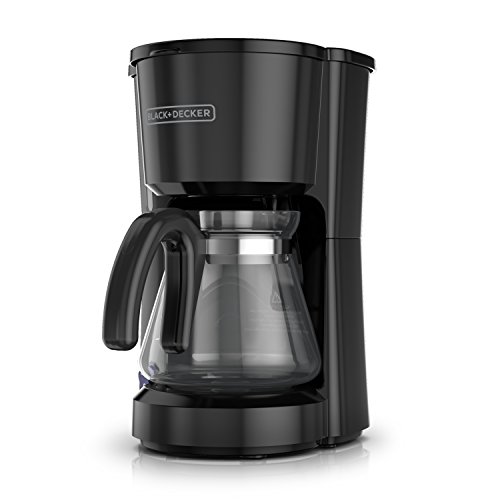
The BLACK+DECKER CM0700BZ 4-in-1 5-Cup Coffee Station is the multi-use pick of this guide, and its listing states the essentials in a single line: a four-in-one five-cup coffee station in black, model CM0700BZ. The four-in-one design is the detail that sets it apart from the plain drip makers here, since a coffee station combines the brewer with storage and serving features in one compact unit, which suits a small worktop where every inch counts.
In daily use, the coffee station behaves like a five-cup drip maker with a tidier footprint. Five cups is about two large mugs, which suits one or two people, and the station format keeps the carafe, the basket and the controls in one place. BLACK+DECKER is a long-established budget brand, so the design is a known quantity, and the model number on the listing makes it easy to confirm the match before ordering.
The trade-off is that a station format is a little more complex than a plain drip maker, and the listing gives few details beyond the capacity and the model number, so the buyer should check what the four functions are before ordering. The capacity is five cups, so a larger household will be brewing twice. Those are fair compromises for the compact format, but they are worth checking before you buy.
Strengths:
- Four-in-one station format keeps everything in one compact unit.
- Five-cup size suits one or two people without waste.
- Model CM0700BZ stated on the listing, so the match is easy to confirm.
Trade-offs:
- Station format is slightly more complex than a plain drip maker.
- Few details beyond capacity on the listing, so check the four functions.
- Five-cup capacity means brewing twice for a larger household.
It fits a small worktop where a tidy, all-in-one brewer matters more than extra features.
Best for: small worktops that want a compact coffee station. Not suited for: anyone who wants a timer or a larger pot.
Check price on Amazon: BLACK+DECKER CM0700BZ 5-Cup Coffee Station

3. Cuisinart 5-Cup Coffee Maker with Stainless Steel Carafe, Coffee Machine with Removable Water Reservoir, Charcoal Water Filter, 30-Minute Keep Warm, and Brew Pause, DCC-5570NAS, Stainless Steel
The Cuisinart 5-Cup Coffee Maker with Stainless Steel Carafe is the smart-carafe pick of this guide, and its listing states the essentials clearly: a five-cup coffee maker with a stainless steel carafe, a removable water reservoir and a charcoal water filter. The stainless steel carafe is the detail that sets it apart from the glass carafes on most budget makers, since steel does not break if it is knocked, keeps the coffee warm without a hot plate, and looks smarter on the worktop.
In daily use, the steel carafe changes the routine for the better. There is no glass to chip, no hot plate scorching the coffee, and the removable water reservoir lifts out for filling at the sink, which is easier than pouring water into a machine tucked under a cabinet. The charcoal water filter is a thoughtful extra, since it improves the taste of the water before it reaches the grounds. Cuisinart is a long-established kitchen brand, so the design is a known quantity.
The trade-off is that a steel carafe hides the coffee level, so you cannot see how much is left without lifting the lid, and the machine is still a simple five-cup brewer with no timer stated on the listing. The capacity is five cups, so a larger household will be brewing twice. Those are fair compromises for the steel carafe, but they are worth knowing before you buy.
Strengths:
- Stainless steel carafe will not break and keeps coffee warm without a hot plate.
- Removable water reservoir fills easily at the sink.
- Charcoal water filter improves the taste of the water.
Trade-offs:
- Steel carafe hides the coffee level.
- No timer stated on the listing.
- Five-cup capacity suits one or two people, not a crowd.
It fits a household that wants a tougher carafe and an easier fill, without paying for a larger machine.
Best for: buyers who want a steel carafe and a removable reservoir. Not suited for: anyone who wants to see the coffee level or a timer.
Check price on Amazon: Cuisinart 5-Cup Coffee Maker, Steel Carafe

4. Cuisinart Soho™ 5-Cup Coffee Maker, Truffle, DCC-5TRNAS
The Cuisinart Soho 5-Cup Coffee Maker, in Truffle, model DCC-5TRNAS, is the style pick of this guide, and its listing states the essentials in a single line: a five-cup coffee maker in the Soho range, in a truffle finish. The Soho range is Cuisinart’s compact, design-led line, and the truffle finish is the detail that sets this machine apart from the black plastic of most budget makers, since it suits a kitchen where the coffee maker is part of the look rather than hidden away.
In daily use, the Soho is a straightforward five-cup drip maker: two large mugs per pot, a compact body, and the same simple routine as the other small makers here. The truffle finish is a warm brown that sits well beside wooden worktops and cream tiles, and the compact Soho body fits a small kitchen. The model number on the listing makes it easy to confirm the match before ordering.
The trade-off is that the Soho is a style-led machine, so the finish is the main difference from the plainer five-cup makers, and the listing gives few details beyond the capacity and the model number. The capacity is five cups, so a larger household will be brewing twice. Those are fair compromises for the finish, but they are worth knowing before you buy.
Strengths:
- Truffle finish suits a warm-toned kitchen.
- Compact Soho body fits a small worktop.
- Model DCC-5TRNAS stated on the listing, so the match is easy to confirm.
Trade-offs:
- Style is the main difference from plainer five-cup makers.
- Few details beyond capacity on the listing.
- Five-cup capacity means brewing twice for a larger household.
It fits a small kitchen where the coffee maker is on display and the finish matters.
Best for: style-conscious small kitchens that want a truffle finish. Not suited for: anyone who wants extra features over looks.
Check price on Amazon: Cuisinart Soho 5-Cup Coffee Maker (DCC-5TRNAS)

5. BLACK+DECKER Single-Serve Coffee Maker with 50oz Reservoir | Single-serve brewer with 50oz reservoir, K-Cup and ground coffee compatibility and travel mug clearance.
The BLACK+DECKER Single-Serve Coffee Maker with a 50-ounce reservoir is the flexible pick of this guide, and its listing states the essentials clearly: a single-serve brewer with a 50-ounce reservoir, taking K-Cup pods and ground coffee. The dual brewing is the detail that sets it apart from the Keurig in the companion guide, since it brews a pod when you want speed and ground coffee when you want the lower cost, without needing a second machine.
In daily use, the 50-ounce reservoir is the difference between a single-serve brewer that needs filling every cup and one that brews several cups before a refill. You fill the reservoir once, drop in a pod or ground coffee, and brew cup after cup, which suits a household where people drink at different times. The ground-coffee option removes the pod cost for everyday drinking, while the pod option stays available for guests or for a quick cup.
The trade-off is that a single-serve brewer still brews one cup at a time, so serving two people means brewing twice, and the machine is larger than a basic single-cup brewer because of the reservoir. The listing also gives few details beyond the reservoir and the dual brewing, so the buyer should check the brew sizes before ordering. Those are fair compromises for the flexibility, but they are worth knowing before you buy.
Strengths:
- Brews both K-Cup pods and ground coffee, so the cost per cup is flexible.
- 50-ounce reservoir brews several cups before a refill.
- Single-serve speed with no pot to wash.
Trade-offs:
- One cup at a time, so serving two people means brewing twice.
- Larger than a basic single-cup brewer because of the reservoir.
- Few details beyond the reservoir on the listing, so check brew sizes.
It fits a household where people drink at different times and want both pod speed and ground-coffee economy.
Best for: mixed households that want pods and ground coffee in one machine. Not suited for: anyone who brews a full pot every morning.
Check price on Amazon: BLACK+DECKER Single-Serve Coffee Maker
6. Elite Gourmet EHC9420 Automatic 5-Cup Drip Coffee Maker, Pause N Serve | Reusable filter, On/Off switch, and water level indicator for easy monitoring
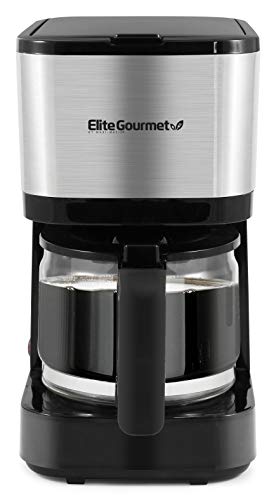
The Elite Gourmet EHC9420 Automatic 5-Cup Drip Coffee Maker is the automatic pick of this guide, and its listing states the essentials clearly: an automatic five-cup drip maker with Pause N Serve, a reusable filter, an on and off switch and a water level indicator. The automatic label is the detail that sets it apart from the simpler switch machines here, since it covers the brew cycle without the owner having to manage it, and the model number makes the match easy to confirm.
In daily use, the EHC9420 brews the same five-cup pot as the other small makers here, but the routine is smoother. Pause N Serve lets you pour a cup before the pot finishes, the reusable filter removes the paper cost, the water level indicator shows exactly how much you have poured in, and the on-off switch is plain and easy to use. Five cups is about two large mugs, which suits one or two people without waste.
The trade-off is that an automatic five-cup maker is still a basic machine with no timer and no strength control, and the reusable filter needs rinsing after every brew. The capacity is five cups, so a larger household will be brewing twice. Those are fair compromises for a straightforward automatic brewer, but they are worth knowing before you buy.
Strengths:
- Automatic brewing with Pause N Serve for an early cup.
- Reusable filter removes the cost of paper filters.
- Water level indicator and plain on-off switch keep the routine simple.
Trade-offs:
- No timer or strength control.
- Reusable filter needs rinsing after every brew.
- Five-cup capacity suits one or two people, not a crowd.
It fits a household that wants a straightforward automatic five-cup brewer with no paper-filter cost.
Best for: buyers who want an automatic five-cup maker with a reusable filter. Not suited for: anyone who wants a timer or a larger pot.
Check price on Amazon: Elite Gourmet EHC9420 5-Cup Drip Coffee Maker
Buying Guide: How to Choose a Coffee Maker Under 20 Bucks
Start with capacity, because it decides everything else. A four- or five-cup drip maker brews about two mugs, which suits one person or a couple, while a single-serve brewer makes one cup at a time and suits a desk. Count the mugs you actually drink each morning, not the cups on the box, since a coffee maker cup is smaller than a mug. Our guide to coffee makers under 30 covers the next step up if the budget stretches a little further, and the coffee makers under 100 dollars guide is useful if you want a larger machine. The 2-cup coffee makers guide is worth reading if you only ever brew for one.
Filters are the running cost that matters most at this price. A maker that takes standard basket filters costs very little to run, since a box of filters lasts months. A maker that needs special pods or a proprietary filter can cost more over a year than the machine itself, so check the listing for the filter type before you buy, and favour a reusable filter basket where one is included. The carafe is usually glass on a keep-warm plate at this price, so check for an auto shut-off, which removes the worry about leaving the plate on, and drink the coffee soon after brewing rather than leaving it to scorch.
Size is the last practical check, and it matters most in a dorm room or a small office. Measure the space where the maker will sit, including clearance for the lid and for pouring water in, and check that the cord reaches the socket without trailing across the desk. Finally, check the listing itself before you buy: confirm what is in the box, confirm the returns policy, and check that the machine is sold as new. A very cheap coffee maker is a simple appliance, so a careful few minutes at the listing stage is worth more than a rushed purchase.
Using and Looking After Your Coffee Maker
A new coffee maker rewards a calm first brew. Rinse the carafe and the filter basket, run one cycle with plain water to flush the machine, and then brew your first cup. Use fresh, cold water and coffee ground for a drip machine, since coffee ground for espresso will run through too slowly and coffee ground for a cafetiere will taste weak. Start with the ratio on the coffee bag and adjust from there, changing one thing at a time so you know what made the difference.
Daily care is simple but worth doing every time. Empty the carafe, rinse the basket and throw away the used grounds, since grounds left in the basket go stale and can clog the machine. Wipe the keep-warm plate so spilled coffee does not bake on, and leave the lid open for a while so the inside dries. These small habits take a minute and they keep the coffee tasting clean, because old coffee oils are the fastest way to spoil an otherwise good machine.
Descaling is the longer-term job, and it matters more in hard-water areas. Follow the intervals in the machine manual and use a descaler suited to coffee makers or plain white vinegar followed by several rinses with fresh water. Keep the machine on a stable, level surface away from the edge of the desk or worktop, and store it with the cord tucked away so it does not dangle where it can be caught.
Common Mistakes to Avoid
The most common mistake is buying the wrong size. A single-serve brewer for a two-coffee household means brewing twice every morning, while a five-cup machine for a desk wastes coffee and space. Count the mugs, not the cups on the box, since a coffee maker cup is smaller than a mug.
The second mistake is using the wrong grind. Drip machines need a medium grind, and coffee ground too fine will brew slowly and taste bitter, while coffee ground too coarse will taste weak and sour. The third mistake is leaving brewed coffee on the keep-warm plate for hours, which scorches it; brew what you will drink and switch the machine off.
The fourth mistake is ignoring the filter cost, which can exceed the machine cost over a year if the maker needs special pods. The fifth mistake is skipping descaling, which slows the machine and dulls the flavour. Finally, do not judge a maker on its first cup. Give it a week, learn its quirks, and only then decide whether it suits you.
Getting the Best Cup from a Maker Under 20 Bucks
A coffee maker under twenty dollars can brew a very good cup, but it needs a little more help from the owner than an expensive machine, because the machine itself does less of the work. The three things that matter most are the grind, the water and the ratio, and getting them right will do more for the taste than any feature on the box. Start with coffee ground for a drip machine, which is a medium grind, neither as fine as espresso nor as coarse as cafetiere coffee. If the coffee tastes bitter and the brew runs slowly, the grind is too fine. If it tastes weak and sour and the brew runs fast, the grind is too coarse. Buy smaller bags more often and keep them sealed, cool and dry, since coffee loses aroma quickly once the bag is open.
Water is the second lever, and it is the one most buyers ignore. A coffee maker is mostly water, so hard or heavily chlorinated tap water will show in the cup. If your tap water tastes of chlorine, let it stand in a jug overnight or use filtered water, and the difference in the cup is immediate. Fresh, cold water matters too: water that has sat in the tank overnight tastes flat, so fill the maker fresh each morning rather than topping up yesterday’s water.
The ratio is the third lever, and the simplest rule is one generous tablespoon of ground coffee per mug of water, adjusted to taste. Weighing the coffee for the first week is worth doing, since a scoop varies more than people think, and once you know the ratio that suits you, the routine becomes automatic. Keep the ratio steady and change only one thing at a time, so you know what made the difference when the cup improves.
Cleaning is the last piece, and it matters more on a very cheap machine than on an expensive one, because a budget maker has fewer parts to hide the effects of neglect. Rinse the basket and the carafe every day, wipe the warming plate so spilled coffee does not bake on, and descale every month or two in a hard-water area. A clean machine brews hotter and tastes cleaner, and the difference between a maker that is cleaned and one that is not is bigger than the difference between two makers on the same shelf. Our guide to coffee makers under 30 covers the next step up if you outgrow a maker in this price band, and the coffee makers under 100 dollars guide is useful if you want a larger machine. The 2-cup coffee makers guide is worth reading if you only ever brew for one.
Our Recommendation
If you want one answer, start with how many cups you drink. For one person who wants a simple pot each morning, a compact four- or five-cup drip maker is the pick that does the job with the least fuss and the lowest running cost. For a single cup at a desk or in a dorm room, a small single-serve brewer is the sensible choice. For the lowest possible running cost, choose the maker that takes standard basket filters.
Any of the machines in this guide will brew a decent cup once you learn it, so choose by the routine you will actually keep, not by the feature list you will admire once and forget.
Frequently Asked Questions
What is the best coffee maker under 20 bucks?
For most buyers it is a compact four- or five-cup drip maker from a known brand, since that size suits one person, takes standard filters and fits a small worktop or desk. Single-serve brewers suit a dorm room better, but cost more per cup.
Are coffee makers under 20 dollars any good?
Yes, for everyday drip coffee. A very cheap maker brews a clean cup with fresh water and the right grind, and the main compromises are capacity, a glass carafe instead of a thermal one, and fewer convenience features. The coffee itself depends more on fresh beans and clean water than on the machine.
How many cups does a 4-cup coffee maker make?
About one large mug or two small cups. A coffee maker cup is roughly five to six ounces, smaller than a standard mug, so count in mugs rather than cups when choosing a size.
Do I need special filters for a cheap coffee maker?
Most cheap drip makers take standard basket filters, which are cheap and widely available. Check the listing for the filter size before you buy, and be wary of any maker that needs a proprietary filter or pod, since that raises the running cost.
Can a coffee maker under 20 bucks brew good coffee?
Yes, for everyday drip coffee. A very cheap maker brews a clean cup with fresh water, the right grind and a clean machine, and the main compromises are capacity, a glass carafe instead of a thermal one, and fewer convenience features. The coffee itself depends more on fresh beans, clean water and the right ratio than on the machine, so a careful owner will get a better cup from a cheap maker than a careless owner will get from an expensive one.
How often should I descale a coffee maker?
Follow the manual, and more often in hard-water areas. As a rule, descale every month or two with a descaler made for coffee makers, or with white vinegar followed by several rinses with fresh water.


