The best chemicals to clean gas grills do one job well: they dissolve the grease, smoke residue and baked-on food that a dry brush leaves behind. A gas grill builds up layers of carbon on its grates, flavorizer bars, burners and drip pan, and once that layer hardens, scrubbing alone takes far longer than it should. A good grill cleaner softens that buildup so it wipes away, which keeps the burners firing evenly and keeps old grease from smoking into the next meal. The six products below are all spray or liquid cleaners made for grills, chosen because their formulas are built for grease on cooking grates and grill surfaces rather than for general household use. Each one works on a gas grill, and each one covers a slightly different cleaning job, from a quick wipe of the grates after dinner to a deep clean of a grill that has not been touched all season.
Before buying, it helps to know what kind of mess you are dealing with. Light grease from a week of burgers needs a different product than a year of carbonized drippings on a burner shield. Spray cleaners are the fastest option for grates and drip pans because they cling to vertical surfaces and start working within minutes. Heavy-duty formulas cut through thicker buildup but need more rinsing and ventilation. Citrus-based cleaners are a solid middle ground for regular maintenance. This guide explains what each cleaner does best, where each one falls short, and which one fits your grill and your cleaning routine.
A gas grill is worth cleaning well because it is also the grill most people cook on most often. Unlike a charcoal grill, which gets emptied of ash after every cook, a gas grill hides its mess: grease drips into a pan you cannot see, burner covers collect drippings that carbonize with every cook, and the inside of the lid turns brown with smoke. That hidden buildup changes how the grill cooks, with hot spots over clogged burners and flare-ups from a full drip pan. The right chemical does not just make the grill look better; it restores even heat, reduces flare-ups, and keeps old grease from flavoring the next meal. The products below were picked with that job in mind.
In this guide
Quick picks: best chemicals to clean gas grills
| # | Product | Where to buy |
|---|---|---|
| 1 | Goo Gone Grill and Grate Cleaner Spray | Check on Amazon |
| 2 | Kingsford Grill Cleaner | Check on Amazon |
| 3 | Weber Outdoor Grill Spray Cleaner and Degreaser | Check on Amazon |
| 4 | Zep Heavy-Duty Oven and Grill Cleaner | Check on Amazon |
| 5 | Citrusafe BBQ Grill Grate Cleaner | Check on Amazon |
| 6 | Weber Exterior Grill Cleaner Spray | Check on Amazon |
How the Picks Were Chosen for the Best Chemicals to Clean Gas Grills
Every product in this guide was found through the site catalog search for grill cleaners and gas grill cleaners, and each one was checked against the same rules. First, the product has to be a chemical cleaner, meaning a spray, liquid or foam made to dissolve grease, not a brush, scraper or tool. Second, the product name has to show it is made for grills, with grates, burners or grill surfaces named in the listing. Third, the product has to be a standard retail listing in its normal form, not a used, renewed or refurbished item. Products that were accessories, replacement parts or tools were left out, even when the search returned them, because a brush is not a chemical and a replacement burner is not a cleaner.
Within those rules, the picks were chosen to cover the range of real cleaning jobs. There are heavy-duty sprays for baked-on grease, a citrus formula for routine cleaning, a two-pack for grill owners who clean often, and an exterior spray for the outside of the grill. Bottle sizes run from 14.5 ounces to 23 fluid ounces, and one pick comes as a case of two 19-ounce bottles for owners who clean a large grill several times a season. No product was picked because of a low sticker value or a high review count, and no cleaning result in this guide comes from a lab test. The strengths and trade-offs for each product describe what its formula and format do, so you can match the cleaner to the mess in front of you.
One more rule shaped the list: every product had to be something a grill owner can actually buy and use without special equipment. No pick in this guide needs a pressure washer, a steam machine or a professional service visit. They are all sprays or liquids that work with a brush, a cloth and clean water, which is how most people clean a grill at home. That rule kept the guide practical: if a product needed equipment most readers do not own, it did not belong here, no matter how strong its formula looked on paper.
The Picks in Detail

Goo Gone Grill & Grate Cleaner Spray, 24 Oz
Goo Gone Grill and Grate Cleaner Spray is a 24-ounce spray built for the parts of a gas grill that collect the most grease: the cooking grates, the drip pan, and the surfaces around the burners. The listing states that it removes grease, grime and baked-on food on grates, drip pans and pellet grills, which makes it a general-purpose grill chemical rather than a single-surface product. The spray format matters here because it lets you coat a grate evenly without pouring cleaner over the grill, and the 24-ounce bottle holds enough for several full cleanings of a standard two- or three-burner grill.
Verified details: spray format; 24-ounce bottle; stated to remove grease, grime and baked-on food from grates, drip pans and pellet grills. The Goo Gone name is a familiar one in household cleaning, and this version is aimed squarely at outdoor cooking equipment rather than at kitchen counters.
Strengths:
- Spray format coats grates and drip pans evenly with little waste.
- Stated to cut grease, grime and baked-on food in one step.
- Large 24-ounce bottle covers several cleanings of a standard gas grill.
Trade-offs:
- Thick, carbonized buildup still needs a brush after the spray has worked.
- Spray mist drifts in wind, so it needs a calm spot and gloves.
- Needs a full rinse before the grill is heated for cooking again.
This cleaner fits the grill owner who cooks several times a week and wants one bottle that handles grates and drip pans after every few sessions. It is a maintenance cleaner first and a deep-clean product second.
Best for: regular grate and drip-pan cleaning on a gas grill.
Not suited for: a grill with a year of untouched carbonized buildup and no brush to follow up.
To use it, spray the grates while they are cool and still on the grill, or remove them and lay them flat on a protected surface for a heavier coat. Let the spray sit for the time the label recommends, then scrub along the bars with a grill brush and rinse with clean water. For the drip pan, pull it out, spray it, wait, and wipe the loosened grease into a bag before rinsing. The spray also works on the inside of the lid, where smoke residue collects; spray, wait, wipe with paper towels, and rinse. Because the bottle is large, keep it upright in a dry spot between uses so the sprayer keeps working through the season.
Check price on Amazon: Goo Gone Grill and Grate Cleaner Spray
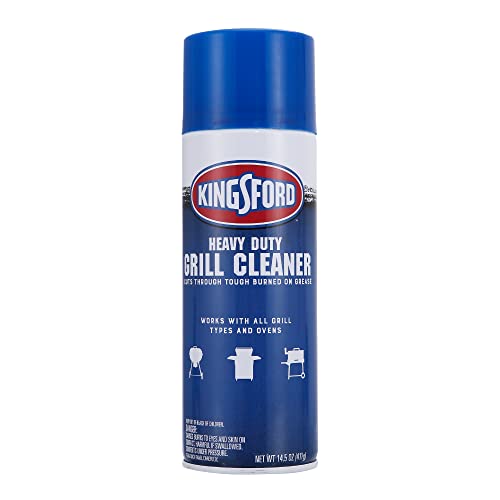
Kingsford Grill Cleaner, Heavy Duty, 14.5 Oz
Kingsford Grill Cleaner is a heavy-duty spray that also works as an oven cleaner and degreaser, and the listing states that it cuts burned-on grease and food on all barbecue types. That broad wording matters for a gas grill owner because the same bottle can handle the cooking grates, the inside of the lid and the firebox walls, where grease splatter bakes on over time. The 14.5-ounce size is smaller than the other sprays in this guide, which makes it a reasonable choice for a small grill or for someone who wants a heavy-duty formula without committing to a large bottle.
Verified details: heavy-duty spray; 14.5 ounces; listed as a grill cleaner, oven cleaner and degreaser; stated to cut burned-on grease and food on all barbecue types.
Strengths:
- Heavy-duty formula aimed at burned-on grease, not just light residue.
- Works on grates, lid interiors and firebox surfaces, not one part only.
- Smaller bottle suits a small grill or occasional deep cleaning.
Trade-offs:
- Smaller bottle runs out faster on a large multi-burner grill.
- Heavy-duty formulas need thorough rinsing before cooking.
- Strong fumes mean it should be used outdoors with ventilation.
This cleaner fits the owner of a grill that has gone too long between cleanings and needs a stronger formula for baked-on grease. It also fits anyone who wants one bottle that doubles as an oven cleaner.
Best for: heavy baked-on grease on grates and inside the grill body.
Not suited for: a quick wipe-down after a single cookout, where a lighter spray is enough.
To use it, apply the spray to the cool grate or firebox surface and let the heavy-duty formula work on the burned-on layer before scrubbing. Because it is a stronger product, give it a little more dwell time than a light cleaner, and wear gloves while you scrub. After scrubbing, rinse the surface thoroughly with clean water and wipe it dry, since heavy-duty residue left behind will smoke at the next cookout. This is a good product to keep for the start-of-season deep clean, when the grill has sat unused for months and the grease has hardened.
Check price on Amazon: Kingsford Grill Cleaner
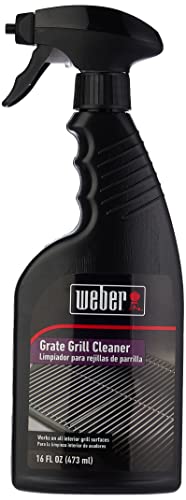
Weber Outdoor Grill Spray Cleaner & Degreaser, 16 Oz
Weber Outdoor Grill Spray Cleaner and Degreaser is a 16-ounce spray from the best-known name in gas grills, and the listing describes it as a safe, non-corrosive, effective formula for grill cleaning. That non-corrosive claim is the point of this product: it is made to clean a grill without attacking the metal underneath, which matters for stainless steel grates and burner parts that a harsh chemical can dull or pit over time. The spray works as both a cleaner and a degreaser, so it handles the two most common gas-grill messes, surface grease and stuck-on food residue, in a single pass.
Verified details: spray cleaner and degreaser; 16 ounces; described as safe and non-corrosive; from Weber, a grill maker rather than a general cleaning brand.
Strengths:
- Non-corrosive formula is gentler on grates and metal grill parts.
- Combines cleaner and degreaser in one spray.
- Made by a grill company, so the formula is aimed at grill surfaces specifically.
Trade-offs:
- 16-ounce bottle is mid-sized and may not last a full season of heavy use.
- A gentler formula may need a second pass on very thick buildup.
- Spray needs dwell time before wiping, so it is not instant.
This cleaner fits the Weber grill owner who wants a cleaner matched to the brand, and anyone with stainless grates who worries about harsh chemicals. It is a solid routine cleaner for a grill that gets cleaned often.
Best for: routine cleaning of stainless grates and grill surfaces without harsh chemicals.
Not suited for: a neglected grill where only a heavy-duty stripper will cut the buildup.
To use it, spray the cool grates and the inside surfaces, let the formula sit briefly, and wipe with a cloth or scrub lightly with a brush before rinsing. Because it is non-corrosive, it is a good choice for stainless grates that you want to keep bright, and for the painted surfaces inside the lid. Use it after most cooks while the grease is still fresh, and the grill will rarely need a heavy-duty deep clean. Keep the bottle near the grill rather than in a distant shed, since a cleaner that is easy to reach gets used more often.
Check price on Amazon: Weber Outdoor Grill Spray Cleaner and Degreaser

Zep Heavy-Duty Oven and Grill Cleaner, 19 Oz, Case of 2
Zep Heavy-Duty Oven and Grill Cleaner comes as a case of two 19-ounce bottles, and the listing states that it dissolves grease on contact on burners, grates and other grill surfaces. That contact claim is what heavy-duty grill chemicals are for: the formula is meant to start breaking grease down as soon as it lands, rather than needing a long soak before it does anything. The two-bottle case makes sense for a household that cleans a large gas grill several times a season, or for someone who also uses the same cleaner in the oven, since the product is listed for both jobs.
Verified details: heavy-duty oven and grill cleaner; 19-ounce bottles; sold as a case of two; stated to dissolve grease on contact on burners and grates.
Strengths:
- Two-bottle case covers many cleanings or a large grill.
- Stated to dissolve grease on contact, which shortens soak time.
- Listed for burners and grates, the two greasiest parts of a gas grill.
Trade-offs:
- Two bottles cost more upfront than a single spray.
- Heavy-duty strength needs careful rinsing before cooking.
- Bulky to store if grill cleaning is a rare job.
This cleaner fits the frequent griller with a large gas grill, or a household that wants one heavy-duty cleaner for both the grill and the oven. The case format rewards regular use.
Best for: frequent deep cleaning of a large gas grill, with a spare bottle on hand.
Not suited for: a small grill cleaned once or twice a year, where one bottle is plenty.
To use it, spray the burners and grates while the grill is cool, let the formula dissolve the grease on contact, and scrub the loosened residue away before rinsing. The two-bottle case means you can keep one bottle by the grill and one in storage, so you never run out halfway through a deep clean. Because this is a heavy-duty product, open the lid and work outdoors with air moving around you, and rinse twice on surfaces that touch food. The second bottle also covers the oven, which makes the case a practical buy for a household that cleans both appliances regularly.
Check price on Amazon: Zep Heavy-Duty Oven and Grill Cleaner

Citrusafe BBQ Grill Grate Cleaner, 23 FL OZ
Citrusafe BBQ Grill Grate Cleaner is a 23-fluid-ounce cleaner aimed specifically at grill grates, the part of a gas grill that touches food and collects the most residue. A grate-focused formula is useful because grates need a cleaner that works on cooking surfaces and rinses clean, without leaving a chemical film where food will sit. The large bottle size is generous for a single-product cleaner, which makes it a good value for owners who clean their grates after most cooks rather than once a season.
Verified details: barbecue grill grate cleaner; 23 fluid ounces; aimed at cooking grates.
Strengths:
- Formula aimed at grates, the surface that matters most for food contact.
- Large 23-ounce bottle lasts through many grate cleanings.
- Single-purpose product with a clear job, easy to use correctly.
Trade-offs:
- Grate-focused, so it is not the pick for lid interiors or drip pans.
- Still needs a brush for food that has carbonized onto the bars.
- Large bottle takes up shelf space in a small outdoor kitchen.
This cleaner fits the cook who cleans the grates after nearly every session and wants a dedicated grate product in a large bottle. It is the most focused pick in this guide.
Best for: regular grate cleaning after cooking, especially for frequent grillers.
Not suited for: cleaning the whole grill body, lid and burners in one job.
To use it, remove the grates or clean them in place while they are cool, apply the cleaner along the bars, and let it work on the food residue before brushing and rinsing. Grates clean best when they are handled separately, because you can reach both sides and see where residue remains. After rinsing, dry the grates or heat them briefly on the grill so they do not rust. Because the bottle is large, mark the purchase date on it and store it upright; a grate cleaner used after every few cooks will run out in a season, which is a sign the grill is being maintained properly.
Check price on Amazon: Citrusafe BBQ Grill Grate Cleaner
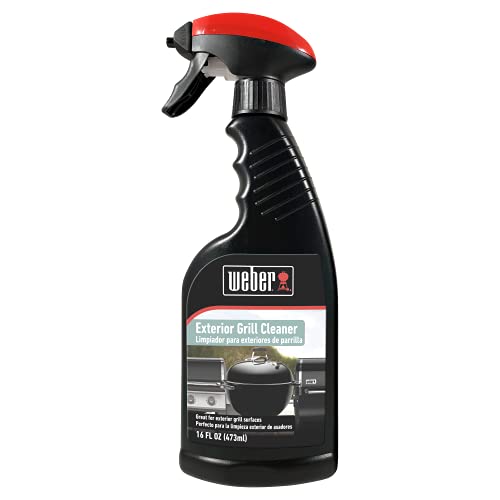
Weber Exterior Grill Cleaner Spray
Weber Exterior Grill Cleaner Spray is made for the outside of the grill, and the listing describes it as a streak-free spray for removing grease, grime and water spots. The outside of a gas grill gets dirty in a different way than the inside: grease splatter, fingerprints, dust and rain marks build up on the lid and side shelves, and a cleaner that leaves streaks behind makes the job look unfinished. A streak-free exterior spray solves that specific problem, and because it comes from Weber it is matched to the finishes used on Weber grills, including painted and stainless surfaces.
Verified details: exterior grill cleaner spray; described as streak-free; stated to remove grease, grime and water spots from outdoor grills.
Strengths:
- Streak-free finish keeps the outside of the grill looking clean.
- Made for exterior surfaces, a job the interior cleaners do not cover well.
- Handles grease, grime and water spots in one spray.
Trade-offs:
- Exterior-only, so it does not clean grates or burners.
- Best as a companion to an interior cleaner, not a standalone product.
- Spraying in direct sun can leave marks before wiping.
This cleaner fits the grill owner who cares how the grill looks on the patio and wants the lid and shelves to match a clean interior. It pairs with any grate cleaner in this guide.
Best for: keeping the outside of a gas grill clean and streak-free.
Not suited for: cleaning cooking grates, burners or drip pans.
To use it, spray the cool lid and side shelves, then wipe with a soft cloth in the direction of the metal grain to avoid streaks. Work in the shade when possible, since a hot lid in direct sun dries the spray before you can wipe it, which leaves marks. For stainless surfaces, a second light pass with a dry cloth brings back the shine. Keep a cloth with the bottle so the job takes two minutes after a cookout, and the outside of the grill will look as clean as the inside.
Check price on Amazon: Weber Exterior Grill Cleaner Spray
Quick Comparison of the Best Chemicals to Clean Gas Grills
| Cleaner | Size | Form | Best use |
|---|---|---|---|
| Goo Gone Grill & Grate Cleaner Spray | 24 oz | Spray | Grates and drip pans |
| Kingsford Grill Cleaner | 14.5 oz | Heavy-duty spray | Burned-on grease |
| Weber Outdoor Grill Spray Cleaner & Degreaser | 16 oz | Spray | Gentle routine cleaning |
| Zep Heavy-Duty Oven and Grill Cleaner | 19 oz x 2 | Heavy-duty spray | Burners and grates, frequent use |
| Citrusafe BBQ Grill Grate Cleaner | 23 fl oz | Liquid cleaner | Grate-only cleaning |
| Weber Exterior Grill Cleaner Spray | Spray | Exterior spray | Outside of the grill |
Buying Guide: Choosing a Chemical to Clean a Gas Grill
Start with the surface you need to clean. Grates, burners, drip pans and exteriors each take a different kind of chemical, and the best cleaner for one can be the wrong choice for another. For cooking grates, pick a cleaner that is stated for food-contact surfaces and that rinses clean, like the Citrusafe grate cleaner or the Goo Gone spray. For burners and the inside of the firebox, a heavy-duty formula such as Kingsford or Zep works better because the grease there is baked on and thick. For the outside, use an exterior spray like the Weber exterior cleaner, which is made to leave a streak-free finish on the lid and shelves. If you are choosing a grill to go with your cleaner, our guides to the best gas grills for steaks and the best charcoal grills under $100 cover the grill side of the decision.
Next, think about strength and safety together. Heavy-duty cleaners cut thick buildup faster, but they need more rinsing, more ventilation and more care around skin and eyes. Gentler formulas such as the Weber spray cleaner are better for frequent light cleaning, where the grill is never allowed to get truly dirty. Always check the label for the surfaces the product is made for, and never use an oven-only chemical on a part that touches food unless the label says it is safe for grills. Rinse every surface with clean water after cleaning, then heat the grill for a few minutes with the lid closed to burn off any residue before cooking.
Bottle size and format are the last practical points. A spray is easier to apply on vertical surfaces such as the inside of a lid, while a liquid can be poured onto a grate that has been removed and soaked. A 14- to 16-ounce bottle suits a small grill or occasional cleaning, while a 23- or 24-ounce bottle or a two-pack suits a large grill that gets cleaned often. If you cook with charcoal as well as gas, the best pellet grills under $1000 guide is worth a look for how pellet grills change the cleaning routine, since ash and grease mix differently there.
Grill material should shape the choice as well. Stainless steel grates and lids handle most cleaners, but a non-corrosive formula keeps them bright over years of use, which is why the Weber spray earns its place here. Porcelain-coated grates need a gentler touch and a cleaner that rinses fully, since chips in the coating expose the metal underneath. Cast iron grates should be cleaned and then dried and lightly oiled, because a chemical clean that leaves them wet will start rust quickly. Enameled fireboxes and painted lids do best with an exterior spray or a mild cleaner rather than the strongest heavy-duty formula. When in doubt, try the cleaner on a small hidden area first and check the result before coating the whole grill.
How to Use Grill Cleaning Chemicals Safely
The safest way to use a grill cleaner is to work on a cool grill. Let the grill cool completely after cooking, then remove the grates and the drip pan so you can clean them separately. Spray the cleaner evenly, give it the dwell time the label asks for, and then scrub with a grill brush before rinsing with clean water. For the inside of the firebox, spray the walls and the burner covers, wait, scrub lightly, and wipe out the loosened grease with paper towels before rinsing. Never spray cleaner directly onto a hot burner or into a lit grill, and never mix two different cleaning chemicals together.
After rinsing, dry the grates before putting them back, or heat the grill briefly to dry them and burn off any remaining residue. Store cleaning chemicals upright in a cool, dry place away from the grill and away from children, and keep the cap closed between uses. Check the drip pan after every few cooks, because a full drip pan is the most common cause of a grease fire. A clean grill lights faster, heats more evenly and lasts longer, which is the real return on a bottle of cleaner.
A seasonal routine keeps the work small. At the start of the cooking season, do a full deep clean: grates out, drip pan emptied, burners brushed, firebox wiped, exterior polished. That is the job for a heavy-duty product such as Kingsford or Zep. During the season, clean the grates after most cooks with a lighter spray such as Goo Gone or the Weber cleaner, and empty the drip pan every few sessions. At the end of the season, repeat the deep clean, dry everything, and cover the grill. A grill stored clean will not greet you with rust and rancid grease in spring, and the first cookout of the year will taste like food rather than last year.
Common Mistakes When Cleaning a Gas Grill
The most common mistake is cleaning a hot grill, which makes the chemical evaporate before it can work and can release fumes. Another is skipping the rinse: cleaner left on a grate will smoke and taste bitter at the next cookout, and it can damage the grate finish over time. A third mistake is using the same cleaner for everything; an exterior spray will not cut baked-on grease inside the firebox, and a heavy-duty interior cleaner can streak or dull the outside finish. Use the right product for each surface.
Other mistakes are easy to avoid once you know them. Do not use a wire brush with loose bristles on a grate you have just sprayed, since bristles can stick to the grate and end up in food. Do not forget the drip pan and the grease tray, which collect the most flammable residue. Do not store the grill with a wet interior after cleaning, since moisture causes rust on burners and grates. Clean little and often rather than once a year, and the job stays short.
A final mistake is buying a cleaner for the wrong fuel type. Gas grills collect grease and carbon, while pellet grills also collect ash that mixes with grease into a paste; a cleaner made for gas grills still works, but ash should be vacuumed out first rather than sprayed into a slurry. Charcoal grills collect ash and soot that rinse away more easily than baked-on gas-grill grease. Match the product to the grill you own, read the label every time rather than trusting memory, and keep a dedicated brush and cloth for the job so cleaning never depends on finding the right tool.
Final Recommendation
For most gas grill owners, the Goo Gone Grill and Grate Cleaner Spray is the best starting point: it covers grates and drip pans, comes in a large 24-ounce bottle, and handles the grease that builds up in normal weekly cooking. If your grill has heavy baked-on grease, step up to the Kingsford heavy-duty spray or the Zep two-pack, and pair the job with the Weber exterior spray to finish the outside. Clean the grates after most cooks, deep clean the burners and drip pan a few times a season, and the grill will cook evenly for years.
If you can only buy two bottles, make them the Goo Gone spray for the inside and the Weber exterior spray for the outside; that pair covers the whole grill for routine care. Add the Kingsford heavy-duty spray when the season starts or when a grill has been neglected, and keep the Citrusafe grate cleaner on hand if you cook often enough to clean the grates weekly. Whichever combination you choose, the habit matters more than the brand: a grill cleaned little and often stays easy to clean, while a grill left alone for a year turns a simple job into a project.
Frequently Asked Questions
Can I use the same chemical on the grates and the outside of the grill?
It is better not to. Grate cleaners are made to dissolve food grease and rinse clean, while exterior sprays are made to leave a streak-free finish. Using the wrong one in the wrong place can leave residue on food surfaces or streaks on the lid.
How often should I deep clean a gas grill?
Clean the grates after most cooks, empty and wipe the drip pan every few cooks, and deep clean the burners and firebox a few times per cooking season. A grill used daily in summer needs more frequent deep cleaning than one used once a month.
Do I need to rinse after using a grill cleaner?
Yes. Rinse every cleaned surface with water, then heat the grill briefly before cooking. Rinsing removes chemical residue that would otherwise smoke or affect the taste of food.
Can a grill cleaner damage stainless steel grates?
A non-corrosive cleaner such as the Weber spray is made to be gentle on metal, but any cleaner left on too long or used on a hot surface can dull a finish. Follow the label, rinse well, and do not let the product dry on the metal.
What is the difference between a grill cleaner and a grill degreaser?
A grill cleaner is a general product for grease, grime and baked-on food, while a degreaser focuses on dissolving grease. Many products do both, and the labels often overlap, so read the stated uses rather than the name alone.
Can I clean a gas grill with a kitchen oven cleaner?
Some products, such as Kingsford and Zep in this guide, are listed for both ovens and grills. A cleaner listed only for ovens should not be used on food-contact grill parts unless its label says it is safe for grills, because oven-only formulas can be too harsh for grates and burners.
How do I clean the burners on a gas grill?
Let the grill cool, remove the grates and flavorizer bars, and brush loose debris off the burners. Spray a heavy-duty grill cleaner on the burner covers and the firebox, let it work, scrub lightly, and rinse. Check the burner ports for clogs and clear them gently before putting the grill back together.


