A ceramic grill is a thick-walled, egg-shaped cooker, usually called a kamado, that holds heat and moisture very well. It can sear a steak, bake a pizza or smoke a pork shoulder, all on lump charcoal. Sizes run from tabletop models to big family cookers.
The six grills below span small, mid and large sizes from well-known names. We have not used these products ourselves, and we avoid exact figures. Sizes, accessories and what comes in the box change between listings and years, so confirm details on the current listing before buying. Ceramic is heavy and can crack if mishandled.
As an Amazon Associate we earn from qualifying purchases. Links below are affiliate links, and they do not change the product information we give.
What to Look For
| Feature | Why it matters |
|---|---|
| Size class | Small models suit one or two people; larger ones feed a crowd |
| Airflow | Top and bottom vents control temperature |
| Hinge and lid | A good hinge makes a heavy lid easier to handle |
| Stand | Cart or nest options affect mobility and height |
| Accessories | Pizza stones and heat deflectors expand what you can cook |
In this guide
Specs at a Glance
| Grill | Material | Size class | Notes |
|---|---|---|---|
| Kamado Joe Joe Jr. | Ceramic | Small, portable | Tabletop or on a stand |
| Big Green Egg MiniMax | Ceramic | Small | Sold with a stand or nest |
| Big Green Egg Small | Ceramic | Small to mid | Check the bundle on the listing |
| Vision Grills Classic B Series | Ceramic | Mid | Cart-style |
| Grill Dome Infinity | Ceramic | Mid to large | Check sizes and stands |
| Pit Boss Ceramic Kamado Grill | Ceramic | Mid | Check the model on the listing |
The 6 Best Ceramic Grills

Top pickBest for small households and tailgates
1. Kamado Joe Joe Jr.
A small ceramic kamado made to be portable enough for a picnic table or patio. It follows the Kamado Joe design with a dome lid and airflow vents, in a size suited to a small family.
Suits: small households and tailgates. Strengths: compact and capable. Weaknesses: limited grilling area. Skip it if you cook for crowds.


Best for apartments and small patios
2. Big Green Egg MiniMax
A small, transportable version of the Egg from the best-known name in ceramic cooking. It is made for two or three people. Check the listing for what stand or nest comes with it.
Suits: apartments and small patios. Strengths: a trusted brand. Weaknesses: a higher cost for its size. Skip it if you need a lot of space.

Best for a couple or small family
3. Big Green Egg Small
A step up from the MiniMax in cooking area, still compact enough for a small patio. It uses the same ceramic design and lump charcoal fuel as the rest of the line.
Suits: a couple or small family. Strengths: proven design. Weaknesses: sold in various bundles. Skip it if you want an all-in-one price.
View Big Green Egg Small on Amazon
Best for first-time ceramic buyers
4. Vision Grills Classic B Series
A cart-mounted ceramic kamado from a brand that has sold ceramic cookers for years. It targets buyers who want ceramic cooking in a more affordable package than the biggest names.
Suits: first-time ceramic buyers. Strengths: a friendlier cost. Weaknesses: fewer accessory options. Skip it if you want a premium ecosystem.

Best for buyers who want something different
5. Grill Dome Infinity
A ceramic kamado from Grill Dome, a company known for its colorful ceramic cookers. It is built for grilling, smoking and baking. Check the listing for size options and what is included.
Suits: buyers who want something different. Strengths: ceramic heat retention. Weaknesses: less common than the big brands. Skip it if you want local support.
View Grill Dome Infinity on Amazon
Best for shoppers who like the Pit Boss name
6. Pit Boss Ceramic Kamado Grill
Pit Boss, mostly known for pellet grills, also sells ceramic kamado models. Specs vary by version, so read the listing for size, cart style and included accessories.
Suits: shoppers who like the Pit Boss name. Strengths: a budget-friendly route into ceramic. Weaknesses: model details vary. Skip it if you want a long-standing ceramic line.
View Pit Boss Ceramic Kamado Grill on Amazon
Care and Setup
- Use lump charcoal or briquettes as the maker advises.
- Raise and lower the temperature slowly to protect the ceramic.
- Keep the lid closed when cold to keep moisture out.
- Get help moving the grill, since ceramic is heavy.
Mistakes to Avoid
- Heating too fast, which can stress the ceramic.
- Opening the lid too quickly when very hot.
- Placing it on an unstable surface.
- Skipping a cover when it is stored outdoors.
Choosing a Size Class for Your Household
Ceramic cookers come in a range of sizes, and picking the wrong one is the most common regret. Small and portable models suit one or two people, apartment balconies, camping and tailgating. They heat fast and use little fuel, but the grate holds only a few steaks or a small roast, and a whole brisket or a rack of ribs may not fit without cutting. Mid-size cookers handle a family dinner and the odd gathering. Large cookers feed a crowd and give you room to set up two cooking zones, but they cost more, weigh more and use more charcoal on each cook.
Be honest about how you cook. If you mostly make weeknight burgers and chicken, a smaller cooker will do and heats quickly. If you like long smoking sessions or entertain regularly, the extra grate area and the room for a heat deflector, drip pan and food can make a larger cooker much more useful. Compare the grate diameter on the listing, and remember that accessories such as a deflector or second-level rack reduce the usable space.
- One to two people: a small or portable class is usually enough.
- Family cooking: a mid-size class gives flexibility.
- Frequent hosting or large cuts: look at larger classes.
Think about storage and moving as well. A larger cooker on a cart is fine on a patio but hard to shift, while a small one can be carried by two people.
Starting and Managing the Fire
A ceramic grill is easy to run once you understand how it responds. The thick walls hold heat for a long time, so the fire changes slowly. That is helpful for steady cooking but means mistakes are hard to undo. If you overshoot the target temperature, the ceramic stays hot for a long while. The solution is to be patient and approach the target from below.
Light a small area of charcoal rather than the entire load. A smaller lit area grows into the rest of the fuel and avoids a sudden surge. Use a chimney starter, an electric starter or natural fire starters rather than heavy lighter fluid, which can leave an odor in the ceramic. Open the bottom vent and the top vent fully, close the lid and let the cooker approach the target.
As the temperature nears your goal, close the vents down to a small opening. The bottom vent mostly controls the amount of air feeding the fire, and the top vent fine-tunes it. Make small adjustments and wait about ten to fifteen minutes to see what happens before making another change. Keep a log of vent positions that held a certain temperature, and you will quickly build a reference for repeat cooks.
To end a cook, close both vents so the fire starves. Do not pour water on the fire or the ceramic.
Direct, Indirect and Two-Zone Setups
The real strength of a ceramic cooker is that it can act as a grill, an oven and a smoker. To use it that way, you need to control how heat reaches the food. For searing, cook directly over the coals with the grate close to the fire. For roasting, baking and smoking, put a heat deflector between the fire and the food so the heat circulates around the dome instead of hitting the food from below.
A two-zone setup puts the coals on one side and leaves the other side open. You can sear on the hot side and move food to the cooler side to finish gently. It works well for thick steaks, chicken pieces and sausages, since you can avoid flare-ups and burnt skins. Some cookers have rack systems that let you stack levels and cook at different distances from the fire, and these can help in a smaller cooker.
- Pizza: use a stone on a deflector, with the stone preheated as the manual advises.
- Low and slow: use a deflector, a drip pan and small amounts of wood chunks.
- Searing: open the vents, allow the fire to build and keep the lid ready.
Check which deflectors, stones and racks are sold for your model. Fit varies by brand and size, and the accessory must match your cooker, so read the listing carefully.
Handling, Moving and Protecting the Ceramic
Ceramic is strong at high temperatures but brittle against a hard knock. A fall, a hard bump or a sudden temperature shock can crack the body, the lid or the fire box. Treat the cooker with care from the moment the box arrives. Unpack with a helper, check for chips or cracks and report damage to the seller promptly. Lift only with the number of people the manual recommends, and use proper hand holds instead of the lid or handle.
Setup matters. Place the cooker on a level, stable base that can carry the weight, and do not use a wobbly table or a base that is not made for the cooker. Make sure the stand, cart or nest is a recommended fit, and lock the casters if there are any. Keep the base away from combustible surfaces and follow clearance guidance in the manual.
Heating and cooling slowly protects the ceramic. Raise the temperature gradually, particularly the first few times you use it. When the cooker is very hot, open the lid slowly in a small gap first, since a sudden rush of air can cause a flare of flame. Let the cooker cool completely before covering it.
A fitted cover helps keep rain out of the vents and off the finish. Avoid leaving the cooker uncovered through a wet season with the lid closed and damp inside, since moisture can encourage mold.
Upkeep, Gaskets and Signs of Trouble
A ceramic cooker needs little maintenance, but the parts that seal and hinge will wear. The felt or fiber gasket between the lid and base keeps the seal tight. When it flattens, frays or burns away, the cooker leaks air and loses temperature control. Replacement gaskets are normally available from the maker or a dealer, and installation is usually a matter of cleaning the surface and fitting the new gasket with the adhesive recommended.
Keep ash out of the bottom vent. A blocked vent starves the fire. Remove ash after the cooker has cooled and before the next cook. Clean the grate while it is warm, using a brush made for the grate material, and wipe the inside only as needed, since a bit of buildup is normal. If mold appears, a burn-off at high temperature followed by a gentle clean may help; follow the maker’s advice.
Check hardware occasionally. Bands, hinges and bolts can loosen with heat cycles, and a lid that sags or will not stay open is a safety concern. Look for hairline cracks in the ceramic, especially near the rim, vents and fire box. Small crazing in the glaze is common and often cosmetic, but a crack that runs through the body is a sign to stop and ask the maker for advice. If you cannot reach support or parts for a brand, think twice before relying on it as your main cooker.
Why Ceramic Grills Hold Heat So Well
A ceramic grill, often called a kamado, has thick ceramic walls that insulate the cooking chamber. That insulation keeps the temperature steady for hours with small adjustments to the vents, and it uses fuel efficiently. Cooks use the same grill for high heat searing, slow smoking and even baking, which makes it one of the more versatile outdoor cookers. The shape, a rounded egg or barrel, helps heat and smoke circulate around the food.
The trade-off is weight and care. Ceramic is heavy, and it can crack if it is dropped or subjected to sudden temperature swings. Most makers advise raising and lowering the temperature gradually and caution against opening the lid quickly at very high heat. Read the manual for the proper lighting and burping procedure.
| Size | Good for | Think about |
|---|---|---|
| Small | Couples, balconies where allowed, tailgates | Limited grate space |
| Medium | Families, everyday grilling | Most flexible |
| Large | Entertaining, big cuts | Weight and footprint |
Where It Sits: Stand, Table or Cart
Most kamado grills sit in a cart with wheels or a nest, which keeps the ceramic above the ground and lets you roll it. Some small models sit on a heat resistant table. Because of the weight, plan your location carefully and think about moving it. Place the grill on stable, level, non flammable ground, away from walls and anything that can burn. Check the clearances in the manual, and local rules about open flame.
- Check the weight limit of the stand or table.
- Lock the casters before you light the fire.
- Keep children and pets away from the hot ceramic.
- Use heat resistant gloves for the lid and vents.
Learning Vent Control
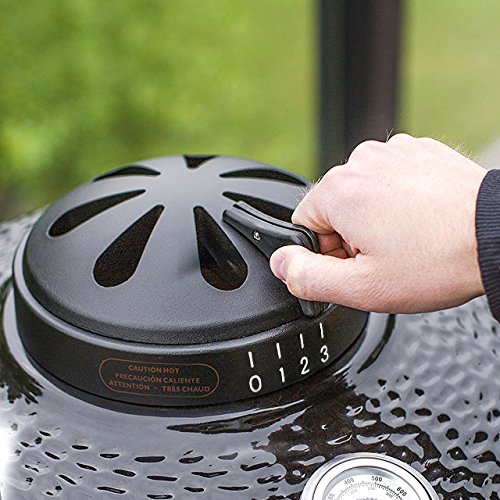
A kamado has a bottom vent and a top vent, and together they control the airflow. Open vents feed the fire and raise the temperature, and closing them slows it. Adjust gradually and wait before making another change, since ceramic responds slowly. Many people close the vents partly before reaching their target temperature, so they do not overshoot. For smoking, keep the temperature low and steady, and add wood chunks for smoke. For searing, open the vents and let the grill get hot, then close the lid to maintain heat.
Cleaning and Mistakes to Avoid
Let the grill cool completely and remove the ash with the tool the maker supplies. Avoid sudden cooling with water. Overfilling the firebox, opening the lid too quickly and using too much lighter fluid are common errors. Cover the grill when cool.
Accessories That Matter Most
A ceramic grill works well on its own, but a few add-ons change how you use it. A heat deflector, often a ceramic plate, sits between the fire and the food for indirect cooking, which is the key to smoking, roasting and baking. A grate extender or a second tier increases cooking space. A cast iron grate can give strong sear marks, and a pizza stone suits flatbreads. A thermometer at grate level provides a more accurate reading than a dome gauge alone. A fitted cover helps protect the finish and the hinge.
- Check which accessories come in the box and which are sold separately.
- Confirm that accessories match your grill’s size.
- Choose gloves that handle high heat comfortably.
- Keep a long ash tool and a brush for cleaning.
How to Read a Ceramic Grill Listing
Pay attention to the cooking diameter, the total weight and the type of stand. Check what material the bands and hinge are made from, since the hinge is what supports the heavy lid. Look for gasket details, because a felt or similar seal around the rim helps keep air out and heat in. Read whether the vents are easy to adjust and whether the grill includes a built in thermometer. Check the warranty on the ceramic, which varies by maker, and the service network for replacement parts. Finally, look at assembly instructions, since a grill of this weight may require help putting together.
A final tip is to practice with simple foods before you attempt a long smoke. Try chicken pieces or sausages to learn how your vents respond, then move on to larger cuts as your confidence grows.
Ceramic Grill FAQ
Is a ceramic grill the same as a kamado?
Generally yes. Kamado describes the style, and ceramic describes the material.
Can it smoke as well as grill?
Yes. The thick walls hold steady low heat, which suits smoking.
Is it fragile?
The ceramic can crack with impact or rapid temperature swings, so handle with care.
What fuel does it use?
Mostly lump charcoal. Check the maker’s guidance for briquettes.
How long does a ceramic grill take to heat up?
It depends on the size, fuel and weather, so rely on the manual. Because the ceramic holds heat, it is usually best to bring it up slowly, and allow time for the temperature to stabilize before cooking.
Can I use a ceramic grill in winter?
Yes, in most cases. Thick walls hold heat well in cold weather, but you may need more fuel and some wind protection. Check the manual for guidance.
What is a heat deflector for?
It blocks direct heat from the fire so the cooker works like an oven. It is essential for smoking, roasting and baking.
Can I cook pizza on a ceramic grill?
Many people do, using a pizza stone on a deflector. Make sure the stone and deflector suit your model and follow the maker's temperature guidance.
Do I need a cover?
A cover is a good idea, especially outdoors, since it keeps rain and debris out of the vents. Wait until the cooker is fully cool before covering it.
Why does my ceramic grill have a crack in the glaze?
Fine crazing in the glaze is common and is often cosmetic. A crack through the body is more serious, so stop using the cooker and ask the maker.
How do I put out the fire?
Close both vents and the lid so the fire loses air. Never douse it with water.
Choosing Ceramic Grills With a Clearer Eye: The Criteria That Actually Matter
Listings for ceramic grills tend to lead with the headline feature, but the choice you live with is decided by quieter details: how the unit fits your space, how it behaves on an ordinary weekday, and how much effort it asks from you after the cooking is done. Start by writing down the job you need done most often. A household cooking the same favourite meals every week needs something different from a household that experiments at weekends, and both need something different from someone buying for a second home, a rental or a gift. When the main job is clear, the rest of the comparison becomes much simpler, because features that do not serve that job can be ignored instead of paid for in money, space and upkeep.
Next, measure before you fall in love with a model. Measure the patio or outdoor cooking area, the access route to it, and the working room you need around it, then compare those figures with the dimensions on the listing and in the manual. Pay attention to fuel supply, connections and ignition, because a model that fits the gap but cannot be connected, vented or used as the maker intends is not a fit at all. Photographs on a listing can make almost anything look compact or spacious; your own tape measure is the only version of the truth that matters on delivery day.
Finally, judge the everyday details: how the controls feel and read, how the parts you touch daily are made, what is included in the box, and whether replacement parts and accessories are easy to find. Read the description of each pick in this guide again with those questions in mind. The right choice among ceramic grills is rarely the one with the longest feature list; it is the one whose size, controls and care routine match the way your household actually cooks, week after week.
Matching the Picks to Real Households and Real Routines
It helps to picture a week of use rather than a single special occasion. The scenarios below follow the descriptions already given for each pick in this guide, so you can line your own routine up against them and see which profile sounds most like your home.
Kamado Joe Joe Jr.. This pick is presented above as suiting small households and tailgates, with compact and capable as its noted strength. Picture it in a household that matches that description and it makes immediate sense: the strength is the thing you will benefit from every time you cook, not just on the first weekend. Keep the honest limitation in view as well, because the guide notes limited grilling area. If your routine leans heavily on exactly the thing it does less well, look again at the neighbouring picks before deciding, and remember the guide’s own steer that it is one to skip if you cook for crowds.
Big Green Egg MiniMax. This pick is presented above as suiting apartments and small patios, with a trusted brand as its noted strength. Picture it in a household that matches that description and it makes immediate sense: the strength is the thing you will benefit from every time you cook, not just on the first weekend. Keep the honest limitation in view as well, because the guide notes a higher cost for its size. If your routine leans heavily on exactly the thing it does less well, look again at the neighbouring picks before deciding, and remember the guide’s own steer that it is one to skip if you need a lot of space.
Big Green Egg Small. This pick is presented above as suiting a couple or small family, with proven design as its noted strength. Picture it in a household that matches that description and it makes immediate sense: the strength is the thing you will benefit from every time you cook, not just on the first weekend. Keep the honest limitation in view as well, because the guide notes sold in various bundles. If your routine leans heavily on exactly the thing it does less well, look again at the neighbouring picks before deciding, and remember the guide’s own steer that it is one to skip if you want an all-in-one price.
Vision Grills Classic B Series. This pick is presented above as suiting first-time ceramic buyers, with a friendlier cost as its noted strength. Picture it in a household that matches that description and it makes immediate sense: the strength is the thing you will benefit from every time you cook, not just on the first weekend. Keep the honest limitation in view as well, because the guide notes fewer accessory options. If your routine leans heavily on exactly the thing it does less well, look again at the neighbouring picks before deciding, and remember the guide’s own steer that it is one to skip if you want a premium ecosystem.
Grill Dome Infinity. This pick is presented above as suiting buyers who want something different, with ceramic heat retention as its noted strength. Picture it in a household that matches that description and it makes immediate sense: the strength is the thing you will benefit from every time you cook, not just on the first weekend. Keep the honest limitation in view as well, because the guide notes less common than the big brands. If your routine leans heavily on exactly the thing it does less well, look again at the neighbouring picks before deciding, and remember the guide’s own steer that it is one to skip if you want local support.
Pit Boss Ceramic Kamado Grill. This pick is presented above as suiting shoppers who like the Pit Boss name, with a budget-friendly route into ceramic as its noted strength. Picture it in a household that matches that description and it makes immediate sense: the strength is the thing you will benefit from every time you cook, not just on the first weekend. Keep the honest limitation in view as well, because the guide notes model details vary. If your routine leans heavily on exactly the thing it does less well, look again at the neighbouring picks before deciding, and remember the guide’s own steer that it is one to skip if you want a long-standing ceramic line.
Notice how the picks divide the work between them. Some are aimed at smaller households and tighter spaces, some at larger groups and heavier use, and some at buyers who simply want the least complicated route to a good result. There is no single winner for every home, and that spread is deliberate: choosing well means matching the profile to your household, not picking the name you recognise first.
Setup, Placement and the First Week
Good results with any grill or smoker start before the first meal. Setup means assembling it on a level surface, checking every fuel connection for leaks or damage, confirming clearances from walls, fences and overhangs, and running it empty the first time if the manual recommends a burn-in. None of that is glamorous, but each step prevents a common disappointment: a unit that rocks, a door that will not seal, a control that behaves oddly, or a first cook spoiled by packaging or residue that should have been dealt with beforehand. Keep the manual open during setup rather than relying on habit, because models that look alike often differ in one important instruction.
Placement deserves the same care. Think about where heat, steam, smoke or splashes will travel, what surfaces sit nearby, and whether you can move around the unit safely while carrying hot or heavy food. Think, too, about the unglamorous logistics: where ingredients and tools will wait, where finished food will land, and where you will put hot parts down. A cooking area that works on paper but forces you to cross a busy room with a full, hot load will annoy you every single time you use it.
Use the first week as a gentle trial rather than a test of limits. Cook familiar food, learn how the controls respond, and note anything that surprises you: uneven results, noises, smells from new materials, or parts that feel loose. Check fixings and connections again after the first few uses, because vibration and heat cycles can settle things. If something seems wrong, stop and consult the manual or the maker while the purchase is new, rather than adapting your cooking around a fault.
Everyday Technique: Getting More From the Same Equipment
Technique matters as much as the model you choose. In practice, good everyday use of a grill or smoker means preheating fully, cooking in zones rather than crowding one area, keeping the lid in the position the recipe needs, and letting the unit cool safely before you cover or move it. Those habits sound simple, yet they are where most disappointing results are born: food crowded so it steams instead of browning, equipment used before it is ready, or settings chosen by habit rather than by the food in front of you. Slow down the first minute of any cook and the rest usually follows.
Build a small rotation of reliable meals before you chase ambitious ones. When you know exactly how a familiar dish behaves, you can judge the equipment fairly and adjust one variable at a time: a different position, a little more or less time, a different order of cooking. Keep brief notes, even just on your phone, naming the dish, the setting and the result. After a month those notes are a personal manual that no general guide can match, because they describe your unit, your ingredients and your tastes.
Also plan the cook around the people eating. Work backwards from serving time, allow for resting and for the side dishes, and keep finished food somewhere sensible rather than rushing everything to finish at once. The cooks who seem effortlessly good with equipment like this are rarely doing anything mysterious; they have simply arranged the sequence so that the unit is never the bottleneck and nothing waits long enough to spoil.
Cleaning, Care and Storage That Keep It Working Well
Care is where ownership is won or lost, and for a grill or smoker the routine centres on grates, drip areas, burners or firebox and the exterior. Let everything cool to a safe point first, then clean while residue is still fresh enough to lift easily. Follow the manual on which parts can be immersed, which cleaners are safe and which tools to avoid, because coatings, seals and sensors vary and the wrong scourer or spray can do quiet, permanent damage. A soft cloth, mild soapy water and patience cover most of what everyday cleaning requires.
Make the routine small enough to actually happen. A quick wipe and empty after each use, a slightly deeper clean on a regular rhythm, and a periodic check of the parts that wear, block or perish will prevent the slow build-up that turns a pleasant appliance into a chore. While you clean, look at the equipment as well as at the dirt: seals that are cracking, surfaces that are changing, fixings that have loosened and vents that are clogging all announce themselves early to anyone who is paying attention.
Storage matters too. Keep the unit covered, dry and disconnected from its fuel source where the manual advises it. If it will sit unused for a long period, clean it thoroughly first, because old residue attracts smells and pests and hardens into a much bigger job. Store any removable parts and accessories together with the unit, and keep the manual with it or photographed on your phone, so the next person to set it up is not guessing.
Problems, Causes and Fixes Worth Knowing
Most problems with equipment in this category follow a pattern: the result disappoints, and the cause turns out to be preparation, loading or timing rather than a broken machine. Before concluding that a grill or smoker is faulty, repeat the cook with the basics corrected: the right preparation, sensible spacing, the setting the recipe or manual actually specifies, and enough patience to let the process finish. A surprising number of faults disappear at that point, and the ones that remain are much easier to describe accurately to the maker.
Keep a simple order of checks. Is the unit set up as the manual describes, with every part seated and every supply properly connected? Is it clean in the places that affect performance? Are you asking it to handle more, larger or wetter food than it is meant to? Work through those questions in order, change one thing at a time, and note the result. Random changes teach you nothing and can turn one small issue into several confusing ones.
Know, too, when to stop troubleshooting. Burning smells from electrical parts, damaged cords or connections, doors or lids that will not close and seal properly, fuel smells you cannot explain, and any sparking or smoke from places that should not smoke are all stop-and-seek-help signals. Unplug, switch off or disconnect as the manual directs and contact the maker or a qualified professional. No meal is worth pressing on with equipment that is telling you something is wrong.
How the Picks Compare, Side by Side
The table below restates the positioning already given for each pick in this guide, gathered in one place so the trade-offs are easy to scan. It adds no new claims; it simply lines up who each pick suits and what it does best, which is the comparison most buyers actually need.
| Pick | Suits | Strengths | Honest limitation |
|---|---|---|---|
| Kamado Joe Joe Jr. | Small households and tailgates | Compact and capable | Limited grilling area |
| Big Green Egg MiniMax | Apartments and small patios | A trusted brand | A higher cost for its size |
| Big Green Egg Small | A couple or small family | Proven design | Sold in various bundles |
| Vision Grills Classic B Series | First-time ceramic buyers | A friendlier cost | Fewer accessory options |
| Grill Dome Infinity | Buyers who want something different | Ceramic heat retention | Less common than the big brands |
| Pit Boss Ceramic Kamado Grill | Shoppers who like the pit boss name | A budget-friendly route into ceramic | Model details vary |
Read the table by elimination. Cross out any pick whose limitation collides with your most common cook, then compare what remains on the strength that matters most to you. If two picks still look equal, decide on the practicalities: the one that fits your space better, includes what you need in the box, or has the care routine you are most likely to keep. Those everyday factors separate near-equal products far more reliably than any headline feature.
Living With It: Costs, Parts and Knowing When to Replace
The purchase is only the first part of ownership. Over its life a grill or smoker asks for consumables, occasional replacement parts and a little of your time, and the picks in this guide differ in how easy those things are to find and fit. Before buying, check that the parts most likely to wear are available for the model you are considering, and keep the model details from your order somewhere safe. A photograph of the nameplate or box label, plus the order confirmation, makes any future conversation with a seller or maker far shorter.
Judge value across the whole period you expect to keep it. A model that suits your routine, cleans easily and has parts available will usually serve you better than a more elaborate one that fights your habits. Equally, replacing a worn part promptly is often the sensible middle path between struggling on and replacing the whole unit: if the body, controls and core function are sound, a fresh wear part can restore the performance you were missing.
Replacement time comes when repairs stop making sense: when the core function has degraded, when safety-related parts are involved, when parts are no longer available, or when your household has simply outgrown the size or style. When that day comes, this same process applies: define the job, measure the space, compare the current picks on the criteria above, and let your notes from the old unit tell you what to prioritise. Experience is the best buying guide there is, and by then you will have plenty of it.
One more check that saves real regret: read the listing photographs as carefully as the description. Photographs show what is actually included, the shape of the controls, the finish of the parts you will handle daily and sometimes accessories that the text mentions only in passing. Compare the photographs with the written list of what is in the box, and if the two disagree, ask the seller before ordering rather than assuming the more generous version is correct. Small mismatches discovered at checkout are trivial; the same mismatch discovered on your counter, with the old equipment already gone, is a genuine problem.
Think about who else will use the equipment, not just who is buying it. A partner, a teenager learning to cook, an older parent or a housemate will each approach the controls differently, and the best choice is one that everyone in the home can use confidently and safely. Clear markings, positive-feeling controls and a manual that explains things plainly matter more in a shared kitchen than in a solo one. If one person will do all the cooking, weight your own habits; if the work is shared, weight clarity and forgiveness, because equipment that only one person understands tends to be used by only one person.
Consider the noise, heat and smells a purchase brings into the home, because listings rarely dwell on them. Equipment that heats a small kitchen in summer, hums through an open-plan living space or holds cooking smells in soft furnishings changes how a home feels, not just how dinner turns out. None of that makes a product good or bad, but it does mean the right home for a given model depends on the building as well as the cook. Where you can, plan ventilation, placement and timing of big cooks around the comfort of the household, not only around the recipe.
Delivery and returns deserve a thought before you order, especially for anything large, heavy or fragile. Check how the item is delivered, whether it comes to the door or into the room, and what you are expected to do with packaging and with any old unit being replaced. Keep the packaging until the new equipment has been set up and tested through its basic functions, because returns and replacements are far simpler with the original box. Photograph the unboxing if anything looks damaged, and test the essentials promptly while the returns window is wide open rather than discovering a fault weeks later.
More Questions Buyers Ask About Ceramic Grills
How do I know if a model is too big for my space?
Measure the spot first, including room to stand, open the lid and move around safely, then compare those measurements with the footprint on the listing. A slightly smaller unit you can use comfortably almost always serves you better than the largest one that technically fits.
What should I check in the first week of ownership?
Work through the manual, test the ignition or heat-up routine, look for uneven heating with a simple cook, and check that every control, hinge and wheel or leg feels solid. Finding a loose part or a confusing control in week one is far easier to sort out than discovering it mid-cookout.
How do I keep results consistent from one cook to the next?
Keep notes on what you cooked, the settings you used and how the weather behaved, because wind and cold change how outdoor equipment performs. Repeat the same routine a few times before changing several things at once, so you can tell which change actually made the difference.
When is it worth paying for a heavier build?
A heavier build tends to reward people who cook often, cook in poor weather or plan to keep the same unit for many seasons. If you cook a few times a year and store the unit carefully, the practical gap may feel smaller than the difference in effort and cost suggests.
What accessories are genuinely useful at the start?
Start with the basics that protect the unit and make cooking safer and easier: a cover that fits, tools long enough for the heat, a reliable thermometer and cleaning tools suited to the surfaces. Add specialised extras only after your first cooks show you what you actually miss.
How should I handle a problem straight after delivery?
Photograph any damage before assembly, keep the packaging until you are sure everything is present and correct, and contact the seller or maker promptly with the model details from the listing. Do not modify parts to make them fit, because that can complicate a straightforward replacement.
The Short Version
For portable ceramic, the Kamado Joe Joe Jr. For a small premium Egg, the MiniMax. For a step up, the Egg Small. For a budget-friendly cart, the Vision Grills. For something distinctive, the Grill Dome. For a familiar name, the Pit Boss.


