Disclosure: As an Amazon Associate, airfryerkitchensupply.com earns from qualifying purchases. Links to Amazon on this page are affiliate links; they cost you nothing extra. Listing details such as price and availability change often, so check the current Amazon listing before you buy.
A good camping blanket does more jobs than almost any other piece of gear in the trunk. It sits over your knees at the fire ring, covers the seat of a cold truck, doubles as a ground cloth for lunch, and drapes over a sleeping bag when the temperature drops after midnight. This guide looks at the best camping blankets for people who want one dependable layer rather than a pile of mismatched throws.
We compare two families of blanket: puffy synthetic designs that pack small, and traditional wool designs that shrug off sparks and rough use. You will see who each one suits, what the maker says about it, and where each one falls short. Whether you sleep in a tent, a hammock, a camper van or an RV, you should finish with a clear idea of which style fits your trips and which product names are worth a closer look on the listing page.

Quick Comparison
| Product | Best for | Main point | Link |
|---|---|---|---|
| Rumpl Original Puffy Blanket | All-round camping | Packable insulated blanket for fire and tent | Check on Amazon |
| Kelty Bestie Blanket | Backpackers and hikers | Compact synthetic layer with a stuff bag | Check on Amazon |
| Therm-a-Rest Argo Blanket | Hammock campers | Wide insulated blanket from a sleep-gear specialist | Check on Amazon |
| Faribault Foot Soldier Wool Blanket | Campfire evenings | Classic wool blanket for rugged use | Check on Amazon |
| Arcturus Heavy Weight Wool Blanket | Car and truck camping | Thick wool-rich blanket with an outdoor following | Check on Amazon |
In this guide
How These Options Were Chosen
This article is built from manufacturer listings, published specifications and the way each blanket is positioned by its maker. We have not used these products ourselves, so we do not describe how they feel after a night outdoors. We looked for blankets from established outdoor or woolen-mill brands, with a clear purpose, a believable range of uses and no obvious gaps in the product information. Where a detail such as size, fill or fabric blend varies by color or version, we point you to the listing rather than guess.
The Best Camping Blankets for Cold Nights
Rumpl Original Puffy Blanket
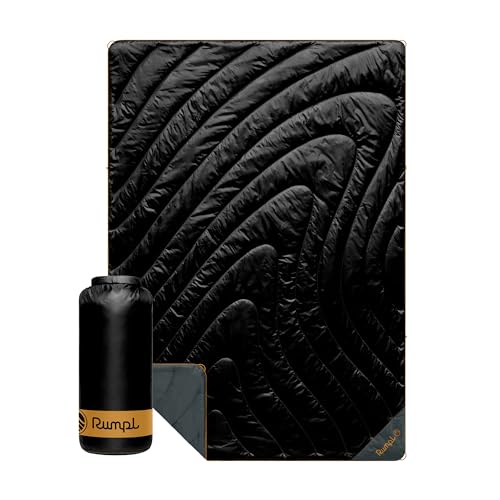
Rumpl is the name most campers think of when a puffy blanket comes up, and the Original Puffy is the model that built that reputation. It is an insulated synthetic blanket with a shell made to handle outdoor surfaces, so it is happy on a picnic table, a folding chair or the floor of a tent. It compresses into a stuff sack, which makes it easy to carry between the car and the campsite.
It suits couples sharing a chair, families who want a blanket that tolerates dirt, and anyone who prefers synthetic insulation because it is easier to live with when damp. The trade-offs are the usual ones for this style. It is not a replacement for a proper sleeping bag below freezing, and a puffy shell can be picked at by embers, so keep it a respectful distance from the flames. Colors, sizes and fill details change between releases, so confirm them on the listing.
Skip it if you want the rugged, spark-tolerant feel of wool, or if you need something far lighter than a full-size blanket for a multi-day hike.

Kelty Bestie Blanket
Kelty built its name on packs, tents and sleeping bags, and the Bestie Blanket brings that experience to a lightweight camp layer. It uses synthetic insulation in a blanket format and compresses into a bag, so it is a sensible choice for people who count space in their pack. It also pairs well with the idea of a backpacking blanket: you carry one wrapper that works as a lap cover, a shoulder cape and an extra layer over a quilt.
It is a strong fit for hikers who want something between a jacket and a sleeping bag, and for first-time campers who prefer to buy one well-known outdoor brand. The limits are practical. It is sized for personal use, not for spreading across a family of four, and a thin synthetic shell is not the same as a heavy wool blanket for sitting on rough ground.
Check the listing for the exact size and the water-resistance details of the version you are buying, because outdoor brands often tweak these from year to year.

Therm-a-Rest Argo Blanket
Therm-a-Rest is best known for sleeping pads, and the Argo Blanket carries that sleep-gear mindset into a blanket you can use in several ways. It is an insulated synthetic design that is popular with people who spend nights in hammocks, where cold air under the body is the main problem and a wide, easy-to-tuck blanket is useful. It also works as a camp wrap on a chilly evening or as an extra layer over a sleeping bag.
It suits hammock campers, van sleepers and anyone who likes a blanket that behaves like a top quilt without the cost of dedicated ultralight gear. It is not designed to be a ground mat, and a wide blanket takes more room in a pack than a small throw does. Always check the listing for the current size options, because these vary by version.
If you only sleep in a standard tent with a good sleeping bag, you may not need what this blanket does best.
Faribault Foot Soldier Wool Blanket
Faribault Woolen Mill is an American company with a long history of making wool blankets, and the Foot Soldier is its rugged, no-frills take on the classic camp blanket. Wool has a reputation in the outdoors for staying comfortable around a campfire, handling a splash of water better than many fabrics, and resisting stray sparks better than a thin synthetic shell.
This is the pick for campfire evenings, bushcraft trips and anyone who likes gear that looks better after a few seasons of use. It also looks right laid across a bed at home, so the blanket earns its place in the closet when camping season is over. The trade-offs are weight and bulk. Wool blankets do not squash into a tiny pouch, and wool can feel scratchy against bare skin for some people.
Check the listing for the exact fiber blend and size before buying, since wool products vary. Skip it if pack weight is your top concern.
Arcturus Heavy Weight Wool Blanket
Arcturus is a long-running name in military-style wool blankets, and the heavy weight blanket is the one that many car campers pick for cold nights. It is a thick, wool-rich blanket that works as a bed layer, a seat cover in a truck and a cozy wrap at the fire. Because it is so rugged, it also suits people who want a blanket for a van, a cabin or the back of an SUV.
The appeal is simple. It is straightforward, durable and meant to be used hard. The downsides are the usual wool ones: it is heavy, it takes up space and it needs a little care to keep clean. It is also not an ultralight option, so backpackers should look at the synthetic choices above.
Check the listing for the stated size and fiber content, as these can change by color or listing. This is a car-camping and cabin blanket first.
Best for Beginners
If this is your first camping blanket, the Rumpl Original Puffy Blanket is the easiest to understand. It packs into a sack, works in a chair, in a tent or in the car, and does not demand any special care. You get an obvious upgrade over a bedroom comforter, which is bulky, absorbs moisture and is awkward to carry. Begin with one dependable blanket and learn what your trips really need before you invest in more gear.
Best for Hammock and Hiking Trips
Hammock campers should look hard at the Therm-a-Rest Argo Blanket, because a wide insulated blanket is easy to wrap around your body. Hikers who want a lighter carry should compare it with the Kelty Bestie Blanket, which suits hiking blankets for camp use. A hammock still needs insulation underneath you, so treat any blanket here as a top layer rather than a full system.
Best for RV, Van and Car Camping
Space is less of a problem when your campsite is a few steps from a parking spot, an Airstream or an RV. That makes the Arcturus Heavy Weight Wool Blanket a natural choice, because bulk does not matter much when the blanket lives in a storage bin. A thick wool blanket also works as an extra bed layer in a camper, over a seat cover or on a cold tailgate evening.
Best for Winter and Campfire Nights
For winter camping and campfire blankets, the Faribault Foot Soldier Wool Blanket is the traditional answer. Wool is the classic fabric for a fire ring because it is more forgiving of drifting sparks than a thin synthetic shell. For snow camping or below-freezing nights, treat it as an extra layer on top of a sleeping bag made for the conditions, not as a stand-alone shelter from the cold.
How to Choose a Camping Blanket
Begin with the question of how you carry it. If the blanket travels from a trunk to a campsite and back, a heavy wool blanket is fine. If it travels in a pack, you need a synthetic or down-style blanket that squashes into a small bag. Down-style and ultralight designs are the most compact, but they are also the most delicate around fire and moisture, so read the maker’s care notes.
Next, think about the fabric. Wool is tough, handles sparks better and looks good at home, but it is bulky and can itch. Synthetic insulation is lighter, compresses well and usually dries faster. Fleece is soft and comfortable for lounging, though it is bulkier for the warmth it gives and can melt if it gets too close to a flame. Faux fur feels luxurious but is hard to pack and clean.
Then look at the size. A personal blanket suits a single sleeper or a chair, while a double-sized blanket gives couples room to share. Be honest about how many people will actually use it at once, because a bigger blanket is also a bigger load to carry and dry.
Also consider the season. A summer camping blanket can be thin and breathable because you only need it when the evening cools down. For shoulder season and cold trips, you will want more insulation, a blanket that can be layered with a sleeping bag and a surface that will not soak up dew.
- Check the packed size if you carry it by hand or in a pack.
- Look for a stuff sack or carry strap if you move camp often.
- Read the care label before you buy, as wool and synthetic items are washed differently.
- Do not rely on a blanket alone for freezing temperatures; pair it with a suitable sleeping bag.
Heat, Fire and Safety Notes
Keep any blanket away from open flames, hot coals and stove burners, and follow the maker’s care and use instructions. Embers can burn through many fabrics, including some that are treated to resist fire, so a respectful distance matters more than the label. If you carry a heated blanket, an electric or battery blanket must be used only as the maker instructs. Never use a heated blanket that is damaged, frayed or has a kinked cord, and check the listing for auto shut-off details before you buy.
Campfire rules vary by location, and fire bans are common in dry seasons, so check local rules before you build a fire. Do not wrap a sleeping child in a blanket near a fire and leave them unattended.
Care and Troubleshooting
A little care makes a camping blanket last for years. Shake it out after every trip, let it dry fully before you store it and keep it away from sticky sap, grease and campfire smoke where you can. Follow the care label on the product, because wool and synthetic fills need different treatment.
| Problem | What to try |
|---|---|
| Musty smell after storage | Air it in the shade before packing it away |
| Damp from morning dew | Dry it in the sun before you stuff it into its sack |
| Small snag or hole | Mend it early with a patch designed for the fabric |
| Wool feels stiff | Follow the maker’s wash instructions, then dry flat |
Wool, Synthetic Fill and Fleece Compared
The material of a camping blanket shapes almost everything about how it behaves outdoors, from the weight in your pack to how it handles damp air. Understanding the broad differences makes it simpler to read each product description, whether you are looking at the Rumpl Original Puffy Blanket, the Kelty Bestie Blanket or a traditional wool option such as the Faribault Foot Soldier Wool Blanket.
| Material | Typical strengths | Typical trade-offs |
|---|---|---|
| Wool | Dense, traditional feel and sturdy fabric | Heavier and bulkier to carry |
| Synthetic puffy fill | Lightweight and packs down small | Outer shell fabric needs gentle handling |
| Fleece | Soft, easy to wash and dry | Less compact than puffy designs |
| Wool blend | Balance of feel and durability | Fiber content varies by maker |
Each maker describes the fabrics differently, so read the product page for the actual fiber content and care instructions rather than assuming from the name alone.
Packing and Carrying Checklist
A blanket is only useful if you remember to bring it and it arrives dry. Before any trip, go through a short routine so the blanket is ready when the evening cools down.
- Check that it is clean and fully dry before you stuff it into its sack.
- Use the compression sack or straps that come with it, if any, and do not overstuff.
- Keep it in a waterproof liner or dry bag while it rides in the vehicle or pack.
- Bring a ground layer if you plan to sit or sleep outside, since a blanket alone will not stop cold rising from the earth.
- Store a spare small blanket in the car for unplanned stops.
If you are hiking, think about whether the weight of the blanket is worth carrying at all. For car and campsite trips the trade-off is far less important, so you can pick for comfort.
Sizing for One, Two or the Whole Family
Blanket size is easy to overlook until you are sitting under one that does not reach your shoulders. A single-person size works well for solo trips and chairs by the fire. Larger sizes suit couples, picnics and hammock setups, though a bigger blanket weighs more and takes up more room in the pack.
Look at the stated length and width in inches and compare it with how you plan to use it. Think about whether you will wrap it around yourself, lay it across your lap or spread it under a group. Sit down next to a measuring tape at home and imagine the blanket draped across you. That small exercise makes the numbers more meaningful.
Fit matters for sharing too. If two people will be using one blanket, a bit of extra width keeps everyone covered when they shift around. For children, a smaller blanket is easier to manage and less likely to trail near a fire, so check the maker’s safety guidance on distance from flames.
A Quick Decision Guide by Trip Type
If you are still unsure, narrow the field by thinking about the kind of trip you take most often.
- Short car camping trips: choose for comfort and size, since weight hardly matters.
- Backpacking or hammock nights: look for a compact, light blanket that packs small.
- Cold evenings by the fire: favor a sturdy, dense fabric and keep it well back from sparks, following the maker’s guidance.
- Shared trips with kids: a larger, easy-care blanket that can be washed after muddy weekends is a practical match.
Whichever you pick, read the care label before the first outing so you know how to wash and dry it when you get home.
Going Deeper: Judging a Camping Blanket by Warmth, Weight and Habit
A blanket is one of the simplest purchases in the home and one of the easiest to get subtly wrong, because the qualities that matter — warmth without stuffiness, weight without oppression, softness that survives washing — only reveal themselves over nights and weeks, not in a first touch. This section works through the judgements behind the reviews above, with particular attention to warmth around a campfire and in a tent, fabrics that shake off dirt and dew, and blankets that pack into a vehicle or a pack without complaint, so you can match a pick to the way you actually sleep, sit, travel or rest.
Warmth is a system, not a single number
No blanket warms you by itself; it works by trapping the warmth your body gives off, and how well it does that depends on the fabric, the weave or loft, and what sits above and below it in the layering system. A breathable mid-layer under a duvet behaves very differently from the same blanket used alone on a summer night. When you read the reviews above, keep asking which role each pick is really describing — sole cover, middle layer, sofa companion, travel layer — because a camping blanket judged in the wrong role will always seem to underperform, however well made it is. Matching role to product is the single biggest source of satisfaction with blankets.
Fabric and breathability, in plain terms
Natural fibres and synthetic fibres manage heat and moisture differently, and neither family is simply better. Cotton and wool tend to breathe and handle temperature swings gracefully; fleece and microfibre tend to feel instantly warm and dry quickly after washing; textured weaves add pockets of trapped air that change how warm a light blanket feels. The right answer depends on whether you run warm or cold, whether your room is heated or draughty, and — central to using a blanket outdoors, around damp, dirt and packing — how the blanket will be used most nights. If you share with a partner whose thermostat disagrees with yours, breathability and the ability to layer one side differently from the other matter more than any headline warmth claim.
Weight and drape: the feel nobody photographs
Two blankets of identical warmth can feel completely different because of weight and drape. A heavier blanket settles and stays put, which some sleepers find deeply reassuring and others find restrictive; a lighter one moves with you, layers easily and packs smaller, but can feel insubstantial on a cold night. Drape decides whether a blanket follows the shape of a bed or a body, or stands away in stiff folds that let cold air in at the edges. As you compare the picks above, translate their descriptions of weight and hand-feel into your own preference honestly — this is a taste judgement, not a quality judgement, and getting your own taste right matters more than any ranking.
Size, edges and the geography of a bed or sofa
Undersized blankets cause a disproportionate share of disappointment: they slip, they leave a partner uncovered, they refuse to tuck, and they look mean on a made bed. Oversizing has its own costs in washing bulk and storage. Think about overhang — how far the blanket should fall at the sides and foot — about whether it must serve two people fairly, and about where it will live when not in use. The reviews above note the intended settings for each pick; take those seriously, because a blanket designed as a personal throw will not become a generous bed layer by wishful thinking, and a full bed blanket folded on a sofa arm can overwhelm the seat it was meant to grace.
Washing reality: the care label is part of the product
Every blanket eventually meets a spill, a pet, a nosebleed, a muddy foot or simple accumulated weeks of use, and at that moment its care label becomes the most important page of its documentation. Before choosing, read what each pick asks of you: machine washing at home or specialist cleaning, tumble drying or patient air drying, a domestic machine that can actually fit it or a laundrette trip. A camping blanket whose care fits your laundry reality will be washed when it should be and will stay pleasant for years; one whose care is a burden will be washed late, reluctantly, or wrongly — and will age accordingly. This is doubly true where warmth around a campfire and in a tent, fabrics that shake off dirt and dew, and blankets that pack into a vehicle or a pack without complaint adds its own handling rules.
A Camping Blanket in Everyday Life: Four Scenarios
The ordinary night, repeated
Most nights are not extreme, and a blanket chosen for extremes often disappoints on the ordinary ones. Picture your typical night: room temperature roughly as usual, your normal sleepwear, your normal partner, pet or solitary arrangement. The right pick is the one that disappears into that routine — no mid-night kicking off, no reaching for an extra layer, no wrestling a corner back into place. When two picks above both appeal, ask which one serves the ordinary night better, and let unusual nights be handled by adding or removing a layer you already own.
The cold snap and the warm spell
Weather tests a blanket wardrobe at both ends. In a cold snap, layering beats thickness: a breathable blanket under a heavier cover, or two medium layers, usually sleeps warmer and more comfortably than one very heavy layer, because you can adjust in small steps. In a warm spell, the same blanket may become the only cover, and its breathability decides whether that works. A versatile camping blanket — one that layers gracefully and also stands alone — quietly covers more of the year than a specialist, which is why so many of the picks above are positioned as flexible layers rather than single-season tools.
Guests, children and borrowed blankets
Blankets get borrowed: by guests on the sofa bed, by children building dens, by whoever is ill on the couch. A household blanket therefore needs a second virtue beyond personal comfort — robustness under other people’s habits. It will be washed more often, treated less carefully, and judged by people with different warmth preferences. If your pick will live this double life, weight the reviews toward easy care, forgiving fabrics and sizes that work on both a bed and a sofa, and keep any genuinely delicate favourite for your own bed, where its care rules will actually be respected.
Evenings that are not about sleep at all
Reading in bed, watching a film, working from the sofa on a cold morning, sitting out a power cut with a hot drink — blankets spend a large share of their lives awake. In those hours, drape over shoulders, a size that covers legs without swamping, a texture that feels pleasant against hands and face, and a look that suits the room all matter more than overnight warmth engineering. Several picks above are explicitly aimed at this waking life as much as at sleep. Being clear about your own split between the two uses is one of the fastest ways to narrow the list.
Living With It: Washing, Storing and Making It Last
Wash a new blanket before its first real use if the maker advises it, and follow the label every time rather than a general habit carried over from other laundry: water temperature, cycle gentleness and drying method are chosen by the maker for that fabric and finish, and they are what stands between the blanket and early pilling, shrinkage or lost softness. Wash similar colours together, avoid overloading the machine — a blanket needs room to move and rinse clean — and make sure it is fully dry before it is folded away, because a blanket stored even slightly damp will smell of it for a long time and can mildew in a closed cupboard.
Between washes, air is your ally. Shaking a blanket out and airing it over a chair or line refreshes it without the wear of a full wash, and rotating two blankets, if you own them, rests the fibres of each. Treat spots promptly and gently, blotting rather than scrubbing, and check any cleaning product against the maker’s guidance first. For the specific handling that using a blanket outdoors, around damp, dirt and packing can involve — electrical parts, delicate loops, unusual weights or premium fibres — the maker’s instructions are not cautious boilerplate; they are the difference between a blanket that lasts and one that is quietly ruined by kindness, so keep them and follow them literally.
Storage decides how a blanket greets you next season. Store it clean, completely dry, loosely folded or rolled in a breathable place, rather than compressed in a sealed bag unless the maker recommends that for the specific fill. Keep it away from sustained heat and strong light, and check on stored blankets occasionally so a problem is found early. When you bring one back into use, a good shake and an airing usually restore it; if it comes back smelling stale after proper storage, a wash per the label, not perfumed sprays, is the honest fix. Handled this way, a good blanket’s second and third years are as comfortable as its first.
Know, too, when a blanket is telling you it is done. Thinning patches, seams giving way, a texture that stays harsh after correct washing, or — for anything with electrical components — any damage to cords, controls or fabric at all, are retirement signals rather than challenges. Retire electrical bedding at the first sign of damage and follow the maker’s guidance on replacement, because safety margins matter more than squeezing out another season. A retired blanket often still serves in a garage, a car boot or a pet’s corner, which is a more honourable second life than the back of a cupboard.
The Picks in This Guide, Compared in Plain Language
Comparison tables are useful, but they compress a lot. What follows restates, pick by pick, the role each option in this guide was chosen for, using only the positioning already given in the reviews and the comparison table above. Read it as a shortlist-narrowing exercise: find the description that sounds most like your household and your habits, then go back and re-read that product’s full review with fresh eyes. If two picks both sound right, the deciding factor is usually not a headline feature but a small everyday detail — how a camping blanket is cleaned, where it will live, or who else will use it.
Rumpl Original Puffy Blanket. In the guide above, this pick is presented as the choice for all-round camping, with the main point being packable insulated blanket for fire and tent. That positioning matters more than any single feature. If that description matches the way you actually live — the room, the people, the routine — then the compromises noted in its review are the ones you are most likely to accept happily. If it does not match, a nominally stronger pick on paper will still feel like the wrong purchase a month later, so let the fit with your routine lead and the feature list follow.
Kelty Bestie Blanket. In the guide above, this pick is presented as the choice for backpackers and hikers, with the main point being compact synthetic layer with a stuff bag. That positioning matters more than any single feature. If that description matches the way you actually live — the room, the people, the routine — then the compromises noted in its review are the ones you are most likely to accept happily. If it does not match, a nominally stronger pick on paper will still feel like the wrong purchase a month later, so let the fit with your routine lead and the feature list follow.
Therm-a-Rest Argo Blanket. In the guide above, this pick is presented as the choice for hammock campers, with the main point being wide insulated blanket from a sleep-gear specialist. That positioning matters more than any single feature. If that description matches the way you actually live — the room, the people, the routine — then the compromises noted in its review are the ones you are most likely to accept happily. If it does not match, a nominally stronger pick on paper will still feel like the wrong purchase a month later, so let the fit with your routine lead and the feature list follow.
Faribault Foot Soldier Wool Blanket. In the guide above, this pick is presented as the choice for campfire evenings, with the main point being classic wool blanket for rugged use. That positioning matters more than any single feature. If that description matches the way you actually live — the room, the people, the routine — then the compromises noted in its review are the ones you are most likely to accept happily. If it does not match, a nominally stronger pick on paper will still feel like the wrong purchase a month later, so let the fit with your routine lead and the feature list follow.
Arcturus Heavy Weight Wool Blanket. In the guide above, this pick is presented as the choice for car and truck camping, with the main point being thick wool-rich blanket with an outdoor following. That positioning matters more than any single feature. If that description matches the way you actually live — the room, the people, the routine — then the compromises noted in its review are the ones you are most likely to accept happily. If it does not match, a nominally stronger pick on paper will still feel like the wrong purchase a month later, so let the fit with your routine lead and the feature list follow.
Wool. In the guide above, this pick is presented as the choice for dense, traditional feel and sturdy fabric, with the main point being heavier and bulkier to carry. That positioning matters more than any single feature. If that description matches the way you actually live — the room, the people, the routine — then the compromises noted in its review are the ones you are most likely to accept happily. If it does not match, a nominally stronger pick on paper will still feel like the wrong purchase a month later, so let the fit with your routine lead and the feature list follow.
Synthetic puffy fill. In the guide above, this pick is presented as the choice for lightweight and packs down small, with the main point being outer shell fabric needs gentle handling. That positioning matters more than any single feature. If that description matches the way you actually live — the room, the people, the routine — then the compromises noted in its review are the ones you are most likely to accept happily. If it does not match, a nominally stronger pick on paper will still feel like the wrong purchase a month later, so let the fit with your routine lead and the feature list follow.
Fleece. In the guide above, this pick is presented as the choice for soft, easy to wash and dry, with the main point being less compact than puffy designs. That positioning matters more than any single feature. If that description matches the way you actually live — the room, the people, the routine — then the compromises noted in its review are the ones you are most likely to accept happily. If it does not match, a nominally stronger pick on paper will still feel like the wrong purchase a month later, so let the fit with your routine lead and the feature list follow.
Wool blend. In the guide above, this pick is presented as the choice for balance of feel and durability, with the main point being fiber content varies by maker. That positioning matters more than any single feature. If that description matches the way you actually live — the room, the people, the routine — then the compromises noted in its review are the ones you are most likely to accept happily. If it does not match, a nominally stronger pick on paper will still feel like the wrong purchase a month later, so let the fit with your routine lead and the feature list follow.
One honest way to finish the comparison is to write down, in a single sentence, the job you most need this camping blanket to do, and then check which pick’s stated role answers that sentence with the fewest conditions attached. Buyers who do this tend to be more satisfied than buyers who chase the longest feature list, because everyday satisfaction comes from the match between one main job and one well-chosen product, repeated daily, rather than from rarely used extras.
More Questions Buyers Ask About Camping Blankets
How many blankets does a household actually need?
Fewer than shops suggest, if each one has a clear role. A sensible core is one main layer per bed, one spare for washing days and guests, and one sofa or reading blanket per living space that actually gets used. Beyond that, buy to replace a role that is failing — too warm, too small, too hard to wash — rather than adding variety for its own sake. The picks above map to distinct roles; choosing by role, and letting each role be filled once and well, gives you a smaller, better blanket cupboard.
Should I choose natural or synthetic fibres?
Choose by behaviour, not by ideology. Natural fibres generally breathe well, handle temperature swings gracefully and age softly, but can ask for gentler washing and cost more care. Synthetics generally feel instantly warm, dry quickly, resist stains and suit busy laundry routines, but can feel clammy to warm sleepers and hold odours if washed late. Your own warmth, your laundry habits and the role the blanket will play — the themes running through warmth around a campfire and in a tent, fabrics that shake off dirt and dew, and blankets that pack into a vehicle or a pack without complaint — point to the right family far more reliably than any general claim about which fibre is best.
Why does my blanket feel warm in the shop and different at home?
Because warmth is a system. In a shop you test a blanket against your hands, in a warm room, over clothes, for a minute. At home it works over hours, against skin and sleepwear, under or over other layers, in a cooler room. That is why this guide keeps returning to role and layering: judge a pick by the job described in its review, set it up in that job at home, and give it a few nights before concluding. Most apparent disappointments are role mismatches, and role mismatches are fixable by re-layering rather than replacing.
How often should a blanket be washed?
As often as its use demands and its label allows. A blanket used nightly against skin needs regular washing; one used over a duvet cover or as an occasional sofa layer needs less. Illness, spills, pets and guests all move the date forward. The practical rule is to wash on a rhythm you will actually keep, and to favour, when choosing between picks, the one whose care instructions fit that rhythm. A blanket washed correctly and often will outlast and out-feel a nominally finer blanket whose care you keep postponing.
Can one blanket really work all year round?
One blanket can anchor the year if it is breathable, mid-weight and good at layering — used alone in warm months, under a duvet in cold ones, over a sheet on in-between nights. What a single blanket cannot do is be simultaneously the lightest summer cover and the warmest winter layer at their extremes. Most households are happiest with one versatile anchor, exactly the role several picks above are built for, plus the option of adding a layer they already own when the weather insists.
What should I check when a new blanket first arrives?
Unfold it fully and check seams, edges and surface for flaws while returning it is still simple. Note any maker instruction about a first wash, shedding, or settling-in, and follow it before judging texture or loft. Then use it in its intended role for a few nights or evenings — first-touch judgements mislead with blankets more than with almost anything else in the home, because hands and whole bodies disagree. Keep the care label findable; you will want it at the first wash, not after it.
Frequently Asked Questions
Are wool blankets good for camping?
Many campers like them because wool is tough, handles sparks better than a thin synthetic shell and feels cozy at a fire. The downside is weight and bulk, so wool suits car camping and cabin stays better than long hikes.
What is the best blanket for hammock camping?
A wide, insulated blanket that is easy to wrap and tuck works well. The Therm-a-Rest Argo Blanket is designed around that idea, though you still need insulation under your body.
Can I use a heated blanket for camping?
Only if you have a safe power source and follow the maker’s instructions. Check the listing for details such as voltage, power source and auto shut-off, and never use a heated blanket that is damaged or frayed.
Do I need a special blanket for an RV or Airstream?
No. Any rugged blanket works, but a thick wool blanket is a comfortable pick because storage space is easier to find in a camper than in a pack.
What is a pocket blanket?
It is a small, foldable blanket that packs to a compact size and suits day hikes, picnics and quick stops. A full-size insulated blanket is a better bet for cold nights.
Is a space or solar blanket the same thing?
No. Reflective emergency blankets are survival gear for emergencies, while the blankets in this guide are made for regular comfort around camp.
Can a blanket replace a sleeping bag below freezing?
Not by itself. Use it as an extra layer over a bag that suits the expected temperatures, and plan for the coldest part of the night.
Bottom Line
For most campers, the Rumpl Original Puffy Blanket is the simplest way to add a flexible layer to a trip. Choose the Kelty Bestie Blanket for lighter carrying, the Therm-a-Rest Argo Blanket for hammock nights, and a wool option such as the Faribault Foot Soldier or Arcturus Heavy Weight blanket when you travel by car and want rugged comfort at the fire. Check each listing for size, fabric and care details before you order.