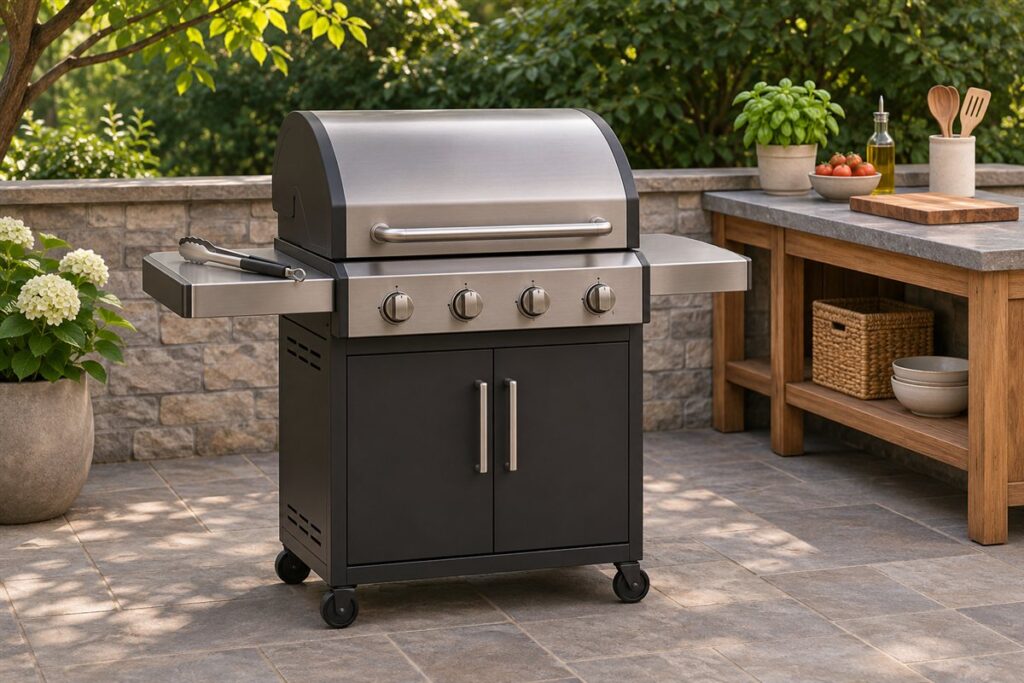
A grill cover shields a barbecue from rain, sun, dust and debris between cookouts. Covers come in universal shapes and model-specific cuts, in fabrics from light polyester to heavier laminated materials. We have not used these products ourselves, so this guide focuses on how to choose rather than how a cover held up.
Fit comes first, then fabric and the small details such as straps and vents. Use the table below, then the specs section to line up the six covers by the same factors. Climate plays a part too: strong sun, heavy rain, snow and coastal air each put different demands on fabric and stitching, so think about the weather your grill actually sees.
As an Amazon Associate we earn from qualifying purchases. Links on this site are affiliate links, and they do not change the information we give.
What to Look For
| Factor | Why it matters | What to check |
|---|---|---|
| Dimensions | A cover that is too short leaves wheels and the base exposed. | Measure width, depth and height of your grill with the lid closed and shelves in place. |
| Fabric | Polyester, vinyl and laminated fabrics differ in weight, flexibility and weather response. | Read the material, weight in denier or ounces and any coatings. |
| Water handling | Seams and coatings affect how water sheds. | Look for sealed seams or a waterproof coating described by the maker. |
| Closures | Straps and buckles help hold the cover in wind. | Check for adjustable straps, drawcords or hem hooks. |
| Vents | Vents let moist air escape and reduce trapped dampness. | See whether vents are described. |
| Color and lining | Light colors reflect sun; a soft lining is gentler on the finish. | Read the color options and lining notes. |
Setup and Care Tips
- Let the grill cool fully before putting on the cover.
- Brush off loose debris and wipe grease before covering.
- Fasten the straps in windy weather.
- Shake off standing water and let the cover dry out when it gets soaked.
- Wash it according to the maker directions and air dry.
Mistakes to Avoid
- Buying by grill type and not measuring.
- Covering a warm grill.
- Ignoring closures, which matter in wind.
- Leaving a wet cover on for long periods.
- Assuming one size fits all brands and shapes.
FAQ
How do I know which size cover to buy?
Measure the grill at its widest, deepest and tallest points, including side shelves and handles, then compare to the stated cover dimensions. A little extra length helps.
Do covers need to be waterproof?
Many are described as water resistant or waterproof. Coatings, seams and vents all influence how well a cover handles wet weather, so read what the maker states.
Matching It to Your Grill and Yard
A cover fits a grill and a climate, so look at both. Begin by measuring width, depth and height of the grill with lid closed, then add any side shelves, handles, chimneys or racks that stick out.
Gas Grills with Side Tables
Measure with the side tables up. Folding tables and removable burners change the overall shape, so choose a cover sized for the form you usually leave out.
Kettle and Round Styles
Measure across the diameter and top to bottom including the lid handle. A snug fit helps a cover stay in place.
Built-in and Island Grills
These need covers shaped for the opening, not freestanding dimensions. Check the shape described by the maker.
Questions to Ask Before You Buy
- Is my grill fully cooled before I put the cover on?
- Does my yard get strong wind, so I need straps or elastic hems?
- Will the cover face direct sun for long stretches?
- Do I want a cover that is easy to pull on with one hand?
- Where will I store the cover when the grill is in use?
Seasonal and Storage Notes
Before winter or a long break, clean the grill, let it dry, and make sure the cover is dry as well. Trapped moisture can encourage mildew under any cover. Shake off leaves and debris regularly, and check the maker’s cleaning instructions before washing. When the cover is not on the grill, fold it loosely in a dry spot instead of creasing it sharply.
Who Should Skip It
If your grill lives in a garage or a covered porch that stays dry, a cover may be optional. Some people prefer a rigid cabinet or storage box for long-term protection.
Feature Trade-offs
| Choice | Upside | Consideration |
|---|---|---|
| Heavy fabric | Feels sturdy | Harder to lift and fold |
| Lighter fabric | Easy to handle | May wear sooner in harsh sun |
| Vented panels | Lets air move | Check how they handle rain |
| Tie-down straps | Help in gusty yards | Another step each time |
Think about how often you cook and how much weather your yard sees. A cover that is easy to put on gets used more often, which usually does more for your grill than any single fabric detail. Check the maker’s guidance on care and cleaning.
The Short Version
Measure your grill, then compare fabric, closures and ventilation. A cover that fits properly and suits your weather is the right one to choose. Take two minutes with a tape measure and the choice becomes much easier. Read each listing for the stated dimensions, fabric and closures, and compare them side by side rather than relying on one headline feature. If a detail is missing from a listing, treat it as unknown and look for another source before you decide.