
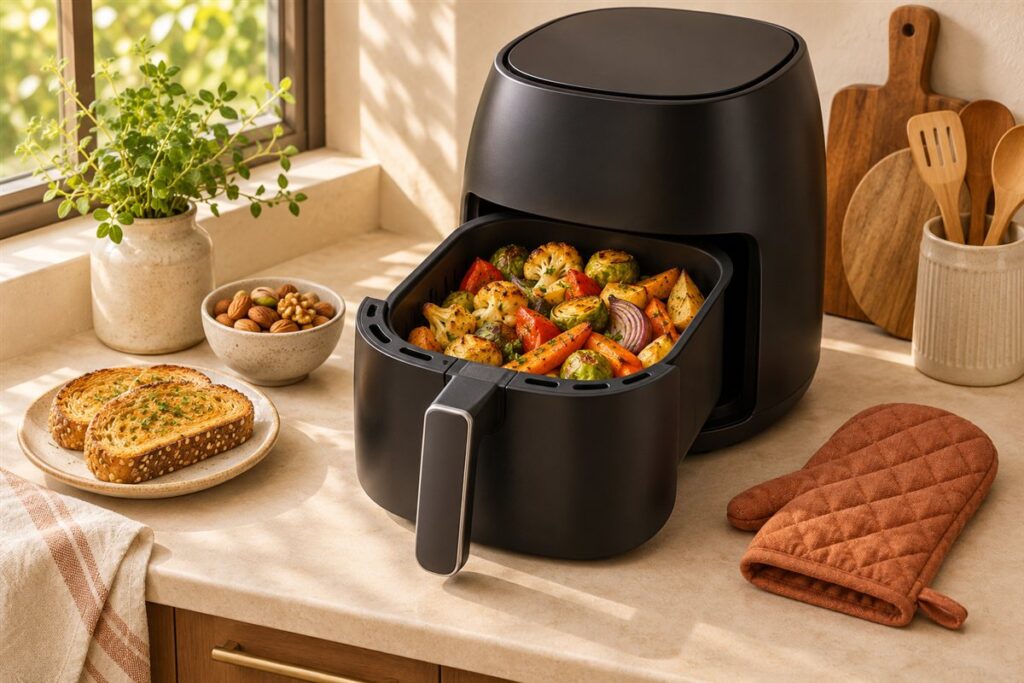
To protect a nonstick basket, clean it gently, use soft utensils, and avoid anything that scratches. Follow your maker’s care notes for washing, since some parts can go in the dishwasher and others cannot.
Daily Cleaning Routine
- Unplug the unit and let it cool fully.
- Remove the basket and drawer.
- Wash with warm water and mild dish soap using a soft sponge or cloth.
- Rinse and dry completely before putting everything back.
- Wipe the inside of the chamber with a damp cloth once it is cool.
Washing soon after cooking is easier, because grease is softer before it hardens on the surface.
Tools and Habits That Protect the Coating
- Use silicone, wood, or soft plastic tools that your maker allows.
- Skip steel wool, metal scrapers, and rough pads.
- Do not cut food inside the basket with a knife.
- Avoid aerosol cooking sprays if your manual warns against them, since some can leave a sticky film. A brush and a small amount of oil is a gentle alternative.
- Do not stack heavy items on top of the basket in storage.
Handling Stuck-On Residue
For stubborn spots, soak the basket in warm soapy water for a while, then wipe with a soft sponge. Repeat rather than scrubbing hard. A paste of baking soda and water on a soft cloth is a gentle option for some surfaces, but check your manual first. Do not use harsh chemical cleaners or oven cleaner unless the maker says they are fine.
Signs of Wear
| What you see | Possible cause | What to do |
|---|---|---|
| Dull, sticky film | Oil residue buildup | Soak and wash gently |
| Fine scratches | Metal tools or rough pads | Switch to soft tools |
| Flaking or peeling | Worn coating | Stop using that part and contact the maker |
| Dark patches | Baked-on grease | Soak, then wipe |
Long-Term Care
Give the basket a look every few weeks, in good light, so you can spot early wear. Wipe the heating area when cool, and clear crumbs from the bottom of the drawer. Store the basket without stacking heavy things on it. If you notice odors that do not wash out, soak in warm soapy water and dry thoroughly. Following the maker’s care notes will help the coating last as long as possible.
Understanding What a Nonstick Coating Is
A nonstick coating is a thin layer applied to the surface of a basket or tray to help food release and cleaning go faster. It is not a solid material all the way through, which is why it needs gentler treatment than bare metal. The exact coating differs between makers, and some describe theirs as ceramic-style while others use different types. Your manual or the listing usually names the type and gives care instructions, so start there.
The coating works best when it is clean and intact. A thin film of oil can build up over time and turn tacky, which reduces its release properties and makes food stick even though the surface is not damaged. Scratches and chips from sharp tools break the layer and let food grab the metal underneath. Heat that is too high for too long can also wear a coating, so stay within the temperatures in the manual.
It helps to think of the coating as a consumable part. With good habits it can last a long time, but it will not last forever. Knowing what it is and what harms it makes care routines feel less like a chore. If you ever have doubts about the safety of a damaged coating, follow the maker’s guidance and contact them for a replacement part rather than guessing.
The Things That Wear a Coating Down
Most damage is gradual, and it comes from a handful of everyday habits. Abrasive scrubbing is the biggest: steel wool, scouring pads, and rough sponges leave fine scratches that add up. Metal tools are next, including forks, knives, and sharp-edged spatulas, which can gouge the surface in a single careless move. Stacking heavy pots, other baskets, or sharp objects on top of the basket in a cupboard can cause damage too.
- Aggressive cleaners: Strong chemical products, oven cleaners, and bleach-based sprays can degrade coatings unless the maker says they are safe.
- Dishwasher detergents: Some harsh detergents dull or etch surfaces over time, even where dishwashers are allowed. Check the guidance.
- Thermal shock: Running very cold water over a hot basket can stress the coating, so let parts cool first.
- Overheating empty: Running the unit without food for a long time at a high setting is hard on the surface.
- Burnt-on residue: Scrubbing hard to remove it does more harm than the residue itself.
Once you know these causes, prevention is simple. Keep soft tools in the kitchen drawer nearest the air fryer so you reach for them by habit. Hand the family a short list of dos and don’ts, particularly if others help with the dishes.
Choosing Cleaning Products and Tools
For routine cleaning, gentle is best. A soft sponge, a dish cloth, or a brush with soft bristles removes most residue when combined with warm water and a mild dish soap. A long-handled brush helps reach corners without putting your hand against hot or sharp edges. Microfiber cloths dry the surface well and avoid scratches.
For stubborn spots, patience works better than force. Fill the basket and drawer with warm soapy water and let them soak, which softens baked-on grease. Then wipe with a soft sponge and rinse. A paste of baking soda and water on a soft cloth may help with some surfaces, but check your manual first. Avoid scouring powders, which are abrasive, and avoid metal-bristle brushes.
Think about the water and soap you use. Strong degreasers may be fine for some parts but not for the coating. If a product label does not mention nonstick surfaces, choose a milder alternative. Rinse thoroughly, since soap residue can bake onto the surface at the next use and leave a film. Dry each piece with a clean cloth or leave it to air dry completely before putting it back, because trapped moisture can cause odors or spotting. Keep one sponge just for the air fryer so that grit from other pots never reaches the coating.
Daily Habits That Protect the Surface
Good habits are easier than repair. Use only as much oil as the recipe needs, and apply it with a brush or by tossing food in a bowl. Excess oil is the main source of sticky buildup. Be cautious with aerosol sprays, since some leave residues that are hard to remove, and check the manual for the maker’s view.
- Lift food out with silicone or wooden tools, never with a knife or metal fork.
- Do not cut food in the basket, and do not slide a metal pan across the base.
- Let the basket cool before washing, but do not leave food waste on it for long.
- Store the basket in a place where nothing sharp or heavy can press on it.
- If you use liners or racks, make sure they do not rub against the coating as you move them.
When serving, tip food onto a plate rather than scraping it. If something sticks, give it a minute to cool, since it often releases on its own. These small changes become automatic, and they keep the surface in good shape for much longer. Ask everyone who uses the machine to follow the same simple habits, since one careless scrape can undo months of careful cleaning and shorten the life of the basket.
When to Replace a Basket or Tray
Even with good care, coatings eventually wear. Look for signs like flaking, peeling, bubbling, or large bare patches where the metal shows through. Food that sticks badly even after thorough cleaning is another clue, as is a rough or chalky texture that was not there before. A few fine surface marks may be cosmetic, but visible flakes mean it is time to act.
If you see flaking, stop using that part. Do not keep cooking in the hope that it will settle, because pieces of coating could mix with food. Contact the maker, check your warranty, and ask whether replacement baskets or trays are sold for your model. Some makers supply spare parts, which is much cheaper than replacing the whole machine.
When you buy a replacement, make sure it is the correct part for your model number and made by the maker or an approved supplier. A poor fit can affect airflow and safety. Keep a note of your model number somewhere handy, and discard the old part according to local rules. After fitting the new one, apply the same care routine from the start so it lasts as long as possible. Checking early saves you from cooking in a worn part.
FAQ
Can I put the basket in the dishwasher?
Some are made for it and some are not. Look in the manual. Even when allowed, hand washing is gentler on the coating.
Should I keep using a basket that is flaking?
No. Stop using it and ask the maker about a replacement part.
Can I use baking soda on the basket?
A paste of baking soda and water on a soft cloth is a gentle option for some surfaces. Check your manual first, and avoid scrubbing hard.
Why does food stick even though the basket is nonstick?
A thin layer of old oil can build up and make the surface tacky. Soak and wash gently, and use a light oil coating when you cook.
Is it safe to use a basket with fine scratches?
Fine scratches may only affect looks and release, but follow the maker's guidance. If you see flaking or peeling, stop using it.
Can I use cooking spray on the basket?
Some makers advise against aerosol sprays because they can leave a sticky film. Check your manual and consider a brush with a little oil instead.
Should I wash the basket straight after cooking?
Let it cool first, then wash it soon after. Waiting too long lets grease harden, but cold water on a hot surface can stress the coating.
Where can I find replacement parts?
Start with the maker's support page or customer service, and give them your model number. Use the correct part for your unit.
The Short Version
Wash gently, dry well, use soft tools, and follow the manual. Retire any part whose coating is peeling. A few minutes of care after each meal is far easier than scrubbing a layer of baked-on grease later, and it keeps your food tasting clean.









