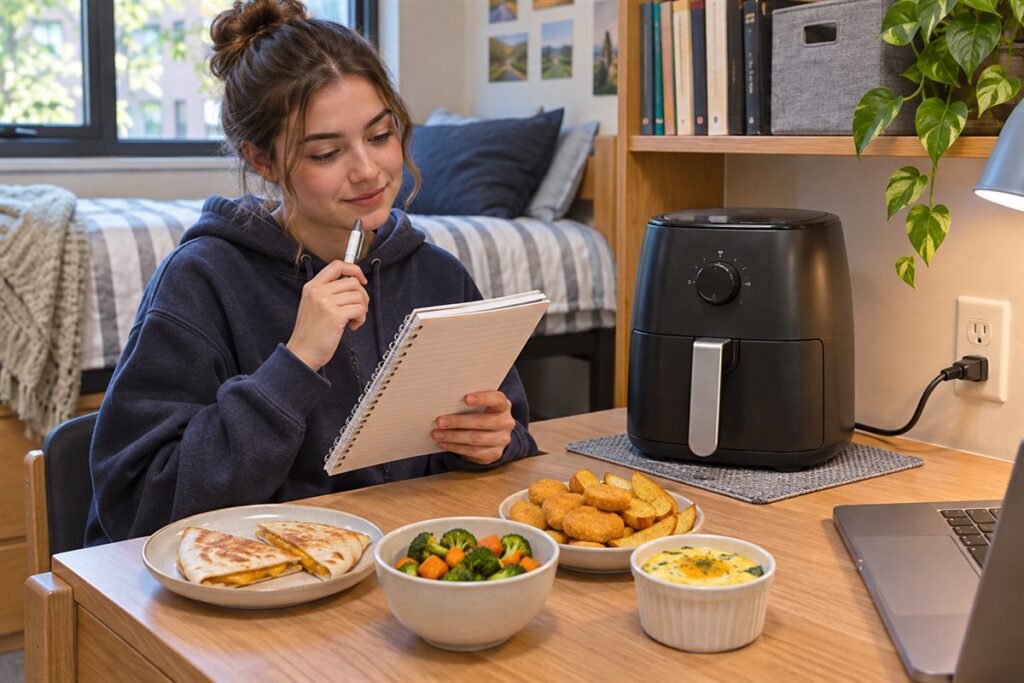
Before bringing an air fryer to a dorm, check your housing rules. Many residence halls limit which appliances are allowed, and rules differ by school and even by building. If it is permitted, a compact unit can add a lot of variety to student meals, provided you use it carefully in a small shared space.
Check the Rules First
Housing offices often publish a list of allowed and banned appliances. Some restrict open heating elements, wattage or any cooking device in rooms. Read the policy, ask your residence staff if unclear, and follow it. Using a banned appliance can lead to fines or removal, so confirm before buying.
- Ask whether cooking is allowed in rooms or only in shared kitchens.
- Check any wattage or size limits.
- Confirm whether a power strip is allowed, and which kind.
Get the answer in writing if you can, such as a link to the policy page or an email from housing staff. If the rules say no, accept that and look at what is allowed in the communal kitchen instead. Many halls provide a shared kitchen with a stove, oven and microwave, and those facilities may fit your needs without any extra equipment.
Power and Placement
Air fryers draw considerable power, so avoid overloading a circuit. Plug straight into a wall outlet when possible, and do not run it alongside other high-power items such as a kettle or heater. Place the unit on a stable, heat-resistant surface with open space on all sides, away from bedding, papers and curtains. Never leave it running unattended, and follow your maker’s guide.
Dorm wiring varies from building to building. If lights flicker or a breaker trips when you cook, stop and tell housing staff. Do not try to fix wiring or use unsuitable adapters yourself, and leave electrical questions to a licensed professional or the building’s maintenance team.
Easy Student Meals
Simple foods suit a dorm best. They need little prep and little cleanup.
- Frozen items, such as nuggets, fish portions or potato wedges, cooked as the package directs.
- Toasted sandwiches or quesadillas, folded and cooked in a few minutes.
- Roasted vegetables in small batches, seasoned with a favorite spice mix.
- Eggs baked in small cups for a quick breakfast.
- Reheated pizza or leftovers from the dining hall, if food rules allow.
| Issue | Simple approach |
|---|---|
| Small space | Store on a shelf or under the desk, cooled first |
| Smoke or smells | Cook small items, clean the basket often, ventilate |
| Sharing a sink | Wipe the basket right after it cools |
| Limited storage | Buy only a few staples at a time |
A Worked Example: A Quick Dinner
- Check the schedule. Choose a time when the hall is quiet and your roommate is fine with it.
- Set up the surface. Clear a stable, heat-tolerant spot away from bedding, papers and the edge of a desk.
- Plug in directly. Use a wall outlet if allowed, and keep the cord out of walkways.
- Load a small portion. A single layer of frozen wedges or a folded sandwich cooks evenly.
- Set a loose time. Use the package or manual range, and check early.
- Stay in the room. Never leave it running unattended, and keep the door and window arranged so the air can move.
- Cool, unplug, clean. Let it cool, unplug it, then wash the basket and wipe the outside.
Common Scenarios
Your roommate does not like cooking smells
Choose mild foods, cook when they are out, and open a window. Agree on a simple rule before you begin.
The sink is down the hall
Wipe the basket with paper towels while it is warm, then carry it for a proper wash. This prevents hardened grease.
The smoke alarm is sensitive
Smoke from fat on a hot tray can set off alarms. Cook small portions, keep the tray clean, and talk to staff about their rules before it happens.
Winter break storage
Clean, dry and cool the unit fully, then pack it in its box or a bin so grease and moisture do not mark other belongings.
Cleanup Without a Kitchen
Let the basket cool, then wash it in a bathroom or shared kitchen sink with mild soap, following the manual. Dry it fully before storing. Wipe the outside with a damp cloth, and never submerge the main housing. A quick clean after each use prevents smoke and odors that might attract attention from neighbors or staff.
Share and Stay Considerate
Dorm life means close neighbors. Keep cooking times short, avoid strong smells late at night, and offer roommates a say before you begin using a shared space for cooking. Label any food you keep in a shared fridge and clean up promptly.
Food safety counts in a dorm as much as anywhere. Without a full fridge, buy small amounts of fresh food, keep cold items cold, and cook meat all the way through. Wash your hands before and after handling raw food, and do not leave cooked food sitting out for long.
Quick Troubleshooting
| Symptom | Likely cause | What to try |
|---|---|---|
| Breaker trips | Too many items on one circuit | Unplug other heating items and tell housing staff if it continues |
| Smoke alarm sounds | Fat on a hot tray | Cook smaller portions and clean the drawer after each use |
| Food is pale | Basket crowded | Use a single layer and shake partway through |
| Strong smell lingers | Residue in the basket | Wash soon after cooling and ventilate the room |
Mistakes to Avoid
- Assuming it is allowed. Rules differ by building, and a banned item can mean fines or confiscation.
- Using a loose power strip. Heating appliances can overload them, so follow housing rules and the maker’s instructions.
- Cooking on a bed or soft surface. Heat and vents need a hard, stable, clear area.
- Walking away. A hot appliance should never be left alone in a small room.
- Storing it warm. Heat and grease in a closed cupboard can leave smells and marks.
Glossary
- Residence staff: the people who manage a hall and its rules.
- Wattage: a measure of how much power an appliance draws.
- Power strip: a multi-socket extension, often restricted for heating appliances.
- Single layer: food spread out so pieces do not stack.
- Shared kitchen: a communal cooking space for residents.
If a term in the housing policy is unclear, ask staff for plain wording. It is much easier to ask first than to deal with a fine afterwards.
FAQ
Can I leave it plugged in?
Unplug it when you are done, once it has cooled. This is a good habit and often a housing rule too.
What size suits a dorm?
A smaller unit is easier to store, but check capacity against your usual portions in the maker’s guide. A basket that holds one hungry student is often plenty.
What if my hall bans air fryers?
Respect the rule and use the shared kitchen if there is one. Housing staff can tell you what is permitted, and policies sometimes change from year to year.
How do I handle smells in a small room?
Cook mild foods, keep the basket clean, and open a window when the weather allows. Strong foods like fish are best avoided in a shared room.
Can I pack it for holidays?
Yes, once it is cool, clean and fully dry. Use the original box or a padded bin, and keep the cord loosely coiled.
The Short Version
Confirm that your housing allows it, use a safe wall outlet and a stable surface, and cook simple foods. Be considerate of roommates and neighbors. Clean right away and unplug when finished.