A whiskey smoker kit adds a gentle wisp of wood smoke to an old fashioned or a neat pour. Most kits take one of two forms: a small chimney that sits on top of the glass and burns a pinch of wood chips with a torch, or a handheld smoke gun that blows smoke through a tube.
The six options below cover both styles, plus a refill pack of chips. We have not used these products ourselves, and we avoid specs we cannot confirm. Check the current listing for what is included, since some kits ship without the torch fuel or the glass.
As an Amazon Associate we earn from qualifying purchases. Links below are affiliate links, and they do not change the product information we give.
What to Look For
| Feature | Why it matters |
|---|---|
| Style | Chimney toppers are simple; smoke guns are faster and work on more than drinks |
| Torch | Many kits need a butane torch, and the fuel is often not included |
| Wood chips | Oak, cherry and pecan each give a different aroma |
| Glass fit | A topper should sit securely on a rocks glass |
In this guide
Specs at a Glance
| Kit | Style | Power | Best for |
|---|---|---|---|
| Aged and Charred Smoker Kit | Chimney topper | Torch | Gifting |
| Mixology and Craft Cocktail Smoker Kit | Chimney topper | Torch | Home bar starters |
| Breville Smoking Gun Pro | Handheld smoke gun | Battery | Drinks and food |
| PolyScience Smoking Gun | Handheld smoke gun | Battery | Cocktails and cheese |
| Aged and Charred Smoking Chips | Refill chips | None | Restocking |
| Whiskey barrel stave smoker kit | Wood base kit | Torch | Display on a bar cart |
The 6 Best Whiskey Smoker Kits
Top pickBest for gift buyers and old fashioned fans
1. Aged and Charred Whiskey Smoker Kit
A topper-style kit built around a small wooden base and a chimney that rests on a glass. The brand is known for cocktail smoking gifts and usually pairs the kit with wood chips.
Suits: gift buyers and old fashioned fans. Strengths: an easy chimney design and presentable packaging. Weaknesses: the torch fuel is typically sold separately. Skip it if you need no fire tools at all.
View Aged and Charred Whiskey Smoker Kit on Amazon
Best for beginners building a home bar
2. Mixology and Craft Cocktail Smoker Kit
A cocktail smoker kit that follows the same chimney-on-glass approach with a few wood chip flavors. It suits people who want to try smoke in a drink without a big investment.
Suits: beginners building a home bar. Strengths: a straightforward kit that is simple to use. Weaknesses: packaging and extras vary, so read the list. Skip it if you want a battery-powered smoker.
View Mixology and Craft Cocktail Smoker Kit on Amazon

Best for bartenders who also cook
3. Breville Smoking Gun Pro
A handheld smoke infuser from a well-known kitchen brand. It blows cool smoke through a tube, so you can fill a glass or a cloche, or flavor food like cheese.
Suits: bartenders who also cook. Strengths: speed and flexibility beyond cocktails. Weaknesses: it costs more than a basic topper and uses batteries. Skip it if you prefer a visible flame at the table.

Best for people who want a chef-style tool
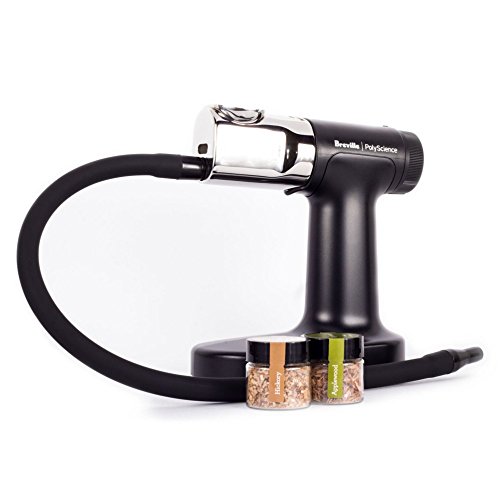
4. PolyScience Smoking Gun
The original handheld food smoker, used by chefs and bartenders. It burns a pinch of chips and pushes smoke out through a flexible hose.
Suits: people who want a chef-style tool. Strengths: a track record in professional kitchens. Weaknesses: it is more equipment than a casual drinker needs. Skip it if you want a simple topper.

Best for owners of an existing smoker
5. Aged and Charred Smoking Chips
A refill pack of wood chips sold for cocktail smokers. It is not a kit by itself, but it keeps a topper or smoke gun supplied with fresh fuel.
Suits: owners of an existing smoker. Strengths: variety of flavors for different spirits. Weaknesses: you must already own a smoker to use them. Skip it if you need a complete starter set.
View Aged and Charred Smoking Chips on Amazon
Best for people who value display as much as function
6. Whiskey barrel stave smoker kit
A kit that uses a wooden barrel-stave base with a chimney, often sold with chips and sometimes a torch. It adds a rustic look to a bar cart.
Suits: people who value display as much as function. Strengths: a barrel look that suits whiskey. Weaknesses: contents differ by seller, so check carefully. Skip it if you want a plain, minimal tool.
View Whiskey barrel stave smoker kit on Amazon
Care and Setup
- Tap out ash and wipe the chimney after it cools.
- Store wood chips dry in a sealed jar.
- Keep torch fuel away from heat and out of reach of children.
- Clean the smoke gun hose and screen as the maker advises.
Mistakes to Avoid
- Smoking a drink for too long and making it bitter.
- Using a very peaty spirit that fights the wood smoke.
- Lighting chips with the glass on a delicate surface.
- Buying a kit without checking if a torch is included.
Chimney Topper or Smoke Gun: Which Fits Your Habits
The first decision is the style, and it is worth making before you compare any individual kit. A chimney topper sits on the rim of a glass. You place a small pinch of wood chips in the bowl, light them with a torch, and let the smoke drift down into the glass before you pour or while the drink rests. It has few parts, nothing to charge, and it makes a visible bit of theater at the table. The tradeoff is that you need a flame source, a stable glass, and a little patience.
A handheld smoke gun works differently. A small fan pushes smoke from a chip chamber through a tube, so you can aim it into a glass, under a cloche, or into a container. Because the smoke is moved by a fan, you control how much goes in and where. Many people like that it can also be used on food such as cheese or butter, which a topper is not really built for. The tradeoff is that it usually runs on batteries, has more parts to keep clean, and the chip chamber still needs a lit ember.
Who each suits:
- Chimney topper: occasional drinkers, gift buyers, and anyone who wants a simple ritual with a single glass at a time.
- Smoke gun: people who host often, make several drinks in a row, or want to smoke ingredients as well as cocktails.
- Refill chips only: people who already own a kit and simply need more fuel.
Ask yourself how many drinks you expect to smoke in one evening and whether you will ever smoke anything other than a drink. If the answer is one drink and no, a topper is plenty. If you want flexibility, check the listing to confirm how the gun is powered and whether the batteries are included.
Wood Chip Flavors and How to Pair Them
Wood chips are the part of the kit you will replace most often, so it helps to know what you are buying. Different woods leave different aromas, and the choice changes the drink more than most people expect. Descriptions below are general tendencies, and the exact result depends on how long you smoke, how hot the chips burn, and the spirit in the glass.
- Oak: a familiar, steady aroma that sits close to the barrel character many whiskeys already have. It is a sensible first choice.
- Cherry: usually described as milder and slightly sweet, which some people like with rye or with a drink that has a touch of sugar.
- Pecan: often described as a rounder, nuttier smoke that suits bourbon-style cocktails.
- Hickory or mesquite types: typically stronger and more savory, and easier to overdo in a delicate pour.
Pairing is a matter of taste rather than rules. A lighter, delicate whiskey can be overwhelmed by heavy smoke, so use less time and a milder wood. A bold, high-proof pour can stand up to a stronger wood. If you are mixing a cocktail with citrus, bitters or sweetener, remember the smoke will interact with all of them.
When you shop, check that the chips are labeled for food and drink use and that the listing names the wood. Chips meant for other purposes, or treated wood, are not what you want near a glass. Keep chips in a sealed container away from moisture, since damp chips are hard to light and give a flatter smoke. Buy a small amount first, taste what each wood does, and then stock up on the one you reach for.
Torch, Fuel and Fire Safety at the Bar
Several kits need a handheld torch, and the listing may or may not include one. This matters for two reasons: cost and safety. Read the product page closely to see whether the torch and its fuel are in the box. Many torches of this kind are sold without fuel, so plan to buy the correct type separately and follow the manual for filling it. Never guess at fuel type, and fill a torch only in a ventilated spot away from flames.
Safe habits when you use an open flame near a drink:
- Work on a heat-resistant, stable surface, not directly on a delicate tabletop or a cloth runner.
- Keep paper, napkins, garnishes and bottles with high-proof spirits well away from the flame.
- Light the chips briefly and then remove the flame. You only need the chips to smolder, not to blaze.
- Keep hair, sleeves and loose fabric clear of the torch tip.
- Let the topper and the ash cool before you touch or move them.
- Dispose of ash only once it is fully out, for example by tipping it into a metal or ceramic container.
Smoke in a closed room can also linger, so open a window or run a vent fan if you are making several drinks. Keep the torch out of reach of children and store it according to the manufacturer’s instructions. If your household cannot comfortably have an open flame in the kitchen, a battery smoke gun may still need a lit ember, so check how it is lit before you assume it is flame-free. If you do not want any fire tools at all, say so to yourself before buying and read each listing with that in mind.
How to Smoke a Drink Step by Step
The method differs slightly between styles, but the goal is the same: a light layer of smoke, not an ashtray. Always follow the instructions that came with your kit, and treat the steps below as a general outline.
With a chimney topper:
- Pour the whiskey or build the cocktail in a sturdy glass that the topper sits on securely.
- Add a small pinch of chips to the bowl. More chips mean more smoke, but also a harsher result.
- Light the chips with the torch until they begin to smolder, then remove the flame.
- Place the topper on the glass and let the smoke collect for a short time. Many people start with a brief pause and lengthen it on later tries.
- Lift the topper, give the glass a gentle swirl, and taste.
With a smoke gun:
- Load a small amount of chips in the chamber and light them as the manual directs.
- Run the fan and direct the smoke into an empty glass or a covered vessel.
- Cover the glass, let it sit briefly, then pour the drink in and swirl.
Common adjustments: if the drink tastes bitter or acrid, you used too many chips or smoked too long. If you cannot taste anything, use slightly more smoke time rather than more chips. Chilled glasses can hold smoke differently from warm ones, so keep your method consistent while you learn. Write down what you did the first few times, and you will land on a repeatable routine quickly.
Cleaning, Storage and When to Replace Parts
Smoke leaves resin and ash behind, and a kit that is cleaned after use works better and lasts longer. Wait until everything has fully cooled, then empty the ash into a safe container. For a wooden topper or base, a dry brush or cloth is usually the safest start; soaking wood in water can cause it to warp or crack, so check the care notes in the listing. For metal parts of a smoke gun, follow the manual, and avoid putting electronics or battery housings in water.
A few care points to remember:
- Wipe the chip chamber and the tube so residue does not build up and flavor the next drink.
- Store chips sealed and dry, and keep them away from heat.
- Keep a spare set of batteries on hand if your gun uses them, and remove them if you will not use it for a long time, as the manual advises.
- Store the torch upright and away from heat sources.
Signs it is time to replace something: a topper that no longer sits flat on the glass, a cracked or charred wooden base, a smoke gun whose fan runs weakly or whose tube is clogged and will not clear, or a torch that will not light reliably. Small parts such as screens or tubes may be sold separately, so check the maker’s page before replacing the whole kit.
Finally, think about total cost rather than the sticker alone: a cheaper kit that needs a torch, fuel, chips and a glass can end up costing as much as a fuller set. Compare what is actually in each box.
Chips, Torch and Topper: How These Kits Work
A whiskey smoker kit lets you add a wisp of wood aroma to a drink without leaving the bar. The typical sequence is simple. You place a pinch of wood chips on a mesh or in a small chamber, light them with a torch, cover the glass with a topper, and let the smoke settle for a short time. The scent clings to the surface and the glass, and the drink is poured or stirred after you remove the topper. Guns and handheld smokers use a small fan to push smoke through a hose into the glass or a cloche.
Wood choice changes the character. Oak is familiar and gentle, cherry adds a fruity edge, and pecan or apple suggests sweetness. Begin with small quantities, since too much smoke overwhelms the spirit.
Topper, Torch or Smoking Gun
| Type | How it works | Good for |
|---|---|---|
| Topper with chip tray | Sits on the glass and holds burning chips | Simple one-drink service |
| Torch and chamber | Torch lights chips in a small chamber | Flexible placement |
| Handheld smoking gun | Fan blows smoke through a tube | Smoking several glasses or foods |
| Cloche or dome | Traps smoke over a plate or drink | Presentation at the table |
Glass size matters. A topper must fit the rim of your rocks glass, and a large tumbler will not suit a small topper. Measure the glass opening before you buy.
Fire Care and Smart Habits
- Work on a stable, heat-resistant surface, away from curtains and paper.
- Check that the torch fuel meets the kit instructions and refill it outdoors or away from flames.
- Keep a lid or small plate nearby to put out chips safely.
- Never leave burning chips unattended, and let ash cool before tossing.
- Do not smoke inside a sealed container that cannot vent.
- Keep the torch away from children and store it empty if instructed.
Follow the maker’s safety notes closely and use the kit only as described. Drink responsibly and observe your local alcohol laws.
Cleanup and Storage
Allow the metal and glass to cool, then tap out ash into a non-flammable bin. Wipe the topper with a damp cloth and let it dry. Store wood chips in an airtight jar to keep them dry.
Pairing Smoke With the Right Drink
Bold smoke suits sweeter spirits such as bourbon and rye, where caramel notes can stand up to the aroma. Delicate single malts may need only a few seconds of exposure. Many people also smoke a cocktail such as an old fashioned, or even nuts and cheese for a tasting plate. Keep notes about the wood, time and drink so you can repeat a combination you enjoyed.
Practice with plain water and a cold glass first, so you learn the timing before using a good bottle.
A small brush helps clear residue from the chip tray after every use.
Choosing a Whiskey smoker kit With a Clearer Eye: The Criteria That Deserve a Second Look
The opening sections of this guide cover the headline points to check when you compare whiskey smoker kits. This section slows down and looks at the same decision from the owner’s side: not what a whiskey smoker kit promises on the day it arrives, but how the choice plays out across months of adding a wisp of real wood smoke to a poured drink at home, for yourself or for guests. Reading it before you settle on a pick will help you use the product sections above more sharply, because you will know which details in each description actually matter for your household and which are simply nice to have.
Fit and space, measured honestly
Start with the glasses you actually use, since the smoker has to sit on or over the rim, and a small storage spot for the kit, fuel and torch together. Measure twice, in the unhurried way that feels excessive, and write the numbers down rather than trusting memory. Allow for the unglamorous details too: how the whiskey smoker kit is reached, what sits around it in the home bar or kitchen counter, and whether the space you have measured is the space that will still be there once everything else is back in place. Most disappointing purchases in this category are not bad products; they are good products matched to the wrong space, and nearly all of them could have been avoided with a tape measure and ten quiet minutes before ordering.
Performance where it counts
Next, think about a clean, brief smoke that flavours the drink without ashy harshness, which comes down to the wood, the burn and how long the smoke rests. Headline claims are easy to compare and often the least useful guide, because daily satisfaction comes from consistency: the tenth use behaving like the first, and the result staying predictable when conditions are less than perfect. As you read the pick-by-pick sections above, keep returning to this question — does this option perform in the specific way my routine actually demands, or is it strong in ways I will rarely call on? A whiskey smoker kit that is merely good at everything but exactly right for your main job usually beats a more impressive all-rounder.
Everyday ease, not first-day impressions
Consider lighting, placing and cleaning the kit in the middle of hosting, when complicated steps quickly stop being fun. Ease of use rarely appears in a feature list, yet it decides whether a whiskey smoker kit becomes part of your routine or an obstacle you work around. Picture the busiest, messiest moment of normal use — not a calm demonstration — and ask whether the design still helps you then. Small frictions repeat: a control that needs two attempts, a part that is awkward to lift, a routine that takes a minute longer than it should. Multiplied across a year of regular use, those small frictions are the difference between a purchase you recommend to friends and one you quietly stop using.
Cleaning and upkeep you will actually do
Be honest about ash and resin that build up in the smoker chamber and on screens or filters after repeated use. Every whiskey smoker kit in this guide asks for some upkeep, and the realistic question is not whether the cleaning is easy in theory but whether it fits the time and patience you genuinely have. Short, regular attention almost always beats occasional heroic deep cleans, both for results and for how long the product lasts. As you compare the picks, favour the design whose upkeep matches your habits — a slightly simpler model you keep clean will outperform a sophisticated one you neglect, every single time.
Safety and the people around you
Finally, think about an open flame near alcohol, hot parts straight after use and keeping the torch and fuel away from children. Safety in this category is mostly a matter of habits and placement rather than dramatic risks: where the whiskey smoker kit sits, who can reach it, and whether your routine includes the small checks that keep everything sound. Read the safety notes in each product section above with your own household in mind — the presence of children, pets, elderly relatives or simply a busy, distracted cook changes which precautions matter most. A few minutes spent setting things up safely at the start is repaid every time you use the whiskey smoker kit without thinking about it.
Putting It to Work: How a Whiskey smoker kit Fits Real Routines
Specifications describe a whiskey smoker kit; routines reveal one. The scenarios below describe the situations readers most often have in mind when they shop for whiskey smoker kits, and what each situation rewards. Find the scenario closest to your life and weight it heavily: a pick that shines in your scenario is a better buy than a pick that wins on a comparison table but belongs to somebody else’s routine. Many households recognise themselves in two scenarios at once, in which case the overlap between them is usually where the right choice sits.
An old fashioned with a smoked finish at home
This is about the classic use, where a short rest under smoke changes the first aroma of the drink. In this situation, the whiskey smoker kit is not an occasional tool but part of a repeating pattern, so reliability and ease matter more than novelty. Look again at the picks above and ask which of them is described in terms that match this pattern: steady performance across a long session, straightforward handling when you are busy, and upkeep that can keep pace with frequent use. It is also worth thinking about what happens on the busiest version of this day, not the average one, because a whiskey smoker kit chosen for the average day is the one that lets you down precisely when the stakes are highest — guests waiting, a deadline looming or a car packed and ready to leave.
Hosting a small tasting with friends
This is about smoking one glass at a time as a small piece of theatre guests remember. In this situation, the whiskey smoker kit is not an occasional tool but part of a repeating pattern, so reliability and ease matter more than novelty. Look again at the picks above and ask which of them is described in terms that match this pattern: steady performance across a long session, straightforward handling when you are busy, and upkeep that can keep pace with frequent use. It is also worth thinking about what happens on the busiest version of this day, not the average one, because a whiskey smoker kit chosen for the average day is the one that lets you down precisely when the stakes are highest — guests waiting, a deadline looming or a car packed and ready to leave.
Experimenting with different woods
This is about comparing how different smoking woods lean sweeter, deeper or spicier in the same drink. In this situation, the whiskey smoker kit is not an occasional tool but part of a repeating pattern, so reliability and ease matter more than novelty. Look again at the picks above and ask which of them is described in terms that match this pattern: steady performance across a long session, straightforward handling when you are busy, and upkeep that can keep pace with frequent use. It is also worth thinking about what happens on the busiest version of this day, not the average one, because a whiskey smoker kit chosen for the average day is the one that lets you down precisely when the stakes are highest — guests waiting, a deadline looming or a car packed and ready to leave.
Gifting to a whiskey enthusiast
This is about a kit that will actually be used, which means simple steps and easy cleaning. In this situation, the whiskey smoker kit is not an occasional tool but part of a repeating pattern, so reliability and ease matter more than novelty. Look again at the picks above and ask which of them is described in terms that match this pattern: steady performance across a long session, straightforward handling when you are busy, and upkeep that can keep pace with frequent use. It is also worth thinking about what happens on the busiest version of this day, not the average one, because a whiskey smoker kit chosen for the average day is the one that lets you down precisely when the stakes are highest — guests waiting, a deadline looming or a car packed and ready to leave.
Day-to-Day Use, Cleaning and Care in More Detail
The care sections earlier in this guide give the essentials. What follows is the longer view: how to build the small habits that keep a whiskey smoker kit performing well, how to clean it without turning the job into a chore you avoid, and how to store and look after it between uses. None of this requires specialist products or skills — it requires doing simple things regularly, which is unglamorous and entirely effective.
The first uses set the pattern
When your whiskey smoker kit is new, take the first use slowly. Read the maker’s instructions properly — not as a formality, but because the details that matter, from first setup to what not to do, are specific to your model and are not repeated anywhere else. Run through the basic routine once without time pressure, notice what feels awkward, and adjust your setup while the stakes are low. Owners who give a new whiskey smoker kit one unhurried first session almost always have a smoother first month than owners who debut it in front of an audience or a deadline.
A cleaning rhythm that sticks
For cleaning, little and often is the whole secret. Deal with ash and resin that build up in the smoker chamber and on screens or filters after repeated use while traces are fresh and the job takes minutes; leave them and the same job becomes the kind of task that gets postponed indefinitely. Keep the basic supplies you need within reach of where the whiskey smoker kit lives, use only cleaning methods and products the maker allows for the surfaces involved, and let everything dry fully before the next use or before storage. If several people share the whiskey smoker kit, agree on the rhythm out loud — most neglected equipment belongs to everyone in theory and nobody in practice.
Storage and the time between uses
What happens between uses shapes a whiskey smoker kit’s life as much as the uses themselves. Store it and its accessories together, dry and protected from knocks, dust and damp, in a place that does not require a struggle to reach — equipment stored awkwardly gets used reluctantly. Before a longer break, a proper clean and a quick check of the parts that wear, loosen or perish means the whiskey smoker kit comes back to service ready rather than needing rescue. When you return to it, a brief inspection before the first use catches the small problems — a frayed edge, a loose fitting, a part left dirty — while they are still small.
Knowing what is normal and what is not
Every whiskey smoker kit develops a familiar pattern of sounds, smells, timings and behaviour, and learning that pattern is a genuine skill. Once you know what normal looks like, changes announce themselves early: a new noise, a slower result, a part that no longer sits as it did. Most changes have simple causes covered in the troubleshooting spirit of this guide — something needs cleaning, adjusting or replacing as a consumable. The ones that do not respond to the simple checks are the ones to hand to a professional, and catching them early is usually what keeps a repair minor.
How the Picks in This Guide Compare With Each Other
Readers often ask for a simple ranking of the whiskey smoker kits above, but the honest comparison is about fit. Each pick in this guide earned its place for a slightly different reader, and the sections describing them already contain everything needed to separate them: who each one suits, the strengths highlighted, and the honest limitation mentioned alongside. The notes below show how to run that comparison for yourself, pick by pick, so the final choice rests on your priorities rather than on a generic verdict.
Consider the Aged and Charred Whiskey Smoker Kit. Return to its section above and note three things in order: the reader it is described as suiting, the strength the guide emphasises most, and the limitation it openly flags. Then hold those three points against the criteria and scenarios earlier on this page. If the reader it suits sounds like you, and its flagged limitation touches something you rarely do, it belongs on your shortlist even if another pick looks stronger on paper. If the limitation sits squarely in your main routine, that is the comparison doing its job — cross it off without regret and move to the next pick, because a whiskey smoker kit whose weakness meets your most common use will disappoint you weekly, however good its strengths are.
Consider the Mixology and Craft Cocktail Smoker Kit. Return to its section above and note three things in order: the reader it is described as suiting, the strength the guide emphasises most, and the limitation it openly flags. Then hold those three points against the criteria and scenarios earlier on this page. If the reader it suits sounds like you, and its flagged limitation touches something you rarely do, it belongs on your shortlist even if another pick looks stronger on paper. If the limitation sits squarely in your main routine, that is the comparison doing its job — cross it off without regret and move to the next pick, because a whiskey smoker kit whose weakness meets your most common use will disappoint you weekly, however good its strengths are.
Consider the Breville Smoking Gun Pro. Return to its section above and note three things in order: the reader it is described as suiting, the strength the guide emphasises most, and the limitation it openly flags. Then hold those three points against the criteria and scenarios earlier on this page. If the reader it suits sounds like you, and its flagged limitation touches something you rarely do, it belongs on your shortlist even if another pick looks stronger on paper. If the limitation sits squarely in your main routine, that is the comparison doing its job — cross it off without regret and move to the next pick, because a whiskey smoker kit whose weakness meets your most common use will disappoint you weekly, however good its strengths are.
Consider the PolyScience Smoking Gun. Return to its section above and note three things in order: the reader it is described as suiting, the strength the guide emphasises most, and the limitation it openly flags. Then hold those three points against the criteria and scenarios earlier on this page. If the reader it suits sounds like you, and its flagged limitation touches something you rarely do, it belongs on your shortlist even if another pick looks stronger on paper. If the limitation sits squarely in your main routine, that is the comparison doing its job — cross it off without regret and move to the next pick, because a whiskey smoker kit whose weakness meets your most common use will disappoint you weekly, however good its strengths are.
Consider the Aged and Charred Smoking Chips. Return to its section above and note three things in order: the reader it is described as suiting, the strength the guide emphasises most, and the limitation it openly flags. Then hold those three points against the criteria and scenarios earlier on this page. If the reader it suits sounds like you, and its flagged limitation touches something you rarely do, it belongs on your shortlist even if another pick looks stronger on paper. If the limitation sits squarely in your main routine, that is the comparison doing its job — cross it off without regret and move to the next pick, because a whiskey smoker kit whose weakness meets your most common use will disappoint you weekly, however good its strengths are.
Consider the Whiskey barrel stave smoker kit. Return to its section above and note three things in order: the reader it is described as suiting, the strength the guide emphasises most, and the limitation it openly flags. Then hold those three points against the criteria and scenarios earlier on this page. If the reader it suits sounds like you, and its flagged limitation touches something you rarely do, it belongs on your shortlist even if another pick looks stronger on paper. If the limitation sits squarely in your main routine, that is the comparison doing its job — cross it off without regret and move to the next pick, because a whiskey smoker kit whose weakness meets your most common use will disappoint you weekly, however good its strengths are.
Two further checks sharpen any shortlist. First, compare upkeep: the picks differ in how much routine attention they ask for, and the one whose care routine matches your habits will still be performing well long after a needier rival has been neglected. Second, compare the whole purchase, not just the unit — the accessories, consumables, replacement parts and storage the whiskey smoker kit needs over its life. A pick that looks like the premium choice sometimes asks the least over time, and the reverse is just as common. Decide with both checks done and you will rarely need to second-guess the order.
The Longer View: Owning One Well
A whiskey smoker kit is one of those purchases whose value compounds quietly. The first month is about learning it; the first year is about the routine settling around it; after that, it simply becomes how things are done in your home. Owners who get the most from whiskey smoker kits share a few traits that have nothing to do with which model they bought. They keep the basic accessories and consumables in stock so a missing item never cancels a plan. They do the small cleaning and checking jobs on rhythm rather than on memory. And they revisit their setup occasionally — as households, tastes and routines change, the way a whiskey smoker kit is used can change with them, and a small rearrangement sometimes unlocks value that was there all along.
It is also worth keeping a light record, even if only mentally, of what works for you: the settings, timings, arrangements or combinations that produced your best results. The guides and product sections can start you off, but your own notes — adjusted for your space, your ingredients, your car, your collection, your people — are what turn a good whiskey smoker kit into the right one. When the time eventually comes to replace it, that record tells you exactly which of the criteria in this guide mattered in practice, and the next purchase becomes the easiest one you have made in this category.
Whiskey Smoker Kit FAQ
How long should I smoke a whiskey drink?
A few seconds to under a minute is usually enough. Taste and adjust to your liking.
Which wood chips work best with whiskey?
Oak and cherry are common choices for bourbon and rye. Pecan gives a softer, sweeter note.
Can a smoke gun be used on food?
Yes, handheld guns can flavor cheese, meat and more. Follow the maker’s guidance for safe use.
Do I need a special glass for a chimney topper?
Not a special one, but the topper needs to sit securely on the rim. A sturdy rocks glass with a flat, even rim is the usual match. Check the listing for the glass diameter the topper is designed to fit.
Is it safe to drink whiskey that has been smoked at home?
Smoking a drink briefly with food-grade wood chips is a common practice. Use chips sold for food and drink, avoid treated or unknown wood, and follow the kit's instructions. If you have a respiratory condition or other health concern, ask a medical professional.
Does smoke change the strength of the whiskey?
The smoke adds aroma and flavor, but it is not meant to change the alcohol content in any way you would notice. The effect is mainly on taste and smell. Check with the maker if you want specifics.
Can I smoke a cocktail that already has ice in it?
Many people smoke the empty glass or the finished drink without ice, then add ice afterward. Ice can melt while you wait for the smoke to settle. Try both ways and see which gives you the result you like.
How many chips should I use per drink?
Start with a small pinch and adjust. A little goes a long way, and too much can taste harsh. The kit's instructions should give a starting amount.
Are these kits good as gifts?
They can be, especially for someone who enjoys whiskey or home bartending. Check what is included, since torch fuel and glasses are often sold separately, and make sure the recipient is comfortable using an open flame if the kit needs one.
What should I do if the smoke tastes bitter?
Use fewer chips, shorten the smoking time, or try a milder wood. Also make sure the chips are only smoldering rather than burning with a flame. Clean any old residue from the chamber as well.
Can I reuse wood chips after they have burned?
Burned chips are spent and will not give a clean smoke again. Discard the ash once it is fully cool and use fresh chips for each drink.
How long should the smoke rest on the drink?
Briefly. Smoke is a strong seasoning and a short rest flavours the surface and aroma without overwhelming the whiskey itself. If a first attempt tastes like an ashtray, the usual fixes are less time, a cleaner burn and letting the glass sit a moment after removing the smoker.
Which drinks besides whiskey suit smoking?
Drinks with depth — aged spirits, stirred cocktails and even some non-alcoholic serves with caramel or spice notes — take smoke well. Light, delicate drinks are easily bullied by it. Treat smoke like chilli heat: add it where the base can stand up to it.
Why does my smoked drink taste bitter or ashy?
Usually the wood smouldered dirty, the smoke sat too long, or ash fell into the glass. Fresh fuel in the right amount, a clean chamber and tapping ash away from the drink before serving solve most cases. Clean equipment is the difference between smoke and soot.
How do I clean the smoker between different woods?
Once fully cool, brush out ash and residue so yesterday’s strong wood does not haunt today’s lighter one. A quick clean between drinks at a party is unrealistic, but a clean at the start of a session keeps flavours honest when you are comparing woods.
Is a smoker kit safe to use indoors?
Used as directed, on a stable surface away from anything flammable, with the small flame treated with respect, it is a normal piece of home bar equipment. Ventilation helps comfort more than safety — the smoke is brief — but never leave a lit torch unattended, even briefly.
What is the easiest drink to practise on first?
A simple, robust serve you already know well, so you can taste exactly what the smoke changed. Practising on your most familiar drink teaches more in one glass than experimenting on something new, where you cannot tell the smoke’s contribution from the recipe’s.
The Short Version
For a giftable topper, the Aged and Charred kit. For a simple starter, the Mixology and Craft kit. For versatility, the Breville Smoking Gun Pro. For a chef tool, the PolyScience Smoking Gun. For restocking, the Aged and Charred chips. For a rustic look, the barrel stave kit.