Home bakers need an oven they can trust more than one with a long list of modes. A steady temperature, even heat and a few well-chosen tools turn out better cookies, cakes and loaves than any single flashy feature.
This guide pairs three practical wall ovens with three small tools that improve results in any oven: a sheet pan, a thermometer and a baking mat. We have not used these products ourselves, so confirm the model, size and features on the current listing before buying.
As an Amazon Associate we earn from qualifying purchases. Links below are affiliate links, and they do not change the product information we give.
What to Look For
| Feature | Why it matters |
|---|---|
| Even heat | Look for convection and good seals |
| Door glass | A big window lets you check on bakes without opening the door |
| Rack levels | Several positions help you bake multiple trays |
| Temperature accuracy | An oven thermometer shows how far off your dial runs |
| Pans | Light-colored metal pans brown evenly |
| Liners | Reusable mats cut waste and sticking |
In this guide
Specs at a Glance
| Product | Type | Role | Notes |
|---|---|---|---|
| Maytag MEW9530FZ | Wall oven | Single, convection | Check version details |
| GE Profile PTS7000 | Wall oven | Single, convection | Smart-capable |
| Whirlpool WOD51EC0HS | Wall oven | Double, convection | Two cavities |
| Nordic Ware Naturals Half Sheet | Baking pan | Cookies and sheet cakes | Aluminum |
| Taylor Oven Thermometer | Thermometer | Checks accuracy | Hangs on a rack |
| Silpat Baking Mat | Silicone mat | Non-stick liner | Reusable |
The 6 Best Picks for Home Bakers
Top pickBest for dependable weekly baking
1. Maytag MEW9530FZ 30-inch Single Wall Oven
A single 30-inch wall oven with a reputation for durable, workhorse builds. Maytag aims at cooks who want reliable results over novelty features. It is a good fit for families who bake every week and want few surprises.
Suits: dependable weekly baking. Strengths: a sturdy brand and convection. Weaknesses: fewer smart extras. Skip it if you want an app.
View Maytag MEW9530FZ 30-inch Single Wall Oven on Amazon
Best for bakers who like extra features
2. GE Profile PTS7000 30-inch Single Wall Oven
A step-up GE Profile model with convection and modern controls. It fits home bakers who want a bit more polish and some connected options. Confirm which controls and modes come with the exact version listed.
Suits: bakers who like extra features. Strengths: convection and polish. Weaknesses: feature set varies by version. Skip it if you want a basic oven.
View GE Profile PTS7000 30-inch Single Wall Oven on Amazon
Best for batch and holiday baking
3. Whirlpool WOD51EC0HS 30-inch Double Wall Oven
A double wall oven with two cavities, so you can bake two dishes at different temperatures. The brand is widely serviced, which helps long-term ownership. Check the cutout height before you buy a double.
Suits: batch and holiday baking. Strengths: two cavities. Weaknesses: takes a taller opening. Skip it if your cabinet fits only a single.
View Whirlpool WOD51EC0HS 30-inch Double Wall Oven on Amazon
Best for cookies and sheet cakes
4. Nordic Ware Naturals Aluminum Commercial Baker’s Half Sheet
A half-size aluminum sheet pan with a rolled rim. The light finish reflects heat gently, which helps cookies brown evenly. It is a staple pan for cookies, sheet cakes and roasted vegetables. Buy two if you often bake more than one tray at a time.
Suits: cookies and sheet cakes. Strengths: even browning. Weaknesses: warps if shocked with cold water. Skip it if you want nonstick coating.
View Nordic Ware Naturals Aluminum Commercial Baker’s Half Sheet on Amazon

Best for checking calibration
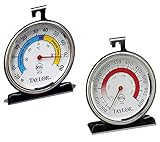
5. Taylor Precision Large Dial Oven Thermometer
A hang-or-stand dial thermometer that shows how your oven really runs. Since many ovens drift from their set temperature, a quick check can prevent under-baked cakes. Leave it on the middle rack, where it reads closest to the food.
Suits: checking calibration. Strengths: easy reading. Weaknesses: needs a quick glance through the glass. Skip it if you want a digital probe.
Best for delicate cookies
6. Silpat Non-Stick Baking Mat
A reusable silicone and fiberglass mat that fits a half sheet pan. It cuts the need for parchment and helps release delicate cookies and pastries. Wash it gently by hand and let it dry flat.
Suits: delicate cookies. Strengths: reusable and nonstick. Weaknesses: grease can build up. Skip it if you prefer parchment.
View Silpat Non-Stick Baking Mat on Amazon
Care and Setup
- Check your oven with a thermometer once a season.
- Let pans cool before washing.
- Hand wash aluminum pans for a longer life.
- Store mats flat to avoid creases.
- Line pans so cleanup stays quick.
Mistakes to Avoid
- Trusting the dial without a thermometer.
- Using dark pans and not lowering the heat.
- Overloading the rack.
- Skipping the preheat.
Matching Oven Features to Your Baking Style
Home bakers do not all need the same oven. Someone who makes a weekly loaf of bread has different priorities from a person who bakes cookies for every school event or a cook who prepares layered cakes. Start by listing what you bake most often, then match the oven features to that list.
Cookie and pastry bakers usually value consistent heat across the whole rack, since they fill trays to the edges. Cake bakers care most about stable temperature and a gentle bake mode, because small swings can cause sinking or doming. Bread bakers often want strong bottom heat and the ability to hold a high temperature steadily. People who bake in volume may find that more rack positions and a roomy cavity matter more than any single special mode.
- Occasional baker: a reliable single oven with clear controls is often enough.
- Regular baker: prioritize even heat, accurate temperature and rack flexibility.
- Holiday or batch baker: consider a double oven or extra bakeware so you can run more than one tray.
Also think about how you like to control the oven. Some people prefer simple knobs and buttons, while others enjoy touch screens or phone connectivity. Features that you will not use add cost and can add complexity, so be honest about what you will touch every week. Check the product listing for the exact version of any oven, since feature sets can differ between similar model names.
Choosing Bakeware That Works With Your Oven
The best oven in the world can still deliver poor results with the wrong pan. Since this guide includes bakeware alongside ovens, it helps to understand what the pan is doing. Metal conducts heat, so it directly affects how quickly the bottoms and edges brown.
Light-colored aluminum is a common choice for cookies and general baking because it browns gently and evenly. Dark metal pans absorb more heat and can produce darker bottoms and crisper edges, which some people like for pizza or roasted food but may need a lower temperature or shorter time for cakes. Heavier gauge pans resist warping, which helps them sit flat on the rack and heat more evenly.
Size matters too. Measure the interior of your oven and compare it to the dimensions of the pan, leaving room for air to circulate. A pan that is too large can block airflow and cause hot and cool spots.
- Check that pans are labeled safe for the temperatures you use.
- Avoid stacking pans in a way that blocks the fan.
- Replace pans that are badly warped or have damaged surfaces.
- Follow the maker’s care instructions to avoid damaging finishes.
If you bake often, owning two or three of the same sheet pan makes it easy to rotate batches while one cools. Look for pans with rolled or reinforced edges that stay stiff when hot.
Using Liners and Thermometers Well
Small accessories can make a noticeable difference in results, and a few habits help you get more from them. A reusable baking mat and an oven thermometer are two such tools, and both work best when you use them thoughtfully.
A silicone-style baking mat gives food a non-stick surface and reduces the need for parchment. Use it according to the maker’s instructions, and check the stated temperature limit in the product listing before baking at high heat. Keep sharp tools away from the surface so you do not cut it, and wash it by hand or as directed. Be aware that a mat adds a thin insulating layer, which can slightly change browning on the bottoms of cookies compared with bare metal or parchment.
An oven thermometer shows what the oven is really doing. Hang or place it in the center of the oven and read it through the window if you can, so you do not need to open the door. Check the temperature once the oven signals that it is preheated, then again after several minutes.
- Compare the thermometer to the oven display at more than one temperature.
- Replace a thermometer if the glass is cracked or the reading seems stuck.
- Keep liners flat, clean and dry between uses.
These tools are inexpensive compared with an oven, and they make it easier to tell whether a problem comes from the oven, the recipe or the pan.
Troubleshooting Common Baking Problems
When a bake goes wrong, it is natural to blame the oven, but several things can be at fault. A methodical approach helps you find the cause before you spend money on a fix or replacement.
If cookies brown on the bottom before the tops set, the rack may be too low, the pan may be dark, or the oven may be running hot. If cakes sink in the middle, the oven door may have been opened too early, the temperature may be off, or the batter may be overmixed. Uneven color from side to side can point to a hot spot or to a pan placed off center. Pale results can mean the oven is cooler than its display or the rack is too high.
- Check temperature with a separate thermometer first.
- Move the pan to a different rack position and compare.
- Rotate the pan halfway through baking.
- Try a lighter or heavier pan to see if the pan is the cause.
- Confirm that the recipe was written for a standard or a convection oven.
Keep a simple notebook of changes and results so you can see patterns. If the oven itself seems at fault, such as large temperature swings, a door that will not seal or controls that behave erratically, check the warranty and contact the manufacturer or an authorized service provider. Do not attempt electrical repairs yourself.
Installation Checks Before You Order
Many buyers focus on features and overlook the practical steps of fitting a wall oven. A few checks before ordering can prevent delays and returns.
Measure your cabinet opening carefully and compare it with the cutout dimensions listed in the installation guide for the exact model. Do not rely on the nominal size in the product name, since the actual opening can differ. Check the height from the floor, because ovens installed too high or too low are awkward and unsafe to use with heavy pans.
Confirm the electrical requirements in the manual, including voltage and the type of connection. Wall ovens typically need a dedicated circuit, and an electrician can verify that your wiring is suitable. Ask whether the unit ships with a power cord or needs one purchased separately, as practice varies.
- Check delivery and haul-away options when replacing an old oven.
- Look at the return policy in case the unit does not fit.
- Keep the model number and serial number for warranty registration.
- Read the manual before the first use so you know the recommended break-in steps.
Taking an hour to confirm these details is far cheaper than discovering a mismatch after the old oven has been removed.
Baking Oven Terms Explained
Oven specifications include several terms that matter to bakers. Here is a short glossary.
- Convection: a fan that moves hot air around the cavity for more even heat.
- True or European convection: a term some makers use for a setup with a third heating element behind the fan.
- Bake element: the heating element at the bottom of the oven.
- Broil element: the element at the top, used for browning.
- Proof mode: a low-temperature setting some ovens offer for rising dough.
- Self-clean: a high-heat cycle that burns off residue, which should be run as the maker instructs.
- Rack positions: the slots where racks sit at different heights.
Your oven’s manual explains what each mode does, so read it before your first bake.
Matching Oven Features to What You Bake
| What you bake | Features that help | Planning note |
|---|---|---|
| Cookies and sheet-pan bakes | Even heat and multiple racks | Check how many pans fit at once |
| Bread | Steady temperature and a proof setting | Think about steam options |
| Cakes | Gentle, even heat | Rotate pans if you see uneven browning |
| Pies and pastry | Good bottom heat | Use a baking stone or steel if the maker allows |
| Holiday baking marathons | Double oven or large capacity | Plan your timing |
Think about the pans you already own, because a large oven is only useful if it fits the way you bake.
A Pre-Order Installation Check
- Measure the cabinet cutout width, height and depth.
- Compare the numbers with the oven’s installation sheet from the maker.
- Check the electrical supply and the required circuit with a licensed electrician.
- Confirm the clearance for the door when it opens.
- Plan how the oven will be delivered and who will lift it.
- Look at the height of the oven in the wall, and think about how you will reach the racks.
- Keep the installation instructions and model number together.
A wall oven is a fixed installation, so careful planning prevents expensive surprises.
Reading a Listing Closely
Look at the interior capacity and the rack layout. A larger capacity number does not always mean more usable space, so compare cavity dimensions with your largest baking sheet. Look at the type of racks, the number of rack positions and whether racks glide out smoothly.
Check the control interface, the display and the preset modes. Read about the oven door, such as how many glass layers it has and whether it can be removed for cleaning. See what accessories come with the oven, including racks, probes or pans, and think about whether you will need to buy extras.
Electrical Work, Local Rules and Professional Help
Ovens are heavy and use high-power electrical connections, so installation should follow the maker’s instructions and local building codes. Use a licensed electrician and an installer for wiring, cutout changes and securing the unit. Do not attempt to modify circuits yourself.
Ask your installer about ventilation and clearances, and keep the manual for future reference. If the oven shows error codes, produces strange smells or fails to heat evenly, consult the manual first and then contact the maker or a qualified technician.
Choosing Pans and Racks to Match the Cavity
Before you buy, measure your favorite baking sheets, loaf pans and cake pans, and compare them with the oven’s interior dimensions. A sheet that touches the walls blocks airflow and can cause uneven browning. Leave a small gap on each side, and use one rack at a time when you want the best airflow, unless the maker advises otherwise.
Light-colored metal pans tend to brown gently, while dark pans absorb more heat and may need a lower temperature or shorter time, according to many recipes. Glass and ceramic dishes hold heat differently again. Use an oven thermometer and keep notes on how each pan behaves.
If you bake bread, a baking stone or steel can help, but check the maker’s guidance on placement and weight. Make sure racks are approved by the maker to carry the load of heavy items, and slide them in carefully.
Troubleshooting Baking Habits, Not Only Equipment
Many baking issues come from small habits. Preheat fully, use an independent oven thermometer, avoid opening the door unnecessarily and give pans enough space for air. Keep notes about the settings and results of each bake, and make small adjustments one at a time.
Choosing a Wall oven With a Clearer Eye: The Criteria That Deserve a Second Look
The opening sections of this guide cover the headline points to check when you compare wall ovens. This section slows down and looks at the same decision from the owner’s side: not what a wall oven promises on the day it arrives, but how the choice plays out across months of weeknight dinners, weekend baking and holiday roasting. Reading it before you settle on a pick will help you use the product sections above more sharply, because you will know which details in each description actually matter for your household and which are simply nice to have.
Fit and space, measured honestly
Start with the cabinet cutout, the electrical supply the unit needs and the clearance around the cabinet, because a built-in oven has to match an opening that already exists or one a cabinet maker is about to cut. Measure twice, in the unhurried way that feels excessive, and write the numbers down rather than trusting memory. Allow for the unglamorous details too: how the wall oven is reached, what sits around it in the kitchen, and whether the space you have measured is the space that will still be there once everything else is back in place. Most disappointing purchases in this category are not bad products; they are good products matched to the wrong space, and nearly all of them could have been avoided with a tape measure and ten quiet minutes before ordering.
Performance where it counts
Next, think about even heating from front to back of the cavity, steady temperature holding during long bakes and recovery after the door has been opened to check on food. Headline claims are easy to compare and often the least useful guide, because daily satisfaction comes from consistency: the tenth use behaving like the first, and the result staying predictable when conditions are less than perfect. As you read the pick-by-pick sections above, keep returning to this question — does this option perform in the specific way my routine actually demands, or is it strong in ways I will rarely call on? A wall oven that is merely good at everything but exactly right for your main job usually beats a more impressive all-rounder.
Everyday ease, not first-day impressions
Consider controls you can read at a glance, racks that slide smoothly under a heavy dish and a door that opens without fighting you when your hands are full. Ease of use rarely appears in a feature list, yet it decides whether a wall oven becomes part of your routine or an obstacle you work around. Picture the busiest, messiest moment of normal use — not a calm demonstration — and ask whether the design still helps you then. Small frictions repeat: a control that needs two attempts, a part that is awkward to lift, a routine that takes a minute longer than it should. Multiplied across a year of regular use, those small frictions are the difference between a purchase you recommend to friends and one you quietly stop using.
Cleaning and upkeep you will actually do
Be honest about baked-on splashes inside the cavity, grease on the door glass and crumbs that collect along the bottom edge and around the gasket. Every wall oven in this guide asks for some upkeep, and the realistic question is not whether the cleaning is easy in theory but whether it fits the time and patience you genuinely have. Short, regular attention almost always beats occasional heroic deep cleans, both for results and for how long the product lasts. As you compare the picks, favour the design whose upkeep matches your habits — a slightly simpler model you keep clean will outperform a sophisticated one you neglect, every single time.
Safety and the people around you
Finally, think about hot exterior surfaces, heavy casserole dishes being lifted out at chest height and children reaching toward a warm door. Safety in this category is mostly a matter of habits and placement rather than dramatic risks: where the wall oven sits, who can reach it, and whether your routine includes the small checks that keep everything sound. Read the safety notes in each product section above with your own household in mind — the presence of children, pets, elderly relatives or simply a busy, distracted cook changes which precautions matter most. A few minutes spent setting things up safely at the start is repaid every time you use the wall oven without thinking about it.
Putting It to Work: How a Wall oven Fits Real Routines
Specifications describe a wall oven; routines reveal one. The scenarios below describe the situations readers most often have in mind when they shop for wall ovens, and what each situation rewards. Find the scenario closest to your life and weight it heavily: a pick that shines in your scenario is a better buy than a pick that wins on a comparison table but belongs to somebody else’s routine. Many households recognise themselves in two scenarios at once, in which case the overlap between them is usually where the right choice sits.
Weeknight family dinners
This is about sheet-pan meals, casseroles and frozen staples that need to go from decision to table without fuss. In this situation, the wall oven is not an occasional tool but part of a repeating pattern, so reliability and ease matter more than novelty. Look again at the picks above and ask which of them is described in terms that match this pattern: steady performance across a long session, straightforward handling when you are busy, and upkeep that can keep pace with frequent use. It is also worth thinking about what happens on the busiest version of this day, not the average one, because a wall oven chosen for the average day is the one that lets you down precisely when the stakes are highest — guests waiting, a deadline looming or a car packed and ready to leave.
Serious home baking
This is about layer cakes, crusty breads and pastry, where even heat and predictable preheating matter more than extra modes. In this situation, the wall oven is not an occasional tool but part of a repeating pattern, so reliability and ease matter more than novelty. Look again at the picks above and ask which of them is described in terms that match this pattern: steady performance across a long session, straightforward handling when you are busy, and upkeep that can keep pace with frequent use. It is also worth thinking about what happens on the busiest version of this day, not the average one, because a wall oven chosen for the average day is the one that lets you down precisely when the stakes are highest — guests waiting, a deadline looming or a car packed and ready to leave.
Holiday and entertaining loads
This is about a large roast or several trays at once, with timing that has to land several dishes on the table together. In this situation, the wall oven is not an occasional tool but part of a repeating pattern, so reliability and ease matter more than novelty. Look again at the picks above and ask which of them is described in terms that match this pattern: steady performance across a long session, straightforward handling when you are busy, and upkeep that can keep pace with frequent use. It is also worth thinking about what happens on the busiest version of this day, not the average one, because a wall oven chosen for the average day is the one that lets you down precisely when the stakes are highest — guests waiting, a deadline looming or a car packed and ready to leave.
Replacing a failed unit
This is about matching an existing cutout so the new oven slides into the old opening with as little cabinet work as possible. In this situation, the wall oven is not an occasional tool but part of a repeating pattern, so reliability and ease matter more than novelty. Look again at the picks above and ask which of them is described in terms that match this pattern: steady performance across a long session, straightforward handling when you are busy, and upkeep that can keep pace with frequent use. It is also worth thinking about what happens on the busiest version of this day, not the average one, because a wall oven chosen for the average day is the one that lets you down precisely when the stakes are highest — guests waiting, a deadline looming or a car packed and ready to leave.
Day-to-Day Use, Cleaning and Care in More Detail
The care sections earlier in this guide give the essentials. What follows is the longer view: how to build the small habits that keep a wall oven performing well, how to clean it without turning the job into a chore you avoid, and how to store and look after it between uses. None of this requires specialist products or skills — it requires doing simple things regularly, which is unglamorous and entirely effective.
The first uses set the pattern
When your wall oven is new, take the first use slowly. Read the maker’s instructions properly — not as a formality, but because the details that matter, from first setup to what not to do, are specific to your model and are not repeated anywhere else. Run through the basic routine once without time pressure, notice what feels awkward, and adjust your setup while the stakes are low. Owners who give a new wall oven one unhurried first session almost always have a smoother first month than owners who debut it in front of an audience or a deadline.
A cleaning rhythm that sticks
For cleaning, little and often is the whole secret. Deal with baked-on splashes inside the cavity, grease on the door glass and crumbs that collect along the bottom edge and around the gasket while traces are fresh and the job takes minutes; leave them and the same job becomes the kind of task that gets postponed indefinitely. Keep the basic supplies you need within reach of where the wall oven lives, use only cleaning methods and products the maker allows for the surfaces involved, and let everything dry fully before the next use or before storage. If several people share the wall oven, agree on the rhythm out loud — most neglected equipment belongs to everyone in theory and nobody in practice.
Storage and the time between uses
What happens between uses shapes a wall oven’s life as much as the uses themselves. Store it and its accessories together, dry and protected from knocks, dust and damp, in a place that does not require a struggle to reach — equipment stored awkwardly gets used reluctantly. Before a longer break, a proper clean and a quick check of the parts that wear, loosen or perish means the wall oven comes back to service ready rather than needing rescue. When you return to it, a brief inspection before the first use catches the small problems — a frayed edge, a loose fitting, a part left dirty — while they are still small.
Knowing what is normal and what is not
Every wall oven develops a familiar pattern of sounds, smells, timings and behaviour, and learning that pattern is a genuine skill. Once you know what normal looks like, changes announce themselves early: a new noise, a slower result, a part that no longer sits as it did. Most changes have simple causes covered in the troubleshooting spirit of this guide — something needs cleaning, adjusting or replacing as a consumable. The ones that do not respond to the simple checks are the ones to hand to a professional, and catching them early is usually what keeps a repair minor.
How the Picks in This Guide Compare With Each Other
Readers often ask for a simple ranking of the wall ovens above, but the honest comparison is about fit. Each pick in this guide earned its place for a slightly different reader, and the sections describing them already contain everything needed to separate them: who each one suits, the strengths highlighted, and the honest limitation mentioned alongside. The notes below show how to run that comparison for yourself, pick by pick, so the final choice rests on your priorities rather than on a generic verdict.
Consider the Maytag MEW9530FZ 30-inch Single Wall Oven. Return to its section above and note three things in order: the reader it is described as suiting, the strength the guide emphasises most, and the limitation it openly flags. Then hold those three points against the criteria and scenarios earlier on this page. If the reader it suits sounds like you, and its flagged limitation touches something you rarely do, it belongs on your shortlist even if another pick looks stronger on paper. If the limitation sits squarely in your main routine, that is the comparison doing its job — cross it off without regret and move to the next pick, because a wall oven whose weakness meets your most common use will disappoint you weekly, however good its strengths are.
Consider the GE Profile PTS7000 30-inch Single Wall Oven. Return to its section above and note three things in order: the reader it is described as suiting, the strength the guide emphasises most, and the limitation it openly flags. Then hold those three points against the criteria and scenarios earlier on this page. If the reader it suits sounds like you, and its flagged limitation touches something you rarely do, it belongs on your shortlist even if another pick looks stronger on paper. If the limitation sits squarely in your main routine, that is the comparison doing its job — cross it off without regret and move to the next pick, because a wall oven whose weakness meets your most common use will disappoint you weekly, however good its strengths are.
Consider the Whirlpool WOD51EC0HS 30-inch Double Wall Oven. Return to its section above and note three things in order: the reader it is described as suiting, the strength the guide emphasises most, and the limitation it openly flags. Then hold those three points against the criteria and scenarios earlier on this page. If the reader it suits sounds like you, and its flagged limitation touches something you rarely do, it belongs on your shortlist even if another pick looks stronger on paper. If the limitation sits squarely in your main routine, that is the comparison doing its job — cross it off without regret and move to the next pick, because a wall oven whose weakness meets your most common use will disappoint you weekly, however good its strengths are.
Consider the Nordic Ware Naturals Aluminum Commercial Baker’s Half Sheet. Return to its section above and note three things in order: the reader it is described as suiting, the strength the guide emphasises most, and the limitation it openly flags. Then hold those three points against the criteria and scenarios earlier on this page. If the reader it suits sounds like you, and its flagged limitation touches something you rarely do, it belongs on your shortlist even if another pick looks stronger on paper. If the limitation sits squarely in your main routine, that is the comparison doing its job — cross it off without regret and move to the next pick, because a wall oven whose weakness meets your most common use will disappoint you weekly, however good its strengths are.
Consider the Taylor Precision Large Dial Oven Thermometer. Return to its section above and note three things in order: the reader it is described as suiting, the strength the guide emphasises most, and the limitation it openly flags. Then hold those three points against the criteria and scenarios earlier on this page. If the reader it suits sounds like you, and its flagged limitation touches something you rarely do, it belongs on your shortlist even if another pick looks stronger on paper. If the limitation sits squarely in your main routine, that is the comparison doing its job — cross it off without regret and move to the next pick, because a wall oven whose weakness meets your most common use will disappoint you weekly, however good its strengths are.
Consider the Silpat Non-Stick Baking Mat. Return to its section above and note three things in order: the reader it is described as suiting, the strength the guide emphasises most, and the limitation it openly flags. Then hold those three points against the criteria and scenarios earlier on this page. If the reader it suits sounds like you, and its flagged limitation touches something you rarely do, it belongs on your shortlist even if another pick looks stronger on paper. If the limitation sits squarely in your main routine, that is the comparison doing its job — cross it off without regret and move to the next pick, because a wall oven whose weakness meets your most common use will disappoint you weekly, however good its strengths are.
Two further checks sharpen any shortlist. First, compare upkeep: the picks differ in how much routine attention they ask for, and the one whose care routine matches your habits will still be performing well long after a needier rival has been neglected. Second, compare the whole purchase, not just the unit — the accessories, consumables, replacement parts and storage the wall oven needs over its life. A pick that looks like the premium choice sometimes asks the least over time, and the reverse is just as common. Decide with both checks done and you will rarely need to second-guess the order.
The Longer View: Owning One Well
A wall oven is one of those purchases whose value compounds quietly. The first month is about learning it; the first year is about the routine settling around it; after that, it simply becomes how things are done in your home. Owners who get the most from wall ovens share a few traits that have nothing to do with which model they bought. They keep the basic accessories and consumables in stock so a missing item never cancels a plan. They do the small cleaning and checking jobs on rhythm rather than on memory. And they revisit their setup occasionally — as households, tastes and routines change, the way a wall oven is used can change with them, and a small rearrangement sometimes unlocks value that was there all along.
It is also worth keeping a light record, even if only mentally, of what works for you: the settings, timings, arrangements or combinations that produced your best results. The guides and product sections can start you off, but your own notes — adjusted for your space, your ingredients, your car, your collection, your people — are what turn a good wall oven into the right one. When the time eventually comes to replace it, that record tells you exactly which of the criteria in this guide mattered in practice, and the next purchase becomes the easiest one you have made in this category.
Home Baker FAQ
Is a double oven worth it for baking?
Only if you bake several dishes at once. Many bakers do fine with a single.
Do I need convection?
It evens out heat and speeds many bakes, but not all recipes need it.
What pan is best for cookies?
A light aluminum half sheet is a good all-round choice.
What else is worth owning?
A cooling rack and a good set of mixing bowls round out a baking kit, and both work in any kitchen.
How often should I test oven temperature?
A seasonal check is plenty unless results start to change.
Do I need a special pan for convection baking?
Usually no, but low-sided, light-colored pans let air move around food and are commonly used. Check your oven manual for any pan recommendations.
Why do my cookies brown unevenly?
Common causes are hot spots, pans placed off center, dark pans or an oven that runs hot. Rotating the pan halfway and checking the real temperature with a thermometer usually narrows it down.
Is parchment or a baking mat better?
Both prevent sticking. Parchment is disposable and handy for easy cleanup, while a reusable mat reduces waste but needs washing and has a temperature limit you should check on the product listing.
How many rack positions do I need?
Most home bakers do well with several positions, which let you bake tall items low and cookies in the middle. If you bake multiple trays at once, extra positions give more flexibility.
Can I bake bread in a wall oven?
Yes, many bakers do. Look for steady high temperature, good bottom heat and enough height for your loaf pans or baking stone, and check the manual about using stones or heavy cookware.
What should I do if my oven runs hot or cold?
Verify it with an oven thermometer, then adjust the set temperature or use the calibration option in the menu if your oven has one. If the difference is large or changes often, contact the manufacturer.
How wide should my oven be for sheet pans?
Measure the interior width and depth in the manual or listing and compare it with your pans. Leave a little room on each side so air can circulate around the pan.
How long should I let a new wall oven run before cooking in it?
A first burn-off run, following the manual for your model, clears manufacturing residues and the new-appliance smell before food goes in. Open a window or run ventilation during that first cycle, let the oven cool fully, wipe the interior with a damp cloth, and only then start cooking as normal.
Why does baking take longer on one rack position than another?
Heat is not perfectly uniform inside any oven cavity. The middle rack is usually the most even spot, while positions close to an element run hotter. If a favourite recipe behaves differently in a new oven, changing rack position is the first, simplest adjustment to try before changing temperature or time.
Can I use the same pans I used in my old oven?
In most cases yes, provided the pans fit with room for air to circulate around them. Very large pans that nearly touch the walls can block airflow and lead to uneven results, so check the fit with the door closed before the first big cook rather than discovering a problem mid-recipe.
What is the best way to check whether my oven runs hot or cold?
An inexpensive oven thermometer placed in the centre of the cavity gives a useful comparison against the set temperature across a few preheats. Small differences are normal as the oven cycles; a large, consistent gap is worth noting and, if the manual allows adjustment, correcting through the calibration setting.
How often should the door gasket be checked?
Give the gasket a quick look whenever you deep-clean the oven. It should sit evenly and feel flexible; a torn, flattened or loose section can let heat escape and affect baking. Gaskets are replaceable parts on many models, and the manual or maker can confirm the right one.
Is it normal for the cooling fan to keep running after I switch off?
Yes. Many built-in ovens run a cooling fan for a while after cooking to protect the electronics and surrounding cabinetry. The sound stopping on its own after a period is expected behaviour; a fan that never stops, or new grinding noises, are the signs to raise with a service technician.
The Short Version
For a durable single, the Maytag. For extra polish, the GE Profile. For two cavities, the Whirlpool double. For pans, the Nordic Ware. For accuracy, the Taylor thermometer. For liners, the Silpat.


