An under counter wine refrigerator stores bottles at cellar temperature beneath the worktop. The best ones vent through the front, so you can set them inside a cabinet run next to a sink or a bar without trapping heat.
The six units below lean toward dual-zone designs, so you can keep reds and whites at their own settings. We have not used these products ourselves, so please confirm bottle capacity, dimensions and venting on the current listing before buying. Capacity numbers on wine fridges are often based on slim bottles. Wide-shouldered bottles such as some sparkling and burgundy styles take up more room than the label suggests, so plan on a smaller real-world count.
As an Amazon Associate we earn from qualifying purchases. Links below are affiliate links, and they do not change the product information we give.
What to Look For
| Feature | Why it matters |
|---|---|
| Zones | Dual zone lets you serve whites cooler than reds |
| Venting | Front venting is meant for built-in installs |
| Shelving | Wood or metal shelves hold wide bottles differently |
| Door | Double-pane glass limits temperature swings and light |
| Noise | Thermoelectric is quiet; compressor models cool more strongly |
In this guide
Specs at a Glance
| Wine fridge | Zones | Size class | Notes |
|---|---|---|---|
| Kalamera 24 Inch Dual Zone | Dual zone | 24 inch width class | Front-vent, built-in style |
| NewAir AWR-290DB | Dual zone | Mid-size class | Freestanding or built-in styling |
| Allavino VSWR56-2SST | Dual zone | Larger class | Stainless steel door frame |
| Ivation 18 Bottle | Single zone | Compact class | Thermoelectric style |
| Whynter BWR-0301 | Single zone | Compact class | Freestanding design |
| EdgeStar CWR263SZ | Single zone | Mid-size class | Built-in friendly |
The 6 Best Under Counter Wine Refrigerators

Top pickBest for kitchen bars
1. Kalamera 24 Inch Dual Zone Wine Cooler
A dual zone built-in wine cooler from Kalamera sized for standard cabinet openings. The glass door lets you see your bottles, and it is meant for under counter use. Look at the shelf type on the listing, because it decides how well wide bottles fit.
Suits: kitchen bars. Strengths: separate temperature areas. Weaknesses: capacity depends on bottle shape. Skip it if you only keep one wine type.

Best for home bars
2. NewAir AWR-290DB
A dual zone NewAir wine fridge that appears often on buying lists. It has a glass door and a compressor system. A compressor generally holds a steady temperature better in a warm room than a thermoelectric design does.
Suits: home bars. Strengths: two settings in one unit. Weaknesses: check venting before sealing it into a cabinet. Skip it if you want the biggest cellar.
View NewAir AWR-290DB on Amazon
Best for serious bottle collections
3. Allavino VSWR56-2SST
A larger Allavino dual zone unit with a stainless steel frame. The brand focuses on wine storage appliances. That focus shows in the shelf design and the controls, which are aimed at collectors.
Suits: serious bottle collections. Strengths: a bigger capacity. Weaknesses: a wider body that needs more room. Skip it if your opening is small.
View Allavino VSWR56-2SST on Amazon
Best for starter collections
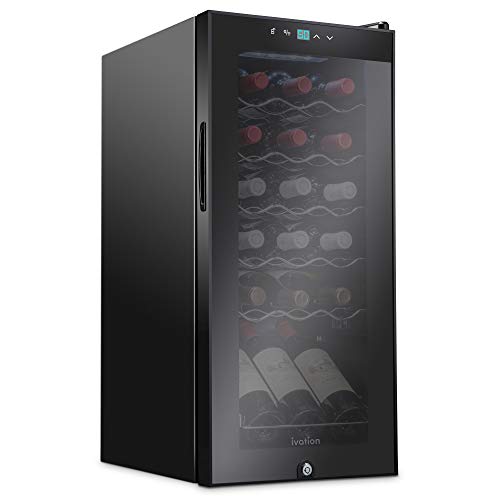
4. Ivation 18 Bottle Wine Cooler
A compact Ivation wine cooler that is quiet and simple. It suits a smaller collection and a tight countertop or low shelf. It is the easiest of the six to move if you rearrange the kitchen.
Suits: starter collections. Strengths: a quiet design. Weaknesses: limited capacity. Skip it if you want a serious cellar.

Best for a single temperature
5. Whynter BWR-0301
A Whynter wine fridge in a compact format with a reliable brand behind it. It is a good fit when you want a straightforward build. Whynter sells a wide range of cooling appliances, so parts and manuals are easy to find.
Suits: a single temperature. Strengths: a simple layout. Weaknesses: not made for fully enclosed cabinets. Skip it if you want a front-vent fit.
View Whynter BWR-0301 on Amazon
Best for tight cabinet runs
6. EdgeStar CWR263SZ
An EdgeStar wine cooler that is sold for built-in use with a front vent. It stores a modest number of bottles. It is a sensible choice when the opening is tight and one serving temperature is enough.
Suits: tight cabinet runs. Strengths: a built-in oriented design. Weaknesses: one temperature zone. Skip it if you want two settings.
View EdgeStar CWR263SZ on Amazon
Care and Setup
- Set reds and whites to their own zones if the unit allows it.
- Keep the unit level so the compressor runs evenly.
- Dust the front grille every few weeks.
- Rest new bottles before opening to avoid temperature swings.
Mistakes to Avoid
- Counting bottle capacity without checking bottle width.
- Enclosing a rear-vent model.
- Placing it beside a hot oven.
- Choosing single zone when you need two.
Compressor or Thermoelectric Cooling
Most wine fridges use one of two cooling methods, and the choice affects noise, temperature range and where the unit can live. A compressor system works like a standard refrigerator. It can cool well below room temperature and is generally better suited to a warm kitchen or a space that gets sun. A thermoelectric system uses a solid-state cooling plate and a small fan. It has no compressor, so it tends to be quiet and to produce little vibration.
The trade-off is range. Thermoelectric units usually cool to a set number of degrees below the surrounding room, and the exact figure differs by model, so check the manual or listing. In a hot room they may struggle to reach cellar temperature. Compressor units hold a set point more reliably in those conditions, though you may hear the motor cycle on and off.
Think about where the fridge will sit. A quiet bar next to a living area may suit a thermoelectric unit. A kitchen run next to an oven or a dishwasher, where ambient heat is higher, often suits a compressor design better. If you plan to keep bottles for years rather than weeks, steadiness matters more than silence. Whichever type you choose, confirm on the listing whether the cooling method is stated, because some pages describe it only in the feature bullets.
Ideal Temperatures by Wine Style
A dual zone fridge is only useful if you set each zone with a purpose. Serving temperatures and storage temperatures are related but not identical. Many people keep all wine at a steady cool storage temperature and chill a bottle further shortly before serving, while others use the upper and lower zones to hold whites and reds at their serving ranges.
As general guidance, sparkling wine and light whites are enjoyed cold, full-bodied whites a little less cold, and reds cool but warmer than whites. Lighter reds often taste better with a slight chill. Exact numbers vary by source and personal taste, so treat any chart as a starting point and adjust to what you like.
Two habits protect your bottles more than any specific number. First, avoid large swings. Opening the door often, or moving the dial every week, stresses the wine more than a setting that is a few degrees off. Second, keep the unit away from direct sunlight and strong vibration. Check how your model displays temperature, because some show the set point rather than the actual interior reading, and a small separate thermometer on a shelf can confirm what the bottles actually experience.
Shelf Materials and Bottle Fit
Shelving decides how many bottles you can really store. Wood shelves look good and are often gentle on labels. Metal shelves can be slimmer and may leave a little more room around each bottle. Check whether shelves slide out, since sliding trays make it easier to reach the back row without disturbing neighbors.
Bottle shape matters as much as shelf type. Standard Bordeaux-style bottles fit most racks. Wider burgundy, sparkling and some imported bottles may not, and magnums almost never do unless the listing says so. Before buying, look at what you drink most often and consider how many of those bottles are oversized.
- Measure a typical bottle from base to shoulder width and compare it to the shelf spacing in the manual.
- Plan for a real-world count that is lower than the label figure.
- Leave some empty space for new purchases and for air to circulate.
- Ask whether shelves can be removed to hold taller bottles or boxed wine.
If you already own a few unusual bottle sizes, choose the unit with the most flexible layout rather than the highest stated capacity.
Measuring the Opening and Airflow
Fitting a wine fridge into a cabinet run takes more than width and height. Measure the opening at the front, the middle and the back, because walls and toe kicks are rarely perfectly square. Record the depth from the wall to the edge of the cabinet face, then add room for the door handle and for the door to open fully without hitting a neighbor.
Airflow is the second half of the job. Units described as front-vented pull and release air through a grille at the bottom front, so they can sit between cabinets. Units without that design need open space around the back or sides, and sealing them in can cause overheating, higher energy use and a shorter working life. Read the installation section of the manual for the minimum clearances the maker asks for.
Also check the power outlet. It should be reachable without stretching the cord around a tight corner, and ideally sit within the cabinet or just beside it. If the unit has a reversible door, decide which way it should swing before you finish the install. Make a cardboard template of the footprint if you are unsure; it is a cheap way to catch a problem before the delivery arrives.
Budget Tiers and When to Replace
Wine fridges fall into rough tiers. Entry-level models are usually smaller, often single zone, and aimed at a modest collection. Mid-range units tend to add dual zones, double-pane glass and better shelving. Higher tiers usually focus on larger capacity, stainless trim, precise controls and sturdier hardware. The right tier depends on how many bottles you keep and how long you keep them, not on how impressive the front looks.
If you buy only a few bottles each month and drink them soon, a simple unit may be enough. If you age bottles for years, spend where it counts: steady temperature, sound shelving and good door sealing.
Signs it may be time to replace a unit include a compressor that runs almost constantly, interior temperature that drifts from the set point, a door gasket that no longer seals, frost or condensation that keeps returning, and noise that has changed. Before replacing, clean the condenser area and check that nothing blocks the vents, since dust is a common cause of poor cooling. Look at the warranty terms on the listing so you know what the maker covers.
A Pre-Order Checklist
Under counter wine coolers are fussy about space, and returns on large appliances are a hassle. Before you order, confirm each of these points against the product page and the installation guide.
- The cabinet opening height, width and depth, measured at several points.
- Whether the cooler is approved by its maker for built-in use, which usually means front venting.
- The door swing direction and whether it can be reversed.
- The path from your door to the kitchen, including stairs and tight turns.
- The power outlet location and whether a dedicated circuit is advised by the manual.
- Leveling feet or adjustable legs for an uneven floor.
If any item is unclear, ask the seller or read the manual online before buying. Electrical and ventilation requirements come from the maker, so follow them rather than guessing, and call a licensed electrician if the outlet needs work.
Reading Capacity Claims Realistically
Bottle counts on a listing usually assume standard Bordeaux shaped bottles laid flat in an ideal arrangement. Wider bases, tall sparkling bottles and thick burgundy shapes often reduce the real number. A model advertised for a certain count may hold fewer once you add the varied bottles most collectors own.
Look at the shelf photos, not just the number. Are the shelves wooden or metal, do they slide out, and do they come as a fixed set? Sliding shelves are easier to use, yet they may take up depth that fixed racks do not. If you buy larger format bottles, check whether any shelf can be removed to make room.
It also helps to keep a small cushion in your plan. A cooler filled to the brim leaves little space for airflow, and a collection tends to grow faster than expected.
Choosing by Situation
| Situation | Suggested direction |
|---|---|
| Mostly red wine, drunk soon | Single zone is often enough |
| Both red and white on hand | Dual zone for individual serving temperatures |
| Open kitchen, lots of foot traffic | Quiet running and a solid latch |
| Long term storage plans | Stable temperature and low vibration |
| Tight built-in space | Confirm front venting and clearances |
Treat this as a quick sorting aid. The details on the product page and in the manual should always win over a general table.
Setting Up on Day One
When the unit arrives, inspect it for damage before the carrier leaves if you can, and photograph any issue. Follow the maker’s guidance about letting the unit rest before plugging it in, since some manufacturers ask for a waiting period and others do not. Wipe the interior with a mild cleaner as the manual suggests, set your preferred temperature, and give it time to settle before loading bottles.
Keep the area around the vents clear, and avoid placing the cooler beside a heat source such as an oven. A little care at setup makes the machine easier to live with for years.
Common Mistakes With Wine Coolers
A wine fridge is not a normal refrigerator, and treating it like one causes most of the trouble owners run into. The first mistake is installing a freestanding model inside a closed cabinet. Freestanding units usually vent from the sides or back, and the manual will tell you they need open space around them. Only models designed for built-in use are meant for a tight opening.
The second is overpacking. Squeezing in every bottle blocks airflow and can leave warm spots, so leave a little breathing room on each shelf. The third is setting a temperature and then opening the door constantly to admire the collection. Every opening lets in warm air, and the compressor has to catch up.
- Do not store the cooler in a space that gets very hot or very cold unless the maker approves it.
- Do not place heavy objects on top that the manual does not allow.
- Do not use harsh cleaners on the interior or on the door seal.
- Do not ignore a door that does not close fully, since a poor seal wastes energy.
Cleaning and Care Notes
Plan a gentle clean every few months, or on the schedule in your manual. Unplug the unit, remove the bottles and wipe the inside with a soft cloth and a mild solution. Dry everything before you reconnect power and reload. Check the door gasket for dust or sticky spots, because a clean seal holds temperature better.
Clean the vent area and any condenser surfaces only in the way the maker describes, since the parts behind the panel are electrical. If you notice odd noises, frost, a musty smell or water pooling, consult the manual or contact support instead of opening the cabinet yourself. A licensed technician should handle anything involving the sealed system or wiring.
How to Choose in Practice: A Step-by-Step Decision Sequence
Most shoppers start with a shortlist of models and a handful of features, but a more reliable way to choose a wine refrigerator is to work through a short sequence of practical decisions in order. The sequence below is built around wine storage that fits under a counter. Each step removes some options from contention, so by the end you are comparing a small number of genuinely suitable picks from the reviews above rather than trying to rank everything at once.
Step one: start with the space, not the product
Measure first and shop second. For this category, that means checking the opening width, height and depth, door swing, ventilation style, rack spacing against the bottle shapes you actually collect, and whether shelving adjusts for larger bottles. Write the numbers down and keep them beside you while you read listings, because the underside of a counter is an unforgiving space: a unit a fraction too tall, or one whose venting does not match the cabinet, is the wrong unit however good it looks. Allow for the door to open fully and for you to slide a shelf out without hitting the unit opposite. If your opening is between sizes, favour the option that leaves the clearances the manual asks for rather than the one that fills every gap.
Step two: list your three most common uses
Next, be honest about what the wine refrigerator will do most weeks. In this category the everyday work usually includes storing everyday drinking wines, keeping a smaller collection ready to serve, separating reds and whites where a model offers zones, and protecting bottles during warm weather. Write down your own three most frequent uses, in order, and judge every pick against those three first. If nearly everything you buy is drunk within the month, a simple single-zone unit may serve you better than a dual-zone model bought for a cellar you do not have. This single habit prevents the most expensive buying error in the category: paying for zones and capacity you will not use while compromising on the rack spacing your actual bottles need.
Step three: match handling to the people who will use it
Consider who else will use the wine refrigerator: a partner, guests, housemates or family. The door should open without a fight, shelves should slide without tipping bottles, and the controls should be understandable without a lesson each time — including which zone is which. Think about light and noise in the room it will live in, and about curious children if the bottles matter to you. If one person curates the collection, their organisation system should carry extra weight in the decision, and everyone else just needs to be able to take a bottle out and put one back without disturbing the rest.
Step four: plan the upkeep and the setting before you buy
Every option in this guide asks for some routine care, and the differences matter. In general that means wiping shelves and seals, keeping ventilation clear, checking for condensation, and handling glass shelves and racks gently when removing them for cleaning. Ask yourself where the unit will sit in relation to heat and sun — beside an oven or in a bright window is a harder life for any wine fridge — and whether the floor is level enough to avoid vibration. Before you commit, also settle the venting question for certain: front-vent for a closed cabinet run, freestanding designs only where the space around them stays open as the manual requires, and an outlet that does not need an extension cord stretched across a kitchen.
Real Households, Real Use Cases
The same wine refrigerator can be an excellent buy for one household and a poor one for another. The scenarios below describe how the choice plays out in common situations, so you can find the one closest to your own life and borrow its priorities.
Everyday drinking wines
When the fridge is a working part of the kitchen rather than a shrine, the priorities are quick access and forgiving organisation. For wine storage that fits under a counter, that usually means shelves that slide, a zone set once and left alone, and room for the odd bottle shape without a rearrangement project. It also means keeping the unit ready to use: grille dusted, door sealing evenly, and a few spaces left empty for this week’s purchases. Judge the picks in this guide by your normal buying rhythm, not by the largest case you have ever brought home.
Dinners, guests and a serving collection
Entertaining tests the serving side of the unit rather than basic storage. Think about how the refrigerator handles the run-up to a dinner: whites and sparkling wines ready at serving temperature, reds close enough to need only a short rest, and bottles you can find by label without pulling out half the shelf. A dual-zone design earns its place here, provided the zones map to how you actually serve. Planning helps more than raw capacity — deciding the menu’s wines in advance and arranging them in serving order the day before.
Quiet rooms and bright spaces
In a living room, studio or bright open-plan kitchen, noise, light and vibration matter as much as temperature. A wine refrigerator lives in a cabinet opening or quiet corner away from direct sunlight and sources of vibration and heat, and choosing that corner well is half the purchase. A thermoelectric design may suit a quiet room if the room itself stays cool; a compressor design holds its setting better in a warm one. Either way, keep the unit out of direct sun, off an uneven floor, and away from speakers, appliances or doorways that shake it daily.
Getting the Best from It Day to Day
Good results with a wine refrigerator depend as much on small habits as on the model you choose. The guidance here is general good practice for the category; always follow the manual for your specific product where the two differ.
Start with the basics of operation: letting the cabinet settle at your chosen setting before loading bottles, placing bottles so labels and necks are easy to see, avoiding frequent door opening, and returning opened bottles promptly. The first few weeks are a learning period. Note the real temperature with a small thermometer on a shelf, how the unit responds after a restock, and which shelves suit which bottle shapes. Most disappointment in this category comes not from faulty products but from capacity counted in slim bottles, a door opened every hour to admire the collection, or a freestanding unit slowly overheating inside a closed cabinet.
Think about load and layout. Air needs room to move, and bottles packed tightly against the back wall or vents can sit at a different temperature from the rest. Arrange bottles so you can read labels without a shuffle, keep the bottles you will drink soonest at the front, and leave a little breathing room on each shelf. If a delivery has several cases, let bottles rest and load them in a couple of short sessions so the door stays open for the shortest possible time.
Finally, keep care habits automatic. Keep the unit level, the grille clear and the seal clean, and resist adjusting the settings every week — steadiness protects wine more than chasing a perfect number. If the refrigerator behaves unusually — temperature fluctuation that will not settle, a new noise, water pooling, damage to a cord or seal — keep the door shut, and consult the manual or the maker rather than pushing on.
Cleaning, Care and Storage: Keeping It Working Well
Regular care is gentle and quick for any wine refrigerator. The core routine is: wiping shelves and seals, keeping ventilation clear, checking for condensation, and handling glass shelves and racks gently when removing them for cleaning. Done little and often, these jobs take minutes. Left for months, dust on the grille and a sticky seal quietly make the unit work harder, and temperatures drift in exactly the way wine storage is meant to avoid.
Set a rhythm that matches how often you use the unit: a quick wipe when a bottle leaks or a shelf comes out, a fuller clean every few months on the manual’s schedule, and a periodic check that the unit is still level and the door still closes with an even grip. Tie the routine to something you already do — a seasonal restock is a natural moment — so it happens without willpower. Unplug the unit for a full clean, as the guide above describes, and dry everything before reloading.
Be careful with materials and methods. Use a mild solution and a soft cloth, avoid harsh cleaners that leave odours inside a cabinet meant for wine, and never force a shelf or rack that is resisting — check how it releases first. Keep the manual and purchase details in one place. If the refrigerator will sit unused for a season, follow the maker’s guidance for cleaning, drying and switching off, so it returns to service without musty smells.
Signs it is time for attention
Learn the early warning signs in this category: temperature fluctuation from a warm room or blocked vents, racks that suit standard bottles but not wider shapes, vibration from an uneven floor, and light exposure when the unit sits in a bright spot. Any of these is a prompt to clean the grille, check the seal and the level, review the manual’s troubleshooting section, and confirm the unit is placed as directed. Persistent problems after basic checks are a reason to contact the maker or a qualified service provider, especially while the product is still within its warranty period. A short note of when a problem started and what you tried will make any support conversation far more productive.
Comparing the Picks in This Guide, Side by Side in Words
The reviews above present each pick for a slightly different collection, and the fairest comparison is not to declare one winner for everyone. It is to match the description, the stated strengths and the stated limits of each option to your own priorities for wine storage that fits under a counter. Read the notes below together with the detailed reviews earlier in this guide, and use them to narrow the list to one or two finalists before you check a current listing.
Kalamera 24 Inch Dual Zone Wine Cooler: who it fits in this line-up
As the guide describes it, this is a dual zone built-in wine cooler sized for standard cabinet openings, whose glass door lets you see your bottles and which is meant for under counter use, and it suits kitchen bars. Its stated strengths are separate temperature areas; its stated weakness is that capacity depends on bottle shape, so the guide suggests skipping it if you only keep one wine type. In practice, it is the natural first finalist for a fitted kitchen bar serving both reds and whites.
NewAir AWR-290DB: who it fits in this line-up
As the guide describes it, this is a dual zone wine fridge with a glass door and a compressor system, where a compressor generally holds a steady temperature better in a warm room than a thermoelectric design does, and it suits home bars. Its stated strength is two settings in one unit; its stated weakness is that you should check venting before sealing it into a cabinet, so the guide suggests skipping it if you want the biggest cellar. In practice, it suits the home bar that is not fully enclosed, or where the venting check comes back in its favour.
Allavino VSWR56-2SST: who it fits in this line-up
As the guide describes it, this is a larger dual zone unit with a stainless steel frame from a brand that focuses on wine storage appliances, whose focus shows in shelf design and controls aimed at collectors, and it suits serious bottle collections. Its stated strength is a bigger capacity; its stated weakness is a wider body that needs more room, so the guide suggests skipping it if your opening is small. In practice, it is the collector’s pick in this list — provided your opening is genuinely the larger one it needs.
Ivation 18 Bottle Wine Cooler: who it fits in this line-up
As the guide describes it, this is a compact wine cooler that is quiet and simple, suiting a smaller collection and a tight countertop or low shelf, and the easiest of the six to move if you rearrange the kitchen, and it suits starter collections. Its stated strength is a quiet design; its stated weakness is limited capacity, so the guide suggests skipping it if you want a serious cellar. In practice, it is the honest starter pick: a quiet home for the bottles you actually have, without cabinet work.
Whynter BWR-0301: who it fits in this line-up
As the guide describes it, this is a wine fridge in a compact format with a reliable brand behind it, a good fit when you want a straightforward build, from a maker whose parts and manuals are easy to find, and it suits a single temperature. Its stated strength is a simple layout; its stated weakness is that it is not made for fully enclosed cabinets, so the guide suggests skipping it if you want a front-vent fit. In practice, it is the freestanding single-zone choice for one wine style kept well.
EdgeStar CWR263SZ: who it fits in this line-up
As the guide describes it, this is a wine cooler sold for built-in use with a front vent, storing a modest number of bottles, and a sensible choice when the opening is tight and one serving temperature is enough, and it suits tight cabinet runs. Its stated strength is a built-in oriented design; its stated weakness is one temperature zone, so the guide suggests skipping it if you want two settings. In practice, it competes with the Kalamera above for the fitted opening, and the decider is simply whether your serving habits need the second zone.
Compare the finalists on total fit rather than on a single headline figure. The right wine refrigerator is the one whose venting matches your cabinet, whose racks fit your bottles as they really are, and whose temperature stays steady in your room. A well-matched smaller unit, kept level and out of the sun, usually serves a collection better than a larger one squeezed into the wrong opening.
Mistakes to Avoid, Expanded
Measuring once, casually
A single quick measurement is how units end up returned or installed without ventilation. Measure the space twice, at its narrowest points, and include the opening width, height and depth, door swing, ventilation style, rack spacing against the bottle shapes you actually collect, and whether shelving adjusts for larger bottles. Measure your widest regular bottle, too — the cabinet is not the only fit that matters. If your numbers are close to a product’s stated size, treat that as a warning, not a pass.
Choosing by headline figure alone
A single impressive bottle count can hide racks your bottles do not fit. Judge the whole routine — opening the door in your actual space, sliding a shelf with loaded hands, reading labels, wiping a spill, cleaning the seal — because you will perform that routine for years. A figure you love should survive contact with that routine; if the count assumes bottles you never buy, its value falls quickly. The same applies to the manual: read at least the installation, venting and care sections before ordering.
Ignoring placement and neglecting the small parts
Most wine fridges in this category depend on placement more than their owners expect: out of direct sun, away from ovens and dishwashers, level, with vents and grilles clear. A freestanding model boxed into a cabinet or a front grille covered by a plinth quietly undoes the whole design. At the same time, inspect the small parts — the door seal, hinges, shelves, racks and leveling feet — when you clean. They do much of the real work, they are usually the first things to wear or shift, and a tired seal or a dusty grille is far cheaper to deal with early than after a season of drifting temperatures.
More Questions Buyers Ask
How do I know if a wine refrigerator is the right size for my home?
Start with your bottles rather than with the largest option available. Think about the opening width, height and depth, door swing, ventilation style, rack spacing against the bottle shapes you actually collect, and whether shelving adjusts for larger bottles. Then compare that with what you keep in a typical month, counting your real bottles rather than the slim shape listings assume. A unit that holds your collection as it is, with a few spaces spare, is a better fit than a larger claim that your widest bottles cannot use.
What should I check in my home before I order?
Check the exact place it will live — a cabinet opening or quiet corner away from direct sunlight and sources of vibration and heat — and walk the delivery route from your door to that spot, noting tight corners, steps and doorways. Confirm the outlet position, the floor’s level, and whether the unit’s venting suits the space. Write the measurements down so you can compare them directly with the product dimensions given by the seller. Doing this before ordering avoids most returns and installation surprises.
How much upkeep does a wine refrigerator need in normal use?
Expect a light routine rather than occasional deep rescue jobs: wiping shelves and seals, keeping ventilation clear, checking for condensation, and handling glass shelves and racks gently when removing them for cleaning. Small, regular care keeps temperatures steady and makes faults easier to spot early. Follow the manual for your exact model, because grille access, removable parts and care intervals differ between compressor and thermoelectric designs.
Can I install or set this up myself?
Placement, levelling, unpacking and first cleaning are usually manageable at home if the manual describes them for the owner, and a front-vent unit mainly needs its clearances and a suitable outlet. Cabinet cutting, new electrical circuits or ventilation changes should be handled by a qualified professional, both for safety and to protect your warranty. When in doubt, ask the retailer or an installer before the unit arrives, not on delivery day.
What should I do in the first week with a new wine refrigerator?
Let the unit stand and settle at your chosen setting as the manual directs before loading it, then use the first week to learn its habits. Load your most common bottles first — everyday drinking wines and the collection you keep ready to serve — and check the real temperature with a small thermometer while you arrange shelves around your widest bottles. Check for temperature fluctuation, a door that does not seal evenly, vibration or anything that differs from the manual, while returning or exchanging is still straightforward. Write the settings and cleaning dates on a note kept with the manual.
Planning Notes: Delivery Day and First Setup
Before the delivery, clear the route and the destination space, and have a tape measure, a soft cloth and the product manual ready. Unpack carefully, check the unit and every shelf and rack against the contents list before discarding packaging, and keep the packaging until you have confirmed the refrigerator works as described. Follow the maker’s guidance about letting the unit rest before plugging it in. Photograph the model and serial details for your records, level the unit carefully — vibration is the enemy here — and let it reach its setting before the bottles go in.
Planning Notes: Keeping a Simple Record
Keep a brief record with the manual: the date you bought the wine refrigerator, the setting each zone holds, cleaning dates, and any parts you replace. Pair it with a simple note of what is stored where, and a small collection becomes easy to manage without opening the door to search — which is itself good for the wine. This sounds minor, but it pays off every time you troubleshoot, order a shelf or seal, or wonder whether a change in temperature came from the unit, the room or a hot week. It also helps anyone who shares the collection follow the same system instead of reshuffling it.
Under Counter Wine Refrigerator FAQ
Is dual zone necessary?
Not for everyone. It helps if you keep both red and white wine and want each at a serving temperature.
Can a wine cooler stay under the counter?
Yes if it is front vent and the maker allows built-in use. Otherwise allow clearance.
How much space do I need?
Check the width, height and depth on the listing, then add room for the door swing.
Are wine fridges the same as beverage fridges?
No. Wine fridges run warmer and have shelves shaped for bottles.
Can I store wine in a regular kitchen refrigerator instead?
A standard fridge is usually colder and drier than ideal for wine, and its door is opened often, which causes temperature swings. It can work for a few days before serving. For longer storage, a dedicated wine unit is generally the better fit.
Should bottles be stored lying down?
Lying bottles on their sides is common for corked wine because it keeps the cork in contact with the wine. Screw-cap bottles are less sensitive to position. Follow the shelf layout your unit provides.
Do I need to leave the unit unplugged after delivery before using it?
Some makers ask you to let a compressor unit stand upright for a period before powering on. The length varies, so check the manual for your model before switching it on.
How often should I clean a wine fridge?
A light wipe of the interior every few months and a check of the vents and grille for dust is a sensible routine. Unplug the unit first and use mild soap and water rather than strong cleaners that leave odors.
Will vibration harm my wine?
Constant strong vibration is generally considered undesirable for long-term storage. Thermoelectric units tend to have less vibration, while compressor models vary. Place the unit on a level, stable floor.
Can I put a wine fridge in a garage or outdoor area?
Only if the manual says the model is rated for that environment. Many are designed for indoor rooms within a set temperature range, and very hot or cold surroundings can affect performance.
Is a glass door a problem for the wine?
Light can affect wine over time, which is why double-pane or tinted glass is often preferred. Keeping the unit out of direct sun and storing bottles in a dim spot helps further.
The Short Version
For dual zone built-in, the Kalamera. For a familiar brand, the NewAir AWR-290DB. For bigger collections, the Allavino. For small spaces, the Ivation. For simplicity, the Whynter. For built-in single zone, the EdgeStar.