A teppanyaki grill plate is a flat, heavy cooking surface used to sear meat, vegetables, noodles and rice the way Japanese restaurants do at the table. At home, the easiest route is a flat plate or griddle that sits across your burners or on a grill, giving you the same wide, even sear.
The six plates below are widely sold cast iron and nonstick griddles that work as home teppanyaki surfaces. We have not used these products ourselves, so confirm size, burner fit and cooktop compatibility on the current listing before buying. Material and heat claims are the makers’ own.
As an Amazon Associate we earn from qualifying purchases. Links below are affiliate links, and they do not change the product information we give.
What to Look For
| Feature | Why it matters |
|---|---|
| Material | Cast iron retains heat and sears hard; nonstick is lighter and easier to clean |
| Size | A double burner plate spans two burners; check it fits your range |
| Reversible | A flat side for teppanyaki and a ridged side for grilling adds range |
| Weight | Cast iron plates are heavy, so consider storage and lifting |
In this guide
Specs at a Glance
| Plate | Material | Style | Notes |
|---|---|---|---|
| Lodge Reversible Grill and Griddle | Cast iron | Reversible | Flat and ridged sides |
| Lodge Pro-Grid Iron Griddle | Cast iron | Flat | Large, square-ish shape |
| Victoria Cast Iron Double Burner Griddle | Cast iron | Flat | Seasoned with flaxseed oil |
| Camp Chef Cast Iron Griddle | Cast iron | Flat | Made for camp stoves |
| Nordic Ware Double Burner Griddle | Aluminum | Flat | Lighter than cast iron |
| Cuisinart Nonstick Double Burner Griddle | Nonstick aluminum | Flat | Easy cleanup |
The 6 Best Teppanyaki Grill Plates

Top pickBest for versatile use
1. Lodge Reversible Grill and Griddle
A pre-seasoned cast iron plate with a flat side for pancakes and teppanyaki-style cooking and a ridged side for grilling. It covers two burners on many ranges.
Suits: versatile use. Strengths: two cooking surfaces in one. Weaknesses: it is heavy and needs seasoning care. Skip it if you want a light pan.


Best for big batches
2. Lodge Pro-Grid Iron Griddle
A large, flat cast iron griddle from the same maker. A broad surface makes room for fried rice, steak and vegetables in one go.
Suits: big batches. Strengths: a roomy sear surface. Weaknesses: very heavy to handle. Skip it if your range has small burners.


Best for a bold sear
3. Victoria Cast Iron Double Burner Griddle
A cast iron plate from a company known for skillets. It is seasoned out of the box and made to span two burners on many cooktops.
Suits: a bold sear. Strengths: a seasoned surface right away. Weaknesses: it needs oiling and careful storage. Skip it if you prefer a nonstick finish.


Best for outdoor cookers
4. Camp Chef Cast Iron Griddle
A cast iron griddle made for camp stoves and outdoor cookers, also usable on a kitchen range or grill. It stays hot for steady searing.
Suits: outdoor cookers. Strengths: tough construction. Weaknesses: weight and a rough, rustic surface. Skip it if you cook only on glass-top ranges.

Best for ease of lifting
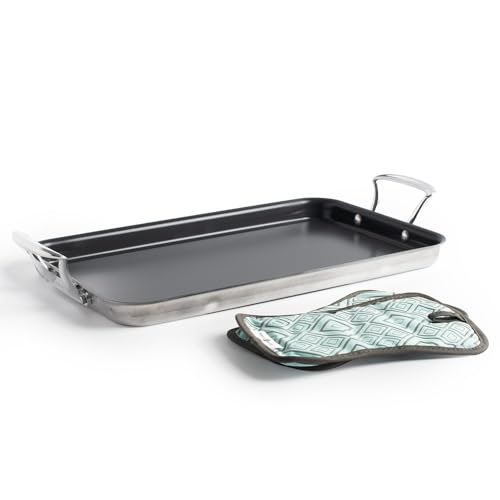
5. Nordic Ware Double Burner Griddle
An aluminum griddle that is lighter than cast iron. It heats quickly and spreads heat over two burners.
Suits: ease of lifting. Strengths: low weight and quick heating. Weaknesses: it holds less heat than cast iron. Skip it if you want a heavy sear plate.

Best for easy cleanup
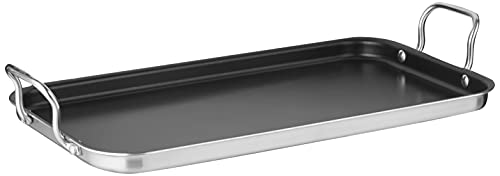
6. Cuisinart Nonstick Double Burner Griddle
A nonstick plate with a large cooking area. A coated surface needs less oil, which suits eggs, pancakes and delicate fish.
Suits: easy cleanup. Strengths: a slick surface for delicate foods. Weaknesses: coating needs gentle tools. Skip it if you plan to use very high heat.
Care and Setup
- Dry cast iron right after washing and rub on a thin oil film.
- Heat the plate slowly so it warms evenly.
- Use wooden or silicone tools on nonstick plates.
- Store plates flat where they will not scratch other cookware.
Mistakes to Avoid
- Putting a hot plate under cold water.
- Using a plate larger than your burners can heat evenly.
- Leaving cast iron wet, which invites rust.
- Cooking acidic sauces for long periods on bare iron.
Matching Plate Size to Your Burners
A flat plate only sears well if the burners beneath it can heat it evenly, so measure before you buy. Check the width and depth of your cooking area, the spacing between burners, and the height of any grates. A double burner plate is designed to span two adjacent burners, while a single plate suits one. If the plate is much larger than the heated area, the edges will stay cooler, which is useful as a warming zone but poor for searing.
Look at the plate’s dimensions on the listing, including the handles, and compare them with the clearance around your burners. Handles should not touch walls, cabinets or knobs, and the plate must sit steady on the grates without rocking. On a gas range, the flame should not lick up the sides or rise past the edge of the plate, which can overheat handles and discolor the finish.
On a grill, the plate rests across the grates and the lid may not close over a tall plate, so check the height too. For camp stoves, ensure the plate is stable on the supports and that you can lift it safely. If your burners are small or widely spaced, a smaller, thicker plate often heats more evenly than a large thin one. When listings give conflicting sizes, as sometimes happens, check the product page or ask the seller before ordering.
Cooktop Compatibility Checks
Not every plate suits every cooktop. Gas burners and open-flame grills are the most forgiving, as heat comes from below and a flat base sits over the flame. Electric coil ranges also work if the plate sits flat. Glass-top and induction cooktops need more care. Some makers advise against heavy cast iron or rough-bottomed pans on glass, since sliding or dropping them can scratch or crack the surface. Induction needs a magnetic base and a size that matches the zone, and a double burner plate may not work on separate induction zones.
Read both the plate’s listing and your range manual. The range maker may give weight limits, cookware size limits or warnings about overhang. A plate that extends well beyond the cooking zone can trap heat and damage surrounding surfaces on some cooktops. If you are unsure, an outdoor burner or grill is often the safer place for a large plate.
Flatness matters. A warped base rocks and heats unevenly, and a perfectly flat one sits flush. Lay a straight edge across the bottom if you can, or check reviews for comments about warping, treating them as individual reports. Lift the plate rather than sliding it. Use a trivet or heat-safe surface when moving it, and keep a firm grip with mitts, since the whole plate becomes hot.
Surface Finishes and Seasoning
The surface decides how the plate behaves day to day. Bare or pre-seasoned cast iron builds a natural non-stick layer through oil and heat, called seasoning, and improves with regular use. It sears strongly and holds heat but needs care. Nonstick coatings release food easily and clean up quickly, but need gentler utensils and lower heat limits, and the coating wears over time.
To maintain cast iron, wash with warm water and a brush or scraper, dry right away, then rub on a very thin film of cooking oil and warm it briefly. Avoid soaking and avoid the dishwasher. If rust appears, scrub it off, re-oil and heat the plate to rebuild the layer. Smoking oil that turns sticky is a sign of too much oil, so wipe the surface with a thin coat only.
For nonstick, use wood, silicone or nylon tools and wash by hand unless the maker says otherwise. Follow the listed maximum temperature, because overheating can damage the coating. If the surface flakes, peels or is deeply scratched, replace the plate.
Think about which routine you will keep up. If you like cooking and do not mind upkeep, cast iron rewards you. If you want quick weeknight meals and simple cleanup, a coated or lighter plate may suit better.
Cooking Technique on a Flat Plate
Good teppanyaki results come from heat management and order of cooking. Preheat the plate slowly and fully before adding food, since a cold or uneven plate causes sticking. A drop of water that skitters and evaporates quickly is a common sign the plate is ready. Add a small amount of high-heat oil, spread it with a spatula and cook in small batches so food sears and does not steam.
Plan your sequence. Start with items that benefit from the hottest surface, such as thin steak slices or shrimp, then move them to a cooler corner to rest while vegetables cook. Cook rice or noodles last, since they pick up flavor from what came before. Day-old rice works better than fresh, since it is drier and separates easily. Keep ingredients cut to similar sizes so they cook at the same pace, and have sauces measured and ready before you start.
Use two sturdy spatulas and a scraper to move food and clean the surface between batches. Wipe or scrape residue while the plate is warm, not hot, so burnt bits do not carry into the next round. Ventilate your kitchen, since high-heat searing creates smoke. Use a range hood or open a window.
Watch for hot splatter from oil and sauces, and keep children away from the plate during and after cooking, as it stays hot for some time.
Storage, Weight and Long-Term Value
A plate you cannot lift or store comfortably will not get used. Cast iron is heavy, so consider where you will keep it and whether you can lift it safely when it is cool. Store plates flat, dry and away from moisture, ideally in a cabinet or on a shelf with a cloth or paper between pieces to prevent scratches. Avoid stacking other cookware on a coated surface.
Think about how often you will cook this way. If teppanyaki-style meals are an occasional treat, a lighter plate or a multi-use griddle may fit better than a heavy specialist piece. If you cook on a plate several times a week, a thicker, more durable option can be worth the effort. Material, thickness and coating quality generally affect durability, though specific lifespans are not stated here and depend on use and care.
Check warranty and return information before you buy, as heavy items are costly to return. Read recent customer comments for patterns about flatness, finish and packaging, keeping in mind these are individual experiences. When the plate arrives, inspect it for cracks, warping or damage right away.
It is time to replace a plate if it is cracked, severely warped, deeply pitted with rust that will not clean off, or if a nonstick coating has begun to flake. Otherwise, a well-kept plate can serve for a long time.
A Prep Checklist Before Cooking on a Flat Plate
Flat plate cooking moves fast. Once the surface is hot, there is little time to hunt for a spatula or chop an onion, so the work happens beforehand. A quick routine keeps the session calm and the food tidy.
- Cut everything to a similar size so pieces cook evenly.
- Pat meat and vegetables dry, since surface moisture steams food instead of searing it.
- Set out oil, salt, sauces and seasonings in small bowls within arm’s reach.
- Keep two sturdy spatulas nearby, along with a scraper for pushing food around.
- Plan the order of cooking, placing foods that need longer time first.
- Have a warm platter ready for finished items.
Cooking in batches is the usual approach. Crowding a plate lowers its temperature and leaves food pale, so give each piece space and be willing to cook in rounds. Rice, noodles and vegetables can be cooked first and kept warm while proteins take their turn.
Plate Material Choices Compared
Different plates behave differently, and your cooking style should shape the choice. The table lays out general tendencies, though each maker’s instructions apply to its own product.
| Material | General strengths | Things to keep in mind |
|---|---|---|
| Cast iron | Holds heat well and sears strongly | Heavy, and needs seasoning and careful drying |
| Nonstick coated | Easy release and simple cleanup | Avoid metal tools and extreme heat unless the maker allows it |
| Carbon steel | Lighter than iron and heats fairly fast | Also needs seasoning and attention to rust |
| Stainless steel | Durable and does not rust easily | Food can stick without enough oil |
If you cook for a crowd and enjoy the sound and look of a hard sear, a heavy plate makes sense. If you want less upkeep and gentler cleanup, a coated one may be more practical. Check that the plate fits your burners or grill, and follow the maker’s guidance on which heat sources are suitable.
Cooking Mistakes and Care Notes to Remember
A few habits cause most disappointments. Preheating too briefly leaves the center of the plate cooler than the edges, so allow time for heat to spread, and never leave a hot plate unattended. Using too much oil can make food greasy, while too little causes sticking, so add small amounts as needed.
Handle the plate with care when it is hot. Use thick gloves, keep children and pets away, and place it on a surface that can take the heat. Follow the manufacturer’s instructions for use on gas burners, grills or electric tops, and never assume a plate is safe on a type of cooktop the manual does not mention.
After cooking, let the plate cool before cleaning. Scrape away residue, wipe it down according to the maker’s care directions, and dry it fully before storing. Cast iron and steel benefit from a thin coat of oil afterward. Store the plate flat or upright in a dry place, with paper between stacked items to prevent scratches.
Glossary for Teppanyaki Plate Shoppers
- Flat top: a smooth cooking surface with no raised ridges, used for searing and stir-frying.
- Seasoning: a thin, baked-on layer of oil that helps prevent sticking on bare metal plates.
- Grease channel: a groove or lip that guides oil and juices toward a collection point.
- Cooktop footprint: the area of the plate that sits over your burners.
- Thermal mass: a thicker plate holds heat longer, but takes longer to warm up.
- Spatula set: flat, wide tools for flipping and chopping on the plate.
Menu Ideas for a Flat Plate
| Course | Idea |
|---|---|
| Opener | Quick-seared vegetables or dumplings |
| Main | Thinly sliced meat or seafood with a simple sauce |
| Side | Fried rice or noodles cooked in the same fat |
| Dessert | Pancakes or fruit warmed with a little sugar |
Safe Use on the Cooktop
- Read the maker’s list of compatible cooktops before you buy.
- Place the plate centered over the heat source and keep it level.
- Warm it gradually, because sudden heat can cause warping in some materials.
- Use heat-safe gloves and long utensils when handling.
- Keep children and pets well away from a hot plate.
- Let it cool completely before washing or storing.
Cooking with a lot of oil on a hot flat plate can cause splatter and flare-ups, so keep a lid, a splatter guard and a damp cloth nearby, and follow the maker’s care instructions to protect the surface.
Prepare all ingredients before you light the burner. Flat plate cooking moves quickly, so chopped vegetables, sliced meat, sauces and serving plates should all sit within reach. Small bowls for each ingredient keep the sequence calm and the plate clear.
How to Narrow Down the Picks for Teppanyaki grill plates for home cooking
With several strong options in this guide, the fastest way to a good decision is to stop comparing everything at once. Start by removing any pick whose basic format does not suit your space or routine, using the descriptions above. Then compare what remains on the two or three points that will affect you weekly, such as size in daily use, the controls you will touch every time and the cleaning the grill plate will ask of you. Features you will use twice a year should never outvote the ones you will use twice a day.
Read the honest limitation in each review as carefully as the strengths. A limitation that touches something you rarely do is a fair trade; a strength that serves a habit you do not have is worth nothing to you. This is why the same guide can honestly serve different households with different answers. Your job is not to find the best grill plate in the abstract, but the one whose strengths and weaknesses line up with your life with the fewest daily frictions.
Before you order, do a final reality check on the exact listing for the model you have chosen. Listings change, similar model names differ in small details, and the version in front of you is the one that will arrive. Confirm the dimensions, the requirements and what is included, and keep a note of what you checked. That five-minute habit prevents most disappointments, and it costs nothing but attention at the moment when attention matters most.
Choosing Teppanyaki grill plates for home cooking: The Details That Decide Daily Satisfaction
Begin with the cooking surface and the food you actually make. A wide, flat plate suits breakfasts, sandwiches and batches of vegetables, while a smaller surface is easier to store and heat for one or two people. Look at how the surface is made and finished, because that decides how you clean it, which utensils you can use and how forgiving it is when food sticks. The listing for each pick in this guide describes its surface, so match that description to your habits rather than to a meal you might cook once a year.
Heat control is the second decision. Even heating across the plate matters more than a high top setting, because griddle food cooks in a thin layer and shows hot spots quickly as uneven browning. If a model offers separate zones, think about whether you will really cook two foods at different heats side by side, or whether one simple control you learn well will serve you better. Simplicity you master beats features you fumble with while food is already on the plate.
Then consider the unglamorous details: grease management, rim height, and where the fat goes while you cook. A shallow rim makes sliding a spatula under food easier but lets splatter travel further. A grease channel or tray you can empty safely matters on a fatty cook. Check the footprint on your counter with the tray open or removed, and decide where the griddle will live between uses, because an appliance that is awkward to store tends to be left out or left unused.
Finally, think about who is cooking. Long handles, stable feet and controls you can read at a glance make a tabletop griddle friendlier for less confident cooks. If several people will use it, a model whose cleaning routine is obvious will stay in better condition. The best choice is the one whose size, surface and upkeep all match the meals your household repeats, from weekday eggs to weekend sandwiches.
Real-Life Situations and How to Match Them
For a family breakfast, the griddle earns its place by cooking pancakes, eggs and bacon in overlapping batches without a parade of pans. Lay out the order before you start: foods that hold well can go first, quick items last, and the plate stays productive the whole time. For a smaller household, the same appliance shines with grilled sandwiches, reheated flatbreads and vegetables cooked in a single layer with proper browning.
Street-food style cooking at home is another strong use. Flatbreads, quesadillas, smashed burgers and seared halloumi all want direct contact with a hot, even surface. A griddle also handles a batch of onions or mushrooms beautifully while the main dish cooks elsewhere, which makes it a useful second surface during bigger meals. Think of it as a flexible extra hob that happens to sit on the counter and pack away afterwards.
If you cook for mixed tastes, zones and timing become your tools. Keep milder items away from strongly seasoned ones, cook vegetables before meat if you want to avoid flavour transfer, and give the plate a quick scrape between batches. A griddle rewards an organised cook: ingredients prepared, utensils ready and a landing tray beside the plate, so finished food comes off at its best instead of waiting while you hunt for a plate.
Setup, First Use and Building Good Habits
Set the griddle on a stable, heat-safe surface with room around it for trays and utensils, and let it preheat fully before food goes down. A plate that is still climbing in temperature will steam food instead of browning it. Lightly prepare the surface as the maker directs for your model, and have everything ready before you start, because griddle cooking moves quickly once the plate is hot and there is little time to chop or search mid-batch.
Work in a single layer with space between pieces. Crowding drops the surface temperature and traps steam, which is why a batch that looks efficient often browns worse than two smaller ones. Turn food once it releases easily rather than forcing it, and use the time on the plate to scrape away residue between batches so the next round starts on a clean, hot surface instead of on burnt leftovers.
When you finish, let the plate cool to a safe point before cleaning, following the guidance for your surface. Scrape residue while it is still warm if the maker allows it, empty the grease tray once it is safe to handle, and dry everything before storing. A griddle put away clean and dry is ready to preheat next time without old flavours or sticky patches waiting for you.
Cleaning, Care and Keeping It Working Well
Cleaning habits decide how long a griddle stays pleasant to use. Wipe or scrape the surface after every cook, wash removable parts as directed, and avoid flooding electrical parts with water. If your surface needs seasoning or gentle treatment, follow that routine consistently rather than scrubbing hard once a month. Built-up residue insulates the plate, creates smoke and makes food stick, so little-and-often cleaning is the real secret to an easy griddle.
Store the griddle dry, with its cord loosely coiled and nothing heavy stacked on the cooking surface. If it lives in a cupboard, protect the plate from knocks that could chip a coating or warp a thin base. Check the grease tray and channels regularly, because old fat is the source of most lingering smells. A quick inspection of feet, handles and controls each time you put it away catches small problems while they are still small.
If food starts sticking where it never used to, look first at residue and heat rather than blaming the surface. A thorough clean and a proper preheat solve most cases. If a coating is damaged, follow the maker’s advice rather than improvising repairs. Treat the surface as the working heart of the appliance and it will keep browning evenly for a long time.
Mistakes to Avoid and Problems Worth Knowing
The most common griddle mistake is impatience: food goes on before the plate is hot, gets moved too soon and sticks, or is crowded so tightly that it steams. The second is heat that is too high for delicate items, scorching the outside while the middle catches up. Learn your model’s temperament with simple foods first, and adjust in small steps rather than swinging between settings.
Neglect after cooking causes the rest of the problems. Grease left in the tray, residue baked on over several cooks and water left on a surface that should be dried all shorten the appliance’s good life. Metal tools on a surface that was not made for them can do lasting damage in a single meal. Read what your surface allows, keep the right utensils beside the griddle, and clean up while the memory of the meal is still warm.
Comparing the Picks in This Guide, One by One
Lodge Reversible Grill and Griddle is worth a closer look when the strengths described in its review above line up with the job you do most often. Read its entry again with your own routine in mind rather than its position in the list, and ask whether its particular balance of size, style and upkeep suits your household. If the honest limitation mentioned in its review touches something you do daily, take that seriously and look again at the neighbouring picks before deciding.
With Lodge Pro-Grid Iron Griddle, the decision is about fit for your habits. Its review above sets out who it suits and where it falls short, so test those claims against your busiest week rather than your most ambitious one. A grill plate that handles your ordinary days gracefully will satisfy you far more than one chosen for an occasional special case, and the limitation that matters least in your real life is the one you can happily accept.
Treat Victoria Cast Iron Double Burner Griddle as the answer to a specific question: which household, cooking in which way, will be glad of this every week? Its entry above gives you the material to answer honestly. Compare its strengths with the pick before and after it in this guide, because the contrasts between neighbours are usually where the right choice reveals itself. Decide by the difference that will still matter to you in a year.
Camp Chef Cast Iron Griddle rewards buyers who read its review for character rather than for a single standout point. Notice what it asks of you in return for its strengths, in space, attention or upkeep, and decide whether that exchange suits your home. Every pick in this guide makes such an exchange, and none of them is free. The buyers who end up happiest are the ones who chose their compromise deliberately instead of discovering it after delivery.
If Nordic Ware Double Burner Griddle is on your shortlist, do one final practical check before deciding: re-read its listing details for the exact version on offer, confirm the dimensions and requirements against your space, and picture it in place on an ordinary evening. That small discipline catches the mismatches that reviews cannot, because listings change and model variations differ in details that matter. A pick that survives that check has earned its place in your home.
For Cuisinart Nonstick Double Burner Griddle, weigh the everyday experience its review describes: how it will feel to load, clean, open, empty or operate when you are tired and the meal matters more than the appliance. First impressions fade quickly, but the daily experience repeats for years. Choose the pick whose daily experience you would recommend to a friend in your situation, and you will rarely go wrong with the final decision.
One habit improves results with almost any grill plate: slow down at the decision points. Measure before you buy, prepare before you start, check before you assume something is finished, and clean before residue becomes a project. None of that requires talent or extra equipment. It is simply the difference between using an appliance and fighting it, and it shows in the results far more reliably than any single feature on a specification list.
Keep a small notebook, paper or digital, for the first month with a new grill plate. Note what worked, what surprised you and what you would do differently, in a sentence or two each time. Memory is generous to itself and quietly rewrites early struggles, while honest notes stay accurate. By the end of the month you will own a personal guide to your own equipment and habits, which is the most useful manual you will ever read.
When something disappoints, change one variable at a time. A different position, a smaller batch, a longer rest, a cleaner surface: single changes teach you cause and effect, while changing everything at once teaches you nothing and usually wastes food or money. This patient, experimental approach is how experienced cooks and careful owners actually improve, and it works for every appliance and ingredient in this guide.
Teach the other people in your household the basics of any shared grill plate. Most damage and most disappointing results come from someone who meant well but did not know the routine: the wrong setting, the wrong cleaner, the door left open, the part forced instead of fitted. A two-minute explanation and a note where it will be seen prevent more problems than any warranty, and they make the appliance a shared pleasure rather than one person’s responsibility.
Buy accessories and extras only after the basic routine is working. The right tray, tool or spare part, chosen to solve a problem you actually have, is money well spent. A drawer of hopeful gadgets bought on the first day is usually money parked. Live with the grill plate for a few weeks, let its real needs reveal themselves in use, and then equip it deliberately. Restraint at the start almost always leads to a better-equipped kitchen in the end.
Seasonal changes affect kitchens more than most people expect. Summer heat, winter cold, holiday quantities and everyday term-time routines all ask different things of the same grill plate. A quick review at the change of each season, checking cleanliness, storage, supplies and the habits that have drifted, keeps performance steady all year. It takes minutes, and it prevents the slow decline that owners often mistake for an appliance wearing out.
Finally, judge your choice by a fair standard after a month of real use. Not by the first attempt, which is always partly rehearsal, and not by the most ambitious occasion of the year, but by ordinary Tuesdays. If the grill plate handles those with ease, fits your space and habits, and asks only for care you are happy to give, you chose well, whatever any list, including this one, ranked first.
Read the current listing for your chosen grill plate one final time on the day you order, and save a copy of the details that decided you: the exact model name, the dimensions or size, what is included and the delivery and returns terms. Listings are edited, bundles change and similar versions sit side by side, so the version you checked is the version you should confirm. If anything has changed since your research, pause and re-check rather than assuming the difference is trivial.
Think about delivery and installation as part of the purchase, not as an afterthought. Who brings the grill plate into the home, what access do they need, and what happens to the packaging and, where relevant, the old appliance? Preparing the space, the route and the paperwork before the day turns a stressful event into a routine one. Keep the delivery note and check the item carefully before signing anything, because damage and missing parts are easiest to resolve at the door.
If you are buying the grill plate as a gift, choose for the recipient’s habits rather than your own taste, and include the receipt arrangements they would need for an exchange. A model that suits your kitchen, garden or routine may be entirely wrong for theirs. Practical gifts succeed when they fit the other person’s space and life, and a short conversation beforehand, however much it spoils the surprise, usually produces a gift that is used for years instead of stored for months.
Consider the end of the grill plate’s life before the beginning. Appliances and tools eventually need parts, repair or responsible disposal, and brands differ in how easy those are to arrange. Keeping the manual and model details, registering a product if the maker offers it and knowing where your local recycling or disposal point is all belong to ownership. A purchase that can be maintained and eventually retired responsibly is a better purchase than one that cannot.
When two picks remain tied after all your comparisons, let the tie be broken by your household rather than by a coin. Ask the people who will share the grill plate which they would rather use, clean and live with, and weigh the answer of whoever will use it most. Shared equipment succeeds when the main user is enthusiastic and everyone else is content. That small consultation prevents the quiet resentment that builds around an appliance only one person wanted.
Teppanyaki Plate FAQ
Can I use a griddle plate on a glass-top range?
Some makers advise against heavy cast iron on glass. Check your range manual and lift rather than slide the plate.
How do I get a restaurant-style sear?
Preheat the plate well, dry the food and cook in small batches so the surface stays hot.
Do I need to season cast iron?
Many arrive pre-seasoned, but regular oiling improves the finish over time.
Can I use the plate on a grill?
Many plates work on grills, but confirm the maker’s notes on open flame and handle heat.
Which plate is easiest for beginners?
A nonstick plate forgives mistakes, while cast iron rewards patience with a better sear.
How big should the plate be?
Measure your burners and the clearance around them first. A plate should sit steady, cover the burners evenly and leave room for handles without touching walls or cabinets.
What is the difference between a griddle plate and a teppanyaki plate?
In practice, a flat griddle plate is the home version of a teppanyaki surface. Teppanyaki refers to the cooking style on a wide, flat hot surface, and a heavy flat plate gives a similar result.
Can I use a cast iron plate on an induction cooktop?
Cast iron is magnetic, but the plate needs a flat base and a size that suits the zone. Check the plate listing and your cooktop manual, and be careful about scratching the surface.
How hot should I preheat the plate?
Preheat until a drop of water evaporates quickly, and follow any temperature limit the maker gives, especially for nonstick. Heating slowly helps the plate warm evenly.
What oil works best for searing?
Oils that tolerate high heat are commonly chosen, but check what suits your plate, and use only a thin layer. Too much oil can smoke and leave a sticky film.
Should I get a smooth or ridged side?
A smooth side suits rice, noodles, eggs and thin slices, which is the classic teppanyaki style. A ridged side leaves grill marks and lets fat run off, so it suits thicker cuts.
Can I wash a cast iron plate with soap?
Many cooks use a small amount of mild soap and then dry and re-oil the plate. Follow the maker's care notes on the listing or packaging.
Is a heavier plate always better?
Heavier plates hold heat well but are harder to lift and store. Choose the weight you can handle safely and that suits your burners.
How do I know the plate is ready for food?
Let it preheat fully rather than judging by the first warmth you feel. Food that goes onto a properly heated plate browns and releases cleanly, while food on a cold plate sticks and steams. Cook something simple first on a new grill and note the timing and hot spots. That short rehearsal teaches you more about your own plate than any general guidance, and it makes every later cook calmer and more predictable.
Why does food stick even on a smooth surface?
Usually the plate was not fully hot, the food was moved too soon, or residue from earlier cooking was left behind. Food releases more easily once its surface has set, so give it time before turning. A thorough clean, a proper preheat and drying the surface of wet ingredients solve most sticking. Persistent problems on a damaged surface are a matter for the maker’s advice, not harder scrubbing.
Can I cook frozen items on a teppanyaki plate?
Thin frozen items usually cook well, but they release moisture as they thaw, which cools the plate and delays browning. Give them space and expect a longer cook. Thick frozen items are better thawed first, because the outside can scorch while the centre is still cold. Drying the surface of thawed food before it meets the plate makes a noticeable difference to how well it sears.
How do I cook several ingredients at once without mixing flavours?
Use the plate in zones. Keep strongly seasoned items at one end and delicate items at the other, cook plainer foods first if you are worried about transfer, and scrape the surface between groups. Timing is your other tool: start the items that need longest, add quicker ones later, and keep a warm area for finished food. An organised plate lets a whole meal arrive together without everything tasting the same.
What should a beginner cook first?
Start with forgiving foods: sliced vegetables, noodles, fried rice, prawns and simple strips of chicken or beef. They teach you the plate’s heat, your timing and your spatula work without much cost if something overcooks. Keep the pieces small and even so they cook at the same pace. Once the basics feel easy, the elaborate mixed grills and delicate items follow naturally.
How do I keep the cooking area manageable for guests?
Prepare everything before the heat goes on: ingredients chopped, sauces in small bowls, plates warming and tools laid out. Teppanyaki cooking is fast and social, and its pleasure disappears if the cook keeps leaving to chop or search. Work in small batches so the plate stays hot, serve each batch as it finishes, and scrape the plate between rounds so every guest gets a clean, hot result.
What utensils should I use on the plate?
Use the utensils your surface allows, which the maker’s guidance will state. Flat spatulas are the classic tool for lifting, turning and chopping on the plate, and a second one helps with larger items. If the surface has a coating, treat it gently and avoid anything that could cut or chip it. Keeping the right tools beside the grill prevents the mid-cook temptation to grab the wrong one.
How should I clean the plate after a mixed grill?
Scrape residue while the plate is still warm if the maker allows, using the method they recommend, then wipe and wash removable parts as directed. Work through grease channels and trays before fat sets hard. Dry everything fully before storing. A plate cleaned straight after cooking takes minutes; the same plate left until morning takes real effort and holds onto flavours you do not want in the next meal.
The Short Version
For a two-in-one, the Lodge Reversible. For a big surface, the Lodge Pro-Grid. For a seasoned start, the Victoria. For outdoor cooking, the Camp Chef. For light weight, the Nordic Ware. For easy cleanup, the Cuisinart nonstick.