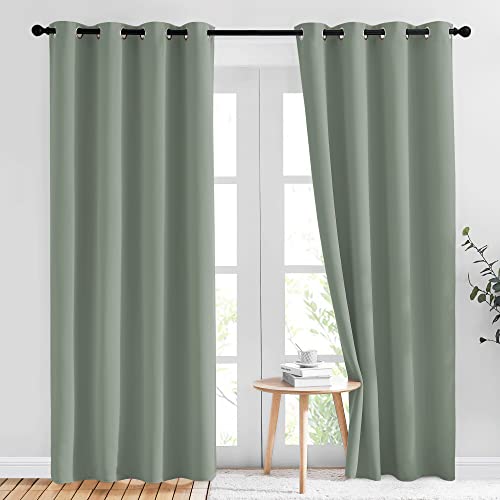
Where to buy
Check the latest price, availability and delivery on Amazon. Orders are placed on Amazon. We may earn a commission from qualifying purchases.
- Best overall: NICETOWN Thermal Insulated Grommet Blackout Curtains, 2 Panels — Check on Amazon
- NICETOWN 100% Blackout Curtains with Black Liner, 2 Panels — Check on Amazon
- NICETOWN Beige Linen Blackout Curtains, 2 Panels (52 x 84 Inch) — Check on Amazon
- H.VERSAILTEX 100% Blackout Curtains with White Liner, 2 Panels — Check on Amazon
See 2 more Amazon options
- BGment Velvet Blackout Curtains, Set of 2 (52 x 84 Inch) — Check on Amazon
- Joydeco 100% Blackout Linen Curtains, 2 Panels (52 x 84 Inch) — Check on Amazon
Read the full guide ↓
Disclosure: As an Amazon Associate, airfryerkitchensupply.com earns from qualifying purchases. Links to Amazon on this page are affiliate links; they cost you nothing extra. Listing details such as price and availability change often, so check the current Amazon listing before you buy.
An apartment bedroom rarely fails on darkness because the curtains are cheap. It fails because the light is not yours to control: a streetlight or parking-lot flood angled straight at the window, a hallway-bright living room on the other side of a studio, blinds the landlord chose for price rather than privacy, and a lease that has opinions about what you may screw into the wall. The good news is that blackout curtains are the most renter-friendly upgrade there is. Nothing is wired, plumbed or permanent; every pick in this guide hangs from a rod, comes down in minutes, and moves to the next apartment in the same box it arrived in. And because a standard window — two panels, 52 by 84 inches each — can go properly dark well within budget, a $100 budget does not buy one window in an apartment. It buys coverage: the bedroom, the studio’s second window, the tall rental window with the odd length, or a liner behind the curtains your landlord already hung.
For most renters we would start with the NICETOWN triple-weave grommet pair: the best-reviewed blackout curtain on Amazon, machine washable (which in apartment life means laundromat-proof) — check price on Amazon for a 52 x 84 pair. If a streetlight shines straight into your pillow, step up to NICETOWN’s lined version, whose sewn-in black liner blocks light regardless of the front color — including the pale colors many leases effectively require on street-facing windows. Below you will find a quick picks table, detailed notes on each of the six, a comparison table, a renter’s buying checklist, an honest account of hanging without drilling, the lease rules that shape what you can buy, the mistakes renters make most, and answers to the questions that come up again and again.
In this guide
Quick Picks
Short on time, or comparing several options at once? Each row below names a renter type and the product that suits it, with a link to the listing. Every pick in this guide is for a pair of 52 x 84 inch panels unless a review says otherwise — because in this category, that is never safe to assume.
| Buyer type | Pick | Why it stands out | Link |
|---|---|---|---|
| Best overall | NICETOWN Thermal Insulated Grommet Blackout Curtains, 2 Panels | The proven triple-weave pair: machine washable, huge size range — check price on Amazon | Check on Amazon |
| Best against streetlight | NICETOWN 100% Blackout Curtains with Black Liner, 2 Panels | A sewn-in black liner blocks light whatever the front color — the street-facing pick | Check on Amazon |
| Best linen look | NICETOWN Beige Linen Blackout Curtains, 2 Panels | Linen texture with a fused white blackout backing — check price on Amazon for the 84-inch pair | Check on Amazon |
| Best for tall windows | H.VERSAILTEX 100% Blackout Curtains with White Liner, 2 Panels | Linen-textured face, white liner, and 96-inch lengths available — check price on Amazon | Check on Amazon |
| Best velvet | BGment Velvet Blackout Curtains, Set of 2 | A soft velvet face with back-tab hanging that seals tight to the rod, in the budget tier — check price on Amazon | Check on Amazon |
| Best back tab | Joydeco 100% Blackout Linen Curtains, 2 Panels | Faux-linen double layer with back tabs and a tidy white street-side backing, OEKO-TEX certified fabric | Check on Amazon |
How These Picks Were Chosen
The first filter was the budget, applied to what a whole window costs — not to the number in the listing title. Curtain listings are the worst offenders on Amazon for per-panel pricing: a low-priced “curtain” that turns out to be one panel, when your window needs two, is a pair-sized purchase wearing a single-panel costume. Every pick below is sold as a pair for the standard 52 x 84 inch size (or the size stated), and where a brand also sells single panels we say so. Anything whose blackout claim dissolved on inspection — a single layer of ordinary woven polyester with the word “blackout” in the title and no liner, coating or triple weave behind it — was left out.
The second filter was the apartment itself. We favored curtains a renter can actually live with: standard sizes that will fit the next apartment as well as this one, care labels that survive shared laundry rooms, weights that a tension rod or a modest bracket can hold, and — because many leases and building rules require a uniform, neutral face to the street — constructions whose backing is white or pale even when the room side is dark. Where a pick fails a renter test, the review says so: the darkest curtain in this guide is also the heaviest and the only one that cannot go in a washing machine, and that trade matters more in a rental than in a house.
We did not use these products ourselves. We read the maker listings and specification tables, compared constructions, fabric weights, header styles and size ranges, and cross-checked listings against Amazon search results and dated coverage from November 2026. Three constructions do the actual light blocking in this category: triple-weave fabric with a black yarn core, a separate black liner sewn behind the face fabric, and a white blackout backing fused or sewn to a decorative face. Each behaves differently — in pale colors, in the wash, and in how it hangs — and the reviews say which is which. No regulator certifies a curtain as “100% blackout,” and maker percentages are not measured to a common standard; what can be verified is construction, and construction is what we judged.
The 6 Best Blackout Curtains for Apartments Under $100
NICETOWN Thermal Insulated Grommet Blackout Curtains, 2 Panels
Who it suits: Most renters, most windows, most of the time — the default blackout curtain against which everything else in this category is measured.
This is the curtain that defines the Amazon category. The construction is a triple weave: colored yarns on the front and back faces with a black yarn woven into the core, so the fabric itself does the blocking with no separate liner and no coating to crack or peel. NICETOWN rates the block at 85% to 99% of light and UV depending on color, and that range is the honest thing to know about this pick — in black, navy or charcoal it is a genuinely dark curtain, while in beige or light grey the same weave lets noticeably more through.
For apartment life, the practical virtues are the reasons it stays on top. It is machine washable cold and can be tumble dried — the only construction here that treats a laundromat trip as a non-event. It is light enough per panel to hang from a tension rod inside the frame or from the basic rod most rentals already have, and the grommets, with a 1.6-inch inner diameter, also thread straight onto many existing rods without new hardware at all. The size range is the deepest in this guide — widths and lengths from café-short to 108 inches long across dozens of colors — so when you move, the odds are good the same line covers the next apartment’s windows too, and a second pair for the living room matches the first. On price: check price on Amazon for a 52 x 84 pair in your color — pricing varies by color and size, and this pick sits in the budget tier for the window most people are actually covering, leaving room in the budget for the second window a studio demands.
- Triple-weave construction with no liner or coating to fail, in the deepest size and color range here.
- Machine washable and tumble-dryable — the easiest care label in this guide for shared laundry rooms.
- Light enough for tension rods and existing rental rods — check price on Amazon for a 52 x 84 pair.
Honest limitation: The weave’s blocking depends on color — pale shades sit at the weak end of the maker’s own 85–99% range — and the grommet heading leaves a row of small light gaps along the rod that only a high, wide mount fully hides; on a tension rod inside the frame, expect an edge glow against a direct streetlight.
Choose it if you want the proven, washable, move-friendly pair and “very dark” is dark enough. Skip it if your window faces a streetlight head-on and the lease wants pale curtains — that is the lined pick below.

NICETOWN 100% Blackout Curtains with Black Liner, 2 Panels
Who it suits: Renters whose bedroom faces a streetlight, a parking lot or a lit courtyard — and day sleepers in any apartment where “very dark” is not the requirement; dark is.
NICETOWN’s second line in this guide solves the triple weave’s one weakness by changing the construction entirely. Each panel is two layers of woven polyester at 230 GSM apiece — 460 GSM in total — with a black liner sewn in between the face and the back. Because the blocking layer is black fabric rather than a dark yarn in a weave, the front color stops mattering: the white and pale-grey versions of this curtain darken a room the way the black triple weave does, which no unlined curtain at any price here can honestly claim. That color freedom is a lease feature as much as a sleep feature — if your building wants a neutral face to the street, this is the pick that can wear white outward and still go dark inward. The weight is a second, quieter benefit: heavy panels hang flatter against the wall, and flat panels leak less of that angled streetlight at the sides.
The trade-offs are care, cost per size and weight — and in an apartment all three bite harder. These panels are hand wash or dry clean only, no machine, which in practice means a bathtub soak or a dry-cleaning bill; that is the real price of the liner, and it is why this is the specialist pick rather than the default. The weight that seals the edges also rules out the flimsier no-drill hardware: a 460 GSM pair wants a properly mounted rod or a heavy-duty tension rod, not adhesive hooks. On price: check price on Amazon for your size. The 84-inch lengths a bedroom usually wants cost more than the shorter lengths — check the live listing for your size rather than budgeting from the headline — but even the long sizes sit comfortably inside this guide’s budget, and the shorter size is the budget-friendly option for the small, high windows many rental bedrooms have.
- Sewn-in black liner: full blackout that does not depend on the front color, white included — lease-friendly on street-facing windows.
- Heavy 460 GSM total construction hangs flat, reducing side leakage from angled streetlight.
- A range of lengths for different rental windows — check price on Amazon for your size.
Honest limitation: Hand wash or dry clean only — the liner that makes it the darkest pick also makes it the most work to maintain without a machine — and the pair is heavy enough to need a real rod; pricing varies by length, so do not budget from the shorter length for the 84-inch one most bedrooms need.
Choose it if a streetlight or a day-sleep schedule makes darkness the whole point and you want it in a light color. Skip it if your only mounting option is a lightweight tension rod or adhesive hardware, or the curtains will need frequent washing.

NICETOWN Beige Linen Blackout Curtains, 2 Panels (52 x 84 Inch)
Who it suits: Renters who want the farmhouse linen look — visible texture, natural beige tones — without accepting the glow that ordinary linen-look curtains let through, and without spending deposit money on window dressing.
Real linen cannot black out a room; the weave is too open, which is why every “linen blackout” curtain on Amazon is a linen-textured face married to a blackout layer behind it. This NICETOWN version uses the third construction in this guide: a white blackout backing fused to the back of the textured face fabric, which the brand calls a safe fused backing. The white backing does double duty — it blocks the light, and it is the side the sun and the street see, so the face fabric fades more slowly, the room-side view stays the beige linen texture you bought, and the building sees the uniform pale backing many leases ask for. The header is a standard grommet top, so it hangs and slides like the classic pair above, onto the rod that is probably already in the apartment.
It is also one of the most budget-friendly full-blackout pairs in this guide. The beige 52 x 84 pair is sold by NICETOWN itself — check price on Amazon — and sits in the budget tier, for a curtain that blocks more light in pale colors than the triple weave can. That positioning makes covering a studio’s two windows realistic on one budget, which is the whole-studio math this guide keeps returning to. What you give up is range and track record: this is a newer, narrower line than the two NICETOWN listings above it, with fewer sizes and colors — measure your windows before falling for it, because odd rental sizes may not be in the line — and a fused backing asks a care question the sewn liner does not: fused layers prefer gentle washing and low heat if they are to stay fused. With the construction visible in the listing and the seller the brand itself, it earns its place as the linen-look value pick rather than a gamble.
- Linen-textured face with a fused white blackout backing — pale colors that genuinely darken, and a uniform street-side face.
- The beige 52 x 84 pair is sold by NICETOWN — check price on Amazon; its budget-tier position helps cover two studio windows.
- Grommet header: hangs, slides and opens daily like a standard curtain, on the rod most rentals already have.
Honest limitation: A fused backing is the least proven construction here over years of washing — follow the care label and keep heat low, which takes a little care in a shared laundry room — and the line’s size and color range is much narrower than the classic NICETOWN listings.
Choose it if the room’s look is natural linen and the budget has to cover more than one window. Skip it if your windows are an unusual size the line does not stock, or you wash curtains hot and often.
H.VERSAILTEX 100% Blackout Curtains with White Liner, 2 Panels
Who it suits: Renters in older buildings and loft conversions with tall windows and high ceilings — the window the value lines simply do not make a curtain for.
H.VERSAILTEX builds its blackout curtain the tailored way: a linen-textured face fabric with a separate white blackout liner behind it, rather than a fused backing. A sewn liner hangs and drapes like a traditional lined drape — the face moves a little independently of the backing, folds fall softer, and the white liner presents a uniform, street-friendly face from outside, which is exactly what most lease window clauses are asking for. The brand sells the line in lengths from 63 up to 108 inches, and it is the lengths that earn this pick its slot: the listing featured here is the 52 x 96 inch pair in Natural, sold by H.VERSAILTEX — check price on Amazon — a nine-foot drop for the tall windows of pre-war rentals and converted warehouses, well within this guide’s budget. Check price on Amazon for the standard 52 x 84 pair in the same line as well; the premium here is for the length and the lined build, not the name.
Two cautions keep it at fourth rather than higher. The first is that H.VERSAILTEX runs several similar linen-blackout lines side by side — grommet and rod pocket, lined and unlined triple-weave versions whose titles differ by a few words — and the unlined ones are room-darkening, not blackout. The listing linked here is the white-liner version; if you change size or color on the page, confirm the words “white liner” are still in the title of what lands in your cart. The second is renter practicality: a lined 96-inch pair is a lot of curtain — heavy on the rod, slow to wash and dry, and sized for this apartment’s windows rather than the next one’s, so it is the one pick here that may not move with you. Judged on what it is — a genuinely lined, linen-faced pair available in real lengths — it is the most curtain-like curtain in this guide, and the one to buy when the window is tall enough that the value lines simply stop.
- Sewn white blackout liner behind a linen-textured face: the traditional lined-drape build, with a uniform white face to the street.
- Lengths to 96 and 108 inches — check price on Amazon for the length you need.
- The white liner is the construction most likely to satisfy a lease’s street-appearance clause while still going fully dark.
Honest limitation: The brand’s lookalike unlined lines make variant selection a genuine trap — the blackout performance belongs to the white-liner listing only — and a long lined pair is heavy, slower to launder, and the least likely pick here to fit your next apartment.
Choose it if your windows are taller than 84 inches or your lease is strict about what shows from the street. Skip it if a standard size in a fused or triple-weave build does the same job for less and moves with you — it usually does.

BGment Velvet Blackout Curtains, Set of 2 (52 x 84 Inch)
Who it suits: Renters who cannot or will not mount a rod high and wide — because the back-tab header seals the top of the window better than any grommet pair, which is where a no-drill hang leaks most.
Every other pick in this guide hangs from grommets, and grommets have a look and a leak: casual, modern, visibly ringed, with a row of light gaps along the rod. BGment’s velvet pair is the alternative. The face is a plush velvet that reads richer than any woven texture here and swallows light at the surface, and the header is a back tab with a rod pocket — the rod slips through hidden loops on the back of the panel, so the curtain hangs in soft folds with no metal showing and, just as useful in a rental, with the top edge sitting close against the rod. That close fit is a blackout feature as much as a style one: on a tension rod mounted inside the frame — the classic no-drill hang, which cannot go high or wide — a back-tab panel hugs the rod and cuts the top leak that a grommet pair on the same rod would leave. The listing describes a thermal-insulated blackout build behind the velvet, sold as a set of two 52 x 84 panels; the verified colorway is olive green, with the line’s other colors on the same listing.
On price: check price on Amazon — this pair sits in the budget tier in this guide, but confirm the live listing rather than budgeting around a headline figure. The honest compromises are motion and care. Back-tab panels do not slide like grommets; opening them is a gather-and-push, not a sweep, which suits a bedroom kept dark more than a living area opened twice a day — and on a tension rod, yanking a stiff back-tab panel is also how rods get pulled down, so open them with a little patience. Velvet shows pressure marks and wants gentle handling in the wash. For a primary bedroom or a studio sleeping corner that stays dressed, neither matters much, and the room gets the best-sealing, best-looking hang in this guide without stretching the budget.
- Velvet face with back-tab and rod-pocket header: no visible rings, and the top edge sits tight to the rod — the best top seal for an inside-frame, no-drill hang.
- Sold as a true set of two 52 x 84 panels — check price on Amazon.
- The plush face and hidden header give the most formal, furniture-like hang here — a rental that looks deliberate, not temporary.
Honest limitation: Back-tab panels slide poorly compared with grommets and tug at a tension rod when forced. Confirm the live price on Amazon before counting on it.
Choose it if you are hanging inside the frame without drilling and looks matter. Skip it if the curtains will be swept open and shut daily, or you need a price you can plan around to the dollar.

Joydeco 100% Blackout Linen Curtains, 2 Panels (52 x 84 Inch)
Who it suits: Renters whose street-facing windows need a tidy white backing, and anyone who wants the tailored back-tab hang and the linen look in one curtain.
Joydeco’s entry combines the two previous picks’ ideas: a faux-linen textured face in a double-layer build, hung by back tabs or a rod pocket rather than grommets. The double layer is what earns the 100% blackout claim in the title — the face fabric alone is a decorative linen-look weave, and the second layer behind it does the blocking, presenting a light backing to the street. For an apartment, that backing is the point: from outside, the window reads as a plain, uniform pale curtain, the look building rules and lease clauses tend to demand, while inside the room gets the linen texture. The back-tab hang seals the top edge the way the BGment pair does, which again suits an inside-frame or existing-rod hang. The detail that separates this listing from most of its marketplace peers is a certification with a number attached: the fabric carries OEKO-TEX Standard 100 certification (certificate SHHO 090941, printed on the listing), which speaks to harmful-substance testing of the textile. It says nothing about blackout performance — no certificate does — but in a category of anonymous fabrics it is a real, checkable fact about what is hanging beside the bed.
On price: check price on Amazon for this 52 x 84 pair in your colorway — the pair sits in the budget tier, so confirm the live figure for your color before ordering. At that tier, this is one of the pairs that makes whole-apartment coverage realistic — a bedroom pair and a living-area pair still leave room in the budget. The limitations are the back-tab family’s usual ones — a slower slide than grommets, folds that need a moment’s arranging to hang evenly, and a little friction against a tension rod — plus a narrower size range than NICETOWN’s lines, so long drops and extra-wide windows may not be in it. What you get is the quietest-looking window in this guide: no rings, no shine, a linen texture in front and a clean backing behind, at a price that leaves most of the budget unspent.
- Faux-linen double-layer build with back-tab and rod-pocket hanging — tailored folds, no grommet shine, a uniform pale face to the street.
- OEKO-TEX Standard 100 certified fabric, certificate number printed on the listing.
- The 52 x 84 pair sits in the budget tier depending on color — check price on Amazon; affordable enough to cover two windows.
Honest limitation: Pricing varies by color, and the back-tab header trades daily sliding ease for its cleaner hang and top seal; size range is narrower than the big NICETOWN lines.
Choose it if you want linen looks with a tailored header, a certified fabric and a street-side backing your lease will approve of. Skip it if you open and close the curtains constantly, or need lengths beyond the standard range.

Comparison Table
| Product | Construction | Best use | Link |
|---|---|---|---|
| NICETOWN Thermal Insulated Grommet Blackout, 2 Panels | Triple weave, no liner | The washable all-rounder that moves with you | Check on Amazon |
| NICETOWN 100% Blackout with Black Liner, 2 Panels | Sewn-in black liner, 460 GSM | Total darkness against direct streetlight, any front color | Check on Amazon |
| NICETOWN Beige Linen Blackout, 2 Panels | Fused white backing | Linen look in the budget tier — two windows per budget | Check on Amazon |
| H.VERSAILTEX 100% Blackout with White Liner, 2 Panels | Sewn white liner | Tall rental windows and strict street-appearance rules | Check on Amazon |
| BGment Velvet Blackout, Set of 2 | Velvet face, back tab | A tight top seal on a no-drill, inside-frame hang | Check on Amazon |
| Joydeco 100% Blackout Linen, 2 Panels | Double layer, back tab | Linen look, tailored header, tidy street-side backing | Check on Amazon |
How to Choose Blackout Curtains for an Apartment
- Read the lease before the listings. Many leases require a white or neutral face to the street and restrict drilling. A lined or white-backed pick from this guide satisfies the first rule out of the box; knowing the second tells you whether you are shopping for a tension rod too.
- Price the window, not the panel. Confirm whether a listing’s price buys one panel or two, and at what size. Every pick in this guide is a pair at 52 x 84 inches unless stated; a single-panel listing is not comparable to a pair listing.
- Match the curtain’s weight to the hardware you are allowed. Lightweight triple-weave and fused-backing pairs hang happily from tension rods and existing rods. The 460 GSM lined pair is the darkest here and needs a properly mounted or heavy-duty rod — do not hang it from adhesive hooks and blame the curtain when it lands on the floor.
- Choose the construction before the color. Triple weave blocks by color (dark works, pale leaks); a black liner blocks regardless of color; a white backing blocks and reflects heat back out the window. Against a streetlight, or in a pale color a lease prefers, construction matters more than shade.
- Buy width at 1.5 to 2 times the window. Total panel width should be one and a half to two times the width of the window or rod, so the fabric still folds when closed. Flat, stretched curtains leak at the center and edges — and on a tension rod inside the frame, fullness is the only side seal you get.
- Measure every window, not the apartment. Rental windows vary within one unit — the bedroom pair at 84 inches and the living-room pair at 63 are a normal combination. Check price on Amazon for each window’s actual size; longer lengths can cost notably more for the same curtain.
- Plan the hang before the fabric. A rod mounted high and wide beats any fabric upgrade, but it needs screws. If drilling is out, an inside-frame tension rod plus a back-tab header and generous width is the best no-drill approximation — see the section below.
- Read the care label like it is part of the price. Machine-washable triple weave costs nothing to maintain in a shared laundry room. A hand-wash-only lined pair charges you a bathtub soak or a dry-cleaning bill every time — worth it for total darkness, resented in a studio.
- Buy standard sizes with the next apartment in mind. An 84-inch pair in a mainstream color fits most rentals you will ever sign for. The 96-inch lined pair that solves this apartment’s tall windows may solve nothing in the next one.
- Treat “100%” as a construction claim, not a measurement. No standard certifies it. Believe a liner you can see in the listing photos; discount a percentage you cannot. And remember that even a perfect fabric leaves edges — the mount decides the rest.
No Holes in the Wall: Hanging Blackout Curtains Without Drilling
The standard advice for blackout curtains — mount the rod 4 to 6 inches above the frame and 6 to 8 inches past it on each side — assumes you may put screws wherever you like. A lease often assumes the opposite. The no-drill options are real, but each trades away some darkness, and it is better to know the exchange rate before you order. A tension rod inside the window frame is the classic: it wedges between the frame’s sides, holds lightweight pairs well, and leaves nothing behind at move-out. Its costs are geometry. The rod sits inside the frame rather than above it, so the curtain cannot cover the frame’s edges; light enters at the top corners and sides, and the only compensations are width (buy toward the 2-times end of the fullness range so the folds themselves plug the sides) and header choice (a back-tab panel, like the BGment and Joydeco picks, hugs the rod and seals the top better than grommets on the same rod).
Adhesive and clamp hardware sit between tension rods and screws. Adhesive brackets avoid holes entirely but carry modest weight ratings — fine for a triple-weave or linen pair, a poor bet for the heavy lined NICETOWN — and they let go sooner on textured or matte walls. Clamp-style brackets that grip the frame or the headrail of existing blinds hold more, but selection is fiddly and building-specific. And do not overlook what is already there: many rentals come with a rod, a track or vertical blinds installed. Grommet curtains thread onto an existing rod in two minutes, and curtains hung in front of the landlord’s blinds layer into a genuinely dark combination — the blinds kill the direct beam, the curtain kills the spill. What no-drill hanging cannot do is hold the heaviest constructions at the widest spans; if your window is wide and your heart is set on the lined pair, the honest options are a heavy-duty tension rod rated for the weight, or a conversation with the landlord — many will permit two small screw holes if asked before rather than after.
The Street Side of the Glass: Lease Rules and Streetlight
Apartment windows have two audiences. Inside, you want darkness; outside, the building wants uniformity. A surprising number of leases, condo rules and HOA documents require window coverings to present a white or neutral face to the street — a clause usually aimed at bedsheets and foil, but written broadly enough to cover a black curtain hanging face-out. The constructions in this guide handle the clause differently. The H.VERSAILTEX and Joydeco picks have white or pale backings by design: the street sees a tidy off-white panel whatever the room side looks like. The NICETOWN linen pair’s fused white backing does the same job. The triple weave is the exposed one — its back face is the curtain’s color, so a black pair presents black to the street; in a building with a uniformity clause, choose the lined NICETOWN in a pale colorway instead, whose face is light on both sides and whose black layer hides in the middle.
The street matters for a second reason: it is where the light comes from. A streetlight, a parking-lot flood or a neighbor’s security light hits a window at an angle, and angled light exploits edges rather than fabric. That is why the reviews keep returning to hang and fullness — heavy panels that rest against the wall, width that folds into the corners, a top edge sealed against the rod. It is also why, against a direct streetlight, construction upgrades beat color upgrades: a pale lined curtain will out-darken a black triple weave on the same window, because the liner does not care what angle the light arrives from. Judge your window at night, from the pillow, before you buy: if the glow outlines the window rather than coming through the fabric, your problem is mounting and edges, and the cheapest pick here hung well will beat the darkest pick hung badly.
One Budget, Every Window: Covering a Whole Studio for $100
The base math of this guide — a standard window can go dark well within budget — changes what a $100 budget means in an apartment, where the bedroom is often also the living room and the office. In a studio, there is no door to close against the second window, the balcony door or the kitchen’s light, so coverage is the product. The coverage works out generously. A NICETOWN linen pair for the sleeping corner and a classic triple-weave pair for the living window — both budget-tier picks, check price on Amazon for each — can cover both windows within budget. Two Joydeco pairs, also in the budget tier, cover two windows as well. Even the premium route — one H.VERSAILTEX 96-inch pair for a tall window — leaves enough in the budget for a standard pair beside it. The remaining money is better spent on the unglamorous parts: a second tension rod, or a set of blackout liners (below) for the window where the landlord’s curtains already hang.
Two habits make apartment coverage pay off beyond this lease. The first is buying the same standard size and color family across windows, so panels can be reshuffled at the next apartment — a pair that is surplus in a one-bedroom becomes the living-room pair in a two-bedroom. The second is remembering that curtains are nearly the only home upgrade that is fully portable: they unhook in minutes, wash flat, pack in a moving box without protection, and hang in the new place the first night, when darkness matters most and the rest of the home is still in boxes. That is the apartment argument for spending the $100 on coverage instead of on one expensive pair: the windows you cover this year are probably not the last windows these curtains will cover.
Already Have the Landlord’s Curtains? The Liner Route
There is one honest way to spend this budget that is not a curtain at all: a separate blackout liner hung behind curtains that are already in the apartment — the landlord’s drapes, or a pair of your own that you like and that glow. The format is standardized: two off-white liner panels, typically 50 by 80 inches, sized to hang behind 84-inch curtains on rings included in the box, sharing the existing rod. DriftAway’s thermal blackout liner set is the category’s reference product, a mid-range option available through Amazon; we name it here without a link because we could not pin down the exact listing variant to the standard this guide requires, and a buying guide should not send you to a listing it cannot stand behind. Hung behind the existing curtains, a liner converts what the apartment came with into a blackout setup at a budget-friendly tier — and at move-out it comes down with your things, leaving the landlord’s curtains exactly as found.
The liner route has real limits, and they are the reason it is a section rather than a seventh pick. A liner only exists in standard sizes, it adds a second layer to open and close every day, and the gap between liner and curtain at the edges can leak light that a single lined curtain would not. It makes the most sense in the situations replacement cannot solve: curtains the lease expects to stay, a furnished rental, or a decorative pair you genuinely love that happens to glow. Everywhere else, a purpose-built lined or backed pair from the six above is simpler, hangs better, and costs about the same.
Common Buying Mistakes
- Drilling a beautiful high-and-wide mount, then meeting the lease clause — and the deposit deduction — at move-out. Check the lease and ask the landlord first; small holes are often permitted, but permission is the difference.
- Hanging the heaviest lined pair from a lightweight tension rod or adhesive hooks, and waking to the whole arrangement on the floor.
- Buying a dark triple-weave pair for a street-facing window in a building that requires a white face to the street.
- Comparing a single-panel price with a pair price and concluding one listing is half the cost of another.
- Measuring one window and ordering for the whole apartment; rental windows vary, and the second window is usually a different size.
- Choosing a pale triple-weave curtain for a window facing a streetlight and expecting black-curtain darkness from it; against direct light, you need a liner, not a darker shade of weave.
- Forgetting the landlord’s vertical blinds: deep blind headrails push a curtain rod’s brackets further from the wall, and a curtain hung tight inside them loses its folds.
- Budgeting from the headline variant — the 63-inch, narrowest size — and discovering the 84- or 96-inch size your windows need costs notably more.
- Changing size or color on a brand page with lookalike lines and landing on the unlined, room-darkening version of the curtain you researched.
- Buying a fused-backing pair and washing it hot in the shared machines, meeting the bubbles and peeling the care label warned about.
Final Recommendation
- Most renters: NICETOWN Thermal Insulated Grommet Blackout Curtains, 2 Panels.
- Streetlight and day sleepers: NICETOWN 100% Blackout Curtains with Black Liner.
- Linen look on a budget: NICETOWN Beige Linen Blackout Curtains.
- Tall windows and strict leases: H.VERSAILTEX 100% Blackout Curtains with White Liner.
- A no-drill hang that seals at the top: BGment Velvet Blackout Curtains.
- Linen look with back tabs: Joydeco 100% Blackout Linen Curtains.
Our top two are the classic NICETOWN triple weave for renters furnishing a normal bedroom in a normal color — washable, light enough for any rod you are allowed, and cheap enough to leave budget for the second window — and the NICETOWN lined pair for anyone whose window faces a light they do not control, because a sewn-in black liner is the only construction here that goes fully dark in the pale colors a lease may require. If the apartment is a studio, think in pairs of pairs: two budget-tier linen-look sets will change more nights than one premium pair. And keeping room in the budget is the honest headline of the whole tier: a standard window goes properly dark well within budget, so the rest of a $100 budget belongs to coverage, a tension rod you can take with you, or a liner behind the curtains the apartment came with — not to a more expensive pair of panels. Read the lease, measure every window, match the curtain’s weight to the hardware you are allowed, and check the live price of the exact size before you order.
Frequently Asked Questions
Can I hang blackout curtains in an apartment without drilling?
Yes, with honest trade-offs. A tension rod inside the frame holds the lighter pairs in this guide and leaves nothing behind; adhesive brackets work for light pairs on smooth walls; and many rentals already have a rod or blinds you can layer over. What you give up is the high-and-wide mount, so light leaks more at the edges — compensate with generous width, a back-tab header that seals the top, and, against direct streetlight, a lined construction. The heavy lined pair is the exception: give it a heavy-duty tension rod or get the landlord’s permission for screws.
Will blackout curtains violate my lease?
The curtains themselves almost never do; the hardware and the street-facing color are the usual issues. Many leases require window coverings to show a white or neutral face to the street, which the white-backed and lined picks in this guide satisfy by construction. Drilling is the other common restriction — check the clause, and ask: many landlords permit small holes or already have rods installed. Keep the original blinds and curtains stored safely so the window can be returned exactly as found.
My apartment already has vertical blinds. Do I still need curtains?
For darkness, usually yes. Standard rental vertical blinds block direct sun but leak at every slat edge and overlap, and they do little against a streetlight at night. Curtains hung in front of them — on the existing rod if there is one, or a tension rod inside the frame — close those leaks, and the combination is darker than either layer alone. Measure the depth of the blind headrail before choosing hardware, since it pushes the curtain line further into the room.
Do I really need to spend $100 on blackout curtains for one apartment?
No, and this guide would rather tell you that than sell you up. A standard window takes two 52 x 84 panels, and every pick here covers it well within the $100 budget. The $100 budget becomes useful when the job grows: two windows in a studio, a 96-inch length for a tall window, a sliding door, or a pair plus a liner for the curtains the landlord already hung. Spend on coverage and mounting before you spend on panels.
What is the difference between blackout and room darkening?
Construction. A blackout curtain has a mechanism — a triple weave with a black core, a sewn-in liner, or a blackout backing — that stops essentially all light through the fabric. “Room darkening” is an unmeasured description for curtains that block some light, often a single woven layer, and they glow in direct sun or under a streetlight. If a listing names no construction, assume room darkening whatever the title says.
How wide should blackout curtains be for a rental window?
Total fabric width of 1.5 to 2 times the window or rod width, so the panels still fold when closed. For a 48-inch window that means 72 to 96 inches of curtain — a standard pair of 52-inch panels gives you 104 inches and a comfortable fold. On a no-drill, inside-frame hang, buy toward the fuller end: the folds are your side seal, and width is the cheapest darkness there is.
Can I take blackout curtains with me when I move?
Yes — that portability is the core apartment argument for buying them at all. Curtains unhook in minutes, wash flat and pack without protection. Buy standard 84-inch lengths in mainstream colors and the same pair will fit most future rentals; keep the packaging or a labeled bag per pair so sizes stay identifiable in storage. The exception is the extra-long lined pair bought for one tall window, which is a purchase for that apartment rather than for your life as a renter.
Will blackout curtains help with heat and street noise as well as light?
Somewhat, on heat: a white backing reflects sunlight back out of the window instead of absorbing it into the room, and any heavy curtain traps a layer of still air against the glass, which softens summer heat and winter drafts at the margin. On noise, expect very little — fabric softens echoes inside the room but does not meaningfully block street sound. Treat both as modest comfort effects, not the reason to buy, and be skeptical of listings that promise specific energy savings with no figures behind them.
- Best Blackout Curtains for Apartments That Go Properly Dark
- Best Blackout Curtains Under $100
- Best Blackout Curtains For Small Bedrooms Under $100
- Best Blackout Curtains Under $75
- Best Bedside Lamp For Apartments Under $100
- Best Bed Sheet Set For Apartments Under $100
Related Guides
- Best Blackout Curtains For Apartments Under $30
- Best Blackout Curtains For Apartments Under $75
- Best Blackout Curtains For Apartments Under $200
- Best Blackout Curtains For Apartments Under $400
- Best Blackout Curtains For Apartments Under $700