Where to buy
Check the latest price, availability and delivery on Amazon. Orders are placed on Amazon. We may earn a commission from qualifying purchases.
- Best overall: Philips Hue Twilight Sleep and Wake-Up Light — Check on Amazon
- Loftie Lamp — Check on Amazon
- Hatch Restore 3 — Check on Amazon
- Philips SmartSleep Wake-Up Light HF3650/60 — Check on Amazon
See 2 more Amazon options
- Uttermost Camellia Table Lamp (27534-1) — Check on Amazon
- Casper Glow Light, Single Pack — Check on Amazon
Read the full guide ↓
Disclosure: As an Amazon Associate, airfryerkitchensupply.com earns from qualifying purchases. Links to Amazon on this page are affiliate links; they cost you nothing extra. Listing details such as price and availability change often, so check the current Amazon listing before you buy.
The best bedside lamps under $700 come with a surprise that this guide will state plainly at the start rather than bury: on Amazon, there is no bedside lamp that honestly sits at the very top of this budget as a single, verifiable mainstream product. We went looking for one — through premium smart lamps, high-end sleep and wake-up systems, designer table lamps and matched pairs — and the most capable single bedside lamp we could verify with a real Amazon listing is the Philips Hue Twilight; check the current price on Amazon, because it sits at the top of the mainstream tier rather than at the ceiling itself. The famous designer names that genuinely occupy the premium designer tier — Artemide, Louis Poulsen, Kartell — sell through design stores, and on Amazon their listings, where they exist at all, run through marketplace dealers whose offers come and go. So a $700 bedside lamp budget on Amazon is not really a single-lamp budget. It is a matched-pair budget, a lamp-plus-ecosystem budget, or a budget with money honestly left over.
That changes what “best” means at this tier, and this guide is built around it. Below you will find the six strongest ways to spend up to $700 on bedside light at Amazon right now: the Twilight for buyers who want the best single lamp and a pair of them for just under the line, the design-led Loftie Lamp, the Hatch Restore 3 sleep system, Philips’ app-free SmartSleep wake-up light, one genuine designer-trade table lamp from Uttermost for readers who want furniture rather than electronics, and the small, portable Casper Glow as the value pick. You will also find the honest ceiling picture, the designer names we deliberately left unlinked and why, a buying checklist, the mistakes shoppers make most at this price, and answers to the questions that come up again and again.
In this guide
Quick Picks
Short on time, or comparing several options at once? Each row below names a buyer type and the product that suits it, with a link to the listing.
| Buyer type | Pick | Why it stands out | Link |
|---|---|---|---|
| Best overall | Philips Hue Twilight Sleep and Wake-Up Light | The most capable bedside lamp Amazon verifiably sells; a pair fits the budget | Check on Amazon |
| Best design-led sunrise lamp | Loftie Lamp | A real shaded lamp that runs sunrise and sunset routines | Check on Amazon |
| Best sleep system | Hatch Restore 3 | Sound machine, sunrise alarm and dimmable clock in one small unit | Check on Amazon |
| Best wake-up light without an app | Philips SmartSleep Wake-Up Light HF3650/60 | Full sunrise simulation with no account, no app and no subscription | Check on Amazon |
| Best classic decorative lamp | Uttermost Camellia Table Lamp (27534-1) | Designer-trade ceramic lamp for buyers who want furniture, not electronics | Check on Amazon |
| Best portable | Casper Glow Light, Single Pack | Rechargeable, gesture-controlled glow you can carry around the house | Check on Amazon |
How These Picks Were Chosen
The first filter was verification, and at this tier it eliminated most of the obvious candidates. Every product below has a real Amazon listing whose ASIN we confirmed. Anything whose only Amazon presence was an inflated marketplace listing on a discontinued product, a record with no live offer behind it, or a listing we could not verify at all was excluded as a pick — however famous the name. That is why you will not find Artemide, Louis Poulsen or Kartell linked below: their bedside lamps are real, they sit in the premium designer tier, and they are named in the ceiling section further down, but we could not verify a live Amazon offer we could stand behind for any of them, and a buying guide should not send you to a listing it cannot verify.
We did not use these products ourselves. We read maker listings, specification sheets and manuals, and favored lamps that do something a basic lamp cannot: simulate a sunrise with color as well as brightness, run a scheduled wind-down routine, disappear into a smart-home system, or — in the Uttermost’s case — be built like furniture instead of electronics. Because “bedside lamp” covers at least three different jobs at this price, we deliberately spread the six picks across them: waking and sleep systems, a smart lamp for readers, a classic decorative lamp, and a portable. A guide that recommended six sunrise clocks would be easier to write and much less useful.
One thing we checked carefully was the true cost of ownership, because premium bedside lamps hide follow-on spending better than any other product in the bedroom. The Hue Twilight wants a Hue Bridge for its scheduled wake routines. The Hatch Restore 3 reserves part of its sound and routine library for a paid subscription. The Loftie Lamp needs its app and a 2.4 GHz Wi-Fi network before it can run an alarm at all. Where a pick carries that kind of tail, we say so in its review and count it in the budget thinking, rather than letting a lamp quietly cost more than its headline purchase once the extras are added.
The 6 Best Bedside Lamps Under $700
Philips Hue Twilight Sleep and Wake-Up Light
Who it suits: Buyers who want the single most capable bedside lamp Amazon verifiably sells — and especially couples, because two of them still fit under this guide’s ceiling.
The Twilight is the lamp this budget was invented for, and it earns the hero spot on evidence rather than reputation. It sits, as far as we could verify, at the top of the mainstream bedside-lamp tier on Amazon — check the current price on Amazon before you buy. It is really two lamps in one sculptural body: a front spotlight aimed at the bed for reading, and a rear panel that washes the wall behind it with colored light. That second source is what separates it from every cheaper wake-up light in this guide, because a sunrise that blooms across the wall in shifting color feels categorically different from a brightening plastic dome.
As a Hue product it also joins the deepest smart-lighting ecosystem on the market: scenes, schedules and automations shared with the rest of a Hue home, voice-assistant control, and gradual wake and wind-down routines built around the rear color panel. The honest catch is the bridge. Out of the box the Twilight works over Bluetooth for basic control, but the scheduled wake automation that is the main reason to buy it needs a Philips Hue Bridge, sold separately, so budget for one if your home does not already run Hue. The second point is the pair question, which is actually good news: two Twilights for a couple’s two nightstands fit within this guide’s budget — the clearest way we found to use most of a $700 budget on bedside lamps at Amazon and receive two genuinely premium products for it.
- Two light sources — a reading spotlight plus a color wall-wash panel — in one lamp.
- Sits at the top of the verified mainstream tier on Amazon — check the current price on Amazon.
- A matched pair fits within this budget and is the natural way to use most of it.
Honest limitation: The scheduled wake routines that justify the price need a Hue Bridge, which is a separate purchase, and Bluetooth-only control without one is noticeably more basic.
Choose it if you want the best single bedside lamp here, or a premium matched pair. Skip it if you refuse to run a smart-home hub or want a lamp that works fully with no app at all.

Loftie Lamp
Who it suits: Design-conscious buyers who want sunrise and sunset light from something that looks like a lamp, not a clock.
Most wake-up lights announce themselves as gadgets. The Loftie Lamp is the exception: a 16-inch lamp with a proper fabric shade that happens to run a full light routine — a gradual sunrise brightening in the morning, a sunset dimming at night, and a red-light night mode for the small hours that will not wreck your night vision or your partner’s sleep. Loftie sells it direct as well, and the Amazon listing covers finishes including White and the warm Penny tone — check the current price on Amazon; be aware that the featured offer on that listing rotates through sellers and has been absent in some of our checks, so confirm a live offer before ordering.
The trade-offs are the standard ones for a connected lamp, plus one specific to Loftie. The lamp needs the Loftie app and a 2.4 GHz Wi-Fi connection before its alarm routines work at all, and it makes no sound itself — the sunrise is silent unless you pair it with the separate Loftie Clock, which is either an elegant division of labor or an upsell, depending on your mood. What you get in exchange is the only pick in this guide that a design magazine would photograph: warm, shaded, analog-looking light that raises and lowers itself on schedule. It also pairs well with this budget — two Lofties fit within the ceiling with room to spare, and one Loftie plus a Hatch Restore 3 for the other side of the bed is a combination several households will prefer to two of anything.
- A real 16-inch shaded lamp that runs sunrise, sunset and red-light night routines.
- Sold by the maker as well as on Amazon — check the current price on Amazon; the listing covers White and Penny finishes.
- The most furniture-like of the smart picks — no clock face, no glowing digits.
Honest limitation: Amazon’s featured offer on this listing comes and goes, the lamp is silent without the separate Loftie Clock, and its alarms depend entirely on the app and your Wi-Fi.
Choose it if looks matter as much as light and you want a screen-free bedroom. Skip it if you need an audible alarm from the lamp itself or dislike app-dependent products.

Hatch Restore 3
Who it suits: Sleepers who want one small device to run the whole night — wind-down sounds, a dark room, and a gentler morning.
The Restore 3 is the third generation of the lamp that defined the modern sleep-system category, and it is the mid-tier anchor of this guide — check the current price on Amazon. In one compact unit — roughly 7.2 by 2.4 by 5.3 inches, in Putty, Greige or Cocoa — it combines a sunrise alarm, a library of more than 80 sleep sounds, a reading-friendly warm light and a clock face that dims all the way to black, which matters more than any other single feature here: a bedroom clock you cannot turn fully dark is a bedroom clock that lights your pillow all night. Controls are deliberately physical, with a big button on top, so the nightly routine runs without opening an app or looking at a phone screen.
The honest limitation is the subscription. Hatch+ is a paid subscription after the trial, and part of the sound and routine library sits behind it. The device is not useless without it — the core sunrise alarm, a basic sound set and the clock all work — but the fair way to budget this pick is to allow for the lamp plus Hatch+ if you want the full library, which still uses only part of this guide’s $700. Sold on Amazon by Hatch itself, the Restore 3 is also the easiest premium pick here to buy with confidence: no marketplace rotation and no discontinued-listing weirdness — just check the current price on Amazon.
- Sunrise alarm, 80-plus sleep sounds and a clock face that goes fully dark, in one unit.
- Physical top-button controls keep phones out of the nightly routine.
- Sold by the maker on Amazon — check the current price on Amazon.
Honest limitation: The full sound and routine library needs the paid Hatch+ subscription; without it you get a reduced, though still functional, device.
Choose it if sleep sounds and a phone-free wind-down are the point of the purchase. Skip it if subscription-gated features annoy you on principle — the Philips below asks for nothing after purchase.
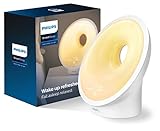
Philips SmartSleep Wake-Up Light HF3650/60
Who it suits: Buyers who want a proven sunrise alarm with zero ongoing relationship — no app, no account, no subscription, ever.
Philips has made wake-up lights longer than anyone, and the HF3650/60 is the sensible center of the current range. Its sunrise runs about 30 minutes through red, orange and yellow to a bright finish — independent measurements put its peak around 310 to 359 lux at pillow distance — and it pairs that with a RelaxBreathe wind-down routine at night, seven wake sounds and an FM radio for people who prefer voices to tones. Check the current price on Amazon before you buy, and keep in mind that this model’s pricing moves through regular discount cycles, so it is worth checking the live listing rather than assuming one fixed figure.
What you give up versus the Twilight and the Loftie is everything connected: no app scenes, no color washes beyond the sunrise sequence, no smart-home integration, and a molded plastic form that looks like what it is — a wake-up light, not a piece of furniture. What you gain is a device that will work identically in ten years, cannot be bricked by a discontinued app, and asks for nothing after the purchase price. In a guide full of ecosystems and subscriptions, that independence is a genuine feature, and for a guest room or a teenager’s room — places where the household’s smart-home login should not be required to set an alarm — it may make this the smartest pick of the six.
- Full color sunrise simulation plus a guided wind-down routine, all on-device.
- No app, no account and no subscription at any point.
- Pricing moves through regular cycles — check the current price on Amazon.
Honest limitation: It is a wake-up light first and a reading lamp a distant second, and its plastic dome will never be mistaken for decor.
Choose it if you want the wake-up function with no ecosystem attached. Skip it if you want app control, smart-home scenes or a lamp that reads as furniture.
Uttermost Camellia Table Lamp (27534-1)
Who it suits: Buyers who want a bedside lamp that is furniture — ceramic, weighty and silent — and who are comfortable buying the way the design trade sells.
Uttermost is a genuine designer-trade brand, the kind sold through lighting showrooms rather than big-box shelves, and the Camellia shows it: a distressed gloss-white ceramic body about 17 inches across at the shade, an oatmeal linen hardback shade, a 3-way socket rated to 150 watts with a dimmer included per the maker’s specification sheet, and UL listing. There is no app, no firmware and nothing to subscribe to; fitted with a good LED bulb, this lamp will work for decades and can be re-shaded when tastes change. Comparable Uttermost table lamps sit in the premium designer-trade tier at lighting retailers, which is where this lamp’s market sits — real designer positioning, honestly below this guide’s ceiling.
The reason this pick carries the longest caveat in the guide is the channel, not the lamp. On Amazon the Camellia is sold by marketplace lighting dealers, and its featured offer rotates: in some of our checks there was no featured offer at all, and its featured offer can be intermittent. So the advice is specific: open the listing, check the current price on Amazon, confirm a live offer from a reputable lighting seller, and walk away from any offer that looks wildly out of line for this tier. If no live offer exists when you shop, the lamp is worth buying from a lighting retailer instead — it is named here because it is the right lamp, with the channel warning attached, not because Amazon is the only place to get it.
- Designer-trade construction: ceramic body, linen shade, 3-way 150W socket, UL listed.
- No electronics to obsolesce — bulb-based, repairable and re-shadeable for decades.
- Positioned in the premium designer-trade tier at lighting retailers — check the current price on Amazon.
Honest limitation: Amazon offers for this lamp are marketplace-only and intermittent; check the live listing and the current price on Amazon carefully, and note the bulb is not the point of the purchase — you will choose and buy it separately.
Choose it if you want one beautiful, dumb, permanent lamp per nightstand. Skip it if you want sunrise features, app control, or the certainty of a maker-sold listing.

Casper Glow Light, Single Pack
Who it suits: Anyone whose bedside light also needs to be a hallway light, a bathroom light and a reading-under-the-covers light.
The Glow is the smallest and cheapest pick here, and the most charming. It is a rechargeable, roughly 5.25-inch frosted light that sits on a charging base on your nightstand and then goes wherever you do: twist it to dim or brighten, flip it over to fade down and switch off, shake it for a low night-light glow. The light itself is a warm 2700K — check the current price on Amazon for the single pack — and the double pack is the natural buy for a couple. Even the double leaves most of a $700 budget unspent, which is rather the point of including it: it proves how far below the ceiling a genuinely good bedside light can sit.
The limitations are real and worth stating. A 5-inch glow is ambient light, not a reading lamp — pair it with a proper task light if you read in bed for hours. The companion app is iOS-only in Casper’s current wording and, by reviewer accounts, has not been meaningfully updated in years, so treat the Glow as a gesture-controlled object and the app as a bonus that may not age well. The Amazon listing’s warranty is a 6-month limited one, short for the category. None of that stops it being the pick most likely to be used every single night, in more rooms than the bedroom.
- Fully portable and rechargeable — one light serves nightstand, hallway and bathroom.
- Gesture controls (twist, flip, shake) work half-asleep with no app and no buttons to find.
- The lower-priced pick in this guide — check the current price on Amazon; the two-pack is the couple’s version.
Honest limitation: Too small and diffuse for serious reading, the app is iOS-only and reportedly neglected, and the 6-month warranty is the shortest here.
Choose it if portability and middle-of-the-night kindness matter most. Skip it if your bedside lamp’s main job is reading light or running a scheduled sunrise.

Comparison Table
| Product | Type | Best use | Link |
|---|---|---|---|
| Philips Hue Twilight | Smart sleep/wake lamp | Best single lamp; a pair fits the budget | Check on Amazon |
| Loftie Lamp | Design sunrise lamp | Screen-free sunrise and sunset routines | Check on Amazon |
| Hatch Restore 3 | Sleep system | Sounds, sunrise and a fully dark clock | Check on Amazon |
| Philips SmartSleep HF3650/60 | Wake-up light | Proven sunrise with no app or subscription | Check on Amazon |
| Uttermost Camellia (27534-1) | Decorative table lamp | Permanent, furniture-grade ceramic lamp | Check on Amazon |
| Casper Glow Light | Portable glow light | Carrying light around the house at night | Check on Amazon |
How to Choose a Bedside Lamp Under $700
- Decide which job you are actually buying. Waking, sleeping, reading and decorating are four different products wearing one name. The picks above split along exactly those lines, and money spent on the wrong job is wasted at any tier.
- Think in pairs before single lamps. Most bedrooms have two nightstands. At this budget, two lamps from the upper mainstream tier beat one very expensive lamp for almost every couple — and as the ceiling section shows, a verifiable single lamp at the very top of this budget barely exists on Amazon anyway.
- Count the ecosystem tail. Add the bridge, the subscription year and any companion device a lamp needs to do its headline trick, then compare totals. A lamp plus a paid subscription is a different purchase from a lamp that asks for nothing after purchase.
- Check who is actually selling it. Maker-sold listings (Hatch, Philips) have stable prices and straightforward returns. Marketplace lighting dealers rotate offers and prices; on those listings, the seller’s identity and feedback matter as much as the lamp.
- Match lamp height to the mattress. For reading, the bottom of the shade should sit near chin level when you are propped up in bed. Tall decorative lamps on tall nightstands beside a low platform bed will glare down at you; measure the nightstand and mattress top before ordering a 25-inch lamp.
- Judge dimming range, not peak brightness. A bedside lamp earns its keep at 2 a.m. The best picks here dim smoothly to a faint glow; a lamp that is merely very bright is a ceiling light in the wrong place.
- Check the live price before you buy. Premium lamp pricing cycles up and down, so for every linked pick here, check the current price on Amazon at the moment you shop rather than relying on any figure you saw earlier.
- Ask what still works if the app dies. Physical controls, on-device alarms and standard bulb sockets are insurance. The more of a lamp’s function lives in a phone app, the more of your budget rides on a software team’s priorities.
The Honest Ceiling: Why No Bedside Lamp on Amazon Really Costs $700
It is worth explaining where the $700 lamps actually live, because the gap between this budget and Amazon’s real ceiling is the most useful fact in the guide. The designer lighting world — Artemide’s Tolomeo and Tizio, Louis Poulsen’s Panthella, Kartell’s Bourgie — sells through authorized design retailers, positioned in the premium designer tier, with some models sitting above this guide’s ceiling altogether. Those are real lamps at real designer-tier positioning. They are named here unlinked because, despite repeated checking, we could not verify a live Amazon offer we could stand behind for any of them — their Amazon presence is thin, marketplace-based or absent, and a guide that linked them would be sending you to listings it could not stand behind. If your heart is set on that tier of object, buy it from an authorized design retailer with the warranty intact, and let this Amazon budget do something else.
The other trap at this ceiling is worse than absence: false presence. Philips’ discontinued flagship wake-up light, the SmartSleep Connected HF3670, still has an Amazon listing, offered at premium figures — but the listing’s manufacturer field now belongs to a pallet-ordering reseller, which is what happens to dead listings for desirable products. The lamp is discontinued, the seller is liquidating who-knows-what condition stock, and it is positioned above the superior current Twilight. Whenever a premium listing looks too rare and too expensive at once, check who the manufacturer and seller fields actually name. At this budget, the most expensive mistake is not overpaying for a lamp; it is paying flagship money for a discontinued one through a liquidation channel.
One Lamp, a Matched Pair, or a System: Spending $700 Three Ways
Because the verifiable single-lamp ceiling sits well below this budget, a $700 budget is really an allocation decision, and there are three sensible shapes. The first is the matched pair: two Twilights, or two Lofties, both fitting within the budget and giving a couple symmetrical light and symmetrical mornings. Symmetry is not vanity — two mismatched lamps mean two apps, two brightness scales and one partner always better lit than the other. The second shape is the mixed system: one strong sunrise lamp for the early riser, one Hatch Restore 3 for the partner who needs sounds to sleep, a Casper Glow for the hallway — three products, three jobs, all within this budget, and a bedroom that works better than any single top-of-budget object could make it. The third shape is the decorator’s: one Uttermost-class lamp per nightstand bought through the lighting trade, accepting marketplace patience on Amazon or a design retailer off it, and spending the remainder on the bulbs and shades that finish the job.
There is also a fourth shape, and it is the one solo sleepers in small rooms should seriously consider: one Twilight or one Loftie, one Casper Glow for the trip to the bathroom, and the remaining budget simply not spent on lamps at all. Premium pricing tempts buyers to treat the budget as a target, as if money left over were value left on the table. At this tier the reverse is true. Bedside light stops improving quickly once sunrise simulation, a dark clock and a decent dimming range are covered, and the bedroom almost certainly has a better use for the surplus — blackout curtains, a proper pillow, or the Hue Bridge that makes the Twilight whole.
What all three shapes share is deliberate leftovers, and that is the diminishing-returns lesson of this tier. The jump from a basic lamp to a sleep system like the Hatch buys sunrise simulation, a sound library and a dark clock — functions, not just brightness. The jump from there to the premium smart tier buys color, design and ecosystem depth. Beyond that, on Amazon, there is simply nowhere for the money to go: the next rung of product exists only in the design trade, where what it buys is materials, authorship and permanence rather than features. Spend to the rung that matches the job, bank the rest, and be suspicious of any listing that offers to absorb the full $700 — at this ceiling, on this site, that offer is the tell of a bad listing, not a better lamp.
Reading in Bed: The Job Premium Lamps Are Worst At
One honest gap in this guide deserves its own section. Serious reading in bed wants a bright, tightly aimed, cool-to-neutral beam that lights the page and not the room — and the tool for that is a task lamp, not a bedside lamp. We researched the strongest candidate, the BenQ WiT e-Reading Lamp, a wide-beam desk lamp with 2700–5700K adjustment, positioned in the mid tier for task lighting in the US. It is a genuinely good product, and it is named here unlinked for a stated reason: it is a desk lamp, with a desk lamp’s clamp-and-arm silhouette, and this guide’s six slots went to lamps that belong on a nightstand. If your $700 is really about reading, the correct allocation is a WiT-class task lamp for the reading side of the bed plus one of the sleep systems above for the waking side — and if it is about everything except reading, the Twilight’s aimed front spotlight is the best reading light among the six picks, with the shaded Loftie second.
Common Buying Mistakes
- Assuming a $700 budget must buy a $700 lamp, then paying flagship money for a discontinued or marketplace-inflated listing because it is the only one priced that high.
- Buying a discontinued premium model — the Philips HF3670 pattern — from a liquidation or pallet seller without checking the manufacturer and seller fields on the listing.
- Forgetting the tail costs: the Hue Bridge the Twilight wants, the paid Hatch+ library, the second device a silent lamp needs to make a sound.
- Buying one spectacular lamp for a two-nightstand room and leaving the other side on a cheap leftover, instead of a matched pair.
- Judging a bedside lamp by maximum brightness or bulb wattage; at 2 a.m. the dimming floor matters more than the ceiling.
- Ordering a tall decorative lamp without measuring nightstand height and mattress top, and ending up with a shade that glares straight into a propped-up reader’s eyes.
- Buying without checking the live listing on lamps whose pricing moves through deep, regular discount cycles — check the current price on Amazon first.
- Setting up an app-dependent lamp on a 5 GHz-only network setting or a partner’s phone, then discovering the alarms live in an account you do not control.
Final Recommendation
- Most buyers: Philips Hue Twilight — one to start, or a pair if the budget is meant to be spent.
- Design-first bedrooms: Loftie Lamp.
- Sleep routines and sounds: Hatch Restore 3.
- No apps, no subscriptions: Philips SmartSleep Wake-Up Light HF3650/60.
- Furniture, not electronics: Uttermost Camellia Table Lamp.
- Portable night light: Casper Glow Light.
Our top two are the Philips Hue Twilight and the Loftie Lamp, because between them they define what premium bedside light on Amazon actually is in 2026: the Twilight is the most capable and best-verified lamp on the site, and the Loftie is the proof that a sunrise lamp can also be a beautiful object. If your household runs on routines rather than ecosystems, swap both for the Hatch Restore 3 and the app-free Philips HF3650 and keep the change. And keep the change is the honest headline of this whole tier: Amazon’s verifiable bedside ceiling for a single lamp sits well below this guide’s budget, so a $700 budget should end as a matched pair, a small system, or a single excellent lamp plus money left over — never as one listing that conveniently costs exactly what you brought.
Frequently Asked Questions
Is there really no bedside lamp on Amazon that costs $700?
None that we could verify as a current product with a genuine price record. The mainstream bedside lamp at the top of the verifiable range is the Philips Hue Twilight — check the current price on Amazon. Lamps in the genuine designer tier — Artemide, Louis Poulsen, Kartell designs — are sold through design retailers, and their Amazon presence is marketplace listings with rotating offers we could not verify. Treat any Amazon listing priced near the top of this budget with suspicion and check who is actually selling it.
Should I buy one premium lamp or a matched pair?
For a shared bedroom, a matched pair, almost every time. A pair of Twilights or a pair of Lofties, both within this budget, give both sleepers the same light, the same controls and the same wake time quality, and symmetry keeps one side of the bed from feeling like the afterthought. A single premium lamp makes sense for a solo sleeper, a guest room, or when the second nightstand carries a different job — a Hatch for sounds, a Glow for the hallway.
Do sunrise wake-up lights actually help?
Many sleepers find waking to gradually brightening light gentler than waking to a sudden alarm, and the wind-down routines help some people keep phones out of the bedroom, which may be the larger benefit. These are comfort products, not medical devices: they do not treat sleep disorders, depression or circadian conditions, and if poor sleep is persistent or a clinician is involved in your care, their advice comes before any lamp. Judge any sunrise lamp over two weeks of real mornings, not one.
Does the Philips Hue Twilight need a Hue Bridge?
For its headline trick, yes. Basic control works over Bluetooth, but scheduled wake and wind-down automation runs through a Philips Hue Bridge, sold separately. If your home already runs Hue lighting, the Twilight drops straight in; if not, add the bridge to the true cost — or choose the Hatch Restore 3 or the Philips HF3650, which need no hub at all.
What do the subscriptions at this tier actually buy?
Mainly content and convenience. The paid Hatch+ subscription unlocks the Restore 3’s full sound and routine library; the core alarm, clock and basic sounds work without it. Philips’ wake-up lights charge nothing after purchase, and the Hue app is free — its cost is the Bridge hardware instead. Before buying any connected lamp, read what the free tier includes, because at this tier the difference between brands is often the subscription, not the lamp.
How tall should a bedside lamp be?
A useful rule: with the lamp on the nightstand, the bottom of the shade should sit around chin level when you are sitting up in bed, so light falls on a book without shining in your eyes. For most nightstand and mattress combinations that means a lamp in the 14-to-20-inch range for sleep and wake lights, and up to the mid-20s for classic table lamps on lower nightstands. Measure your nightstand height and mattress top, add them, and compare against the lamp’s height before ordering — premium prices do not fix wrong geometry.
- Best Bedside Lamp Under $200
- Best Bedside Lamp Under $400
- Best Bed Frame Under $700
- Best Blackout Curtains Under $75
Related Guides
- Best Bedside Lamp Under $30
- Best Bedside Lamp Under $75
- Best Bedside Lamp Under $100
- Best Bedside Lamp Under $200
- Best Bedside Lamp Under $400