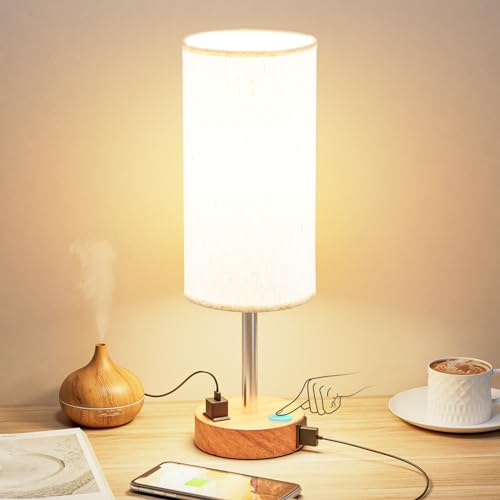
Where to buy
Check the latest price, availability and delivery on Amazon. Orders are placed on Amazon. We may earn a commission from qualifying purchases.
- Best overall: Philips Hue Twilight Smart Sleep and Wake-Up Lamp — Check on Amazon
- Lumie Bodyclock Luxe 700FM Wake-Up Light — Check on Amazon
- Philips Hue Gradient Signe Table Lamp — Check on Amazon
- Philips SmartSleep Sleep and Wake-Up Light HF3650/60 — Check on Amazon
See 2 more Amazon options
- Hatch Restore 3 Sunrise Alarm Clock and Sound Machine — Check on Amazon
- BenQ WiT e-Reading Lamp — Check on Amazon
Read the full guide ↓
Disclosure: As an Amazon Associate, airfryerkitchensupply.com earns from qualifying purchases. Links to Amazon on this page are affiliate links; they cost you nothing extra. Listing details such as price and availability change often, so check the current Amazon listing before you buy.
Renting changes what a premium bedside lamp has to prove. In a house you own, a $400 lighting budget might go into hardwired sconces, dimmer switches and a ceiling fixture you will enjoy for a decade. In an apartment, none of that is yours to install — the wiring belongs to the landlord, the lease forbids opening the walls, and anything fixed to the building stays behind when you leave. So the renter’s version of premium light has to meet three tests the homeowner’s never faces: it must plug in, not wire in; it must work across a whole rental, not just one room; and every dollar of it must be able to leave with you on moving day, ideally in its original box.
The six lamps below are the strongest bedside lamps we could verify with live Amazon listings at or under $400, re-judged through exactly that lens. Two of them are Philips Hue lamps, and that is deliberate: Hue is the one premium lighting system that can spread across an entire rental — nightstand, desk, living room, hallway — with nothing more than bulbs screwed into sockets that already exist and a small bridge plugged into your router. One is a subscription-free wake-up light that will still be working, unchanged, in your third apartment from now. One is a routine clock whose real price includes a subscription, counted honestly in its review. And one is a reading lamp so good that readers happily pack it first and label the box fragile. For most apartment buyers we would start with the Philips Hue Twilight: it is the best bedside lamp here in its own right, and it is also the seed of a whole-rental lighting system that needs no landlord’s permission at any point.
In this guide
Quick Picks
Short on time, or comparing several options at once? Each row below names a renter type and the product that suits it, with a link to the listing.
| Renter type | Pick | Why it stands out | Link |
|---|---|---|---|
| Best overall | Philips Hue Twilight Smart Sleep and Wake-Up Lamp | The best sleep-and-wake lamp here — and the start of a Hue system that lights the whole rental without rewiring | Check on Amazon |
| Best no-subscription premium | Lumie Bodyclock Luxe 700FM | Glass globe, FM radio and Bluetooth audio; no app, no account, nothing to stop working at the next address | Check on Amazon |
| Best design statement | Philips Hue Gradient Signe Table Lamp | A slim aluminium stem that washes the wall in blended colour — the decor upgrade a lease actually allows | Check on Amazon |
| Best classic sunrise | Philips SmartSleep Sleep and Wake-Up Light HF3650/60 | The brightest verified sunrise here, fully on-device and comfortably within this budget | Check on Amazon |
| Best for bedtime routines | Hatch Restore 3 Sunrise Alarm Clock and Sound Machine | Light-and-sound routines with big phone-free controls — with the subscription cost stated, not hidden | Check on Amazon |
| Best for reading in bed | BenQ WiT e-Reading Lamp | An extra-wide, auto-dimming pool of light for books and screens; moves from nightstand to desk and back | Check on Amazon |
How These Picks Were Chosen
The first filter was the budget. Every product below was verified with a live Amazon.com listing within this guide’s under-$400 budget, sold by the brand or a mainstream retailer. Premium lamp prices on Amazon move a lot, especially around sale events, so this guide does not print a fixed figure for any lamp — check the current price on Amazon before you buy. Two well-known lamps were deliberately left out on exactly this test: the Philips SmartSleep Connected HF3670, whose Amazon offer came from a third-party listing outside this budget, and every Artemide, FLOS and &Tradition lamp checked, none of which had a verifiable Amazon offer within this budget. They are named, unlinked, in the designer section below.
The second filter is the one this apartment variant adds, and it is a landlord’s filter. Nothing here needs wiring, drilling, hardwired dimmers or a single change to the unit: every lamp plugs into an ordinary outlet, every smart feature runs on a bridge or battery switches you own, and every lamp can be unplugged, boxed and working in a new bedroom within an hour of the movers leaving. We also judged each lamp as a renter actually uses it — the Hue lamps with the Bridge their automations assume, the Hatch with its optional subscription kept in view rather than ignored, the pairs question answered plainly (all six are sold singly, so a matched pair means buying two).
We did not use these lamps ourselves. We compared maker listings and specification pages, independent measurements where they exist and long-running review coverage, and favoured lamps that do a bedside job properly: genuine low dimming for 2 a.m., controls that work half asleep, sunrises that are gradual and bright enough to matter, and full costs stated up front. In an apartment there is one more quiet criterion — the lamp should earn its footprint. Nightstands in rentals are small and shared with chargers, books and water glasses, so slim bases and lamps that double as the room’s main light source score better here than they would in a spacious owned bedroom.
The 6 Best Bedside Lamps for Apartments Under $400
Philips Hue Twilight Smart Sleep and Wake-Up Lamp
Who it suits: Renters who want one lamp that handles the whole night — reading light, sunset wind-down, night light and sunrise — and who like the idea of that lamp becoming the first piece of a smart-lighting system that covers the entire apartment.
The Twilight is the rare premium bedside lamp designed for the nightstand first and the living room never. It has two light sources in one body: a front-facing lamp you can read by, and a rear gradient light that throws blended colour up the wall behind it, so the lamp can glow like a sunset at bedtime and build like a sunrise in the morning without shining directly in your face. The dimming is the headline specification in practice: it goes exceptionally low, low enough to work as a night light you can leave on, and rises smoothly through the warm colours Hue’s sleep automations are built around. Two physical buttons on top handle the basics in the dark; everything deeper — schedules, scenes, the Wake Up and Go to Sleep automations — lives in the Hue app, and it works with Alexa, Apple Home and Google Assistant for voice control.
For a renter, though, the Twilight’s real argument is what it connects to. Add a Hue Bridge (sold separately — check the current price on Amazon — and plugged into your own router, with no wiring and no landlord involved) and the same system extends across the whole unit: Hue bulbs in the ceiling sockets and desk lamps you already own, battery-powered dimmer switches stuck to walls with removable adhesive instead of the hardwired dimmers your lease forbids, motion sensors in the hallway. The bedroom lamp stops being a lamp and becomes the hub of the only lighting renovation a tenant is allowed to make — and when the lease ends, the entire system unscrews, unplugs and moves with you, leaving the apartment exactly as meter-read as you found it.
On price, the honest treatment is simple: the Twilight sits at the premium end of this guide’s budget, its Amazon price moves around sale events, and third-party sellers have pushed the same listing outside this budget at times. Check the current price on Amazon before you buy, buy it from Amazon or the Philips Hue storefront listing, and treat an offer that sits outside this budget as a reason to wait for the next sale cycle, because this lamp is discounted several times a year.
- Two light sources — a reading light in front, a colour gradient washing the wall behind — in one slim bedside body.
- Exceptionally deep, smooth dimming: a genuine night light at the bottom, a real sunrise at the top.
- The seed of a whole-rental Hue system: bulbs, adhesive switches and automations, with zero rewiring and zero trace at move-out.
Honest limitation: Scheduled wake-up automations need a Hue Bridge (sold separately) — out of the box you get Bluetooth app control — and third-party sellers have pushed this listing outside this budget at times, so check the current price on Amazon and who is actually selling it before you pay.
Choose it if you want the most complete sleep-and-wake lamp on this list and are happy building a Hue system around it. Skip it if you refuse apps and accounts in the bedroom, or your partner’s side of the bed needs a matching lamp on a strict total budget.

Lumie Bodyclock Luxe 700FM Wake-Up Light
Who it suits: Renters who want premium wake-up features with nothing installed, nothing subscribed and nothing that depends on an app surviving to their next address — the lamp you buy once and carry through three leases.
Lumie invented this category in 1992, and the Luxe 700FM is its flagship in the US line: a frosted glass globe on a neat base, with a sunrise and sunset you can stretch anywhere from 15 to 90 minutes, more than 25 sleep and wake sounds, an FM radio with a proper telescopic antenna, and a Bluetooth speaker for your own audio. It also has the feature sleep specialists actually ask about — a low-blue-light evening mode that keeps the bedtime end of the routine from working against you — plus tap-control snooze and a clock display that dims itself down at night. Everything is set with dials and buttons on the unit. There is no app because there is nothing for an app to do, and Lumie backs it with a 3-year warranty, the longest cover in this guide.
That self-containment is worth more in a rental than in a house. There is no bridge to plug into a router your roommate controls, no account tied to an address, no ecosystem to rebuild after a move: you set the clock, set the alarm, and the lamp behaves identically in every bedroom it ever sits in. Check the current price on Amazon — the Luxe 700FM sits in the upper half of this guide’s budget, and Lumie’s own store runs sales of its own from time to time. What it does need is one measured honesty note: independent lab testing of the US Bodyclock range measured the Luxe 700FM at about 173 lux at pillow distance at the end of its sunrise — respectable, and plenty for most sleepers in a dark room, but well below the Philips HF3650 below, which measured roughly double.
- The complete standalone package: sunrise, sunset, FM radio, Bluetooth speaker and 25+ sounds in a glass globe.
- Low-blue-light evening mode and a 15–90 minute adjustable sunrise — the widest timing range here.
- No app, no account, no subscription, ever; 3-year warranty from the company that invented wake-up lights.
Honest limitation: Measured sunrise brightness (about 173 lux at the pillow in independent tests) trails the Philips HF3650, and the frosted globe is real glass — beautiful, and the one lamp here that needs its box kept and a careful pair of hands on moving day.
Choose it if you want premium wake-up features with zero smart-home involvement and a lamp that outlives leases. Skip it if you sleep through anything less than the brightest possible sunrise, or you want coloured light scenes.

Philips Hue Gradient Signe Table Lamp
Who it suits: Renters whose bedroom has to do double duty as the room they show people — and who know that in a lease, the decor upgrades you are allowed are the ones that plug in.
The Signe is the opposite philosophy to the wake-up lights: no clock, no sounds, no sunrise program of its own, just a slim aluminium stem, about the height of a paperback stack, that washes the wall behind it with a flowing gradient of blended colours. Hue rates it at up to 1,040 lumens, which makes it the most powerful light source in this guide — bright enough to genuinely light a bedroom corner, not just decorate it — and the gradient effect, several colours melting into each other along the stem, is still the effect rival systems imitate. On a small rental nightstand it takes almost no footprint while reading as sculpture, and against a plain landlord-white wall — the wall you are not allowed to paint — it does the job paint would have done: it gives the room a colour story that unplugs at move-out and leaves no evidence.
Like the Twilight it joins the Hue ecosystem for scenes, schedules and voice control, and a Hue automation can turn it into a perfectly good sunrise lamp even though Philips does not sell it as one; paired with a Twilight on the other nightstand or a few Hue bulbs overhead, it is how a rental bedroom gets layered light without a single fixture being touched. It sits in the middle of this guide’s budget — check the current price on Amazon, because this is a lamp that is discounted often, and an offer sitting high in the band is a reason to wait for the next sale cycle. One design decision divides owners and belongs in the open: there is no switch on the lamp itself. Control is by app, voice, or a Hue dimmer switch bought separately — battery-powered and adhesive-mounted, so still lease-safe, but a real extra to budget for.
- The strongest light here — up to 1,040 lumens — in the slimmest footprint on the list, ideal for small rental nightstands.
- Hue’s gradient wall-wash: the colour upgrade for walls you are not allowed to paint.
- Aluminium build in black, white or oak finishes; a lamp that earns its place as decor and packs in minutes.
Honest limitation: No on-lamp controls at all — everything runs through the app, voice or a separate Hue switch — and it is an ambient lamp, not a reading light: the light goes at the wall, not onto your book.
Choose it if the lamp’s job is atmosphere and you are building, or already own, a Hue home. Skip it if you read in bed every night or want physical buttons you can find half asleep.

Philips SmartSleep Sleep and Wake-Up Light HF3650/60
Who it suits: Heavy sleepers in dark rental bedrooms — basement units, north-facing windows, blackout-curtain rooms — who want the strongest, most proven sunrise on the list and no app between them and the alarm.
This is the lamp Philips’ whole wake-up reputation rests on (it was formerly sold as the Somneo). The sunrise runs through real colour — deep red, orange, warm yellow, bright white — across up to 40 minutes and 25 brightness levels, and it is the brightest verified wake-up light in this guide: Philips rates it around 300 lux, and independent measurements at pillow distance have recorded roughly 359 lux, about double the Lumie flagship above. At night it reverses the trick with a sunset fade and RelaxBreathe, a light-guided breathing rhythm for winding down, plus a midnight-light setting dim enough to find the bathroom by. There are seven wake-up sounds and an FM radio, a USB port for charging a phone — a small mercy in bedrooms where every outlet is already spoken for — and every control is on the device itself: no account, no Wi-Fi, no subscription, nothing to stop working when a server somewhere is retired or when you move somewhere with different Wi-Fi.
Check the current price on Amazon — the HF3650 sits comfortably within this guide’s budget for arguably its most effective alarm, and it has a long history of dipping in sale events. A word of care about the listing family, because Philips’ naming invites mistakes: the cheaper HF3520 is the older generation, the HF3500 is the basic model, and the app-connected HF3670 is a different product again whose Amazon offers were found inflated well outside this budget by third-party sellers. The ASIN linked here is the HF3650/60 itself; confirm the model number on the listing before you pay.
- The brightest sunrise verified here — around 300 lux rated, roughly 359 lux measured at the pillow.
- Full-colour sunrise and sunset, RelaxBreathe wind-down, seven sounds and FM radio, all on-device.
- USB charging port and a midnight light; no app, account or subscription involved — set it up identically in any apartment.
Honest limitation: The design is a rounded clock, not a piece of furniture — it looks like the appliance it is — and the display and controls, while complete, are fiddlier to programme than an app. It also throws its light forwards, so it wants to face the bed rather than sit decoratively sideways.
Choose it if waking up is the whole point and you want the strongest dawn for the money. Skip it if you want coloured ambient light, smart-home scenes, or a lamp that disappears into your decor.
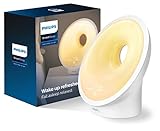
Hatch Restore 3 Sunrise Alarm Clock and Sound Machine
Who it suits: Renters trying to build a phone-free bedtime in a unit where the bedroom is also the office, the cinema and the phone’s charging station: a set routine of light and sound that starts with one big button.
The Restore 3 is built around routines rather than specifications. In the Hatch app you build an evening sequence — say, a warm reading light that fades into a sunset paired with rain sounds, then switches to white noise for the night — and a morning sequence where a gradual sunrise in your chosen colours brightens ahead of a gentle alarm sound. On the device itself there are just two large, findable-in-the-dark controls on top: one to start your routine, one for the alarm. The fabric-covered body (Putty, Greige and Cocoa finishes) looks like a soft piece of homeware rather than a clock, the display dims right down, and as a sound machine it is genuinely good — which, in an apartment with thin walls and a neighbour’s television on the other side of them, is not a luxury feature but the difference between their evening and yours.
The Restore 3 sits at the more accessible end of this guide — check the current price on Amazon — and the honesty paragraph is about what happens after the box, because renters already carry enough monthly meters. The core sunrise, sunset and a starter library of sounds work without paying anything more, but the full content library — the deeper catalogue of sleep sounds, stories and meditations — sits behind Hatch+, an optional paid subscription after the included trial. That ongoing cost adds up for as long as you keep it, narrowing the gap with the subscription-free picks in this guide, and unlike rent it buys nothing you keep: cancel, and the library goes. The second note is brightness: independent comparisons put the Restore 3’s sunrise well below the Philips and Lumie lamps, so very heavy sleepers in bright bedrooms should treat it as a routine and sound device first and an alarm second.
- Routines pair light and sound into one-tap evenings and mornings — the best wind-down system here, and a real defence against thin apartment walls.
- Big, simple on-device controls and a soft fabric design that hides the clock at night.
- A strong all-night sound machine built in, not bolted on.
Honest limitation: The full sound and content library needs the Hatch+ subscription (an optional paid subscription after a trial) — a running cost that follows you from lease to lease — and its sunrise is the gentlest here, so heavy sleepers should not rely on it as their only alarm.
Choose it if your real goal is a calmer, phone-free routine and you accept the optional subscription for the full library. Skip it if you hate subscriptions on principle — take the Lumie — or need maximum wake-up brightness.

BenQ WiT e-Reading Lamp (Matte Gold)
Who it suits: Serious readers in small units, where the nightstand is also the desk: the people for whom the lamp’s real job is two hours with a book, a Kindle, a crossword or needlework, at light quality nothing else here matches.
The WiT is the one lamp in this guide that comes from the task-light world, and it shows in the optics. Its curved head throws an extra-wide, even field of light — BenQ’s “smile curve” covers roughly a 35-inch span — so a whole open book, or a book and a notebook, sit in one shadow-free pool instead of a bright circle with dark edges. An ambient sensor auto-dims the lamp to the room, colour temperature adjusts from warm 2700K for evening paper to a cooler 5700K, the light is flicker-free and high-CRI so print and colour work look true, and the ball-jointed metal arm stays exactly where you aim it. In an apartment it earns its keep twice over: swung over the bed it is the world’s best reading light, and swung over the corner of the same small room where you work, it is a proper desk lamp — one purchase doing the job of two fixtures you have no space for.
Check the current price on Amazon for the WiT — pricing varies by finish, and it sits at the premium end of this tier, which buys a great deal of engineering and no smart features whatsoever. That trade is the review in one line: there is no app, no sunrise, no colour, no speaker, and the wide head is a desk lamp’s silhouette, not a decorator’s. What the money buys instead is the thing the other five lamps treat as secondary — light itself, measured and controlled better than any of them. For a reader, that is not a compromise; for anyone else, it is money spent on the wrong virtue.
- The best reading light here by a distance: a roughly 35-inch-wide, even, shadow-free pool of light.
- Auto-dimming ambient sensor, 2700K–5700K adjustment, flicker-free high-CRI output — nightstand lamp and desk lamp in one.
- Weighted metal build with a ball-joint arm that holds its aim; finishes include Matte Gold, Blue and Silver.
Honest limitation: It is a task lamp in shape and spirit — no sunrise, no smart features, no ambient glow — and its wide head takes more nightstand presence than the sleep lamps, which matters on a small table; the arm also wants careful packing on moving day.
Choose it if reading in bed is the main event and eye comfort over long sessions is what you are paying for. Skip it if you want help waking up, falling asleep, or lighting the room’s mood — every other pick here does those jobs better.

Comparison Table
| Product | Type | Best use | Link |
|---|---|---|---|
| Philips Hue Twilight | Smart sleep and wake-up lamp | Sunrise, sunset and night light — plus the seed of a whole-rental Hue system | Check on Amazon |
| Lumie Bodyclock Luxe 700FM | Wake-up light with radio | Premium standalone sunrise with FM radio; no subscription, ever | Check on Amazon |
| Philips Hue Gradient Signe Table Lamp | Smart gradient lamp | Wall-washing colour gradients — the lease-safe decor upgrade | Check on Amazon |
| Philips SmartSleep HF3650/60 | Wake-up light | The brightest classic sunrise, no app required | Check on Amazon |
| Hatch Restore 3 | Routine clock and sound machine | Phone-free bedtime routines and all-night sound for thin walls | Check on Amazon |
| BenQ WiT e-Reading Lamp | Reading and task lamp | Wide, even, auto-dimming light for books, screens and desk work | Check on Amazon |
How to Choose a Bedside Lamp for an Apartment Under $400
- Apply the move-out test first. If a lamp cannot be unplugged, boxed and working in your next bedroom within the hour — with nothing left behind, patched or forfeited — it fails the renter’s first filter, whatever its specifications.
- Name the job before the lamp. Waking up, falling asleep, reading, or decorating are four different products wearing one name. Every pick in this guide is the best at one of them and ordinary at the others.
- Test the bottom of the dimmer, not the top. Bedside lamps live at 2 a.m. brightness. A lamp that cannot dim to a true glow — the Twilight and the wake-up lights here can — will be unplugged within a month.
- If waking matters, ask for lux, not lumens. What wakes you is light reaching your eyes. Independent measurements put the HF3650 near 359 lux at the pillow and the Lumie Luxe near 173; both beat their marketing, but they are not the same alarm.
- Think in systems, not lamps. In a rental, one Hue lamp plus a Bridge can become whole-apartment lighting — bulbs in existing sockets, adhesive switches where dimmers are forbidden. A standalone lamp, however good, lights one nightstand.
- Price the whole system, in writing. A Hue Bridge for automations, a Hue dimmer switch for the Signe, the Hatch+ subscription — add the extras a lamp quietly assumes before comparing headline prices, and count a subscription over the whole time you will own the lamp, not just at checkout.
- Check who is selling it. Premium lamps attract third-party marketplace offers far above the brand’s own listing — the Twilight’s listing has been pushed outside this budget that way. Buy the brand’s own listing or a mainstream seller, and check the current price on Amazon before you pay.
- Count the nightstands. All six picks are sold singly, so a matched pair means buying two lamps. A mismatched pair — one smart lamp, one simple — is often the smarter spend for a shared bed.
- Mind the light’s direction. Forward-facing wake-up lights want to face the sleeper; the Signe lights the wall; the BenQ lights the page. The best lamp in the wrong orientation is a mediocre lamp.
- Measure the table, and keep the box. The BenQ’s wide head and the Lumie’s glass globe both need real nightstand space — and the globe needs its original packaging when you move. Slim lamps like the Signe and Twilight stand in a few square inches.
A Hue Ecosystem Across a Whole Rental, Without Rewiring Anything
Here is the quiet frustration of renting a place with bad light: the fixes that actually work — dimmer switches, warm ceiling fixtures, a sconce by the bed — all live behind the wall plate, and the wall plate belongs to someone else. Smart bulbs were invented for exactly this impasse, and Philips Hue is the most complete version of the idea. A Hue lamp like the Twilight or the Signe is not really a lamp purchase; it is the first node of a lighting system that installs with a screwdriver-free afternoon: bulbs into the ceiling sockets and table lamps that already exist in the unit, a Bridge plugged into your router, dimmer switches that stick to the wall with removable adhesive and come off at move-out without a mark. Nothing is wired, nothing is drilled, and the deposit never hears about it.
The practical difference this makes is larger than one lamp’s feature list. A bedroom-only lamp gives you a better nightstand. A Hue system gives the whole rental one behaviour: lights that warm and dim together in the evening because you scheduled them once, a hallway that glows at night-light level when the motion sensor sees you, a living room that shifts from work white to movie amber on a voice command, and a bedroom sunrise that the Twilight runs as part of the same scene rather than as a separate gadget with a separate app. The two Hue picks in this guide play different roles in that system — the Twilight is the sleep specialist with the deep dimming and the wake-up automations, the Signe is the atmosphere piece that makes a plain rental wall look designed — and a common renter’s build is one of each, plus a Bridge.
Two honest costs belong in this section rather than the small print. First, the Bridge: both lamps work over Bluetooth out of the box, but the scheduled automations that make the system feel like a system — above all the Twilight’s Wake Up routine — need the Bridge on your network if a starter kit has not already put one in your home — it is sold separately, so check the current price on Amazon and count it in the budget from the start. Second, the ecosystem is a commitment: Hue bulbs and switches are priced at a premium over rival smart bulbs, and every room you add deepens the investment. The counterweight is portability. A homeowner’s lighting renovation raises the value of a house they will sell; a renter’s Hue system is the rare home upgrade that is fully, literally removable — unscrew, unplug, and the entire renovation is in a box in the moving van, ready to be better than the next apartment’s lighting on the first night.
Premium Light You Take With You: The Move-Out Test
Every purchase in a rental eventually faces the same audit: the last weekend of the lease, a van outside, and the question of what this thing is worth now. Furniture fails the audit constantly — the bookcase that does not fit the new hallway, the sofa sold for a third of its price because the new living room is smaller. Premium lamps pass it almost perfectly, and that is a genuine part of what the $400 buys. A bedside lamp is small, light, room-agnostic and needed in every bedroom you will ever sleep in. The Twilight you buy for this apartment is not adapted to it in any way; it will sit on a different nightstand, in a different city, doing the identical job, for the decade-plus that quality LED hardware lasts. Spread across two or three leases, even a premium lamp like the Twilight earns its place in a way a budget lamp rarely does — you spend the intervening years with the better light, and it is still yours at the end.
Passing the test does ask for a little discipline, and the reviews above flag it per lamp. Keep the boxes: the Lumie’s frosted globe is real glass, the BenQ’s ball-jointed arm does not love being crushed under bedding in a car boot, and the original packaging is the difference between a lamp that travels and a lamp that arrives. Buy the finish that goes with rooms you have not seen yet — the Signe’s black, white and oak and the Hatch’s three fabric tones all survive a change of decor better than a statement colour would. And notice what is absent from this entire guide: anything installed. No sconces, no pendants, no hardwired anything. That absence is the apartment variant’s whole philosophy — at this budget, in a rental, the premium is not in the fixture. It is in light you own outright, that no landlord can keep, no lease can strand, and no move can strand you without.
The Running Meter: Subscriptions and Bridges, Counted Honestly
Renters are connoisseurs of the monthly meter — rent, utilities, parking, the streaming stack — so a lamp that quietly joins the list deserves scrutiny, and this guide’s six picks split cleanly into two camps. In the pay-once camp: the Lumie, the Philips HF3650 and the BenQ WiT. Everything they will ever do is in the box; there is no account to maintain, no library to rent, no server whose retirement could dim them, and their cost in your fifth year of ownership is exactly their cost in the first. In the platform camp: the two Hue lamps and the Hatch Restore 3, each of which assumes extras — but extras of very different kinds, and the difference matters.
The Hue extras are hardware, bought once and owned forever: a Bridge unlocks the automations, and a dimmer switch civilises the switchless Signe — both sold separately, so check the current price on Amazon for each. There is no Hue subscription for anything in this guide; the meter, such as it is, stops at the accessories. The Hatch extra is the opposite shape: the hardware sits at the more accessible end of this guide, and the meter runs afterwards — Hatch+ is an optional paid subscription for the full sound and content library, after the trial. Kept for years, that ongoing cost adds up and narrows the gap with the subscription-free Lumie, and the library is rented, not owned: stop paying and it leaves with the subscription. None of this makes the Hatch a bad buy — its routines are the best wind-down system in this guide, and plenty of owners judge the library worth its rent. It makes it a buy to make with the total in view, which is all this section asks: lamp plus bridge plus the ongoing subscription is the honest comparison, and on that basis the gaps in this guide narrow considerably. The best lamp is still the one matched to your job — but it should win on its full cost of ownership, not its headline alone.
What $400 Cannot Buy on Amazon: The Designer Lamp Problem
Open any design magazine’s bedside lamp round-up and you will meet the same names: the Artemide Tolomeo, the FLOS Bellhop, Louis Poulsen’s Panthella, &Tradition’s Flowerpot. We went looking for all of them on Amazon, because a $400 budget should in theory reach them — and the honest result is that it cannot, at least not in any form this guide is willing to link. The Tolomeo Micro, the smallest of its line, is priced above this guide’s budget at Artemide’s own US store for the lamp body alone, before the base it needs to stand on; the one complete Micro with base found on an Amazon marketplace listing was also above this budget, from a third-party seller. The FLOS Bellhop portable sits within this budget range at FLOS direct, but it is sold through FLOS and design retailers; no live Amazon.com offer from an authorised seller could be verified. The &Tradition Flowerpot VP9 portable likewise sits in this premium band at design stores, and is absent from Amazon in any verifiable form.
This is not an accident of stock. Designer lighting is sold through authorised dealers precisely so the brands can control price, authenticity and warranty, and the grey-market listings that do surface on marketplaces carry real risks: no manufacturer warranty, uncertain provenance, and a counterfeit problem the brands themselves warn about — a “Tolomeo” at half price is a well-documented fake, not a bargain. So the choice at this budget is a genuine fork, and for renters it has a pleasing symmetry: the designer portables are, if anything, even more move-friendly than the picks here. If the designer object is what you want, buy the Bellhop or the Flowerpot VP9 from an authorised design retailer and enjoy it for decades. If the lamp must come from Amazon — for the returns, the delivery, the gift card balance — then the six lamps in this guide are what the marketplace honestly offers at the top end: less heritage, more function, and in the Twilight’s case a kind of sleep engineering no designer lamp attempts. What we will not do is blur the fork with a marketplace link we cannot stand behind.
Common Buying Mistakes
- Paying a third-party marketplace price far above the brand’s own listing — premium lamp listings spike. Check the seller, and check the current price on Amazon, before you pay.
- Buying installed light for a rented room — hardwired sconces and swapped fixtures spend your money on the landlord’s asset and can cost you deposit at move-out. At this budget, everything worth buying plugs in.
- Confusing Philips’ model numbers: the HF3650, HF3520, HF3500 and HF3670 are four different lamps, and listings are not always careful about which is which.
- Buying one lamp for a two-nightstand bedroom and discovering a matched pair means a second full purchase you had not planned for.
- Assuming a smart lamp works fully out of the box, then meeting the bridge, the account and the app permissions at 11 p.m. on setup night.
- Forgetting the subscription: Hatch+ is an ongoing cost that keeps adding up for as long as you use the full library. It may be worth it — but count it, the way you would count any other monthly bill in the unit.
- Judging a wake-up lamp by its looks in daylight. The HF3650 is the plainest object here and the strongest alarm; the prettiest lamps are not always the ones that get you up.
- Putting a wall-washing lamp like the Signe on reading duty, or a forward-facing wake-up light sideways against a wall where its sunrise misses the bed.
- Throwing away the box. The Lumie’s globe is glass and the BenQ’s arm is precision metalwork; the original packaging is what makes a premium lamp a portable one.
- Chasing designer names through unauthorised marketplace sellers and ending up with no warranty, or worse, a counterfeit. The authorised-dealer channel exists for a reason.
Final Recommendation
- Most apartment buyers: Philips Hue Twilight Smart Sleep and Wake-Up Lamp.
- No apps, no subscriptions, buy-it-for-three-leases: Lumie Bodyclock Luxe 700FM.
- Design and ambience first: Philips Hue Gradient Signe Table Lamp.
- Heaviest sleepers in dark units: Philips SmartSleep Sleep and Wake-Up Light HF3650/60.
- Phone-free routines, subscription counted and accepted: Hatch Restore 3.
- Serious reading in a small unit: BenQ WiT e-Reading Lamp.
Our top two are the Philips Hue Twilight and the Lumie Bodyclock Luxe 700FM, because between them they state the renter’s real choice at this budget. The Twilight is the system pick: the deepest dimming, the prettiest sunsets, a sunrise inside the one lighting ecosystem that can renovate a whole rental without touching a wire — and then leave with you, complete, when the lease ends. The Lumie is the sovereignty pick: glass, radio, Bluetooth audio and a 3-year warranty, everything in the box and nothing on a server, identical in every apartment it will ever sit in. Pick the Twilight if your rental’s lighting bothers you beyond the bedroom and you want one purchase to start fixing all of it; pick the Lumie if the bedroom is the one room you keep offline. And if your problem is narrower — you cannot wake up in a dark unit, or you cannot put the book down — the HF3650 and the BenQ WiT respectively are not runners-up; they are the correct answers to those specific questions, comfortably within this budget.
Frequently Asked Questions
Can I build a smart lighting system in a rental without rewiring?
Yes — that is precisely what the Hue picks in this guide are for. Hue lamps and bulbs screw or plug into what already exists, the Bridge connects to your own router, and dimmer switches mount with removable adhesive. Automations, schedules and voice control then work across the whole unit, and at move-out everything unscrews and unplugs, leaving the apartment exactly as you found it. No part of the system needs an electrician, a wall plate opened, or a landlord’s signature.
Is a $400 bedside lamp worth it in an apartment I might leave in a year?
More worth it than most premium purchases, because a lamp is one of the few upgrades that is not spent on the address. Nothing in this guide is installed, sized to the room or matched to the unit’s fixtures, so the lamp’s value does not stay behind when you go — the same Twilight or Lumie serves the next bedroom identically. Judged per lease rather than per purchase, a premium lamp that survives three apartments costs less per home than a mid-range lamp replaced at each move.
Do I need a Hue Bridge for the Twilight or the Signe?
Not to switch them on: both work over Bluetooth with the Hue app out of the box. You do need a Bridge for the full automation layer — scheduled wake-up routines on the Twilight, away-from-home control, and integration with Hue bulbs and switches across the rest of the apartment — and most renters building the whole-unit system described in this guide end up adding one — it is sold separately, so check the current price on Amazon. Count it in the budget from the start rather than discovering it at setup.
Which of these lamps is best for waking up?
The Philips SmartSleep HF3650, on the evidence: it is rated around 300 lux and independent measurements at pillow distance recorded roughly 359 lux, about double the Lumie Luxe 700FM’s measured figure — a gap that matters in the dark, north-facing and basement bedrooms rentals specialise in. The Hue Twilight’s sunrise is the most pleasant and the most customisable, and the Hatch Restore 3’s is the gentlest. If you sleep through alarms, brightness is the specification to buy.
Is the Hatch Restore 3 worth it with the subscription?
The hardware — check the current price on Amazon — is fairly positioned for its routines, sound machine and design, and the sunrise, sunset and starter sounds work without paying more. Hatch+, an optional paid subscription after the trial, unlocks the full content library; kept over years, that ongoing cost adds up and narrows the gap with the subscription-free Lumie. If you know you will use the deep library nightly, it can be worth it. If you mainly want a sunrise and white noise to cover the neighbours, it is not.
Do wake-up lights really help, or is it marketing?
The mechanism is ordinary physiology, not magic: light is the main signal that sets the body clock, and a gradual dawn raises light exposure before the alarm sound, so most people wake feeling less jolted than from darkness and a buzzer. Philips’ wake-up lights have been studied more than most, and Lumie has built its name on the category since 1992. What these lamps are not is medical devices: they are comfort products, they do not treat sleep disorders or seasonal conditions, and if either is part of your life, a clinician’s advice comes before a purchase.
Why are there no Artemide or FLOS lamps in the picks?
Because they could not be verified on Amazon under $400. The Artemide Tolomeo Micro is priced above this budget at the maker’s US store for the lamp body alone, and the single complete Amazon marketplace listing found was also above this budget, from a third-party seller; the FLOS Bellhop and &Tradition Flowerpot VP9 sit in this premium band at authorised design retailers, with no verifiable Amazon.com offer. Those are good lamps sold through a different channel — buy them there, with the warranty, rather than through a marketplace listing nobody can stand behind.
Should I buy a matched pair for a shared bed?
Only if both sleepers want the same lamp. Every pick here is sold singly, so a pair means two full purchases, not one. Renters sharing a bed often do better with one full-featured lamp on the early riser’s side and a simpler dimmable lamp on the other — or, in a Hue home, one Twilight plus a Hue bulb in an existing lamp, which keeps both sides in the same system without buying a second premium lamp.
- Best Bedside Lamp Under $400
- Best Bedside Lamp For Apartments Under $200
- Best Bedside Lamp For Apartments Under $100
- Best Bedside Lamp For Small Bedrooms Under $400
- Best Bedside Lamp For Guest Rooms Under $400
- Best Bedside Lamp For Side Sleepers Under $400
- Best Bed Frame For Apartments Under $400
- Best Bed Sheet Set For Apartments Under $400
Related Guides
- Best Bedside Lamp For Apartments Under $30
- Best Bedside Lamp For Apartments Under $75
- Best Bedside Lamp For Apartments Under $100
- Best Bedside Lamp For Apartments Under $200
- Best Bedside Lamp For Apartments Under $700