An adult art easel holds a canvas at a workable height and angle. The main types are the tabletop easel, the lightweight metal tripod, the portable French easel with a storage drawer and the large H-frame for big canvases in a studio.
The six easels below cover each type. Materials, heights and weights come from each product’s listing page. We have not used these easels ourselves. Capacity and sturdiness claims are the makers’ own. For child-sized models, see our separate list of art easels for kids.
As an Amazon Associate we earn from qualifying purchases. Links below are affiliate links, and they do not change the product information we give.
What to Look For
| Feature | Why it matters |
|---|---|
| Type | Tabletop, tripod, French and H-frame suit different spaces |
| Material | Beech wood is sturdy; aluminum is light |
| Height and angle | Range decides canvas size and flat or upright work |
| Weight | Matters if you carry or store it often |
| Storage | Drawers and trays keep supplies close |
In this guide
Specs at a Glance
| Easel | Type and material | Size | Notes |
|---|---|---|---|
| MEEDEN extra large tabletop | Tabletop; beech | 30 x 20 in; folds to about 3 in deep | About 3 kg; 5 rubber foot pads |
| U.S. Art Supply H-frame | Floor H-frame; beech | 26 W x 27.5 D x 80 H in; up to 139 in tall | 35 lb; storage tray; locking casters |
| U.S. Art Supply 80 in tripod | Tripod; aluminum | Up to 80 in tall | About 2 kg; floor or tabletop use |
| CONDA French | French; aluminum legs and wood | Table lists 49.6 in tall; title says 70 in | 4.7 kg; drawer; shoulder strap |
| VISWIN French | French; beech | 57 to 72 in tall | 6.9 kg; palette; two-layer drawer |
| T-Sign tripod | Tripod; aluminum | 17 to 66 in; folds to 17 in | About 2.2 lb; carrying bag |
The 6 Best Art Easels for Adults

Top pickBest for desk drawing and drafting
1. MEEDEN Extra Large Tabletop Easel
A beech wood tabletop easel with a natural oil finish, side adjusters for the slant and five rubber foot pads. The listing gives 30 by 20 inches and says it folds to a thin profile; the weight is listed as 3 kg, or about 6.6 pounds.
Suits: desk drawing and drafting. Strengths: a big board that folds thin. Weaknesses: it needs a tabletop. Skip it if you paint standing.


Best for a studio and big canvases
2. U.S. Art Supply Heavy Duty Extra Large Wood H-Frame Easel
A 35 pound beech wood floor easel with a built-in storage tray, locking casters and an angle that moves from vertical to flat. The listing gives 80 inches tall as the standard size, with a 139 inch maximum height, and says it suits large canvases.
Suits: a studio and big canvases. Strengths: casters, a tray and a wide range. Weaknesses: heavy and large. Skip it if you need to carry it.
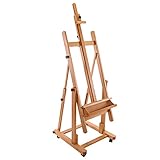
View U.S. Art Supply Heavy Duty Extra Large Adjustable Wood H-Frame Easel on Amazon

Best for tall canvases and displays
3. U.S. Art Supply 80 Inch Aluminum Tripod Easel
An aluminum tripod weighing about 2 kg that stands up to 80 inches tall and holds canvases from 21 to 63 inches high vertically. The listing says it converts to a horizontal position for floor or tabletop use, with a steel pivot head lock and non-skid feet.
Suits: tall canvases and displays. Strengths: a large height range. Weaknesses: a wide leg spread. Skip it if you want a storage drawer.

View U.S. Art Supply 80 in Aluminum Art Easel Stand on Amazon

Best for sketching on the go
4. CONDA French Easel With Aluminum Legs
A folding French-style easel with aluminum legs, a drawer for paints and brushes, a leather handle and a shoulder strap. The title says 70 inches, but the specs table gives 49.6 inches tall, and the material is listed as aluminum and pine while the description says beechwood. Check these details before ordering.
Suits: sketching on the go. Strengths: a drawer and a strap. Weaknesses: conflicting size and material details. Skip it if you need a confirmed height.

View CONDA 70 in French Easel with Aluminum Legs and Drawer on Amazon
Best for plein-air painting
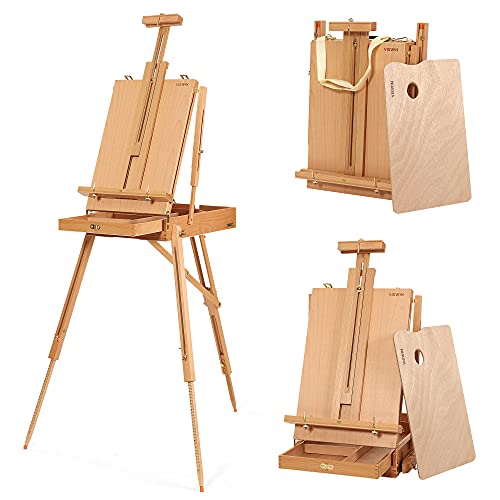
5. VISWIN French Easel
A beech wood sketchbox easel weighing 6.9 kg, with a wooden palette, a two-layer storage drawer, a built-in level, a shoulder strap and three telescopic legs that adjust from 57 to 72 inches. The listing says no assembly is required.
Suits: plein-air painting. Strengths: a palette and a drawer. Weaknesses: the heaviest portable one here. Skip it if you want a light tripod.
View VISWIN Adjustable Beech Wood French Easel with Palette and Storage on Amazon
Best for travel and display
6. T-Sign 17 to 66 Inch Metal Tripod Easel
An aluminum tripod of about 2.2 pounds that adjusts from 17 inches for tabletop use to 66 inches standing, folds to 17 inches and comes with a carrying bag. A spring-loaded top clamp holds the canvas and rubber feet grip the floor.
Suits: travel and display. Strengths: very light and compact. Weaknesses: no tray or drawer. Skip it if you want a wood look.
View T-Sign 17 to 66 Inch Heavy Duty Adjustable Metal Tripod Art Easel on Amazon
Care and Setup
- Set up on level ground and tighten every knob.
- Wipe wood with a dry or barely damp cloth.
- Keep paint off joints and locks.
- Match canvas size to the easel’s stated range.
Mistakes to Avoid
- Choosing an easel that is too small for your canvas.
- Ignoring the weight if you plan to travel.
- Leaving knobs loose.
- Trusting a title height without checking the specs.
Matching an Easel to Your Medium
The medium you work in shapes which easel makes sense. Oil and acrylic painters usually work upright, at or near eye level, and need a frame that holds a canvas firmly without wobble. Watercolor painters often prefer to tilt the board toward flat so washes do not run, which calls for an easel with a wide angle range. Pastel and charcoal artists may want a ledge or tray to catch dust and keep the work steady, while illustrators and drafters often prefer a tabletop board with a gentle slope.
Consider the weight of the work too. Heavy stretched canvases and wood panels put more load on the clamps and the lower support than thin paper on a board. Check the maker’s stated maximum canvas size, and leave margin, since a canvas near the limit can feel unstable.
- For oils and acrylics: look for a firm mast, a lower support that locks and an upper clamp that grips the stretcher bar.
- For watercolor: look for a tilt mechanism that locks flat or near flat.
- For pastels and charcoal: a tray or ledge helps keep dust off the floor.
- For sketching: a lightweight tripod or tabletop easel is often enough.
If you work in more than one medium, favor an easel with a wide range of angles and a solid base, and use accessories such as a tray or pad to adapt it.
Stability, Joints and Materials
An easel can look sturdy in a photo and still shake under a brush stroke. A few things to look for when judging stability are the number of legs, the spread of the base, the weight of the frame and the way the pieces lock.
Wooden easels, such as those in beech, tend to be heavier, which helps them resist movement, although they are harder to carry. Aluminum tripods are light, which makes them easier to transport but also easier to knock over, especially outdoors. A wide leg spread helps, and rubber feet grip smooth floors better than bare metal. Some tripods allow a weighted bag to be hung from the center to steady them in wind.
Joints and locks are where problems tend to start. Look for knobs that tighten firmly and do not strip, and for hinges that do not wobble when loaded. Metal-to-metal contact can loosen over time, so check the knobs regularly. Wooden easels can swell or shrink with humidity, which may make adjustments stiff or loose.
Before you buy, read the listing for the maximum canvas height, the maximum weight and any notes on use. If you plan to work on large pieces, test your canvas against the easel’s stated range. A little margin means the easel does not have to work at its limit.
Setting Up for Your Body
An easel should serve the artist, not the other way around. The right height and angle reduce strain on the neck, shoulders and back, and let you step back to see the work as a whole.
For upright painting, the center of the canvas is usually best near eye level, so you can reach the top and bottom edges without stretching. If you paint seated, a taller stool and a lower easel may be more comfortable. Standing artists should keep the canvas high enough that they do not have to hunch. Leave room behind you to step back several paces, since small details look different from a distance.
- Position the easel so the light comes from the side opposite your painting hand, to avoid casting a shadow on the work.
- Place a small table or tray at hand height for paint, brushes and water.
- Stand on a cushioned mat if you work for long periods on a hard floor.
- Take breaks to stretch and look away from the canvas.
If you have limited mobility, a tabletop easel on a sturdy desk, or a floor easel with a tilting board, can help you work comfortably. Look for models that adjust easily with one hand and lock securely.
Portability and Storage
How often you move the easel should weigh heavily in your choice. A studio easel that never leaves the room can be large and heavy, while an easel for plein-air work needs to fold small and be carried comfortably.
Look at the folded size and the weight. Tripods and French easels fold into compact shapes, and many come with a carrying bag or strap. Add the weight of your canvas, paints and stool to your estimate of what you will carry. If the easel includes a drawer or palette, that adds weight and bulk, but it can save you from carrying a separate box.
At home, think about where the easel will live. A folded tripod can slide behind a door or into a closet. An H-frame easel takes more space and may need a dedicated corner, but locking casters on some models make it easier to move aside. Tabletop easels stack flat on a shelf.
- Check that the folded easel fits your car, closet or storage space.
- Wipe off paint before folding, so it does not dry on joints and locks.
- Store wooden easels away from damp, and keep metal parts dry.
- Carry heavy easels with two hands, and take care with the legs when folding them.
Care Routines and Useful Accessories
A little maintenance keeps an easel steady for years. Wipe off paint splatter before it dries, using a damp cloth for water-based paints and an appropriate solvent for oils, applied carefully so it does not harm the finish. Dry any wet parts. For wooden easels, an occasional wipe with a dry cloth is usually enough, and some owners treat bare wood with a light oil or wax to help it resist moisture. For metal ones, check for rust at the joints.
Once a month or so, go around the easel and tighten every knob and bolt. Look for cracks in wood and bends in metal tubing, and stop using the easel if you find damage that could make it unsafe. Replace worn rubber feet to keep the easel from slipping.
Accessories can adapt a basic easel to your needs. A clip-on tray gives you a place to rest brushes or pastels, and a hanging weight bag adds stability. A canvas holder or extra clamp can help with small or unusual formats, and a cover or case protects the easel in transit. Some artists add a lamp that clips to the frame for evening work. Before buying any accessory, check that it fits the easel’s tubing or frame, and read the maker’s notes on load limits.
A Quick Checklist Before You Choose an Easel
An easel is a piece of working equipment, and the right one makes painting less tiring. Think through these points before settling on one of the six above.
- What is the largest canvas you expect to paint on, and how often?
- Will you paint at home, in a studio, outdoors or in a class?
- Do you prefer to stand, sit on a stool or work at a desk?
- How much floor space can you give up, and where will it be stored?
- Do you need to tilt the canvas flat for watercolor or ink?
- Will you carry the easel, or will it stay put?
- Do you need a shelf, drawer or tray for brushes and tubes?
It helps to write the largest canvas size at the top of the page, then compare it against the maximum canvas height given in each listing, with a little margin on both sides.
Easel Types Compared
| Type | Strength | Trade-off |
|---|---|---|
| Tabletop | Small footprint, easy to store | Limited canvas size, depends on table quality |
| Metal tripod | Light, adjustable, quick to fold | Can feel less steady with large canvases |
| French easel | Carries supplies and folds like a case | Heavier, more parts to learn |
| H-frame | Stable base for big work | Takes floor space, harder to move |
The types in the list above cover all four. If you are unsure, think about the size of your first few paintings and the room you have rather than the one you might have in future.
Posture and Lighting Notes
Comfort affects how long you can enjoy a session. The canvas center should sit near eye level, with your arm able to reach the whole surface without stretching. If you work seated, check that the easel base clears your stool or chair. Many painters like to step back to judge the work, so leave floor space behind you.
Lighting matters too. Place the easel so the light falls on the canvas without casting your own shadow across it. Side light from a window, or a neutral lamp, usually works better than a light directly behind you. If you paint with glossy media, watch for glare, and adjust the tilt of the easel slightly forward.
Set-Up and Assembly Tips
Read the instructions once before assembling, and lay out all the parts. Tighten knobs and wing nuts by hand to a firm hold, and check that all legs lock fully before putting weight on them. Place the easel on a level floor, since a sloping or soft surface changes how steady it feels.
Work with a medium-sized canvas first to get a feel for the balance. Then add larger work gradually. If anything shifts or creaks, stop and recheck the locks rather than hoping it holds. Keep the tray clear of heavy items, as most trays are designed for light tools and tubes.
Follow the Maker Limits on Weight and Height
Every easel has a size and load limit set by the maker. Exceeding it can cause the canvas to slip, the legs to splay or the whole piece to tip. Stay inside the stated figures and leave a margin for wet paint, frames and added supplies. For classes and shared studios, check with the organizer on any rules about equipment. When in doubt, ask the maker through the product page before ordering.
Mistakes to Avoid With a New Easel
A common slip is buying a tripod for a canvas that is too large for it. A tripod might hold the canvas, but a heavy piece pressed with a loaded brush may rock. Match the canvas weight to the maker limits and, when working large, choose a sturdier frame.
Another is forgetting the paint. Drips and spatters land on the floor, the base and the joints, so place a drop cloth underneath and wipe the frame when you finish. Dried paint in a joint can make it hard to fold or adjust. Also remember that a fully extended easel is taller than it looks in photos, so check the ceiling height before raising it.
Finally, many beginners tilt the canvas too far back, which makes it hard to see the whole picture and tires the shoulder. Set a slight forward lean for oils and acrylics, and a flatter angle only for fluid media.
Choosing Art easels in Practice: A Deeper Look
The shortlists and tables above give you the facts about each option. This section is about turning those facts into a decision that fits your studio corner, your routine and the people who will use art easels with you. None of it requires specialist knowledge; it mostly requires slowing down at the points where buyers most often rush, and checking the details that listings present in the order that suits the seller rather than the order that matters to you.
The size of work it must hold. Match the easel to the largest canvas or board you realistically paint, because an easel straining at its limit wobbles with every stroke while one sized with headroom feels invisible. Leave a little breathing room around the item once it is in place, because a fit that only just works on paper tends to feel cramped or awkward in daily use. Durability is hard to judge from a photograph, so pay attention to the parts that move, flex, carry weight or meet water, as those are the places wear shows first. It is worth rereading the weaknesses noted for each pick above with your own situation in mind, because a flaw that rules an item out for one home may not matter at all in another.
Stability under your technique. Palette-knife work, big brushes and leaning forearms all push an easel around, so weight and footprint matter more for energetic painters than for careful detail work. Households rarely agree on everything, so weigh the preference of the person who will live with the item every day more heavily than a visitor’s passing opinion. Read the full listing rather than the headline alone, because what is included, what is sold separately and what the maker only implies are often three different things. If two options look evenly matched, let the tie be broken by the detail you will notice most often in use, not by the one that photographs best.
Adjustment and working height. You will raise, lower and tilt the work constantly, so mechanisms that move smoothly with one hand save more frustration over a year than any decorative feature. Measure the space you actually have before you fall for any particular option, and write the numbers down so you can check them against each listing instead of guessing from memory later. Look for the version of the listing that matches the size, finish or configuration in the product name, since options on one page can differ more than the shared title suggests. Ranking your priorities before you compare listings keeps a minor feature from outweighing the thing you actually cared about when you started looking.
Floor space and storage. A studio easel that cannot fold or move will own its corner permanently, so measure the footprint against the room and decide whether the easel lives out or packs away. If several people will share it, a middle-ground choice that everyone finds acceptable usually outlasts a specialist choice that only one person loves. A choice you can clean, adjust or repair easily will usually serve you longer than a slightly prettier one that resists every attempt at maintenance. Every option in this guide trades something away, so decide in advance which compromise you mind least rather than discovering it after the box is open.
Material and build for the long term. Wood and metal frames age differently and flex differently, and since a good easel should outlast many paintings, judge the joints and fittings rather than the finish. Leave a little breathing room around the item once it is in place, because a fit that only just works on paper tends to feel cramped or awkward in daily use. Check what arrives in the box before you order, especially fixings, accessories and spare parts, so the first day of use does not start with a second, unplanned purchase. It is worth rereading the weaknesses noted for each pick above with your own situation in mind, because a flaw that rules an item out for one home may not matter at all in another.
How the Picks Compare in Everyday Use
Specifications only tell half the story. Below, each pick from the main list is revisited with one question in mind: what is it actually like to live with? Everything here is drawn from the descriptions and notes in the reviews above, reorganised so the contrasts between the art easels are easier to see before you commit.
MEEDEN Extra Large Tabletop Easel. A beech wood tabletop easel with a natural oil finish, side adjusters for the slant and five rubber foot pads. The listing gives 30 by 20 inches and says it folds to a thin profile; the weight is listed as 3 kg, or about 6.6 pounds. Suits: desk drawing and drafting. Strengths: a big board that folds thin. Weaknesses: it needs a tabletop. Skip it if you paint standing. Compared with the alternatives, it is the pick whose compromises are easiest to predict before it arrives. Consider how the item behaves on an ordinary, tired weekday rather than on its first day, since that is the version of it you will actually live with.
U.S. Art Supply Heavy Duty Extra Large Wood H-Frame Easel. A 35 pound beech wood floor easel with a built-in storage tray, locking casters and an angle that moves from vertical to flat. The listing gives 80 inches tall as the standard size, with a 139 inch maximum height, and says it suits large canvases. Suits: a studio and big canvases. Strengths: casters, a tray and a wide range. Weaknesses: heavy and large. Skip it if you need to carry it. Against the other options, it stands out less for novelty than for how directly it answers one specific need. If several people will share it, a middle-ground choice that everyone finds acceptable usually outlasts a specialist choice that only one person loves.
U.S. Art Supply 80 Inch Aluminum Tripod Easel. An aluminum tripod weighing about 2 kg that stands up to 80 inches tall and holds canvases from 21 to 63 inches high vertically. The listing says it converts to a horizontal position for floor or tabletop use, with a steel pivot head lock and non-skid feet. Suits: tall canvases and displays. Strengths: a large height range. Weaknesses: a wide leg spread. Skip it if you want a storage drawer. In the context of the full list, it rewards buyers who know exactly which job they are hiring it to do. Picture who will use it most often, not who might use it once, because a choice tuned to the daily user stays satisfying long after a novelty choice has worn thin.
CONDA French Easel With Aluminum Legs. A folding French-style easel with aluminum legs, a drawer for paints and brushes, a leather handle and a shoulder strap. The title says 70 inches, but the specs table gives 49.6 inches tall, and the material is listed as aluminum and pine while the description says beechwood. Check these details before ordering. Suits: sketching on the go. Strengths: a drawer and a strap. Weaknesses: conflicting size and material details. Skip it if you need a confirmed height. Read alongside its rivals, it is a reminder that the best fit is usually a match of priorities rather than a contest of features. Households rarely agree on everything, so weigh the preference of the person who will live with the item every day more heavily than a visitor’s passing opinion.
VISWIN French Easel. A beech wood sketchbox easel weighing 6.9 kg, with a wooden palette, a two-layer storage drawer, a built-in level, a shoulder strap and three telescopic legs that adjust from 57 to 72 inches. The listing says no assembly is required. Suits: plein-air painting. Strengths: a palette and a drawer. Weaknesses: the heaviest portable one here. Skip it if you want a light tripod. Weighed against the others, its appeal is clearest when that strength matches the job you have in mind most often. Consider how the item behaves on an ordinary, tired weekday rather than on its first day, since that is the version of it you will actually live with.
T-Sign 17 to 66 Inch Metal Tripod Easel. An aluminum tripod of about 2.2 pounds that adjusts from 17 inches for tabletop use to 66 inches standing, folds to 17 inches and comes with a carrying bag. A spring-loaded top clamp holds the canvas and rubber feet grip the floor. Suits: travel and display. Strengths: very light and compact. Weaknesses: no tray or drawer. Skip it if you want a wood look. Set beside the rest of the list, it makes most sense for buyers who value that particular balance over all-round ability. If several people will share it, a middle-ground choice that everyone finds acceptable usually outlasts a specialist choice that only one person loves.
Art easels in Real Life: Four Common Situations
A spare room that doubles as a studio
When the studio is also a guest room, an easel that folds or rolls away keeps the hobby welcome in the house instead of permanently at war with the furniture. If the situation happens rarely, it is usually better to adapt a good all-round pick than to buy a specialist that spends most of its life in storage. Think a season or two ahead as well, because the right choice tends to be the one that still makes sense when routines, weather or household members change.
Painting standing for long sessions
Standing painters need the work at a height that keeps shoulders relaxed, and an easel that adjusts finely prevents the slow stoop that ends sessions early. Notice what you reach for, move or work around in this setting, because those small workarounds point straight at the feature your next purchase should have. If several people will share it, a middle-ground choice that everyone finds acceptable usually outlasts a specialist choice that only one person loves.
Working from a seated position
Seated painters, including wheelchair users, need lower trays and clearance beneath, so check the easel’s lowest settings rather than assuming any easel adapts. Comfort and convenience in this situation come less from any single feature than from the item fitting the space and the routine without demanding attention. A choice you can clean, adjust or repair easily will usually serve you longer than a slightly prettier one that resists every attempt at maintenance.
Display as well as work
Some easels spend half their life displaying finished pieces, and a design that looks good holding a painting in the living room earns space a purely functional frame cannot. In practice this is where small differences between the picks stop being abstract, because the setting dictates which features earn their keep and which ones never get used. Households rarely agree on everything, so weigh the preference of the person who will live with the item every day more heavily than a visitor’s passing opinion.
Setting Up, Using and Looking After Your Art easel
Most art easels disappoint for preventable reasons: a rushed setup, a skipped instruction or a cleaning routine that never quite becomes a habit. The points below are deliberately general, because the maker’s instructions for your specific model always come first, but they cover the ground where everyday care makes the biggest difference.
Set it up on the level first
Check the easel stands square and every lock is engaged before a canvas goes on, because a painting session should never include catching your own work. Keep the tools and products you use for upkeep near the item itself, so the routine takes minutes and actually happens instead of being postponed. Leave a little breathing room around the item once it is in place, because a fit that only just works on paper tends to feel cramped or awkward in daily use.
Keep moving parts clean of paint
Dried paint in adjustment tracks and screws slowly freezes an easel’s best features, so wipe spills while they are wet and clear the tracks during cleanup. Little and often beats rare and heroic: a quick routine done regularly prevents the build-up that turns a simple job into an exhausting one. Keeping the packaging and instructions until you are sure the item suits you makes returns, adjustments and warranty questions far simpler if they arise.
Tighten joints as they settle
New easels settle in and older ones loosen, so a periodic pass over the bolts and wing nuts keeps the frame rigid and the adjustments trustworthy. Inspect the item while you clean it, because loose parts, early wear and small damage are far easier to deal with when you catch them at this stage. Measure the space you actually have before you fall for any particular option, and write the numbers down so you can check them against each listing instead of guessing from memory later.
Store canvases off the easel
Leaving a heavy canvas mounted for weeks strains trays and tilts, so store finished work separately and let the easel rest unloaded between projects. Let everything dry fully before it goes back into storage or against a wall, because trapped moisture causes more quiet damage than everyday use ever does. Durability is hard to judge from a photograph, so pay attention to the parts that move, flex, carry weight or meet water, as those are the places wear shows first.
More Mistakes Worth Avoiding
Buying a display easel for painting. Easels made to hold a finished picture prettily are rarely built for the pushing and adjusting of painting, and the difference appears within the first session. The frustrating part is that this mistake usually only becomes obvious after the return window feels very near, which is why it is worth pausing on before you order. It is worth rereading the weaknesses noted for each pick above with your own situation in mind, because a flaw that rules an item out for one home may not matter at all in another.
Forgetting the tray height. A tray set wrongly puts brushes, water and mediums at an awkward reach, so check where your working tools will actually sit, not just where the canvas sits. If you recognise your own plan in this mistake, it does not mean starting again; it usually means adjusting one decision before it hardens into a permanent annoyance. Every option in this guide trades something away, so decide in advance which compromise you mind least rather than discovering it after the box is open.
Ignoring the floor beneath. Easels on polished floors creep and on thick carpet tilt, so plan a mat or board under the feet if your studio floor is anything but flat and grippy. A quick test in the first few days of use will usually reveal whether you have fallen into this trap while changing your mind is still straightforward. Ranking your priorities before you compare listings keeps a minor feature from outweighing the thing you actually cared about when you started looking.
Choosing by looks for a working tool. An easel is furniture you wrestle daily, so mechanisms, stability and cleaning should outrank appearance unless the easel’s main job really is display. The frustrating part is that this mistake usually only becomes obvious after the return window feels very near, which is why it is worth pausing on before you order. If two options look evenly matched, let the tie be broken by the detail you will notice most often in use, not by the one that photographs best.
None of these points will choose a art easel for you on their own. Used together, though, they turn a long list of similar-looking options into a short decision you can defend: you know what you measured, what you prioritised, which compromises you accepted and how you will look after the result. That is usually the difference between a purchase that quietly satisfies for years and one that is replaced within months.
It is also worth deciding in advance what would make you return or replace the item, since setting that line while you are calm is far easier than improvising it later when you are already frustrated and inclined to keep something that does not suit you.
Finally, remember that the most suitable choice is rarely the one with the longest feature list; it is the one whose strengths line up with your most frequent use and whose weaknesses fall in places you will seldom notice.
One useful habit is to shortlist two options rather than one and live with the comparison for a day, because the differences that matter tend to surface once the first excitement of choosing fades and you start imagining ordinary use instead of the unboxing.
Think about what you are replacing, if anything, and what you liked and disliked about it, since your own history with a similar item is a more honest guide than any stranger’s enthusiasm, and it stops you paying twice for the same disappointment.
Consider the total footprint of the decision, including storage when the item is not in use, the accessories it needs and the space it takes from everything around it, because an item that earns its place only while in use still has to live somewhere the rest of the time.
If you are buying for a household rather than yourself alone, a short conversation about expectations before ordering prevents the common pattern where one person’s priority quietly becomes everyone else’s daily irritation.
Seasonal timing can matter more than shoppers expect: needs feel urgent in the week they arise, but a choice made to solve this month’s problem should still make sense when the season turns and the item is used differently or stored away.
When you compare listings side by side, keep a simple written note of the two or three points that separate your finalists, because after an hour of tabs and photographs every option blurs into the same average and the deciding details are the first thing forgotten.
It is also worth deciding in advance what would make you return or replace the item, since setting that line while you are calm is far easier than improvising it later when you are already frustrated and inclined to keep something that does not suit you.
Finally, remember that the most suitable choice is rarely the one with the longest feature list; it is the one whose strengths line up with your most frequent use and whose weaknesses fall in places you will seldom notice.
One useful habit is to shortlist two options rather than one and live with the comparison for a day, because the differences that matter tend to surface once the first excitement of choosing fades and you start imagining ordinary use instead of the unboxing.
Think about what you are replacing, if anything, and what you liked and disliked about it, since your own history with a similar item is a more honest guide than any stranger’s enthusiasm, and it stops you paying twice for the same disappointment.
Art Easel FAQ
Tripod or H-frame?
Tripods are light and fold small. H-frames are heavy and suit large studio work.
Can I use these on a table?
The MEEDEN is a tabletop model. The T-Sign and U.S. Art Supply tripod also list tabletop use.
What size easel do I need for a large canvas?
Check the easel's maximum canvas height and weight on the listing, and leave some margin. Large canvases are heavy and top-heavy, so a wide base such as an H-frame often suits them better than a light tripod.
Can I use an easel for watercolor?
Yes, if it can tilt close to flat so washes do not run. Check the listing for the angle range and whether the easel locks securely in that position.
Is a wood or aluminum easel better?
Neither is better for everyone. Wood is heavier and steadier in a studio, while aluminum is lighter and easier to carry. Choose based on how often you move it.
How do I stop my easel from wobbling?
Set it on a level, firm surface, spread the legs fully, tighten all knobs and avoid placing the canvas at the limit of the range. On a tripod, hanging a weight from the center can help.
Can a tabletop easel hold a large canvas?
Only up to the size in the listing. Tabletop easels suit small to medium work and drafting. For big canvases, a floor easel is safer.
How should I clean paint off an easel?
Wipe water-based paint with a damp cloth before it dries. For oils, use a suitable solvent sparingly and keep it away from finished surfaces. Always dry the easel afterward.
Do I need an easel with a drawer?
Only if you want to keep supplies with the easel, as in outdoor sketching. For studio work, a separate table or tray may be more convenient and lighter.
More Art easels Questions, Answered
What type of easel suits most adult beginners?
An adjustable A-frame or H-frame that handles the canvas sizes you plan covers most needs, and the right choice is the one whose adjustments you will actually use rather than admire. A choice you can clean, adjust or repair easily will usually serve you longer than a slightly prettier one that resists every attempt at maintenance.
Can one easel handle both canvas and board?
Most studio easels hold both if the tray and mast grip securely, but very thin boards may need a backing support, so test the grip with your usual materials. Households rarely agree on everything, so weigh the preference of the person who will live with the item every day more heavily than a visitor’s passing opinion.
How much space does a studio easel need?
Beyond its footprint, allow room to step back from the work, because judging a painting from a distance is part of painting and a cramped easel discourages it. Think a season or two ahead as well, because the right choice tends to be the one that still makes sense when routines, weather or household members change.
Are wooden easels better than metal ones?
Neither wins outright: wood brings weight and warmth, metal brings slim profiles and easy cleaning, and your floor space and painting style decide which suits you. If several people will share it, a middle-ground choice that everyone finds acceptable usually outlasts a specialist choice that only one person loves.
Should an easel tilt?
A slight forward tilt helps with glare and keeps pastel or charcoal dust falling away from the surface, while flat vertical suits most oil and acrylic work, so adjustable tilt covers both. A choice you can clean, adjust or repair easily will usually serve you longer than a slightly prettier one that resists every attempt at maintenance.
The Short Version
For a desk, the MEEDEN. For a studio, the U.S. Art Supply H-frame. For tall canvases, the 80 inch tripod. For a drawer and a strap, the CONDA. For a palette and a drawer, the VISWIN. For light and compact, the T-Sign.