With a septic tank, everything that goes down the drain stays in your system until it breaks down or gets pumped out. A disposal increases the solids load, so the goal is a unit that grinds finely and gets used sparingly. Many septic owners keep a compost bin nearby and reserve the disposal for small scraps. Ask your septic service how often the tank is pumped and whether it has any limits on ground food waste.
The six disposals below range from light-duty to one horsepower, and one includes an enzyme cartridge. We have not used these products ourselves, so confirm septic guidance, horsepower and included parts on the current listing before buying. Your septic company can tell you what your tank can handle.
As an Amazon Associate we earn from qualifying purchases. Links below are affiliate links, and they do not change the product information we give.
What to Look For
| Feature | Why it matters |
|---|---|
| Septic guidance | Check the maker’s stated position on septic use |
| Tank size | Smaller tanks fill with solids sooner |
| Grind quality | Finer grinding helps the tank break waste down |
| Enzymes | Cartridge systems add enzymes but need refills |
| Use pattern | Light use is easier on a tank than daily heavy use |
In this guide
Specs at a Glance
| Product | Type | Key trait | Note |
|---|---|---|---|
| InSinkErator Evolution Septic Assist | 3/4 HP, continuous feed | Enzyme cartridge | Cartridge is a refill |
| InSinkErator Evolution Essential XTR | 3/4 HP, continuous feed | Sound insulated | Mid-range Evolution |
| InSinkErator Evolution Excel | 1 HP, continuous feed | Highest power here | Larger body |
| InSinkErator Badger 1 | 1/3 HP, continuous feed | Entry-level, light unit | Basic grinding power |
| Waste King L-2600 | 1/2 HP, continuous feed | Light duty | Confirm cord included |
| Moen Prep Series GX50C | 1/2 HP, continuous feed | Entry-tier Moen | Light-duty power |
The 6 Best Garbage Disposals for Septic Tanks
Top pickBest for septic tank owners who want a built-in feature
1. InSinkErator Evolution Septic Assist
A 3/4 horsepower InSinkErator that adds a cartridge system meant to introduce enzymes for septic setups, per the maker. The cartridge is a consumable you replace over time.
Suits: septic tank owners who want a built-in feature. Strengths: an enzyme cartridge from the maker. Weaknesses: the cartridge is a recurring refill. Skip it if you want no ongoing parts.
View InSinkErator Evolution Septic Assist on Amazon
Best for everyday cooking with fine grinding
2. InSinkErator Evolution Essential XTR
A 3/4 horsepower unit from the Evolution line, described by the maker as quieter than basic models and built with a multi-stage grinding approach and continuous feed.
Suits: everyday cooking with fine grinding. Strengths: quiet running and three-quarter horsepower. Weaknesses: no enzyme system. Skip it if you want a septic-labeled model.
View InSinkErator Evolution Essential XTR on Amazon
Best for heavier use with finer grinding
3. InSinkErator Evolution Excel
A 1 horsepower InSinkErator from the Evolution line, positioned as a high-power, quiet-running model with continuous feed for heavy daily use.
Suits: heavier use with finer grinding. Strengths: one horsepower of motor. Weaknesses: a larger body and more waste load. Skip it if your tank is small.
View InSinkErator Evolution Excel on Amazon

Best for very light use
4. InSinkErator Badger 1
A long-running entry-level InSinkErator, generally listed at 1/3 horsepower with continuous feed. It is a small, light unit aimed at everyday scraps and simple swap-in replacements.
Suits: very light use. Strengths: a small, simple design. Weaknesses: basic grinding power. Skip it if you plan to use it daily.

Best for an occasional-scrap setup
5. Waste King L-2600
A 1/2 horsepower continuous feed unit from Waste King, a light-duty option that is often sold with a power cord for plug-in installation. Check the listing to confirm.
Suits: an occasional-scrap setup. Strengths: a light-duty motor. Weaknesses: limited grinding fineness. Skip it if you cook large meals often.

Best for a basic replacement
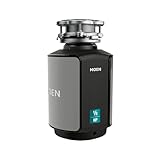
6. Moen Prep Series GX50C
A 1/2 horsepower continuous feed unit from Moen, whose Prep Series is its entry tier. It comes from a faucet maker many owners already know.
Suits: a basic replacement. Strengths: a recognized faucet-brand name. Weaknesses: light-duty power only. Skip it if you want finer grinding.
Care and Setup
- Keep the disposal for small scraps and compost the rest.
- Pump the tank on the schedule your septic service recommends.
- Follow the cartridge replacement guidance if your model uses one.
- Keep grease, oil and starchy food out of the drain.
- Keep a simple log of pumping dates so you can spot changes in how fast the tank fills.
Mistakes to Avoid
- Treating the disposal as a replacement for the trash can.
- Skipping the septic service’s advice.
- Flushing coffee grounds, rice or pasta down the drain.
- Choosing a bigger motor without considering the extra solids it creates.
What a Disposal Actually Adds to a Septic Tank
A septic tank works by letting solids settle and fats float, while bacteria break down waste and the liquid in the middle flows on to the drain field. Food scraps ground by a disposal are organic, but they add to the layer of solids at the bottom and the scum layer at the top. Over time that means the tank fills faster and needs pumping more often than it would without a disposal.
The effect depends on tank size, household size and how heavily you use the unit. A large tank with a small household can absorb light use. A small or older tank with several people may struggle, and fats and fine solids that reach the drain field can clog the soil and cause expensive failures. That is why many septic services suggest limiting disposal use to small scraps and composting the rest.
Before you buy, find out the size and age of your tank, when it was last pumped and whether your local rules or your septic contractor have a position on disposals. A short call to a septic professional is often the most useful step, because they know your system and local soil conditions.
Enzyme Cartridges and What They Do
Some disposals sold for septic use include an injection system that releases bio-active additives or enzymes into the water as the disposal runs. The idea is to add helpful microbes to support the breakdown of waste in the tank. These systems use cartridges that need replacing, so they add an ongoing cost and a task to remember.
It is wise to be realistic about what a cartridge can do. It does not turn a disposal into a free pass, and it does not remove the need for regular pumping or sensible use. Think of it as a supplement to good habits, not a substitute. Whether it is worth it for you depends on how often you use the disposal and how your septic contractor feels about additives.
- Check how the cartridge is replaced and how often, and whether refills are readily sold.
- Confirm the cartridge is compatible with the exact model you buy.
- Ask your septic service whether additives suit your system.
If you prefer a simpler approach, a standard unit used sparingly can be paired with other habits that protect the tank.
Grind Stages, Motor Power and Septic Use
People often assume more horsepower is always better. For septic use the picture is more mixed. A stronger motor with good grinding hardware reduces food to finer particles that settle and break down more readily, and it is less likely to jam. But a powerful unit also makes it effortless to send more waste down the drain than the tank can comfortably handle.
A smaller motor suits light use such as scraps from a small household, and it encourages you to put less through the disposal. A mid-range unit offers a balance for typical families. Look at the number of grinding stages and the quality of the grind chamber described on the listing, since finer particles help.
Also think about feed type. Continuous feed units run while you push scraps in with water running, while batch feed units grind only when the stopper is in place, which some owners prefer for safety. Noise insulation does not change the tank load, but it improves daily comfort. Check the listing for mounting compatibility with your sink, since the flange and drain connections vary.
What Should Never Go Down the Drain
With a septic system, what you avoid matters as much as the unit you choose. Fats, oils and grease should stay out of the drain, because they cool and form a layer that can clog the tank outlet and drain field. Starchy foods such as rice, pasta and potato peels swell and form thick paste. Coffee grounds are fine particles that do not break down quickly and add to sludge. Fibrous scraps such as celery, corn husks and onion skins can tangle.
Also avoid bones, fruit pits, eggshells in quantity and anything non-food. Harsh chemical drain cleaners and heavy use of bleach and antibacterial products can disturb the bacteria your tank relies on, so use them sparingly and follow your septic service’s advice.
A simple routine works well. Scrape plates into the trash or a compost bin first, then use the disposal only for small soft scraps with plenty of cold water running. Run the water for some seconds after grinding so particles clear the pipes.
Pumping Schedule and Warning Signs
A disposal usually means pumping the tank more often. How often depends on tank size, household size and use, so follow the schedule your septic professional recommends instead of a general rule. Keep a log of the dates and what the technician found, such as the sludge and scum levels. That record shows how fast your tank fills and helps you adjust.
Watch for signs of trouble. Slow drains throughout the house, gurgling sounds, unpleasant odors near the tank or drain field, wet or unusually green patches in the yard and sewage backing up into fixtures all call for a prompt call to a professional. Do not wait for a total failure.
If you notice that the tank fills faster than expected after adding a disposal, you can cut back use, shift more scraps to compost or remove the unit. Replacing the disposal is a separate question, and signs include a motor that hums but will not turn, frequent jams, leaks under the sink or rust and corrosion on the housing.
Questions to Settle Before You Shop
With a septic system, the best disposal decision often begins away from the sink. A few quick checks tell you whether adding a disposal makes sense at all, and which kind of unit to look for if it does.
- Do you know the size of your tank and the date it was last pumped?
- Does your local health or building authority place any rules on disposals for homes with septic systems?
- Has your septic service company said anything about food waste in your system?
- How many people live in the household, and how much food waste do you realistically produce?
- Do you already compost, and could you keep most scraps out of the drain?
- Is there enough space under the sink for the unit, the plumbing and an electrical connection?
Write down the answers, then call your septic service company with the list. They know your tank, your soil and your local rules, and their guidance should outweigh any general article. Some homeowners are told a disposal is fine for occasional use, while others are advised against one. Neither answer is wrong, because each system is different.
Choosing Between the Models in This Guide
The six disposals covered above fall into a few broad groups, and understanding the groups makes the comparison simpler. The table below uses general descriptions, so confirm the details on the maker’s page for each unit.
| Model | Where it fits | What to check |
|---|---|---|
| InSinkErator Evolution Septic Assist | Households that want a unit designed with septic homes in mind | How the added cartridge system works and how it is replaced |
| InSinkErator Evolution Essential XTR | Those who want a quiet, stronger motor | Whether your tank can handle the added solids |
| InSinkErator Evolution Excel | Households that prefer a step up in grinding performance | Space under the sink |
| InSinkErator Badger 1 | Lighter use, smaller households | Whether it suits your daily scrap volume |
| Waste King L-2600 | A straightforward unit for general use | Mounting style and warranty terms |
| Moen Prep Series GX50C | Buyers who want a familiar plumbing brand | Fit with your existing drain assembly |
Whichever you choose, the habit matters more than the model. A tank that receives a modest amount of finely ground scraps behaves very differently from one that receives large daily loads.
Common Mistakes Septic Homeowners Make With Disposals
Several errors repeat across households, and they usually come from assumptions rather than carelessness.
Treating the disposal as a second trash can
Because the unit makes scraps disappear, it is easy to push far more food through it than planned. In a septic home, restraint is the whole point. Use the trash, compost or a food-waste collection bin for bulky leftovers and keep the disposal for small remnants.
Assuming a special label solves everything
A unit marketed for septic use may reduce the burden, but it does not make the tank limitless. Follow the maker’s instructions and your septic professional’s advice.
Skipping pumping reminders
Adding a disposal may change how often your tank needs attention. Put the pumping date on a calendar and ask your service company whether the interval should change.
Using harsh cleaners
Strong chemical products can affect the balance of a septic system. Check the disposal manual and your septic service company before pouring anything unusual down the drain.
Ignoring warning signs
Slow drains, gurgling pipes or odors near the tank deserve a prompt call to a licensed professional. Do not wait for the problem to grow.
When to Read the Manual and When to Call a Licensed Pro
Installation involves plumbing, electrical wiring and sometimes a dishwasher connection. If you are comfortable with these tasks, follow the maker’s instructions line by line, including the steps for the power cord or hardwire connection and the dishwasher knockout plug. Skipping a step can lead to leaks or a unit that does not run.
Call a licensed plumber or electrician when you are unsure, when local code requires permits, or when your sink has unusual plumbing. A professional can also confirm that the drain size and venting suit the new unit. Electrical work in particular should follow local code and the maker’s guidance.
For anything involving the tank itself, such as inspection, pumping or repairs, call a licensed septic service. Do not open or enter a tank yourself, and follow official guidance in your area.
Everyday Habits That Keep Things Simple
Small routines make a disposal and a septic tank easier to live with. Scrape plates into the trash or compost before rinsing. Feed the disposal slowly and in small amounts, with cold water running during use and for a short while afterward, as the maker directs. Keep fats and oils out of the drain entirely.
Create a household rule that everyone understands, such as only soft scraps go in the disposal. A note taped inside the cabinet door can help guests and children remember it.
Finally, keep a simple record of pump dates, inspections and any changes to your plumbing. This log helps your septic professional spot patterns and gives you a clear history when you eventually sell the home.
A Short Glossary for Septic Disposal Shoppers
- Grind chamber: the area where food scraps are broken down before they leave through the drain.
- Continuous feed: a unit that runs while you push scraps in, controlled by a wall switch.
- Batch feed: a unit that runs only when a stopper is in place, which some households prefer.
- Cartridge: a replaceable insert some units use to add helpful additives to the water stream.
- Leach field: the area where treated water from the tank is spread into the soil.
Understanding these words makes the maker’s literature easier to follow, and it helps you ask precise questions when you phone your septic service company.
Choosing With Confidence: The Criteria That Actually Decide It
Choosing a garbage disposal is mostly about matching the machine to your plumbing, your cooking and your cabinet — in that order. Start under the sink: measure the space, note the position of the drain and the dishwasher connection if you have one, and check whether there is an electrical outlet in the cabinet or whether the unit will need to be hardwired. A disposal that does not fit the cabinet geometry, or that leaves no room for the trap and the cleaning bottles that also live there, is the wrong disposal no matter how well it grinds.
Motor power and grind stages decide how the machine copes with your real waste. Light-duty cooking — vegetable peelings, plate scrapings, the occasional lemon half — is handled comfortably by the smaller motors. Households that cook from scratch daily, deal with fibrous vegetables, or regularly clear several plates at once will feel the difference in a stronger motor and a finer, multi-stage grind, which reduces the load on your pipes as well as the noise of struggle. Buy for your heaviest normal week, not for the single toughest item you can imagine, because no domestic disposal is built for bones by the bucketful or a pan of grease.
Feed type is a genuine fork in the road. Continuous-feed models run while you feed them, controlled by a switch, and suit households that clear up in volume. Batch-feed models only run with their stopper in place and a twist to start, which some households prefer for safety around children and for the discipline it imposes on feeding speed. Neither is better in the abstract; the right choice follows who uses the kitchen and how your household actually clears plates after a meal.
Noise, materials and warranty finish the decision. Grind components in stainless steel resist corrosion far better than plainer metals, and sound insulation varies enormously between a basic unit that announces itself through the floor and a well-insulated model you can talk over. Since a disposal is plumbed in and slightly awkward to swap, the warranty length is a useful proxy for how long the maker expects it to live — and a longer warranty on the specific model you are comparing is real information, not marketing noise.
Real Homes, Real Routines
Everyday family clearing-up
The disposal’s busiest moment is the ten minutes after a family meal: plates scraped, pans soaked, small spills of everything. A machine that starts instantly, takes a steady stream of mixed scraps with cold water running, and clears without drama is what this pattern needs. Power in reserve matters here less for any single item than for the total volume moving through in a short window without the sink backing up.
keen cooks and from-scratch kitchens
Cooking from scratch generates the fibrous, stringy, starchy waste that tests a disposal: celery strings, onion skins, herb stems, potato peelings in quantity. The lessons are technique as much as hardware — feed fibrous waste gradually, mixed with sturdier scraps, keep cold water running throughout and for a short while after, and let the machine finish each mouthful before the next. A finer grind stage helps, but feeding discipline is what separates a happy disposal from a jammed one.
Light-use and second kitchens
In a utility room, a granny flat, a holiday home or a garage sink, the disposal may run twice a week and sit idle between visits. For these, simplicity and corrosion resistance outrank raw power: a straightforward unit, flushed with cold water at each use and run briefly on every visit so seals stay wet and moving parts stay free, will outlast a powerful machine neglected in the same spot. Idle disposals fail from stillness, not work.
Use, Cleaning and Day-to-Day Care
Daily care is three habits. Always run cold water — before, during and for a short run after grinding — because cold water keeps fats solid so they are chopped and flushed rather than melted onto pipe walls further down. Feed in small amounts and let the machine clear between handfuls. And run the disposal regularly even in quiet weeks; a machine that sits unused for months can seize, and its seals dry out, so a brief weekly run with water is genuine maintenance, not superstition.
Cleaning is simple and needs no special products. A tray of ice cubes ground with cold water scours the grind chamber walls; citrus peel run through occasionally leaves the sink smelling like a kitchen rather than a bin. For a deeper freshen, a small amount of bicarbonate followed by a gentle vinegar rinse is the traditional routine — let it foam, flush well with cold water, and never mix chemical drain cleaners with a disposal, which can splash dangerously and damage seals and components. Never pour bleach or caustic cleaners into the unit.
Know the two classic faults and their safe fixes. A humming unit that does not spin has usually jammed on something hard: switch off at the wall, check for an overload reset button on the unit’s underside, and free the plate only with the maker’s tool or an appropriate hex key in the underside socket, turning it back and forth — never with your fingers inside the chamber, ever, even with the power off. A leak needs locating before tightening: leaks at the top flange, the dishwasher inlet and the discharge elbow each have different causes, and a drip ignored becomes a cabinet floor ruined quietly over months.
Where Buyers Commonly Go Wrong
The most expensive mistake is treating the disposal as a bin. Grease poured in warm sets in the pipes beyond the unit; rice, pasta and coffee grounds swell or settle into a sludge that traps other waste; stringy fibres wrap the works. The disposal is for the residue that clings to plates and boards after the bin has taken the bulk — scrape to the bin first, then let the machine handle what is left, and both the unit and your drains will live longer.
Installation mistakes cause the other half of regrets: a flange sealed carelessly that leaks from day one, a dishwasher knock-out plug left in so the dishwasher floods the counter, a discharge pipe aligned so the unit vibrates against the cabinet. If you are fitting it yourself, work slowly through the maker’s sequence, test with water and a torch before the first grind, and check again a week later. If any part of the job involves altering wiring or pipework you are unsure of, that is the moment for a plumber or electrician, not for optimism.
Running a Disposal Well: A Step-by-Step Routine
Step 1: Start with cold water
Turn on a strong stream of cold water before the disposal starts, every time, without exception. Cold water is the system’s transport and its protection: it carries ground waste through the trap and keeps any fat in the waste firm enough to be chopped and flushed rather than melted onto your pipes. Making this the first move of a fixed sequence is how it becomes automatic for everyone in the household.
Step 2: Switch on, then feed slowly
Start the motor before food goes in, and feed in small handfuls, letting each clear before the next. A disposal fed gradually grinds finer, runs quieter and never faces the solid plug of waste that causes jams and sink back-ups. Think of it as feeding a machine at the speed it eats, not emptying a plate at the speed you tip it — the difference is a few seconds and a great deal of plumbing.
Step 3: Keep the bulk for the bin
Before the plate reaches the sink, the bin should already have taken the bones, the bulk peelings, the cooking fat and anything stringy in quantity. The disposal’s job is the residue — what clings, what is left, what would otherwise be rinsed down an unprotected drain. Households that scrape first use their disposals for a decade without a jam; households that treat the unit as a bin meet their plumber on a first-name basis.
Step 4: Flush after the grind
When the chamber sounds clear, keep the motor and the cold water running briefly, then water alone for a few more seconds, so ground particles are carried well past the trap into the main run. Switching everything off the moment the noise stops leaves a slurry sitting in the trap to ferment quietly. The flush is the step everyone skips and the one that decides whether the sink smells like a kitchen or a drain.
Step 5: Freshen weekly, inspect monthly
Once a week, grind a tray of ice with cold water and follow it with citrus peel if you have it; the ice scours the chamber and the citrus leaves the sink honest. Once a month, scrub the splash guard top and underside, and shine a torch under the unit to check for the first beading of a leak. Caught at a drip, a leak is a washer; caught at a warped cabinet floor, it is a renovation.
How the Picks on This List Compare
Six products made this list of garbage disposals for septic tanks, and they are not six versions of the same idea. The reviews above judge each one on its own terms; this section is about the shape of the list as a whole, so you can see where your own priorities land before you commit. Read it alongside the individual reviews and the specs table near the top of the page, which together contain every fact you need — this comparison adds no new claims about the products, it simply arranges the decision.
The list opens with InSinkErator Evolution Septic Assist and InSinkErator Evolution Essential XTR. These are the two the editors put first, and for most readers the honest shortlist starts here: read their two reviews back to back and note which one’s strengths match the job you described in the buying criteria above. If either fits your space, your habits and your constraints, you can stop early with confidence — the rest of the list exists for readers whose situation is more specific.
The remaining picks — InSinkErator Evolution Excel, InSinkErator Badger 1, Waste King L-2600, Moen Prep Series GX50C — earn their places by serving narrower briefs: a tighter space, a heavier workload, a particular installation, a preference for one design approach over another. That is not a polite way of saying they are worse. For the reader whose kitchen matches one of those briefs, the fourth or sixth pick may be the only correct answer on the page, while the top pick would be a daily frustration. Matching the brief matters more than matching the ranking.
A practical way to finish the decision: take the two or three criteria that the earlier sections identified as decisive for garbage disposals for septic tanks — the measurements, the capacity question, the one feature your household will use daily — and score only your shortlist against only those. Buyers who compare everything against everything end up with a spreadsheet and no decision; buyers who compare their shortlist against their own two or three decisive criteria end up with the right product and a quiet kitchen.
What Using It Day to Day Is Really Like
Living with a septic tank means the disposal is a guest in a biological system, and it should behave like one. Ground waste adds to the tank’s solid load, so the households that succeed with this pairing treat the disposal as a finishing tool for plate residue rather than a route for whole meals, and they keep grease out entirely — fat is as unkind to a tank’s balance as it is to pipes. A model designed with septic use in mind, a sensible pumping interval confirmed with your service provider, and a ban on harsh chemicals down the sink keep the partnership healthy. If your tank is small or old, weigh the compost-and-bin routine honestly; the cheapest disposal problem is the one never created.
Whatever the brochures promise, ownership of the right choice for garbage disposals for septic tanks settles into a routine within a month: the features you use daily become invisible, the one compromise you accepted becomes the thing you plan around, and the details that decided the purchase — a measurement, a control you liked, a layout that fit your habits — quietly prove themselves several times a day. That is why this guide weights fit and habits so heavily over headline specifications. A product that matches your routine disappears into your life in the best way; a product that fights it will be renegotiated at every use, and no specification on a box makes up for that.
A Final Checklist Before You Buy
Before you order, run through this short list. It takes five minutes and prevents most of the regrets readers write in about garbage disposals for septic tanks.
- Measure the space — and the route to it — one final time, and compare the numbers against the specific model, not the category average.
- Write down the two or three jobs your choice for garbage disposals for septic tanks must do weekly, and confirm the model you picked is the one whose review answers those jobs.
- Check what the installation needs — power, plumbing, ventilation, clearances — and decide honestly which parts are DIY and which are a professional’s.
- Confirm what is included and what is not, so any fitting, cord, connector or accessory the job needs is ordered with the product, not discovered without it.
- Read the warranty terms for the specific model and keep the paperwork somewhere findable; a decade-long appliance deserves a filed receipt.
- Plan the first week: where it goes, what it replaces, and the one habit — cleaning, checking, rotating — that will keep it at its best.
Garbage Disposals for Septic Tanks FAQ
Can a septic tank handle a disposal?
Often yes with light use and regular pumping, but a small or older tank may struggle. Ask your septic service.
Does more horsepower help a tank?
It grinds finer, which can help. It also makes it easy to send more waste into the tank.
What if I have a leach field?
Fats and solids can clog a field, so keep use light and follow your service’s advice.
Is composting better?
Composting keeps solids out of the tank, so many septic owners prefer it for most scraps.
Should I ask my septic service before installing a disposal?
Yes. They know your tank size, age and soil conditions, and can tell you whether a disposal is a good idea and how often to pump. Some local rules or system designs restrict disposals.
How often will the tank need pumping with a disposal?
It depends on the tank, the household and how heavily you use the unit, so follow your septic professional's advice. Expect to pump more often than you would without one.
Do I need to run cold or hot water?
Cold water is generally recommended while grinding because it keeps fats solid so they can be flushed away. Check your manual for the maker's guidance.
Can I use bleach or drain cleaner to clean the disposal?
Heavy use of strong chemicals can harm the bacteria in the tank. For cleaning, many owners use ice, citrus peel or a mild approach recommended in the manual.
Is a batch feed disposal better for septic tanks?
It does not change the tank load, but some people like that it only runs with the stopper in place. The key factors are how much you put through it and your tank's capacity.
Are compost bins a good alternative?
Many septic owners use them for most scraps, which keeps solids out of the tank. Follow local guidance on what can be composted.
What should I do if the disposal stops mid-grind?
Turn the switch off and let the motor stop completely. Check whether the overload protector has tripped — many units have a small reset button underneath — and press it once the unit has cooled. If the plate is jammed, free it with the maker’s wrench or hex key from underneath, remove the obstruction with tongs, then restore power and test with cold water running. If it trips repeatedly, the cause is mechanical or electrical and deserves a professional look.
Can I run hot water while grinding?
Use cold water for grinding, always. Cold water keeps any fats in the waste firm so the machine chops them into particles small enough to flush away. Hot water melts fat into a liquid that coats the inside of your pipes further along, where it cools, sets and gradually narrows the pipe — the classic slow blockage that appears months later and gets blamed on everything except the habit that caused it.
How long should I run the water afterwards?
Keep cold water running for a short while after the grinding sound clears — long enough to carry the ground particles past the trap and into the main drain run. Turning everything off the instant the chamber empties leaves ground waste sitting in the trap, where it decomposes and smells. A brief flush is cheap insurance against both odours and build-up.
Are disposals safe around children?
They are as safe as the household’s habits. The chamber has no exposed blades — food is ground by centrifugal force against a serrated ring — but fingers should never enter it, and children should be taught that the disposal is an adult tool like the oven. Batch-feed models, which only run with the stopper locked in, give some families extra peace of mind, and switching at the wall adds another layer.
Why does my sink gurgle or drain slowly after installing a disposal?
Slow drainage after an installation usually points to alignment: the discharge run should fall steadily away from the unit without dips where ground waste can settle, and the trap should be correctly seated. Gurgling can also mean the venting of the drain run is being asked to cope with a new appliance. Check the simple alignment issues first; persistent problems are a plumber’s ten-minute diagnosis and worth paying for before they become a blockage.
Can a disposal handle ice and citrus?
Yes — both are traditional maintenance foods. Ice cubes scour the grind chamber as they shatter, and citrus peel freshens the unit as it is ground. Neither substitutes for the cold-water habit, and neither should be fed in huge quantities at once. Bones and very hard items are a different matter: follow the maker’s guidance for your model rather than testing its limits for entertainment.
What does a disposal need electrically?
It needs a suitable supply in or near the cabinet — either an outlet for a corded model or a hardwired connection made by someone competent — and a switch arrangement that suits your kitchen, whether a wall switch, an air switch in the worktop, or a batch-feed stopper that does the job. If your cabinet has no power at all, that installation step, not the unit choice, is what to arrange first.
How do I keep the splash guard from smelling?
The rubber splash guard at the sink opening is the most neglected part of the whole system: its underside collects a film of ground food that never gets rinsed. Lift the flaps and scrub them with a brush and soapy water as part of your weekly clean, top and bottom. Most ‘disposal smells’ that survive ice and citrus live exactly there, inches from your nose.
Can I grind eggshells and coffee grounds?
Occasional eggshells pass through without drama, but the folk belief that they sharpen anything is a myth — the grind plate has no blades to sharpen. Coffee grounds are better kept out as a habit: they do not harm the unit itself, but they settle in traps and low spots in pipework and contribute to the sludge that causes slow drains. The bin and the compost are the right homes for both in quantity.
Why does the disposal smell like a drain some days?
Because, in part, it is one: the chamber and trap hold a film of past meals. The routine that fixes it is mechanical, not chemical — ice ground with cold water, the splash guard scrubbed top and underside, and a proper flush after every use so waste does not sit in the trap. Smells that survive that routine usually live further down the pipe run and deserve a plumber’s camera rather than another bottle of anything.
Is it normal for the unit to vibrate?
A hum of working vibration is normal; shaking that rattles the sink or walks objects across the counter is not. Excess vibration usually means an unbalanced load — something hard being thrown around the chamber — a loose mounting, or a worn unit nearing its end. Stop, clear the chamber safely, check the mounting is snug, and if the shaking persists on ordinary waste, have it looked at before it loosens its own seals.
What happens if a utensil falls in?
Switch off immediately and retrieve it with tongs or pliers — never fingers, even with the power off, because a loaded plate can shift. Inspect the utensil and, if it was ground against, check the unit runs freely by turning the plate from beneath with the maker’s tool before restoring power. Most utensil incidents end with a bent fork and no damage, provided the machine was stopped fast.
How do I prepare the disposal for a holiday?
Run it clean before you leave: a good grind of ice, a long cold-water flush, and the splash guard scrubbed, so nothing is left to ripen in the trap while the house is empty. Leave the cabinet dry and the unit switched off at the wall if that is your household’s practice for appliances. On return, run cold water and the unit briefly before the first real load, to rewet seals and confirm all is well.
The Short Version
For a built-in feature, the Evolution Septic Assist. For quiet fine grinding, the Evolution Essential XTR. For heavier use, the Evolution Excel. For very light use, the Badger 1 or Waste King L-2600. For a Moen basic, the Prep Series GX50C.