Wine glasses, tumblers and jars need a gentler wash than pots and pans. Some countertop dishwashers include a glass program that uses lower heat and a softer cycle, and the best countertop dishwashers with glassware cycles protect delicate pieces without leaving spots.
The six models below come from well-known and value brands. We have not used these products ourselves, and cycle lists vary by model and version, so please confirm the glass program by name on the current listing before you buy.
As an Amazon Associate we earn from qualifying purchases. Links below are affiliate links, and they do not change the product information we give.
What to Look For
| Feature | Why it matters |
|---|---|
| Glass program | Look for a named glass or delicate setting in the cycle list, and check the product images for the control panel |
| Rack space | Tall stemware may not fit in a compact cabinet, so check the interior height, and measure your tallest glass |
| Rinse aid | A rinse aid helps glass dry clear and spot-free, if the maker recommends it |
| Heat | Lower heat settings are kinder to delicate glass, which also reduces the risk of thermal shock |
In this guide
Specs at a Glance
| Dishwasher | Type | Size class | Notes |
|---|---|---|---|
| Danby DDW621WDB Countertop Dishwasher | Countertop | Compact | Faucet hookup |
| Avanti Countertop Dishwasher | Countertop | Compact | Faucet hookup |
| Magic Chef MCSCD6W5 Countertop Dishwasher | Countertop | Compact | Faucet hookup |
| SPT SD-2224DW Countertop Dishwasher | Countertop | Compact | Faucet hookup |
| Comfee Portable Countertop Dishwasher | Countertop | Compact | Portable |
| hOmeLabs Countertop Dishwasher | Countertop | Compact | Portable |
The 6 Best Countertop Dishwashers with Glassware Cycles
Top pickBest for small households
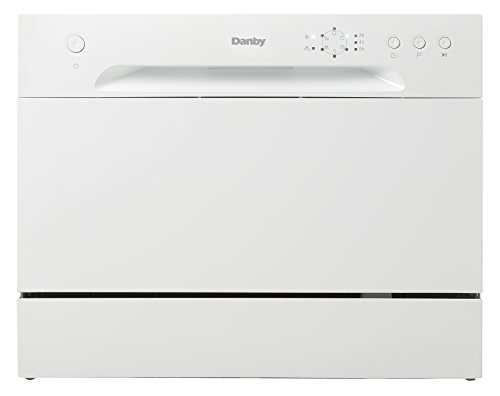
1. Danby Countertop Dishwasher (DDW621WDB)
A countertop dishwasher from Danby, a long-running appliance brand. Check the program list for a glass setting and confirm the interior height for stemware. The Danby is a common name in compact appliances, so check the exact version on the listing.
Suits: small households. Strengths: a recognizable maker. Weaknesses: stemware may not fit. Skip it if you wash tall glasses.
Best for small spaces
2. Avanti Countertop Dishwasher
A countertop dishwasher from Avanti, which sells many compact appliances. The listing shows the cycles, so look for a glass program by name. Do not assume the cycle list matches that of other models from the same maker.
Suits: small spaces. Strengths: a compact build. Weaknesses: cycle lists vary. Skip it if you need tall stemware space.
View Avanti Countertop Dishwasher on Amazon
Best for small households
3. Magic Chef Countertop Dishwasher (MCSCD6W5)
A countertop dishwasher from Magic Chef, a well-known appliance brand. Check the listing for a glass or delicate cycle. Confirm the exact model, as similar names can differ in cycles.
Suits: small households. Strengths: a familiar brand. Weaknesses: program lists vary. Skip it if you require a named glass cycle.
View Magic Chef MCSCD6W5 Countertop Dishwasher on Amazon

Best for everyday small loads
4. SPT SD-2224DW Countertop Dishwasher
A countertop dishwasher from SPT. Read the program list to see whether it includes a glass setting, and check the rack for stemware. Look at the photos of the control panel to see the cycle names.
Suits: everyday small loads. Strengths: a compact build. Weaknesses: the listing has limited detail. Skip it if you need a very specific cycle.

Best for simple use
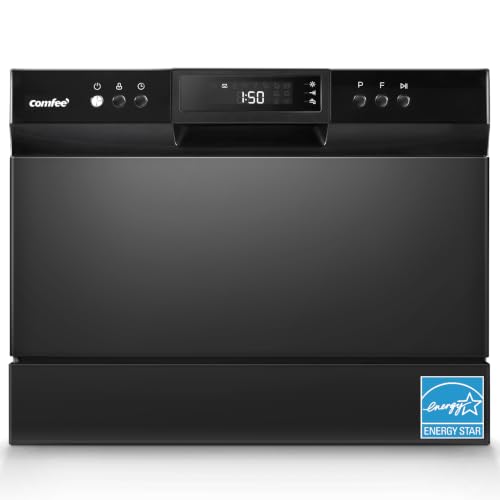
5. Comfee Portable Countertop Dishwasher
A portable countertop dishwasher from Comfee. The cycle list on the listing will show whether a glass or delicate setting is offered. It is sold as an easy unit for small kitchens, so match the cycles to your needs.
Suits: simple use. Strengths: a compact body. Weaknesses: program lists vary. Skip it if you want premium features.

Best for small kitchens
6. hOmeLabs Countertop Dishwasher
A countertop dishwasher from hOmeLabs. Read the cycle names on the listing to confirm a glass program before you rely on it. Check the interior size, since tall glasses may not fit.
Suits: small kitchens. Strengths: a compact body. Weaknesses: details vary by listing. Skip it if you wash stemware daily.
View hOmeLabs Countertop Dishwasher on Amazon
Care and Setup
- Load glasses so they do not touch, which can chip them. Place them so water reaches the inside.
- Use rinse aid if the maker suggests it, for clearer glass. Check the dispenser before each load.
- Hand wash very fragile or antique glass instead of risking it. Delicate heirlooms rarely belong in a dishwasher.
- Wipe the interior now and then to prevent cloudy buildup. Clean the filter as well.
Mistakes to Avoid
- Packing glasses tightly together.
- Using the most aggressive cycle on thin glass.
- Skipping the check on interior height for stemware.
- Using too much detergent, which can leave a film.
What a Glass Program Really Changes
A glass or delicate program usually adjusts three things: water temperature, wash intensity and drying. Lower water temperature reduces the risk of etching or thermal shock, which is when fragile glass cracks because of sudden temperature changes. A gentler spray keeps stemware from knocking together, and a shorter or cooler drying stage avoids baked-on spots. The exact settings differ by model, and makers do not always publish the temperatures, so check the manual or listing for how the program is described.
Names vary as well. Some machines call the setting glass, others delicate, crystal or light. A cycle called quick or eco may be gentle in effect but is not necessarily designed for glassware. Read the cycle list and the control panel photos in the listing, and look for the specific name of the program you want. If the listing is vague, ask the seller or check the manual before you buy.
Understand the limits as well. A glass cycle cannot fix hard water, poor loading or old, worn glassware. It will not make hand-painted, gilded or antique items safe for machine washing. Sometimes the best option is still hand washing for very valuable pieces. For everyday tumblers, wine glasses and jars, a gentler cycle combined with a rinse aid and sensible loading usually gives good results. Think of the program as one part of a system, alongside detergent, water quality and rack setup.
Loading Compact Racks Without Chips
Countertop machines have small interiors, so loading technique matters more than in a full-size dishwasher. Place glasses upside down at an angle, so water can drain and does not pool in the base. Avoid letting glasses touch each other or the walls, since vibration during the cycle can cause chips. Lightweight glasses can tip over when water sprays, so secure them with the rack’s tines or holders where available.
Measure your tallest glass before ordering. Many compact dishwashers have limited interior height, and tall stemware may not fit upright. Some racks let you lay glasses on their sides or remove a basket, but check how the machine handles that arrangement. Wide-mouth jars and travel mugs may also need special positions. If the machine has a fold-down or adjustable rack, that gives flexibility.
Keep the load balanced. Putting heavy plates next to delicate glasses can lead to knocks. Place plastic items on the top rack, away from heating elements. Do not overload; crowded glasses will not get clean and are more likely to clink. Rinse off heavy food, but avoid pre-washing too thoroughly, because detergent needs something to work on. After the cycle, open the door slightly to let steam escape, and let glasses cool a little before handling. A lint-free cloth can polish any drops.
Water Hardness, Rinse Aid and Cloudy Glass
Cloudy or spotty glass is one of the most common complaints, and the cause is usually water. Hard water carries minerals that leave white spots when it dries, and some detergents can leave residue. A rinse aid reduces water sheeting and helps droplets run off glass instead of drying on it. Check whether your machine has a rinse aid dispenser, and fill it according to the manual. Many compact models rely on a small compartment that needs regular topping up.
Etching is different from spotting. Etching is permanent damage that looks like a milky haze, caused by a combination of soft water, too much detergent and high heat. It cannot be wiped away. If you see a rainbow-like shimmer or a dull film, etching may be the cause. Using the right amount of detergent, choosing a gentler cycle and avoiding very hot water can help prevent it.
If your tap water is hard, a water softener or a descaling product designed for dishwashers may help; follow the machine’s manual for compatible products. A cup of white vinegar run through an empty cycle is a common home remedy, but check that the manufacturer permits it. Clean the filter regularly, and wipe door seals. Use the detergent type the manual recommends, whether tablets, powder or gel. If glass is still cloudy after trying these steps, test one glass by hand to see whether the problem is the water or the machine.
Hookups, Placement and Counter Setup
Countertop dishwashers need a water source, a drain and power, and the setup is part of the buying decision. Many connect to a faucet with an adapter, which suits renters and small kitchens, while others use a permanent line. Check which faucet types the adapter supports, since some faucets with sprayers or unusual threads need additional parts. Read the listing carefully for any included hoses and fittings.
Drain arrangement matters. Some units drain into the sink through a hose that must hang at a correct height, while others need a built-in connection. A hose that sits too low or too high can cause drainage problems. Keep the hose free of kinks and secure it so it cannot slip out of the sink during a cycle. Position the dishwasher on a firm, level counter that can bear its weight, and leave room around it for the door and ventilation.
Think about the whole kitchen. The machine will take up counter space, and you may need to move it when not in use. Make sure the power outlet is nearby and not overloaded, and avoid using extension cords. Keep the area dry and wipe any spills. Steam released at the end of a cycle can affect cabinets above, so allow clearance. Finally, check the noise level and water use on the listing, since these figures help you compare models fairly. A compact dishwasher that fits your faucet and your routine is more useful than one with extra features you will not use.
What to Hand Wash Instead
Even with a glass program, some items are better washed by hand. Antique glass, hand-painted pieces, gold or platinum rims, and delicate crystal can lose their finish or crack. Thin, mouth-blown stemware is more fragile than standard drinking glasses. If a piece is a family heirloom or has sentimental value, protect it with a sink and a soft cloth. Check the maker’s care label or manual for dishwasher-safe symbols.
Other items to keep out include wooden items, cast iron, certain nonstick pans, sharp knives and insulated tumblers without a dishwasher-safe mark. Plastic items can warp near heating elements. Aluminum can discolor. Good glassware that is not marked dishwasher safe is best washed by hand using warm water and a mild detergent, then dried with a soft cloth.
When hand washing glass, support the bowl and the stem separately to avoid snapping, and avoid sudden temperature changes such as hot water on a cold glass. Wash one piece at a time, lining the sink with a towel to cushion accidents. Dry promptly to avoid spots, and store glasses upright or on a padded shelf. When unsure, test a less valuable piece first. Over time you will learn which pieces handle the machine well, and the glass program becomes a convenient option for everyday glassware without risking your best items.
Countertop Dishwasher Terms Explained
Compact dishwashers use specific vocabulary. Here is a short glossary.
- Place settings: the number of full sets of dishes the maker says the machine can hold.
- Glass cycle: a program designed to be gentler, usually with lower heat or a shorter pattern.
- Water tank: a built-in reservoir that some models use when no faucet connection is available.
- Faucet adapter: a connector that links the machine to a sink tap.
- Rinse aid: a product added to a dispenser to help water sheet off dishes.
- Spray arm: the rotating arm that sprays water inside the tub.
- Filter: a screen that catches food particles.
- Drain hose: the hose that sends used water to the sink or drain.
Names and features differ, so check the manual of any model you consider.
Choosing by Kitchen and Household
| Your situation | What to consider | Planning note |
|---|---|---|
| Apartment without a built-in dishwasher | Compact unit with a faucet connection | Check your faucet type |
| Single person or couple | Smaller capacity | Fits a small counter |
| Lots of wine glasses | Glass cycle and adjustable racks | Check rack spacing |
| Rental home | Removable, portable design | Check rules on installation |
| Hard water area | Rinse aid dispenser and filter access | Follow the maker’s care guidance |
Count the glasses you own and think about how they sit in the rack. Tall stems can be a problem in compact units.
A Pre-Purchase Space and Hookup Checklist
- Measure the counter space, including the height under cabinets.
- Check the machine’s dimensions, including space for the door and hoses.
- Look at your sink faucet and compare it with the adapters the maker supplies.
- Check the location of the outlet and how the cord will reach.
- Plan where the drain hose will go.
- Make sure the counter can support the weight of a full machine.
- Read the installation instructions in the manual before ordering.
Taking time to check these points avoids unwelcome surprises on delivery day.
Reading a Listing Closely
Look at the cycle list and find out what each program does. Check the interior dimensions and rack design, and see if racks are adjustable or removable. Read about the water source options, since some units can connect to a faucet and others use a tank.
See what accessories are included, such as hoses, adapters and a cutlery basket. Check the noise information if you have it, and see what the maker says about water and energy use. Read about the warranty and how to contact support.
Protecting Glassware
Glass can chip, scratch or cloud over time, so read the care instructions for your glasses as well as the dishwasher manual. Place glasses so they do not touch each other, and avoid overloading. Use the cycle the maker recommends, and consider using rinse aid if the manual allows.
Hand wash items that the glass maker says should not go in a dishwasher, such as fine crystal or antique pieces. Let glasses cool before handling. If you notice cloudiness, check water hardness and detergent use, and follow the maker’s guidance.
Daily Habits for a Small Dishwasher
A compact machine runs best when you give it a steady routine. Scrape plates, but follow the maker’s advice on pre-rinsing, and load items so water can reach every surface. Place larger pieces on the sides and back so they do not block the spray arm, and keep glasses angled so water drains and does not pool in the base.
Run the machine when it is full, since small loads waste water and energy. Keep a small basket for items that need hand washing, so they are not forgotten. Empty the filter regularly, wipe the door seal and let the door stay open for a short time after the cycle so moisture can escape.
Use the detergent type the maker recommends, in the amount shown in the manual. Too much can leave film, and too little can leave residue. If you notice cloudy glasses, check the manual and consider water hardness before changing products.
Safety, Plumbing and When to Call a Professional
A countertop dishwasher connects to water and electricity. Follow the maker’s instructions for hoses, adapters and power. Make sure connections are firm and that hoses are not kinked. If you are unsure, ask a licensed plumber to help, and use a suitable outlet.
Do not run the machine unattended if you notice leaks, and stop using it if you smell burning or see damage to cords. Contact the maker for repairs and avoid opening the machine yourself.
Choosing Countertop dishwashers with glassware cycles: What Actually Matters
Cycles and drying deserve as much attention as washing. A short cycle that genuinely cleans a lightly soiled load saves water and time on the days between big cooks, while a hotter, longer cycle earns its place for greasy pans and baby items. Drying methods vary, from residual heat to fan assistance to simply opening the door, and they decide whether plastics come out ready to cupboard or needing a tea towel. Noise matters in small homes where the kitchen is also the living room, and a delayed start can move the noise to a better hour. Judge the machine by a week of your real dishes, not by its longest feature list.
A countertop dishwasher lives or dies by fit, so measure before anything else: the unit’s height against the space under your cabinets, its depth against your counter, and the route to the tap and drain. Some models connect to the faucet with an adapter, others carry their own water tank you fill by hand, and that single difference reshapes daily use. Faucet-connected models suit kitchens where the sink is free at wash time; tank models suit renters and awkward sinks, at the cost of filling and emptying by hand. Check your faucet’s shape early, because some modern taps cannot take an adapter at all.
Capacity should be counted in your real place settings and your bulkiest regular items, not in the manufacturer’s optimistic setting count. Look at the rack layout: whether dinner plates stand upright without touching, whether a rack or shelf takes mugs and glasses safely, and whether cutlery has a basket or tray that keeps pieces separated enough to wash clean. If you cook much, test the idea of your largest pan or mixing bowl against the interior dimensions on paper. A countertop dishwasher that handles your daily load in one run is a servant; one that always leaves a second pile by the sink is a compromise you will feel every day.
How Countertop dishwashers with glassware cycles Fit Real Routines
Renters and kitchens without plumbing options
For renters who cannot alter plumbing, a countertop dishwasher is often the only route to machine washing, and it is a good one. Models with a built-in tank need no faucet connection at all: fill, run, and drain into the sink. Faucet-connected models remove and store away when the landlord inspects or when you move. Protect the counter beneath with a mat if the surface is wood, keep the drain hose’s route simple and downhill, and store hoses neatly so setup stays a two-minute job. The appliance should feel like an appliance, not a project.
Daily washing for a small household
For one to three people, a countertop dishwasher changes the rhythm of the kitchen: dishes go in through the day, one cycle runs in the evening, and the sink stays clear. The habits that make it work are simple. Scrape rather than rinse, since modern detergents need some soil to work against and pre-rinsing wastes water. Load with space between items so water reaches every surface, keep spray arms free to rotate, and run the machine when it is full but not crammed. In the morning, unload the bottom rack first so drips from above do not wet clean dishes below.
Entertaining and big cooking days
On cooking-heavy days the countertop machine becomes a staging tool rather than the whole solution. Run a first load of prep bowls, boards, and utensils while the meal finishes cooking, and the kitchen resets before guests sit down. Hand-wash the one oversized roasting pan without resentment; even full-size dishwasher owners do the same. Glasses and delicate items do better in a gentler cycle once the greasy load has gone through. Used this way, the small machine handles eighty percent of the volume and all of the drudgery, and the sink work shrinks to a few large pieces.
Getting Glassware Genuinely Sparkling
Glassware is the load that judges a dishwasher honestly, because every spot, streak, and cloud shows against the light. A dedicated glassware cycle typically trades force for care: gentler water action and temperatures that clean without stressing delicate stems and thin walls. Load glasses so they cannot knock together or trap water, angled so they drain, and keep them away from heavy items that could shift. In a countertop machine the load is small, which suits glassware well: a dinner party’s glasses fit in one careful load rather than being crammed among pans.
Water quality decides the finish as much as the cycle. Hard water leaves mineral spots that a rinse aid and correct detergent dose largely prevent, while very soft water plus too much detergent can etch glass permanently, a cloudiness no cleaning reverses. If glasses cloud, test whether a vinegar rinse clears a sample glass: if it does, you are fighting scale and dose; if it does not, etching has begun and the remaining glasses need gentler treatment. Fine glassware and heirloom crystal may still deserve hand washing, and a wise owner lets the machine take the everyday glasses and keeps the treasures for the sink.
Setup, Daily Use, and Getting the Best Results
Build the daily routine around the machine’s strengths. Keep a small bench scraper by the sink for plates, stack dirty items in a sensible staging spot rather than the sink itself, and start the cycle at a consistent time so unloading becomes part of the morning. Every week or so, check and clean the filter, which on most countertop models is a simple lift-out mesh that traps what would otherwise recirculate onto your glasses. Wipe the door seal and the area around it. Five minutes weekly is the whole maintenance bargain, and it keeps performance where it was on day one.
Setup day is about water in, water out, and no leaks. Position the unit where the fill and drain runs are short and direct, level it so the door seals and the racks roll smoothly, and run a first empty cycle while you watch the connections. For faucet models, fit the adapter carefully and check it under pressure; for tank models, fill and drain once to learn the routine and the tank’s markings. Read the manual’s loading diagrams, because countertop machines have specific spray patterns, and the maker has already solved the puzzle of where your plates should stand.
Detergent choice matters more in a small machine. Use the form and dose the maker recommends, often less than a full-size machine’s dose, because excess detergent in a small tub leaves film and can cause foaming problems. If your water is hard, a rinse aid makes a visible difference to glassware and drying, and the machine’s settings may let you adjust for it. Keep detergent dry and sealed, load it just before running, and if results disappoint, change one variable at a time, dose, cycle, or loading, so you learn what actually fixed it.
Care, Cleaning, and Keeping It Working Well
Limescale is the slow enemy in hard-water areas. If glasses cloud with a white film that a vinegar rinse removes from a test glass, scale is building inside the machine too, and a citric-acid or maker-approved descaling cycle on the maker’s schedule keeps jets and heaters efficient. Cloudiness that does not shift is etching, which is permanent and comes from too much detergent, very soft water, or overly hot pre-rinsing habits; adjusting dose prevents it spreading. Knowing which cloud you are looking at saves both panic and unnecessary products.
The filter is the heart of countertop dishwasher care. When washing seems weaker or grit appears on glasses, the filter is the first suspect, and cleaning it is a two-minute job: lift it out, rinse under the tap, brush gently if needed, and reseat it properly. Check that the spray arms spin freely and that their jets are not blocked by a stray seed or label fragment. Wipe the tank and its lid on tank models, and let them dry open occasionally so nothing grows stale. A machine that washes dishes should itself smell of nothing at all.
Common Mistakes and How to Avoid Them
Connection mistakes cause the other failures. A drain hose with a sagging loop can leave dirty water sitting where it should not; a faucet adapter cross-threaded in haste drips through every cycle; a tank model run without enough water stops mid-cycle and confuses its owner. All are prevented by a careful first setup and a glance at connections when you start a load. Finally, do not wash things the maker excludes, wooden boards that crack, delicate crystal, cast iron that loses its seasoning, sharp knives that dull and endanger hands. The machine is a specialist; let it specialize.
Loading mistakes cause most ‘bad dishwasher’ verdicts. Plates jammed so tightly that water cannot pass, bowls nested into each other, a tall item blocking the spray arm, and cutlery spooning together all produce dirty results from a perfectly good machine. Face soiled surfaces toward the water’s source, alternate cutlery directions, and spin the spray arm by hand before closing the door as a final check. The second classic mistake is detergent excess: more powder does not mean cleaner, it means residue. Measure honestly, especially in a small tub where concentration builds fast.
How the Picks in This Guide Compare
Comparison only makes sense against your own priorities, so use this section as a decision exercise rather than a ranking. The picks above were chosen to cover different needs within countertop dishwashers with glassware cycles: different sizes, styles, and strengths for different kitchens. Read across them with your space measurements, your regular recipes, and your cleaning tolerance in hand, and the shortlist usually narrows itself to one or two. What follows revisits each pick in turn and frames the question you should ask of it.
Danby Countertop Dishwasher (DDW621WDB) is the pick to study closely if its purpose in this guide matches the job you most need done. Read its section alongside the picks either side of it, and notice the trade-offs the guide describes: every design in this category gives something to get something. If the compromise it makes is one you would happily make too, that is a strong signal. If its strengths answer a problem you do not have, a simpler pick further down the list will probably serve you better.
With Avanti Countertop Dishwasher, the decision is about fit for your household rather than rank. Its review above explains the cooking it is built for; your task is to be honest about how often that cooking happens in your kitchen. A pick used three times a week at the centre of your routine is worth more than a technically broader one used monthly. Check also the practicalities the review raises, size, handling, and care, because those are the details still shaping your satisfaction a year from now.
Magic Chef Countertop Dishwasher (MCSCD6W5) represents one answer to the question this guide is asking, and the other picks represent others. Compare them by the criteria that opened this article: how they fit your space, how they behave in the cooking you repeat, and how they clean and store afterwards. If you find yourself torn between this pick and another, choose by the tie-breaker of daily friction: the one that will be easier to reach for, easier to wash, and easier to live with usually wins the year, whatever wins the afternoon.
SPT SD-2224DW Countertop Dishwasher earns its place in this line-up for the role set out in its review above. When you weigh it against the neighbouring picks, compare what the reviews themselves say about what it does well, where its limits are, and the kind of cooking it suits. The right choice is rarely the most elaborate option; it is the one whose strengths match your weekly routine rather than your most ambitious day, and whose handling and care you will be happy with long after the novelty fades.
Comfee Portable Countertop Dishwasher is the pick to study closely if its purpose in this guide matches the job you most need done. Read its section alongside the picks either side of it, and notice the trade-offs the guide describes: every design in this category gives something to get something. If the compromise it makes is one you would happily make too, that is a strong signal. If its strengths answer a problem you do not have, a simpler pick further down the list will probably serve you better.
With hOmeLabs Countertop Dishwasher, the decision is about fit for your household rather than rank. Its review above explains the cooking it is built for; your task is to be honest about how often that cooking happens in your kitchen. A pick used three times a week at the centre of your routine is worth more than a technically broader one used monthly. Check also the practicalities the review raises, size, handling, and care, because those are the details still shaping your satisfaction a year from now.
More Practical Notes on Countertop dishwashers with glassware cycles
Finally, judge the purchase against the sink it replaces. If your household produces a steady stream of plates, mugs, and lunch boxes and nobody enjoys the washing-up hour, a countertop dishwasher returns time and a clear sink every single day. Keep the filter clean, load with a little thought, and use the right cycle, and it will do that job quietly for years. The models in this guide differ in connection style, capacity, and cycles; the right one is the one that fits your tap, your counter, and your actual pile of dishes.
Water and energy use are part of the honest case for these machines. A countertop dishwasher running a full load generally uses less water than washing the same load by hand under a running tap, and its small tub heats only the water it needs. The savings depend on your habits: half-empty cycles and heavy pre-rinsing erase them. Run full loads, scrape instead of rinse, and use the shorter cycle when the soil allows, and the little machine is both a convenience and a genuinely efficient way to wash for a small household.
Think about the countertop geography before you commit. The machine will occupy prime counter permanently, near the sink, so measure that spot with your other daily tools in mind: the kettle, the board you chop on, the space where shopping lands. Some owners place the unit on a sturdy cart or a reinforced shelf to reclaim the counter, which works if water runs stay short and safe. The best placement is the one where loading is effortless and the door opens without moving anything else, because friction, not cleaning power, is what makes people abandon appliances.
Accessories should be bought in the order your frustration dictates. Live with countertop dishwashers with glassware cycles for a month first, and let real friction, the missing rack, the awkward jug, the pan that does not fit, tell you what to buy. Each accessory should remove a named annoyance from a task you perform weekly; anything bought for an imagined task will join the drawer of good intentions. And when you do buy, measure first and buy once, because the accessory that fits properly and is used daily is cheaper at any price than the almost-right one replaced twice.
Plan for the appliance’s whole life in your home, including its end. Keep the packaging only if storage is free and returns are plausible; register the warranty; note where spare parts and consumables for your model are sold. When performance drifts, work through the simple causes in order, cleanliness, loading, settings, placement, before assuming failure, because most appliance misery is maintenance wearing a disguise. A well-kept machine, honestly assessed, will tell you clearly when it is done; until then, steady care beats anxious replacement.
Consider how countertop dishwashers with glassware cycles interact with the rest of your kitchen’s cast. The best kitchens are ensembles: each appliance covers the others’ weaknesses, and tasks flow to the tool that does them best rather than the newest one. Let the appliance in this guide take the jobs it is genuinely best at, and resist forcing it to be universal. That division of labor is what makes a kitchen feel calm at the busiest hour, and it is the real destination of every comparison and criterion in this guide: the right tool, in the right place, doing its best work.
Safety around countertop dishwashers with glassware cycles is mostly a set of small, unbroken habits. Keep the area around the appliance clear and dry, route cords and hoses where they cannot be tripped over or pinched, and let hot parts cool before cleaning or covering. Never defeat a safety feature because it slows you down, and never leave a heating appliance in a state you would not leave a hob. Teach these habits as part of the appliance’s routine rather than as warnings, and they will be followed on the tired evenings when warnings are forgotten.
Glassware Dishwasher FAQ
Is a glass cycle important?
It helps protect delicate pieces with lower heat and gentler cycles, if the model includes one. Always check the listing for it.
Will stemware fit in a compact dishwasher?
Often not. Check the interior height and the rack layout on the listing. Tall wine glasses are the main problem.
How do I avoid cloudy glass?
Use the right amount of detergent and rinse aid, and avoid overloading the rack. Hard water can also leave a film.
Can every glass go in?
Not always. Hand wash very thin or antique glass instead. Hand washing is safer for those.
What detergent is best for glassware?
Use the type the manual recommends, and avoid using more than needed. Too much detergent can cloud glass, especially in soft water. Tablets, powder and gel all work if used as directed.
Does a countertop dishwasher need a rinse aid?
Many makers recommend it for spot-free glass. Check the manual to see if the machine has a dispenser and which product is suitable.
Can I run a glass cycle with plates in the same load?
You can, but a gentle cycle may not clean heavily soiled plates. Mixed loads work best when everything is lightly soiled and the cycle suits the most delicate items.
Why do my glasses come out with white film?
White film is often mineral residue from hard water or detergent buildup. Try a rinse aid, the right amount of detergent and an occasional cleaning cycle with an approved descaler.
Are countertop dishwashers hard to install?
Many connect to a faucet and sink drain without plumbing work, but check that your faucet supports the adapter. Read the listing and manual for the required parts.
How do I remove cloudy glass caused by etching?
True etching is permanent and cannot be wiped away. Mineral film can often be removed with an approved descaling method, which helps you tell the two apart.
Can plastic tumblers go in the glass cycle?
Many plastic items are top-rack only and may warp near heat. Check the item's care label and keep plastics away from the heating element.
Why does my dishwasher smell?
Odors come from trapped food in the filter, residue around the door seal, or a drain hose holding stale water. Clean the filter, wipe the seal and the tub’s edges, and run an empty hot cycle; a maker-approved cleaner or a descaler addresses build-up in hard-water homes. Leaving the door ajar between uses lets the interior dry and prevents the closed, damp smell from forming.
Do countertop dishwashers clean as well as full-size ones?
For everyday loads, yes, provided they are loaded so water can reach every surface and the filter is kept clean. The limits are capacity and very bulky or heavily baked-on items, not basic cleaning power. Choosing the right cycle for the soil level matters: a quick cycle is for light soil, and greasy loads deserve the longer, hotter program.
How do I connect a countertop dishwasher to my faucet?
Most faucet-connected models use an adapter that replaces or fits over the faucet’s aerator, with a quick-release coupling for the hoses. Some modern or pull-out faucets cannot accept an adapter, which is why checking your tap’s design comes before buying. Tank models avoid the question entirely by carrying their own water supply that you fill manually.
Why are my dishes still wet at the end of the cycle?
Plastics hold less heat than ceramic or glass, so they dry last and sometimes not fully in any dishwasher. Opening the door a little after the cycle ends lets steam escape and speeds drying on models without a fan. Rinse aid helps water sheet off surfaces instead of beading, and loading cups at an angle so they do not pool water makes a visible difference.
How much detergent should I use?
Use the dose the maker specifies for your model and adjust modestly for soil and water hardness. Countertop machines have small tubs, so a full-size machine’s dose is usually too much and leaves film or foam. If dishes feel slippery or glasses look cloudy, reduce the dose before changing anything else, and keep detergent fresh and dry.
Can I wash pots and pans in a countertop dishwasher?
Pans that fit without blocking the spray arm and whose makers rate them dishwasher-safe can go in, placed on the greasiest cycle. Cast iron, carbon steel, and wooden items should stay out. In practice, most owners wash daily dishes by machine and give the one large roasting pan a quick hand wash, which keeps both the machine and the pan in good condition.
Why do my glasses come out cloudy?
Cloudiness has two causes: mineral deposits from hard water, which a rinse with vinegar on a test glass will shift, and etching, which is permanent surface damage encouraged by excess detergent, very soft water, and high heat. For deposits, adjust dose, use rinse aid, and descale the machine. For etching, reduce detergent and use the gentler glass cycle for the glasses that remain.
How should I load glasses so they do not break?
Place them between tines rather than over them where the design allows, angled so water drains and they cannot pool, with space between each glass so they never touch. Keep stems secure and never force a tall glass into a space that bends it against the tub. If a glass only fits by touching the spray path or the door, it does not fit, and the sink is kinder.
The Short Version
Check the listing for a named glass cycle on any of these. The Danby, Avanti, Magic Chef, SPT SD-2224DW, Comfee and hOmeLabs are compact options, so choose by size, brand and cycle list.


