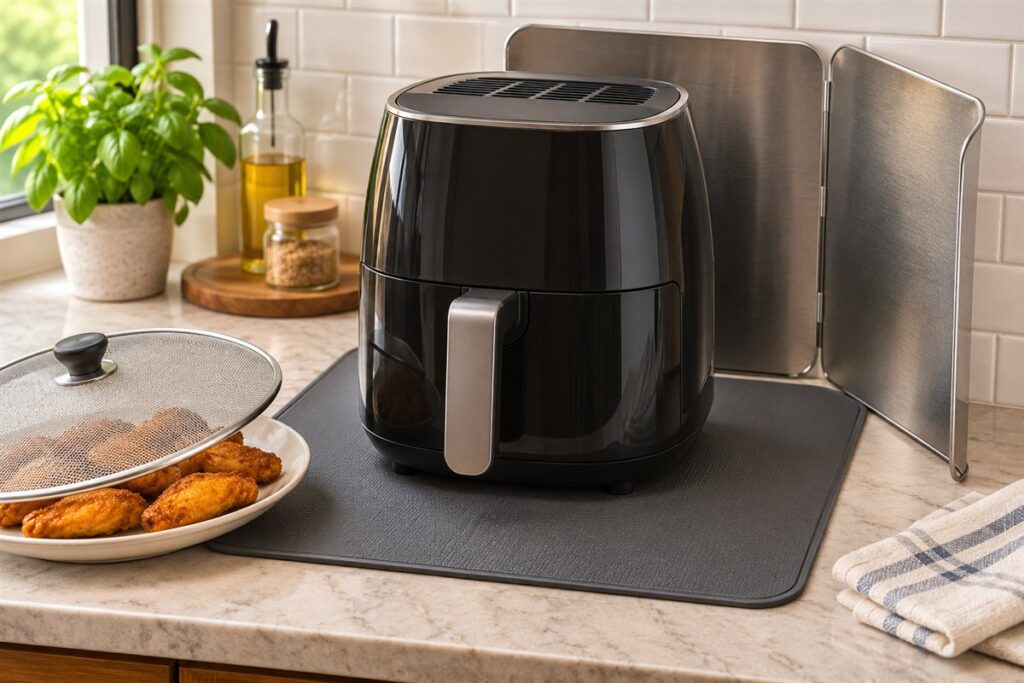
Splatter guards and mats protect the counter and the area around your air fryer from grease, crumbs and drips. A mat sits under the unit to catch spills, and a guard sits near the cooking area to keep splashes contained. Neither should block vents, and both must follow the maker’s heat and clearance guidance. This guide covers what each one does, how to choose and place them, and how to cut down on mess in the first place.
Why Splatter Happens
Air fryers move hot air quickly. Fat from meat, sauces on wings and crumbs from breading can spit or blow around. Some of it lands on the basket, but some escapes when you open the drawer, and it can drip onto the counter below.
What a Mat Does
A mat lies on the counter under the unit. It catches drips, makes wiping easier and can add a little grip. Look for a flat mat that is larger than the appliance footprint but does not wrap up the sides. Heat-proof materials are best, and you should check the maker’s guide for spacing and temperature limits.
What a Guard Does
A splatter guard is a cover or screen placed near or over a surface to stop spraying. With an air fryer, you might use one on the counter behind or beside the unit, or over a pan when you transfer sizzling food. Never place a cover over the unit’s vents or on top while it runs.
Quick Comparison
| Item | Where it goes | Main benefit | Watch out for |
|---|---|---|---|
| Counter mat | Under the appliance | Catches drips | Do not cover the vents |
| Back or side guard | Behind or beside the unit | Protects walls and cabinets | Keep clear of hot surfaces |
| Pan screen | Over a dish during transfer | Contains spitting | Use only when not cooking |
Reducing Mess at the Source
- Pat food dry before cooking.
- Use only a light amount of oil.
- Avoid overfilling the basket so fat has room to drain.
- Let the unit rest for a minute before opening the drawer.
- Wipe the basket and drawer after each use.
Always follow the maker’s manual and safety instructions. Hot grease and surfaces can cause burns, so leave the unit to cool before moving it or cleaning around it.
A Worked Walkthrough: Setting Up a Tidy Cooking Spot
Use this sequence the first time you set a mat or guard around the unit, and again whenever you move the appliance.
- Unplug the unit and let it cool. Move it aside so you can clear and wipe the counter.
- Read the manual for clearance figures at the back, sides and top, and mark them on the counter with a ruler.
- Lay the mat flat. It should be larger than the unit’s footprint but leave the vents and air intake free, and none of it should drape up the sides or over the controls.
- Check the mat’s own care label for any heat limit, and keep in mind that the area right under a running unit can get warm.
- Place the unit on the mat, and make sure its feet sit evenly and the unit does not slide or rock.
- If you use a side or back guard, set it so it stands clear of the vents by the distance the manual gives, and keep it away from hot surfaces.
- Run a first cook while staying nearby. Check the mat and guard afterwards for any warmth, warping or marks, and adjust if you notice anything unusual.
Keeping the Area Tidy
Wipe up spills when they are still fresh, because dried grease is harder to remove. Lift the mat now and then to clean the counter beneath it. Wash the mat with warm soapy water and dry it so it does not trap moisture.
Choosing Materials
Pay attention to what the item is made from and what the maker says about heat. Silicone and glass fibre mats are often sold for kitchen use, but the heat limit varies, so read the product label. Metal screens and guards conduct heat and can get hot to the touch. Fabric, paper and thin plastic are poor choices near a hot appliance, because they can melt, scorch or catch. Whatever you choose, it should lie flat, stay put and be easy to wash.
Common Scenarios
A unit under a low cupboard
Do not try to protect the cupboard with a cover or foil that traps heat. Instead, pull the unit out so the steam has clear space above it, and follow the clearance in the manual.
Cooking greasy foods such as bacon or sausages
Expect more spatter. Use a mat, keep the basket from overfilling, and give the unit a minute to settle before opening the drawer.
A rental counter you want to protect
A heat-proof mat under the unit helps with marks, and lifting the unit now and then to wipe underneath prevents grease from building up.
Transferring sizzling food
Use a pan screen over the dish while you carry it only if you are not cooking, and use mitts. Do not cover a hot dish tightly, because steam can build up.
Mistakes to Avoid
- Covering the vents. Hot air must leave freely, or the unit can overheat.
- Using a mat that is not heat-proof. The base of the unit warms up during a long cook.
- Placing a guard against hot metal. Plastic can melt and fabric can scorch.
- Letting grease build up under the mat. It attracts crumbs and can create a smell.
- Using foil on the counter as a catch tray without checking the manual. Loose foil can lift or block airflow.
Quick Troubleshooting
| Symptom | Likely cause | What to try |
|---|---|---|
| Grease on the wall behind | Spray when the drawer opens | Pull the unit forward and add a guard that stays clear of vents |
| Mat curls or warps | Heat or poor material | Replace it with one made for heat, or remove it |
| Unit slides on the mat | Smooth surfaces | Use a mat with grip and keep the cord from pulling |
| Smell from the counter | Old grease under the mat | Lift, wash and dry both the mat and counter |
| Smoke from the unit | Fat in the base or too much oil | Stop, cool, clean and follow the manual |
Words Worth Knowing
These terms appear on product labels and in manuals.
- Splatter: small drops of fat or sauce thrown out during cooking.
- Footprint: the counter area the appliance occupies.
- Vent: an opening where hot air or steam leaves the unit.
- Heat-proof: made to tolerate the temperatures it will meet.
- Clearance: the open space the manual asks you to leave around the unit.
- Silicone: a flexible, heat-tolerant material common in kitchen mats.
FAQ
Do I need both a mat and a guard?
Not necessarily. A mat is useful for most kitchens, while a guard helps if your unit sits near a wall or cabinet.
Can a mat go under any air fryer?
Only if it is heat-proof and does not block the vents or feet. Check the maker’s guide.
How often should I wash the mat?
Wipe it after any visible spill, and wash it with warm soapy water whenever it feels greasy. Dry it fully before putting the unit back.
Will a mat stop the counter from getting warm?
A mat can reduce marks, but it does not remove heat. Follow the manual’s clearance advice and use a surface made for hot appliances.
Can I use a baking tray under the unit?
Only if the maker allows it and it does not block vents or air intake. A tray that sits too close can trap heat, so check the manual first.
The Short Version
A mat catches drips, a guard contains splashes, and good habits cut down on mess. Keep vents clear and follow the maker’s clearance guidance.