
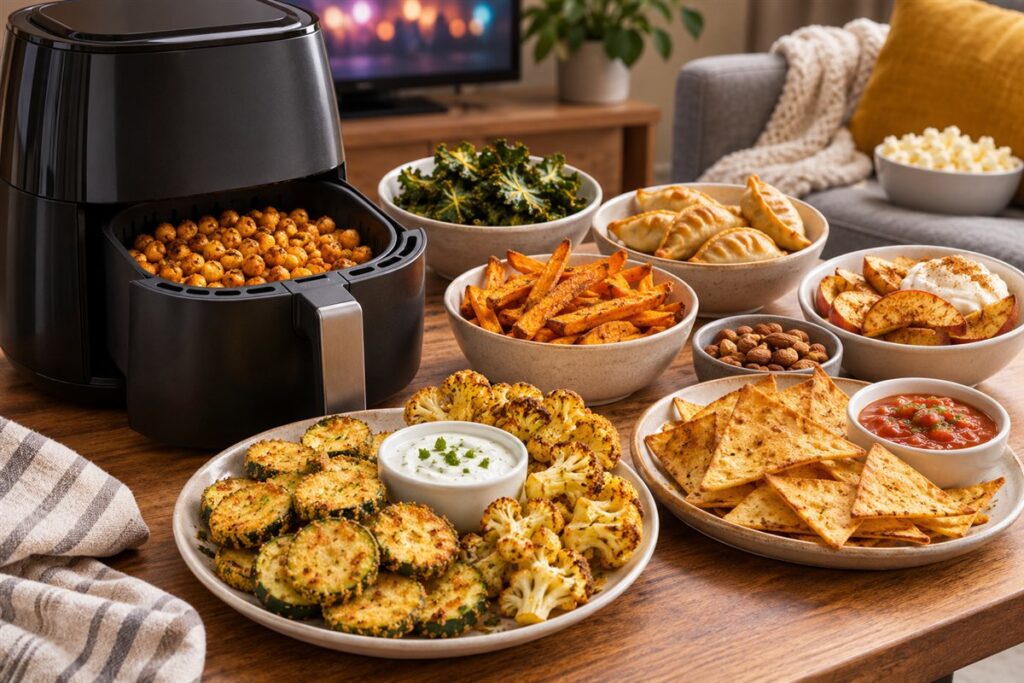
Snacks are where an air fryer shines, because small pieces brown quickly and the basket needs little cleanup. Crunchy vegetables, seasoned legumes, tortilla bites and frozen favorites all work well. The ideas below are general categories and methods, with loose ranges you can adjust to your own unit.
Crunchy Vegetable Bites
Thin slices of vegetables turn crisp when the surface dries out in moving air. Cut pieces evenly, dry them well, and use only a light coating of oil.
- Zucchini or eggplant rounds with a seasoned crumb coating
- Kale leaves torn small and lightly oiled
- Sweet potato sticks or thin slices
- Cauliflower florets tossed in spices
Thin slices may need only 5 to 10 minutes, while thicker sticks can take 12 to 20. Check often, because thin pieces move from golden to dark quickly.
Seasoned Legumes and Nuts
Drained, well-dried chickpeas make a crunchy bite when shaken in the basket partway through. Toss them with a little oil and your favorite dry seasoning, such as garlic powder, smoked paprika, or cinnamon for a sweeter version. Raw nuts can be warmed and seasoned too, but they darken fast, so use a short time and watch closely.
Tortilla and Bread Snacks
Flour or corn tortillas cut into wedges become chips in several minutes. Pita and flatbread can be cut the same way. A few steps help.
- Cut wedges to a similar size.
- Spread them in one layer with space between.
- Add a light brush of oil and a pinch of salt.
- Cook in short bursts and remove the first ones as they brown.
Frozen Favorites and Dips
Many frozen items, such as mini egg rolls, dumplings, and potato bites, are made for this kind of cooking. Follow the package directions first, then adjust for your model. Pair them with simple dips made from yogurt, herbs, or salsa.
| Snack type | Rough time | Cue to look for |
|---|---|---|
| Thin vegetable slices | 5 to 10 minutes | Dry, lightly browned edges |
| Chickpeas | 10 to 15 minutes | Crunchy when cooled slightly |
| Tortilla wedges | 3 to 7 minutes | Golden and stiff |
| Frozen bites | Follow package | Hot all the way through |
For a movie night, cook in two or three short rounds and keep finished snacks on a tray so they stay warm. Shake seasoning on right after cooking while the surface is still slightly oily, which helps it cling.
Sweet Snacks and Fruit Bites
Sweet snacks do not have to mean heavy desserts. Fruit slices warmed in the basket concentrate in flavor, and a dusting of cinnamon turns apple, pear or banana into a tasty treat. Firm fruit holds up better than very soft fruit, which can collapse and stick. Cut pieces to an even thickness and dry them lightly before cooking.
Oat-based bites, small muffins and cookies baked in tiny batches are other options. Use pans or liners that fit the basket, and keep portions small. Sugar browns quickly in moving air, so watch closely and use moderate heat. Fruit leather-style drying is not the same as air frying, so check your manual if your unit has a dehydrate function.
- Pat fruit dry to avoid steaming rather than browning.
- Use a pan or liner for sticky or juicy pieces.
- Add honey or sugar toward the end to avoid burning.
- Let snacks cool briefly, since sugar stays hot inside.
Pair sweet snacks with plain yogurt or a handful of nuts to balance the sugar.
Seasoning Blends and Flavor Pairings
A good seasoning can make a plain snack interesting. Dry blends stick best to lightly oiled food, so toss pieces in a thin coating of oil first, then add seasoning. Salt is best added at the end for dry foods, since it can draw out moisture early. Spices such as paprika, garlic powder, onion powder, cumin and chili powder are common choices, and cinnamon or nutmeg suit sweeter snacks.
Think about balance. A salty snack gains from a bit of acidity, so a squeeze of citrus or a sprinkle of vinegar powder can lift it. Sweet and spicy combinations, like cinnamon with a touch of chili, work for nuts and chickpeas. Herbs such as rosemary, thyme and oregano suit potatoes and bread snacks.
Make small jars of blends so they are ready for use. Label them and store them away from heat and light. Check ingredient labels if you are avoiding allergens, since commercial blends may contain extras. Taste before cooking a whole batch, by seasoning a small portion first. Keep notes so you can repeat combinations you enjoy and adjust those you do not.
Healthier Swaps and Portion Sense
Air frying can reduce the amount of oil you need compared with deep frying, but a snack is still a snack. Choose bases such as vegetables, legumes and whole grains, which add fiber and nutrients. Use a light coating of oil, and flavor with herbs, spices and citrus instead of heavy sauces.
Portion size is easy to lose track of with crunchy foods. Portion snacks into small bowls or containers rather than eating from the basket or a large bag. Pair crunchy items with protein, such as yogurt dip or hummus-style spreads, to feel fuller.
If you are managing a health condition, such as high blood pressure, diabetes or a food allergy, speak with a qualified professional about what suits you, rather than relying on general ideas. Check labels for salt and sugar content on packaged foods. Swaps that work for many people include baked tortilla pieces in place of fried chips, vegetable sticks in place of potato crisps, and roasted chickpeas in place of fried snacks. Make changes gradually so that you keep the habit.
Snacks for Kids and Groups
When cooking for children, keep pieces small and soft enough for their age, and let food cool before serving. Familiar flavors usually work best, with a new element introduced gradually. Mini pizzas on small flatbread, vegetable sticks with a dip, and cheese-filled bites are common favorites. Involve kids in choosing and assembling, taking care that they stay away from the hot unit.
For groups, think about quantity and timing. Small batches cook quickly, so you can serve in rounds. Place snacks in bowls rather than on one big plate, so people can help themselves. Offer a mix of savory and sweet, and at least one option without common allergens.
Check with parents or guests about allergies, and keep ingredient lists on hand. Clean the basket between batches if allergens are in play, and use fresh tools. Never leave children unsupervised near the unit. Remember that popcorn, whole nuts and some small foods are choking hazards for young children, so choose age-appropriate options. For classroom or event snacks, follow any rules the organizers set.
Storing and Re-Crisping Leftover Snacks
Many snacks lose crunch as they sit, since moisture from the air softens them. Let them cool fully, then store in an airtight container at room temperature if they are dry, such as seasoned chickpeas or tortilla pieces. Keep snacks with cheese, egg or meat in the refrigerator and follow food safety guidance on how long they last.
To re-crisp, warm them in the air fryer for a minute or two at a moderate temperature, checking often. Spread them in a single layer so air can reach each piece. Items that have gone very soft may not fully recover, but many regain much of their texture. Do not reheat the same portion repeatedly.
Avoid storing warm snacks in sealed containers, because trapped steam will make them soggy. Add a clean paper towel to absorb moisture if needed. Label containers with dates and use the oldest first. Discard anything with an off smell or appearance. Make snacks in small batches so you can eat them while they are at their best, and avoid leftovers whenever possible.
FAQ
Why are my snacks soft instead of crunchy?
Usually the food was damp, cut unevenly, or crowded together. Dry pieces well, use a single layer, and cook in smaller batches.
Can I use paper or foil in the basket?
Some makers allow liners with air holes made for air fryers, while others do not. Check your manual and never block the airflow or let loose paper lift into the heating element.
How do I stop seasoning from falling off?
Coat the food lightly in oil first so the seasoning sticks, and season while it is still slightly warm. Shake the basket gently rather than stirring roughly.
Can I make popcorn in the air fryer?
Some people do, but it is not recommended by every maker. Check your manual before trying, and never leave the unit unattended.
How do I make snacks less salty?
Use herbs, spices and citrus for flavor, and add salt sparingly at the end. Check labels on seasoning blends and packaged foods.
What snacks are good for dipping?
Tortilla wedges, pita pieces, vegetable sticks and roasted potato wedges all suit dips. Choose sturdy pieces that will not break.
Can I cook two snacks at once?
Only if they need similar times and temperatures, and avoid mixing strong flavors. Keep allergen foods separate.
How long do homemade snacks keep?
Dry snacks keep for a few days in an airtight container, but perishable ones need refrigeration. Follow current food safety guidance and discard anything doubtful.
What is the best oil for snacks?
Use a light cooking oil suited to the temperature you are using, and apply it sparingly. Check the oil label and your manual for any guidance.
The Short Version
Choose small, dry, evenly cut pieces and cook them in a single layer. Check early and often, since snacks go from golden to dark quickly. Use the ranges as loose guides and follow your maker’s instructions.









