
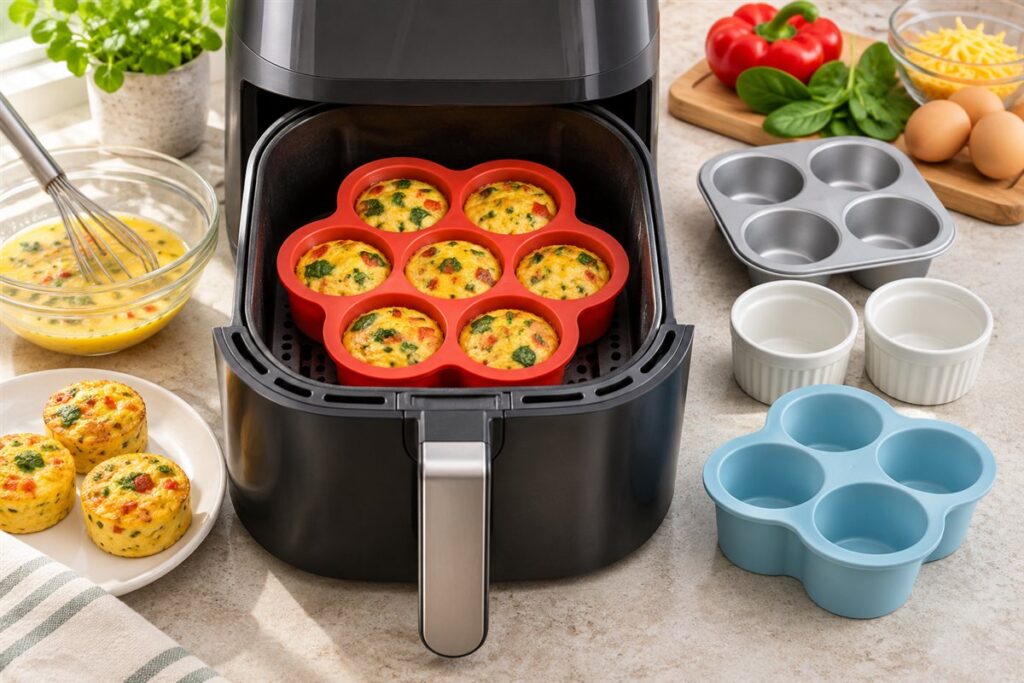
Egg bite molds are small cups or trays that hold a mixture of eggs and add-ins while it cooks in the air fryer. Choose a mold that fits inside your basket with room around it, is made from a material the maker allows, and is easy to wash. Most people use silicone, though metal and ceramic cups also appear.
What an Egg Bite Mold Does
An egg bite mold gives a loose mixture a shape. Without one, the egg would spread across the basket. With one, you get neat individual portions that are easy to lift out and share. Molds come in trays of several cups or as single ramekin-style cups.
Material Choices
- Silicone: flexible and easy to release, but floppy when full, so place it on a tray or rack before filling.
- Metal: heats quickly and holds a firm shape; a light coat of oil helps with release.
- Ceramic or glass: holds heat steadily, but check that the maker allows it and avoid sudden temperature changes.
Always confirm the temperature limit for any mold in the maker’s guide, and follow the manual and safety instructions for your air fryer.
Sizing for Your Basket
| Factor | Why it matters | What to check |
|---|---|---|
| Tray footprint | It must lie flat in the basket | Measure the basket floor |
| Cup depth | Deep cups cook slowly in the center | Look for shallow to medium cups |
| Number of cups | More cups mean more crowding | Choose a count that leaves airflow room |
| Rim height | High rims can touch the heating area | Measure from the floor up |
A General Method
- Warm the air fryer briefly if your model suggests it.
- Lightly oil or spray the cups.
- Whisk the eggs with your chosen add-ins, such as chopped vegetables, cheese or cooked meat.
- Fill each cup about two thirds full to allow for puffing.
- Cook at a moderate setting for roughly 8 to 14 minutes, then check the center.
- Let the bites rest briefly before releasing them.
Times differ with the size of the cup and the strength of your model, so treat the range above as a loose guide only. Eggs should be cooked through before eating.
Keeping Molds Clean
Egg residue can cling, so soak the mold in warm water after use. Use a soft brush on small corners. Dry fully before storing, since moisture left in silicone corners can cause smells.
Choosing Cup Count and Cup Shape
Molds come with different numbers of cups and different cup shapes, and both affect the result. A tray with many cups produces a lot of bites at once, but it can crowd the basket and slow airflow. A tray with fewer cups leaves more space for air to circulate, which often gives more even cooking. Think about how many bites you need per batch before deciding.
Round cups give classic puck-shaped bites. Wider, shallower cups cook faster and more evenly because heat reaches the center sooner. Deeper cups take longer, and the center may remain soft while the outside sets. If you like a custard-like texture, a deeper cup may suit; for firmer bites, choose shallow.
- Check the cup capacity in the listing and compare with the amount of mixture you usually make.
- Look for smooth interior surfaces, which release food more easily.
- Consider whether the tray has handles or tabs that help you lift it out.
- Make sure the tray does not touch the sides of the basket.
Start with a simple design. Fancy shapes can be harder to clean and may not release neatly.
Mixture Texture and Add-Ins
The mixture decides whether bites come out fluffy, dense or rubbery. Whisking eggs with a splash of milk, cream or a spoonful of cottage cheese or yogurt gives a softer texture. Too much liquid can make bites weep or turn watery, while too little gives a dense result. Whisk thoroughly but gently, and avoid beating in too much air.
Add-ins should be small and, where needed, cooked first. Raw vegetables release water as they cook, which can make the center soggy, so sauté or pat dry watery ones such as mushrooms and spinach. Cook raw meat before adding it. Cheese melts well, but too much can leak and stick. Season the mixture lightly, remembering that cheese and cured meats already contribute salt.
Distribute add-ins evenly across the cups rather than piling them into one. Pour the egg mixture over them and leave some headroom for rising. If you plan to add fresh herbs, stir them in near the end of mixing. Keep the mixture cold until you cook, and use it promptly after mixing.
Food Safety and Checking Doneness
Eggs must be cooked properly, so do not rely on color alone. Bites should be set in the center, with no liquid egg visible when you press or cut one open. If you have a food thermometer, use it as the maker or current food safety guidance suggests, and check more than one bite since positions in the basket can cook at different rates.
Because molds vary, the same time can give different results in different units. Begin checking a few minutes before the suggested time, and add short bursts if needed. If the tops brown but the centers are wet, lower the heat and cook longer. Over-cooking leads to a dry, rubbery texture and a greenish ring around yolk-based fillings.
Keep raw egg mixture away from other foods and wash hands, utensils and surfaces after handling. Do not leave the raw mixture out for a long time. Store cooked bites in the refrigerator in a covered container and reheat until steaming hot. Follow current guidance about how long cooked egg dishes keep, and discard anything that smells or looks wrong.
Storing, Freezing and Reheating Egg Bites
Egg bites are popular for meal prep because they keep well. Cool them quickly on a rack, then transfer to a shallow, covered container. Place a sheet of paper between layers if you stack them. Keep them in the refrigerator and follow safe storage times from reliable food safety sources.
To freeze, lay the cooled bites on a tray in a single layer until firm, then bag them. Label the bag with the date. Freezing can slightly change the texture, making them a little more spongy, but flavor generally stays good. Thaw overnight in the refrigerator or reheat from frozen if you adjust the time.
Reheating in the air fryer gives a better texture than a microwave for many people, with a lightly crisp edge. Use a low to moderate temperature and short intervals, checking often. A microwave works for speed, but covering the bites loosely helps stop them drying. Reheat only what you plan to eat, and make sure the center is hot. Avoid reheating the same bites more than once.
Variations and Substitutes When You Lack a Mold
You do not need a dedicated mold to make egg bites. Small oven-safe ramekins, a muffin tin that fits the basket, or silicone muffin cups can all work, provided they are heat-safe and fit with room for airflow. Always check the temperature rating and make sure the container does not touch the heating element.
Variations are easy. A vegetable version might use peppers, onions and herbs. A meat version might use cooked sausage or ham. A cheese-focused version might mix two types for flavor and melt. For a lighter option, use more vegetables and less cheese, or replace some whole eggs with egg whites. Each change affects texture and moisture, so adjust gradually.
If you are cooking for different diets, make separate cups in the same tray so each person has what they need, and label them. Use a toothpick or a small flag to mark types. When switching between flavors, wash the tray between batches if allergens are involved. Experiment with small batches until you settle on a combination you enjoy.
FAQ
Why do my egg bites deflate?
Eggs puff as they cook and settle as they cool. That is normal, and a slightly lower fill level helps keep a neat shape.
Can I stack two trays?
Usually this blocks airflow, so cook one tray at a time unless your maker’s guide says otherwise.
Do I need to grease silicone molds?
Many release well without it, but a light coat of oil can help, especially with cheese. Follow the listing or the maker's care advice for your mold.
Why are my bites watery in the middle?
Watery vegetables, too much liquid or undercooking are the usual causes. Pre-cook wet add-ins, reduce added liquid and extend the time at a moderate heat.
Can I make egg bites without cheese?
Yes. Cheese adds flavor and structure, but you can use vegetables, herbs and seasoning, or a spoonful of yogurt for a softer texture.
How long do cooked egg bites keep?
Check current food safety guidance, but they generally keep for a few days in the refrigerator in a covered container. Discard any that smell or look off.
Can I use liquid egg products?
You can, though texture and flavor can differ. Check the label for cooking guidance and make sure the bites are fully set.
Should I preheat before putting in the mold?
Follow your manual. Many cooks preheat for steadier results, but make sure a lightweight mold is filled and stable before it goes in.
How do I get bites out cleanly?
Let them rest a minute or two, then run a thin, non-scratch tool around the edge or flex a silicone cup. Avoid metal tools on coated molds.
The Short Version
Choose a mold that fits, check the material limits, fill cups partway and cook within a loose range. Wash soon and dry well.









