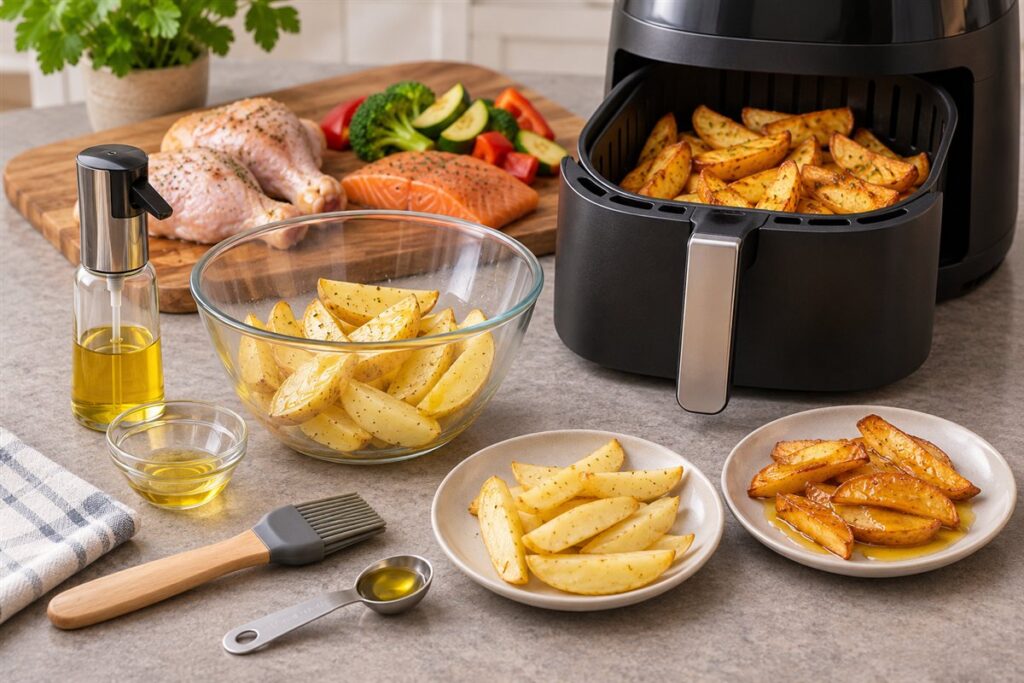
Most air fryer foods need only a teaspoon or two of oil, and some need none at all. The goal is a thin, even coat on the surface, not a pool at the bottom. The amounts below are loose guides, so adjust to your food and your manual.
Why Less Is Enough
An air fryer moves hot air around the food instead of surrounding it with oil. A thin film helps with browning and stops the surface from drying out. Extra oil mostly drips off, smokes, or leaves food greasy.
Loose Amounts by Food Type
| Food | General amount | Notes |
|---|---|---|
| Fresh potato wedges or chips | 1 to 2 teaspoons per serving | Dry them well first |
| Vegetables | About 1 teaspoon per cup | Toss until lightly glossy |
| Chicken pieces with skin | Little to none | Skin has its own fat |
| Lean meat or fish | A light brush | Prevents drying out |
| Breaded items | A light mist on the coating | Helps the crumbs brown |
| Frozen pre-cooked snacks | Usually none | Follow the pack |
How to Apply It Evenly
- Dry the food with a paper towel.
- Put it in a bowl and add a small amount of oil.
- Toss or turn by hand until every piece has a thin coat.
- Add seasoning after oiling so it sticks.
- Spread the food in the basket in a single layer.
Signs You Used Too Much or Too Little
- Smoke, or a greasy drip tray: too much oil, or fatty food with extra added.
- Pale, dry surfaces: too little oil, or food that was wet when it went in.
- Soggy patches: oil pooled in clumps instead of a thin coat.
Safe Habits
Do not pour oil into the base of the unit unless the manual says to. Wipe off excess before cooking, and clean the tray after fatty foods. If the unit smokes heavily, switch it off, let it cool, and follow the manual. Contact the maker if the smoke returns after cleaning.
Begin light and adjust by result, not by habit. Make a note of what amount gave you the finish you liked for each food, then repeat it. Fresh cuts of potato and vegetables vary in moisture, so a little more or less may be needed from one bag to the next. If you are using a marinade that already contains oil, reduce or skip the extra oil to avoid a greasy finish.
Choosing an Oil for Hot Air Cooking
Air fryers run hot, and a thin film of oil on food is exposed directly to that heat. The oil you pick should handle it. Refined oils with a neutral taste and a high smoke point are the usual choice, because they are less likely to smoke or turn bitter. Oils with a lower smoke point, including many unrefined or cold-pressed types, can smoke quickly at air fryer temperatures and are better saved for dressings and finishing.
Flavor is the other factor. A neutral oil lets the food and seasoning come through, while strongly flavored oils add their own taste, which can be pleasant in small amounts on certain dishes. You can use a neutral oil for the cook and add a drizzle of a flavorful oil afterward when you serve.
- Check the bottle label or producer guidance for suitability at high heat.
- Use fresh oil that has not turned rancid, which smells sharp or stale.
- Keep one all-purpose oil for the air fryer so you learn how it behaves.
- Avoid mixing different oils in the same cook, as the lowest smoke point sets the limit.
Butter and some solid fats burn at lower temperatures and are better added at the end or used in recipes made for them. If you are cooking for someone with an allergy, check that the oil suits their needs.
Tools for Applying Oil Evenly
How you apply oil matters as much as how much you use. Tossing food in a bowl gives full coverage and works well for chips, wedges and chopped vegetables. A pastry brush suits flat items such as fish fillets, chicken pieces and breaded cutlets, letting you control exactly where the oil goes.
Sprayers deliver a fine mist and are handy for coatings and baked goods. A refillable pump-style sprayer lets you choose the oil and avoids propellants. Aerosol cans are convenient, but some makers advise against them for non-stick baskets because additives can leave a sticky residue or damage the finish. Check your manual before choosing.
Wipes with a paper towel can also work. Put a small amount of oil on a towel and rub it over the food or the surface of a liner. For items that stick easily, such as eggs in a dish or delicate fish, a thin coat of oil on the dish or liner helps release.
Whichever tool you use, add oil sparingly and in stages. It is easy to add more but hard to remove excess. If food looks wet or shiny with pooled oil, dab it off with a paper towel before it goes into the basket.
Oil with Marinades and Seasonings
Marinades, rubs and sauces change how much extra oil you need. A marinade that already contains oil coats the food, so extra oil often leads to a greasy finish. Drain off most of the liquid and pat the surface dry before cooking, because wet food steams and browns poorly. Sugary marinades, honey and syrup scorch quickly, so cook with a lighter coating and brush on sweet glazes in the last few minutes.
Dry seasonings stick better if the food has a very light film of oil. Season after oiling, not before, since powders that land on a dry surface can blow off in the fan. Fine spices such as paprika and chili powder can burn if the oil layer is too thick or the cook is long, so use them moderately and watch the color.
- Salt can draw out moisture from vegetables, so season fairly close to cooking time.
- Breadcrumb coatings brown best with a light mist applied after the coating is on.
- Cheese and fatty toppings need no extra oil.
If your food is going to be cooked with a sauce at the end, consider cooking it dry first and tossing it afterward. This keeps the surface crisp and cuts the amount of oil needed.
Foods That Need More or Less Fat
Different foods behave differently. Lean proteins, such as skinless chicken breast or white fish, can dry out and benefit from a light coat. Fatty foods, such as sausages, bacon and skin-on poultry, render their own fat and rarely need any. Starchy vegetables such as potatoes want a thin, even coat to crisp, while watery ones, such as courgettes and mushrooms, release moisture and need to be dried and cooked in small amounts.
Tofu, paneer and similar foods are lean on the surface and benefit from a patted-dry exterior and a light coating to brown. Plant-based patties and nuggets, and many frozen foods, are often pre-treated with fat, so they need none. Always follow the package directions.
Baked goods and doughs in an air fryer, such as small muffins or rolls, usually follow the recipe and the dish or liner preparation, not the oil amounts used for roasting. Follow recipes written for your type of appliance where possible.
If you are watching your fat intake, remember that the fat from the food itself also counts. Use the drawer as a visual check. A drawer pooled with fat after a cook suggests that you can skip added oil next time, or choose a leaner cut.
Troubleshooting Oil-Related Results
Most oil problems have simple causes. If food comes out greasy, you likely used too much oil, did not dry the food, or overcrowded the basket so the oil could not drain. Cook a smaller batch, pat food dry and use less next time.
If food is dry or pale, it may need a thin coat, a little more time or a higher setting toward the end. Check that the food was not wet when it went in. If seasoning falls off, add it after oiling and press it gently to stick.
Smoke can come from several sources. Old grease in the drawer, fat dripping onto a hot surface, oils with a low smoke point and burnt sugary coatings are common causes. Switch off and let the unit cool before checking. If you see heavy smoke or smell burning that does not match the food, follow the manual and contact the maker if it recurs.
Finally, keep notes. Record the food, the oil, the amount, the time and the result. A few weeks of notes show your own pattern, and they take the guesswork out of adjusting. Treat any amounts you find online as loose starting points and adjust to your appliance.
FAQ
Do I need oil on every food?
No. Fatty foods such as sausages or skin-on chicken usually cook well without any extra.
Is a spray bottle better than pouring?
A fine mist often gives a more even coat with less oil. Use a refillable pump type if your manual warns against aerosol sprays.
Which oil is best for an air fryer?
A refined oil with a neutral taste and a high smoke point is a common choice. Check the label or producer guidance for high-heat suitability.
Can I use butter in an air fryer?
Butter burns at lower temperatures, so it is better added near the end or used in recipes designed for it. A heat-tolerant oil is more reliable for the main cook.
Are aerosol cooking sprays safe for the basket?
Some makers warn that they can damage non-stick coatings or leave residue. Check your manual and consider a refillable pump sprayer instead.
Why does food stick even with oil?
The food may have been wet, the basket crowded or the coating worn. Dry the food, spread it out and check the basket condition.
Do I need oil for frozen chips?
Many are pre-treated and need none, but a very light mist can improve browning. Follow the package.
Should I oil the basket or the food?
The food is usually the better target. Oil on the basket can smoke, so only do it if the manual or recipe suggests.
Can I reuse the oil from the drawer?
No. It contains food residue and has been heated, so discard it once cool and clean the drawer according to the manual.
The Short Version
Use a teaspoon or two, spread it thinly, and skip it for fatty foods. Adjust by results and follow the manual.