
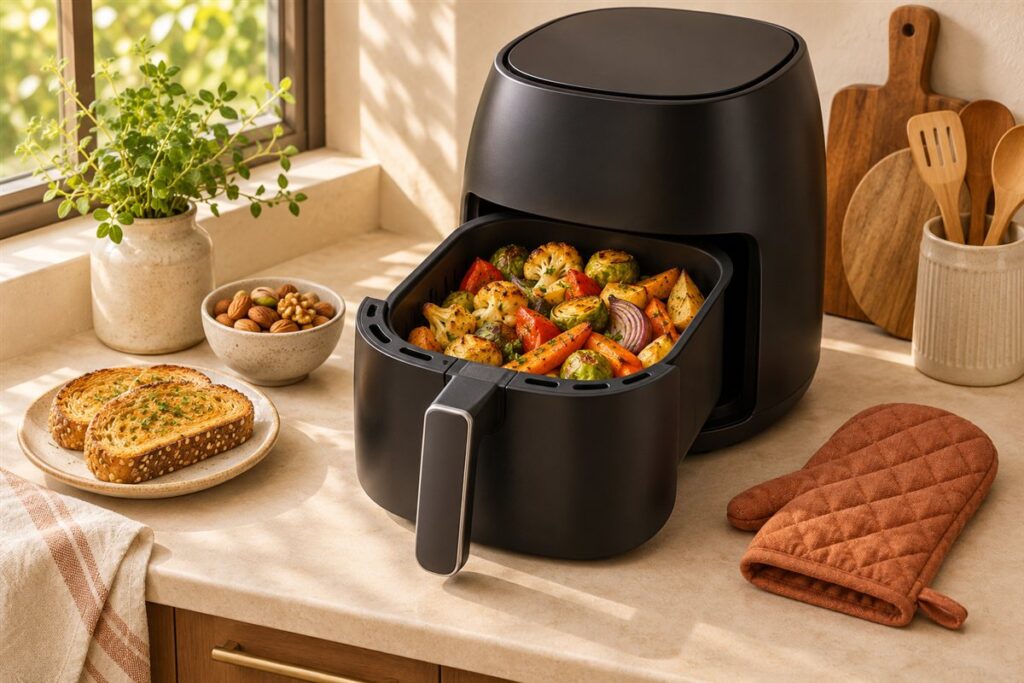
An air fryer can brown a steak quickly, giving a seared outside without a heavy pan. Thickness is the main factor, and a general range is about 400 F for 8-16 minutes, flipped once. Check your model, and use official food-safety guidance for doneness temperatures.
Choose and Prepare the Cut
Steaks about 1 to 1.5 inches thick suit most baskets. Very thin cuts overcook in moments, and very thick ones may brown before the center is ready.
- Take the steak from the fridge only briefly before cooking, within food-safety limits.
- Pat both sides dry for better browning.
- Brush with a thin coat of oil and season with salt and pepper.
Cooking Method
- Preheat the air fryer to a high setting for a few minutes.
- Place the steak in the basket with space around it. One or two steaks at a time works best.
- Cook for about half the expected time, then flip with tongs.
- Check the center with a food thermometer, placed into the thickest part sideways.
- Move the steak to a plate and rest it, loosely covered, for about 5 minutes.
Resting lets juices settle so they stay in the meat when you cut it.
General Timing by Thickness
| Thickness | Rough total time at high heat |
|---|---|
| About 3/4 inch | 6-10 minutes |
| About 1 inch | 8-13 minutes |
| About 1.5 inches | 12-18 minutes |
Rare, medium and well-done results all land at different points inside those ranges. Rely on a thermometer and the official food-safety chart for your region instead of guessing from color.
Finishing Touches
A small pat of butter or a spoonful of herb mix on the hot steak while it rests adds flavor. If you like a darker crust, brush a bit more oil on before the second side and extend the time by a minute, watching closely.
Cleanup and Smoke
Fat and juices drip into the drawer, and a hot drawer can smoke. Empty it between batches, wipe up any splatter once cool, and read your maker’s manual for the highest allowed setting.
Choosing a Cut
Well-marbled cuts such as ribeye or strip steak stay juicy, while leaner cuts such as sirloin cook faster and can dry out sooner. Cuts of similar thickness cook at similar speeds, so match your timing to thickness rather than to the name on the label.
Doneness and Internal Temperature
Steak doneness is about temperature, not time. Charts give a starting point, but thickness, starting temperature, fat content, and the air fryer itself all shift the result. A digital instant-read thermometer is the best tool for the job, because it removes guesswork. Insert the probe into the center of the thickest part, away from bone and fat.
Common descriptions run from rare, with a cool red center, through medium-rare and medium, to well done, which is cooked through with no pink. Food safety agencies publish minimum recommended temperatures for beef, and some people choose to cook steak beyond their preferred level for safety reasons, such as pregnant people, older adults, and anyone with a weakened immune system. Check your local guidance and decide accordingly.
Remember that steak keeps cooking after it leaves the heat. This carryover can raise the internal temperature by several degrees during resting, so remove the steak a little before your target. Thin cuts have less margin for error, because the center moves from raw to overdone in a short time. For thick cuts, a lower temperature setting and a longer cook can help the middle catch up with the crust. Write down what works for you, such as the removal temperature and the final result, so the next steak is more predictable.
Thickness, Fat, and Marbling
Choosing a steak for an air fryer is about thickness and fat. A cut that is too thin overcooks before it browns, while a very thick cut may need extra steps to cook through. A moderate thickness, roughly an inch or a bit more, is a common sweet spot for a basket. Ask the butcher to cut to your preferred thickness if you are buying from a counter.
Marbling, the streaks of fat within the meat, adds flavor and juiciness. Well-marbled steaks stay tender and forgiving, but they also release more fat, which can smoke in an air fryer. Lean steaks have a cleaner beef flavor but dry out more easily, so they benefit from careful timing and a rest. Bone-in cuts take a bit longer near the bone and may need repositioning to fit the basket.
The fat cap along the edge can be trimmed or scored. Scoring prevents curling, and rendering the fat adds flavor, but too much fat can cause flare-ups of smoke. Check packaging dates and look for meat that is a healthy red, without an off smell or slimy surface. Steak sold in different grades or labels varies, so read what the label says rather than assuming. Cuts with the same name may differ by region, so ask if unsure.
Tenderizing and Seasoning Ahead
A little preparation can improve any steak. Salting ahead, known as dry brining, draws moisture to the surface, which then dissolves the salt and is reabsorbed, seasoning the meat more deeply and improving the crust. Salt the steak and leave it uncovered on a rack in the refrigerator for a number of hours, or if you are short on time, season it right before cooking. Pat the surface dry before it goes in the basket.
- Dry rubs: Pepper, garlic powder, paprika, and herbs. Coarse pepper can burn, so use moderation.
- Marinades: Useful for tougher cuts, such as flank and skirt. Acidic or enzymatic marinades can turn the surface mushy if left too long.
- Mechanical tenderizing: Pounding or scoring breaks up fibers in tougher cuts.
- Butter or oil: A light coating of oil helps seasoning stick and browning, while herb butter is best added after cooking.
Bring a thick steak toward room temperature for a short time before cooking if you wish, but do not leave raw meat out for long periods. Slice tough cuts across the grain after cooking, which shortens the muscle fibers and makes each bite more tender. Wipe off heavy marinade before cooking to reduce smoke and splatter.
Resting, Slicing, and Serving
Resting is not optional. When the steak comes out, the juices are pushed toward the center. If you cut right away, they spill onto the board. A rest of about five minutes for a moderate steak, with larger cuts needing longer, lets juices redistribute so the slices stay moist. Rest the steak on a warm plate or a rack, loosely covered with foil if you like, though avoid wrapping tightly, which softens the crust.
Slice against the grain, which means cutting across the visible lines of muscle fiber. This is especially important for cuts such as flank or skirt. Use a sharp knife and long, smooth strokes. For thick steaks, cut into strips to serve. Pour any resting juices over the slices or into a sauce.
Finish with simple touches. Flaky salt, a pat of herb butter, a squeeze of lemon, or a spoonful of pan sauce work well. Serve with sides that suit the richness, such as roasted vegetables, a crisp salad, potatoes, or grilled mushrooms. For sandwiches or salads, cool the sliced steak slightly before assembling. Keep side dishes timed so everything is ready together; steak does not wait well.
Storing and Reheating Cooked Steak
Cooked steak is best fresh but keeps well if handled correctly. Refrigerate leftovers promptly in a covered container, ideally within a couple of hours, and eat them within a few days. Slicing before storage helps it cool quickly, though whole pieces retain moisture better. Do not leave steak at room temperature for long periods.
Reheating steak without overcooking is a challenge. High heat dries it out. The gentler approach is to warm slices in the air fryer at a lower setting for a short time, perhaps just a couple of minutes, checking often. Alternatively, warm the slices briefly in a covered pan with a splash of broth. Microwave reheating is fast but can toughen the meat, so use a low power setting in short bursts if you choose it.
Leftover steak is versatile. Use it in sandwiches, wraps, tacos, fried rice, noodle bowls, salads, or omelets. It is often tastier cold or at room temperature in a salad than reheated. Reheat to steaming hot if you plan to serve it warm, particularly for higher-risk groups. For freezing, wrap tightly in freezer-safe material with the air pressed out, label with the date, and thaw in the refrigerator. Discard steak that smells sour or looks slimy.
FAQ
Should I use a rack or the bare basket?
The basket is usually fine. If your model comes with a rack or tray, check the manual to see which one it recommends for meat.
Can I cook a frozen steak?
It can be done, but the outside tends to overcook before the middle thaws. Thawing in the fridge first gives more even results.
Do I need to preheat the air fryer for steak?
Preheating helps the surface sear quickly. Follow your manual if unsure, and check doneness early.
Should I flip the steak?
Yes, flipping once around the midpoint helps even browning. Use tongs rather than a fork so you do not pierce the meat.
Why is my steak gray instead of browned?
Surface moisture and a crowded basket can cause steaming. Pat the steak dry, use enough heat, and cook one or two steaks at a time.
Is it okay to cook multiple steaks at once?
If they fit in a single layer with space around them. Otherwise cook in rounds and rest the first ones.
How do I stop the kitchen from filling with smoke?
Trim excess fat, wipe off heavy marinade, and keep the drawer clean. Check your manual about adding a little water under the basket.
Can I add butter before cooking?
Butter can burn at high heat. It is usually better added after cooking.
What if my steak is overcooked?
Slice it thinly across the grain and serve with a sauce, or use it in sandwiches, tacos, or soups where moisture comes from other ingredients.
The Short Version
Dry the steak, season it, preheat, and cook at high heat with one flip. Use the table for rough timing, rest the meat, and confirm doneness with a thermometer and food-safety guidance.









