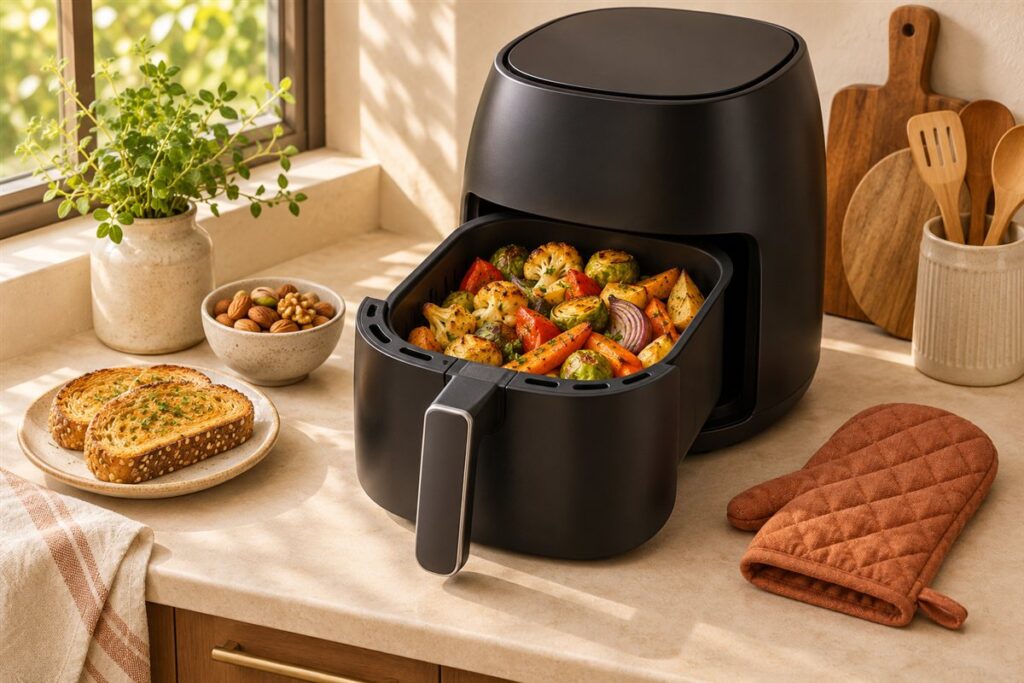
Asparagus cooks in just 5-10 minutes in an air fryer at roughly 360-400 F. Thin spears are done in a few minutes, while thicker ones need a little longer. Because it cooks so quickly, check early and pull it out as soon as it is tender with lightly browned tips.
Trim and Season
Hold a spear at both ends and bend it gently. It snaps where the tough woody part ends. Trim the rest of the spears to that length, or simply cut off an inch or two from the bottoms.
- Rinse the spears and dry them well.
- Lay them on a plate and drizzle with a teaspoon or two of oil.
- Roll them around so each spear is lightly coated.
- Sprinkle with salt, pepper, and garlic powder if you like.
Cooking Method
Place the spears in the basket in a single layer, or crisscross them lightly if the basket is small. Cook at a moderate-to-high setting for 4-5 minutes, then shake or turn them with tongs. Cook for another 1-5 minutes, depending on thickness. The spears are ready when they bend easily and a fork slides in near the base.
Thin Versus Thick Spears
| Thickness | General time | Texture |
|---|---|---|
| Pencil-thin | 4-6 minutes | Tender, lightly crisp tips |
| Medium | 6-8 minutes | Tender with a slight bite |
| Thick | 8-12 minutes | Softer stalks, browned tips |
If you cook a mix of sizes, remove the thin ones first.
Ways to Serve It
- Squeeze lemon juice over the hot spears.
- Top with shaved hard cheese while still warm.
- Wrap bundles of three or four spears in a slice of ham or bacon, and cook a few minutes longer. Check the meat is cooked through.
- Serve beside eggs, fish, or chicken.
Cooking With Other Vegetables
Asparagus cooks quickly, so it pairs well with other fast vegetables, such as cherry tomatoes, sliced peppers and zucchini. Slower foods, such as carrots or potatoes, should go in first. Add the asparagus for the final few minutes, so that every item finishes at the same time. Keep the basket in a loose layer so the air can reach each spear.
Look for firm, bright green spears with tight tips when shopping. Limp or wrinkled ones cook unevenly and can taste bitter. Store them upright in a glass with a little water in the fridge until you are ready to cook.
Selecting and Storing Spears
Good results start at the store. Look for spears that are firm and straight, with tightly closed tips and a bright, even color. Tips that look mushy, slimy, or spread open usually point to age, and the cut ends of the stalks should not look dried out or deeply split. If you can, pick a bunch where the spears are close to the same thickness, because uniform spears finish together in the basket.
At home, treat the bunch a little like cut flowers. Many cooks trim a small piece off the base, stand the bundle upright in a glass with a little water, and loosely cover the tips in the refrigerator. Another approach is wrapping the ends in a damp paper towel inside a bag. Either way, keep them cold and use them within a few days, since they lose moisture and firmness quickly.
Wash right before cooking rather than before storing, and dry the spears thoroughly. Surface water steams the spears instead of letting hot air brown them, which is one of the most common reasons asparagus comes out limp. Pat them with a clean towel, or let them air-dry on a rack for a few minutes while the air fryer preheats. Check the packaging or your appliance manual if you are unsure about preheating, since some models do not require it.
Basket Size and Airflow
An air fryer works by moving hot air around the food, so how you load the basket matters as much as the temperature you pick. Asparagus is long, and the length of your spears relative to the basket decides how you arrange them. If the basket is wide enough, lay them in one layer, all pointing the same direction. If it is narrow, cut the spears in half or into shorter pieces, or cook two smaller batches instead of piling them up.
Stacked spears trap steam between them. The top layer browns while the bottom layer turns soft and dull. If you must cook a heavier load, shake or rearrange the spears partway through, moving the ones from the bottom to the top. Tongs work better than shaking for long spears, since shaking can tangle them or tip them against the heating element.
Very light, thin spears can sometimes be lifted by the fan. If you notice them shifting or sticking up near the element, tuck them down, or lay a trivet or rack designed for your model over them if the manual allows it. Never block the air vents with foil or other items. Foil use varies by model, so check the guidance that came with your fryer before lining the basket with anything.
Judging Doneness by Sight and Touch
Because asparagus cooks so quickly, timing charts are only a starting point. Thickness, how cold the spears are, and how hot your particular machine runs all shift the result. It is more reliable to learn what finished spears look and feel like and begin checking early.
- Color: The green should deepen slightly and look glossy, with the tips taking on a little browning. Olive-drab, wrinkled spears have gone too far.
- Flex: Lift a spear with tongs. A properly cooked one bends in a gentle curve but does not collapse. A stiff, straight spear needs longer.
- Fork test: A fork or knife tip should slide into the thick end with light pressure.
- Tip texture: Crisp tips are good, but if they turn brittle and dark, pull the batch out.
Taste one spear from the thick end, since that part finishes last. Remember that spears keep cooking from residual heat for a minute after you take them out, so stopping a touch early is safer than stopping late. If your first batch is not perfect, make a note of the minutes and the spear thickness so the next batch is easier to judge.
When to Add Salt, Acid, and Cheese
The order in which you add flavor changes how the spears cook. Oil should go on before cooking so the surface can brown and the seasonings cling. Dry seasonings such as garlic powder, pepper, or paprika also work well before cooking, but fresh minced garlic tends to scorch in high heat, so add it at the end or stir it into a sauce.
Salt is fine before cooking in a light hand. If you like a stronger salt flavor, finish with a pinch while the spears are still hot, when it will stick to the glossy surface. Acid is best added after cooking: lemon juice, a splash of vinegar, or a drizzle of a tangy dressing keeps its brightness when it goes on last. Applied before cooking, acid can dull the green color.
Cheese and breadcrumbs sit somewhere in between. Hard grated cheese melts nicely if sprinkled in the last minute or two, but too early and it can darken or fall through the basket holes. Soft toppings such as butter, herbs, or a soft cheese go on after the spears come out. Toasted nuts or seeds add crunch and are best added once everything is plated.
Storing and Reheating Leftover Spears
Cooked asparagus is best eaten fresh, but leftovers can be useful. Let the spears cool, then store them in a covered container in the refrigerator and plan to eat them within a few days. They hold up better when cooked just to tender rather than soft, so if you know you are saving some, take that portion out a little early.
To reheat, avoid a long, hot cycle. A short, lower-temperature warm-up in the air fryer, perhaps a couple of minutes, refreshes the tips without drying the stalks. You can also eat leftover spears cold, which suits salads, grain bowls, and sandwiches. Chopped into pieces, they fold easily into omelets, pasta, or fried rice, where a small amount of extra heat will not matter.
Avoid reheating the same portion multiple times, and follow general food safety practice by not leaving cooked vegetables out at room temperature for long periods. If the spears smell sour or feel slimy, discard them. Freezing cooked asparagus is possible, but the texture turns soft, so it suits soups and purees better than a side dish.
FAQ
Why is my asparagus stringy?
The bottom ends were probably not trimmed enough. Snap off a bit more next time, or peel the lower part of thick spears.
Why did it dry out?
It likely cooked too long or had too little oil. Check at the early end of the range and add a touch more oil if needed.
Do I need to peel asparagus before air frying?
Peeling is optional. Thin spears rarely need it, but on thick spears a quick pass with a vegetable peeler over the lower part of the stalk removes the tougher skin and makes the texture more even.
Can I cook asparagus wrapped in bacon or ham?
Yes, bundle a few spears and wrap them, then cook until the meat is done and the spears are tender. Wrapped bundles usually take longer than bare spears, so check the meat first and keep the pieces in a single layer.
Should I preheat the air fryer for asparagus?
A short preheat can help the spears brown quickly, but many models work fine without one. Follow your manual, and check early either way, since asparagus finishes fast.
Can I cook frozen asparagus?
You can, though frozen spears release more water and come out softer than fresh. Cook them straight from frozen without thawing, keep them in a single layer, and expect less browning.
How can I keep the spears from sticking to the basket?
Make sure they are coated lightly with oil and that the basket is clean. A very light spray or brush of oil on the basket itself also helps, as long as your manual allows it for the nonstick coating.
Why do the tips burn before the stalks are tender?
The tips are thin and cook faster. Try a slightly lower setting, cook thick spears a little longer, or trim and sort spears by thickness so each batch matches.
What size bundle serves four people?
Plan on a generous handful of spears per person as a side dish, and adjust for appetite. Most baskets hold only a single layer comfortably, so a larger group usually means two rounds.
The Short Version
Trim the tough ends, coat lightly with oil, and cook in one layer for about 5-10 minutes, turning once. Thin spears finish first. Adjust for your model, and follow your maker’s manual.