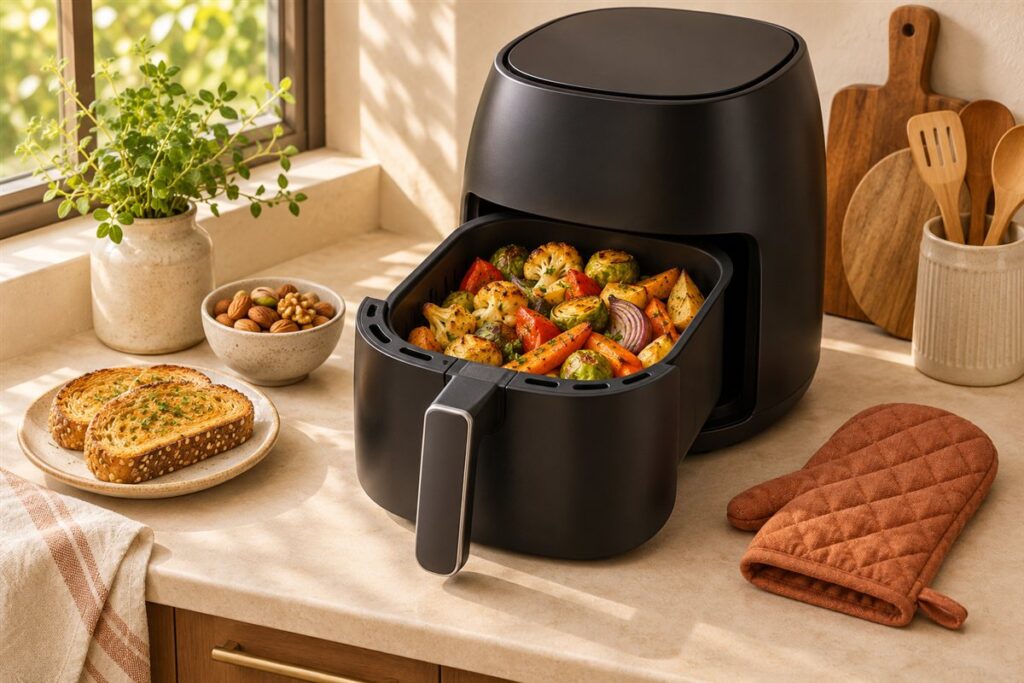
You do not need much beyond the air fryer itself. A thermometer, heat-resistant gloves, tongs, and a cleaning brush cover most needs, and everything else can wait until you know how you cook.
The Essentials
- Food thermometer: The only reliable way to confirm that poultry, pork, and fish are cooked through.
- Heat-resistant gloves or mitts: The basket, drawer, and dishes get very hot.
- Tongs or a silicone-tipped turner: Lets you flip food without scratching the coating.
- Soft brush and non-scratch sponge: Keeps the basket clean without wearing it down.
- A small oil sprayer or brush: Helps you use a thin coat of oil.
Nice-to-Have Extras
These can make life easier once you have used the unit for a few weeks:
- Liners made for air fryers, to cut cleanup on sticky foods.
- A small baking pan or silicone mold that fits your basket.
- A rack or skewers, if your maker offers a model-specific version.
- A kitchen timer, if your unit has no reliable one.
- A trivet or mat for hot dishes.
- Airtight containers for batch-cooked leftovers.
How to Decide What You Need
Cook with the bare unit for two weeks and write down what annoyed you. Was cleanup slow? Did you wish for a way to bake? Were you unsure of doneness? Buy only what solves a problem you have noticed. This avoids a drawer full of unused gadgets and keeps your counter clear.
Always check that an accessory is made for high heat and fits inside your basket with space around it. Your manual may list what the maker allows.
Decision Table
| Item | Why it helps | What to check |
|---|---|---|
| Thermometer | Confirms doneness | Fast reading and clear display |
| Gloves or mitts | Protects hands | Heat resistance and grip |
| Liners | Easier cleanup | Size, and airflow holes |
| Baking pan | Opens up baking | Fit inside the basket |
| Brush | Gentle cleaning | Soft bristles |
What You Can Skip
Many gadgets look handy but see little use. Single-purpose racks, novelty molds, and large accessory sets often end up in a drawer. Before buying, ask whether you already own something that does the same job, such as an oven-proof dish or a spare brush. Spend your effort on learning the unit, and you will likely find that a few basics are enough.
Matching Accessories to Your Basket Size
Before buying anything for your air fryer, measure the cooking space. Basket and drawer models have a fixed footprint, and the usable area is often smaller than the outside of the unit suggests. Measure the inside length, width and depth of the basket, or the rack area on an oven-style model, and write the numbers down. Take the measurements with any divider or crisper plate in place, because these reduce the room available.
Accessories should leave space around them for air to move. A pan that fills the basket from side to side blocks airflow and may cook unevenly. As a rule, look for an item that sits flat with a clear margin on every side, and check that the handles fold, lift out or clear the drawer when it closes. Height matters too, because an item that is too tall may touch the heating element or the top of the cooking chamber.
Round, square and rectangular units take different shapes. A round pan fits a round basket best, while a rectangular pan suits a drawer-style unit. Some makers list which sizes and shapes are compatible with their models, so look at the manual or the maker’s accessory page before ordering.
- Measure the basket inside, not the outside.
- Leave a margin for airflow on all sides.
- Check height against the heating element.
- Look for the maker’s list of compatible items.
Safety and Material Checks for Accessories
An air fryer runs hot and moves air fast, so accessories need to cope with both. Look for a stated heat rating that covers the temperatures you plan to use. Metal pans, silicone moulds and ceramic dishes are common choices, but not every version suits every unit. The listing or manual should say what the item is designed for, and if it does not, ask the seller before buying.
Light items can blow around in the airflow. Paper liners, foil and parchment sheets can lift and touch the heating element if they are not weighed down by food. Many makers advise against using loose liners without food on top, and some warn against certain materials. Follow the manual, and never cover the whole basket in a way that blocks airflow.
Check coatings. Nonstick surfaces can scratch if you use metal tools, so choose silicone or wood tools when the basket is coated. Look at the care instructions for dishwasher use and cleaning, since harsh scrubbing can wear a coating.
Consider handles and grips. Pans and dishes should be easy to lift out with gloves, and handles should not become too hot to hold with your protection. Finally, be careful with second-hand or unmarked items. If you cannot find a heat rating or a material description, it is safer to choose something else.
What Different Cooks Actually Need
The right extras depend on what you cook. If you mostly reheat leftovers and cook frozen foods, you may need nothing beyond the basics. A thermometer and gloves cover safety, and a brush handles cleanup. Adding more would be clutter.
If you cook for a family, batch size matters. A second basket or a stackable rack, if the maker offers one for your model, can let you cook two items at once. Containers for leftovers help with meal planning, and a timer or notes app can help you track different foods. Think about the space you have for storing items between uses.
If you like baking, a small pan or silicone mould that fits the basket opens up muffins, small cakes and baked dishes. A thin, oven-safe dish helps with egg and cheese recipes. Check the manual for baking guidance and any limits on liners or covers.
If you cook meat and fish often, a quick-read thermometer matters most. Tongs and a turner help you turn pieces without breaking them. If you roast vegetables, a perforated tray or rack can help air reach all sides. Small households might choose a compact set, while frequent cooks may like a few options.
- Reheaters and snackers: basics only.
- Families: containers, a rack, extra capacity if available.
- Bakers: small pan or mould that fits.
- Meat and fish: thermometer, tongs.
Cleaning and Storage Extras Worth Having
A few cleaning tools make an air fryer easier to live with. A soft brush and a non-scratch sponge handle most residue in the basket. A small bottle brush or a narrow tool can reach the corners and the holes in a crisper plate. A soft cloth wipes the outside and the inside of the cooking chamber once the unit has cooled and is unplugged. Follow the manual’s cleaning steps, since parts that can go in the dishwasher on one model may not on another.
Degreasing is easier if you clean soon after use. Soaking a basket in warm soapy water for a short time can loosen baked-on grease, as long as the manual allows it. Avoid abrasive pads and harsh chemicals on nonstick surfaces, because they can damage the coating.
Storage matters too. A designated spot for the air fryer and its accessories means you will use it more. A small container or drawer divider keeps tongs, gloves and liners together. If counter space is limited, check the unit’s size and weight before deciding whether it can stay out. Allow clearance behind and around it when in use, as the manual specifies for vents.
Finally, keep the manual, or a photo of key pages, in an easy place. It lists approved cleaning methods, bakeware limits and troubleshooting tips, and it saves time when you need to check something quickly.
Spending Sensibly and Spotting Poor Value
Air fryer accessories range from simple tools to large sets, and the best value is usually found by buying slowly. Start with the essentials, use them for a few weeks, and note what is missing. Many people find that the accessories they thought they needed are not the ones they miss.
Be careful with large bundles. A set may include a handful of items you will use and several you will not. Count the pieces you would actually use, and compare that with buying them singly. A smaller set of well-matched items often beats a long list of generic extras. Check whether any pieces duplicate things you already own, such as an oven-safe dish, tongs or a spare brush.
At budget level, look for simple tools with clear heat ratings and honest descriptions. In the middle range, items may offer sturdier build and better coatings. Higher-priced accessories may offer maker-specific fit or extra features, but they are not always necessary. Quality matters most for items that touch food or heat, such as thermometers and gloves, so pay attention to reviews and descriptions.
Questions to ask before buying include whether the item fits your model, what temperature it is rated for, how it is cleaned, and what the return policy is. Be wary of vague claims, missing heat ratings or items that look like they would block airflow. If something does not fit or perform as expected, return it promptly rather than forcing it.
FAQ
Do I need a cookbook?
Not at first. Many people begin with package directions and simple recipes, then add a book if they want ideas.
Are bundles worth it?
They can be, if you would use every piece. Look at what is in the set and skip it if half the items would sit unused.
Do I need special liners for an air fryer?
Not always. Liners can ease cleanup on sticky foods, but they must suit your model and leave airflow gaps. Follow the manual and never let a liner sit empty where it could lift into the element.
Can I use my regular baking dishes in an air fryer?
Sometimes, if they are heat-safe and fit with room around them. Check the dish's temperature rating and the air fryer's manual, and avoid dishes that touch the sides or top.
Is a food thermometer really necessary?
It is the most reliable way to check that poultry, pork and fish are cooked through. Air fryer browning can look done before the centre is ready, so a thermometer is helpful.
Should I buy a second basket?
Only if your model supports it and you often cook larger batches. Check whether the maker sells a compatible version, and think about storage space first.
What gloves are best for handling hot baskets?
Look for heat-resistant gloves or mitts with a clear temperature rating and a good grip. Make sure they cover your wrists and fit well enough to hold a basket securely.
Are silicone accessories safe in an air fryer?
Many are designed for high heat, but ratings vary. Check the listed temperature limit and the air fryer manual before use.
What should I do about accessories that do not fit?
Return or exchange them rather than forcing them in. A poor fit can block airflow, damage the coating or touch the heating element.
How do I keep accessories from cluttering the kitchen?
Store them in one container or drawer and buy only what solves a problem you have noticed. Remove anything you have not used after a few months.
The Short Version
Begin with a thermometer, gloves, tongs, and cleaning tools. Add extras only after your own cooking shows you what is missing.