
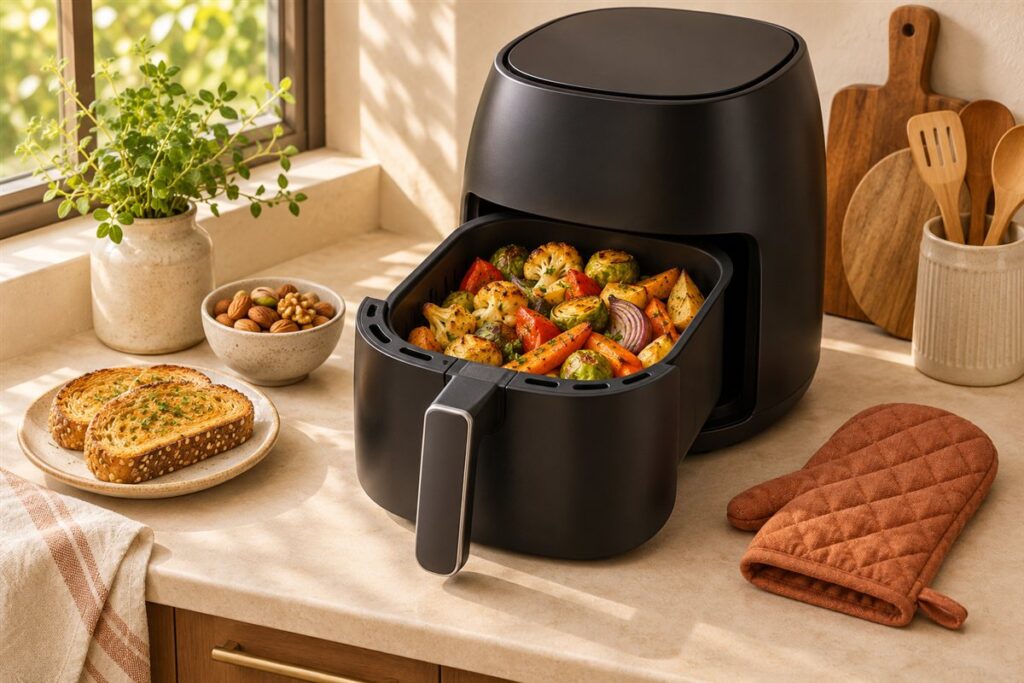
Most air fryer disappointments come from a few habits that are easy to change: overfilling, using too much oil, skipping cleaning, and trusting timers blindly. Fix those and you will get crisper food with less smoke.
Mistakes With Loading and Prep
- Packing the basket. Crowded food steams instead of crisping. Use a single layer and cook in batches.
- Leaving food wet. Pat items dry before cooking, especially meat and vegetables.
- Using too much oil. A light coating is enough. Excess oil drips and smokes.
- Cutting uneven pieces. Mixed sizes finish at different times.
- Using wet batter. Thin batters drip through the basket. Use breading or a thick coating instead.
Mistakes With Heat and Timing
- Setting the temperature too high for thick foods, which browns the outside before the inside is done.
- Never checking food partway. Open the drawer and look, turn pieces, and adjust.
- Copying oven times exactly. Air fryers usually cook faster.
- Judging meat by color alone. Use a food thermometer for poultry, pork, ground meat, and fish.
- Skipping preheating when your manual calls for it.
Mistakes With Care and Placement
Leaving grease in the drawer is the top cause of smoke. Wash the basket and drawer after use, following your maker’s cleaning notes, and avoid harsh scrubbing tools that may wear the coating. Place the unit on a hard, heat-tolerant surface with space behind and around it so the vents can release hot air, and do not run it under low cabinets. Plug it directly into a wall outlet instead of an extension lead unless your manual says otherwise.
Also avoid lining the basket with anything that blocks airflow or can lift into the element. Follow your manual for liners and foil.
Quick Fix Chart
| Mistake | Result | Simple fix |
|---|---|---|
| Crowded basket | Soft, uneven food | Single layer, batches |
| Too much oil | Smoke and grease | Light coat only |
| No mid-cook shake | One side pale | Shake or flip halfway |
| Dirty drawer | Smoke and odors | Clean after each use |
| Blocked vents | Poor cooking | Leave space around the unit |
Building Good Habits
Keep a short notes page near the kitchen. After each new food, write the temperature, time, and basket amount that gave good results. After a month you will have a personal guide that fits your unit. Also give the manual a quick read when you first unpack the appliance, because it lists limits and cleaning rules that no general article can cover.
Food Safety Slips to Avoid
Some air fryer mistakes affect safety, not just taste. The most common is trusting color or a timer to decide when meat, poultry, or fish is done. Because the fan browns the outside quickly, the inside of thick pieces can still be undercooked. A food thermometer placed in the thickest part, checked against your local food safety guidance, is the reliable way to know.
Cross-contamination is another slip. Raw poultry juices on a board, tongs, or the basket handle can spread to cooked food, so use separate tools or wash them between steps. Wash the basket after raw meat before using it for anything else.
Watch for these habits too:
- Leaving cooked food in the drawer for a long time while the unit sits warm or cools.
- Reheating leftovers unevenly and skipping a check that the center is hot.
- Thawing frozen meat on the counter instead of in the fridge.
- Reusing marinade that touched raw meat as a finishing sauce without cooking it properly.
None of this requires special equipment beyond a thermometer, clean tools, and a few minutes of attention. Treat the air fryer like any other cooking appliance, with the same standards for temperatures and handling.
Accessory and Liner Errors
Accessories can improve results, but the wrong one can cause trouble. Liners, foil, and paper are the usual culprits. They are light, so the fan can lift them toward the heating element, and covering the whole basket floor can block airflow and leave food soft. Use liners that are made for air fryers, with holes for airflow, and weigh them down with food.
Pans and dishes can cause problems when they are too large or not heat-rated. A dish that touches the element or fills the whole basket restricts air and may overheat. Plastic, thin cardboard, and sealed containers should not go in at all.
Before using any accessory, ask:
- Is it labeled for oven or air fryer heat?
- Does it leave a gap around the edges?
- Will it stay put when the fan runs?
- Does my manual list it as allowed or not allowed?
Skewers and racks should be stable and sized for your basket. If an accessory is damaged, warped, or has peeling coating, replace it. When you are unsure, cooking directly in the basket is the simplest and safest choice, and you can always contact the maker with your model number to ask what they permit.
Seasoning and Coating Blunders
Seasoning behaves differently in an air fryer because the fan can blow loose powders around the cooking area. Fine dry spices and flour can fly off food and settle on the element, which may smoke or burn. Press coatings on firmly, and apply them over a thin film of oil or egg wash so they stay attached.
Sugary glazes and sauces brown fast and can burn before the food finishes. Add them near the end of the cook instead of at the start. Salty or acidic marinades can leave food wet, so pat it dry or let excess drip off before cooking.
Other coating mistakes include:
- Using thin wet batter, which drips through the basket instead of setting.
- Skipping the dry step, so breading turns gummy.
- Seasoning heavily with salt before cooking foods that release moisture.
- Spraying aerosol oils on coated baskets when the manual says to avoid them.
A good rule is to coat lightly, press well, and add delicate seasonings after cooking. Dried herbs and fine spices lose flavor or scorch under strong airflow, so a small sprinkle at the end often tastes better than a heavy dose at the start.
Causes of Smoke and Odors
Smoke is a common complaint and usually has a simple cause. Grease left in the drawer or on the element from earlier cooking burns when the unit heats up. Fatty foods such as bacon or sausages can also release enough fat to smoke, especially at high temperatures. Clean the basket, drawer, and interior regularly, and wipe away splatter before it bakes on.
Check the food and the setting as well. Excess oil, sugary coatings, and loose crumbs can burn. A very high setting for a long time can produce smoke even from clean surfaces. If you cook fatty foods often, a rack over a drip tray, if your manual allows it, can help fat drain away from the heat.
Troubleshoot in this order:
- Unplug and cool the unit, then check for grease in the drawer and on the element.
- Clean it as the manual directs and let it dry completely.
- Try again with less oil and a slightly lower temperature.
- Check ventilation, since a blocked vent can trap odor and heat.
A new unit may produce a mild smell on the first few uses, which many makers note in the manual. Persistent or strong burning smells should be treated as a reason to stop and consult the maker.
Knowing When a Problem Is the Machine
Sometimes the issue is not your technique. Learn the signs that suggest a fault so you can stop using a unit that may be unsafe. Unusual burning smells that continue after cleaning, a fan that rattles or stops, a display that behaves oddly, or a cord and plug that feel hot are all reasons to stop and contact the maker.
Uneven results that no change in habits can fix may point to a thermostat or fan problem. For example, food that burns at normal settings, never browns even when uncrowded, or cooks very differently from past batches could signal a worn part. Visible damage such as cracks, peeling coating, bent baskets, or a loose handle also deserves attention.
Take these steps if you suspect a fault:
- Unplug the unit and let it cool.
- Check the manual for troubleshooting and warranty information.
- Contact the maker or a qualified repair service rather than opening it yourself.
- Stop using the unit if the cord, plug, or element is damaged.
Replacement becomes sensible when repair is not offered, the coating is deteriorating, or safety concerns remain, and a warranty may help when the unit is still covered.
FAQ
Why does my food taste dry?
It may be overcooked, or the temperature may be too high for the size. Lower the heat and check sooner.
Do I need to clean it every time?
Wiping the basket and drawer after each use keeps residue from building up. Follow the maker’s guide for deeper cleaning.
Can I put wet marinated food straight into the basket?
It is better to let excess marinade drip off and pat the surface dry. Wet food steams, browns poorly, and can cause smoke when drips hit hot surfaces.
Why does my air fryer smoke when I cook bacon?
Fatty foods release a lot of grease that can burn on hot surfaces. Cook at a moderate setting, clean the drawer after use, and follow your manual on racks or liners.
Is it a mistake to use cooking spray?
It can be. Some makers warn that aerosol sprays may damage coated baskets. A refillable pump sprayer is a common alternative, but follow your manual.
How full should I fill the basket?
Fill it so food sits mostly in a single layer with gaps for airflow. Overfilling is the most common cause of soggy results.
Can I leave the air fryer unattended?
It is wise to stay nearby while it is running and check food partway through. Follow the manual, since it may give specific guidance on supervision.
Should I wash the basket in the dishwasher?
Only if the manual says it is dishwasher safe. Many coated baskets last longer when washed by hand with a soft sponge.
The Short Version
Give food space, use little oil, check partway, and keep the unit clean and ventilated. Read the manual once, since it answers many questions.









