A wall mirror does more than show your reflection. It reflects light, makes a room feel larger and acts as a focal point. Size, shape and frame all shape the effect, and the hardware on the back decides how easily and firmly it hangs.
We have not used these products ourselves, so this guide describes construction and features rather than personal results. Use it to compare listings step by step, and measure your wall before you decide, because a mirror that looks right online can feel very different on your own wall.
As an Amazon Associate we earn from qualifying purchases. Links on this site are affiliate links, and they do not change the information we give.
In this guide
Quick Picks
| Pick | Product | Best For |
|---|---|---|
| Best Overall | Brightify Arched Mirror, 26 x 38 Inch, Black | Arched metal frame for vanities, mantels and entryways |
| Best Vanity Mirror | Brightify Metal Framed Rectangle Mirror, 40 x 30 Inch, Black | Hangs vertically or horizontally over a sink |
| Best Wood Frame | Kate and Laurel Talma Scalloped Mirror, 24 x 36, Natural Wood | Wavy scalloped wood edge with a warm finish |
| Best Traditional | Kate and Laurel Arendahl Arch Mirror, 24 x 36, Antique Gold | Baroque-style resin crown on an arched iron frame |
| Best Large Mirror | CIRCUMI Arched Wall Mirror, 36 x 48, Black | Tempered glass in an oversized arch |
Our Picks

1. Brightify Arched Mirror, 26 x 38 Inch, Black — Best Overall
The arched top is the reason to choose this mirror: the curve softens the straight lines of a vanity, mantel or console table and bounces light in the way the guide describes, while the slim black metal frame keeps the look current. At 26 inches wide by 38 inches tall it is proportioned for a single vanity or an entryway wall without overwhelming either, and the metal frame keeps the overall weight lower than a comparable wood frame, which simplifies fixing. Brightify sells the mirror through its own Amazon storefront with fulfilment by Amazon. Before ordering, confirm the stated weight and the bracket style on the listing, use the tape-outline trick from the care tips to check the arch against your wall, and plan fixings that suit your wall type rather than relying only on the included hardware.

2. Brightify Metal Framed Rectangle Mirror, 40 x 30 Inch, Black — Best Vanity Mirror
A plain rectangle is still the most flexible wall mirror shape, and this Brightify model adds the orientation choice the guide flags as worth checking: the 40 by 30 inch frame can hang vertically or horizontally. Run it horizontally above a wide or double vanity, or vertically over a single sink where ceiling height allows. The black metal frame is thin, so most of the footprint is reflective glass, and the finish pairs with matte black taps and handles as well as chrome. It is sold by Brightify Direct and fulfilled by Amazon. Measure the vanity first and aim for a mirror somewhat narrower than the unit beneath it, as the FAQ suggests, then check the listing for the hanging brackets supplied and the total weight so you can match anchors to your wall construction.
View Brightify Metal Framed Rectangle Mirror on Amazon

3. Kate and Laurel Talma Scalloped Mirror, 24 x 36, Natural Wood — Best Wood Frame
The Talma swaps the usual straight rectangle edge for a scalloped, wavy outline cut into a natural wood frame, which gives a bathroom or nursery wall a softer, crafted feel without changing the practical 24 by 36 inch size. That footprint suits a single vanity or a bedroom dressing corner, and the warm wood tone works where black metal would feel cold. Kate and Laurel is a long-running decor brand (made by Uniek), and this listing is sold by Amazon.com itself, which helps if you need an exchange for transit damage. Wood frames in bathrooms deserve the guide’s moisture check: hang it away from direct shower spray and wipe splashes off the frame. Confirm the hanging hardware and orientation on the product page, and use two fixings so the wide frame stays level.

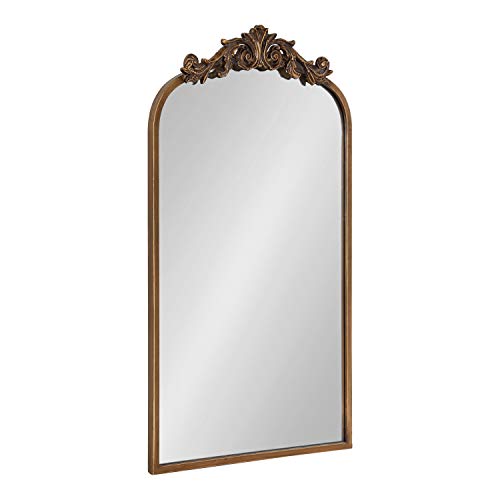
4. Kate and Laurel Arendahl Arch Mirror, 24 x 36, Antique Gold — Best Traditional
For a traditional or vintage-leaning room, the Arendahl is the statement piece in this list. Its arched iron frame is topped with a baroque-inspired resin garland crown, finished in antique gold, and the overall size is 24 inches wide by 36 inches tall and about 1.25 inches deep. That ornament makes it a focal point above a mantel, sideboard or dressing table rather than a plain bathroom mirror, and the gold tone reflects warm light from lamps in the way the guide’s lighting section describes. Kate and Laurel (Uniek) publishes the frame dimensions and UPC on the listing, which makes like-for-like comparison easy. Because the crown adds visual weight at the top, mark the outline with tape first, check the stated weight, and use fixings rated for it in studs or with proper anchors.


5. CIRCUMI Arched Wall Mirror, 36 x 48, Black — Best Large Mirror
At 36 inches wide by 48 inches tall, this CIRCUMI arch is the pick for a big blank wall, a wide double vanity or an entryway that needs light thrown deep into the room. The glass is tempered, and the maker describes it as shatterproof and crystal-clear, which matters more at this size because a large sheet of ordinary glass is both heavier and less forgiving if it is knocked. The black metal frame keeps the outline slim so the mirror reads as one clean arch. Size brings the guide’s practical warnings to the front: this is a two-person lift, the stated weight on the listing decides your fixings, and plasterboard anchors alone may not be enough, so plan for studs or heavy-duty anchors. CIRCUMI sells and ships it through Amazon, and the same design is listed in other sizes if 36 by 48 is too large.

What to Look For
| Factor | Why it matters | What to check |
|---|---|---|
| Size and proportion | The mirror should suit the wall and furniture around it. | Measure the space, then compare the stated width, height and depth. |
| Shape | Round, arched and rectangular forms create different moods. | Match the shape to your room style and existing lines. |
| Frame material | Wood, metal and resin differ in weight and finish. | Look at the maker’s description of material and surface coating. |
| Glass quality | Clear, distortion-free glass gives a truer reflection. | Check for a stated glass thickness, edge finish and backing. |
| Hanging hardware | Heavy mirrors need strong fixings. | Check the included brackets, hanging wire or cleats and the stated weight. |
| Orientation | Some mirrors hang only one way, others both. | Read whether the frame supports vertical and horizontal mounting. |
| Room and lighting | Position affects how much light the mirror bounces around. | Think about nearby windows and lamps, and whether you want a bright or a softer reflection. |
Setup and Care Tips
- Mark the position with low-tack tape on the wall to visualise size before drilling.
- Use fixings suited to your wall type, such as anchors for plasterboard or screws for studs.
- Ask a second person to help lift and hold larger mirrors while you fix them.
- Clean the glass with a soft cloth and a gentle cleaner, applied to the cloth rather than the mirror.
- Keep the frame away from direct splashes in bathrooms unless the maker describes it as moisture resistant.
Mistakes to Avoid
- Choosing a mirror that is too small for the wall, which can look lost.
- Relying on the included hardware without checking whether it suits your wall.
- Hanging it opposite something unattractive that you do not want reflected.
- Forgetting the weight, then discovering the fixings are not strong enough.
- Ordering without checking how the item ships and whether the glass is protected.
Measuring and Proportion: Getting the Scale Right
The most common regret with a mirror is size. A piece that looked generous online can feel timid on a large wall, and a huge one can overwhelm a small hallway. Begin by measuring the wall space and the furniture beneath or beside it. As a general design habit, a mirror over a console, dresser or sofa often looks balanced when it is somewhat narrower than the furniture, commonly around two thirds to three quarters of its width.
For a full-length use, think about the height of the people who will use it. For a decorative mirror, think about the overall visual weight, including the frame. A thick frame makes a mirror look larger than the glass measurement alone, and the listing dimensions may refer to the outer edge of the frame or to the glass, so read the details carefully.
A paper template is a simple trick. Cut paper or tape the outline on the wall and live with it for a day. If it feels too big or too small, you have saved yourself a return.
Shape Guide: Arched, Round, Rectangular and More
Shape sets the mood of the room. Rectangles feel classic and work in almost any setting. Arched mirrors soften straight lines and suit entryways and bedrooms. Round mirrors add a gentle contrast to square furniture and look good above a console or in a bathroom. Scalloped or irregular shapes act as small statements and work best on a calm wall.
| Shape | Typical feel | Where it often works |
|---|---|---|
| Rectangle | Clean, versatile | Vanity, hallway, over a dresser |
| Arch | Soft, elegant | Entry, bedroom, living room |
| Round | Friendly, balancing | Above a console, near square shapes |
| Decorative or scalloped | Statement piece | Plain walls, accent areas |
Orientation also matters. Upright mirrors draw the eye up and help with low ceilings, while wide, horizontal ones stretch a narrow wall.
Frame Materials and Finishes
Common frame materials include metal, solid or engineered wood, and moulded composite. Metal frames are slim, sturdy and well suited to modern spaces, and finishes such as black, gold or brass tones set the style. Wood frames look warm and natural, though they can react to humidity, so a bathroom may call for a metal or sealed frame instead.
Look at the corners and joints in listing photos. Neat, tight corners point to better construction. Check whether the finish is painted, plated or wrapped, and think about how it will wear. Gold finishes in particular may show wear if they are scratched. Matching the frame tone to other metal in the room, such as lights and handles, creates a cohesive look without much effort.
Glass Quality, Backing and Edges
The mirror surface is a thin reflective coating on glass, and quality varies. Good mirrors show a clear, undistorted reflection. Poor ones can show waviness, especially in large sizes. Photos on a listing cannot always reveal this, so look for descriptions that mention the glass type and the backing.
The back of the mirror often has a protective layer or board. Some listings mention a shatter-resistant film or a safety backing, which is helpful, especially in homes with children, but details differ by product. Read the description and the maker’s notes for what is included rather than assuming.
Edges can be flat, bevelled or sit entirely inside the frame. Bevelled edges give a classic touch, while framed edges hide the cut glass. On arrival, inspect the mirror for chips, scratches and loose parts before you hang it, and keep the packaging until you are sure you are keeping it.
Hanging Hardware and Wall Safety
How a mirror hangs matters as much as how it looks. Check the back for hanging brackets, D-rings, wire or a French cleat, and see whether the hardware is included. Some mirrors can hang either upright or sideways, and others only one way, which affects placement.
Mirrors can be heavy, and the wall fixing must suit both the weight and the wall type. Plasterboard, brick, plaster over lath and tile each call for different fixings. Use the hardware and method the maker describes, and check the weight stated on the listing. For large or heavy mirrors, or any doubt about the wall, hire a qualified professional. Do not rely on adhesive hooks or small nails for anything with real weight.
Two people make hanging safer, and a spirit level keeps the mirror straight. Avoid hanging mirrors where they might be knocked, such as the side of a busy doorway, unless the fixing is extra secure.
Placement, Light and Reflection
A mirror multiplies whatever it faces. Place it opposite a window to bounce daylight into a dim room, or across from a pleasing view to bring the outdoors in. Avoid facing a messy corner or a harsh light source, which can cause glare. In a hallway, a mirror makes the space feel wider. Over a vanity, good lighting at face level matters more than the mirror itself.
Think about the centre height. A common guideline is to hang a mirror so its centre sits near eye level for most people, though the best height depends on who uses it. Over a mantel or console, leave a small gap between the furniture and the bottom edge, so the mirror does not feel crowded.
Humidity, Cleaning and Long-Term Care
Bathrooms are tough on mirrors. Steam and splashes can attack edges and backing over time, so look for products described as suitable for damp rooms, and keep the mirror away from direct spray. If a listing does not mention bathroom use, follow the maker’s advice before placing it there.
For cleaning, use a soft cloth with a glass cleaner suited to mirrors, spraying the cloth rather than the mirror so liquid does not run into the edges. Avoid abrasive pads and strong chemicals that could damage the frame finish. Dust the top of the frame and hardware occasionally and check that the fixings remain firm.
Common Mistakes and Who Should Skip Which Type
- Choosing by looks only: check weight, hardware and size on the listing.
- Hanging too high: a mirror out of eye range feels disconnected.
- Using weak fixings: match the fixing to the weight and the wall.
- Ignoring humidity: not every frame suits a bathroom.
- Skipping inspection: check for damage as soon as it arrives.
Renters who cannot drill may prefer a leaning floor mirror. Very large wall mirrors are not ideal for walls you are unsure about. A small decorative mirror suits a tight corner better than a bold oversized one.
A Worked Example: Choosing a Mirror for a Narrow Entryway
Imagine a hallway about a metre wide with a slim console table against one wall and a coat hook rail beside it. The owner wants a mirror for a last check before leaving, and also wants the space to feel less cramped. The first step is measuring the wall above the console, noting the width of the table and the height from table top to ceiling.
A tall arched mirror, narrower than the console, would draw the eye upward and echo the lines of a door. A wide rectangle would work too, but could clash with the coat rail. Because the hall is narrow, the mirror should not stick out far from the wall, so a slim frame is a plus. The owner checks the listing for the frame depth, the weight and the hanging style, then marks the wall with paper to test the height.
Finally, the question of fixing. The wall is plasterboard, so the owner reads the maker’s guidance on suitable anchors and the weight limit. If the mirror turns out heavy, a professional will fit it. This approach, where space, shape, depth and fixing are all checked before buying, keeps surprises to a minimum.
Troubleshooting Common Mirror Problems
The mirror hangs crooked
Check the hanging points and the level. If there is a wire, the position of the hook affects tilt. Small rubber bumpers on the lower corners keep it steady.
Dark spots or lines near the edge
These can appear when moisture reaches the back coating. Keep the mirror away from steam and sprays, and wipe edges dry. If spots spread, contact the seller or maker.
Reflection looks wavy
Wavy images may come from thin glass or an uneven surface, or from a frame that presses on the glass. If this appears when the mirror is new, speak to the seller about a replacement.
Glare in the evening
Move lamps so they do not shine directly into the glass, or choose softer bulbs. Matte frames also reduce visual noise.
Short Glossary
- Bevel: an angled edge cut around the glass.
- French cleat: a two-part angled bracket that holds a heavy piece against the wall.
- D-ring: a small metal loop screwed to the back of the frame for hanging.
- Anchor: hardware that grips inside a wall so a screw can hold a load.
- Silvering: the reflective layer applied to the glass.
Final Checklist Before You Order
- Measure the wall and the furniture beneath it.
- Test the size with paper or tape.
- Choose a shape that suits the room.
- Check frame material and finish for the room’s humidity.
- Look at the weight and the hanging hardware included.
- Plan the fixing method for your wall type.
- Inspect the mirror on arrival and keep the packaging until you are happy.
Related Choices: Wall, Leaning or Freestanding
A wall mirror is not the only option. A leaning floor mirror needs no drilling and can be moved to a new spot when you rearrange a room, which suits renters and people who change their minds. It must lean at a stable angle and sit where it will not be knocked, so keep it away from busy doorways and from small children and pets who might tip it.
A freestanding mirror on a stand tilts for a better view, useful in a dressing area, though it takes floor space. A wall mirror is best when you want a permanent feature that keeps the floor clear and ties into the design of the wall.
Think about how often you move, how heavy the mirror is and whether you can fix it safely to your wall. Pick the style that suits your habits, then choose the shape and frame that suit your room. A few moments spent on this choice usually saves a return later.
Whichever type you choose, think about safety in busy homes. Place glass away from places where balls, toys or furniture could hit it, and check the fixings now and then. A quick look every few months is enough to catch loose hardware before it becomes a problem.
How the Picks in This Guide Differ From Each Other
Readers often reach the end of a list of wall mirrors with a simple problem: several options sound suitable, and the differences that matter are easy to miss. This section compares the picks already reviewed above side by side, using only the roles and strengths described in this guide, so you can match a pick to your own situation in bathrooms, bedrooms, hallways and living rooms rather than choosing on a headline alone.
Brightify Arched Mirror, 26 x 38 Inch, Black. It is presented in this guide as the choice for best Overall. Choose it when that description matches the job you actually have, the space you measured, and the way you expect to use it week after week. Skip it, and look at the neighbouring picks instead, if its stated strength solves a problem you do not have, if it duplicates a product you already own and are happy with, or if the fit, mounting, sizing or capacity details described above do not line up with your own measurements. A pick that is wrong for your space will disappoint even when its build quality is excellent, so let your own constraints, not the order of this list, make the final call.
Brightify Metal Framed Rectangle Mirror, 40 x 30 Inch, Black. It is presented in this guide as the choice for best Vanity Mirror. Choose it when that description matches the job you actually have, the space you measured, and the way you expect to use it week after week. Skip it, and look at the neighbouring picks instead, if its stated strength solves a problem you do not have, if it duplicates a product you already own and are happy with, or if the fit, mounting, sizing or capacity details described above do not line up with your own measurements. A pick that is wrong for your space will disappoint even when its build quality is excellent, so let your own constraints, not the order of this list, make the final call.
Kate and Laurel Talma Scalloped Mirror, 24 x 36, Natural Wood. It is presented in this guide as the choice for best Wood Frame. Choose it when that description matches the job you actually have, the space you measured, and the way you expect to use it week after week. Skip it, and look at the neighbouring picks instead, if its stated strength solves a problem you do not have, if it duplicates a product you already own and are happy with, or if the fit, mounting, sizing or capacity details described above do not line up with your own measurements. A pick that is wrong for your space will disappoint even when its build quality is excellent, so let your own constraints, not the order of this list, make the final call.
Kate and Laurel Arendahl Arch Mirror, 24 x 36, Antique Gold. It is presented in this guide as the choice for best Traditional. Choose it when that description matches the job you actually have, the space you measured, and the way you expect to use it week after week. Skip it, and look at the neighbouring picks instead, if its stated strength solves a problem you do not have, if it duplicates a product you already own and are happy with, or if the fit, mounting, sizing or capacity details described above do not line up with your own measurements. A pick that is wrong for your space will disappoint even when its build quality is excellent, so let your own constraints, not the order of this list, make the final call.
CIRCUMI Arched Wall Mirror, 36 x 48, Black. It is presented in this guide as the choice for best Large Mirror. Choose it when that description matches the job you actually have, the space you measured, and the way you expect to use it week after week. Skip it, and look at the neighbouring picks instead, if its stated strength solves a problem you do not have, if it duplicates a product you already own and are happy with, or if the fit, mounting, sizing or capacity details described above do not line up with your own measurements. A pick that is wrong for your space will disappoint even when its build quality is excellent, so let your own constraints, not the order of this list, make the final call.
Two habits help with this comparison. First, write down your non-negotiables before you re-read the reviews: the measurements of your space, the tasks in bathrooms, bedrooms, hallways and living rooms that happen every week rather than once a year, and anything your household will not compromise on. Second, compare the picks in pairs. Put the two closest candidates next to each other and ask which stated strength you would genuinely notice in the first month of use, and which limitation described above would bother you most by the third month. That simple exercise usually produces a clear winner, and it protects you from paying for capability, size or features that your routine will never use.
Matching Wall mirrors to Real-Life Situations
Most buying mistakes with wall mirrors happen because the buyer pictured an ideal situation instead of their real one. Work through the situations below and find the one closest to your life in bathrooms, bedrooms, hallways and living rooms; the right choice for that situation is usually clearer than a general verdict, and it often points to a different pick than you first expected.
The everyday situation: A bathroom vanity
For a bathroom vanity, start from the constraints, not the product. Note how often this happens, who else is involved, and what has frustrated you with your current setup or with doing without. Then return to the reviews above and look for the pick whose described strengths speak directly to that frustration, and whose described limitations fall in areas this situation rarely touches. If two picks still tie, choose the one that is easier to live with on an ordinary day: simpler to use, simpler to clean, and simpler to store or access. In bathrooms, bedrooms, hallways and living rooms, convenience compounds quietly, and the option you use happily every day beats the theoretically stronger option that feels like a chore.
The demanding situation: Brightening a dark hallway
For brightening a dark hallway, start from the constraints, not the product. Note how often this happens, who else is involved, and what has frustrated you with your current setup or with doing without. Then return to the reviews above and look for the pick whose described strengths speak directly to that frustration, and whose described limitations fall in areas this situation rarely touches. If two picks still tie, choose the one that is easier to live with on an ordinary day: simpler to use, simpler to clean, and simpler to store or access. In bathrooms, bedrooms, hallways and living rooms, convenience compounds quietly, and the option you use happily every day beats the theoretically stronger option that feels like a chore.
The limited-space situation: A dressing area in a bedroom
For a dressing area in a bedroom, start from the constraints, not the product. Note how often this happens, who else is involved, and what has frustrated you with your current setup or with doing without. Then return to the reviews above and look for the pick whose described strengths speak directly to that frustration, and whose described limitations fall in areas this situation rarely touches. If two picks still tie, choose the one that is easier to live with on an ordinary day: simpler to use, simpler to clean, and simpler to store or access. In bathrooms, bedrooms, hallways and living rooms, convenience compounds quietly, and the option you use happily every day beats the theoretically stronger option that feels like a chore.
The shared or long-term situation: A statement piece above a console or fireplace
For a statement piece above a console or fireplace, start from the constraints, not the product. Note how often this happens, who else is involved, and what has frustrated you with your current setup or with doing without. Then return to the reviews above and look for the pick whose described strengths speak directly to that frustration, and whose described limitations fall in areas this situation rarely touches. If two picks still tie, choose the one that is easier to live with on an ordinary day: simpler to use, simpler to clean, and simpler to store or access. In bathrooms, bedrooms, hallways and living rooms, convenience compounds quietly, and the option you use happily every day beats the theoretically stronger option that feels like a chore.
If none of the situations matches you exactly, combine the two closest. Many households buying wall mirrors sit between cases: a space that is small but heavily used, or a task that is occasional but demanding when it happens. Weight the situation that occurs most often more heavily, because frequency, not the rare extreme, decides whether you will still be pleased with your choice a year from now.
A Deeper Look at the Checks That Matter Before You Buy
The buying advice earlier in this guide can be reduced to a short pre-purchase routine. Before ordering any of the wall mirrors above, work through these checks in order: the wall size and viewing distance, the stud or fixing points available, the light the mirror will reflect, and the clearance from taps, doors and furniture. Each one eliminates some options and strengthens others, and together they take far less time than returning a product that never suited your home.
Start with measurement and honest observation. Spend a few days noticing how the task actually happens in bathrooms, bedrooms, hallways and living rooms: where clutter gathers, where light, water, power or access is missing, and where people hesitate or improvise. Those observations are worth more than any general recommendation, because wall mirrors are bought for a specific place and a specific routine. Photograph the space, note dimensions in your phone, and keep the notes beside you while you compare the picks; small mismatches in size, clearance or access are the most common reason a well-reviewed product gets sent back.
Next, separate needs from preferences. A need is something that decides whether the product works at all in your home: correct size, compatible fittings or connections, safe installation, and enough capacity for your household. A preference is everything else: finish, styling, extra modes or accessories. Fund the needs fully first, even if that means choosing a plainer pick from the list, and only spend remaining budget on preferences. Reversing that order is how buyers end up with an attractive product that cannot be installed, does not fit, or is undersized for the job it was bought to do.
Finally, check the practicalities that listings make easy to overlook. Confirm what is included in the box and what must be bought separately, such as fixings, filters, batteries, hoses or mounting hardware mentioned in the reviews above. Read the maker’s own manual or support page for the exact model you choose before it arrives, note the warranty terms and the retailer’s returns window, and keep packaging until you have used the product properly at least once. These unglamorous steps are what separate a smooth purchase from an expensive lesson, whatever you spend.
Getting Set Up and Using Your Choice Well
Good results with wall mirrors depend as much on the first week as on the purchase itself. When your choice arrives, unpack it somewhere with room to lay out every part, check the contents against the maker’s list before anything is fitted or assembled, and keep the instructions open rather than relying on memory or guesswork. If anything looks damaged or missing, photograph it and contact the seller before you install or use the product, because fitted and used items are much harder to exchange.
Follow the maker’s setup sequence in order, even where a step looks skippable. Manufacturers write those sequences around the mistakes they see most often, and shortcuts at this stage are a common cause of poor performance that gets blamed on the product. Work on a clean, clear surface or floor area, keep small parts in a tray, and test each function as you complete it rather than discovering a problem only when everything is finished. Where installation involves walls, water, gas or electricity and the guide above or the manual calls for a qualified professional, treat that as a requirement, not a suggestion.
During the first few uses, go gently and pay attention. Learn how the product behaves at its normal settings before pushing it to its limits, notice sounds, smells, movement or results that differ from the manual’s description, and adjust your technique rather than forcing the product to work your way. Most wall mirrors reward a short learning period: small changes in position, pace, loading or settings, of the kind described in the technique advice earlier in this guide, usually matter more than buyers expect. Keep notes if it helps; what you learn in week one prevents the frustrations that otherwise appear in month three.
Build a simple household routine around the product once it is in regular use in bathrooms, bedrooms, hallways and living rooms. Agree who uses it, where accessories and instructions live, and what ‘finished’ looks like after each use: cleaned, emptied, switched off, stored or left ready for the next person. Products that are left ready get used; products that need ten minutes of hunting and untangling before they work quietly stop being used, whatever they cost.
Cleaning, Care and Storage: A Routine That Lasts
Long service from wall mirrors rarely comes from one big effort; it comes from small, regular care. For this category that means dusting the frame, cleaning the glass with a soft cloth and suitable cleaner, and checking fixings stay firm. Put those tasks on a rhythm you will actually keep: a quick check after each use, a slightly deeper clean on a weekly or monthly cycle depending on how hard the product works, and a proper inspection once or twice a year.
Use only cleaning products and methods the maker approves for the materials involved. Harsh abrasives, solvents and pressure or steam where they are not recommended can damage finishes, seals, fabrics and coatings in ways that are not covered by warranty and cannot be undone. A soft cloth, warm water and a mild cleaner handle most routine dirt on most products in this category; anything stronger should be tested on a hidden area first and used only when the manual allows it. Always let cleaned parts dry fully before reassembly or storage, because trapped moisture causes odours, corrosion and mould in enclosed spaces.
Storage deserves the same attention as cleaning, especially for products used seasonally or kept in garages, lofts and utility rooms. Store the product clean, dry and protected from knocks, with cords, hoses or accessories kept with it rather than scattered. Keep manuals and spare parts in one labelled place, and note dates for filter changes, servicing or part replacements on a calendar rather than trusting memory. When you bring a stored product back into use, inspect it before switching on or loading it: check for damage, pests, perished seals or stiff moving parts, and test it empty or gently first.
Finally, learn the difference between normal ageing and a fault developing. Gradual, even wear is expected; sudden changes are information. A new noise, a drop in performance, a smell, looseness, leaks or visible damage are all reasons to stop, consult the manual’s troubleshooting section, and contact the maker or a professional if the cause is not obvious. Acting early usually keeps a small, inexpensive fix from becoming a replacement, and it keeps the product safe for everyone in the household.
FAQ
What size mirror suits a wall above furniture?
A common approach is to choose a mirror somewhat narrower than the furniture beneath it, leaving a small margin on each side. Use tape to mark the outline on the wall first.
Can I hang a mirror in a bathroom?
Yes, if the frame and backing are described as suitable for humid spaces. Check the listing for moisture resistance and place it away from direct water spray.
How long should I expect wall mirrors to last with normal home use?
Longevity depends far more on correct sizing, correct installation and regular care than on the badge on the box. A well-matched product that is used within its limits and maintained on the rhythm described in this guide should give years of service, while an undersized or poorly fitted one can wear out quickly even if it is well made. Follow the maker’s service and replacement-part guidance, act on early warning signs such as new noises, leaks or falling performance, and keep your proof of purchase so warranty support stays available if you need it.
What is the most common mistake first-time buyers of wall mirrors make?
Choosing for an idealised version of their home instead of the real one. Buyers measure optimistically, overestimate how often they will use advanced features, and underestimate everyday constraints such as storage, cleaning access and other people in the household. The fixes are simple: measure carefully and write the numbers down, be honest about frequency of use, and read the limitations in each review above as seriously as the strengths. A modest pick that fits your real routine will satisfy you more than an ambitious one that fights it.
Should I buy the largest or most powerful option to be safe?
Not automatically. Oversizing {t} can bring its own problems: higher running effort, more space taken up, harder handling, more cleaning, and features you pay for but never use. Undersizing is equally unhelpful, because a product that struggles with your normal workload will frustrate you daily. The right answer is the middle discipline used throughout this guide: size for your typical workload with a sensible margin for busy days, and let the specific measurements and tasks in your home, rather than a fear of missing out, set that margin.
What should I check in the first week of ownership?
Confirm that everything promised was in the box, that the product performs each of its main functions as the manual describes, and that nothing about its size, noise, fit or handling surprises you in your actual space. Use it several times under normal conditions rather than judging it on a single first attempt, because both you and the product may need a short settling-in period. Keep all packaging during this week, note the returns deadline, and raise any defect with the seller promptly and in writing while your options are widest.
How do I know when it is time to repair, replace a part, or replace the whole product?
Start with the manual’s troubleshooting steps and the maker’s support resources, because many performance drops trace back to cleaning, a worn consumable or a simple adjustment rather than a failed product. Repair or replace a part when the rest of the product remains sound and the fix restores full, safe function. Consider full replacement when faults recur, when safety is involved, when parts are no longer available, or when the product no longer suits how your household has changed. Never keep using a product that shows damage affecting safety, whatever its age.
Are extended warranties or service plans worth considering for wall mirrors?
They can be, but only after you understand the standard warranty already included, what it covers, and for how long. Compare that with the plan’s exclusions, excess charges and claim process, and weigh the cost against how heavily the product will be used in your home and how disruptive a breakdown would be. For lightly used products in an average household, careful use and prompt attention to small faults often give better value. Whatever you decide, register the product if the maker offers registration, and store warranty documents with the manual.
The Short Version
The best choice is the one that suits your wall, your room and your lighting, not simply the largest or the most ornate. Take a few minutes to plan placement before you commit.Compare size, shape, frame material, glass quality and hanging hardware. Measure your wall, plan the fixing, and read each listing carefully before you decide.
Related Guides
- How to Choose the Best Round Wall Mirrors: Buyer's Guide (2026)
- 6 Best Wall Mirrors for Entryways: Shapes and Frames (2026)
- How to Choose the Best Arched Mirrors: Buyer's Guide (2026)
- How to Choose the Best Floor Mirrors: Buyer's Guide (2026)
- How to Choose the Best Hollywood Vanity Mirrors: A Buyer's Guide