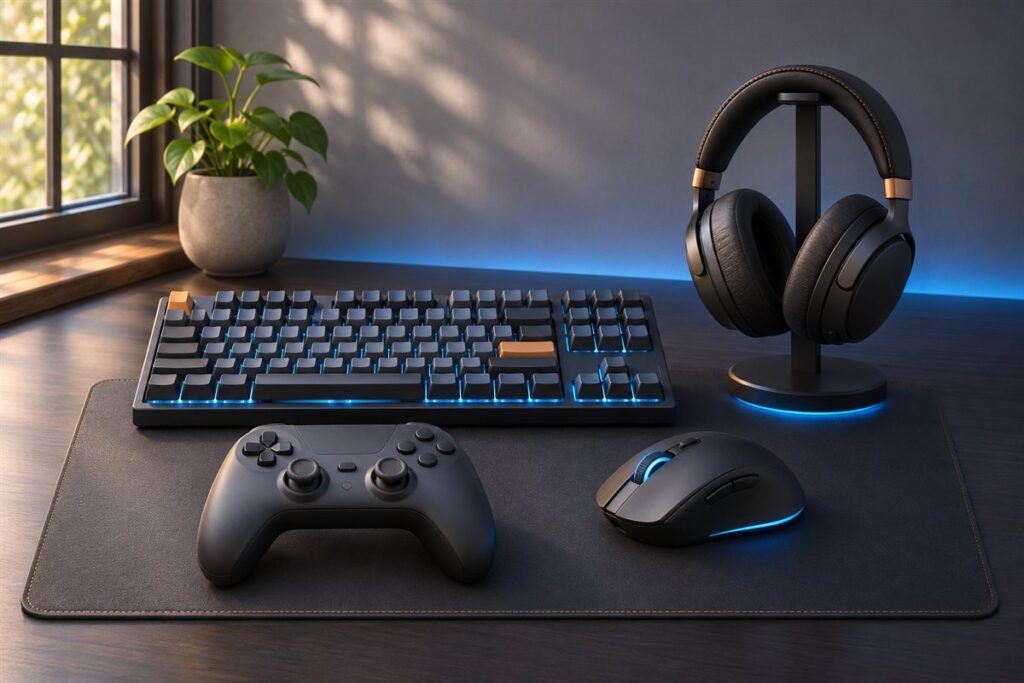
An RGB gaming PC is a desktop built for games, with a glass panel case and programmable lighting on the fans, memory and other parts. Prebuilt systems save the time of picking components and assembling them, and they differ widely in parts and upgrade room. We have not used these products ourselves, so this guide makes no claims about results. It shows how to compare the details in each listing.
Lighting is a style choice, while the parts inside decide how the machine plays. Think about the games you want to run, the screen you will use and your plans for upgrades. Use the checklist below to compare each listing in the same way and weigh trade-offs such as performance against noise, and a flashy case against an airflow friendly one.
As an Amazon Associate we earn from qualifying purchases. Links on this site are affiliate links, and they do not change the information we give.
What to Look For
| Factor | Why it matters | What to check |
|---|---|---|
| Graphics card | The graphics card has the biggest effect on frame rates and detail levels in games. | Read the exact card name and its memory amount. |
| Processor | The processor affects game speed, multitasking and streaming. | Compare core counts and the generation named. |
| Memory and storage | Memory capacity and a fast drive affect load times and multitasking. | Check memory size, speed and drive type and size. |
| Cooling | Good airflow keeps parts at steady temperatures under load. | See the fan count and whether it uses air or liquid cooling. |
| Case and lighting | A tempered glass case shows the lighting but can restrict airflow. | Look for the lighting software and mesh front panels. |
| Upgrade path | Power supply wattage and open slots decide how easily you can upgrade. | Check the power supply wattage and free memory and drive slots. |
| Ports and wireless | Ports and network options decide which accessories and displays you can connect. | Count the USB, display and network connections. |
Setup and Care Tips
- Leave space around the case so air can move in and out of the vents.
- Install the latest graphics and chipset drivers from the maker’s own sources.
- Use the lighting software to set a calm default scene, and turn lighting off when you do not need it.
- Clean dust filters on a regular schedule with the power off and the cable unplugged.
- Keep a surge protector between the wall outlet and the machine.
Mistakes to Avoid
- Focusing on lighting while ignoring the graphics card and processor.
- Choosing a glass case with weak airflow for a powerful card.
- Ignoring the power supply wattage when planning upgrades.
- Forgetting to match the PC to your monitor refresh rate and resolution.
- Opening the case without checking how it affects the maker’s coverage terms.
FAQ
Does RGB lighting affect performance?
Lighting itself has little effect on game speed. Some lighting software uses background resources, so many owners set a scene and close the program.
Is a prebuilt PC or a custom build better?
A prebuilt system saves time and often includes support from one maker. A custom build gives more control over parts. Choose by how much time and knowledge you want to put in.
The Short Version
Choose a gaming PC by looking at the graphics card and processor first, then memory, storage and cooling. Treat lighting as a finishing touch, leave room for upgrades and make sure the machine suits your display. A balanced build will serve you longer than one that looks good but lacks airflow.