
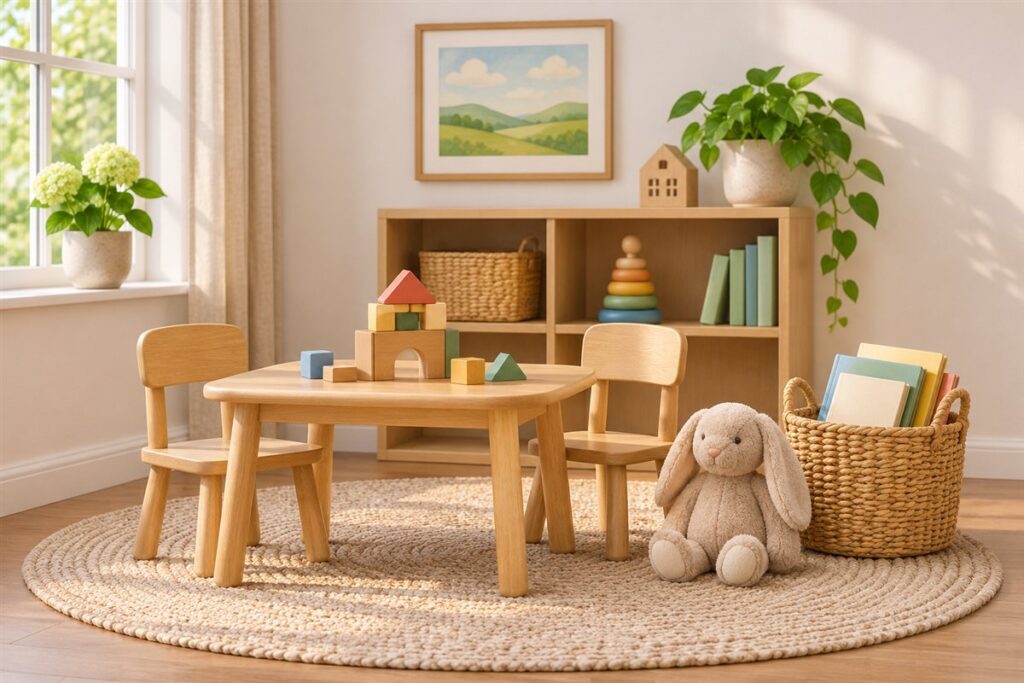
Foam floor tiles are interlocking squares that cover a hard floor in a playroom, giving the space a softer and warmer surface. They come in different thicknesses, tile sizes, colors and edge styles, and the right mix depends on the room shape, the floor underneath and how the space is used every day.
This guide is for parents and carers who want to understand the options before buying. We have not used these products ourselves; we compare the information in each listing, so confirm material and size details with the maker before you order. Use the table below as a checklist while you browse.
As an Amazon Associate we earn from qualifying purchases. Links on this site are affiliate links, and they do not change the information we give.
What to Look For
| Factor | Why it matters | What to check |
|---|---|---|
| Tile thickness | Thicker tiles feel softer underfoot but cost more floor height at doorways. | Read the thickness in the listing and compare it with your door clearance. |
| Tile size | Larger tiles mean fewer seams, while smaller ones are easier to fit around corners. | Measure the room and work out how many tiles it needs. |
| Edge pieces | Border pieces give the finished mat a neat outline. | Check whether edge strips are included or sold separately. |
| Surface texture | A smooth or lightly textured top changes how easy it is to wipe clean. | Look at product photos and the maker’s surface description. |
| Material notes | Foam types differ, and makers describe their own certifications. | Read the material list and any maker claims on material content. |
| Interlock fit | A tight joint keeps tiles from drifting apart during play. | Look at how the tabs connect and whether the set lies flat. |
| Cleaning method | Spills are common in play areas. | Check whether the maker allows wiping with mild soap and water. |
Setup and Care Tips
- Sweep and dry the floor first so dust does not sit under the tiles.
- Lay the tiles out dry before pressing the tabs together, so you can plan the border.
- Let new tiles air out in a ventilated room if the maker suggests it.
- Wipe spills promptly with a damp cloth and mild soap, following the maker’s notes.
- Lift and rotate tiles from time to time to see how the floor beneath is doing.
Mistakes to Avoid
- Ordering before measuring the room and counting full and cut tiles.
- Ignoring the thickness and then finding that a door will not open over the mat.
- Skipping the border pieces and leaving raw tile edges exposed.
- Assuming every foam type has the same material makeup.
- Using harsh cleaners that the maker does not recommend.
FAQ
How many tiles do I need for my room?
Multiply the room length by its width, then divide by the area of a single tile listed by the maker. Add a few extra tiles for cuts around corners and furniture, and check whether border pieces count toward the total in the set.
Can foam tiles go over carpet?
Makers usually describe their tiles for use on hard, flat floors. A thick carpet can make the joints shift, so read the maker’s notes on suitable surfaces before you buy.
The Short Version
Playroom foam floor tiles differ by thickness, size, edge pieces and surface texture. Measure the room, read the material notes from the maker, and choose a set whose joints and cleaning method suit how your family plays.









