Steady heat is the difference between a grill that cooks evenly and one that leaves food charred on the outside and raw in the middle. The best grills that are thermostatically controlled take the guesswork out of that problem by holding a set temperature on their own, so the cooking surface stays where it should be from the first minute to the last. Whether the goal is slow smoking, fast searing, or a long afternoon of burgers for a crowd, a grill with a real thermostat keeps the heat consistent while the cook focuses on the food.
This guide covers six grills that bring genuine temperature control to the table. The lineup includes electric grills for patios and apartments, a pellet grill with a PID controller, a digital charcoal grill, and a commercial gas griddle built for high volume cooking. Every pick below has its temperature control confirmed in the product listing from the site Amazon lookup, and every link goes to the exact model described. The sections that follow explain how the picks were chosen, what each grill does well, where each one falls short, and how to match the right model to a particular cooking style.
In this guide
Quick picks: best grills that are thermostatically controlled
| # | Product | Where to buy |
|---|---|---|
| 1 | Product | Check on Amazon |
| 2 | Product | Check on Amazon |
| 3 | Product | Check on Amazon |
| 4 | Product | Check on Amazon |
| 5 | Product | Check on Amazon |
| 6 | Product | Check on Amazon |
How the picks were chosen
A grill earned a place in this guide only when its product listing clearly stated a thermostat, a digital temperature control, an adjustable temperature control, or a PID temperature controller. Vague claims about even heating were not enough. Each model also had to be a complete grill or griddle on its own, not a replacement part, a controller board, a probe, or a heating element sold separately. Accessory listings such as fan controllers and thermostat kits were left out, even when they mentioned well known grill brands, because they are not grills by themselves.
The six picks were selected to cover different fuels, sizes, and settings. An electric grill suits a balcony or a small patio where open flame is not allowed. A pellet grill suits low and slow smoking with wood flavor. A digital charcoal grill suits cooks who love charcoal flavor but want push button temperature control. A portable electric grill suits camping trips and tailgates. An indoor searing grill suits apartment kitchens. A commercial gas griddle suits anyone cooking for a large group or running a small food business. Together, the six cover the main ways people actually use a thermostatically controlled grill.
Fuel type mattered in the selection because it changes how temperature control works. Electric models use a heating element and a dial or digital panel, which gives fast response and simple operation. Pellet models feed wood pellets into a fire pot and use a controller to hold a target temperature, which gives steady heat over long cooks. Charcoal models with digital control use a fan and a controller to manage airflow, which keeps charcoal burning at a steady rate. Gas griddles use a thermostat valve to hold the flat top at a set temperature across a wide surface. Each approach can hold temperature well, but each one fits a different kind of cook.
Cooking area was also weighed. A small indoor grill with a little over one hundred square inches of surface is enough for one or two people, while a large commercial griddle with a four foot wide top can handle dozens of servings at once. The guide notes the cooking area for every pick so readers can match the grill to the number of people they usually feed. Build quality, ease of cleaning, and practical details such as a lid, a drip tray, a side shelf, and a cover were considered as well, using only details stated in the product listings.
Best grills that are thermostatically controlled
The six grills below are presented in an order that moves from a full size outdoor electric grill to a compact indoor model, with a pellet smoker, a digital charcoal grill, a portable electric grill, and a commercial gas griddle in between. Each section starts with a linked image of the exact product, followed by verified specifications, strengths, trade-offs, and guidance on who the grill fits best.
Top pick
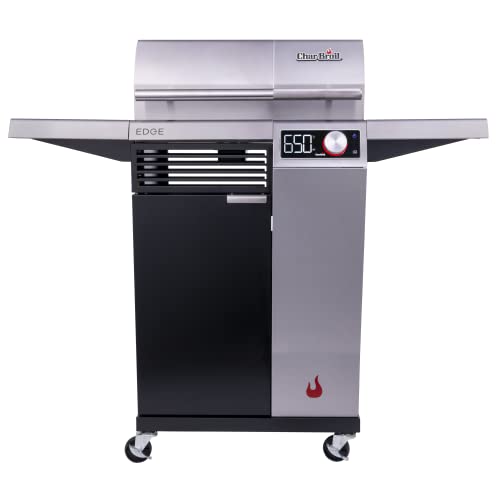
1. Char-Broil Edge Electric Grill
The Char-Broil Edge Electric Grill is the most complete outdoor electric grill in this guide. Its digital temperature control covers a range of 200 degrees Fahrenheit to 700 degrees Fahrenheit, which is wide enough for low and slow cooking at one end and hard searing at the other. The grill is built with a steel construction and a built-in cabinet, so it looks and works like a full size patio grill while running on electricity. Fast preheat gets the cooking surface up to temperature without a long wait, and the AutoClean feature helps with cleanup after the meal.
The wide temperature range is the main reason this grill leads the list. Many electric grills top out at a moderate heat that can brown food but cannot sear a steak properly. A top end of 700 degrees Fahrenheit changes that, giving the cook real searing power. At the low end, 200 degrees Fahrenheit is gentle enough for slow cooking and for holding food warm without drying it out. The digital control holds the chosen setting, so the cook can set a temperature and trust the grill to stay near it.
The built-in cabinet is a practical feature that is easy to overlook. It gives the grill a stable base, adds storage space for tools and accessories, and makes the whole unit feel like a permanent part of an outdoor kitchen rather than a portable appliance. Steel construction adds durability for outdoor use, where rain, sun, and temperature swings wear down lesser materials over time.
Key specifications
- Digital temperature control with a range of 200 degrees Fahrenheit to 700 degrees Fahrenheit
- Steel construction with a built-in cabinet
- Fast preheat for shorter waiting before cooking
- AutoClean feature for easier cleanup
- Model number 22652143
Strengths
- The 200 to 700 degree temperature range covers everything from gentle warming to hard searing, which few electric grills can match.
- The built-in cabinet and steel body give it the presence and stability of a full size patio grill.
- Electric power means no charcoal to light, no propane tank to refill, and no open flame to manage.
Trade-offs
- Electric heat does not produce the same smoky flavor as charcoal or wood pellets, so cooks who want smoke will need to add it another way.
- The cabinet base makes the grill less portable than a tabletop model, so it suits a fixed spot on a patio more than a trip to a park.
- Outdoor electric grills need a suitable power outlet nearby, which can limit placement on a large patio or yard.
Who it fits
This grill fits a homeowner who wants a full size outdoor grill with precise temperature control and no fuel to buy. It also fits anyone living where charcoal or gas grills are restricted, since electric power avoids open flame rules in many communities. Cooks who grill several times a week will value the fast preheat and the wide temperature range most.
Best for: patio cooking with precise digital control from gentle heat to a hard sear. Not suited for: cooks who want charcoal or wood smoke flavor, or anyone who needs a grill that travels.
Check price on Amazon: Product
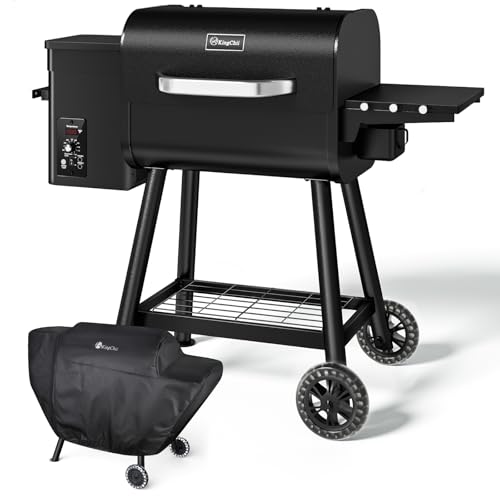
2. KingChii Electric Wood Pellet Grill and Smoker
The KingChii Electric Wood Pellet Grill and Smoker brings PID temperature control to an affordable pellet grill. Its PID controller holds a temperature range of 180 degrees Fahrenheit to 425 degrees Fahrenheit, which covers low smoking, roasting, and baking. The grill offers 456 square inches of cooking capacity and an 11 pound hopper, so it can run a long cook without constant refilling. A side shelf adds workspace, and a cover is included to protect the grill between uses.
PID control is a meaningful step up from a basic thermostat. A PID controller watches the temperature constantly and adjusts the pellet feed in small steps, which keeps the heat steadier than a simple on and off thermostat. That steadiness matters most during long smokes, where a swing of twenty or thirty degrees can change how a brisket or a pork shoulder turns out. The 180 degree low end is gentle enough for smoking fish and cheese, while the 425 degree top end handles roasting and baking with ease.
The pellet format gives this grill a flavor advantage over electric models. Wood pellets burn cleanly and add a mild smoke flavor to everything cooked on the grill, from chicken to vegetables. The electric ignition and automatic pellet feed keep the process simple, so the cook does not need to manage a fire by hand. The included cover is a welcome detail, since a pellet grill left uncovered in rain can suffer pellet swelling and auger jams.
Key specifications
- PID temperature control with a range of 180 degrees Fahrenheit to 425 degrees Fahrenheit
- 456 square inches of grill capacity
- 11 pound pellet hopper
- Side shelf for workspace
- Cover included
Strengths
- PID control holds temperature more steadily than a basic thermostat, which improves long smokes.
- Wood pellets add real smoke flavor without the work of managing a charcoal fire.
- The included cover and side shelf add value that many grills in this size class charge extra for.
Trade-offs
- The 425 degree top end is not high enough for a hard steakhouse style sear, so cooks who love a dark crust may want a hotter grill as well.
- Pellet grills need electricity and a supply of pellets, so they are less useful for off grid cooking than a simple charcoal grill.
- Pellets must stay dry, which means storing them indoors and keeping the hopper covered in wet weather.
Who it fits
This grill fits a cook who wants to try pellet smoking without spending a large sum. It also fits a small household that grills for four to six people at a time. Anyone curious about low and slow cooking will find the PID controller forgiving, since it does much of the temperature work on its own. Readers who want more pellet options can compare it with the models in our guide to the best small pellet grills.
Best for: steady low and slow smoking with wood flavor at a modest size. Not suited for: high heat searing above 425 degrees, or cooking far from a power outlet.
Check price on Amazon: Product

3. Masterbuilt Gravity Series 600 Smoker Grill
The Masterbuilt Gravity Series 600 is a digital charcoal grill that pairs the flavor of charcoal with push button temperature control. Its GravityFed charcoal hopper feeds fuel into the firebox by gravity, while a digital controller and WiFi technology manage the burn. The cooking surface measures 600 square inches, which is enough for a large family meal or a small gathering. Model MB20041023 is the version listed here.
The gravity feed design is what makes this grill interesting. Charcoal sits in a tall hopper above the firebox and drops down as fuel is used, so a long cook can run for hours without the cook adding charcoal by hand. The digital controller watches the temperature and adjusts airflow to hold the setting, which takes the hardest part of charcoal cooking, managing the fire, and turns it into a matter of turning a dial. WiFi technology lets the cook check and adjust the grill from a phone, which is handy during a long smoke when going outside every half hour gets old.
Charcoal flavor is the main reason to choose this grill over an electric or pellet model. Charcoal gives food a depth of flavor that electric heat cannot match, and the gravity feed system makes that flavor accessible to cooks who do not want to learn fire management. The 600 square inch surface is a good middle size, large enough for a whole chicken and a tray of vegetables at once, but not so large that it wastes fuel on a small weeknight meal.
Key specifications
- Digital charcoal grill with WiFi technology
- GravityFed charcoal hopper for long cooks without refueling
- 600 square inches of cooking space
- Model MB20041023
Strengths
- Real charcoal flavor with digital temperature control, which combines the best of two cooking styles.
- The gravity feed hopper supports long smokes without manual refueling.
- WiFi control lets the cook monitor and adjust temperature without standing next to the grill.
Trade-offs
- Charcoal cooking still produces ash that must be cleaned out, which is more work than an electric grill.
- The grill needs electricity for the controller and fan, so it is not a fully off grid cooker.
- Charcoal and fire management parts add weight and complexity compared with a simple electric grill.
Who it fits
This grill fits a charcoal lover who wants steadier temperature without learning to manage vents by feel. It also fits a household that smokes meat on weekends and grills burgers on weeknights, since the digital control handles both styles. Cooks who already own a pellet grill may still want this one for the different flavor that charcoal brings.
Best for: charcoal flavor with digital control and long unattended cooks. Not suited for: cooks who want zero ash cleanup, or grilling with no power source nearby.
Check price on Amazon: Product

4. Royal Gourmet DL1001 Portable Electric Grill
The Royal Gourmet DL1001 is a portable electric grill built for outdoor cooking in small spaces. It runs on 1500 watts and offers 250 square inches of cooking surface, with a digital thermometer and adjustable heat control to manage the temperature. A lid with a handle helps hold heat in, and sturdy leg bases keep the grill stable on a table or a patio surface. The dark green and black finish gives it a classic outdoor look.
Portability is the main strength of this grill. At 250 square inches it is large enough for a family meal of burgers or chicken, yet small enough to carry to a campsite, a tailgate, or a friend house. The legs fold into a stable base, and the electric design means there is no fuel to transport and no open flame to worry about in places where fire rules are strict. The digital thermometer gives the cook a clear reading of the cooking temperature, which is something many portable grills lack.
Adjustable heat control lets the cook match the temperature to the food. Delicate items such as fish and vegetables need gentle heat, while burgers and sausages need a hotter surface to brown properly. The lid helps on both ends, trapping heat for faster cooking and protecting food from wind on a cool evening. For a portable grill, the combination of a thermometer, a lid, and adjustable control is a practical set of features.
Key specifications
- 1500 watts of electric power
- 250 square inches of cooking surface
- Digital thermometer with adjustable heat control
- Lid with handle and sturdy leg bases
- Dark green and black finish
Strengths
- Portable size with enough cooking area for a family meal makes it useful at home and away.
- The digital thermometer and adjustable control give better temperature feedback than most portable grills.
- Electric power avoids fuel, open flame, and the smoke that bothers neighbors on a small patio.
Trade-offs
- The 250 square inch surface is too small for a large party, so big gatherings will need a second grill or a larger model.
- Like all electric grills, it needs an outlet, which limits use at remote campsites without power.
- Electric heat cannot match the high searing temperature of a large gas or charcoal grill.
Who it fits
This grill fits apartment dwellers with a small balcony, campers with access to power, and anyone who wants a second grill for travel. It also fits a small household that grills for two to four people and values easy setup and cleanup. Readers comparing portable options can also look at our guide to the best portable pellet grills for a fuel based alternative.
Best for: portable outdoor grilling with temperature feedback in small spaces. Not suited for: large parties, or cooking far from an electrical outlet.
Check price on Amazon: Product


5. Hamilton Beach Electric Indoor Searing Grill
The Hamilton Beach Electric Indoor Searing Grill is made for kitchens where outdoor grilling is not an option. Its adjustable temperature control reaches 450 degrees Fahrenheit, which is hot enough to sear meat and brown vegetables indoors. The cooking surface measures 118 square inches and uses a PFAS-free removable nonstick coating. A lid with a viewing window lets the cook watch food without lifting the lid and losing heat, and the stainless steel body fits a modern kitchen.
Indoor grilling lives or dies on smoke control, and this grill handles that problem with a lid and a moderate size. The lid traps heat and moisture, which keeps the kitchen cooler and the food juicier, while the viewing window means the cook can check progress without opening the grill. The removable nonstick surface lifts out for washing, which matters because indoor grills get used often and need fast cleanup to stay in regular rotation.
The 450 degree top end is the key number for this grill. Many indoor grills run too cool to sear, which leaves meat pale and steamed rather than browned. Reaching 450 degrees gives this model real searing ability for steaks, pork chops, and chicken breasts. The adjustable control also lets the cook turn the heat down for delicate foods such as fish or vegetables, so one grill covers a full range of indoor cooking.
Key specifications
- Adjustable temperature control up to 450 degrees Fahrenheit
- 118 square inches of cooking surface
- PFAS-free removable nonstick cooking surface
- Lid with viewing window
- Stainless steel body
Strengths
- The 450 degree maximum gives real searing power for an indoor grill.
- The lid with a viewing window keeps heat in while letting the cook watch the food.
- The removable nonstick surface makes cleanup fast enough for everyday use.
Trade-offs
- The 118 square inch surface cooks for one or two people at a time, so larger families will cook in batches.
- Indoor grilling cannot match the smoke flavor of outdoor charcoal or pellet cooking.
- A lid helps, but any indoor grill can still set off a sensitive smoke alarm during a high heat sear.
Who it fits
This grill fits apartment residents, dorm dwellers, and anyone whose building rules out outdoor grilling. It also fits a cook who wants grilled food in winter without going outside. Our guide to the best indoor grills for chicken has more options in the same category for readers who want to compare indoor models side by side.
Best for: searing indoors with a lid, a window, and easy cleanup. Not suited for: feeding a large family in one round, or cooks who want outdoor smoke flavor.
Check price on Amazon: Product

6. ATOSA ATMG-48T Commercial Griddle
The ATOSA ATMG-48T is a 48 inch heavy duty commercial griddle that is thermostatically controlled by design. The product title states the feature plainly, and the unit is built for restaurant work with a natural gas supply and a 100,000 BTU output. The stainless steel body and the wide flat top make it a workhorse for high volume cooking, from breakfast service to a backyard event with dozens of guests.
Size is the defining feature of this griddle. A 48 inch wide top gives the cook room to work in zones, with one area running hot for searing and another running cooler for holding food warm. That zoning is possible because the thermostat controls the surface temperature across the top, so the cook can trust each zone to stay where it was set. For a large family gathering, a church picnic, or a small food business, that capacity turns a long cooking session into a manageable one.
Commercial build quality is the second reason this model made the list. Stainless steel resists rust and wipes clean, the heavy frame stays steady under a full load of food, and the natural gas supply keeps running as long as the gas line is connected. A 100,000 BTU output means the surface recovers heat quickly after a batch of cold food goes on, which is the moment when a weaker griddle falls behind and food starts to steam instead of brown.
Key specifications
- Thermostatically controlled 48 inch commercial griddle
- Natural gas with 100,000 BTU output
- Heavy duty stainless steel construction
- Restaurant griddle cooktop with a portable top design
Strengths
- The thermostat is stated in the product title, so temperature control is a core feature rather than an afterthought.
- The 48 inch top handles very large batches and allows cooking in temperature zones.
- High BTU output and commercial build quality support heavy, repeated use.
Trade-offs
- This is a commercial unit that needs a natural gas hookup and a large, well ventilated space.
- The size and weight make it unsuitable for a small patio, a balcony, or a kitchen counter.
- A flat griddle top cooks differently from a grate grill, so foods that need grill marks or drip through grates will not work the same way.
Who it fits
This griddle fits a small restaurant, a food truck, a caterer, or a homeowner who regularly cooks for a crowd. It also fits anyone who wants a flat top for breakfast foods, smash burgers, and stir fry at scale. Readers planning an outdoor cooking area may also like our guide to the best outdoor griddle grills for smaller flat top options.
Best for: high volume cooking with a wide, thermostatically controlled flat top. Not suited for: small patios, apartments, or cooks who want traditional grill grates.
Check price on Amazon: Product
Comparison table
| Grill | Temperature control | Fuel | Cooking area | Best for |
|---|---|---|---|---|
| Char-Broil Edge | Digital, 200 to 700 degrees Fahrenheit | Electric | Full size patio grill | Precise outdoor grilling |
| KingChii Pellet Grill | PID, 180 to 425 degrees Fahrenheit | Wood pellets | 456 square inches | Low and slow smoking |
| Masterbuilt Gravity 600 | Digital with WiFi | Charcoal | 600 square inches | Charcoal flavor with control |
| Royal Gourmet DL1001 | Digital thermometer, adjustable heat | Electric | 250 square inches | Portable outdoor cooking |
| Hamilton Beach Searing Grill | Adjustable to 450 degrees Fahrenheit | Electric | 118 square inches | Indoor searing |
| ATOSA ATMG-48T | Thermostat controlled | Natural gas | 48 inch griddle top | High volume cooking |
Buying guide: how to choose a thermostatically controlled grill
Start with the setting where the grill will live. A balcony or a small patio with strict fire rules points toward an electric model, since electric grills produce no open flame and need no fuel storage. A backyard with room for a smoker points toward a pellet or charcoal model, where flavor matters more than compact size. A kitchen with no outdoor space at all points toward an indoor electric grill with a lid. A commercial kitchen or a large event setup points toward a gas griddle with a wide top. Matching the grill to the setting first saves the trouble of buying a grill that cannot be used where it will live.
Next, think about the temperature range the cooking actually needs. Searing a steak needs high heat, ideally above 500 degrees Fahrenheit, which makes the Char-Broil Edge the strongest choice in this guide for that job. Smoking a brisket needs steady low heat around 225 degrees, which makes the KingChii PID controller or the Masterbuilt digital control the better fit. Everyday grilling of burgers, chicken, and vegetables needs a middle range of 350 to 450 degrees, which every grill in this guide can handle. A grill that cannot reach the temperature a favorite dish needs will disappoint no matter how well it is built.
Consider how the temperature control actually works. A simple dial thermostat turns the heat on and off around a target, which is fine for burgers and vegetables but can swing during a long smoke. A PID controller adjusts in small steps and holds a tighter range, which is better for smoking and roasting. A digital panel with a display lets the cook see the set temperature at a glance, which is easier than guessing from a dial position. None of these systems is wrong, but they suit different cooking styles, and the guide notes which system each pick uses.
Cooking area should match the usual number of people at the table. A good rule is to allow roughly 70 to 100 square inches per person for a main course of burgers or chicken. That makes a 118 square inch grill right for one or two people, a 250 square inch grill right for three or four, and a 456 to 600 square inch grill right for six to eight. A 48 inch commercial griddle goes far beyond family cooking and into event or business territory. Buying more area than needed wastes fuel and space, while buying too little means cooking in batches while the first batch gets cold.
Fuel and running costs deserve a thought before buying. Electric grills cost nothing beyond electricity and need no fuel runs, but they tie the cook to an outlet. Pellet grills need a steady supply of wood pellets and a dry place to store them. Charcoal grills need charcoal and produce ash to clean. Natural gas griddles need a gas hookup and professional installation in many areas. Each fuel has a cost and a chore attached, so the right choice is the one whose chores the cook is willing to do every week.
Finally, check the practical details that decide whether a grill gets used or gathers dust. A lid helps hold heat and protect food from wind. A drip tray or grease management system makes cleanup faster. A side shelf holds a plate and tongs. A cover protects the grill from rain. Wheels or a light body make the grill easy to move. None of these details makes a grill cook better, but together they decide whether grilling feels easy or feels like a project.
How to use and care for a thermostatically controlled grill
Preheat the grill with the lid closed and the temperature set to the target for the dish. A thermostat can only hold a temperature if it has time to reach it first, so give the grill ten to fifteen minutes to stabilize before food goes on. Opening the lid often lets heat escape and forces the controller to work harder, which can cause wider temperature swings. Check the food through a window or with a quick lift, then close the lid again.
Let the thermostat do its job instead of chasing the display. Digital controllers and PID systems adjust in small steps, and the temperature may drift a few degrees above or below the target before settling. Constantly turning the dial up and down in response to small changes usually makes the swings worse. Set the target, wait a few minutes, and adjust only if the temperature stays well off target for more than ten minutes.
Clean the cooking surface while it is still warm, using a brush or scraper made for the surface material. A nonstick indoor grill needs a soft cloth or sponge rather than a wire brush, which can damage the coating. A stainless steel griddle can take a scraper and a wipe down with a damp cloth. Empty drip trays and grease cups after every cook, since old grease can smoke, catch fire, or attract pests. A clean grill heats more evenly and lasts longer.
Store the grill under a cover when it is not in use, and keep pellet and charcoal supplies dry. Moisture is the main enemy of a pellet grill, since wet pellets swell and can jam the auger. For electric grills, check the power cord and the controller for damage before each season, and keep the controller dry during cleaning. For gas griddles, check the gas connections for leaks with soapy water at the start of the season, and have a professional look at the hookup if anything smells of gas.
Common mistakes to avoid
The most common mistake is buying a grill for its maximum temperature and ignoring its low end. A grill that sears well but cannot hold a low temperature is a poor choice for smoking or for cooking delicate fish. Check both ends of the stated range before buying, and make sure the low end matches the gentlest dish on the menu.
A second mistake is trusting a thermostat without checking it. Even a good controller can drift over time, and a grill thermometer can read differently from the actual cooking surface. An inexpensive probe thermometer placed on the grate gives a second reading that can confirm the thermostat is honest. If the two readings disagree by more than twenty degrees, the thermostat may need calibration or service.
A third mistake is overcrowding the cooking surface. Food that is packed tightly together steams instead of searing, because moisture cannot escape and the surface temperature drops. Leave space between items, cook in batches when needed, and let the grill recover heat for a few minutes between batches. A thermostat can hold a temperature, but it cannot hold it if cold food covers the whole surface at once.
A fourth mistake is skipping the preheat. Food placed on a cold grill sticks, cooks unevenly, and absorbs grease instead of browning. A few minutes of preheating lets the surface reach the set temperature and form a proper sear. The same rule applies to a griddle, where a cold spot in the middle can leave half a batch pale while the edges burn.
A fifth mistake is treating a thermostatically controlled grill as fully automatic. The controller holds temperature, but it does not watch the food. A brisket still needs checking, a burger still needs flipping, and a grill still needs cleaning. The thermostat removes one chore, not all of them, and the best results still come from a cook who pays attention.
Final recommendation
For most buyers, the Char-Broil Edge Electric Grill is the strongest all around choice in this guide. Its digital temperature control covers 200 to 700 degrees Fahrenheit, which handles everything from gentle warming to hard searing, and its built-in cabinet and steel body make it a real patio grill rather than a portable appliance. Electric power keeps the operation simple, with no fuel to buy and no flame to manage.
Cooks who care most about smoke flavor should look at the KingChii pellet grill for steady PID smoking, or the Masterbuilt Gravity Series 600 for charcoal flavor with digital control. Travelers and small households will get the most use from the Royal Gourmet DL1001, while apartment cooks should choose the Hamilton Beach indoor searing grill. The ATOSA ATMG-48T stands apart as a commercial tool for high volume cooking, and it is the right pick only for that job. Whatever the setting, the common thread is the same: a thermostat that holds temperature frees the cook to focus on the food, and that is what makes these six grills worth owning.
Frequently asked questions
What does thermostatically controlled mean for a grill?
It means the grill has a thermostat or a digital controller that holds a set cooking temperature on its own. The cook chooses a target temperature, and the grill adjusts its heat source to stay near that target, instead of running at one fixed power level or needing constant manual adjustment.
Is a PID controller better than a regular thermostat?
A PID controller usually holds temperature more steadily than a simple thermostat, because it adjusts the heat in small steps rather than switching fully on and off. That steadiness matters most during long smokes and roasts. For quick grilling of burgers and vegetables, a regular thermostat or digital control is usually enough.
Can an electric grill sear a steak properly?
It depends on the maximum temperature. An electric grill that reaches 450 degrees Fahrenheit can brown a steak, but a model that reaches 700 degrees, such as the Char-Broil Edge in this guide, can produce a much darker crust. For the best sear, preheat the grill fully, pat the meat dry, and avoid moving it until the crust forms.
Do thermostatically controlled grills work for smoking?
Yes, when they can hold a low temperature steadily. Pellet grills with PID control and digital charcoal grills are both made for smoking, since they can hold 180 to 250 degrees for hours. Electric grills with a low setting can smoke with the help of a smoker box, but they do not produce smoke on their own.
How do I keep a thermostatically controlled grill accurate?
Preheat with the lid closed, avoid opening the lid often, and check the temperature with a separate probe thermometer from time to time. Keep the temperature sensor clean, since grease and soot on a sensor can cause false readings. If the grill consistently runs hot or cold compared with the probe, consult the manual for calibration steps or contact the maker for service.


