Disclosure: this article contains affiliate links, and airfryerkitchensupply.com may earn an affiliate commission when you buy through them, at no extra cost to you.
Every grill tells the story of its last few cooks. The grates carry a blackened crust of polymerized fat and carbonized sauce, the inside of the lid flakes like old paint, and the grease tray holds a layer of drippings that nobody wants to think about for long. None of this stops the grill from working — people cook happily on filthy grills all season — but the mess quietly taxes everything: old grease smokes and flares, carbon flakes drift onto fresh food, and the rancid residue of last month’s burgers perfumes this month’s chicken. A grill does not need to look new. It does need the kind of clean that keeps fire behaving and food tasting like itself.
“Grill cleaner” turns out to be several different products wearing one label. There are gentle citrus sprays built for the wipe-down after a weeknight cook, alkaline degreasers that strip a season of baked-on grease in one session, heavy-duty formulas for the annual rescue of a neglected cooker, and simple workhorse concentrates that clean a whole patio of equipment from one bottle. The six products below cover that full range, and each is a real, widely sold cleaner matched to a real cleaning situation rather than six near-identical sprays ranked by scent.
Just as important, this guide treats the cleaner as only half the job. The other half is timing and tools: whether you clean grates while they are still warm from the fire or soak them cold the next morning, and what you scrub with once the chemistry has done its work. That second half includes a safety warning that deserves to be said plainly near the top — the traditional wire grill brush sheds bristles, those bristles can end up in food, and swallowed wire bristles have sent people to emergency rooms. The cleaner you choose matters. The brush you retire matters more.
What to look for in a grill cleaner
Match the chemistry to the mess
Grill soil comes in three grades, and confusing them is why people conclude that “grill cleaners don’t work.” The first grade is fresh grease: the slick film left by tonight’s cook, still soft, still soluble in hot water and a mild surfactant. A citrus spray and a cloth handle it in minutes. The second grade is polymerized grease — fat that has been heated, cooled, and reheated until it cross-links into a varnish-like coating that shrugs off dish soap entirely. This is the black lacquer on grates and lids, and it needs an alkaline degreaser with dwell time to break the bonds. The third grade is carbon: sauce sugars and proteins burned all the way down to a hard, brittle crust. Carbon responds to strong alkali, to heat, and to mechanical removal, usually in that order.
Reading a cleaner’s label with those three grades in mind saves money and frustration. A product that promises effortless cleaning is usually formulated for grade one and will disappoint on grade three. A heavy-duty oven-and-grill formula will strip grade three soil, but it is overkill — and sometimes genuinely harmful — for the light weekly wipe. The practical household ends up owning two products: a friendly spray for maintenance and a stronger degreaser for the monthly or seasonal deep clean. This list is built around exactly that division of labor.
Warm grates or cold soak: the two honest methods
Cleaning grates while they are still warm is the older tradition, and it has real physics behind it. Grease that is warm is grease that is liquid or at least soft; it wipes and brushes away with a fraction of the effort the same grease demands once it has cooled into a solid. The classic routine — close the lid, run the burners high for ten to fifteen minutes after cooking, then scrub — also burns loose residue down to pale ash that brushes off easily. The limits are equally real. A hot grate is a burn hazard, the scrubbing window is short, and the burn-off step does nothing for the grease tray, the flavorizer bars, or the cookbox walls below. It also turns cleaning into part of the cooking session, which is precisely when most people least want to do it.
The cold method trades immediacy for thoroughness. Grates come off the grill and soak — in a tub, a contractor bag with cleaner sprayed inside, or a sink for smaller grates — while degreaser softens the soil over thirty minutes to overnight. Cold soaking reaches every surface, including the undersides that burn-off never touches, and it pairs naturally with cleaning the rest of the cookbox while the grates are out. Its costs are time, a suitable soaking vessel, and the discipline to actually start the soak. Many experienced grill owners quietly use both: a quick hot brush-off after each cook to keep the cooking surface honest, and a cold deep clean a few times a season to reset the whole machine. The cleaners in this guide serve both routines, and the individual reviews note which method each product suits best.
The wire brush problem: read this before you scrub
The standard grill brush — a block or handle set with twisted steel wire bristles — has a failure mode that is easy to miss and serious when it happens. The wires fatigue where they are anchored, and individual bristles snap off during scrubbing. A broken bristle is short, stiff, nearly invisible, and it clings to the grate. The next piece of food picks it up. Swallowed wire bristles have caused throat, stomach, and intestinal injuries serious enough that medical journals and consumer-safety agencies have published warnings about them, and the injuries are notoriously hard to diagnose because the bristle is so small.
The fix is not to stop cleaning; it is to change tools. Coil-style brushes, wound from a continuous spiral of stainless wire with no individual bristle ends, are the closest substitute and scrub nearly as aggressively. Nylon-bristle brushes are safe but must be used only on a cool grate, because nylon melts on contact with hot metal. Pumice-style grill stones and scouring pads conform to the grate bars and leave nothing behind. And the oldest tool of all — a halved onion speared on a long fork, rubbed cut-side down over a hot grate — genuinely works for the light post-cook wipe, using the onion’s moisture and mild acids to loosen fresh grease while perfuming nothing but the air. Whichever tool you choose, add one habit: after scrubbing, wipe the grate with a damp cloth or a ball of oiled paper towel and look at what it picks up. That wipe is the inspection step the wire brush era never had.
Surface safety: porcelain enamel, stainless steel, cast iron, and chrome
A cleaner that is perfect for one grate material can damage another, and grills mix materials freely — porcelain-enameled cast iron grates over stainless burner tubes inside a painted or stainless cookbox. Porcelain enamel is glass fused to metal: chemically tough, but it chips if struck and it can be dulled by highly abrasive powders and by thermal shock. Stainless steel tolerates strong degreasers well but shows scratches from aggressive scouring and can be discolored by chlorine-bearing cleaners left to dry on it. Bare cast iron is the traditionalist’s surface and the fussiest: it wants to be cleaned, dried thoroughly, and re-oiled, because its seasoning is a coating you maintain, not a finish the factory applied. Chrome-plated grates, common on budget grills, have the thinnest skin of all; once the plating is scrubbed through, the steel beneath rusts quickly.
The practical rule is to clean to the gentlest surface in the assembly. If your grates are porcelain enamel, choose cleaners labeled safe for enamel, keep abrasive pads off them, and never pry at carbon with a metal scraper edge-on. If your grates are bare cast iron, accept a different finish line: clean means free of loose carbon and old grease, then dried and oiled — not gleaming. Several products below are specifically positioned for one end of this spectrum or the other, and the reviews say which.
Dwell time and the contractor-bag trick
Degreasers do not dissolve polymerized grease on contact; they penetrate and soften it over minutes. Spraying a strong cleaner and scrubbing immediately wastes most of its chemistry. For a serious deep clean, the most effective home technique is embarrassingly simple: remove the grates, slide them into a heavy contractor bag, spray generously inside, seal the bag, and leave it somewhere out of the sun for several hours or overnight. The bag keeps the cleaner wet and in contact with every surface, prevents fumes from filling the house, and contains the filthy runoff when you open it. The next morning most of the soil wipes or rinses away, and only the thickest carbon needs a scouring pad.
For in-place cleaning — cookbox walls, lid interiors, side shelves — dwell time still applies, just in shorter form. Spray, close the lid to slow evaporation, wait ten to fifteen minutes, then scrub and wipe. Work top to bottom so loosened grime falls onto surfaces you have not cleaned yet, and keep a bucket of hot water for rinsing your cloth, because pushing dirty water around with a filthy cloth is how a clean grill ends up merely rearranged.
Safety: fumes, gloves, and food-contact sense
The stronger grill cleaners are alkaline enough to irritate skin and eyes, and the strongest are effectively oven cleaners that demand real respect. Nitrile or rubber gloves are not optional equipment for the heavy-duty end of this list, and eye protection is wise whenever you spray overhead surfaces like a lid interior. Ventilation matters outdoors less than in a garage; if you clean inside a garage or shed, open the door. Keep every grill cleaner away from the self-cleaning cycle of an indoor oven routine and never mix products — alkaline degreaser plus an acidic descaler is a chemistry experiment nobody needs.
Food-contact sense is the other half. Anything that touches the cooking surface must be rinsed or burned off before food returns. The reliable sequence after a chemical deep clean is: rinse thoroughly, dry, reassemble, then run the grill empty at high heat for ten to fifteen minutes to burn off any residue, and finally wipe the grates with a high-heat cooking oil on a cloth once they cool slightly. That seasoning pass both protects the metal and proves the surface is clean — the cloth should come away dirty with carbon dust at first, then progressively cleaner, never soapy or chemical-smelling. If you can still smell cleaner, repeat the burn-off. Your nose is a legitimate instrument here.
How to read a grill cleaner label without a chemistry degree
Grill cleaner labels reward a thirty-second read. The first thing to find is the surface list: a trustworthy product names the materials it is safe on — porcelain enamel, stainless steel, cast iron, painted surfaces — and, just as usefully, the ones to keep it away from. A cleaner whose label is vague about surfaces is asking you to gamble with your grates. The second thing is the temperature instruction. Some formulas are designed for cold application only, and their labels say so for good reason: spraying a volatile or caustic cleaner onto a hot grate creates fumes and spatter. Others are built for warm maintenance wiping. Using a cold-only cleaner hot, or expecting a warm-wipe spray to strip a cold, carbonized grate, are the two most common label errors behind disappointing results.
The third element is dwell time, and its presence on a label is a mark of honesty. A degreaser that tells you to wait ten, twenty, or thirty minutes is telling you how its chemistry works; a product that promises instant results on baked grease is describing the fresh-grease case and staying quiet about the rest. Fourth, check the rinse instruction. Cleaners meant for food-contact surfaces will direct a thorough rinse, and that direction is part of the product, not fine print — budget the rinse and the burn-off into your cleaning session. Finally, note the format economics: a concentrate you dilute will state its ratios, and following the heavy-soil ratio for grates rather than the general-purpose ratio is the difference between a degreaser that performs and one that seems mysteriously weak. Every product in the reviews below was assessed with these five label points in mind, and the trade-offs noted for each one trace back to them.
In this guide
Quick comparison: the six cleaners at a glance
| Cleaner | Format | Strength | Best for | Method fit |
|---|---|---|---|---|
| Weber Grill Cleaner Spray | Ready-to-use spray | Moderate | Grates and exterior of any brand | Warm wipe and cold soak |
| Citrusafe Grill Cleaning Spray | Citrus-based spray | Gentle to moderate | Frequent light cleaning, low-odor homes | Warm wipe after cooks |
| Goo Gone Grill & Grate Cleaner | Gel-like spray | Moderate to strong | Baked-on grate grease, clings to verticals | Cold soak and in-place dwell |
| Carbona Oven Rack and Grill Cleaner | Soak-in-bag liquid system | Moderate to strong on soaked racks | Removable grates and oven racks, scent-sensitive users | Cold soak in the included bag |
| Zep Citrus Degreaser | Spray or concentrate | Moderate to strong | Whole-patio degreasing, high volume | Cold soak and cookbox walls |
| Easy-Off BBQ Grill Cleaner | Heavy-duty foam spray | Strongest on this list | Neglected grills, carbonized cookboxes | Cold application only |
One more pattern is worth naming before the reviews: no product on this list is the right answer for every surface of every grill, and the reviews below are deliberately specific about where each formula should stop. The Weber and the gentle sprays can travel almost anywhere on the appliance. The Zep should be rinsed carefully off stainless and kept off delicate finishes. The Easy-Off should never meet the outside of the lid at all. Reading those boundaries is not fine-print caution — it is the difference between a cleaner restoring a grill and a cleaner quietly becoming the next problem the grill has.
The pattern to notice is that strength and friendliness trade against each other all the way down the table. The gentlest sprays are the ones you will actually use weekly, and a cleaner used weekly beats a stronger cleaner that lives untouched in the garage. The heavy-duty entry earns its place for the twice-a-year reset and for rescue jobs — the grill bought secondhand, the cooker that sat under a cover for two seasons — not for Tuesday’s chicken thighs.
The best grill cleaners, reviewed
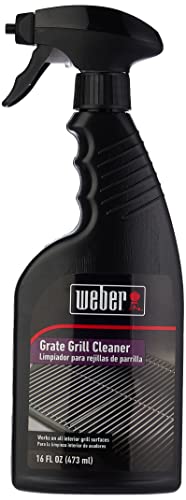
Weber Grill Cleaner Spray
It is mildly surprising how many people assume the Weber-branded cleaner only belongs on Weber grills. In truth it is a general-purpose grate and exterior cleaner that happens to come from a grill manufacturer, and that origin shows in the right ways: the formula is built to be safe across the materials a typical grill actually contains, including porcelain-enameled grates and lids, stainless steel, and painted steel. For an owner who does not want to maintain a mental compatibility chart before every cleaning session, that breadth is the product’s main argument.
Strengths. The spray format is genuinely ready to use — no dilution, no mixing, no second bottle — and the trigger produces a wetting spray that stays where it lands long enough to work. On warm grates it lifts fresh and moderately baked grease with a short dwell and a coil brush or scouring pad. On the exterior it handles the smoky film that dulls a lid and the greasy fingerprints around the handle without attacking the finish. It is also one of the more widely stocked grill cleaners in ordinary hardware and home stores, which matters for a consumable you will rebuy.
Trade-offs. This is a mid-strength cleaner, and it knows it. A full season of carbonized buildup on a neglected grate will exhaust its patience: expect repeated applications and real scrubbing, where a heavy-duty formula would have softened the crust in one soak. The bottle is sized for maintenance cleaning rather than whole-grill restoration, so a big spring deep clean of a large cooker can consume most of it. Owners of bare cast-iron grates should also remember that, like every water-based cleaner, it leaves the iron needing a thorough dry and a fresh coat of oil afterward.
Who it suits. This is the default recommendation for the typical gas-grill household: porcelain or stainless grates, a cook or two per week in season, and a preference for one bottle that handles grates, lid, and side shelves without drama. If your grill has never been deep-cleaned in its life, buy this for the season ahead — but do the first rescue with something stronger from lower in this list, then maintain with the Weber.
However your current cleaner is performing, it is worth comparing against this benchmark before your next cookout — check price on Amazon.

Citrusafe Grill Cleaning Spray
Citrusafe belongs to the citrus-solvent school of grill cleaning, built around d-limonene, the solvent extracted from citrus peel that dissolves grease by chemistry rather than by caustic alkalinity. The practical difference is how the product behaves in a household: it smells like oranges instead of a chemical plant, it is comfortable to use without a respirator-level concern about fumes, and it encourages the habit that actually keeps grills clean — the quick spray-and-wipe while the grates are still warm and the grease is still soft.
Strengths. For fresh and lightly baked grease, citrus chemistry is genuinely effective, and Citrusafe’s spray is formulated to cling briefly rather than running straight off a vertical grate bar. It is a good citizen around the exterior of the grill and around painted surfaces where a harsh alkaline cleaner would be a risk. The low-odor profile makes it the cleaner most likely to be used in a garage or on a covered patio without complaints from the household, and that usability is a performance feature in its own right: the best maintenance cleaner is the one that gets used after every second or third cook instead of twice a year.
Trade-offs. Citrus solvent has a ceiling, and carbonized, varnish-hard polymerized grease sits above it. On a neglected grate, Citrusafe will clean the surface film and then stall against the black lacquer underneath, no matter how long it dwells. It is also, like most citrus products, slower than an alkaline degreaser even within its comfort zone — give it its full dwell time rather than scrubbing on contact. Finally, citrus cleaners should be kept off some stone and unsealed surfaces around the grill, so spray with a little care on fancy patio setups.
Who it suits. Frequent grillers with light-to-moderate soil are this product’s home ground: the weeknight cook who wipes down while the grates are warm, the apartment or condo griller cleaning on a balcony where fumes drift to neighbors, and any household that shares the patio with kids and would rather keep the cleaning shelf gentle. Pair it with one strong degreaser for the seasonal reset and you have a complete two-bottle system.
If your cleaning routine needs to become easier to keep, not just stronger, this is the bottle to start with — check price on Amazon.

Goo Gone Grill & Grate Cleaner
The Goo Gone name comes from adhesive removal, and the grill formula carries that heritage in a useful direction: it is formulated to stay put and work on sticky, baked residues rather than running off them. Where thin sprays sheet down a grate and pool in the cookbox, this cleaner has a slightly gel-like cling that holds it against grate bars and the vertical walls of a lid long enough for a real dwell. For the classic problem — grates with a season of sauce and fat burned into a glossy black crust — that cling is the difference between a cleaner that wets the soil and one that actually softens it.
Strengths. The standout use is the cold soak described earlier in this guide: grates sprayed heavily, sealed in a contractor bag, and left for hours come out with their crust softened to the point that a scouring pad and hot water finish the job. It is also effective on the underside of lids, where carbon flakes form, and on stainless exterior panels with baked smoky film. The formula is positioned as safe for most grill surfaces including enamel and stainless, and it rinses cleanly without leaving the slick residue some gel degreasers deposit. For a single-product deep clean of a mid-size grill, it is arguably the most balanced bottle on this list.
Trade-offs. Cling costs speed: this is not the fastest spray-and-wipe for a warm grate after dinner, and using it that way wastes its talents. It also sits in the middle of the strength range — stronger than the citrus sprays, short of the true heavy-duty rescue formulas — so a grill that has been abandoned for years may still need the nuclear option below, or a second bag-soak session. As with all degreasers, it strips cast iron to bare metal, so cast-iron owners must budget the dry-and-oil step afterward.
Who it suits. This is the pick for the twice-a-season deep cleaner: the owner who lets the grill ride through summer with quick brush-offs, then does one thorough reset in midsummer and one before winter storage. It also suits kettle and kamado owners whose grates come off easily for soaking, and anyone whose main enemy is baked-on sauce crust rather than rust or neglect.
For a deep clean that rewards patience instead of elbow grease, this is the bottle to reach for — check price on Amazon.

Carbona Oven Rack and Grill Cleaner
Carbona takes a completely different route from every spray on this list: its 2-in-1 Oven Rack and Grill Cleaner is a soak system. You slide the removable grate or oven rack into the large bag supplied in the box, pour in the liquid, seal it, and let time do the work that a spray would ask your arm to do. The formula is unscented — the box says “no scent” and means it — which makes it the odd one out in a category dominated by citrus and lemon fragrances. Judged on its own terms, it is not a spray-and-wipe maintenance product at all; it is a soak treatment for the parts of the grill that come off.
Strengths. The soak does the scrubbing. Baked-on grease and sauce crust on a removable grate soften in the sealed bag while you do something else, and most of the soil rinses or wipes away afterward instead of demanding a long session with a brush. Because the liquid stays in the bag, there is no spray drift onto the patio, the lawn, or your clothes, and the absence of scent makes it the easiest product on this list to use in enclosed patios, garages, and indoor-adjacent spaces. The same box covers oven racks, which doubles its usefulness for households that deep-clean the kitchen on the same seasonal rhythm as the grill.
Trade-offs. The format is the limit: it only treats what fits in the bag. The cookbox, the lid interior, the burners, and any grate too large or too awkward to remove are simply outside its reach, so it complements a spray rather than replacing one. The soak also asks for planning — this is an hours-long, set-it-aside process, not a ten-minute fix before guests arrive. The bag is effectively a per-session consumable, so frequent deep cleaners should expect repeat purchases rather than one bottle that lasts the year. And the heaviest carbon on a truly neglected grate may still need a follow-up scrub after the soak has done its softening work.
Who it suits. Owners of grills with removable grates — kettle, kamado, and many gas models — who would rather soak than scrub, scent-sensitive households, and anyone doing a seasonal reset of both the grill grates and the oven racks in one session. If your cleaning style is patient and planned rather than last-minute, this is the most agreeable treatment on the list.
If soak-it-and-rinse beats spray-and-scrub in your household, this cleaner fits that philosophy — check price on Amazon.

Zep Citrus Degreaser
Zep is a janitorial-supply brand that wandered into home grill cleaning and stayed because the economics are hard to argue with. Its citrus degreaser is sold in homeowner-friendly spray bottles and in larger concentrate formats meant to be diluted, and a single purchase can end up servicing the grill, the patio furniture, the garage floor spots, and the range hood. Inside the grill it behaves like what it is: a strong citrus-solvent degreaser, a clear step up in muscle from the gentle citrus sprays, aimed at baked grease on grates and cookbox walls rather than at delicate finishes.
Strengths. Volume and versatility are the headline. For the spring deep clean — grates soaking, cookbox scraped and sprayed, exterior degreased, drip pan soaking in the sink — a concentrate you dilute yourself keeps working long after a single ready-to-use bottle would have run dry. The degreasing action on polymerized film is strong for a citrus product, especially with dwell time, and it is effective on the stainless and painted exterior surfaces that grill-specific sprays sometimes treat as an afterthought. It also pulls double duty on the concrete pad under the grill, where a season of drips leaves a dark constellation.
Trade-offs. Zep’s citrus degreaser is a general degreaser, not a grill specialist, and two consequences follow. First, you manage dilution yourself, which means a too-weak mix disappoints and a too-strong mix needs more rinsing; follow the label ratios for heavy degreasing rather than guessing. Second, it is not the product to spray carelessly around every surface — keep it off delicate finishes, test painted surfaces in a corner, and rinse stainless thoroughly so no residue dries on it. It also lacks the gel cling of the Goo Gone on vertical carbon, so for grate crust the bag soak is its best mode.
Who it suits. Owners of big grills and bigger cleaning days: the household that deep-cleans a large cooker, a smoker, and the surrounding patio in one session, and anyone who would rather stock one serious degreaser for the whole outdoor kitchen than a shelf of single-purpose sprays. If your grill shares a pad with a fryer, a griddle, and a smoker, this is the economical center of that cleaning kit.
For a deep-clean day that goes beyond the grill itself, this is the bottle that will not run out halfway — check price on Amazon.
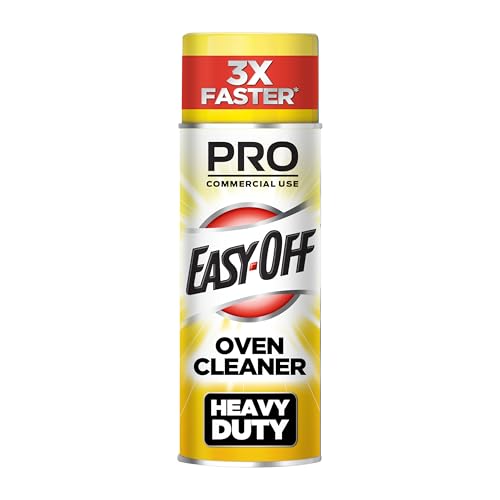
Easy-Off BBQ Grill Cleaner
Every category has a heavy artillery piece, and in grill cleaning it is Easy-Off’s barbecue formula — a close relative of the oven cleaner that has stripped baked-on grease from enamel cavities for generations. It exists for the jobs the other five products on this list cannot finish: the grill that sat under a torn cover for two winters, the secondhand cooker whose previous owner never cleaned it once, the cookbox whose walls are upholstered in carbon. Used with respect, it does in one cold application what milder cleaners cannot do in four.
Strengths. The alkaline foam attacks polymerized grease and carbonized soil at a level citrus and mid-strength sprays simply cannot reach, softening crusts that would otherwise need a putty knife and an afternoon. It is at its best on removable parts — grates, racks, drip pans — that can be sprayed, bagged or wrapped, left for an extended dwell, and rinsed outside with a hose. On a true rescue job it can return a grate from “replace it” to “season it and cook,” which makes it the most money-saving product on this list in the specific cases it is for. Availability is excellent; it is stocked wherever oven cleaner is sold.
Trade-offs. The strength is inseparable from the handling rules. This is a caustic product: gloves are mandatory, eye protection is strongly advised, fumes demand open air, and it must be applied to cold surfaces only — spraying it onto a warm grill is both dangerous and contrary to its design. It is not for aluminum, not for painted exteriors, not for the outside of the lid, and not for any surface the label excludes; careless overspray can permanently mark finishes. It also demands the most thorough rinsing and burn-off afterward of anything here. Reaching for it for routine cleaning is like reaching for a sledgehammer to hang a picture.
Who it suits. The rescuer: buyers of used grills, inheritors of neglected backyard cookers, landlords and sellers preparing a grill for its next life, and meticulous owners doing the one annual full-strip before winter storage. If your grill’s problem is measured in seasons rather than suppers, start here, then maintain the result with one of the gentler products above.
For the grill that looks beyond saving, this is the last stop before replacement parts — check price on Amazon.
Cleaning by grill type: the same chemistry, different details
Gas grills
The gas grill is a system of layered parts, and cleaning it well means working through the layers in order. Grates come off first for soaking. Beneath them sit the heat tents or flavorizer bars, which catch most drippings and carbonize them; these bars are the most commonly ignored part of the grill and a leading source of flare-ups once their coating of old grease gets thick. Scrape them, spray them, and accept that they are consumables — when they rust through, replacement restores performance more than any cleaning. Below them, the burners themselves need a gentle touch: brush along the tube, never across the gas ports, and clear blocked ports with a soft wire or paperclip rather than enlarging them. The cookbox floor funnels grease to the drip tray, and that tray — the single most fire-prone component in the whole appliance — should be scraped and degreased every few cooks, not every few months.
Charcoal grills and kettles
Charcoal grills trade burner maintenance for ash management. Ash is not inert in storage: it absorbs moisture from the air and forms a mildly corrosive paste that eats the bottom of a kettle left uncleaned through a wet season. The cleaning rhythm is therefore simpler but stricter — ash out when it is fully cold, grates treated exactly like gas-grill grates, and the kettle’s interior scraped of its flaking carbon layer before it starts shedding onto food. Enamel on a kettle is the same porcelain as on grates, so the same rules apply: soak, soften, no abrasive heroics. One-arm ash sweepers make the routine easy enough that there is little excuse for a kettle to winter with a bed of wet ash in it.
Pellet grills and smokers
Pellet grills add two complications: electronics and a steady production of fine ash from the fire pot. The grates and drip tray clean like any other grill’s, and the drip tray on a pellet cooker deserves special attention because it sits directly in the path of long, low cooks — a tray coated in old grease under a brisket cooking for twelve hours is a grease fire with a timer. Vacuum the fire pot and interior ash with a shop vacuum only when everything is completely cold. Keep degreaser away from the temperature probes, the auger mechanism, and the control panel, and never flood the interior with rinse water the way you might hose out a kettle. The chimney or exhaust vents also accumulate a creosote-like film; a periodic wipe with degreaser keeps that bitter deposit from seasoning your food for you.
Kamado cookers
A ceramic kamado cleans itself in a way no metal grill can: a full, hot burn with all vents open pyrolyzes interior grease and carbon down to ash, the same principle as a self-cleaning oven. That burn replaces most chemical cleaning of the ceramic interior — degreasers should not be sprayed around inside a kamado at all, because the ceramic is porous and can absorb chemical flavors that later cook into food. The grates still benefit from the standard soak-and-scrub treatment outside the cooker, and the gasket, ash drawer, and exterior glaze want gentle products from the friendly end of this list. Knowing which grill type should never see strong chemicals inside is as much a part of cleaning expertise as knowing which cleaner strips carbon fastest.
Flat-top griddles
The outdoor griddle inverts the grill problem: instead of grates with gaps, you have a single steel plate whose seasoning is the cooking surface. Cleaning is a heat-and-water discipline — scrape while hot, steam off residue with water while the plate is still warm, wipe, and finish with the thinnest possible film of oil. Heavy degreasers are for the griddle’s frame, legs, and grease cup, not for a seasoned plate you intend to keep seasoned; stripping a griddle top with caustic cleaner means re-seasoning from bare metal. Owners who run both a grill and a griddle will find the citrus and mid-strength products here serve the griddle’s exterior and side shelves perfectly well.
Rust: the problem no cleaner can spray away
Cleaners remove soil; rust is not soil but damage — iron that has already converted to oxide. A degreaser will strip the grease off a rusty grate beautifully and leave the rust exactly where it was, which is why rust needs its own short protocol. Light surface rust on cast iron or steel grates yields to abrasion: a scouring pad or coil brush with a little cooking oil as lubricant, working until the orange dust stops coming. Vinegar soaks dissolve rust chemically and are a legitimate home method for small parts, followed by thorough drying. What matters most is the finish: a rust-cleaned grate that is not dried completely and oiled while warm will rust again within days, because you have just exposed fresh, reactive metal.
There is also a point of no return, and honest cleaning advice should name it. Grates whose bars are pitted deeply, flaking in layers, or thinning at the welds are not dirty — they are done. Cooking on heavily corroded grates sheds oxide and metal flakes onto food and heats unevenly where the bars have thinned. Replacement grates for common grill models are a normal, expected purchase in a grill’s life, and a new grate plus a mid-strength cleaner and better habits will outperform any amount of chemistry poured onto a grate that has structurally failed. Judge the metal, not just the mess.
Five mistakes that make grill cleaning harder than it needs to be
The first is cleaning only the grates. The cooking surface is the visible ten percent of the soil problem; the grease tray, heat tents, and cookbox hold the rest, and they are where flare-ups and grease fires are born. The second is scrubbing dry. Degreaser needs dwell time and moisture to work; spraying and immediately scouring converts a chemical process into pure manual labor. The third is the pressure washer temptation — it feels decisive, but it drives water and grease into burner ports, igniters, and seams, and it can strip paint and force moisture where rust starts. A hose rinse is fine; a pressure jet is not a grill tool.
The fourth mistake is putting grates away wet or storing the grill with a dirty interior, which manufactures next season’s rust and varnish in one step. The fifth is using whatever is under the kitchen sink without reading it: chlorine-bearing cleaners on stainless, oven cleaner on aluminum or painted finishes, abrasive powders on enamel. The cleaners in this guide were chosen to cover the realistic cases with labeled, purpose-matched chemistry — the cheapest cleaning upgrade available is simply using the right bottle for the surface in front of you, at the right temperature, with the patience to let it work.
A seasonal rhythm: opening, maintaining, and closing the grill
Cleaners work best inside a calendar. The spring opening clean is the year’s deepest: grates out for a soak, cookbox scraped down to the grease tray, burner tubes brushed and their ports checked, the whole machine inspected for rust and rodent souvenirs before the first fire. This is heavy-degreaser territory — the Goo Gone or the Zep for a normal winter’s accumulation, the Easy-Off if the grill was stored dirty. End the session with the empty burn-off and oil wipe described earlier, and the grill starts the season genuinely reset rather than merely dusted.
Summer maintenance is deliberately light, because light is what actually happens. A hot brush-off or onion wipe after cooks, a citrus or gentle spray every few cooks while the grates are warm, and a drip-tray check whenever you remember — that rhythm keeps polymerized grease from ever establishing itself, which is the entire strategic point. Grease that is removed weekly never becomes the carbon that needs caustic chemistry. The mid-season mark deserves one step up: an hour with the grates soaking while you scrape the cookbox, timed to the weekend before a big cookout rather than the morning of it.
The autumn closing clean decides what you find in spring. A grill stored dirty spends the winter curing its grease into varnish and feeding rust wherever moisture reaches bare metal; a grill stored clean — deep-cleaned, burned off, grates oiled, interior dry — wakes up needing little more than a wipe and a leak check. If you do only two serious cleans a year, make them the closing and the opening, and let the closing be the thorough one. Covers help against weather but trap humidity; a clean, dry, oiled grill under a cover is the goal, not a dirty one sealed in with its own grease.
Building the cleaning kit around the cleaner
A bottle of cleaner works inside a small system of tools, and assembling that system once makes every future clean faster. Start with the scrubbing tools that replaced the wire brush: a coil brush for the hot post-cook pass on sturdy grates, a stiff nylon brush reserved strictly for cold grates, and a pumice grill stone or non-scratch scouring pads for the soaked deep clean. Add a rigid putty-style scraper — plastic for enamel cookboxes, metal reserved for bare steel and cast iron — because the cookbox floor and grease tray are scraping jobs, not spraying jobs, and no chemical softens a quarter-inch of cold grease drippings as fast as a blade removes the bulk of it before the degreaser ever comes out.
The supporting cast matters as much as the brushes. Heavy contractor bags turn any degreaser into a soak system sized for full grates. Nitrile gloves protect hands from both the alkaline cleaners and the carbon-black mess itself, and a dedicated pair of rubber gloves for the strongest formula keeps the caustic work separate from the routine work. A bucket that lives with the grill kit, a roll of paper towels you are willing to sacrifice, and a spray bottle of plain water for controlled rinsing complete the wet side of the kit. Finally, the finishing supplies: a high-heat cooking oil and a cloth or folded paper towels reserved for the post-clean wipe and seasoning pass, stored where you will actually find them when the burn-off ends.
Storage discipline ties the kit together. Cleaners should live capped, upright, and out of the grill’s own storage cabinet if that cabinet sits in direct sun or against the hot firebox wall — heat degrades formulas and pressurizes containers. Brushes and stones should be inspected the way you now inspect the grate: a coil brush with a broken loop or a nylon brush with melted tips has become the hazard it replaced. Replacing a worn tool is part of the routine, not an admission of failure. With the kit assembled, the difference between a ten-minute maintenance wipe and an hour-long project becomes mostly a matter of which bottle you pick up — which is exactly the decision this guide set out to make easy.
best cleaner for glass cooktops
best air fryers with racks
Frequently asked questions
Is it better to clean grill grates hot or cold?
Both methods are legitimate, and they do different jobs. Cleaning hot — burning off residue at high heat after cooking, then brushing or wiping — is fast and keeps the cooking surface honest between cooks, but it cannot reach the undersides, the cookbox, or the grease tray. Cleaning cold, with grates removed and soaked in degreaser, is slower and far more thorough. The routine that works for most households is a hot wipe after cooks plus a cold deep clean a few times a season, using the stronger cleaners from this list for the cold sessions.
Why do people say wire grill brushes are dangerous?
Because their bristles break. The thin steel wires fatigue at the anchor point, snap off during scrubbing, and can cling invisibly to the grate until a piece of food picks one up. Swallowed bristles have caused serious throat and digestive injuries. The safer replacements are coil brushes made from a continuous spiral of wire, nylon brushes used only on cool grates, pumice grill stones, scouring pads, and the traditional halved onion on a fork for light hot wiping. Whatever tool you use, finish with a damp-cloth wipe of the grate and inspect what the cloth picks up.
Can I use oven cleaner on my grill?
A barbecue-specific heavy-duty cleaner in the oven-cleaner family, such as the Easy-Off grill formula on this list, is appropriate for removable parts and cookbox interiors used cold, with gloves, ventilation, and thorough rinsing. What you should not do is improvise: indoor oven cleaner on a warm grill, on aluminum parts, or on painted and decorative exterior finishes can damage surfaces and create fumes. Always follow the grill-specific label, keep the product off excluded materials, and run the grill empty at high heat afterward to burn off any residue before food returns.
How do I clean porcelain-enameled grates without chipping them?
Treat enamel like the glass coating it is. Soak rather than scrape: a degreaser dwell in a bag or tub softens soil so a non-scratch pad or coil brush can remove it without force. Never pry carbon off with a metal edge, never use abrasive powders, and avoid shocking a hot enamel grate with cold water. If a chip does appear, the exposed metal beneath will rust, so keep that spot oiled; small chips are cosmetic, but flaking enamel is a sign the grate is nearing replacement.
What should I do right after a chemical deep clean, before cooking again?
Rinse everything thoroughly, dry it, and reassemble. Then run the grill empty with the lid closed at high heat for ten to fifteen minutes to burn off any cleaner residue. Let the grates cool slightly and wipe them with a cloth or folded paper towel holding a thin coat of high-heat cooking oil; the cloth should come away with only light carbon dust, and you should smell hot metal and oil, not chemicals. If any cleaner smell remains, repeat the burn-off. That sequence — rinse, burn, oil — is the difference between a grill that is clean and a grill that is merely sprayed.
Pick the cleaner that matches the mess in front of you, retire the wire brush without a second thought, and your grill will reward you the way a well-kept fire always does — quietly, and every single time you lift the lid.