Disclosure: As an Amazon Associate, airfryerkitchensupply.com earns from qualifying purchases. Links on this page are affiliate links; they cost you nothing extra. Prices and availability change often, so check the current Amazon listing before you buy.
This is a sideboard worth it guide is written for readers who want clear, practical help rather than hype. Whether you are reading a is a sideboard worth it for the first time or returning to compare notes, the aim is the same: understand what a sideboard does well, where it disappoints, how to place and care for it, and how to decide without rushing. No model here is linked, no specification is invented, and every recommendation is given in prose so you can check the current listing with fresh eyes.
Key Takeaways From This Is A Sideboard Worth It
Key Takeaways: a sideboard is a long, low storage piece for dining and living rooms, valued for closed storage and a useful top surface. It suits homes that serve, host or store tableware near where it is used. It is less suited to rooms with no clear wall, tight doorways that were never measured, or households that know the top will become permanent clutter. Anchor tall or narrow pieces, store heavy items low, protect the top with coasters and trivets, and be clear-eyed about veneer versus solid wood before you choose.
Long term care. Care is mostly small habits repeated: dust with a soft cloth along the grain, wipe spills promptly, keep the piece out of harsh direct sun where you can, and tighten hardware gently when a handle begins to feel loose. Those habits protect both veneer and solid wood, and they cost far less effort than repairing a stained or warped top. Leave breathing room behind and beside the piece so doors open fully and you can reach the back of a deep cabinet without dragging everything forward.
Daily serving. A sideboard earns its keep in daily serving when the things you reach for at every meal live at waist height, behind closed doors, instead of being carried from a distant cupboard each time. Think through a normal weeknight, a slow weekend breakfast and a larger gathering, and list what actually moves between kitchen and table. That honest list, not a styled photograph, tells you how much closed storage, drawer space and clear top surface you really need. Anchor a tall or narrow piece to the wall with the strap the maker supplies, or with a suitable anti-tip strap fitted to a stud, because a sideboard loaded unevenly and opened all at once can lean forward in a way a low wide piece rarely does.
Gatherings and hosting. When guests arrive, the top becomes a landing zone for drinks, shared dishes and the extras that would crowd the table itself. A good layout keeps hot dishes on trivets, cold drinks on a tray, and a clear path between the table and the kitchen, so the piece works as a quiet helper rather than a second cluttered surface. Store the heaviest items low, close to the floor and close to the back, so serving platters, stacked dishes and bottles steady the piece instead of raising its centre of gravity and straining the upper shelves.
In this guide
Short Answer to This Is A Sideboard Worth It Question
Long term care. Care is mostly small habits repeated: dust with a soft cloth along the grain, wipe spills promptly, keep the piece out of harsh direct sun where you can, and tighten hardware gently when a handle begins to feel loose. Those habits protect both veneer and solid wood, and they cost far less effort than repairing a stained or warped top. Leave breathing room behind and beside the piece so doors open fully and you can reach the back of a deep cabinet without dragging everything forward.
Daily serving. A sideboard earns its keep in daily serving when the things you reach for at every meal live at waist height, behind closed doors, instead of being carried from a distant cupboard each time. Think through a normal weeknight, a slow weekend breakfast and a larger gathering, and list what actually moves between kitchen and table. That honest list, not a styled photograph, tells you how much closed storage, drawer space and clear top surface you really need. Anchor a tall or narrow piece to the wall with the strap the maker supplies, or with a suitable anti-tip strap fitted to a stud, because a sideboard loaded unevenly and opened all at once can lean forward in a way a low wide piece rarely does.
Gatherings and hosting. When guests arrive, the top becomes a landing zone for drinks, shared dishes and the extras that would crowd the table itself. A good layout keeps hot dishes on trivets, cold drinks on a tray, and a clear path between the table and the kitchen, so the piece works as a quiet helper rather than a second cluttered surface. Store the heaviest items low, close to the floor and close to the back, so serving platters, stacked dishes and bottles steady the piece instead of raising its centre of gravity and straining the upper shelves.
Storage that stays tidy. Closed storage hides the visual noise of linens, candles, board games, chargers and the serving pieces you use only sometimes. The discipline that makes it work is simple: one category per shelf or drawer, heavy things low, and a quick sort each season so the cabinet does not become a place where objects go to be forgotten. Be honest about doors and drawers around small fingers: soft-close hardware softens a closing door, but it is not a guarantee against a pinch, and a plain hinge that stops short can be safer in a busy family room than a door that swings freely.
What You Actually Get
Daily serving. A sideboard earns its keep in daily serving when the things you reach for at every meal live at waist height, behind closed doors, instead of being carried from a distant cupboard each time. Think through a normal weeknight, a slow weekend breakfast and a larger gathering, and list what actually moves between kitchen and table. That honest list, not a styled photograph, tells you how much closed storage, drawer space and clear top surface you really need. Anchor a tall or narrow piece to the wall with the strap the maker supplies, or with a suitable anti-tip strap fitted to a stud, because a sideboard loaded unevenly and opened all at once can lean forward in a way a low wide piece rarely does.
Gatherings and hosting. When guests arrive, the top becomes a landing zone for drinks, shared dishes and the extras that would crowd the table itself. A good layout keeps hot dishes on trivets, cold drinks on a tray, and a clear path between the table and the kitchen, so the piece works as a quiet helper rather than a second cluttered surface. Store the heaviest items low, close to the floor and close to the back, so serving platters, stacked dishes and bottles steady the piece instead of raising its centre of gravity and straining the upper shelves.
Storage that stays tidy. Closed storage hides the visual noise of linens, candles, board games, chargers and the serving pieces you use only sometimes. The discipline that makes it work is simple: one category per shelf or drawer, heavy things low, and a quick sort each season so the cabinet does not become a place where objects go to be forgotten. Be honest about doors and drawers around small fingers: soft-close hardware softens a closing door, but it is not a guarantee against a pinch, and a plain hinge that stops short can be safer in a busy family room than a door that swings freely.
Style in the room. A sideboard anchors a wall the way a bookcase anchors a study. Its long low line can balance a large table, hold lamps or artwork at a comfortable height, and repeat a wood tone or metal finish used elsewhere, tying the room together without needing to match every other piece exactly. Say plainly whether a finish is veneer over an engineered core or solid wood through and through, because veneer can look handsome and stay flat while solid wood moves with the seasons, and neither fact alone tells you which piece will suit your room.
The Real Costs Beyond Money
Gatherings and hosting. When guests arrive, the top becomes a landing zone for drinks, shared dishes and the extras that would crowd the table itself. A good layout keeps hot dishes on trivets, cold drinks on a tray, and a clear path between the table and the kitchen, so the piece works as a quiet helper rather than a second cluttered surface. Store the heaviest items low, close to the floor and close to the back, so serving platters, stacked dishes and bottles steady the piece instead of raising its centre of gravity and straining the upper shelves.
Storage that stays tidy. Closed storage hides the visual noise of linens, candles, board games, chargers and the serving pieces you use only sometimes. The discipline that makes it work is simple: one category per shelf or drawer, heavy things low, and a quick sort each season so the cabinet does not become a place where objects go to be forgotten. Be honest about doors and drawers around small fingers: soft-close hardware softens a closing door, but it is not a guarantee against a pinch, and a plain hinge that stops short can be safer in a busy family room than a door that swings freely.
Style in the room. A sideboard anchors a wall the way a bookcase anchors a study. Its long low line can balance a large table, hold lamps or artwork at a comfortable height, and repeat a wood tone or metal finish used elsewhere, tying the room together without needing to match every other piece exactly. Say plainly whether a finish is veneer over an engineered core or solid wood through and through, because veneer can look handsome and stay flat while solid wood moves with the seasons, and neither fact alone tells you which piece will suit your room.
Small rooms and apartments. In a smaller home the same piece may serve the dining area, the living area and the entry at once. That versatility is real, but it rewards restraint: choose a footprint that leaves walking room, prefer doors that do not swing into a passage, and resist filling every shelf in the first week. Use coasters, trivets and mats on the top surface every time, because heat rings and moisture marks are the most common damage on a sideboard top, and a finish that shrugs off a cold glass may still blister under a hot serving dish.
Keep exploring with these related guides: sideboard review sideboard reviews sideboard buying guide sideboard pros and cons how to choose a sideboard dining table review dining table buying guide how to choose a dining table neutral sofas that sit comfortably beside a sideboard classic sofas for a traditional dining room textured rugs under a dining set nightstands with a similar closed-storage idea
Who It Pays Off For
Storage that stays tidy. Closed storage hides the visual noise of linens, candles, board games, chargers and the serving pieces you use only sometimes. The discipline that makes it work is simple: one category per shelf or drawer, heavy things low, and a quick sort each season so the cabinet does not become a place where objects go to be forgotten. Be honest about doors and drawers around small fingers: soft-close hardware softens a closing door, but it is not a guarantee against a pinch, and a plain hinge that stops short can be safer in a busy family room than a door that swings freely.
Style in the room. A sideboard anchors a wall the way a bookcase anchors a study. Its long low line can balance a large table, hold lamps or artwork at a comfortable height, and repeat a wood tone or metal finish used elsewhere, tying the room together without needing to match every other piece exactly. Say plainly whether a finish is veneer over an engineered core or solid wood through and through, because veneer can look handsome and stay flat while solid wood moves with the seasons, and neither fact alone tells you which piece will suit your room.
Small rooms and apartments. In a smaller home the same piece may serve the dining area, the living area and the entry at once. That versatility is real, but it rewards restraint: choose a footprint that leaves walking room, prefer doors that do not swing into a passage, and resist filling every shelf in the first week. Use coasters, trivets and mats on the top surface every time, because heat rings and moisture marks are the most common damage on a sideboard top, and a finish that shrugs off a cold glass may still blister under a hot serving dish.
Families and everyday wear. Family use is the honest test. Sticky fingers, toy cars rolled along the top, homework spread beside dinner plates and pets brushing past the doors all leave marks over time. A forgiving finish, rounded corners where you can get them, and hardware that small hands can grip without yanking will matter more than a delicate showroom look. Measure doorways, hall turns, stair landings and the lift if you use one before you order, because a fully assembled sideboard that fits the wall beautifully may still refuse to turn the corner outside the room.
Who Should Skip It
Style in the room. A sideboard anchors a wall the way a bookcase anchors a study. Its long low line can balance a large table, hold lamps or artwork at a comfortable height, and repeat a wood tone or metal finish used elsewhere, tying the room together without needing to match every other piece exactly. Say plainly whether a finish is veneer over an engineered core or solid wood through and through, because veneer can look handsome and stay flat while solid wood moves with the seasons, and neither fact alone tells you which piece will suit your room.
Small rooms and apartments. In a smaller home the same piece may serve the dining area, the living area and the entry at once. That versatility is real, but it rewards restraint: choose a footprint that leaves walking room, prefer doors that do not swing into a passage, and resist filling every shelf in the first week. Use coasters, trivets and mats on the top surface every time, because heat rings and moisture marks are the most common damage on a sideboard top, and a finish that shrugs off a cold glass may still blister under a hot serving dish.
Families and everyday wear. Family use is the honest test. Sticky fingers, toy cars rolled along the top, homework spread beside dinner plates and pets brushing past the doors all leave marks over time. A forgiving finish, rounded corners where you can get them, and hardware that small hands can grip without yanking will matter more than a delicate showroom look. Measure doorways, hall turns, stair landings and the lift if you use one before you order, because a fully assembled sideboard that fits the wall beautifully may still refuse to turn the corner outside the room.
Moving and placement. Placement is a decision you live with daily. Against the longest clear wall the piece usually works best, close enough to the table to serve from, far enough that chairs pull out without striking the doors. Try the spot with a taped outline on the floor for a few days before committing, and watch how light, traffic and door swings behave. Check the floor before you level the piece, because an uneven board will make doors drift and drawers rub, and a few minutes with shims or adjustable feet saves months of small annoyance.
Strengths and Trade-Offs of Owning One
Small rooms and apartments. In a smaller home the same piece may serve the dining area, the living area and the entry at once. That versatility is real, but it rewards restraint: choose a footprint that leaves walking room, prefer doors that do not swing into a passage, and resist filling every shelf in the first week. Use coasters, trivets and mats on the top surface every time, because heat rings and moisture marks are the most common damage on a sideboard top, and a finish that shrugs off a cold glass may still blister under a hot serving dish.
Families and everyday wear. Family use is the honest test. Sticky fingers, toy cars rolled along the top, homework spread beside dinner plates and pets brushing past the doors all leave marks over time. A forgiving finish, rounded corners where you can get them, and hardware that small hands can grip without yanking will matter more than a delicate showroom look. Measure doorways, hall turns, stair landings and the lift if you use one before you order, because a fully assembled sideboard that fits the wall beautifully may still refuse to turn the corner outside the room.
Moving and placement. Placement is a decision you live with daily. Against the longest clear wall the piece usually works best, close enough to the table to serve from, far enough that chairs pull out without striking the doors. Try the spot with a taped outline on the floor for a few days before committing, and watch how light, traffic and door swings behave. Check the floor before you level the piece, because an uneven board will make doors drift and drawers rub, and a few minutes with shims or adjustable feet saves months of small annoyance.
Long term care. Care is mostly small habits repeated: dust with a soft cloth along the grain, wipe spills promptly, keep the piece out of harsh direct sun where you can, and tighten hardware gently when a handle begins to feel loose. Those habits protect both veneer and solid wood, and they cost far less effort than repairing a stained or warped top. Leave breathing room behind and beside the piece so doors open fully and you can reach the back of a deep cabinet without dragging everything forward.
Alternatives to Consider
Families and everyday wear. Family use is the honest test. Sticky fingers, toy cars rolled along the top, homework spread beside dinner plates and pets brushing past the doors all leave marks over time. A forgiving finish, rounded corners where you can get them, and hardware that small hands can grip without yanking will matter more than a delicate showroom look. Measure doorways, hall turns, stair landings and the lift if you use one before you order, because a fully assembled sideboard that fits the wall beautifully may still refuse to turn the corner outside the room.
Moving and placement. Placement is a decision you live with daily. Against the longest clear wall the piece usually works best, close enough to the table to serve from, far enough that chairs pull out without striking the doors. Try the spot with a taped outline on the floor for a few days before committing, and watch how light, traffic and door swings behave. Check the floor before you level the piece, because an uneven board will make doors drift and drawers rub, and a few minutes with shims or adjustable feet saves months of small annoyance.
Long term care. Care is mostly small habits repeated: dust with a soft cloth along the grain, wipe spills promptly, keep the piece out of harsh direct sun where you can, and tighten hardware gently when a handle begins to feel loose. Those habits protect both veneer and solid wood, and they cost far less effort than repairing a stained or warped top. Leave breathing room behind and beside the piece so doors open fully and you can reach the back of a deep cabinet without dragging everything forward.
Daily serving. A sideboard earns its keep in daily serving when the things you reach for at every meal live at waist height, behind closed doors, instead of being carried from a distant cupboard each time. Think through a normal weeknight, a slow weekend breakfast and a larger gathering, and list what actually moves between kitchen and table. That honest list, not a styled photograph, tells you how much closed storage, drawer space and clear top surface you really need. Anchor a tall or narrow piece to the wall with the strap the maker supplies, or with a suitable anti-tip strap fitted to a stud, because a sideboard loaded unevenly and opened all at once can lean forward in a way a low wide piece rarely does.
How to Get the Most Value If You Buy
Moving and placement. Placement is a decision you live with daily. Against the longest clear wall the piece usually works best, close enough to the table to serve from, far enough that chairs pull out without striking the doors. Try the spot with a taped outline on the floor for a few days before committing, and watch how light, traffic and door swings behave. Check the floor before you level the piece, because an uneven board will make doors drift and drawers rub, and a few minutes with shims or adjustable feet saves months of small annoyance.
Long term care. Care is mostly small habits repeated: dust with a soft cloth along the grain, wipe spills promptly, keep the piece out of harsh direct sun where you can, and tighten hardware gently when a handle begins to feel loose. Those habits protect both veneer and solid wood, and they cost far less effort than repairing a stained or warped top. Leave breathing room behind and beside the piece so doors open fully and you can reach the back of a deep cabinet without dragging everything forward.
Daily serving. A sideboard earns its keep in daily serving when the things you reach for at every meal live at waist height, behind closed doors, instead of being carried from a distant cupboard each time. Think through a normal weeknight, a slow weekend breakfast and a larger gathering, and list what actually moves between kitchen and table. That honest list, not a styled photograph, tells you how much closed storage, drawer space and clear top surface you really need. Anchor a tall or narrow piece to the wall with the strap the maker supplies, or with a suitable anti-tip strap fitted to a stud, because a sideboard loaded unevenly and opened all at once can lean forward in a way a low wide piece rarely does.
Gatherings and hosting. When guests arrive, the top becomes a landing zone for drinks, shared dishes and the extras that would crowd the table itself. A good layout keeps hot dishes on trivets, cold drinks on a tray, and a clear path between the table and the kitchen, so the piece works as a quiet helper rather than a second cluttered surface. Store the heaviest items low, close to the floor and close to the back, so serving platters, stacked dishes and bottles steady the piece instead of raising its centre of gravity and straining the upper shelves.
The Decision Checklist
Long term care. Care is mostly small habits repeated: dust with a soft cloth along the grain, wipe spills promptly, keep the piece out of harsh direct sun where you can, and tighten hardware gently when a handle begins to feel loose. Those habits protect both veneer and solid wood, and they cost far less effort than repairing a stained or warped top. Leave breathing room behind and beside the piece so doors open fully and you can reach the back of a deep cabinet without dragging everything forward.
Daily serving. A sideboard earns its keep in daily serving when the things you reach for at every meal live at waist height, behind closed doors, instead of being carried from a distant cupboard each time. Think through a normal weeknight, a slow weekend breakfast and a larger gathering, and list what actually moves between kitchen and table. That honest list, not a styled photograph, tells you how much closed storage, drawer space and clear top surface you really need. Anchor a tall or narrow piece to the wall with the strap the maker supplies, or with a suitable anti-tip strap fitted to a stud, because a sideboard loaded unevenly and opened all at once can lean forward in a way a low wide piece rarely does.
Gatherings and hosting. When guests arrive, the top becomes a landing zone for drinks, shared dishes and the extras that would crowd the table itself. A good layout keeps hot dishes on trivets, cold drinks on a tray, and a clear path between the table and the kitchen, so the piece works as a quiet helper rather than a second cluttered surface. Store the heaviest items low, close to the floor and close to the back, so serving platters, stacked dishes and bottles steady the piece instead of raising its centre of gravity and straining the upper shelves.
Storage that stays tidy. Closed storage hides the visual noise of linens, candles, board games, chargers and the serving pieces you use only sometimes. The discipline that makes it work is simple: one category per shelf or drawer, heavy things low, and a quick sort each season so the cabinet does not become a place where objects go to be forgotten. Be honest about doors and drawers around small fingers: soft-close hardware softens a closing door, but it is not a guarantee against a pinch, and a plain hinge that stops short can be safer in a busy family room than a door that swings freely.
Models Worth a Closer Look, in Prose
Use the notes to shortlist, then check the current listing yourself for materials, hardware and what is included in the box.
Walker Edison Sideboard
Best for: readers who want a recognisable sideboard style with closed storage for everyday dining use. Not suited for: anyone who needs a confirmed material or hardware detail before shortlisting, because this draft deliberately leaves those checks to the listing. Anchor a tall or narrow piece to the wall with the strap the maker supplies, or with a suitable anti-tip strap fitted to a stud, because a sideboard loaded unevenly and opened all at once can lean forward in a way a low wide piece rarely does.
Daily serving. A sideboard earns its keep in daily serving when the things you reach for at every meal live at waist height, behind closed doors, instead of being carried from a distant cupboard each time. Think through a normal weeknight, a slow weekend breakfast and a larger gathering, and list what actually moves between kitchen and table. That honest list, not a styled photograph, tells you how much closed storage, drawer space and clear top surface you really need. Anchor a tall or narrow piece to the wall with the strap the maker supplies, or with a suitable anti-tip strap fitted to a stud, because a sideboard loaded unevenly and opened all at once can lean forward in a way a low wide piece rarely does.
Gatherings and hosting. When guests arrive, the top becomes a landing zone for drinks, shared dishes and the extras that would crowd the table itself. A good layout keeps hot dishes on trivets, cold drinks on a tray, and a clear path between the table and the kitchen, so the piece works as a quiet helper rather than a second cluttered surface. Store the heaviest items low, close to the floor and close to the back, so serving platters, stacked dishes and bottles steady the piece instead of raising its centre of gravity and straining the upper shelves.
Yaheetech Sideboard
Best for: readers who want a recognisable sideboard style with closed storage for everyday dining use. Not suited for: anyone who needs a confirmed material or hardware detail before shortlisting, because this draft deliberately leaves those checks to the listing. Store the heaviest items low, close to the floor and close to the back, so serving platters, stacked dishes and bottles steady the piece instead of raising its centre of gravity and straining the upper shelves.
Gatherings and hosting. When guests arrive, the top becomes a landing zone for drinks, shared dishes and the extras that would crowd the table itself. A good layout keeps hot dishes on trivets, cold drinks on a tray, and a clear path between the table and the kitchen, so the piece works as a quiet helper rather than a second cluttered surface. Store the heaviest items low, close to the floor and close to the back, so serving platters, stacked dishes and bottles steady the piece instead of raising its centre of gravity and straining the upper shelves.
Storage that stays tidy. Closed storage hides the visual noise of linens, candles, board games, chargers and the serving pieces you use only sometimes. The discipline that makes it work is simple: one category per shelf or drawer, heavy things low, and a quick sort each season so the cabinet does not become a place where objects go to be forgotten. Be honest about doors and drawers around small fingers: soft-close hardware softens a closing door, but it is not a guarantee against a pinch, and a plain hinge that stops short can be safer in a busy family room than a door that swings freely.
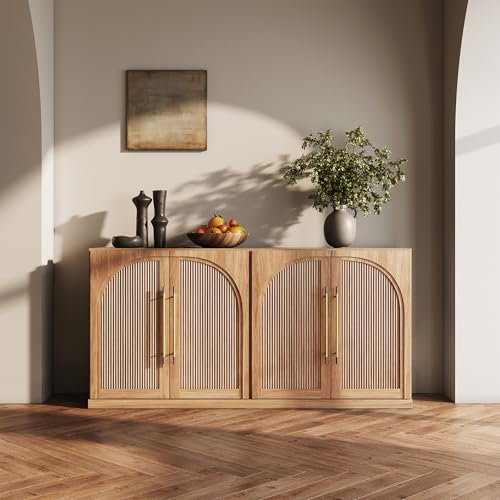
BELLEZE Sideboard
Best for: readers who want a recognisable sideboard style with closed storage for everyday dining use. Not suited for: anyone who needs a confirmed material or hardware detail before shortlisting, because this draft deliberately leaves those checks to the listing. Be honest about doors and drawers around small fingers: soft-close hardware softens a closing door, but it is not a guarantee against a pinch, and a plain hinge that stops short can be safer in a busy family room than a door that swings freely.
Storage that stays tidy. Closed storage hides the visual noise of linens, candles, board games, chargers and the serving pieces you use only sometimes. The discipline that makes it work is simple: one category per shelf or drawer, heavy things low, and a quick sort each season so the cabinet does not become a place where objects go to be forgotten. Be honest about doors and drawers around small fingers: soft-close hardware softens a closing door, but it is not a guarantee against a pinch, and a plain hinge that stops short can be safer in a busy family room than a door that swings freely.
Style in the room. A sideboard anchors a wall the way a bookcase anchors a study. Its long low line can balance a large table, hold lamps or artwork at a comfortable height, and repeat a wood tone or metal finish used elsewhere, tying the room together without needing to match every other piece exactly. Say plainly whether a finish is veneer over an engineered core or solid wood through and through, because veneer can look handsome and stay flat while solid wood moves with the seasons, and neither fact alone tells you which piece will suit your room.

VASAGLE Sideboard
Best for: readers who want a recognisable sideboard style with closed storage for everyday dining use. Not suited for: anyone who needs a confirmed material or hardware detail before shortlisting, because this draft deliberately leaves those checks to the listing. Say plainly whether a finish is veneer over an engineered core or solid wood through and through, because veneer can look handsome and stay flat while solid wood moves with the seasons, and neither fact alone tells you which piece will suit your room.
Style in the room. A sideboard anchors a wall the way a bookcase anchors a study. Its long low line can balance a large table, hold lamps or artwork at a comfortable height, and repeat a wood tone or metal finish used elsewhere, tying the room together without needing to match every other piece exactly. Say plainly whether a finish is veneer over an engineered core or solid wood through and through, because veneer can look handsome and stay flat while solid wood moves with the seasons, and neither fact alone tells you which piece will suit your room.
Small rooms and apartments. In a smaller home the same piece may serve the dining area, the living area and the entry at once. That versatility is real, but it rewards restraint: choose a footprint that leaves walking room, prefer doors that do not swing into a passage, and resist filling every shelf in the first week. Use coasters, trivets and mats on the top surface every time, because heat rings and moisture marks are the most common damage on a sideboard top, and a finish that shrugs off a cold glass may still blister under a hot serving dish.
Related Reading
Keep exploring with these related guides: sideboard review sideboard reviews sideboard buying guide sideboard pros and cons how to choose a sideboard dining table review dining table buying guide how to choose a dining table neutral sofas that sit comfortably beside a sideboard classic sofas for a traditional dining room textured rugs under a dining set nightstands with a similar closed-storage idea
Start the decision with the single largest thing the sideboard must swallow, and measure that object rather than guessing. For many households it is the dining table’s extension leaf, an awkward board that fits nowhere gracefully; for others it is a stack of serving platters, the slow cooker, or board games in boxes that defeat ordinary cupboards. Carry that measurement into the internal dimensions, not the glossy external ones, and allow for the swing of the doors and the depth lost to the back panel. A sideboard chosen around its biggest resident earns its floor space every week; one bought for looks alone becomes an expensive surface for unopened post.
Frequently Asked Questions About Is A Sideboard Worth It
Will a sideboard fit in a small dining room?
It can, provided the footprint leaves clear walking room and the doors can open without striking chairs. Tape the outline on the floor, live with it for a few days, and measure doorways before ordering so the piece can actually reach the room. A compact piece used well beats a large piece that blocks the passage every single day.
Should heavy dishes go on the top shelf?
No. Store heavy items low, close to the floor and towards the back, where they steady the piece instead of raising its centre of gravity. Lighter linens, napkins and occasional pieces belong higher up, and that simple arrangement also makes lifting safer for whoever is setting the table.
Is veneer worse than solid wood?
Not automatically, and it should be stated plainly either way. Veneer over a stable core can stay flat and look consistent, while solid wood can be repaired in ways veneer cannot but may move with humidity. Judge the construction, the finish and the care you are willing to give, rather than the label alone.
How do I protect the top surface?
Use coasters under drinks, trivets under hot dishes and a mat under anything damp, every time rather than only for guests. Wipe spills promptly, avoid dragging rough bases across the finish, and keep strong sun off the top where you can. Most top damage is preventable with those small habits.
Do I need to anchor a sideboard to the wall?
For a tall or narrow piece, yes, use an anti-tip strap fixed to a stud, especially in a home with children or pets. Even a lower piece deserves a check once it is loaded, because open drawers and doors shift weight forward. Anchoring is quiet, hidden and far easier than dealing with a tip.
Are soft-close doors always better?
They are gentler and quieter, and they reduce slamming, but they are not a guarantee against pinched fingers and they can feel slow if you are unloading quickly. Try the action where you can, be honest about who will use the piece, and teach children to use the handles rather than the door edges.
Can a sideboard double as a TV stand or living room storage?
Yes, and for many homes that second job is what makes the purchase worthwhile. A sideboard’s long, low profile suits a television, and its cupboards hide media boxes, games consoles and chargers better than open TV benches do. Check two things before repurposing one: the depth, since many sideboards are shallower than dedicated media units and a large receiver may overhang, and ventilation, because enclosed cupboards trap heat around electronics, so a model with a removable back panel or cable cut-outs works far better. Used this way, one piece of furniture serves dining storage and living room duty, which strengthens the value case considerably for smaller homes.
How much hassle is a sideboard when you move house?
More than most buyers expect. A solid wood sideboard commonly weighs as much as a large sofa, needs two people to carry safely, and will not turn tight stairwell corners without planning. Renters who move every year or two should weigh that against the storage gained, and measure both the destination room and every doorway and hallway turn before buying, not on delivery day. Flat-pack and leg-removable designs travel far better. If your next move is already on the horizon, a lighter credenza-style piece delivers most of the storage with a fraction of the moving-day grief.
Extra Notes on Living With a Sideboard, Part 1
Long term care. Care is mostly small habits repeated: dust with a soft cloth along the grain, wipe spills promptly, keep the piece out of harsh direct sun where you can, and tighten hardware gently when a handle begins to feel loose. Those habits protect both veneer and solid wood, and they cost far less effort than repairing a stained or warped top. Leave breathing room behind and beside the piece so doors open fully and you can reach the back of a deep cabinet without dragging everything forward. Readers who take this slower, room-by-room approach almost always end up happier with the piece they choose, because the decision was based on their own habits rather than a single photograph or a rushed weekend of shopping.
Daily serving. A sideboard earns its keep in daily serving when the things you reach for at every meal live at waist height, behind closed doors, instead of being carried from a distant cupboard each time. Think through a normal weeknight, a slow weekend breakfast and a larger gathering, and list what actually moves between kitchen and table. That honest list, not a styled photograph, tells you how much closed storage, drawer space and clear top surface you really need. Anchor a tall or narrow piece to the wall with the strap the maker supplies, or with a suitable anti-tip strap fitted to a stud, because a sideboard loaded unevenly and opened all at once can lean forward in a way a low wide piece rarely does. Readers who take this slower, room-by-room approach almost always end up happier with the piece they choose, because the decision was based on their own habits rather than a single photograph or a rushed weekend of shopping.
Gatherings and hosting. When guests arrive, the top becomes a landing zone for drinks, shared dishes and the extras that would crowd the table itself. A good layout keeps hot dishes on trivets, cold drinks on a tray, and a clear path between the table and the kitchen, so the piece works as a quiet helper rather than a second cluttered surface. Store the heaviest items low, close to the floor and close to the back, so serving platters, stacked dishes and bottles steady the piece instead of raising its centre of gravity and straining the upper shelves. Readers who take this slower, room-by-room approach almost always end up happier with the piece they choose, because the decision was based on their own habits rather than a single photograph or a rushed weekend of shopping.
Storage that stays tidy. Closed storage hides the visual noise of linens, candles, board games, chargers and the serving pieces you use only sometimes. The discipline that makes it work is simple: one category per shelf or drawer, heavy things low, and a quick sort each season so the cabinet does not become a place where objects go to be forgotten. Be honest about doors and drawers around small fingers: soft-close hardware softens a closing door, but it is not a guarantee against a pinch, and a plain hinge that stops short can be safer in a busy family room than a door that swings freely. Readers who take this slower, room-by-room approach almost always end up happier with the piece they choose, because the decision was based on their own habits rather than a single photograph or a rushed weekend of shopping.

