Disclosure: As an Amazon Associate, airfryerkitchensupply.com earns from qualifying purchases. Links on this page are affiliate links; they cost you nothing extra. Prices and availability change often, so check the current Amazon listing before you buy.
This upright vacuum buying guide guide is written for real homes rather than showroom floors. If you are researching an upright vacuum — how it cleans carpet and hard floors, how it behaves on stairs, what it costs you in effort and upkeep over the years — you are in the right place. The word on this format is simple: the upright remains the default deep-cleaning machine for carpeted homes because it combines a powered brush roll, strong and steady suction, and a tool set for the rest of the room in one always-ready body. Everything below tests that promise honestly, including where it falls short.
Key Takeaways
An upright is the right main machine for homes with meaningful amounts of carpet, and a perfectly capable one for mixed floors when the brush roll can be calmed on hard surfaces. The decisions that actually matter are weight and carrying, stairs method, bagged or bagless, filtration upkeep, and storage — not headline suction claims. Safety on stairs is non-negotiable: never pull the machine by its hose while standing on the steps. Maintenance is light but faithful: empty or change the container on time, care for filters exactly as the maker directs, and clear the brush roll before it wraps solid. Choose for your hardest room, and the rest of the house takes care of itself.
In this guide
Upright Vacuum Buying Guide: What an Upright Does and the Main Types
The bagged-versus-bagless decision shapes daily life with the machine more than most specifications do. Bagged uprights contain the mess: you lift out a sealed bag and the dust goes with it, which many people find cleaner and calmer, and suction stays consistent as the bag fills within its working range. The costs are literal and logistical — bags are an ongoing purchase, and running out mid-clean is its own small frustration. Bagless machines remove that errand and let you see exactly what you have collected, which is oddly motivating, but emptying a cup can release a puff of fine dust if you rush it, and the filters in a bagless design carry more of the long-term workload, so they need faithful washing or replacing to keep performance up.
A corded upright trades a small amount of freedom for a large amount of consistency. Suction does not fade as a battery drains, there is no runtime clock on a big clean, and the machine can be built without the weight and cost of a large battery pack. The cord itself becomes a habit: you learn the rooms in outlet order, you manage the slack with one hand almost without thinking, and a generous cord length quietly decides how many times per clean you stop to re-plug. Cord storage matters more than it sounds, too. Hooks that release the whole cord in one motion get used; fiddly winding systems get left dangling, and a vacuum that is annoying to put away is a vacuum that gets used less often than it should.
Weight is not a single number in real life; it is where the weight sits and when you meet it. Pushing an upright across carpet is mostly about head design and wheel size, and a heavier machine with good geometry can feel easier than a light one that fights you. Carrying is the unforgiving test: up a flight of stairs, out to the car, or into a cupboard, every part of the machine’s mass is in your hands at once. This is why lift-away designs and genuinely light models have such loyal followings, and why the honest question is not how heavy an upright is but how often your home makes you carry it, and whether the design gives you a lighter way to do the jobs that happen off the floor.
Swivel steering changed how uprights feel in furnished rooms. A head that pivots lets you walk a machine around chair legs, table bases, and the forest of furniture in a real living room without the stop, lift, turn, restart rhythm of a fixed-neck design. Ball-based steering takes the same idea further, leaning the whole body into turns. The benefit is not speed so much as willingness: cleaning under and around things stops feeling like a chore layered on top of the chore. The counterpoints are stability and feel. Some swivel machines will not stand quite as calmly when parked mid-room, and some users simply prefer the planted, straight-line tracking of a traditional body, especially on large open carpet where there is nothing to steer around.
Bagged Uprights
Attachments decide whether an upright is a floor machine or a whole-room system. A crevice tool earns its place along skirting boards, between cushions, and down the side of car seats. A dusting brush with soft bristles handles shelves, blinds, and lampshades without scattering what it touches. An upholstery tool, ideally with lint-picking edges, lifts hair and grit from sofas and stairs. The questions that matter are practical: do the tools live on the machine, where you will actually use them, or in a bag in a cupboard? Does the hose release with one hand? Can you reach a ceiling corner with the wand without standing on furniture? A modest tool set that is always attached beats an impressive one that is never fetched.
Bagless Uprights
The brush roll is the hardest-working and most neglected part of the machine. Hair, thread, and fibres wind around it week after week, and a wrapped roll cleans worse, strains the motor, and can eventually affect the belt or the roll’s own bearings. Clearing it is simple maintenance: unplug the machine first, always, then turn it over, and cut the wrapped material away carefully along the roll, pulling the freed strands clear with your fingers once they are cut. Take your time and keep your fingers aware of the blade, working with scissors or a seam ripper in good light rather than tugging blindly. Some designs offer removable rolls or anti-wrap combs that reduce the chore; none of them eliminate it entirely in a home with long hair or pets.
Lift-Away and Lightweight Designs
Filters are the quiet half of performance. A clogged filter makes a strong motor feel weak, shortens cleaning sessions with cut-outs on some designs, and pushes fine dust where you do not want it. The care rules are simple but strict. Wash a filter only if the maker says that specific filter is washable — some are, some are not, and washing a non-washable filter ruins it. If you do wash one, rinse it gently, shake off the excess, and let it dry fully and completely before refitting it; a damp filter put back into a machine is a musty smell and a performance problem waiting to happen. Keep a note of when you last cleaned or changed each filter, because the decline is gradual enough to go unnoticed until the machine feels transformed by a fresh one.
Top Picks at a Glance

Hoover WindTunnel — the carpet-focused workhorse
The Hoover WindTunnel line has served carpet-heavy homes for a long time, and its appeal is straightforward: strong agitation on pile, a design that concentrates airflow across the width of the head, and a ownership experience built around simple, widely available bags or easy-empty cups depending on the version. In a house where most rooms are carpeted and the weekly job is deep, satisfying passes rather than delicate hard-floor work, it feels entirely in its element. The trade-offs are weight and refinement: these machines can feel more old-school in the hand, less nimble around furniture, and less elegant on bare floors than the swivel-steering designs that now dominate the shelves.
Best for: households whose rooms and routines match the carpet-focused workhorse described above. Not suited for: buyers whose main constraint points the other way — be honest about your floors, your stairs, and your storage before choosing. This pick sits in the mid tier of the upright market, positioned by design and features rather than by any fixed price, which changes too often to print.
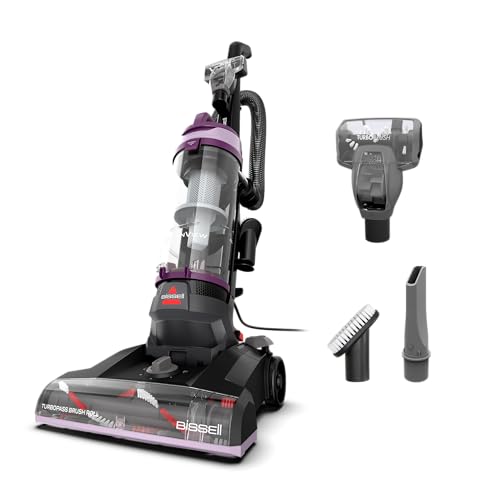
Bissell CleanView — the value-minded family pick
The Bissell CleanView family is built for buyers who want a proper full-size upright without moving into premium territory. You get a wide cleaning path, a washable-filter approach on many versions, scatter-resistant hard-floor behaviour, and the kind of straightforward controls a busy household actually uses. For first homes, rentals, and family houses where the vacuum works hard and nobody wants to baby it, that combination is exactly right. The compromises show in the details rather than the cleaning itself: plastics feel more utilitarian, the hose and tools are functional rather than delightful, and long-term refinement is a step behind the premium names, even though the floors come up just as clean on an ordinary week.
Best for: households whose rooms and routines match the value-minded family pick described above. Not suited for: buyers whose main constraint points the other way — be honest about your floors, your stairs, and your storage before choosing. This pick sits in the premium tier of the upright market, positioned by design and features rather than by any fixed price, which changes too often to print.

Eureka PowerSpeed — the lightweight budget pick
The Eureka PowerSpeed is the upright for people who have been put off uprights by weight. It is noticeably easier to carry between floors, quick to pull out for a daily pass, and simple in a way that suits smaller homes, flats, and anyone who cleans little and often rather than in one long weekly session. On low and medium pile and on hard floors it covers the everyday jobs — crumbs, grit by the door, hair in the hallway — without fuss. The limits are equally clear: deep-pile carpet and heavy pet shedding ask more of a machine than this class is built to give, and the lighter build that makes it easy to carry also makes it feel less planted on thick carpet.
Best for: households whose rooms and routines match the lightweight budget pick described above. Not suited for: buyers whose main constraint points the other way — be honest about your floors, your stairs, and your storage before choosing. This pick sits in the mid tier of the upright market, positioned by design and features rather than by any fixed price, which changes too often to print.
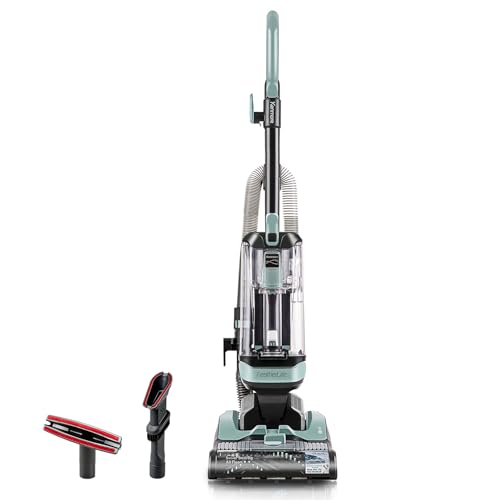
Kenmore Upright — the bagged traditionalist pick
Kenmore uprights speak to buyers who still prefer a bag. A bagged machine traps what you pick up inside a sealed, disposable layer, so emptying is a clean, dust-contained job, and many long-time owners trust the consistent suction a fresh bag provides. Kenmore designs tend to feel substantial, with strong carpet cleaning and a familiar, repairable character that suits people who keep appliances for years. The ongoing cost and errand of replacement bags is the standing trade-off, along with a heavier, less fashionably styled body. For allergy-conscious households that simply dislike dust cups — framed here purely as comfort and cleanliness preference, not as any medical benefit — the bagged route remains a rational, satisfying choice.
Best for: households whose rooms and routines match the bagged traditionalist pick described above. Not suited for: buyers whose main constraint points the other way — be honest about your floors, your stairs, and your storage before choosing. This pick sits in the entry-to-mid tier of the upright market, positioned by design and features rather than by any fixed price, which changes too often to print.

Shark Navigator Lift-Away — the lift-away all-rounder
The Shark Navigator Lift-Away built its reputation on a simple, genuinely useful idea: the canister pod lifts off the body, so the part you carry to the stairs, the car, or the upholstery is far lighter than the whole machine. On open carpet it behaves like a conventional upright, with swivel steering that makes it feel smaller than it is, and on hard floors it settles down without scattering debris ahead of the brush roll. It suits households that want one machine to cover whole rooms and awkward corners without buying a second handheld. Its trade-off is the usual lift-away one: you are managing a hose and a pod rather than simply pushing, and the dust cup needs regular emptying if you clean a large, pet-heavy home in one session.
Best for: households whose rooms and routines match the lift-away all-rounder described above. Not suited for: buyers whose main constraint points the other way — be honest about your floors, your stairs, and your storage before choosing. This pick sits in the entry tier of the upright market, positioned by design and features rather than by any fixed price, which changes too often to print.

Dyson Ball Animal — the premium steering pick
The Dyson Ball Animal takes a different route to the same rooms, rolling on a ball so the whole body pivots around furniture legs and table bases with a twist of the wrist. It is aimed squarely at homes with shedding animals, where the brush roll, the suction at the floor head, and a filtration system designed to keep fine dust inside the machine matter more than anything else. The feel is engineered and solid, and the tools are made for above-floor work as much as for carpet. The honest limitation is positioning: this is a premium-tier machine, and its dust bin is not the largest, so big homes with heavy shedding may find themselves emptying it mid-clean more often than they would like.
Best for: households whose rooms and routines match the premium steering pick described above. Not suited for: buyers whose main constraint points the other way — be honest about your floors, your stairs, and your storage before choosing. This pick sits in the mid tier of the upright market, positioned by design and features rather than by any fixed price, which changes too often to print.
How Much Cleaning Power Do You Actually Need?
Storage is the unglamorous test every upright eventually faces. A full-size machine needs a home: a cupboard with enough height for the body and hooks for the cord, a corner of a utility room, or a spot in a hallway closet shared with coats and a mop. Measure the space you actually have before you fall for a machine, including the door swing and the shelf above. Designs that stand securely on their own, lock upright without leaning, and keep their tools on board store gracefully; tall, top-heavy machines in shallow cupboards become a daily small annoyance. In smaller homes this single factor legitimately decides the purchase, and there is no shame in it — the best vacuum for a home is one that fits the home, cupboards included.
Noise shapes when and how a home gets cleaned. Uprights are working machines with motors and spinning brush rolls, and none of them are silent; what varies is the pitch and harshness as much as the volume, and how the sound changes between carpet and hard floors. A machine you dread hearing will be used in shorter, rarer sessions, which quietly undermines every other virtue it has. If you clean around sleeping children, shift workers, nervous pets, or thin apartment walls, treat sound as a real buying criterion: read how owners describe the tone, favour designs known for a lower, smoother note, and plan the noisiest jobs for sociable hours. It is a quality-of-life specification, and it deserves a place on the checklist beside suction and weight.
Durability in an upright is mostly about the boring parts: belts, hoses, wheels, latches, and the brush roll’s bearings. These are the components that decide whether a machine is still pleasant in its fifth year or becomes a rattling obligation. Signs of a design built to last include a hose that flexes without kinking or splitting at the cuffs, wheels that roll rather than drag, a head that survives knocks against skirting boards, and parts — filters, belts, rolls — that are easy to source and simple to fit at home. Ownership is also a skill: most early failures trace back to clogged filters, wrapped brush rolls, and blockages left to strain the motor. A mid-priced machine maintained faithfully will usually out-clean and out-last a premium one that is neglected.
How Will You Handle Stairs and Carrying?
Blockages announce themselves politely before they become problems: suction fades, the pitch of the motor changes, the machine leaves debris it would normally take, or the brush roll stops turning. The usual hiding places are predictable — the hose, the wand, the intake behind the brush roll, and the sharp bend where dirt enters the cup or bag chamber. Working through them in order, with the machine unplugged, solves the great majority of performance complaints without any tools beyond a broom handle to gently push a clog through a detached hose. Making this check a habit whenever performance dips protects the motor, because a machine straining against a blockage runs hot and works far harder than it was designed to for far longer than it should.
Edge cleaning is where specification sheets go quiet and real rooms tell the truth. Dirt collects where floors meet walls, along the kick plates under kitchen cabinets, and in the corners where two skirting boards join. A head that can pull debris from close to the wall on at least one side, and ideally across its front, saves the second pass with a crevice tool that turns a quick clean into a project. Test any machine you own with a line of crumbs against the skirting and watch honestly. In open-plan spaces with long wall runs, good edge behaviour saves real time every week; in small, furnished rooms, the crevice tool was coming out anyway, and edge performance matters correspondingly less.
For households that are simply dust-sensitive in the everyday sense — people who sneeze through a cleaning session and dislike the dusty smell a poor machine leaves behind — the practical advice is about containment and habits rather than claims. Choose a machine that seals well, keep its filters maintained so it keeps sealing well, empty cups and change bags outdoors or directly into an outside bin where you can, and let the air in a freshly vacuumed room settle before sensitive noses return to it. Framed that way, as comfort and cleanliness, filtration is a perfectly good reason to choose one upright over another. What a buying guide should never do is promise medical outcomes, and this guide does not: it talks about tidier air and more pleasant cleaning, nothing more.
Bagged or Bagless — Which Suits Your Tolerance?
The households that get the most from an upright are usually the ones that clean in a rhythm rather than in a crisis. A full pass on a set day, a quick traffic-lane pass midweek, and immediate attention to the grit zones by doors and under the kitchen table keeps carpets healthier and makes every session shorter. An upright supports this rhythm well because it is always ready: no charging, no battery anxiety, just unwrap the cord and go. Keeping the machine somewhere it can be reached in seconds rather than minutes is part of the system. So is the small discipline of emptying the cup or checking the bag at the end of a session, so the next session starts with the machine at full strength rather than already half compromised.
Different rooms make different demands, and walking your own home mentally, room by room, is the most reliable specification exercise there is. The living room is furniture, rugs over hard floors, and hair on upholstery. The bedrooms are carpet, dust under beds that a full-size head may or may not reach, and the quiet-hours question. The kitchen is hard floor, crumbs, and grit in corners. The hallway is the grit highway of the house, where outdoor dirt arrives and spreads. A good upright for your home is the one whose strengths line up with your hardest rooms, not the one with the longest feature list, and a machine that forces you to buy a second cleaner for a room you use daily has failed its main job.
Value in this category is a whole-ownership calculation. The purchase itself is only the opening chapter; bags, filters, belts, and the occasional brush roll are the running story, and a cheap machine with expensive consumables can cost more over its life than a pricier one with washable filters and common parts. Time is a cost too: a machine that needs its cup emptied three times per clean, or its brush roll cleared after every session in a pet home, taxes you in minutes and patience. Set against that, a well-chosen upright lasts for years of weekly use, replaces separate machines for floors, stairs, and upholstery, and asks for no charging infrastructure or battery replacements. Judged over its whole life in your home, a good upright is one of the more honest bargains in housekeeping.
How to Prioritise by Use Case
A note for buyers considering a used or handed-down upright: the design’s simplicity works in your favour. Check the brush roll spins freely, the belt is intact, the hose has no splits at the cuffs, and the filters are present and not collapsing. Run it and listen; a healthy motor note is smooth and even, and a burning smell or a screaming pitch is a reason to walk away. Budget mentally for fresh filters and possibly a belt and a brush roll as the true starting cost, clean the machine thoroughly before its first session in your home, and you can end up with years of service from a design that was built to be maintained rather than replaced. That maintainability is one of the upright format’s genuine, underrated virtues.
Homes with children generate a distinctive kind of mess: crumbs ground into carpet, craft glitter in rug pile, sand from shoes and bags, and a steady migration of small debris into every corner. An upright handles this life well precisely because it is robust, always ready, and powerful enough to deal with the ground-in end of the mess spectrum. The practical points are about storage and supervision: keep the machine stored where small hands cannot pull it over, keep cords wound and out of play, and treat the vacuum as the appliance it is rather than a ride-on toy, however inviting a sturdy body looks to a toddler. Cleaned regularly, family carpets also simply last longer, because the grit that children track in is exactly the grit that wears fibres out.
Flat and apartment living reframes the upright question around space, stairs, and neighbours. A compact or lightweight upright that stores in a shallow cupboard, carries easily if there is no lift, and cleans a small floor plan quickly can be a better answer than a full-size flagship that dominates the hallway cupboard. Noise travels through floors and walls, so the machine’s tone matters socially as well as personally. At the same time, small homes concentrate mess: the same square metres take all the traffic, all the cooking, and all the shedding, so the cleaning power of a proper upright is not wasted on a small floor plan. The format scales down gracefully; it is the storage and carrying questions that decide which model belongs in a flat.
For older users, or anyone cleaning with a weaker grip, a bad back, or limited stamina, the upright decision becomes physical in a specific way. The pushing is rarely the problem — good wheels and head geometry do that work — but the lifting, the carrying between floors, and the bending to adjust settings or empty cups are where a machine either respects its user or fights them. Lightweight designs, lift-away pods, controls placed high on the body, and height adjustments that do not demand kneeling are the features that matter. There is also a strong case for keeping a machine on each floor of a multi-storey home rather than carrying any vacuum up and down stairs weekly, whatever its weight.
Keep reading around this cluster: upright vacuum review; upright vacuum reviews; upright vacuum pros and cons; the best HEPA vacuums; the best bagged vacuums.
First Setup and Care Essentials
Rugs over hard floors are a small daily test of versatility. The machine must clean the rug’s pile properly, then step off onto bare floor without scattering, then climb back on without catching the rug’s edge and bunching it — a particular hazard with lightweight rugs and strong suction, where a suction-release or a gentler setting saves frustration. Fringed rugs need a moment’s care: lift the fringe rather than vacuuming over it, or use a tool, because brush rolls and tassels are natural enemies. A home that is mostly hard floor with a few rugs wants a different balance — hard-floor manners first, rug competence second — from a carpeted home with a tiled kitchen, and being honest about which description fits your floors is half the purchase decision.
There is a difference between maintenance cleaning and a deep clean, and an upright serves both, differently. Maintenance is speed: traffic lanes, visible crumbs, the weekly rhythm that keeps a home feeling kept. A deep clean is methodical: furniture moved, edges done with the crevice tool, slow overlapping passes on carpet so the brush roll has time to work the pile, upholstery and curtains taken down with the tools, and the machine itself checked afterwards — cup emptied, filter looked at, brush roll inspected. Scheduling a deep clean a few times a year, at the change of seasons or before guests, is what keeps carpets from slowly dulling under accumulated grit that quick passes never quite reach, and it is where a full-size upright most clearly outclasses lighter formats.
Suction figures and motor claims are the least useful numbers in this category when read alone, because cleaning happens at the floor head, where airflow, agitation, and sealing meet the dirt. A design with modest headline power and a well-sealed head that agitates carpet properly will out-clean a louder, prouder machine that leaks air at every joint. Judge by behaviour: does it pick up in one pass what you expect it to, does performance hold as the cup fills or the bag loads, and does it still pull at the edges of the head? Owners’ long-term reports about consistency are worth more than launch-day claims, and a machine that cleans the same in year three as in week one is the real performance story in this category.
Mistakes to Avoid
Carpet is where an upright earns its keep. The brush roll does not merely sweep the surface; it agitates the pile so embedded grit, hair, and fine dust loosen and move into the airflow. On low pile and Berber-style loops, almost any competent upright feels effective, because the head sits close and the fibres give up their dirt easily. On medium and plush pile the differences appear: a head that rides too low can feel like hard work to push, while a head that floats too high leaves the deep grit behind. Height adjustment, whether automatic or manual, is really a comfort-and-contact control, and learning where your own carpets sit on that dial transforms both the effort of the weekly clean and the result you see in the dust cup afterwards.
Hard floors ask something different. A brush roll that helps so much on carpet can scatter crumbs and grit across tile, laminate, and wood if it spins aggressively with no way to calm it down, which is why a brush-roll shutoff or a dedicated hard-floor setting matters far more than marketing language about multi-surface cleaning. Watch how a machine behaves at the edges, too: crumbs collect along skirting boards and under cabinet toe-kicks, and a head that seals reasonably well to the floor pulls that debris in instead of pushing it around. Between passes, the transition from rug to bare floor is where you will feel a design’s quality every single week, in the wrist, in the noise, and in whether you bother finishing the room.
Pet hair changes the cleaning maths of a house. Hair itself is light and easy to lift; the real work is hair woven into carpet fibres, hair on upholstery, and the fine dander and dust that travel with it. An upright that handles pets well combines a brush roll that resists wrapping — or at least one you can clear quickly — with tools shaped for fabric: a small powered or air-driven head for sofas and stairs, and an upholstery nozzle that does not simply skate over cushions. Emptying becomes a rhythm rather than an event in a shedding household, so a dust cup or bag system you can deal with calmly, outdoors or over a bin, without a cloud escaping, is worth more than a marginal difference in headline suction.
The Short Answer
Match the machine to your hardest room, your stairs, and your storage, in that order, and let headline claims fall where they may. An upright chosen that way rarely disappoints, because the disappointments in this category almost always come from a mismatch between the home and the format, not from a lack of suction.
Deeper Notes for Careful Buyers
Hard floors ask something different. A brush roll that helps so much on carpet can scatter crumbs and grit across tile, laminate, and wood if it spins aggressively with no way to calm it down, which is why a brush-roll shutoff or a dedicated hard-floor setting matters far more than marketing language about multi-surface cleaning. Watch how a machine behaves at the edges, too: crumbs collect along skirting boards and under cabinet toe-kicks, and a head that seals reasonably well to the floor pulls that debris in instead of pushing it around. Between passes, the transition from rug to bare floor is where you will feel a design’s quality every single week, in the wrist, in the noise, and in whether you bother finishing the room.
Filtration is best discussed honestly and qualitatively. A well-sealed machine with good filters keeps more of the fine dust it collects inside the vacuum instead of returning it to the room air, and that makes cleaning more pleasant — less dusty smell, less fine residue settling back onto surfaces. That is a comfort and cleanliness point, and it is the right way to frame it: no vacuum is a medical device, and no filter claim in a buying guide should be read as a treatment or a guarantee for any health condition. What you can judge as a buyer is simpler: does the machine seal well around its cup or bag, are the filters easy to remove and maintain, and does the maker tell you clearly whether each filter is washable or replace-only.
Weight is not a single number in real life; it is where the weight sits and when you meet it. Pushing an upright across carpet is mostly about head design and wheel size, and a heavier machine with good geometry can feel easier than a light one that fights you. Carrying is the unforgiving test: up a flight of stairs, out to the car, or into a cupboard, every part of the machine’s mass is in your hands at once. This is why lift-away designs and genuinely light models have such loyal followings, and why the honest question is not how heavy an upright is but how often your home makes you carry it, and whether the design gives you a lighter way to do the jobs that happen off the floor.
The brush roll is the hardest-working and most neglected part of the machine. Hair, thread, and fibres wind around it week after week, and a wrapped roll cleans worse, strains the motor, and can eventually affect the belt or the roll’s own bearings. Clearing it is simple maintenance: unplug the machine first, always, then turn it over, and cut the wrapped material away carefully along the roll, pulling the freed strands clear with your fingers once they are cut. Take your time and keep your fingers aware of the blade, working with scissors or a seam ripper in good light rather than tugging blindly. Some designs offer removable rolls or anti-wrap combs that reduce the chore; none of them eliminate it entirely in a home with long hair or pets.
Noise shapes when and how a home gets cleaned. Uprights are working machines with motors and spinning brush rolls, and none of them are silent; what varies is the pitch and harshness as much as the volume, and how the sound changes between carpet and hard floors. A machine you dread hearing will be used in shorter, rarer sessions, which quietly undermines every other virtue it has. If you clean around sleeping children, shift workers, nervous pets, or thin apartment walls, treat sound as a real buying criterion: read how owners describe the tone, favour designs known for a lower, smoother note, and plan the noisiest jobs for sociable hours. It is a quality-of-life specification, and it deserves a place on the checklist beside suction and weight.
A Pre-Purchase Fit Audit for Upright vacuum: Space, Habits and the Constraints Listings Skip
Specifications and shortlists only get a buyer so far. What decides whether an upright vacuum works out is the fit between the product and your floors, stairs and the household debris it faces weekly, and that fit can be audited before any money moves. Work through the checks below in order, because each one eliminates a different kind of disappointment: the wrong size, the wrong format for the routine, and the right product undermined by one ignored constraint in the room or the household.
Treat this first check as a gate, not a preference. Start with fit, because fit failures cannot be fixed by enthusiasm later. In practice that means three things: decide between bagged and bagless based on how you prefer to empty and maintain it; match the vacuum to your main floor type rather than the rarest room; and check weight and handling if it will be carried between floors often. Write the answers down rather than holding them in your head, because an upright vacuum is usually chosen over several browsing sessions, and the constraint you checked on Monday is the one forgotten by Friday. If any of the three checks produces an awkward answer, treat it as information about format, not as a problem to wave away — a different format of upright vacuum often removes the conflict entirely, while a compromise on fit tends to be re-litigated every time the product is used.
On a shortlist, this is where weak candidates quietly fall away. Then picture the product in its real situations rather than its best one. The routine cases are easy to imagine: an allergy-conscious routine with frequent, thorough passes (general cleanliness only), or a pet household where hair gathers daily on carpet and hard floors. The more useful exercise is the harder day: thick rugs that some heads ride over rather than cleaning into; and fine dust and hair wrapping the brush roll until suction seems lost. An upright vacuum does not need to be perfect in those moments, but it does need a workable answer to them — a way to be moved, covered, adjusted, cleaned or simply tolerated until conditions improve. If the honest answer is that the hard day would make you stop using it altogether, that is a decision-grade fact, and it is far cheaper to learn it now than after delivery.
Reviewers rarely mention this point, yet owners raise it constantly. Most disappointments trace back to a short list of avoidable errors. The common ones here are: skipping filter care because the vacuum still picks up surface crumbs; assuming weak suction means motor failure before checking filters and blockages; and dragging the vacuum by its hose, straining seals and connections. Notice that none of them is really about build quality. They are sequencing errors — deciding before measuring, assuming instead of checking, or copying someone else’s setup whose space and habits differ from yours. Reading any listing for an upright vacuum with those three errors in mind is a fast filter: if the page in front of you encourages one of them, slow down and return to your own measurements and routine.
Budget for this in time, not just money, before you commit. Ownership also has a rhythm, and it is worth pricing that rhythm in before you commit. For an upright vacuum, the upkeep that keeps it pleasant is modest but specific: wipe the soleplate and check wheels for grit that scratches hard floors; empty the bin or check the bag after heavy sessions, not just when performance drops; and wash or replace filters on the maker’s schedule and let them dry fully. None of that is onerous on its own. The question is whether it attaches to a routine you already have — a weekly clean, a seasonal tidy, a habit of putting things away properly — or whether it requires a new routine invented from scratch, which is the kind that quietly lapses by the second month.
Frequently Asked Questions
How often should an upright vacuum be emptied or its bag changed?
Empty a bagless cup when debris reaches the fill line marked on it, and sooner in pet homes, because a packed cup restricts airflow and performance falls away quietly. Bagged machines should get a fresh bag when the bag feels full and firm or when suction noticeably softens, whichever comes first. Making emptying the last step of every cleaning session is the simplest habit in this whole guide: the next clean then starts at full strength, and you never begin a session by doing the previous session’s least pleasant job.
Can one upright really handle both carpet and hard floors?
Yes, provided it gives you a way to calm the brush roll on hard floors — a shutoff switch, a dedicated setting, or a head designed to settle gently on bare surfaces. Without that, a carpet-focused roll can scatter crumbs and grit ahead of itself on tile and wood. With it, a single upright genuinely covers a mixed home, stepping from rug to laminate to tile in one continuous pass. The transition test is the one to apply when you shop and when you first bring a machine home: if the change of surface does not change your technique, the design has done its job.
What is the safest way to vacuum stairs with an upright?
Never pull an upright by its hose while you are standing on the stairs, because the machine can topple onto you, and that is a real injury risk rather than a tidiness issue. Carry a lift-away pod by its handle and clean each tread with the pod in one hand and the tool in the other, or park the body securely on a landing and work only within comfortable, unstrained hose reach, or simply use a small handheld for the staircase. Keep a stable stance, keep a hand free for the rail where you can, and treat the stairs as a job to do slowly and deliberately.
How do I know whether my filter can be washed?
Read the maker’s instructions for your exact model, because washability is a property of the specific filter, not of the brand or the machine. Some foam and fabric filters are designed to be rinsed; some pleated and high-efficiency filters are replace-only, and washing one of those ruins it. If yours is washable, rinse it gently, shake off the excess water, and let it dry fully and completely — a full day of air drying is the safe habit — before refitting it. A filter put back damp will smell musty and perform badly, so patience at this step is part of the maintenance, not an optional extra.
Why does my upright lose suction over time?
Gradual suction loss is almost never the motor. Work through the usual suspects in order: a cup or bag that needs emptying or changing, a filter clogged with fine dust, a brush roll wrapped in hair so it cannot agitate properly, and a blockage in the hose, wand, or the intake behind the head. Unplug the machine before investigating, clear what you find, wash or replace filters as the maker directs, and performance usually returns completely. A machine straining against a blockage runs hot and wears itself, so treating fading suction as a prompt for a five-minute check protects the motor as well as the cleaning.
Is a bagged or bagless upright better for a pet home?
Both can work well; the choice is about your tolerance for the chores each creates. Bagless machines show you the hair you have collected and never need bags, but shedding homes fill cups quickly and emptying becomes a frequent, slightly dusty ritual. Bagged machines contain the hair neatly and empty rarely and cleanly, at the cost of an ongoing supply of bags. Either way, the brush roll matters more than the container: choose a roll that resists wrapping or is quick to clear, keep a small tool for stairs and sofas, and the pet hair itself stops being the deciding factor.
Related Guides
Keep reading around this cluster: upright vacuum review; upright vacuum reviews; upright vacuum pros and cons; is an upright vacuum worth it; how to choose an upright vacuum; how to clean an upright vacuum; the canister vacuum buying guide; is a canister vacuum worth it; our round-up of the best upright vacuums.
