Disclosure: As an Amazon Associate, airfryerkitchensupply.com earns from qualifying purchases. Links on this page are affiliate links; they cost you nothing extra. Prices and availability change often, so check the current Amazon listing before you buy.
This guide is built around one search: how to choose an electric spin scrubber. Whether you arrived here planning a purchase, questioning a purchase, or trying to get more from a tool already under your sink, the aim is the same, to give you the full picture in one place. You will find what an electric spin scrubber genuinely does well, where its limits honestly sit, how the main models differ in shape and purpose, and the safety and care habits that matter around water, chargers and cleaning products. Read the sections in order for the complete argument, or jump to the part that matches your decision, because every section was written to stand on its own as well as together.
Key Takeaways
The answer in brief before the steps begin. In the context of how to choose an electric spin scrubber, this is where the general advice becomes specific to your rooms, your surfaces and your routine, so judge every claim here against the bathroom and kitchen you actually clean each week, not against a showroom version of either.
- It removes arm effort from soap scum, grout lines and tiled surfaces, which are its proven strengths.
- It does not replace descaling, and it cannot repair damaged grout or sealant.
- Follow the maker’s water-resistance guidance: splash-resistant is not submersible, keep the charger and port dry, and never use it while plugged in unless designed for that.
- Comfort, reach and the right brush heads matter more than headline claims.
- Follow the cleaner’s own label, ventilate the bathroom, and never mix cleaners.
Value in this category is measured in jobs done, not features listed. A modest scrubber that handles your shower, tub and kitchen sink every week is worth more than a premium kit whose extra heads never leave the box. Think in cost-per-clean terms across a year of weekly use and even a mid-tier tool looks inexpensive next to the effort it removes, while a tool bought for a bathroom it does not suit is dear at any tier. Replacement heads and how easily you can get them belong in the value calculation too, since brushes are consumables that soften and splay with use. Buying from a range with readily available spare heads protects the purchase far better than chasing the longest accessory list on day one.
Renters and owners get different things from the same tool. A renter gains a way to hand back a bathroom that looks cared for without chemicals harsh enough to risk the landlord’s finishes, and to tackle the grout and sealant lines that inspections always seem to focus on. An owner gains a maintenance habit that delays bigger jobs: grout kept clean stays sound longer, sealant lines you can actually see get resealed before water gets behind them, and tiles never reach the state where only renovation helps. Both benefit from the same honesty about limits, because a scrubber reveals the true condition of a bathroom better than any other cleaning tool. What it shows you, good or bad, is information you can act on while the fixes are still small.
Children, pets and shared bathrooms add practical wrinkles. In a family bathroom the tool earns its keep constantly, because toothpaste, bath products and general traffic build grime faster than any schedule expects, and a scrubber kept charged turns a daunting weekly deep clean into shorter, more frequent passes. Store it and its charger out of reach of small children, as you would any electrical appliance, and never let the tool become a bath toy, however boat-like it may look to a toddler. For pet households, the scrubber is excellent around litter trays, feeding areas and the muddy zone by the door, with a dedicated head kept for those jobs. Rinse and dry heads after pet-area use and store them separately from bathroom heads.
In this guide
What You Need to Know Before You Start
Concepts, safety and preparation that make everything after it easier. In the context of how to choose an electric spin scrubber, this is where the general advice becomes specific to your rooms, your surfaces and your routine, so judge every claim here against the bathroom and kitchen you actually clean each week, not against a showroom version of either.
Travel, caravans and second homes are a niche but real use case. A compact scrubber keeps a caravan shower tray or a small holiday-let bathroom presentable without carrying a cupboard of brushes, and owners of rental properties often keep one with the changeover kit because it speeds up the bathroom reset between guests. The same water-and-electrics rules apply even more firmly in small spaces: charge away from water, keep ports dry, and ventilate when using cleaning products in a tiny bathroom. Battery discipline matters away from home, so charge before the trip rather than hoping to do it there. It is not an essential travel item for most people, but for anyone responsible for a small, hard-working bathroom away from home, it quietly earns its space.
Troubleshooting starts with the simple truth that most disappointing results are technique, product or patience problems rather than tool problems. If cleaning looks patchy, the usual causes are moving too fast, too little cleaner, no dwell time for the product to soften the film, or a head that is too soft or too worn for the surface. If the tool slows under pressure, ease off and let it spin freely. If it splashes, your angle is wrong or there is too much loose liquid on the surface. Work through those causes in order before concluding the scrubber is weak, because the same tool with a slower pass and a fresh head often performs like a different machine. Keeping a short mental checklist turns a frustrating first clean into a reliable routine by the third.
Environmental thinking belongs in the picture too. A rechargeable scrubber replaces a stream of disposable scouring pads and single-use cleaning wipes for many households, and brushes that last for months of weekly use generate little waste. Using the right cleaner in the right amount matters more with a spinning brush, because the tool spreads product efficiently and it is easy to use more than the job needs. Measure rather than glug, ventilate rather than over-apply, and rinse heads so they last. When heads finally wear out, replace the head rather than the whole tool wherever the range allows it. None of this requires perfection; it is simply the pattern of ownership that keeps costs, waste and chemical use down while the bathroom stays genuinely clean.
The Steps in Full
The complete process, step by step, with the detail that prevents mistakes. In the context of how to choose an electric spin scrubber, this is where the general advice becomes specific to your rooms, your surfaces and your routine, so judge every claim here against the bathroom and kitchen you actually clean each week, not against a showroom version of either.
Step 1: Work Slowly, Section by Section
Travel, caravans and second homes are a niche but real use case. A compact scrubber keeps a caravan shower tray or a small holiday-let bathroom presentable without carrying a cupboard of brushes, and owners of rental properties often keep one with the changeover kit because it speeds up the bathroom reset between guests. The same water-and-electrics rules apply even more firmly in small spaces: charge away from water, keep ports dry, and ventilate when using cleaning products in a tiny bathroom. Battery discipline matters away from home, so charge before the trip rather than hoping to do it there. It is not an essential travel item for most people, but for anyone responsible for a small, hard-working bathroom away from home, it quietly earns its space.
Step 2: Work Slowly, Section by Section
Troubleshooting starts with the simple truth that most disappointing results are technique, product or patience problems rather than tool problems. If cleaning looks patchy, the usual causes are moving too fast, too little cleaner, no dwell time for the product to soften the film, or a head that is too soft or too worn for the surface. If the tool slows under pressure, ease off and let it spin freely. If it splashes, your angle is wrong or there is too much loose liquid on the surface. Work through those causes in order before concluding the scrubber is weak, because the same tool with a slower pass and a fresh head often performs like a different machine. Keeping a short mental checklist turns a frustrating first clean into a reliable routine by the third.
Step 3: Work Slowly, Section by Section
Environmental thinking belongs in the picture too. A rechargeable scrubber replaces a stream of disposable scouring pads and single-use cleaning wipes for many households, and brushes that last for months of weekly use generate little waste. Using the right cleaner in the right amount matters more with a spinning brush, because the tool spreads product efficiently and it is easy to use more than the job needs. Measure rather than glug, ventilate rather than over-apply, and rinse heads so they last. When heads finally wear out, replace the head rather than the whole tool wherever the range allows it. None of this requires perfection; it is simply the pattern of ownership that keeps costs, waste and chemical use down while the bathroom stays genuinely clean.
Step 4: Work Slowly, Section by Section
Finally, set expectations by room rather than by advertisement. A typical family shower, cleaned regularly, is where a spin scrubber looks almost miraculous, because soap scum and surface grout dirt are exactly its strengths. A neglected bathroom being rescued after a year will improve a great deal but may still need descaling, resealing or regrouting in places, and judging the tool by that rescue alone is unfair to it and to you. Plan a first deep clean in stages, room by room, then settle into the shorter maintenance rhythm the tool makes possible. That rhythm, modest as it sounds, is the real product being sold in this whole category: a bathroom that never gets bad enough to dread cleaning again.
Step 5: Work Slowly, Section by Section
Start with what the tool actually does. An electric spin scrubber replaces the back-and-forth motion of a hand brush with a rotating brush head, so the cleaner and the bristles do the loosening while you mostly guide, pause and move on. That change sounds small until you picture a full shower enclosure: walls, a tub rim, a shower tray, grout lines in every direction and glass that shows every missed patch. Guiding a spinning brush across that area is a different physical job from scrubbing it, and it is the reason this category exists at all. It does not make dirt vanish on contact, and it does not reward rushing. It rewards a slow pass, enough cleaner, and letting each section get its turn under the brush before you rinse and judge the result honestly.
Finally, set expectations by room rather than by advertisement. A typical family shower, cleaned regularly, is where a spin scrubber looks almost miraculous, because soap scum and surface grout dirt are exactly its strengths. A neglected bathroom being rescued after a year will improve a great deal but may still need descaling, resealing or regrouting in places, and judging the tool by that rescue alone is unfair to it and to you. Plan a first deep clean in stages, room by room, then settle into the shorter maintenance rhythm the tool makes possible. That rhythm, modest as it sounds, is the real product being sold in this whole category: a bathroom that never gets bad enough to dread cleaning again.
Start with what the tool actually does. An electric spin scrubber replaces the back-and-forth motion of a hand brush with a rotating brush head, so the cleaner and the bristles do the loosening while you mostly guide, pause and move on. That change sounds small until you picture a full shower enclosure: walls, a tub rim, a shower tray, grout lines in every direction and glass that shows every missed patch. Guiding a spinning brush across that area is a different physical job from scrubbing it, and it is the reason this category exists at all. It does not make dirt vanish on contact, and it does not reward rushing. It rewards a slow pass, enough cleaner, and letting each section get its turn under the brush before you rinse and judge the result honestly.
Soap scum is the job these tools were born for. The filmy layer that builds up on tubs, trays and tiles resists a quick wipe because it is a mixture of soap residue, body oils and hard-water minerals, and it bonds to the surface over weeks. A spinning brush works through it gradually, breaking the film into the cleaner so it can be rinsed away, especially when you give the cleaning product a few minutes to soften the layer first. Work in small sections, keep the brush moving slowly, and rinse as you go so you can see what is actually clean. Where the film has hardened over a long period, expect a second pass rather than pressing harder, because pressure mostly splashes cleaner and tires your arm without adding much cleaning.
Models Worth a Closer Look
Compare them on shape, heads and how you would actually use them, and check the current listing yourself before buying. Each sits at a different qualitative tier, from compact entry-level tools to fuller premium kits.

Tilswall Electric Spin Scrubber
Tilswall models tend to appeal to households that want a longer handle and a general-purpose kit for the whole bathroom rather than a single-purpose gadget, so the conversation around them is mostly about versatility across tile, grout and glass. As a tier, treat it as a mid-to-premium kit aimed at whole-bathroom cleaning. Best for: households whose jobs match that shape and who will use the included heads weekly. Not suited for: buyers expecting it to descale heavy limescale or repair tired grout, which no scrubber in this category does. Strengths include the effort it removes from soap scum and grout lines; trade-offs include charging discipline, replacement heads over time, and keeping the unit and its port dry in a wet room.
Synoshi Electric Spin Scrubber
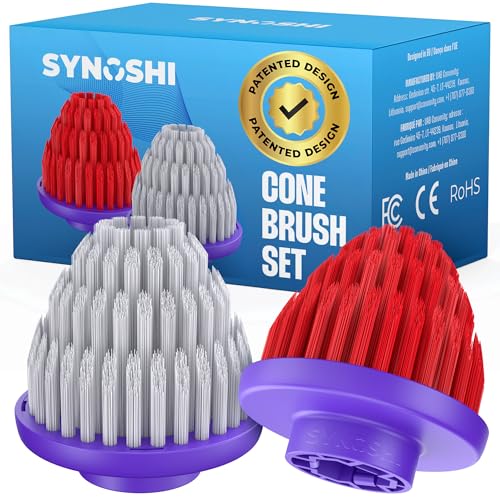
Synoshi is the name most people meet first in the compact, handheld end of this category, a smaller scrubber people keep under a sink for sinks, taps, hobs and quick jobs rather than whole-room deep cleans. As a tier, treat it as a compact, entry-to-mid option for smaller jobs. Best for: households whose jobs match that shape and who will use the included heads weekly. Not suited for: buyers expecting it to descale heavy limescale or repair tired grout, which no scrubber in this category does. Strengths include the effort it removes from soap scum and grout lines; trade-offs include charging discipline, replacement heads over time, and keeping the unit and its port dry in a wet room.
Voweek Electric Spin Scrubber
Voweek models sit in the practical middle ground that many first-time buyers land on, presented as straightforward kits for bathrooms and kitchens where the appeal is simply doing the weekly scrub with far less arm work. As a tier, treat it as a mid-to-premium kit aimed at whole-bathroom cleaning. Best for: households whose jobs match that shape and who will use the included heads weekly. Not suited for: buyers expecting it to descale heavy limescale or repair tired grout, which no scrubber in this category does. Strengths include the effort it removes from soap scum and grout lines; trade-offs include charging discipline, replacement heads over time, and keeping the unit and its port dry in a wet room.
Keimi Electric Spin Scrubber
Keimi models are typically considered by shoppers comparing similar-looking kits on brush selection and handle comfort, and they reward a careful read of what heads are actually included rather than a quick glance at the box. As a tier, treat it as a mid-to-premium kit aimed at whole-bathroom cleaning. Best for: households whose jobs match that shape and who will use the included heads weekly. Not suited for: buyers expecting it to descale heavy limescale or repair tired grout, which no scrubber in this category does. Strengths include the effort it removes from soap scum and grout lines; trade-offs include charging discipline, replacement heads over time, and keeping the unit and its port dry in a wet room.
Common Mistakes
The errors almost everyone makes once, and how to skip them. In the context of how to choose an electric spin scrubber, this is where the general advice becomes specific to your rooms, your surfaces and your routine, so judge every claim here against the bathroom and kitchen you actually clean each week, not against a showroom version of either.
Grout deserves a separate, honest conversation. A narrow brush head can reach into grout lines and lift the grey, tired look that makes a whole bathroom feel older than it is, and for surface dirt on sound grout the improvement can be dramatic. What a spin scrubber cannot do is repair grout that is cracked, crumbling or missing, restore sealant that has failed, or undo mould that has grown deep into damaged material. Those are repair jobs, not cleaning jobs, and no brush changes that. Treat the scrubber as the tool that keeps good grout looking good and reveals, clearly, the places where regrouting or resealing is genuinely needed. That honesty saves money, because you stop buying stronger cleaners for a problem that was never a cleaning problem.
Water and electrics set the safety frame for everything in this article, so it comes early and plainly. Follow the maker’s water-resistance guidance for the exact model you own: splash-resistant is not the same as submersible, and a tool rated only for splashes should never be held under a running tap, dropped into a filled tub or left sitting in standing water. Keep the charger and the charging port dry, charge the tool away from the sink and the bath, and never use the scrubber while it is plugged in unless the maker has designed it specifically for that use, which most are not. If the housing cracks, the port cover stops sealing or the tool behaves oddly after getting wetter than it should, stop using it and follow the maker’s advice rather than hoping it dries out fine.
Cleaning chemicals need the same respect as the electrics. Follow the cleaner’s own label for dilution, dwell time and which surfaces it suits, because a spinning brush spreads product efficiently and can also spread a product that was wrong for the surface in the first place. Ventilate the bathroom while you work, opening a window or running the extractor, especially during longer deep cleans. Never mix cleaners, not even two ordinary-looking bathroom products, because some combinations release gases that are genuinely dangerous in a small enclosed room. One product at a time, rinsed away before anything else is tried, is the whole rule. If a cleaner warns against use on natural stone, acrylic or a particular finish, believe it, and test any new product on a small hidden patch before the brush takes it everywhere.
Pro Tips
Small refinements that experienced owners rely on. In the context of how to choose an electric spin scrubber, this is where the general advice becomes specific to your rooms, your surfaces and your routine, so judge every claim here against the bathroom and kitchen you actually clean each week, not against a showroom version of either.
Brush heads are where the category earns or loses its keep. A large flat head covers shower walls and tub sides quickly, a smaller round head suits basins and around taps, a corner or cone shape gets into the junctions where walls meet trays, and a stiff narrow head is the one that follows grout lines. More heads in the box only helps if they match your rooms, so picture your own bathroom and kitchen while you compare kits. Bristle stiffness matters just as much: softer bristles for acrylic, glass and coated surfaces that mark easily, firmer ones for unsealed tile and stubborn floor grout. Swapping heads mid-job takes seconds and prevents the classic mistake of attacking a delicate surface with the one aggressive head that happened to be fitted.
Reach changes who can clean what. An extendable handle lets you scrub a shower floor without kneeling, reach the far end of a tub without leaning across it, and clean high tiles without a step stool and the wobble that comes with it. For anyone with sore knees, a bad back or limited grip strength, that reach is not a luxury feature but the difference between doing the job and putting it off. Shorter, handheld models answer a different need: control in small spaces, around taps and toilet bases, and quick jobs at the kitchen sink. Many households end up valuing both shapes for different tasks, which is why the honest first question is not which scrubber is strongest, but which shape matches the jobs you actually repeat every week.
Technique matters more than force. Hold the tool so the brush sits flat on the surface, switch on, and move slowly enough that the bristles spend real time on each patch, overlapping your passes slightly so nothing is skipped. Let the spinning do the work; pressing down hard flattens bristles, slows the head and can stall a smaller motor, while a light touch keeps the brush at full speed and spreads cleaner evenly. Work from the top of a shower downwards so loosened dirt rinses over areas you have not finished yet rather than over clean ones, and keep a rinsing cloth or handheld shower ready. When you reach corners, slow down further and angle the head rather than forcing it, because corners collect the most residue and reward patience most clearly.
Worked Examples
Real household situations worked through to a clear answer. In the context of how to choose an electric spin scrubber, this is where the general advice becomes specific to your rooms, your surfaces and your routine, so judge every claim here against the bathroom and kitchen you actually clean each week, not against a showroom version of either.
Kitchens give a spin scrubber its second life. Cooker surrounds, splashbacks, sink edges, draining boards and the grime that collects around taps all respond well to a small head and a suitable cleaner, and the tool is equally at home on tiled kitchen floors in the places a mop skims over. Keep food-contact surfaces in mind: rinse thoroughly after cleaning, follow the cleaner’s label about food areas, and keep a head reserved for the kitchen separate from the one that scrubs the toilet surround, for obvious hygiene reasons. Colour-coding or simply storing kitchen and bathroom heads in different bags prevents mix-ups. That small organisational habit is one of the clearest signs of a household that will still be using the tool happily a year after buying it.
Floors and large tiled areas test patience in a different way. A spin scrubber will not replace a mop for a whole floor, and it was never meant to; its role is the grout lines, the edges by the skirting, the patch around the pet bowls and the traffic lane by the door where dirt grinds in. Work those zones with the scrubber, then mop as usual, and the floor looks properly reset rather than surface-clean. On textured tiles, move the brush in more than one direction because the texture shelters dirt from a single pass. Take breaks on big jobs, swap the battery routine into your planning if your model uses removable packs, and remember that a room done thoroughly in two sessions beats a rushed whole house that needs redoing.
Glass and shower doors show technique fastest. The cloudy film on glass is usually a mix of soap residue and mineral spotting, and a soft head with a suitable cleaner, worked slowly and rinsed well, clears most of it without the streaky elbow work of a cloth. Dry the glass afterwards with a clean microfibre cloth or a squeegee and the difference lasts far longer, because remaining droplets leave fresh mineral spots as they dry. Avoid stiff bristles on coated glass, since some shower doors carry protective coatings that harsh scrubbing can wear. If spotting returns within days, your water may be leaving mineral deposits faster than cleaning removes them, and a quick squeegee after showers will do more than any amount of extra scrubbing on cleaning day.
| Option | Best for | Watch out for |
|---|---|---|
| Long-handled scrubber kit | Whole bathrooms, tubs and shower floors | Storage space and balance at full reach |
| Compact handheld scrubber | Sinks, taps, hobs and quick jobs | Slower on large tiled areas |
| Hand brush and effort | Tiny, occasional jobs | Arm fatigue and inconsistent results |
Keeping It Working
Maintenance and storage that protect the result over time. In the context of how to choose an electric spin scrubber, this is where the general advice becomes specific to your rooms, your surfaces and your routine, so judge every claim here against the bathroom and kitchen you actually clean each week, not against a showroom version of either.
Descaling is the limit case worth stating plainly. Light mineral crust around taps and shower heads softens with the right descaling product and time, and a gentle brush helps once the deposit has loosened. Thick, long-established limescale is a chemical-and-patience job first and a brushing job second, and forcing it with a stiff head risks marking chrome and enamel. A spin scrubber saves effort on soap scum and grout, which is its real promise, but it does not replace descaling, and it does not repair damaged grout or sealant. Keeping those boundaries clear is not a criticism of the tool; it is how you end up satisfied with it, because the jobs it genuinely transforms are the weekly ones that used to leave your arm aching and the bathroom still looking half done.
Charging and storage quietly decide long-term satisfaction. A tool that lives charged, clean and reachable gets used for small jobs the moment they appear, which is where much of its value hides; a tool buried in a cupboard with a flat battery gets skipped, and the grime wins another week. Rinse heads after use once the tool is switched off and away from the charger, let them dry before storing so they do not sit damp, and check the maker’s guidance before rinsing any part of the motor body itself. Keep the charger and charging port dry at all times, store the unit out of standing water and away from the splash zone of the shower, and inspect heads periodically, because a worn, splayed brush cleans badly and tempts you to press harder to compensate.
Noise, vibration and comfort deserve more attention than listings give them. You will hold this tool, switched on, for the length of a bathroom clean, so grip shape, balance and how much vibration travels into your hand matter as much as any cleaning claim. A well-balanced long-handled model feels lighter than its weight suggests, while a nose-heavy one tires wrists quickly. If grip strength is limited in your household, look for simple controls that can be operated without squeezing hard, and consider how the tool behaves at arm’s length overhead, where control matters most. Trying a friend’s scrubber for ten minutes, if you can, teaches more about comfort than an evening of reading descriptions, and comfort is what decides whether the second month of ownership looks like the first enthusiastic week.
How To Choose An Electric Spin Scrubber: The Complete Picture
Cleaning chemicals need the same respect as the electrics. Follow the cleaner’s own label for dilution, dwell time and which surfaces it suits, because a spinning brush spreads product efficiently and can also spread a product that was wrong for the surface in the first place. Ventilate the bathroom while you work, opening a window or running the extractor, especially during longer deep cleans. Never mix cleaners, not even two ordinary-looking bathroom products, because some combinations release gases that are genuinely dangerous in a small enclosed room. One product at a time, rinsed away before anything else is tried, is the whole rule. If a cleaner warns against use on natural stone, acrylic or a particular finish, believe it, and test any new product on a small hidden patch before the brush takes it everywhere.
Brush heads are where the category earns or loses its keep. A large flat head covers shower walls and tub sides quickly, a smaller round head suits basins and around taps, a corner or cone shape gets into the junctions where walls meet trays, and a stiff narrow head is the one that follows grout lines. More heads in the box only helps if they match your rooms, so picture your own bathroom and kitchen while you compare kits. Bristle stiffness matters just as much: softer bristles for acrylic, glass and coated surfaces that mark easily, firmer ones for unsealed tile and stubborn floor grout. Swapping heads mid-job takes seconds and prevents the classic mistake of attacking a delicate surface with the one aggressive head that happened to be fitted.
Reach changes who can clean what. An extendable handle lets you scrub a shower floor without kneeling, reach the far end of a tub without leaning across it, and clean high tiles without a step stool and the wobble that comes with it. For anyone with sore knees, a bad back or limited grip strength, that reach is not a luxury feature but the difference between doing the job and putting it off. Shorter, handheld models answer a different need: control in small spaces, around taps and toilet bases, and quick jobs at the kitchen sink. Many households end up valuing both shapes for different tasks, which is why the honest first question is not which scrubber is strongest, but which shape matches the jobs you actually repeat every week.
Technique matters more than force. Hold the tool so the brush sits flat on the surface, switch on, and move slowly enough that the bristles spend real time on each patch, overlapping your passes slightly so nothing is skipped. Let the spinning do the work; pressing down hard flattens bristles, slows the head and can stall a smaller motor, while a light touch keeps the brush at full speed and spreads cleaner evenly. Work from the top of a shower downwards so loosened dirt rinses over areas you have not finished yet rather than over clean ones, and keep a rinsing cloth or handheld shower ready. When you reach corners, slow down further and angle the head rather than forcing it, because corners collect the most residue and reward patience most clearly.
Extra Detail From Real-World Use
Renters and owners get different things from the same tool. A renter gains a way to hand back a bathroom that looks cared for without chemicals harsh enough to risk the landlord’s finishes, and to tackle the grout and sealant lines that inspections always seem to focus on. An owner gains a maintenance habit that delays bigger jobs: grout kept clean stays sound longer, sealant lines you can actually see get resealed before water gets behind them, and tiles never reach the state where only renovation helps. Both benefit from the same honesty about limits, because a scrubber reveals the true condition of a bathroom better than any other cleaning tool. What it shows you, good or bad, is information you can act on while the fixes are still small.
Children, pets and shared bathrooms add practical wrinkles. In a family bathroom the tool earns its keep constantly, because toothpaste, bath products and general traffic build grime faster than any schedule expects, and a scrubber kept charged turns a daunting weekly deep clean into shorter, more frequent passes. Store it and its charger out of reach of small children, as you would any electrical appliance, and never let the tool become a bath toy, however boat-like it may look to a toddler. For pet households, the scrubber is excellent around litter trays, feeding areas and the muddy zone by the door, with a dedicated head kept for those jobs. Rinse and dry heads after pet-area use and store them separately from bathroom heads.
Travel, caravans and second homes are a niche but real use case. A compact scrubber keeps a caravan shower tray or a small holiday-let bathroom presentable without carrying a cupboard of brushes, and owners of rental properties often keep one with the changeover kit because it speeds up the bathroom reset between guests. The same water-and-electrics rules apply even more firmly in small spaces: charge away from water, keep ports dry, and ventilate when using cleaning products in a tiny bathroom. Battery discipline matters away from home, so charge before the trip rather than hoping to do it there. It is not an essential travel item for most people, but for anyone responsible for a small, hard-working bathroom away from home, it quietly earns its space.
Extra Detail From Real-World Use
Troubleshooting starts with the simple truth that most disappointing results are technique, product or patience problems rather than tool problems. If cleaning looks patchy, the usual causes are moving too fast, too little cleaner, no dwell time for the product to soften the film, or a head that is too soft or too worn for the surface. If the tool slows under pressure, ease off and let it spin freely. If it splashes, your angle is wrong or there is too much loose liquid on the surface. Work through those causes in order before concluding the scrubber is weak, because the same tool with a slower pass and a fresh head often performs like a different machine. Keeping a short mental checklist turns a frustrating first clean into a reliable routine by the third.
Environmental thinking belongs in the picture too. A rechargeable scrubber replaces a stream of disposable scouring pads and single-use cleaning wipes for many households, and brushes that last for months of weekly use generate little waste. Using the right cleaner in the right amount matters more with a spinning brush, because the tool spreads product efficiently and it is easy to use more than the job needs. Measure rather than glug, ventilate rather than over-apply, and rinse heads so they last. When heads finally wear out, replace the head rather than the whole tool wherever the range allows it. None of this requires perfection; it is simply the pattern of ownership that keeps costs, waste and chemical use down while the bathroom stays genuinely clean.
Finally, set expectations by room rather than by advertisement. A typical family shower, cleaned regularly, is where a spin scrubber looks almost miraculous, because soap scum and surface grout dirt are exactly its strengths. A neglected bathroom being rescued after a year will improve a great deal but may still need descaling, resealing or regrouting in places, and judging the tool by that rescue alone is unfair to it and to you. Plan a first deep clean in stages, room by room, then settle into the shorter maintenance rhythm the tool makes possible. That rhythm, modest as it sounds, is the real product being sold in this whole category: a bathroom that never gets bad enough to dread cleaning again.
A Working Decision Checklist for Choosing an Electric spin scrubber: Measurements, Habits and Deal-Breakers
Choosing well is a sequence, not a hunch. For an electric spin scrubber, the reliable order is to fix the constraints of the bathroom, kitchen and other surfaces it will clean on rotation first, then the habits of the people using it, and only then compare individual products. The checklist below follows that order, and each step exists because skipping it is a known route to a return, a compromise or a product that lives unused in a cupboard.
Do this step before looking at any individual product. Start with fit, because fit failures cannot be fixed by enthusiasm later. In practice that means three things: decide whether interchangeable heads matter more than a single fixed brush for your rooms; check the brush head range against your jobs, from flat glass to corner grout; and confirm the handle length options suit both low baths and high shower walls. Write the answers down rather than holding them in your head, because an electric spin scrubber is usually chosen over several browsing sessions, and the constraint you checked on Monday is the one forgotten by Friday. If any of the three checks produces an awkward answer, treat it as information about format, not as a problem to wave away — a different format of electric spin scrubber often removes the conflict entirely, while a compromise on fit tends to be re-litigated every time the product is used.
Skipping this step is how good budgets buy the wrong format. Then picture the product in its real situations rather than its best one. The routine cases are easy to imagine: an older home with textured tiles that defeat flat sponges and cloths, or a family bathroom where grout lines and bath edges need weekly attention. The more useful exercise is the harder day: a long session where the motor warms and grip comfort starts to matter; and very hard water scale that needs dwell time from a cleaner before any brush helps. An electric spin scrubber does not need to be perfect in those moments, but it does need a workable answer to them — a way to be moved, covered, adjusted, cleaned or simply tolerated until conditions improve. If the honest answer is that the hard day would make you stop using it altogether, that is a decision-grade fact, and it is far cheaper to learn it now than after delivery.
Frequently Asked Questions
Will a spin scrubber remove limescale?
It helps with light mineral film once a suitable descaling product has softened it, and a gentle head can lift what the product loosens. Thick, long-established limescale is mainly a product-and-patience job, and forcing it with a stiff brush risks marking chrome and enamel. A spin scrubber saves real effort on soap scum and grout, but it does not replace descaling, and it cannot repair damaged grout or sealant.
How often should brush heads be replaced?
Replace a head when the bristles splay, soften or stop cleaning evenly, because a worn head tempts you to press harder and still cleans worse. Rinsing heads after use and letting them dry properly extends their life considerably. How fast they wear depends on how often you clean and how coarse your surfaces are, so judge by condition rather than by a calendar, and keep a spare of your most-used head so a worn one never delays a clean.
Can I use any cleaning product with a spin scrubber?
Use products that suit both the surface and the job, and follow the cleaner’s own label for dilution and dwell time. Ventilate the bathroom while you work and never mix cleaners, because some combinations are dangerous in a small room. One product at a time, rinsed away before trying another, is the safe pattern. Avoid anything the label rules out for your surfaces, such as certain products on natural stone or acrylic, and test new products on a hidden patch first.
Is a spin scrubber worth it for a small bathroom?
For a small bathroom it can be the most worthwhile of all, because the whole room is within reach of one charge and one head change, and the weekly clean shrinks to a short, low-effort routine. A compact handheld model often suits a small space better than a long-handled kit. The honest exception is a bathroom you already keep spotless with a quick hand scrub in moments, where the tool adds storage and charging without removing much effort.
What is the difference between a spin scrubber and a steam mop?
A spin scrubber agitates surfaces with rotating bristles and a cleaning product, which suits tubs, tiles, grout, sinks and glass. A steam mop uses heated steam on floors and is a floor tool first. They overlap slightly on tiled floors and grout but are not substitutes: choose the scrubber for vertical surfaces, edges and detail work, and the steam mop for open floor areas. Many households that own both use each for what it genuinely does best.
How do I stop a spin scrubber splashing cleaner everywhere?
Splashing usually means too much loose liquid on the surface, too steep an angle, or moving too fast. Apply cleaner, let it dwell, then start the brush flat on the surface before moving, keep passes slow, and work in sections you rinse as you finish. A light touch keeps the head at full speed and throws far less spray. Wearing old clothes for a first deep clean is wise while your technique settles in.
Related Guides
Keep exploring with these guides: how to use an electric spin scrubber, electric spin scrubber review, electric spin scrubber reviews, how to organize cleaning supplies.
For the next stage of your cleaning routine, see also best kitchen vacuums, how to clean windows without streaks, how to clean a dishwasher.

