Disclosure: As an Amazon Associate, airfryerkitchensupply.com earns from qualifying purchases. Links on this page are affiliate links; they cost you nothing extra. Prices and availability change often, so check the current Amazon listing before you buy.
Learning how to use a salad spinner properly takes about one salad, because the tool is simple — but the difference between damp, bruised leaves and dry, crisp ones lives in a handful of small techniques. This guide to how to use a salad spinner covers washing, loading, spinning, checking, storing and cleaning in the order you will actually do them, with the common mistakes flagged inside each step rather than saved for the end.
Key Takeaways
- Dry leaves hold dressing in an even coating instead of letting it pool at the bottom of the bowl.
- Wash greens close to serving, dry them thoroughly, and store any leftovers loosely with a clean dry towel.
- Smaller loads spun in short bursts dry better and bruise delicate leaves far less than one overpacked load.
- Clean the basket and lid after use and let every part dry fully, especially around pump and cord mechanisms.
- Towels and a colander remain a perfectly good free alternative if you make salad only occasionally.
The process in brief: wash the greens in clean water and lift them out, load the basket loosely, spin in short bursts with a pause to shake and check, stop when the leaves feel dry, then serve or store them dry — and wash and fully dry the spinner itself before you put it away.
What You Need
Washing itself matters just as much as drying. Greens grow close to the soil, and grit, field dust and loose debris settle deep between the leaves, especially in curly varieties and in bunches bought at markets. A proper soak in clean water, a gentle swish, and a lift out of the water — rather than pouring the water over the greens — leaves the grit behind in the bowl instead of redepositing it on the leaves.
Food safety with greens is mostly about habits, not fear. Wash greens close to when you will eat them, use clean hands and a clean basket, and dry the leaves well before they go back into the fridge, because lingering moisture is what turns crisp leaves limp and slimy in storage. Greens that are washed, dried thoroughly and stored loosely with a clean dry towel keep their texture far longer than greens stored wet and sealed.
The spinner itself needs the same discipline. Rinse the basket and bowl after every use, wash them with warm soapy water regularly, and let every part dry completely before you reassemble and store the spinner. Pump and pull mechanisms deserve particular attention, because moisture trapped inside a lid mechanism can develop a musty smell and visible mould over time — a problem that thorough drying after washing almost entirely prevents.
Towels and a colander are the honest free alternative, and any fair assessment starts there. You can shake leaves in a colander, spread them on clean towels, blot them, roll them gently and wait — and for a small handful of leaves that method works perfectly well. What it costs is time, counter space, laundry and patience, and the result is rarely as dry as a good spin, which is the entire case for and against owning the tool.
Required: the spinner with its basket, bowl and lid, a sink or large bowl of clean water for washing, and clean hands. Optional but helpful: a clean dry towel for storing washed greens, a second bowl for gritty soak water changes, and a soft brush or cloth for cleaning around the lid mechanism afterwards.
In this guide
Safety and Before You Start
Food safety with greens is mostly about habits, not fear. Wash greens close to when you will eat them, use clean hands and a clean basket, and dry the leaves well before they go back into the fridge, because lingering moisture is what turns crisp leaves limp and slimy in storage. Greens that are washed, dried thoroughly and stored loosely with a clean dry towel keep their texture far longer than greens stored wet and sealed.
The spinner itself needs the same discipline. Rinse the basket and bowl after every use, wash them with warm soapy water regularly, and let every part dry completely before you reassemble and store the spinner. Pump and pull mechanisms deserve particular attention, because moisture trapped inside a lid mechanism can develop a musty smell and visible mould over time — a problem that thorough drying after washing almost entirely prevents.
Towels and a colander are the honest free alternative, and any fair assessment starts there. You can shake leaves in a colander, spread them on clean towels, blot them, roll them gently and wait — and for a small handful of leaves that method works perfectly well. What it costs is time, counter space, laundry and patience, and the result is rarely as dry as a good spin, which is the entire case for and against owning the tool.
Herbs are the spinner’s second career. Bunches of parsley, coriander, mint and basil hold surprising amounts of water in their stems and leaves after washing, and that water browns cut edges and dulls flavour in storage. A gentle, short spin — or even a slow, careful turn for the most delicate herbs — dries them without bruising, and dried herbs chopped for a sauce or scattered over a finished dish stay vivid instead of clumping wetly together.
Work on a stable, dry counter with the bowl sitting flat, keep fingers clear of the moving basket, and let the basket stop — using the brake if your model has one — before you lift the lid. Wash greens in clean water, change the water if the first soak comes up gritty, and never store wet greens sealed away for long afterwards.
How to Use a Salad Spinner, Step by Step
Step 1: Wash the Greens Properly
Washing itself matters just as much as drying. Greens grow close to the soil, and grit, field dust and loose debris settle deep between the leaves, especially in curly varieties and in bunches bought at markets. A proper soak in clean water, a gentle swish, and a lift out of the water — rather than pouring the water over the greens — leaves the grit behind in the bowl instead of redepositing it on the leaves.
Food safety with greens is mostly about habits, not fear. Wash greens close to when you will eat them, use clean hands and a clean basket, and dry the leaves well before they go back into the fridge, because lingering moisture is what turns crisp leaves limp and slimy in storage. Greens that are washed, dried thoroughly and stored loosely with a clean dry towel keep their texture far longer than greens stored wet and sealed.
The spinner itself needs the same discipline. Rinse the basket and bowl after every use, wash them with warm soapy water regularly, and let every part dry completely before you reassemble and store the spinner. Pump and pull mechanisms deserve particular attention, because moisture trapped inside a lid mechanism can develop a musty smell and visible mould over time — a problem that thorough drying after washing almost entirely prevents.
Step 2: Load the Basket Loosely
Capacity is a question about your real salads, not your aspirational ones. A household that makes a big shared salad most nights needs a basket that swallows a whole head of lettuce without crushing it, because overpacking is the most common reason spinners disappoint: leaves pressed tight against each other cannot release their water. A single person making side salads, by contrast, may find a large spinner mostly a storage problem wearing a lid.
Storage is the trade-off nobody photographs. A salad spinner is a bulky, round, single-purpose shape that does not nest neatly with anything else in most cupboards. Before buying, picture exactly where it will live — on top of the fridge, in a deep drawer, in the cupboard space currently holding something you use less — because a spinner stored inaccessibly is a spinner that quietly stops being used at all.
The mechanism decides the daily feel of the tool. Pump tops ask for repeated presses and suit cooks who like a brake button to stop the basket instantly. Pull-cord designs spin fast with a few tugs but ask you to hold the bowl steady. Crank handles feel familiar and controlled. None is objectively best; the right choice is the one your hands, your wrists and your patience will still enjoy on a tired weeknight.
Step 3: Spin in Short Bursts
A brake is a small feature with outsized value. Being able to stop the basket dead, rather than waiting for it to coast down or grabbing at spinning plastic, makes the whole process feel calmer and makes it easier to check dryness mid-spin. It also protects delicate leaves, which can be inspected, rearranged and given one more short burst instead of being battered by one long, violent spin.
Lids, locks and feet decide whether the bowl stays put. A spinner that walks across the counter as it spins forces you to hover over it, one hand clamped on top, which defeats much of the convenience. Non-slip bases, a lid that seats positively, and a bowl that sits flat and steady when you carry it full of water all matter more in daily use than any headline feature on the box.
Delicate leaves set the limits of spinning. Butter lettuce, baby spinach, pea shoots and tender herb leaves bruise if they are spun hard, long and overpacked, and bruised leaves wilt and brown at the damaged spots within a day. The technique that protects them is simple: smaller loads, shorter bursts, a pause to shake the basket gently between bursts, and stopping while the leaves are dry enough rather than chasing absolute dryness.
Step 4: Pause, Shake and Check
Delicate leaves set the limits of spinning. Butter lettuce, baby spinach, pea shoots and tender herb leaves bruise if they are spun hard, long and overpacked, and bruised leaves wilt and brown at the damaged spots within a day. The technique that protects them is simple: smaller loads, shorter bursts, a pause to shake the basket gently between bursts, and stopping while the leaves are dry enough rather than chasing absolute dryness.
Sturdy greens forgive almost anything. Romaine hearts, kale with the thick stems removed, cabbage wedges shredded for slaw, and cos leaves can take a longer, firmer spin and reward it by staying crisp for days. This is where a spinner earns its keep in meal prep: a large batch washed and dried on a quiet afternoon becomes the base for several fast salads through the week, each one still crisp because it started dry.
Dressing at the table is the final lesson dry leaves teach. When leaves go into the bowl properly dry, you can dress them minutes before serving and they will hold their texture through the meal instead of collapsing. Wet leaves force a choice between dressing early and watching the salad wilt, or dressing late and tasting water. Removing the water removes the dilemma, and that timing freedom is a benefit owners mention again and again.
Step 5: Empty the Water and Spin Once More if Needed
Water is the quiet enemy of a good salad. Freshly washed leaves carry droplets in every fold and curl, and those droplets pool at the bottom of the bowl, dilute the dressing, and leave the last servings sitting in a thin, flavourless puddle. A spinner removes that water with centrifugal force: the basket turns, the water flies outward through the slots, and the leaves stay behind, noticeably drier than any amount of shaking over the sink achieves.
Dressing behaves completely differently on dry leaves. Oil-based dressings slide straight off wet surfaces and gather at the bottom of the bowl, while on dry leaves the same dressing clings in a thin, even coating that seasons every bite. Vinaigrettes emulsify and hold better, creamy dressings spread instead of thinning out, and delicate leaves taste like themselves rather than like the rinse water they were washed in.
Washing itself matters just as much as drying. Greens grow close to the soil, and grit, field dust and loose debris settle deep between the leaves, especially in curly varieties and in bunches bought at markets. A proper soak in clean water, a gentle swish, and a lift out of the water — rather than pouring the water over the greens — leaves the grit behind in the bowl instead of redepositing it on the leaves.
Step 6: Serve Now or Store Dry
Leftovers reveal the difference dryness makes. A dressed salad is finished food, but undressed leaves that were spun dry, stored loosely and kept cold stay usable for days, while leaves stored wet deteriorate quickly at every wet contact point. If you regularly cook for a household that eats salad across several days rather than in one sitting, that storage life is not a minor detail — it is the difference between eating the greens you bought and throwing half of them away.
A spinner also earns a place outside salad season. It rinses and dries pasta for pasta salads in its basket-as-colander role, drains soaked beans and lentils, dries washed potatoes before roasting so their skins crisp instead of steaming, and gives washed mushrooms a gentle place to shed surface water. None of these jobs requires the tool, but together they explain why a supposedly single-purpose gadget keeps surviving cupboard clear-outs in real kitchens.
Noise and drama are worth a sentence of honesty. A spinner is not silent: the basket hums, water rattles against the bowl, and a pull-cord model on a hard counter announces itself. It is a few seconds of noise rather than a sustained roar, comparable to shaking a colander vigorously, but cooks in open-plan homes with sleeping babies learn to spin before nap time rather than during it.
Troubleshooting and Common Mistakes
Restaurant and deli kitchens treat drying greens as non-negotiable, which tells you something about the gap between washed and ready. Professional spinners are simply bigger versions of the same idea: wash in volume, spin hard, store dry, dress late. The home tool copies that workflow at domestic scale, and the improvement in the finished salad is the same improvement — cleaner flavour, better dressing coverage, longer life in the fridge.
If your salads are mostly chopped and sturdy — slaws, chopped romaine with chunky vegetables, grain bowls built on kale — a spinner still helps, but the margin over a colander narrows, because sturdy chopped ingredients shed water easily and dressings for these salads are often heavier and more forgiving. If your salads are built on tender leaves, herbs and delicate lettuces, the margin widens dramatically, and the spinner moves from nice-to-have towards genuinely transformative.
One underrated use is rescuing leaves that have begun to wilt. A soak in very cold clean water revives limp lettuce surprisingly well as the leaves take water back up through their cut ends, and a gentle spin afterwards removes the surface water so the revived leaves eat crisp rather than soggy. It is the wash-spin partnership working in reverse, and it saves many a market bunch from the compost.
Finally, keep expectations in proportion. A salad spinner does not make salad for you, does not wash the greens by itself, and does not turn ingredients you dislike into dinner. It does one mechanical job — removing wash water quickly and thoroughly — and does it better than the free alternatives. Judged on that job alone, and on how often your kitchen needs it done, the tool either justifies its cupboard space or it does not, and the rest of this article is about working out which side of that line your kitchen sits on.
Water is the quiet enemy of a good salad. Freshly washed leaves carry droplets in every fold and curl, and those droplets pool at the bottom of the bowl, dilute the dressing, and leave the last servings sitting in a thin, flavourless puddle. A spinner removes that water with centrifugal force: the basket turns, the water flies outward through the slots, and the leaves stay behind, noticeably drier than any amount of shaking over the sink achieves.
Dressing behaves completely differently on dry leaves. Oil-based dressings slide straight off wet surfaces and gather at the bottom of the bowl, while on dry leaves the same dressing clings in a thin, even coating that seasons every bite. Vinaigrettes emulsify and hold better, creamy dressings spread instead of thinning out, and delicate leaves taste like themselves rather than like the rinse water they were washed in.
Gear That Helps
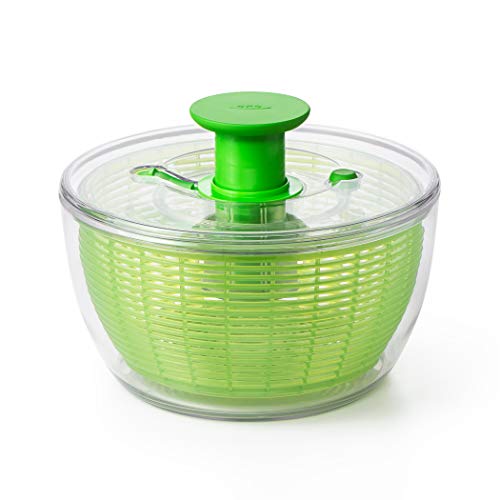
OXO Good Grips Salad Spinner
The OXO Good Grips Salad Spinner, a premium-tier pump design, makes the burst-and-check rhythm in this guide easy because the brake stops the basket instantly whenever you want to inspect the leaves. Its basket doubles as the rinsing colander described in the early steps.
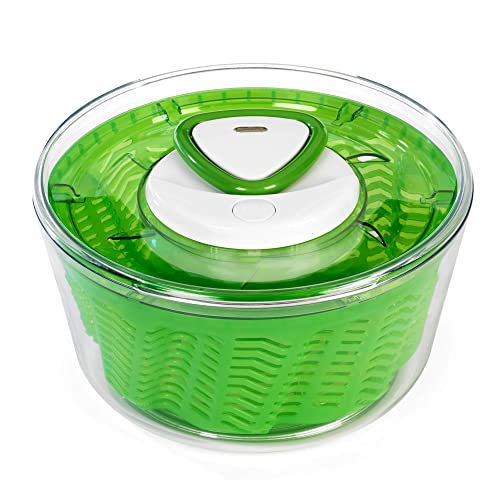
Zyliss Salad Spinner
The Zyliss Salad Spinner, a mid-tier pull-cord design, suits the same technique with a different hand motion: short pulls, a steadying hand on the bowl, and a lid you open up for proper drying afterwards, which the maintenance section below insists on.

Cuisinart Salad Spinner
The Cuisinart Salad Spinner is the simple mid-tier option for cooks who want the steps in this guide without a specialised mechanism to learn. Whichever spinner you use, the technique — loose loads, short bursts, full drying — matters far more than the model name.
Maintenance and Keeping It Working
The spinner itself needs the same discipline. Rinse the basket and bowl after every use, wash them with warm soapy water regularly, and let every part dry completely before you reassemble and store the spinner. Pump and pull mechanisms deserve particular attention, because moisture trapped inside a lid mechanism can develop a musty smell and visible mould over time — a problem that thorough drying after washing almost entirely prevents.
Towels and a colander are the honest free alternative, and any fair assessment starts there. You can shake leaves in a colander, spread them on clean towels, blot them, roll them gently and wait — and for a small handful of leaves that method works perfectly well. What it costs is time, counter space, laundry and patience, and the result is rarely as dry as a good spin, which is the entire case for and against owning the tool.
Herbs are the spinner’s second career. Bunches of parsley, coriander, mint and basil hold surprising amounts of water in their stems and leaves after washing, and that water browns cut edges and dulls flavour in storage. A gentle, short spin — or even a slow, careful turn for the most delicate herbs — dries them without bruising, and dried herbs chopped for a sauce or scattered over a finished dish stay vivid instead of clumping wetly together.
Berries, radishes, spring onions and other small produce benefit too, with caveats. Sturdy items can go straight into the basket after rinsing, while fragile berries should be handled gently and spun briefly or simply rested in the lined basket to drain. The basket doubles as a colander for rinsing and as a serving vessel in some designs, which is part of why owners tend to reach for the tool more often than they expected.
Capacity is a question about your real salads, not your aspirational ones. A household that makes a big shared salad most nights needs a basket that swallows a whole head of lettuce without crushing it, because overpacking is the most common reason spinners disappoint: leaves pressed tight against each other cannot release their water. A single person making side salads, by contrast, may find a large spinner mostly a storage problem wearing a lid.
One Last Spin
Master the small things and the tool disappears into the routine: wash well, load loosely, spin in bursts, check with your hands, store greens dry, and dry the spinner itself completely before it goes away. Do those six things and every salad you make with it will be crisper, better dressed and longer keeping than the same salad made with wet leaves.
Field Notes From Everyday Salad Making
Capacity is a question about your real salads, not your aspirational ones. A household that makes a big shared salad most nights needs a basket that swallows a whole head of lettuce without crushing it, because overpacking is the most common reason spinners disappoint: leaves pressed tight against each other cannot release their water. A single person making side salads, by contrast, may find a large spinner mostly a storage problem wearing a lid.
Storage is the trade-off nobody photographs. A salad spinner is a bulky, round, single-purpose shape that does not nest neatly with anything else in most cupboards. Before buying, picture exactly where it will live — on top of the fridge, in a deep drawer, in the cupboard space currently holding something you use less — because a spinner stored inaccessibly is a spinner that quietly stops being used at all.
The mechanism decides the daily feel of the tool. Pump tops ask for repeated presses and suit cooks who like a brake button to stop the basket instantly. Pull-cord designs spin fast with a few tugs but ask you to hold the bowl steady. Crank handles feel familiar and controlled. None is objectively best; the right choice is the one your hands, your wrists and your patience will still enjoy on a tired weeknight.
A brake is a small feature with outsized value. Being able to stop the basket dead, rather than waiting for it to coast down or grabbing at spinning plastic, makes the whole process feel calmer and makes it easier to check dryness mid-spin. It also protects delicate leaves, which can be inspected, rearranged and given one more short burst instead of being battered by one long, violent spin.
Keep these notes in mind alongside the main guidance above, because the small habits around washing, drying, storing and cleaning are what decide whether any spinner feels like a help or a burden in a real kitchen week after week.
If your salads are mostly chopped and sturdy — slaws, chopped romaine with chunky vegetables, grain bowls built on kale — a spinner still helps, but the margin over a colander narrows, because sturdy chopped ingredients shed water easily and dressings for these salads are often heavier and more forgiving. If your salads are built on tender leaves, herbs and delicate lettuces, the margin widens dramatically, and the spinner moves from nice-to-have towards genuinely transformative.
One underrated use is rescuing leaves that have begun to wilt. A soak in very cold clean water revives limp lettuce surprisingly well as the leaves take water back up through their cut ends, and a gentle spin afterwards removes the surface water so the revived leaves eat crisp rather than soggy. It is the wash-spin partnership working in reverse, and it saves many a market bunch from the compost.
Finally, keep expectations in proportion. A salad spinner does not make salad for you, does not wash the greens by itself, and does not turn ingredients you dislike into dinner. It does one mechanical job — removing wash water quickly and thoroughly — and does it better than the free alternatives. Judged on that job alone, and on how often your kitchen needs it done, the tool either justifies its cupboard space or it does not, and the rest of this article is about working out which side of that line your kitchen sits on.
Water is the quiet enemy of a good salad. Freshly washed leaves carry droplets in every fold and curl, and those droplets pool at the bottom of the bowl, dilute the dressing, and leave the last servings sitting in a thin, flavourless puddle. A spinner removes that water with centrifugal force: the basket turns, the water flies outward through the slots, and the leaves stay behind, noticeably drier than any amount of shaking over the sink achieves.
Keep these notes in mind alongside the main guidance above, because the small habits around washing, drying, storing and cleaning are what decide whether any spinner feels like a help or a burden in a real kitchen week after week.
Delicate leaves set the limits of spinning. Butter lettuce, baby spinach, pea shoots and tender herb leaves bruise if they are spun hard, long and overpacked, and bruised leaves wilt and brown at the damaged spots within a day. The technique that protects them is simple: smaller loads, shorter bursts, a pause to shake the basket gently between bursts, and stopping while the leaves are dry enough rather than chasing absolute dryness.
Sturdy greens forgive almost anything. Romaine hearts, kale with the thick stems removed, cabbage wedges shredded for slaw, and cos leaves can take a longer, firmer spin and reward it by staying crisp for days. This is where a spinner earns its keep in meal prep: a large batch washed and dried on a quiet afternoon becomes the base for several fast salads through the week, each one still crisp because it started dry.
Dressing at the table is the final lesson dry leaves teach. When leaves go into the bowl properly dry, you can dress them minutes before serving and they will hold their texture through the meal instead of collapsing. Wet leaves force a choice between dressing early and watching the salad wilt, or dressing late and tasting water. Removing the water removes the dilemma, and that timing freedom is a benefit owners mention again and again.
Children and new cooks often find the spinner unexpectedly satisfying, and that matters more than it sounds. A tool that is safe, mechanical and faintly playful gets used; a chore that involves spreading towels across the counter and waiting does not. Households where someone actually enjoys spinning the salad are households where salads happen more often, which is a perfectly respectable reason for a kitchen tool to exist.
Keep these notes in mind alongside the main guidance above, because the small habits around washing, drying, storing and cleaning are what decide whether any spinner feels like a help or a burden in a real kitchen week after week.
Washing itself matters just as much as drying. Greens grow close to the soil, and grit, field dust and loose debris settle deep between the leaves, especially in curly varieties and in bunches bought at markets. A proper soak in clean water, a gentle swish, and a lift out of the water — rather than pouring the water over the greens — leaves the grit behind in the bowl instead of redepositing it on the leaves.
Food safety with greens is mostly about habits, not fear. Wash greens close to when you will eat them, use clean hands and a clean basket, and dry the leaves well before they go back into the fridge, because lingering moisture is what turns crisp leaves limp and slimy in storage. Greens that are washed, dried thoroughly and stored loosely with a clean dry towel keep their texture far longer than greens stored wet and sealed.
The spinner itself needs the same discipline. Rinse the basket and bowl after every use, wash them with warm soapy water regularly, and let every part dry completely before you reassemble and store the spinner. Pump and pull mechanisms deserve particular attention, because moisture trapped inside a lid mechanism can develop a musty smell and visible mould over time — a problem that thorough drying after washing almost entirely prevents.
Towels and a colander are the honest free alternative, and any fair assessment starts there. You can shake leaves in a colander, spread them on clean towels, blot them, roll them gently and wait — and for a small handful of leaves that method works perfectly well. What it costs is time, counter space, laundry and patience, and the result is rarely as dry as a good spin, which is the entire case for and against owning the tool.
Keep these notes in mind alongside the main guidance above, because the small habits around washing, drying, storing and cleaning are what decide whether any spinner feels like a help or a burden in a real kitchen week after week.
A spinner also earns a place outside salad season. It rinses and dries pasta for pasta salads in its basket-as-colander role, drains soaked beans and lentils, dries washed potatoes before roasting so their skins crisp instead of steaming, and gives washed mushrooms a gentle place to shed surface water. None of these jobs requires the tool, but together they explain why a supposedly single-purpose gadget keeps surviving cupboard clear-outs in real kitchens.
Noise and drama are worth a sentence of honesty. A spinner is not silent: the basket hums, water rattles against the bowl, and a pull-cord model on a hard counter announces itself. It is a few seconds of noise rather than a sustained roar, comparable to shaking a colander vigorously, but cooks in open-plan homes with sleeping babies learn to spin before nap time rather than during it.
The environmental ledger is modest but real. Compared with the towel method, a spinner uses no paper towels at all and far fewer cloth towels through the laundry, and compared with buying pre-washed bagged leaves for every salad, washing whole heads at home usually means less plastic packaging. Set against that is a plastic tool that must be cared for to last. Used weekly for years, the balance is comfortably favourable; bought and abandoned, it is not.
Breakage points are predictable, which makes them checkable before you buy. Cords fray where they exit the lid, pump mechanisms lose their spring, thin baskets crack at the rim when dropped, and lids warp when they are forced through very hot dishwasher cycles against the maker’s guidance. Choosing a design with a simple, robust mechanism and washing the lid by hand when in doubt removes most of the failure stories owners tell.
Keep these notes in mind alongside the main guidance above, because the small habits around washing, drying, storing and cleaning are what decide whether any spinner feels like a help or a burden in a real kitchen week after week.
Berries, radishes, spring onions and other small produce benefit too, with caveats. Sturdy items can go straight into the basket after rinsing, while fragile berries should be handled gently and spun briefly or simply rested in the lined basket to drain. The basket doubles as a colander for rinsing and as a serving vessel in some designs, which is part of why owners tend to reach for the tool more often than they expected.
Capacity is a question about your real salads, not your aspirational ones. A household that makes a big shared salad most nights needs a basket that swallows a whole head of lettuce without crushing it, because overpacking is the most common reason spinners disappoint: leaves pressed tight against each other cannot release their water. A single person making side salads, by contrast, may find a large spinner mostly a storage problem wearing a lid.
Storage is the trade-off nobody photographs. A salad spinner is a bulky, round, single-purpose shape that does not nest neatly with anything else in most cupboards. Before buying, picture exactly where it will live — on top of the fridge, in a deep drawer, in the cupboard space currently holding something you use less — because a spinner stored inaccessibly is a spinner that quietly stops being used at all.
The mechanism decides the daily feel of the tool. Pump tops ask for repeated presses and suit cooks who like a brake button to stop the basket instantly. Pull-cord designs spin fast with a few tugs but ask you to hold the bowl steady. Crank handles feel familiar and controlled. None is objectively best; the right choice is the one your hands, your wrists and your patience will still enjoy on a tired weeknight.
Keep these notes in mind alongside the main guidance above, because the small habits around washing, drying, storing and cleaning are what decide whether any spinner feels like a help or a burden in a real kitchen week after week.
Restaurant and deli kitchens treat drying greens as non-negotiable, which tells you something about the gap between washed and ready. Professional spinners are simply bigger versions of the same idea: wash in volume, spin hard, store dry, dress late. The home tool copies that workflow at domestic scale, and the improvement in the finished salad is the same improvement — cleaner flavour, better dressing coverage, longer life in the fridge.
If your salads are mostly chopped and sturdy — slaws, chopped romaine with chunky vegetables, grain bowls built on kale — a spinner still helps, but the margin over a colander narrows, because sturdy chopped ingredients shed water easily and dressings for these salads are often heavier and more forgiving. If your salads are built on tender leaves, herbs and delicate lettuces, the margin widens dramatically, and the spinner moves from nice-to-have towards genuinely transformative.
One underrated use is rescuing leaves that have begun to wilt. A soak in very cold clean water revives limp lettuce surprisingly well as the leaves take water back up through their cut ends, and a gentle spin afterwards removes the surface water so the revived leaves eat crisp rather than soggy. It is the wash-spin partnership working in reverse, and it saves many a market bunch from the compost.
Finally, keep expectations in proportion. A salad spinner does not make salad for you, does not wash the greens by itself, and does not turn ingredients you dislike into dinner. It does one mechanical job — removing wash water quickly and thoroughly — and does it better than the free alternatives. Judged on that job alone, and on how often your kitchen needs it done, the tool either justifies its cupboard space or it does not, and the rest of this article is about working out which side of that line your kitchen sits on.
Keep these notes in mind alongside the main guidance above, because the small habits around washing, drying, storing and cleaning are what decide whether any spinner feels like a help or a burden in a real kitchen week after week.
Lids, locks and feet decide whether the bowl stays put. A spinner that walks across the counter as it spins forces you to hover over it, one hand clamped on top, which defeats much of the convenience. Non-slip bases, a lid that seats positively, and a bowl that sits flat and steady when you carry it full of water all matter more in daily use than any headline feature on the box.
Delicate leaves set the limits of spinning. Butter lettuce, baby spinach, pea shoots and tender herb leaves bruise if they are spun hard, long and overpacked, and bruised leaves wilt and brown at the damaged spots within a day. The technique that protects them is simple: smaller loads, shorter bursts, a pause to shake the basket gently between bursts, and stopping while the leaves are dry enough rather than chasing absolute dryness.
Sturdy greens forgive almost anything. Romaine hearts, kale with the thick stems removed, cabbage wedges shredded for slaw, and cos leaves can take a longer, firmer spin and reward it by staying crisp for days. This is where a spinner earns its keep in meal prep: a large batch washed and dried on a quiet afternoon becomes the base for several fast salads through the week, each one still crisp because it started dry.
Dressing at the table is the final lesson dry leaves teach. When leaves go into the bowl properly dry, you can dress them minutes before serving and they will hold their texture through the meal instead of collapsing. Wet leaves force a choice between dressing early and watching the salad wilt, or dressing late and tasting water. Removing the water removes the dilemma, and that timing freedom is a benefit owners mention again and again.
Keep these notes in mind alongside the main guidance above, because the small habits around washing, drying, storing and cleaning are what decide whether any spinner feels like a help or a burden in a real kitchen week after week.
Getting More From a Salad Spinner: Habits, Sequencing and Small Adjustments That Add Up
Buying a salad spinner takes an afternoon; living with it happens at the counter beside the sink, then a cupboard it must fit into, while washing and drying leaves for salads several times a week, and that daily reality is what this section judges. Judge in this order: routine first, space second, features last. Reversing that order is how most disappointing purchases of a salad spinner begin. Start with the bowl capacity against the salads you make, not the largest you can imagine. If that check fails, stop there, since the remaining virtues of any salad spinner are built on a foundation your home has already rejected. Set a review date about a month after purchase and judge the salad spinner then against the three jobs you named, while adjusting, exchanging or returning is still practical.
Where the salad spinner involves weight, heat, blades, water or power, and most do in some combination, the safe choice is the one whose correct use is also its easiest use. Routines change across the year, so ask whether the salad spinner still makes sense in the opposite season, during holidays, or when the household grows, shrinks or rearranges the room it lives in. Consider what the salad spinner gives off while it works and what it leaves behind afterwards, because living with the by-products is part of living with the product. Nothing is kept forever. Favour the salad spinner you could repair, rehome or responsibly retire over the one that becomes an awkward problem the day it stops working.
- End with the reset, clean and dry the task demands.
- Pause at any resistance and diagnose before forcing anything.
- Prepare the space and stage everything before you start.
- Note what went wrong and adjust the routine next time.
- Work in sequence and change one habit at a time.
Apply this thinking to real candidates, such as the OXO Good Grips Salad Spinner or the Zyliss Salad Spinner: open the current listing, confirm the dimensions, parts and care details, and only then judge the photographs. Do not test your decision against a calm day. Test it against the rushed morning, the crowded evening or the week everything happens at once, because that is when a salad spinner earns or loses its place. Think about handing the task over: if someone else had to use, clean or reset the salad spinner from your brief description alone, the design and your setup would pass or fail together. Weekday and weekend versions of the same routine can want different things from a salad spinner, so check your choice against both rhythms rather than averaging them into a routine nobody actually lives.
Frequently Asked Questions
How long should you spin salad greens?
Spin in short bursts rather than one long session, checking between bursts. Sturdy leaves can take a firmer, longer total spin, while delicate leaves need only brief, gentle bursts. Stop when the leaves look dry and feel dry to the touch and no fresh droplets appear in the bowl — chasing absolute dryness beyond that point only bruises leaves.
Should you wash greens before or after spinning?
Before. Spinning removes water; it does not wash. Soak the leaves in clean water, swish gently, and lift them out so grit stays in the water, then load the basket and spin. Very gritty market greens may need a second soak in fresh water before they go into the basket.
Why are my leaves still wet after spinning?
Almost always because the basket was overpacked, so leaves pressed together could not release their water, or because the water collected in the bowl was never emptied before a second spin. Load loosely, spin, tip the water out of the bowl, shake the basket to redistribute the leaves, and spin again briefly.
How do you clean a salad spinner lid properly?
Wash the lid in warm soapy water, rinse it, and let it dry completely — ideally separated or propped open — before reassembling the spinner. Pay special attention to the pump or cord housing, where trapped moisture causes musty smells and mould. Store the spinner dry, with the lid slightly ajar if your cupboard allows.
Can you use a spinner for herbs and berries?
Yes, gently. Herbs such as parsley, coriander and mint dry well with short, soft bursts and keep their colour and flavour better in storage afterwards. Berries should be handled with the lightest touch — a brief gentle turn, or simply resting in the lined basket to drain — because their skins bruise easily.
How should spun greens be stored?
Store them dry, loose and cold: place the spun leaves in a clean container or bag with a clean dry towel to catch any remaining moisture, do not pack them tightly, and keep them in the fridge. Do not seal wet greens away for long, and dress only what you are serving, at the moment you serve it.
Related Guides
Keep exploring with these related guides: salad spinner review, salad spinner reviews, salad spinner buying guide, salad spinner pros and cons, is a salad spinner worth it.
For the surrounding prep work, see also sturdy kitchen towels for drying and handling, fruit and vegetable kitchen towels, a dishwasher-safe cutting board for salad prep, cutting boards for home cooks, yogurt strainers and other straining tools.
Once the steps feel automatic, judge your spinner by the dressing, not by how impressive the spinning looks. Leaves that come out dry enough for oil and vinegar to cling, rather than slide into a puddle, are ready, whether that took two short bursts or three. Work in loose batches, empty the bowl between spins, and dry the lid thoroughly before storing the spinner away. Keep that rhythm and the OXO, Zyliss or Cuisinart on your counter stops being a bulky extra and becomes the quickest route to salads people actually finish.


