Disclosure: As an Amazon Associate, airfryerkitchensupply.com earns from qualifying purchases. Links on this page are affiliate links; they cost you nothing extra. Prices and availability change often, so check the current Amazon listing before you buy.
This salad spinner reviews gathers what households actually report after months of daily use, and tests those reports against what a modern salad spinner actually does in a home kitchen, how the main designs behave with real leaves, and which details separate a spinner you will use every week from one that ends up stored and forgotten. The salad spinner reviews below is based on the jobs this tool is asked to do daily: washing market greens, drying herbs, prepping leaves for several days of salads, and cleaning up afterwards without fuss.
Key Takeaways
- Dry leaves hold dressing in an even coating instead of letting it pool at the bottom of the bowl.
- Wash greens close to serving, dry them thoroughly, and store any leftovers loosely with a clean dry towel.
- Smaller loads spun in short bursts dry better and bruise delicate leaves far less than one overpacked load.
- Clean the basket and lid after use and let every part dry fully, especially around pump and cord mechanisms.
- Towels and a colander remain a perfectly good free alternative if you make salad only occasionally.
The short verdict: a good spinner suits anyone who eats leafy salads several times a week, buys whole heads and market bunches, or preps greens in batches. It suits nobody who eats salad rarely, buys mostly pre-washed bagged leaves, or has no realistic storage space for a bulky round bowl. Between those poles, the mechanism, the basket size and the ease of cleaning decide everything.
Salad Spinner Reviews: What a Salad Spinner Is and Where It Fits
Water is the quiet enemy of a good salad. Freshly washed leaves carry droplets in every fold and curl, and those droplets pool at the bottom of the bowl, dilute the dressing, and leave the last servings sitting in a thin, flavourless puddle. A spinner removes that water with centrifugal force: the basket turns, the water flies outward through the slots, and the leaves stay behind, noticeably drier than any amount of shaking over the sink achieves.
Dressing behaves completely differently on dry leaves. Oil-based dressings slide straight off wet surfaces and gather at the bottom of the bowl, while on dry leaves the same dressing clings in a thin, even coating that seasons every bite. Vinaigrettes emulsify and hold better, creamy dressings spread instead of thinning out, and delicate leaves taste like themselves rather than like the rinse water they were washed in.
Washing itself matters just as much as drying. Greens grow close to the soil, and grit, field dust and loose debris settle deep between the leaves, especially in curly varieties and in bunches bought at markets. A proper soak in clean water, a gentle swish, and a lift out of the water — rather than pouring the water over the greens — leaves the grit behind in the bowl instead of redepositing it on the leaves.
Food safety with greens is mostly about habits, not fear. Wash greens close to when you will eat them, use clean hands and a clean basket, and dry the leaves well before they go back into the fridge, because lingering moisture is what turns crisp leaves limp and slimy in storage. Greens that are washed, dried thoroughly and stored loosely with a clean dry towel keep their texture far longer than greens stored wet and sealed.
The spinner itself needs the same discipline. Rinse the basket and bowl after every use, wash them with warm soapy water regularly, and let every part dry completely before you reassemble and store the spinner. Pump and pull mechanisms deserve particular attention, because moisture trapped inside a lid mechanism can develop a musty smell and visible mould over time — a problem that thorough drying after washing almost entirely prevents.
Towels and a colander are the honest free alternative, and any fair assessment starts there. You can shake leaves in a colander, spread them on clean towels, blot them, roll them gently and wait — and for a small handful of leaves that method works perfectly well. What it costs is time, counter space, laundry and patience, and the result is rarely as dry as a good spin, which is the entire case for and against owning the tool.
Herbs are the spinner’s second career. Bunches of parsley, coriander, mint and basil hold surprising amounts of water in their stems and leaves after washing, and that water browns cut edges and dulls flavour in storage. A gentle, short spin — or even a slow, careful turn for the most delicate herbs — dries them without bruising, and dried herbs chopped for a sauce or scattered over a finished dish stay vivid instead of clumping wetly together.
In this guide
Design, Build and Setup
Berries, radishes, spring onions and other small produce benefit too, with caveats. Sturdy items can go straight into the basket after rinsing, while fragile berries should be handled gently and spun briefly or simply rested in the lined basket to drain. The basket doubles as a colander for rinsing and as a serving vessel in some designs, which is part of why owners tend to reach for the tool more often than they expected.
Capacity is a question about your real salads, not your aspirational ones. A household that makes a big shared salad most nights needs a basket that swallows a whole head of lettuce without crushing it, because overpacking is the most common reason spinners disappoint: leaves pressed tight against each other cannot release their water. A single person making side salads, by contrast, may find a large spinner mostly a storage problem wearing a lid.
Storage is the trade-off nobody photographs. A salad spinner is a bulky, round, single-purpose shape that does not nest neatly with anything else in most cupboards. Before buying, picture exactly where it will live — on top of the fridge, in a deep drawer, in the cupboard space currently holding something you use less — because a spinner stored inaccessibly is a spinner that quietly stops being used at all.
The mechanism decides the daily feel of the tool. Pump tops ask for repeated presses and suit cooks who like a brake button to stop the basket instantly. Pull-cord designs spin fast with a few tugs but ask you to hold the bowl steady. Crank handles feel familiar and controlled. None is objectively best; the right choice is the one your hands, your wrists and your patience will still enjoy on a tired weeknight.
A brake is a small feature with outsized value. Being able to stop the basket dead, rather than waiting for it to coast down or grabbing at spinning plastic, makes the whole process feel calmer and makes it easier to check dryness mid-spin. It also protects delicate leaves, which can be inspected, rearranged and given one more short burst instead of being battered by one long, violent spin.
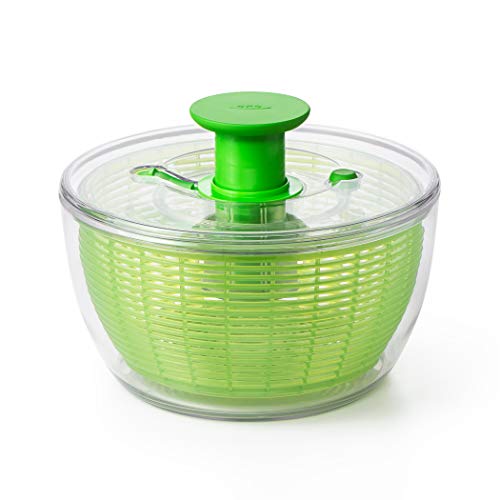
OXO Good Grips Salad Spinner
The OXO Good Grips Salad Spinner is the pump-top design most people picture first: press the top to spin, press the brake to stop, and use the outer bowl for serving. In prose terms it sits in the premium tier of home spinners, and its appeal is the calm, one-handed rhythm of pumping and braking rather than any single headline feature. The basket lifts out for rinsing, the lid comes apart for washing, and the whole tool rewards the dry-it-fully habit described throughout this article.
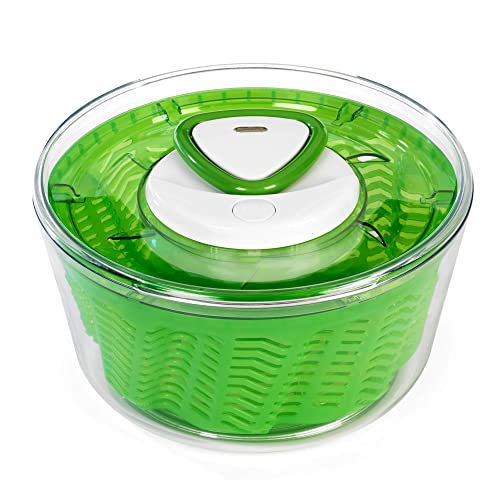
Zyliss Salad Spinner
The Zyliss Salad Spinner represents the pull-cord family, built around a cord you draw out to spin the basket and a lid designed to be opened and cleaned without a struggle. It sits in the mid tier, and it suits cooks who like a fast, decisive spin and do not mind holding the bowl steady while they pull. As with every cord design, the cord housing is the part to keep dry and to inspect when you clean.
Performance in Real Use: What Owners Notice Most
Everyday Lettuce and Mixed Leaves
Lids, locks and feet decide whether the bowl stays put. A spinner that walks across the counter as it spins forces you to hover over it, one hand clamped on top, which defeats much of the convenience. Non-slip bases, a lid that seats positively, and a bowl that sits flat and steady when you carry it full of water all matter more in daily use than any headline feature on the box.
Delicate leaves set the limits of spinning. Butter lettuce, baby spinach, pea shoots and tender herb leaves bruise if they are spun hard, long and overpacked, and bruised leaves wilt and brown at the damaged spots within a day. The technique that protects them is simple: smaller loads, shorter bursts, a pause to shake the basket gently between bursts, and stopping while the leaves are dry enough rather than chasing absolute dryness.
Sturdy greens forgive almost anything. Romaine hearts, kale with the thick stems removed, cabbage wedges shredded for slaw, and cos leaves can take a longer, firmer spin and reward it by staying crisp for days. This is where a spinner earns its keep in meal prep: a large batch washed and dried on a quiet afternoon becomes the base for several fast salads through the week, each one still crisp because it started dry.
Dressing at the table is the final lesson dry leaves teach. When leaves go into the bowl properly dry, you can dress them minutes before serving and they will hold their texture through the meal instead of collapsing. Wet leaves force a choice between dressing early and watching the salad wilt, or dressing late and tasting water. Removing the water removes the dilemma, and that timing freedom is a benefit owners mention again and again.
Delicate Leaves and Herbs
Children and new cooks often find the spinner unexpectedly satisfying, and that matters more than it sounds. A tool that is safe, mechanical and faintly playful gets used; a chore that involves spreading towels across the counter and waiting does not. Households where someone actually enjoys spinning the salad are households where salads happen more often, which is a perfectly respectable reason for a kitchen tool to exist.
Leftovers reveal the difference dryness makes. A dressed salad is finished food, but undressed leaves that were spun dry, stored loosely and kept cold stay usable for days, while leaves stored wet deteriorate quickly at every wet contact point. If you regularly cook for a household that eats salad across several days rather than in one sitting, that storage life is not a minor detail — it is the difference between eating the greens you bought and throwing half of them away.
A spinner also earns a place outside salad season. It rinses and dries pasta for pasta salads in its basket-as-colander role, drains soaked beans and lentils, dries washed potatoes before roasting so their skins crisp instead of steaming, and gives washed mushrooms a gentle place to shed surface water. None of these jobs requires the tool, but together they explain why a supposedly single-purpose gadget keeps surviving cupboard clear-outs in real kitchens.
Noise and drama are worth a sentence of honesty. A spinner is not silent: the basket hums, water rattles against the bowl, and a pull-cord model on a hard counter announces itself. It is a few seconds of noise rather than a sustained roar, comparable to shaking a colander vigorously, but cooks in open-plan homes with sleeping babies learn to spin before nap time rather than during it.
Sturdy Greens and Meal Prep
The environmental ledger is modest but real. Compared with the towel method, a spinner uses no paper towels at all and far fewer cloth towels through the laundry, and compared with buying pre-washed bagged leaves for every salad, washing whole heads at home usually means less plastic packaging. Set against that is a plastic tool that must be cared for to last. Used weekly for years, the balance is comfortably favourable; bought and abandoned, it is not.
Breakage points are predictable, which makes them checkable before you buy. Cords fray where they exit the lid, pump mechanisms lose their spring, thin baskets crack at the rim when dropped, and lids warp when they are forced through very hot dishwasher cycles against the maker’s guidance. Choosing a design with a simple, robust mechanism and washing the lid by hand when in doubt removes most of the failure stories owners tell.
Second-hand spinners are common and usually a sensible buy, with one inspection that matters: smell the lid mechanism and look closely around the pump or cord housing for any sign of trapped moisture or mould, and check the basket for cracks at the rim. A spinner that has been stored dry and clean is a bargain; one that has lived damp in a cupboard should be passed over, however low the asking figure.
Restaurant and deli kitchens treat drying greens as non-negotiable, which tells you something about the gap between washed and ready. Professional spinners are simply bigger versions of the same idea: wash in volume, spin hard, store dry, dress late. The home tool copies that workflow at domestic scale, and the improvement in the finished salad is the same improvement — cleaner flavour, better dressing coverage, longer life in the fridge.
Beyond Salad: Herbs, Berries and Kitchen Odd Jobs
Food safety with greens is mostly about habits, not fear. Wash greens close to when you will eat them, use clean hands and a clean basket, and dry the leaves well before they go back into the fridge, because lingering moisture is what turns crisp leaves limp and slimy in storage. Greens that are washed, dried thoroughly and stored loosely with a clean dry towel keep their texture far longer than greens stored wet and sealed.
The spinner itself needs the same discipline. Rinse the basket and bowl after every use, wash them with warm soapy water regularly, and let every part dry completely before you reassemble and store the spinner. Pump and pull mechanisms deserve particular attention, because moisture trapped inside a lid mechanism can develop a musty smell and visible mould over time — a problem that thorough drying after washing almost entirely prevents.
Towels and a colander are the honest free alternative, and any fair assessment starts there. You can shake leaves in a colander, spread them on clean towels, blot them, roll them gently and wait — and for a small handful of leaves that method works perfectly well. What it costs is time, counter space, laundry and patience, and the result is rarely as dry as a good spin, which is the entire case for and against owning the tool.
Herbs are the spinner’s second career. Bunches of parsley, coriander, mint and basil hold surprising amounts of water in their stems and leaves after washing, and that water browns cut edges and dulls flavour in storage. A gentle, short spin — or even a slow, careful turn for the most delicate herbs — dries them without bruising, and dried herbs chopped for a sauce or scattered over a finished dish stay vivid instead of clumping wetly together.
Strengths and Trade-Offs
Strengths
- Leaves come out dry enough for dressing to cling evenly, with no puddle at the bottom of the bowl.
- Batch washing and drying turns market-day greens into several days of fast, crisp salads.
- The basket works as a colander for rinsing and, in many designs, the bowl works for serving.
Trade-offs
- The bowl is bulky and round, and it will claim real cupboard space every day of its life.
- Pump and cord lids need deliberate drying after washing or they can develop musty smells.
- Delicate leaves still need a gentle hand: short bursts, small loads, no overpacking.
How It Compares

Cuisinart Salad Spinner
The Cuisinart Salad Spinner is the straightforward mid-tier alternative: a simple, familiar design that focuses on the basic wash-spin-serve routine without elaborate mechanisms. For cooks comparing models in this review, it is the sensible reference point for what an uncomplicated spinner should do well — a steady bowl, a basket that rinses clean, and a lid that does not fight you at the sink.
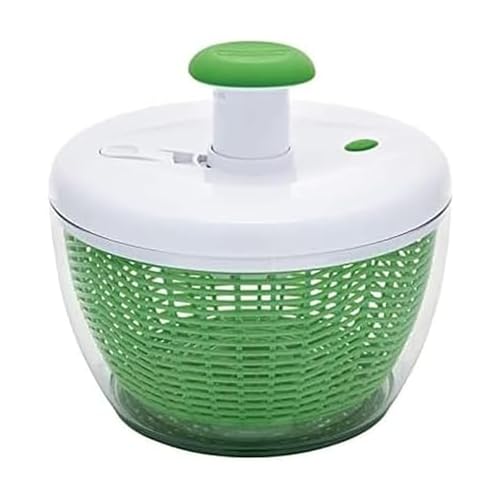
Farberware Pump Salad Spinner
The Farberware Pump Salad Spinner brings the pump mechanism to an entry tier, which makes it the natural comparison for anyone who likes the pump idea but is testing whether a spinner earns a permanent place in their kitchen at all. Expect the same washing and drying discipline to matter more than small design differences: load size, spin bursts and full drying after cleaning decide results far more than badges do.
Mueller Salad Spinner
The Mueller Salad Spinner rounds out the comparison as a practical mid-tier option aimed at households that want generous everyday capacity for family salads and prep batches. Whichever model in this group you consider, judge it on the same shortlist: does the bowl stay put, does the lid come apart for cleaning, can you dry the mechanism fully, and will the whole thing fit where you plan to store it.
Who Should Buy It and Who Should Skip It
Storage is the trade-off nobody photographs. A salad spinner is a bulky, round, single-purpose shape that does not nest neatly with anything else in most cupboards. Before buying, picture exactly where it will live — on top of the fridge, in a deep drawer, in the cupboard space currently holding something you use less — because a spinner stored inaccessibly is a spinner that quietly stops being used at all.
The mechanism decides the daily feel of the tool. Pump tops ask for repeated presses and suit cooks who like a brake button to stop the basket instantly. Pull-cord designs spin fast with a few tugs but ask you to hold the bowl steady. Crank handles feel familiar and controlled. None is objectively best; the right choice is the one your hands, your wrists and your patience will still enjoy on a tired weeknight.
A brake is a small feature with outsized value. Being able to stop the basket dead, rather than waiting for it to coast down or grabbing at spinning plastic, makes the whole process feel calmer and makes it easier to check dryness mid-spin. It also protects delicate leaves, which can be inspected, rearranged and given one more short burst instead of being battered by one long, violent spin.
Lids, locks and feet decide whether the bowl stays put. A spinner that walks across the counter as it spins forces you to hover over it, one hand clamped on top, which defeats much of the convenience. Non-slip bases, a lid that seats positively, and a bowl that sits flat and steady when you carry it full of water all matter more in daily use than any headline feature on the box.
Delicate leaves set the limits of spinning. Butter lettuce, baby spinach, pea shoots and tender herb leaves bruise if they are spun hard, long and overpacked, and bruised leaves wilt and brown at the damaged spots within a day. The technique that protects them is simple: smaller loads, shorter bursts, a pause to shake the basket gently between bursts, and stopping while the leaves are dry enough rather than chasing absolute dryness.
Before you buy, run a simple checklist. Count how many salads your household honestly eats in a normal week. Picture the storage spot and measure it rather than guessing. Decide which mechanism your hands will enjoy. Check that the lid can be cleaned and dried properly. And be honest about the towel alternative: if you tried it happily for a month and never minded it, you may not need this tool at all.
Setup, Care and Maintenance Essentials
Sturdy greens forgive almost anything. Romaine hearts, kale with the thick stems removed, cabbage wedges shredded for slaw, and cos leaves can take a longer, firmer spin and reward it by staying crisp for days. This is where a spinner earns its keep in meal prep: a large batch washed and dried on a quiet afternoon becomes the base for several fast salads through the week, each one still crisp because it started dry.
Dressing at the table is the final lesson dry leaves teach. When leaves go into the bowl properly dry, you can dress them minutes before serving and they will hold their texture through the meal instead of collapsing. Wet leaves force a choice between dressing early and watching the salad wilt, or dressing late and tasting water. Removing the water removes the dilemma, and that timing freedom is a benefit owners mention again and again.
Children and new cooks often find the spinner unexpectedly satisfying, and that matters more than it sounds. A tool that is safe, mechanical and faintly playful gets used; a chore that involves spreading towels across the counter and waiting does not. Households where someone actually enjoys spinning the salad are households where salads happen more often, which is a perfectly respectable reason for a kitchen tool to exist.
Leftovers reveal the difference dryness makes. A dressed salad is finished food, but undressed leaves that were spun dry, stored loosely and kept cold stay usable for days, while leaves stored wet deteriorate quickly at every wet contact point. If you regularly cook for a household that eats salad across several days rather than in one sitting, that storage life is not a minor detail — it is the difference between eating the greens you bought and throwing half of them away.
A spinner also earns a place outside salad season. It rinses and dries pasta for pasta salads in its basket-as-colander role, drains soaked beans and lentils, dries washed potatoes before roasting so their skins crisp instead of steaming, and gives washed mushrooms a gentle place to shed surface water. None of these jobs requires the tool, but together they explain why a supposedly single-purpose gadget keeps surviving cupboard clear-outs in real kitchens.
Final Verdict From the Reviews
A salad spinner earns its place by doing one job — removing wash water — quickly, thoroughly and without turning salad-making into a production. For frequent salad households the improvement in dressing coverage, texture and storage life is real and repeatable. For occasional salad eaters, the free towel method remains entirely respectable, and the honest recommendation is to use it until it genuinely starts to annoy you.
Field Notes From Everyday Salad Making
Food safety with greens is mostly about habits, not fear. Wash greens close to when you will eat them, use clean hands and a clean basket, and dry the leaves well before they go back into the fridge, because lingering moisture is what turns crisp leaves limp and slimy in storage. Greens that are washed, dried thoroughly and stored loosely with a clean dry towel keep their texture far longer than greens stored wet and sealed.
The spinner itself needs the same discipline. Rinse the basket and bowl after every use, wash them with warm soapy water regularly, and let every part dry completely before you reassemble and store the spinner. Pump and pull mechanisms deserve particular attention, because moisture trapped inside a lid mechanism can develop a musty smell and visible mould over time — a problem that thorough drying after washing almost entirely prevents.
Towels and a colander are the honest free alternative, and any fair assessment starts there. You can shake leaves in a colander, spread them on clean towels, blot them, roll them gently and wait — and for a small handful of leaves that method works perfectly well. What it costs is time, counter space, laundry and patience, and the result is rarely as dry as a good spin, which is the entire case for and against owning the tool.
Herbs are the spinner’s second career. Bunches of parsley, coriander, mint and basil hold surprising amounts of water in their stems and leaves after washing, and that water browns cut edges and dulls flavour in storage. A gentle, short spin — or even a slow, careful turn for the most delicate herbs — dries them without bruising, and dried herbs chopped for a sauce or scattered over a finished dish stay vivid instead of clumping wetly together.
Keep these notes in mind alongside the main guidance above, because the small habits around washing, drying, storing and cleaning are what decide whether any spinner feels like a help or a burden in a real kitchen week after week.
Noise and drama are worth a sentence of honesty. A spinner is not silent: the basket hums, water rattles against the bowl, and a pull-cord model on a hard counter announces itself. It is a few seconds of noise rather than a sustained roar, comparable to shaking a colander vigorously, but cooks in open-plan homes with sleeping babies learn to spin before nap time rather than during it.
The environmental ledger is modest but real. Compared with the towel method, a spinner uses no paper towels at all and far fewer cloth towels through the laundry, and compared with buying pre-washed bagged leaves for every salad, washing whole heads at home usually means less plastic packaging. Set against that is a plastic tool that must be cared for to last. Used weekly for years, the balance is comfortably favourable; bought and abandoned, it is not.
Breakage points are predictable, which makes them checkable before you buy. Cords fray where they exit the lid, pump mechanisms lose their spring, thin baskets crack at the rim when dropped, and lids warp when they are forced through very hot dishwasher cycles against the maker’s guidance. Choosing a design with a simple, robust mechanism and washing the lid by hand when in doubt removes most of the failure stories owners tell.
Second-hand spinners are common and usually a sensible buy, with one inspection that matters: smell the lid mechanism and look closely around the pump or cord housing for any sign of trapped moisture or mould, and check the basket for cracks at the rim. A spinner that has been stored dry and clean is a bargain; one that has lived damp in a cupboard should be passed over, however low the asking figure.
Keep these notes in mind alongside the main guidance above, because the small habits around washing, drying, storing and cleaning are what decide whether any spinner feels like a help or a burden in a real kitchen week after week.
Capacity is a question about your real salads, not your aspirational ones. A household that makes a big shared salad most nights needs a basket that swallows a whole head of lettuce without crushing it, because overpacking is the most common reason spinners disappoint: leaves pressed tight against each other cannot release their water. A single person making side salads, by contrast, may find a large spinner mostly a storage problem wearing a lid.
Storage is the trade-off nobody photographs. A salad spinner is a bulky, round, single-purpose shape that does not nest neatly with anything else in most cupboards. Before buying, picture exactly where it will live — on top of the fridge, in a deep drawer, in the cupboard space currently holding something you use less — because a spinner stored inaccessibly is a spinner that quietly stops being used at all.
The mechanism decides the daily feel of the tool. Pump tops ask for repeated presses and suit cooks who like a brake button to stop the basket instantly. Pull-cord designs spin fast with a few tugs but ask you to hold the bowl steady. Crank handles feel familiar and controlled. None is objectively best; the right choice is the one your hands, your wrists and your patience will still enjoy on a tired weeknight.
A brake is a small feature with outsized value. Being able to stop the basket dead, rather than waiting for it to coast down or grabbing at spinning plastic, makes the whole process feel calmer and makes it easier to check dryness mid-spin. It also protects delicate leaves, which can be inspected, rearranged and given one more short burst instead of being battered by one long, violent spin.
Keep these notes in mind alongside the main guidance above, because the small habits around washing, drying, storing and cleaning are what decide whether any spinner feels like a help or a burden in a real kitchen week after week.
If your salads are mostly chopped and sturdy — slaws, chopped romaine with chunky vegetables, grain bowls built on kale — a spinner still helps, but the margin over a colander narrows, because sturdy chopped ingredients shed water easily and dressings for these salads are often heavier and more forgiving. If your salads are built on tender leaves, herbs and delicate lettuces, the margin widens dramatically, and the spinner moves from nice-to-have towards genuinely transformative.
One underrated use is rescuing leaves that have begun to wilt. A soak in very cold clean water revives limp lettuce surprisingly well as the leaves take water back up through their cut ends, and a gentle spin afterwards removes the surface water so the revived leaves eat crisp rather than soggy. It is the wash-spin partnership working in reverse, and it saves many a market bunch from the compost.
Finally, keep expectations in proportion. A salad spinner does not make salad for you, does not wash the greens by itself, and does not turn ingredients you dislike into dinner. It does one mechanical job — removing wash water quickly and thoroughly — and does it better than the free alternatives. Judged on that job alone, and on how often your kitchen needs it done, the tool either justifies its cupboard space or it does not, and the rest of this article is about working out which side of that line your kitchen sits on.
Water is the quiet enemy of a good salad. Freshly washed leaves carry droplets in every fold and curl, and those droplets pool at the bottom of the bowl, dilute the dressing, and leave the last servings sitting in a thin, flavourless puddle. A spinner removes that water with centrifugal force: the basket turns, the water flies outward through the slots, and the leaves stay behind, noticeably drier than any amount of shaking over the sink achieves.
Keep these notes in mind alongside the main guidance above, because the small habits around washing, drying, storing and cleaning are what decide whether any spinner feels like a help or a burden in a real kitchen week after week.
Delicate leaves set the limits of spinning. Butter lettuce, baby spinach, pea shoots and tender herb leaves bruise if they are spun hard, long and overpacked, and bruised leaves wilt and brown at the damaged spots within a day. The technique that protects them is simple: smaller loads, shorter bursts, a pause to shake the basket gently between bursts, and stopping while the leaves are dry enough rather than chasing absolute dryness.
Sturdy greens forgive almost anything. Romaine hearts, kale with the thick stems removed, cabbage wedges shredded for slaw, and cos leaves can take a longer, firmer spin and reward it by staying crisp for days. This is where a spinner earns its keep in meal prep: a large batch washed and dried on a quiet afternoon becomes the base for several fast salads through the week, each one still crisp because it started dry.
Dressing at the table is the final lesson dry leaves teach. When leaves go into the bowl properly dry, you can dress them minutes before serving and they will hold their texture through the meal instead of collapsing. Wet leaves force a choice between dressing early and watching the salad wilt, or dressing late and tasting water. Removing the water removes the dilemma, and that timing freedom is a benefit owners mention again and again.
Children and new cooks often find the spinner unexpectedly satisfying, and that matters more than it sounds. A tool that is safe, mechanical and faintly playful gets used; a chore that involves spreading towels across the counter and waiting does not. Households where someone actually enjoys spinning the salad are households where salads happen more often, which is a perfectly respectable reason for a kitchen tool to exist.
Keep these notes in mind alongside the main guidance above, because the small habits around washing, drying, storing and cleaning are what decide whether any spinner feels like a help or a burden in a real kitchen week after week.
Washing itself matters just as much as drying. Greens grow close to the soil, and grit, field dust and loose debris settle deep between the leaves, especially in curly varieties and in bunches bought at markets. A proper soak in clean water, a gentle swish, and a lift out of the water — rather than pouring the water over the greens — leaves the grit behind in the bowl instead of redepositing it on the leaves.
Food safety with greens is mostly about habits, not fear. Wash greens close to when you will eat them, use clean hands and a clean basket, and dry the leaves well before they go back into the fridge, because lingering moisture is what turns crisp leaves limp and slimy in storage. Greens that are washed, dried thoroughly and stored loosely with a clean dry towel keep their texture far longer than greens stored wet and sealed.
The spinner itself needs the same discipline. Rinse the basket and bowl after every use, wash them with warm soapy water regularly, and let every part dry completely before you reassemble and store the spinner. Pump and pull mechanisms deserve particular attention, because moisture trapped inside a lid mechanism can develop a musty smell and visible mould over time — a problem that thorough drying after washing almost entirely prevents.
Towels and a colander are the honest free alternative, and any fair assessment starts there. You can shake leaves in a colander, spread them on clean towels, blot them, roll them gently and wait — and for a small handful of leaves that method works perfectly well. What it costs is time, counter space, laundry and patience, and the result is rarely as dry as a good spin, which is the entire case for and against owning the tool.
Keep these notes in mind alongside the main guidance above, because the small habits around washing, drying, storing and cleaning are what decide whether any spinner feels like a help or a burden in a real kitchen week after week.
A spinner also earns a place outside salad season. It rinses and dries pasta for pasta salads in its basket-as-colander role, drains soaked beans and lentils, dries washed potatoes before roasting so their skins crisp instead of steaming, and gives washed mushrooms a gentle place to shed surface water. None of these jobs requires the tool, but together they explain why a supposedly single-purpose gadget keeps surviving cupboard clear-outs in real kitchens.
Noise and drama are worth a sentence of honesty. A spinner is not silent: the basket hums, water rattles against the bowl, and a pull-cord model on a hard counter announces itself. It is a few seconds of noise rather than a sustained roar, comparable to shaking a colander vigorously, but cooks in open-plan homes with sleeping babies learn to spin before nap time rather than during it.
The environmental ledger is modest but real. Compared with the towel method, a spinner uses no paper towels at all and far fewer cloth towels through the laundry, and compared with buying pre-washed bagged leaves for every salad, washing whole heads at home usually means less plastic packaging. Set against that is a plastic tool that must be cared for to last. Used weekly for years, the balance is comfortably favourable; bought and abandoned, it is not.
Breakage points are predictable, which makes them checkable before you buy. Cords fray where they exit the lid, pump mechanisms lose their spring, thin baskets crack at the rim when dropped, and lids warp when they are forced through very hot dishwasher cycles against the maker’s guidance. Choosing a design with a simple, robust mechanism and washing the lid by hand when in doubt removes most of the failure stories owners tell.
Keep these notes in mind alongside the main guidance above, because the small habits around washing, drying, storing and cleaning are what decide whether any spinner feels like a help or a burden in a real kitchen week after week.
Reading Salad Spinner Reviews Critically: Patterns That Matter More Than One Opinion
The purchase is the easy part. A salad spinner proves itself at the counter beside the sink, then a cupboard it must fit into, in the middle of washing and drying leaves for salads several times a week, long after the packaging has gone. Judge in this order: routine first, space second, features last. Reversing that order is how most disappointing purchases of a salad spinner begin. Start with the bowl capacity against the salads you make, not the largest you can imagine. If that check fails, stop there, since the remaining virtues of any salad spinner are built on a foundation your home has already rejected. Cleaning time is an ownership cost like any other, so favour the design whose care routine fits the time you genuinely have, not the time you would have in an ideal week.
Complaints that mention the same remedy, adjustment or workaround are especially valuable, since they reveal both the weakness of the salad spinner and whether living with it is realistic. When every option looks equally good, the missing information is rarely about the products; it is about your household, and that is the gap to close before spending anything. Read the included-parts list as carefully as the feature list. Many disappointing first days with a salad spinner are simply the discovery that an essential accessory was never in the box. Plan the end at the beginning: a salad spinner should be repairable, passable on, recyclable or at least easy to dispose of responsibly when its service ends, and designs differ widely on this.
- Note any workaround owners mention and judge if you would accept it.
- Check the most recent comments for changes between versions.
- Weight comments from households like yours most heavily.
- Count repeated, specific observations across unrelated owners.
- Read extreme stories as anecdotes until a pattern confirms them.
Delegation exposes weak choices. A salad spinner that only works in one person’s hands, with one person’s knack, is a fragile solution for a shared home. Check for duplicated function in your own home first, because the item you already own that does part of this job changes what the new salad spinner actually needs to be. A rotation or spare strategy suits some households, where one salad spinner rests, dries, charges or waits in reserve while another works, and it can double useful life for surprisingly little organisation. Oversizing is the quietest buying mistake: capacity you never use still has to be stored, cleaned, moved and worked around every single day.
Anything heavy, hot, sharp, load-bearing or electrically powered deserves a respectful pause in the decision, and the maker’s own guidance, read before purchase, is part of the specification. When a shortlist refuses to separate, stop comparing headline features and compare failure modes instead, since you will meet the weaknesses weekly and the strengths only occasionally. Decisions sharpen when they are written.
Frequently Asked Questions
Do you wash greens before or after spinning?
Wash first, then spin. Soak the leaves in clean water, lift them out so grit stays behind, place them in the basket without packing them down, and spin in short bursts. Check the leaves, shake the basket gently to redistribute them, and spin once more if droplets remain. Dress only when the leaves look and feel dry.
How do you stop a spinner from smelling musty?
Wash the basket, bowl and lid in warm soapy water, rinse well, and let every part dry completely before reassembling it, paying special attention to the pump or cord housing in the lid where moisture hides. Store the spinner dry, ideally with the lid ajar. A musty spinner is almost always a spinner that was put away damp.
Can you spin herbs and delicate leaves without bruising them?
Yes, with a lighter touch. Use small loads, short gentle bursts, and pause to shake the basket so leaves are not pressed against the sides for long. Stop as soon as surface water is gone rather than chasing perfect dryness. Butter lettuce, baby spinach and soft herbs all respond well to this patient approach.
Is the outer bowl useful for anything besides spinning?
In many designs, yes. The clear outer bowl commonly doubles as a serving bowl for the finished salad, and the inner basket works as a colander for rinsing produce, draining soaked beans or holding washed vegetables while you prep. That double duty is part of why owners keep the tool within reach instead of banishing it to a high shelf.
How should washed greens be stored after spinning?
Dry them thoroughly, then store them loosely in a clean container or bag with a clean dry towel to absorb any remaining moisture. Keep them cold, do not pack them tightly, and do not seal wet greens away for long, because trapped moisture is what turns leaves limp and slimy. Dress only the portion you are about to serve.
What is the best alternative if you do not own a spinner?
Clean towels and a colander. Shake the washed leaves in the colander, spread them on a towel, blot gently, and roll the towel loosely to absorb more water. It takes longer and uses more laundry, and the leaves rarely end up quite as dry, but for occasional salads it is a completely workable free method.
Related Guides
Keep exploring with these related guides: salad spinner review, salad spinner buying guide, salad spinner pros and cons, is a salad spinner worth it, how to use a salad spinner.
For the surrounding prep work, see also sturdy kitchen towels for drying and handling, fruit and vegetable kitchen towels, a dishwasher-safe cutting board for salad prep, cutting boards for home cooks, yogurt strainers and other straining tools.
Pick your spinner by the greens you eat most, then let the reviews do their real job: confirming how a model behaves after months of rinsing, spinning and washing. The OXO Good Grips suits households that want a steady, one-handed routine, while the Zyliss rewards cooks who value a compact footprint and quick handling. Whichever design you shortlist, spin in smaller loads, stop once surface water disappears, and store leaves loosely with a dry towel. Done that way, even delicate herbs stay bright, dressings cling properly, and weeknight salads stop tasting washed out.


