Disclosure: As an Amazon Associate, airfryerkitchensupply.com earns from qualifying purchases. Links on this page are affiliate links; they cost you nothing extra. Prices and availability change often, so check the current Amazon listing before you buy.
Reading rug pad reviews can feel like reading reviews of something that does nothing, because a pad’s whole job is to disappear. These rug pad reviews take the opposite approach: five real, named pads, judged on the three jobs a pad actually has, grip, floor protection, and cushion, plus the one warning every buyer needs. If your rug slides, bunches, or feels thin over hard floors, one of the pads below is the fix, and this page exists to help you pick the right one rather than merely a popular one.
Key Takeaways
- Match the pad to the room first: grip-led pads for traffic lanes, cushioned pads for lounging rooms.
- Every grippy pad needs a floor-compatibility check; some materials can react with certain finishes.
- Trim every pad slightly smaller than its rug so edges stay hidden and flat.
- Thickness is a trade-off: plush feels better, but doors and edges set the limit.
- The best pad in these reviews is the one whose strengths line up with your rug’s worst behaviour.
Short verdict: for a rug that will not stay put, start with a grip-led pad; for a living room rug that feels thin, start with a combination or felt pad from a household name; for a prized floor, start with the specialist. The detailed reviews below explain why, pad by pad, with the honest limitation of each stated next to its strengths.
In this guide
How These Rug Pad Reviews Were Judged
A rug pad has three jobs, and grip is the first of them. A rug that slides on a hard floor is not a minor annoyance; it is a fall hazard, plainly stated. Rugs creep underfoot in hallways, bunch at doorways, and skate sideways when someone steps onto an edge at an angle, and the people most at risk are the ones moving fastest or least steadily: children running through, older relatives, and anyone carrying something heavy enough that they cannot catch themselves. A pad with real grip anchors the rug to the floor so the surface you step on stays where you put it.
Grip works in two directions at once. The underside of the pad holds the floor, and the top side holds the rug, so the whole sandwich moves as one piece instead of three layers sliding against each other. When a pad only grips on one face, the rug can still travel across the top of the pad even while the pad itself stays put, which is why a rug can end up bunched against a wall while its pad sits exactly where you left it. Judge any pad by both faces, not just the one that touches the floor.
Dirt is part of the protection story too. Grit that falls through a rug’s pile collects underneath it, and if the rug moves, that grit grinds. A pad holds the rug still so trapped grit stays trapped rather than sanding the floor, and lifting the rug and pad together at cleaning time lets you sweep the whole area clean in one pass. Homes with sandy shoes, pets tracking in grit, or an entryway that sees outdoor dirt will notice this benefit sooner than most.
A pad also changes how a room sounds and feels in small ways that add up. Footsteps land softer, dropped objects thud instead of clattering, and a thin rug over a hollow-sounding floor feels more settled and substantial. None of this shows up in a product photograph, which is exactly why pads are underrated: almost everything they do is experienced rather than seen, and the difference only becomes obvious when you lift a rug that has had a good pad under it and walk on one that has not.
Each pad was assessed the way an owner experiences it: does the rug stay put through a week of real traffic, does the floor underneath stay unmarked, does the rug feel better underfoot than it did on bare floor, and does the pad behave when trimmed, vacuumed over, and lifted for cleaning. Popularity contests were ignored on purpose. A pad is a fit purchase, like a shoe insole: the best-reviewed pad in the world is the wrong pad if its material fights your floor finish or its thickness fights your doors.
The Reviews: Five Pads, Five Temperaments
Gorilla Grip rug pad — the grip-first option
Gorilla Grip built its name on pads that hold, and in a category where the headline job is stopping movement, that focus is the point. The pads are made to keep a rug anchored on hard floors, with a grippy character that suits the rooms where rugs skate worst. In prose terms it sits in the accessible tier of the market: a working pad bought for performance rather than luxury, the one you choose when the rug by the door has become a daily irritation and you want it to simply stop moving.
Treat this as the problem-solver of the group. If your rug bunches, creeps, or folds at the corners, a grip-led pad like this addresses the cause directly instead of asking you to keep straightening the rug. It is less about indulgence and more about safety and sanity: the rug stays flat, the edges stay down, and the fall hazard that a sliding rug represents is dealt with at the source. Check the maker’s floor guidance before ordering, as with every grippy pad.
Best for: homes where the rug will not stay put: entryways, hallways, kitchens, and anywhere a small or light rug takes sideways traffic all day. Not suited for: a household chasing maximum plushness, where a thick felt pad would feel better underfoot. Positioned qualitatively in its tier, with no fixed price promised here, because listings change; check the current listing, the maker’s floor guidance, and your rug maker’s advice before you buy.

Mohawk Home rug pad — the all-round household name
Mohawk Home is one of the familiar names in flooring, and its pads reflect that broad, household-first approach: options across the felt and combination families that aim to suit the ordinary rug in the ordinary room. That breadth is genuinely useful, because most homes do not need a specialist; they need a pad that protects the floor, softens the step, and keeps a furniture-anchored rug calm. In tier terms it sits comfortably in the middle of the market, the default shortlist name for a first pad.
The strength here is versatility rather than a single headline trick. A combination-style pad from a range like this can give a living room rug its missing softness while still holding it steady, and a felt option can serve a big rug that mainly needs protection and body. As always, the specific material still has to be cleared against your floor finish and your rug maker’s advice; a famous name does not exempt any pad from the compatibility check that protects your floor.
Best for: most living rooms and bedrooms, where a balance of cushion, protection, and dependable hold matters more than any single extreme. Not suited for: shoppers who need a specialist pad for an unusual floor finish without checking the maker’s compatibility guidance first. Positioned qualitatively in its tier, with no fixed price promised here, because listings change; check the current listing, the maker’s floor guidance, and your rug maker’s advice before you buy.
RUGPADUSA rug pad — the specialist’s shortlist
RUGPADUSA is the name that comes up when people start choosing pads the way they choose mattresses: by material, density, and intended floor. The range leans into felt and natural-rubber constructions and into explaining which pad suits which situation, which suits a buyer who has a floor they genuinely care about and a rug they intend to keep for years. In tier terms it occupies the premium end of this group, bought for fit and longevity rather than for the lowest commitment.
A specialist pad earns its place when the pairing matters: a fine rug on a prized floor, a household that has already had a cheap pad crumble or a grippy pad misbehave, or a room where the pad will be in service for a decade. The homework burden is real but front-loaded: read the maker’s floor guidance, match the material to your finish, trim carefully, and the pad then disappears from your attention, which is exactly where a good pad belongs. Verify compatibility with both makers before buying, as with every pick here.
Best for: buyers who know their floor type and want to choose a pad by material and feel with more precision than the mass market usually offers. Not suited for: anyone who wants to skip the homework entirely, because a specialist range rewards a buyer who reads the guidance. Positioned qualitatively in its tier, with no fixed price promised here, because listings change; check the current listing, the maker’s floor guidance, and your rug maker’s advice before you buy.
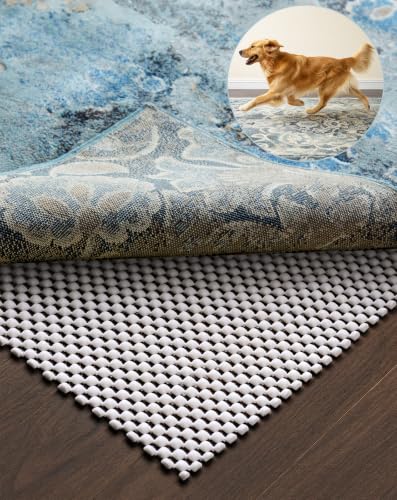
Veken rug pad — the straightforward grip pad
Veken’s pads are the kind of simple, widely bought grip pads that end up under a great many ordinary rugs: thin, grippy, easy to trim, and aimed squarely at the sliding-rug problem in rented and everyday spaces. In tier terms this is the entry end of the group, and there is no shame in that: for a light rug in a hallway or a first apartment, stopping the slide is ninety percent of the job, and a straightforward pad does it without ceremony.
The limits are the honest ones for its tier. Do not expect much cushion, because a thin grip pad is a holding device, not a comfort layer, and do not skip the compatibility check just because the pad is inexpensive; a budget pad made of the wrong material for your finish can still mark a floor. Used where it belongs, though, it is a sensible, low-drama fix, and for many renters it is the difference between a rug that behaves and a rug that gets rolled up and abandoned.
Best for: renters, first flats, dorm-style rooms, and secondary spaces where a rug needs to stop sliding without a big production. Not suited for: a forever-home rug on a delicate finish where a specialist, maker-matched pad is the wiser spend. Positioned qualitatively in its tier, with no fixed price promised here, because listings change; check the current listing, the maker’s floor guidance, and your rug maker’s advice before you buy.
Enjoy Holiday rug pad — the value grip option
Enjoy Holiday appears in the value tier of the rug pad market: simple non-slip pads sold for the everyday job of keeping a rug in place on a hard floor. For a guest room rug that sees weekend traffic, a seasonal rug that comes out for part of the year, or a utility rug by a back door, that basic brief may be all the situation honestly requires, and overspending on a specialist pad would add little the room would ever notice.
Judge it by that brief and it makes sense; ask more of it and the trade-offs show. Cushion is minimal, longevity under heavy daily traffic is not its selling point, and the same floor-compatibility check applies as to any grippy pad, whatever its price. The right way to use a value pad is deliberately: matched to a low-demand rug, trimmed neatly, inspected when the rug is lifted for cleaning, and replaced without regret when it eventually tires.
Best for: spare rooms, seasonal rugs, and second rugs around the house where basic hold at a gentle commitment is the whole brief. Not suited for: the main living room rug in a busy home, where a heavier-duty pad will outlast and outperform it. Positioned qualitatively in its tier, with no fixed price promised here, because listings change; check the current listing, the maker’s floor guidance, and your rug maker’s advice before you buy.
Grip, Protection and Cushion: What the Reviews Add Up To
The need for grip is not evenly spread around a home. A large rug weighed down by a sofa and a coffee table barely moves, while a small rug in an entryway, a runner in a hallway, or a mat-sized rug in front of a sink takes sideways force all day and has almost no weight of its own to resist it. The smaller and lighter the rug, and the busier the path across it, the more the pad underneath has to do, and the less forgiving a weak-grip pad becomes in daily use.
Grip also protects the rug itself. A rug that constantly shifts gets walked on at its edges and corners, which curl, fold, and wear unevenly, and a folded corner becomes a trip lip of its own. Keeping the rug flat and stationary spreads foot traffic across the whole surface the way the maker intended, so the pile wears evenly and the edges stay down. Many rugs that look worn out early are really rugs that spent their lives sliding around on a floor with nothing holding them in place.
The second job of a pad is floor protection, and it matters most on the floors people worry about most. The backing of many rugs is rougher than the face suggests, and every small shift of the rug works that backing against the floor finish like a slow, patient sheet of abrasive. Over months and years that movement can dull a finish in the exact outline of the rug. A pad puts a soft, stable barrier between backing and floor so the movement stops and the finish underneath stays the way it was when the rug went down.
A pad also cushions the floor against the pressure points furniture creates. Rug or no rug, the feet of a heavy table or sofa concentrate weight in small spots, and a pad spreads that load a little and keeps hard furniture feet from pressing a gritty rug backing into the finish. It will not turn a delicate floor into a workshop surface, and heavy furniture can still mark soft finishes, but a padded layer is meaningfully kinder than a thin rug alone between furniture and floorboards.
The third job is cushion, and it is the one people feel first. A rug on a hard floor without a pad can look plush and still feel thin underfoot, because pile compresses to almost nothing against an unyielding surface. A pad adds the resilient layer that makes the rug feel like the soft surface it appears to be, which changes how a room feels in bare feet, how it feels to sit or play on the floor, and how tiring a long stand at a counter or desk becomes.
Cushion is a balance rather than a contest. Too little and the pad adds grip but no comfort; too much and the surface starts to feel unstable, furniture can wobble or sink at odd angles, and the edge of the rug rises into a lip you can catch a toe on. The right amount depends on the room: a living room rug people lounge on rewards a plusher pad, while a dining rug with chairs sliding in and out all day is happier with something firmer and thinner that lets chairs move without fighting a soft surface.
The Warning Every Review Here Repeats
One warning belongs in every pad conversation, stated plainly: some pad materials can react with certain floor finishes. Certain rubber and vinyl pads are known to discolour or damage specific finishes over time, sometimes leaving a ghost of the rug’s outline that only appears when the rug is lifted. The risk depends on the combination of pad material, floor finish, and time, and no general guide can clear a specific pairing. Check compatibility with your floor maker and your rug maker before buying, and follow the stricter of the two if their advice differs.
The compatibility question cuts both ways. Some rug makers warn against particular pad types under their rugs, and some floor finish makers name pad materials to avoid on their surfaces. A pad that is perfect for one home can be the wrong choice for another with a different finish, which is why confident one-size advice about pad materials should be treated with suspicion. When in doubt, choose the pad type both makers approve, keep the paperwork, and lift a corner after the first weeks to check that nothing underneath is changing colour or feel.
Heat and sunlight deserve a mention in the same breath. Floors that get strong sun or sit over radiant heating put pads under stresses that can age some materials faster, and a pad that crumbles or turns sticky with age can mark a floor even if it was compatible when new. Inspecting under your rugs once or twice a year is cheap insurance: a healthy pad lifts cleanly and feels intact, while a pad that sticks, flakes, or smells strongly is telling you it is time to replace it before it becomes a floor problem.
Choosing Between Them by Room
Different rooms ask different things of a pad. Entryways need maximum grip in a thin profile, because doors swing, wet shoes arrive, and the rug there is usually small. Hallways and stairs-adjacent landings need grip above all, since runners take fast, directional traffic. Living rooms can trade a little grip for cushion because furniture anchors the rug. Bedrooms reward softness, since the first and last steps of the day land there in bare feet. Kitchens and dining rooms need a pad that tolerates spills, chair movement, and frequent cleaning without complaint.
Pets and children rewrite the priorities again. A home with a dog that launches itself down the hallway needs grip that survives sudden sideways force, and a home with toddlers playing on the floor benefits from the extra cushion a pad adds over hard surfaces. Washable rugs, which are often thin and light, are the most pad-dependent rugs of all: without a grippy pad underneath, a washable rug can feel like a towel on ice, and with one it behaves like a proper rug that happens to go in the machine.
Open-plan spaces add a subtle job: definition. A rug marks out a seating or dining zone within a larger room, and a pad keeps that zone exactly where you placed it instead of migrating a few centimetres a week until the arrangement looks accidental. It sounds minor until you have pushed the same rug back into place every few days for a month. A pad ends that slow drift, and with it the low-level untidiness that guests notice even when they cannot name what looks off about the room.
The honest way to think about thickness is by room rather than by preference. Bedrooms and living rooms with doors that open away from the rug can enjoy a thicker, softer pad. Hallways, entryways, and any rug a door swings across usually want a thin, dense pad that grips hard and keeps the edge profile low. Dining rooms sit in between: enough cushion to feel pleasant, firm enough that chairs slide rather than dig in. Matching thickness to the room prevents almost every complaint people have about pads.
Sizing and Trimming, Once, Done Right
A pad should be slightly smaller than the rug it supports, trimmed so it sits invisibly inside the rug’s footprint on every side. That small margin matters: a pad cut to the exact size of the rug tends to peek out as things settle and shift, and a visible pad edge looks untidy and curls up into a ridge that catches feet and vacuum heads. A pad that is slightly smaller stays hidden, keeps the rug’s own edge lying flat against the floor, and gives the whole arrangement a finished look from every angle.
Most pads are sold in standard rug sizes and are meant to be trimmed at home, because rugs themselves vary a little from their stated size and rooms are rarely as tidy as a size chart. Trimming is a simple job with sharp scissors or a straight edge and a utility knife on a safe cutting surface, done a little at a time: you can always take more off, and you cannot put any back. Test-fit, mark, trim conservatively, and test-fit again before the rug goes down for good.
Runners and odd shapes deserve the same care as rectangles. A runner pad that is too narrow lets the runner’s long edges flap and curl, while one that is too wide shows along both sides of a narrow hallway. Round, oval, and shaped rugs need the pad traced from the rug itself rather than guessed from a diameter, flipping the rug face-down and marking the pad inside its outline with that same small margin. Ten unhurried minutes at this stage saves months of looking at a pad edge that was never supposed to be seen.
Care, Cleaning and Knowing When a Pad Is Finished
Pads are low-maintenance, not no-maintenance. Dust, grit, and pet hair migrate under rugs over time, and a pad collects its share. Lifting the rug and pad at regular deep cleans, shaking or vacuuming the pad, and sweeping the floor beneath keeps the whole stack fresh and lets you inspect both the pad’s condition and the floor’s finish at the same time. That inspection habit is how you catch a pad that is starting to stick, crumble, or mark the floor while the fix is still simply replacing the pad.
Spills change the routine. Liquid that soaks through a rug reaches the pad, and a pad left damp underneath a rug can hold moisture against a floor far longer than the rug’s surface suggests. After any real spill, lift the rug, check the pad, and let everything dry fully before putting the stack back together; a pad that has absorbed a spill and smells of it afterwards is usually better replaced than aired and hoped over. This matters most in kitchens, dining rooms, and anywhere children and pets eat, drink, and occasionally upend things.
Vacuuming technique matters more with a pad than without one, in a good way. A well-gripped rug stays put while you vacuum instead of bunching ahead of the machine or getting its edges eaten, and the pad’s cushion lets you use a thorough setting without the rug skating around. If the vacuum struggles or the rug ripples, the issue is often suction set too high for a lightweight rug rather than a failing pad, and easing the suction or the brush height usually restores calm to the whole arrangement.
Construction quality shows in how a pad ages. A well-made pad cuts cleanly without shedding fibres everywhere, lies flat out of the roll instead of fighting you with curl, and keeps its texture rather than compressing into a hard, flat sheet within a season. A pad that crumbles, powders, or turns gummy is failing, and failing pads should be replaced promptly: a disintegrating pad can leave residue on a floor and stops doing all three of its jobs at once. Longevity is part of value, because the cheapest pad replaced twice costs more than the better pad bought once.
Final Verdict
Across these reviews the pattern is consistent: pads fail by mismatch, not by concept. A grip pad under a lounge rug feels unyielding; a plush felt pad in a hallway lets the runner travel; any pad bought without a compatibility check gambles with a floor finish. Match material to floor, thickness to doors, and temperament to room, and every pad reviewed here does its three jobs well. Start with the room that annoys you most, fix that rug first, and let the difference underfoot make the case for the rest of the house.
What Owners Actually Praise and Regret
Across owner experiences with pads of every type, the praise clusters in predictable places: the rug stopped moving, the room felt softer, the floor looked unchanged when the rug was lifted. The regrets cluster just as predictably, and almost none of them are about grip or cushion. They are about a pad that marked a finish it was never checked against, a pad too thick for a door nobody measured, and a pad cut exactly to size that peeked forever. These reviews weighted those real-world regrets heavily, which is why compatibility and trimming recur on this page more than any product name.
Rug Types Change What the Pad Must Do
A flatweave rug brings almost no body of its own, so its pad must supply both grip and substance, and a thin, grippy pad transforms how such a rug feels and behaves. A high-pile or shag rug brings its own cushion in abundance, so its pad can concentrate on hold and protection, and thickness underneath should stay modest to keep the total height sensible. A wool rug deserves a pad its maker approves, because natural fibres and certain pad surfaces do not always agree. Read the rug’s own care guidance as part of choosing the pad, not as an afterthought once the pad is already under it.
Washable Rugs Are a Special Case
Machine-washable rugs have changed what a pad is for in many homes. They are deliberately thin and light so they fit in a machine, which makes them the most mobile rugs ever sold: they skate, fold, and travel in a way a traditional rug never would. A grippy pad is what turns one into a functioning floor covering between washes. The routine also simplifies care, because the pad stays down while the rug is in the wash, holding the room’s layout and giving you a clean moment to vacuum and inspect the pad itself before the rug returns.
Pads on Stairs and Landings
The most safety-critical rug in many homes is the one at the top or bottom of a staircase, where a slip has the worst possible consequences. A rug in that position should be held by a pad with serious grip on both faces, trimmed carefully, and checked often, because the cost of it moving even slightly is out of all proportion to its size. If a rug near stairs still shifts with a good pad under it, the honest conclusion is that the rug does not belong there at all, and no pad purchase should be used to argue otherwise.
Office Chairs and Rolling Loads
A rug under a desk takes a kind of traffic no other rug sees: chair castors rolling the same short path hundreds of times, concentrating force and testing the pad’s grip in one direction all day. A firm, low pad suits this best, because a soft pad lets castors dig troughs and makes the chair feel like it is rolling uphill. The pad also protects the floor from the castor wear that would otherwise mark a permanent track. Anyone whose rug bunches in front of a desk has usually bought cushion when the room was asking for firmness.
Wet Weather and the Entryway Rug
The entryway rug earns its keep in the worst weather of the year, catching water, grit, and whatever the season tracks in. Its pad lives in that damp, gritty environment too, which is why entryway pads deserve more frequent lifting and inspection than any others in the house. A pad that stays damp against a floor is a problem developing quietly, so after a wet week, lift the rug, check underneath, and let everything dry. This small seasonal habit protects both the floor and the pad’s own lifespan.
Children Playing on the Floor
For households with small children, the floor is furniture: it is where games happen, towers fall, and naps occasionally occur. A pad under the living room or playroom rug is what makes that floor genuinely comfortable rather than merely covered, adding resilience over hard surfaces during the years when the most time is spent at ground level. Grip matters here too, because play is lateral and sudden. Parents often discover the pad’s value in reverse, visiting a home where a thin rug on bare boards makes every tumble a negotiation.
Dogs, Cats and the Physics of Launch
Pets test pads in ways product descriptions rarely mention. A dog does not walk onto a rug so much as depart from it at speed, and the sideways force of a launch will move any rug whose pad grips weakly. Cats contribute differently, kneading, scratching at edges, and occasionally treating a curled corner as an invitation. A well-gripped, well-trimmed pad removes most of these dramas: corners stay down, launches stay planted, and the rug stops being the most entertaining object in the room. Homes with pets should weight grip higher than any other pad quality.
Seasonal and Occasional Rugs
Not every rug lives down all year. Seasonal rugs, guest room rugs, and the rug that appears when family visits all spend time stored, and their pads have a storage life too. Roll a pad rather than folding it where possible, store it clean and dry, and let it relax flat before relaying it. A pad stored damp or folded hard can come back with creases, smells, or damaged patches that show through the rug above. Treating the pad as part of the rug, stored and handled together, keeps both ready for their next season of service.
Moving House With Rugs and Pads
A move is the natural moment to audit every pad you own. Pads that are crumbling, sticky, or compressed flat should not travel; they should be replaced at the new home, where the floors may also demand a fresh compatibility check, because a pad approved for one finish may not suit another. Measure the new rooms before assuming the old pad sizes transfer, and remember that a pad can be trimmed down for a smaller rug but never grown for a larger one. The households that plan this save themselves a week of sliding rugs in a new home.
When the Rug Is the Problem
Honesty requires one section on the limits of pads. A pad cannot save a rug that is badly made, with edges that curl from a manufacturing fault, a backing that is disintegrating, or a size hopelessly wrong for its room. It cannot make an outdoor rug behave indoors or give a bath mat the manners of a hallway runner. Part of reviewing and buying pads well is recognising when the correct purchase is a different rug, after which the pad question can be asked again with a better partner. Money spent padding a failing rug is usually spent twice.
Sound, Neighbours and Downstairs Rooms
In flats and multi-storey homes, a pad does quiet diplomatic work. The resilient layer under a rug softens the footfall that travels to the room below, and it settles the hollow note that thin floors give back. It is not soundproofing and should never be sold as such, but the difference between a padded and unpadded rug in an upstairs hallway is one a downstairs neighbour can describe. If noise is part of your reason for buying, favour the denser, more substantial pads, and cover the traffic lanes rather than only the decorative centre of the room.
The Feel Test You Can Do in a Minute
There is a simple way to understand everything in this article with your own feet. Stand on your rug as it is, then fold one corner back and stand on the folded double layer, and notice how much more substantial the doubled section feels. That difference, extended across the whole rug and combined with grip and protection, is roughly what a pad adds. It is also why people who have lived with a good pad rarely go back: the comparison is not subtle, and it is waiting under any rug in your home that currently sits straight on the floor.
Comparing Rug pad Options Side by Side: Patterns That Separate a Good Match From a Poor One
Comparing several examples of a rug pad is less about crowning a winner than about spotting patterns: which details repeat across listings because they matter, and which are decoration. Set the options against the rug and floor pairing it will sit between and the differences that count usually narrow to a handful — format, fit, upkeep and how each design handles the awkward cases rather than the easy ones.
Across listings, this is a pattern worth tracking from model to model. Start with fit, because fit failures cannot be fixed by enthusiasm later. In practice that means three things: match pad type to your floor finish, since some materials react with certain coatings; check thickness against door swings that pass over the rug edge; and decide whether grip, cushion or both matter most in that room. Write the answers down rather than holding them in your head, because a rug pad is usually chosen over several browsing sessions, and the constraint you checked on Monday is the one forgotten by Friday. If any of the three checks produces an awkward answer, treat it as information about format, not as a problem to wave away — a different format of rug pad often removes the conflict entirely, while a compromise on fit tends to be re-litigated every time the product is used.
Some options handle this gracefully; others expose it immediately. Then picture the product in its real situations rather than its best one. The routine cases are easy to imagine: a living-room rug on hard floors that slides when the sofa is used, or a dining rug whose chairs drag it into wrinkles at every meal. The more useful exercise is the harder day: thick cushion pads making a dining rug too spongy for chair legs; and sun and heat through a window ageing one section of pad faster. A rug pad does not need to be perfect in those moments, but it does need a workable answer to them — a way to be moved, covered, adjusted, cleaned or simply tolerated until conditions improve. If the honest answer is that the hard day would make you stop using it altogether, that is a decision-grade fact, and it is far cheaper to learn it now than after delivery.
This is where side-by-side comparison earns its keep. Most disappointments trace back to a short list of avoidable errors. The common ones here are: using a strong-grip pad on a floor finish the maker warns against; letting a wrinkled pad stay folded under the rug instead of trimming it flat; and assuming one pad type suits every rug in the house. Notice that none of them is really about build quality. They are sequencing errors — deciding before measuring, assuming instead of checking, or copying someone else’s setup whose space and habits differ from yours. Reading any listing for a rug pad with those three errors in mind is a fast filter: if the page in front of you encourages one of them, slow down and return to your own measurements and routine.
Whichever option leads your comparison, put it through this closing pass. A final decision pass can be kept deliberately short. Confirm the measurements against the space one last time. Confirm the format against the routine it will actually join, including who else uses it and how often. Confirm the upkeep list is acceptable as a standing habit, not a launch-week intention. And confirm that the edge case most likely in your household has a workable answer. Four confirmations, honestly answered, separate a considered purchase of a rug pad from a hopeful one.
Frequently Asked Questions
How much smaller than the rug should the pad be?
Slightly smaller on every side, enough that the pad stays hidden and the rug’s own edge can lie flat against the floor. A pad cut to the rug’s exact size tends to peek out as the stack settles, and a peeking edge curls and catches feet and vacuum heads. Most pads are made to be trimmed at home, so buy the size that covers your rug, then trim conservatively, test-fit, and trim again if needed. You can always remove a little more; you cannot add any back, so patience at this step pays off every day afterwards.
How do I stop my hallway runner from creeping?
Creeping runners are a grip problem, and the fix is a pad with real hold on both faces, cut slightly smaller than the runner and long enough to support it nearly end to end. A pad that only grips the floor lets the runner travel across its top surface, so check that the top face holds the rug as firmly as the bottom face holds the floor. Vacuum grit out from underneath at deep cleans, because trapped grit acts like ball bearings, and re-check the ends, where creep always shows first.
Does a rug pad help with noise?
It helps more than most people expect. A pad adds a resilient layer that softens footsteps, dulls the clatter of dropped objects, and makes a thin rug over a hollow floor feel and sound more settled. It will not soundproof a room, and it cannot fix noise travelling through a building’s structure, but the everyday sounds of a room, heels on a hallway runner, chairs shifting on a dining rug, toys landing on a living room floor, all land softer with a pad underneath than without one.
Can I use a rug pad under a washable rug?
A washable rug is one of the strongest cases for a pad, because washable rugs tend to be thin and light, exactly the rugs that slide most. A grippy pad turns a floppy washable rug into something that behaves like a proper rug underfoot. The practical routine is simple: the rug goes in the wash, the pad stays in place, gets a vacuum and a quick inspection while the rug is off, and the rug goes back down on top. Choose a pad the rug maker approves, and check the pairing guidance as you would for any rug.
Should a dining room rug have a pad?
Yes, and the choice of pad matters more there than in most rooms. Dining chairs slide in and out constantly, which walks an unpadded rug sideways and bunches it under the table, and spills are a matter of when, not if. Choose a pad that is firm rather than plush, so chairs slide instead of digging in, grippy enough to hold the rug steady through hundreds of chair movements, and easy to lift when a spill soaks through and everything underneath needs to dry fully before the rug goes back down.
How do I clean under a rug and pad?
Roll or fold the rug back, lift the pad, and sweep or vacuum the floor that has been covered, because grit collects under rugs even in tidy homes. Vacuum or shake the pad itself, check it for crumbling, stickiness, or smells, and glance at the floor finish while it is uncovered. Let everything dry fully if there has been any damp, then relay the pad flat, smooth out any folds, and settle the rug back over it with its small margin of pad hidden inside the rug’s edges on every side.
Related Guides and Next Steps
- rug pad review
- rug pad buying guide
- rug pad pros and cons
- is a rug pad worth it
- how to install a rug pad
- kitchen mat review
- kitchen mat buying guide
- is a kitchen mat worth it
- best rug pads
- best rugs for hardwood floors
One underappreciated benefit of a pad is how it changes the way a rug ages at its edges. Corners are where rugs fail first, because corners get kicked, folded, vacuumed hard, and walked on at an angle. A pad holds the corner down and flat, so the corner takes traffic the way the flat of the rug does, spread across its surface instead of concentrated on a fold. Owners often credit a rug’s durability to the rug, when the quiet reason it still lies flat after years of use is the pad nobody sees underneath it.
There is also a fitting benefit that only becomes clear the second time you lay the same rug. Without a pad, positioning a rug is a two-person negotiation of nudges and straightening that drifts within the week. With a pad down first, the pad becomes the fixed template: centre it once, smooth it flat, and the rug can be lifted for cleaning and returned to exactly the same spot by aligning it to the pad. Rooms that get rearranged for guests, cleaning, or seasons quietly become easier to run when the pad holds the map.
Renters have a particular stake in pads that owners sometimes underestimate. A rental floor has to be handed back in good condition, and the slow dulling a shifting rug backing can cause is exactly the kind of damage that shows up at inspection time. A compatible pad, checked against the floor guidance and lifted periodically for inspection, is cheap protection for a deposit. It also avoids the need for adhesive tapes and temporary fixes that can leave their own marks, which are often worse than the problem they were solving.
Finally, a pad is one of the few home purchases whose success is measured in nothing happening. No slips, no bunching, no scratched finish, no weekly straightening, no curled corners. That invisibility is why pads are easy to skip at the till and easy to appreciate a month later. When a rug simply behaves, staying flat, soft, and exactly where it was placed, the pad underneath is doing all three of its jobs at once, and the best review most pads ever get is that their owners stopped thinking about them entirely.

