Disclosure: As an Amazon Associate, airfryerkitchensupply.com earns from qualifying purchases. Links on this page are affiliate links; they cost you nothing extra. Prices and availability change often, so check the current Amazon listing before you buy.
These sheet set reviews compare the sets households actually buy, for the reader past the question of whether new sheets are needed and into the better question of which set deserves the bed. Fibre loyalists, hot sleepers, parents washing for a family, and hosts dressing a guest bed will each find a different winner here, and that is deliberate: a round-up that crowns one set for everyone has understood none of them. Compare by sleeper first, tier second, colour last.
Key Takeaways
- The best set for a hot sleeper is cotton; for a busy household, microfibre’s easy care wins nights and laundry days.
- All four sets here are and tier-positioned — match the description to your bed.
- Pocket depth and full elastic matter more than any fibre argument on a deep mattress.
- Wash before first use and separate colours from the very first wash.
In this guide
Sheet Set Reviews: How the Leading Sets Differ
Weave is the second decision, and it explains why two cotton sets can feel like different products. A percale weave has a matte finish and a crisp, cool hand that many hot sleepers love, reminiscent of a well-made shirt. A sateen weave feels smoother and slightly warmer, with a gentle sheen and more drape. Microfibre sets achieve their smoothness differently, through very fine yarns woven tightly. If you know you love the cool crispness of hotel-style bedding, you are probably a percale person; if you reach for silky softness, sateen or quality microfibre will suit you better. Naming your preference ends most of the confusion in this category.
Fit is where sheet sets quietly succeed or fail. A fitted sheet whose pockets are too shallow for a modern deep mattress — especially with a topper added — will pop off a corner in the night no matter how lovely the fabric is. Elastic that runs all the way around the fitted sheet, rather than only at the corners, grips far more reliably. Before buying, measure your mattress depth including any topper, and compare it honestly with the pocket depth the maker describes. Ten minutes with a tape measure prevents the single most common sheet complaint there is.
Wash before first use — this small instruction appears in almost every good care guide for a reason. New sheets carry finishing treatments from manufacture that can make them feel stiffer or less absorbent than they really are, and a first wash removes those finishes, softens the fabric, and lets you judge the set fairly. It also means any loose dye leaves in the wash rather than on your pillowcase. Make the first wash a gentle one, follow the label, and let the set start its life clean; you will form a truer first impression and the fabric will thank you.
Separate colours, every wash, without exception. Dark sheets washed with light bedding can share dye, and light sheets washed with darks emerge slightly greyed over time — a slow disappointment that is entirely avoidable. Washing sheets as their own load, grouped by colour, also lets the load be the right size: sheets need room to move and rinse clean, and an overstuffed machine leaves them twisted, under-rinsed, and wrinkled. If you own several sets, a simple rotation by colour group makes laundry day almost automatic and keeps every set looking the way it did when you chose it.
The Shortlist, Set by Set
The order below runs from the cotton specialist through the all-rounder to the two microfibre value designs, so fibre-first readers meet their candidate early and laundry-first readers can skip straight to theirs.

California Design Den Sheet Set
The California Design Den Sheet Set is the cotton specialist of the group, for buyers who have decided fibre first and want natural cotton with its breathability and familiar, honest feel. These sets suit hot sleepers and percale-or-sateen loyalists who find synthetic smoothness slightly clingy and prefer the way cotton breathes, softens with washing, and ages gracefully. Positioned in the mid-to-premium tier, this is the pick for people who keep sheets for years, wash them properly, separate colours without being asked, and regard bedding as a small daily pleasure worth doing right. If that description sounds like you, start here.
Best for: sleepers whose priorities match the description above, and households that will wash it per the label and keep it in regular rotation. Not suited for: buyers whose needs point the other way — a different fibre, a different level of protection, or a different tier — because no single product in this category honestly serves everyone, and choosing against your own sleeping habits is how good products end up in the returns pile. As a pick in this guide it carries a qualitative tier position rather than a link, so compare current listings on the qualities described here.
Bedsure Sheet Set
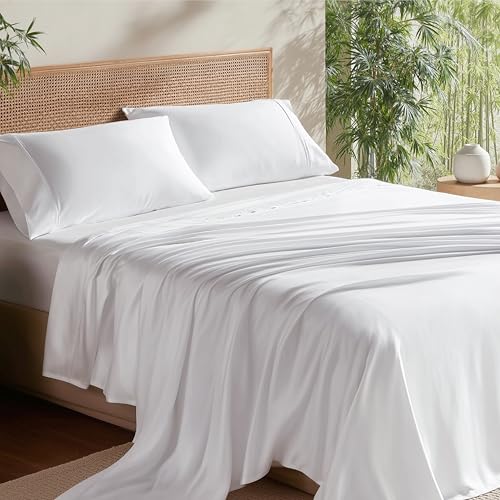
The Bedsure Sheet Set is the comfort all-rounder, offering sets across fibres with an emphasis on a soft, inviting hand-feel and a made-bed look that stays neat through the week. Bedsure sits in the mid tier and suits buyers who want their everyday bed to feel a little more considered — the set you choose for the main bedroom when the entry tier feels slightly thin but premium cotton feels like overkill. Its smoother finishes drape well and photograph honestly, which is another way of saying the bed looks made even when it was made in a hurry. A good middle path for most sleepers.
Best for: sleepers whose priorities match the description above, and households that will wash it per the label and keep it in regular rotation. Not suited for: buyers whose needs point the other way — a different fibre, a different level of protection, or a different tier — because no single product in this category honestly serves everyone, and choosing against your own sleeping habits is how good products end up in the returns pile. As a pick in this guide it carries a qualitative tier position rather than a link, so compare current listings on the qualities described here.
Mellanni Sheet Set
The Mellanni Sheet Set is the household name of this group, a microfibre set whose reputation rests on softness from the first night and an easy-care routine that suits busy homes. The fabric feels smooth and slightly silky, resists wrinkles straight from the dryer, and comes in the kind of colour range that lets you match almost any bedroom. Positioned in the entry-to-mid tier, it is the set many families buy in multiples — one on the bed, one in the wash, one in the drawer — because rotation at this tier is a genuinely sensible strategy. Warm sleepers should note microfibre can feel cosier than cotton; cool and neutral sleepers usually love it immediately.
Best for: sleepers whose priorities match the description above, and households that will wash it per the label and keep it in regular rotation. Not suited for: buyers whose needs point the other way — a different fibre, a different level of protection, or a different tier — because no single product in this category honestly serves everyone, and choosing against your own sleeping habits is how good products end up in the returns pile. As a pick in this guide it carries a qualitative tier position rather than a link, so compare current listings on the qualities described here.
CGK Unlimited Sheet Set
The CGK Unlimited Sheet Set is the value-driven microfibre alternative, bought by households that want the same smooth, easy-care character with an eye firmly on practicality. CGK sets are the kind of purchase made for second bedrooms, student rooms, rental properties, and children’s beds that need frequent changing — places where sheets are washed often and must dry quickly and come back smooth. In the entry tier, the appeal is not luxury language but throughput: wash, dry, refit, repeat, without ironing and without fuss. If your sheet problem is volume and laundry speed rather than ultimate hand-feel, this is the pick shaped like your problem.
Best for: sleepers whose priorities match the description above, and households that will wash it per the label and keep it in regular rotation. Not suited for: buyers whose needs point the other way — a different fibre, a different level of protection, or a different tier — because no single product in this category honestly serves everyone, and choosing against your own sleeping habits is how good products end up in the returns pile. As a pick in this guide it carries a qualitative tier position rather than a link, so compare current listings on the qualities described here.
Performance Themes Across the Round-Up
Feel Against the Skin
Care per fibre is the rule that keeps sheets feeling right. Cotton generally tolerates warm washing and benefits from being removed promptly so it dries smooth rather than creased. Microfibre prefers gentler treatment and modest heat, and fabric softener can coat its fine fibres and dull the very smoothness you bought it for. Whatever the fibre, the care label on your specific set outranks any general advice — makers know their fabric, and the label is written for it. Read it once, tape the essentials inside a cupboard door if laundry is shared, and the whole household washes the same way.
Temperature is the sheet conversation that matters most to sleep quality. Breathable natural fibres let heat and moisture escape, which is why hot sleepers gravitate to them and to percale weaves in particular. Smoother, denser fabrics feel cosier in a cool room and can feel clingy in a warm one. There is no single right answer across seasons either: many households keep a cooler-feeling set for summer and a softer, warmer-feeling set for winter, rotating them the way they rotate duvets. If you only buy one set, buy for the season in which you sleep worst, and let the other season compromise.
Fit on Modern Deep Mattresses
Durability in sheets shows itself in predictable places: the fitted sheet’s elastic, the corners, and the surface where heels and elbows work hardest. Pilling — those small bobbles that roughen a once-smooth surface — is the most common early failure, and it is influenced by fibre quality, weave, and how harshly the set is washed. You cannot fully judge durability from a product page, but you can protect it from day one: wash gently, avoid overloading the machine, skip harsh additives unless the label invites them, and rotate between at least two sets so each rests between washes. Rotation alone noticeably extends a set’s good years.
Colour and pattern are not trivial decisions, because sheets are the most visible textile in the bedroom and the one you see last at night and first in the morning. Pale colours show the bed at its freshest and reveal stains early, when they are easiest to treat; deeper colours are forgiving between washes and anchor a room’s palette. If you pair sheets with a mattress protector — as this guide recommends — remember the protector’s surface can slightly change how a thin, light sheet drapes, another small reason to handle the actual set before committing to several in the same colour.
Washing, Drying and Staying Smooth
Value in sheet sets is mostly about cost per good night rather than the ticket on the packet. An entry-level set that pills within the season is expensive in the only way that matters, while a mid-tier set that stays smooth for years is quietly cheap. The sensible strategy for most households is to buy the best-feeling set within a sensible tier, buy it twice if the budget allows so rotation extends both sets, and spend the effort on care rather than on chasing ever-higher specifications on paper. Sheets reward consistency — of fibre, of washing, of rotation — more than they reward extravagance.
Guest bedding follows slightly different logic. Guests notice smoothness, freshness, and whether the fitted sheet stays on; they do not inspect fibre specifications. A reliable mid-tier set in a calm colour, washed before first use and stored clean and dry, makes any guest bed feel considered. Keep a dedicated guest set rather than borrowing from your own rotation, and wash it after each visit even if it looks untouched — freshness you can smell is the detail guests actually remember. If the guest bed has a protector, as it should, the sheets above it live an easier life too.
When a set finally wears out, it usually tells you gradually: the fitted sheet’s elastic relaxes, the surface roughens, colours fade unevenly. Retire it gracefully to the linen cupboard’s lower league — dust covers, pet bedding, craft and moving protection — and replace the main rotation before the decline reaches the point of nightly annoyance. Bedding is a small daily pleasure, and the moment sheets stop feeling good, they have stopped doing their job. A household that replaces sheets on feel rather than on catastrophe always sleeps in bedding it likes.
Strengths and Trade-Offs
Strengths
- Between them, the four sets cover every mainstream preference: breathable cotton, silky microfibre, and a genuine middle path.
- Entry tiers are strong enough that furnishing several beds well is realistic.
- All four reward the same simple care routine, so switching sets never means relearning laundry.
Trade-offs
- Fibre loyalty cuts both ways — the wrong fibre in a quality set still sleeps wrong for you.
- Microfibre’s warmth is a feature in winter and a complaint in summer.
- No set here can compensate for pockets too shallow for your mattress and topper combined.
How the Shortlist Compares at a Glance
| Set | Position | Best for | Not suited for |
| California Design Den Sheet Set | Mid to premium tier | Hot sleepers and cotton loyalists | Buyers wanting the fastest, easiest laundry |
| Bedsure Sheet Set | Mid tier | A considered main-bedroom feel | Furnishing many beds at once |
| Mellanni Sheet Set | Entry to mid tier | Softness, colour choice and rotation buying | The hottest sleepers in summer |
| CGK Unlimited Sheet Set | Entry tier | Volume, guests, students and rentals | Buyers chasing a luxury hand-feel |
Use the table the way experienced buyers do: eliminate by mismatch first. If you sleep hot, the microfibre pair leaves the conversation early; if you wash for a family, the cotton specialist’s slower drying may rule it out. What remains after honest elimination is usually one set, occasionally two — and between two honest finalists, choose by the colour you want to see every morning and buy it twice for rotation.
Who Each Set Suits and Who Should Skip the Category
Cotton loyalists and hot sleepers start with California Design Den; main-bedroom upgraders with Bedsure; rotation builders and colour collectors with Mellanni; volume buyers — landlords, parents, hosts of many guests — with CGK Unlimited. Skip the whole category only if your current sets are smooth, elastic, and honestly liked, because sheets are bought for feel and feel you already have is worth keeping. Everyone else will find a name above that fits, and the fit, as always in bedding, is the entire decision.
Care Essentials That Apply to Every Pick
Stains reward speed and punish heat. A mark treated promptly with cool water and a little detergent usually lifts in the wash; the same mark baked in by a hot wash or a hot dryer can become a permanent part of the fabric. Check the set as it comes off the bed and again as it leaves the machine, because the moment before drying is your last easy chance to re-treat anything that survived the wash. This one habit — inspect before drying — saves more sheets than any specialist product on the laundry shelf.
Detergent restraint is an underrated sheet skill. More detergent does not mean cleaner sheets; excess detergent is hard to rinse from fabric, leaves a residue that makes sheets feel stiff and attracts soil faster, and can dull colours over time. Measure for the load size, use less than your instinct suggests, and let water and movement do the work. Sheets are lightly soiled compared with work clothes — they need thorough rinsing more than chemical force — and they feel noticeably better washed that way.
Whatever set wins, the first wash sets the pattern: wash before first use, keep colours separate, use a gentle cycle with measured detergent, dry promptly and gently, and store only when fully dry. The companion cleaning guide linked below turns that paragraph into a full step-by-step routine worth reading once and following forever.
Putting It All Together: Living With the Choice
Bedding also ages unevenly across a household, and planning for that saves money. The main bed works hardest and deserves the best of everything; children’s beds work dirtiest and deserve the most washable; guest beds work rarely and deserve reliability after long storage. Buying identical products for all three is tidier but rarely optimal. Match the tier and the construction to the duty each bed actually performs, and the household’s bedding budget suddenly stretches much further without any bed feeling short-changed.
A word about buying for the bed you have rather than the bed in the photograph. Catalogue beds are dressed in daylight, on new mattresses, with everything freshly laundered and nothing lived in. Your bed hosts real life: a partner who runs warm, a dog with opinions, a child with a juice box, a Sunday-morning coffee habit. Products chosen for that bed — washable, forgiving, honestly fitted — will satisfy you daily, while products chosen to recreate a photograph will be quietly resented by Friday. Let your household’s actual habits write the specification, and let the photograph inspire only the colours.
Parents of teenagers, hosts of elderly relatives, owners of ageing pets — many households are quietly managing continence, medication spills, and middle-of-the-night accidents that product pages never mention. For those households a reliable waterproof barrier and fast-change bedding are not conveniences but dignity-preserving infrastructure, and they should be bought without embarrassment and in duplicate. This guide’s emphasis on honest barriers, quick changeovers, and spares in the drawer is written with those households firmly in mind, even when the examples sound like coffee and juice.
Humidity is the invisible variable in bedding performance. In a humid climate or a steamy flat, fabrics dry slower, store worse, and feel clammy sooner, which argues for quick-drying fibres, disciplined airing, and absolute strictness about storing only fully dry textiles. In a dry climate the same products behave almost effortlessly. Read every recommendation in this guide through your own climate: the right product in the wrong humidity regime will always feel like a disappointment, and the fix is usually process — airing, spacing, patience — rather than replacement.
A useful test for any bedding purchase is the two-in-the-morning test. Imagine the product failing at that hour — a corner loose, a spill spreading, a surface suddenly too warm — and ask what you would do. Good bedding has a two-in-the-morning answer: a spare set in the drawer, a protector that strips off in seconds, a fitted sheet that goes back on by feel. If the honest answer is misery until morning, the system needs a spare or a simpler product, and it is far better to learn that in the shop than in the dark.
When you are comparing listings, read for specifics and be suspicious of superlatives. A maker who tells you how the skirt is elasticated, how the set should be washed, and where the product’s trade-offs lie is giving you the material of a real decision. A listing built entirely from words like luxurious, premium, and revolutionary is giving you weather, not information. The products recommended in this guide were chosen because their descriptions survive that test: they say what the product is, what it suits, and what it does not do — and honest description correlates strongly with honest manufacture.
If you are furnishing a bed from nothing, sequence the spending. Start with the mattress decision, protect it the same week it arrives, then buy two sheet sets rather than one so rotation begins immediately, and only then refine pillows and decorative layers. That order feels unglamorous — the protector is the least exciting item on the list — but it is the order that protects the largest purchase during its most vulnerable early weeks and builds the laundry rotation that keeps everything else lasting longer. Glamour can be added at any point; protection delayed is protection partly lost.
A last word on colour and mood, because bedding is the largest textile surface in the room and sets its emotional temperature. Calm, pale bedding makes a small room feel larger and a busy mind quieter; deep colours ground a large room and forgive the realities of pets and children between washes. There is no correct palette, only the one that makes you exhale when you walk in at night. Choose the products in this guide by performance first, then let that exhale cast the final vote between the finalists.
Seasonal thinking improves bedding more than most upgrades do. The bed that delights in January can genuinely disappoint in July, because warmth is a property of the whole stack, not of any one layer. Rather than searching for a mythical all-season perfection, many households keep the protector constant — protection is seasonless — and rotate the sheet set and duvet weight with the weather. That division of labour is tidy: the barrier never changes, the comfort layers do, and each purchase can be optimised for its actual job instead of compromised across all of them.
Think, too, about the order in which a bed is made after washing, because sequence prevents the classic frustrations. Protector first, seated at every corner and smoothed flat. Fitted sheet next, deepest corner first. Flat sheet and duvet last, falling evenly. Made in that order, the bed takes minutes and stays made; made in any other order, something is always being tugged out from under something else. It sounds trivial until you have remade a bed at midnight, at which point it becomes the most practical paragraph in this guide.
One under-discussed factor is the sound a household makes at night, and bedding’s contribution to it. A bed is an instrument whether you like it or not: every turn, every shift, every early-morning exit is either muffled by well-chosen layers or announced by crinkly, loose ones. Light sleepers learn this in the first week with a new product, which is why this guide returns so often to quietness as a first-class criterion rather than a footnote. When in doubt between two otherwise equal options, choose the quieter one — nobody has ever been kept awake by bedding that made too little noise.
Consider the bed from the perspective of the person who maintains it, because that person is usually you at the end of a long day. Every bedding choice is also a laundry choice: how often it must be washed, how gently, how long it takes to dry, how easily it goes back on. Products that respect the maintainer — machine washable, quick to refit, forgiving of an ordinary routine — stay in service for years, while fussy products are quietly abandoned to the back of the cupboard no matter how impressive their first week was. When two candidates seem equal, choose the one whose care routine you will actually keep.
Storage is the unglamorous final stage of bedding ownership. Clean sets stored fully dry, folded inside one of their own pillowcases, in a cupboard that is itself dry, stay fresh for months; the same sets stored faintly damp or in a steamy bathroom cupboard emerge smelling of their storage rather than their washing. Protectors store flat or loosely rolled rather than crushed into a ball, which treats the membrane kindly. Ten seconds of care at storage time is the difference between bedding that greets you fresh and bedding that needs re-washing before it can be used at all.
It helps to think of bedding purchases on two different clocks. The mattress runs on a long clock, measured in years, and deserves slow, careful choosing. Protectors and sheets run on a shorter clock: they are washed constantly, they age visibly, and they are replaced on feel. Mixing the clocks up causes most buying mistakes — people either replace sheets far too late, sleeping on rough fabric for a year out of inertia, or replace a mattress early because an unprotected surface made it feel older than it was. Protect the long-clock purchase with short-clock purchases, and replace the short-clock items without sentimentality.
One more practical habit separates satisfied owners from disappointed ones: inspect on arrival. Unfold the product fully, check seams, elastic, and surface, test the fit on the actual bed, and run the first wash before the return window closes rather than after. Almost every bedding disappointment is discoverable in that first afternoon — a pocket too shallow, a surface rougher than expected, a skirt that will not grip — and almost every one is only fixable while returning is still easy. The first day is your quality-control department; use it while it is free.
Layering is the idea that ties this whole corner of the bedroom together. No single product makes a bed good; the mattress supports, the protector defends, the sheets touch, the pillow cradles, and each layer does its own job better when the others are doing theirs. Buying in that order of thinking — support first, protection second, surface third — prevents the common error of spending heavily on the visible layer while leaving the expensive layer underneath undefended. A modest protector under good sheets will out-serve beautiful sheets over a mattress that is slowly absorbing every spill of the year.
It is worth saying plainly that none of the products in this guide will fix a bed whose foundations have failed. A sagging mattress needs replacing, not dressing; a pillow that has gone flat needs retiring, not a new case. Bedding works its quiet magic on sound foundations, and part of buying well is recognising when the honest purchase is the foundation itself. Protect and dress what is sound, replace what is not, and never ask a thin layer of fabric to perform a structural rescue it was never designed for.
Reading care labels is a small literacy that pays for itself across the whole house. The label on a protector or sheet set compresses the maker’s entire knowledge of their fabric into a few lines: temperature, cycle, what to avoid, how to dry. Households that follow labels keep textiles noticeably longer than households that wash everything on one heroic setting, and the difference is not effort — the label takes twenty seconds to read, once — but attention. Tape a note inside the laundry cupboard door if several people share the washing, and the whole household inherits the benefit.
When a product description and your own priorities disagree, trust your priorities. A protector engineered for maximum barrier may be wrong for the hottest sleeper; the silkiest sheet set may be wrong for the household that washes everything hot and fast. Manufacturers design for an average sleeper who does not exist, in a household that resembles nobody’s. Your bed, your climate, your laundry, your partner, your dog — those are the specifications that matter, and every section of this guide has been written to help you apply them rather than to override them.
Finally, trust your own sleep over any guide’s ranking, including this one. Reviews and buying guides can narrow a field, explain trade-offs, and warn you off mismatches, but the final evidence is a week of your own nights: whether the bed felt right, whether the layers stayed put, whether laundry day was easy. Buy from sellers whose return terms respect that reality, judge on your own mattress in your own room, and keep the products that earn their place. Bedding is intimate equipment, and your verdict, honestly formed, is the one that counts.
There is a quiet economics to all of this that rarely appears in product descriptions. The cost of protection and rotation is small spread across the nights it serves, while the cost of the item being protected is large and concentrated. Households that internalise that ratio tend to protect early, rotate sheets properly, and replace worn bedding on schedule — not because they are extravagant, but because they have done the arithmetic the other way and seen what an unprotected mattress and a single overworked sheet set actually cost across a few years of nightly use.
Finally, let the bed be the easiest system in your house to run. If a bedding routine needs a spreadsheet, it will fail; if it needs a fixed wash day, a spare set, and a note on a cupboard door, it will run itself for a decade. Every recommendation in this guide — protection early, rotation always, gentle washing, restrained heat, dry storage — was chosen because it survives contact with real, busy, forgetful households. Simple systems, honestly maintained, are what great sleep is actually made of.
Ownership, in the end, is the real review. The first night with new bedding tells you about novelty; the fiftieth wash tells you about the product. Everything recommended here was chosen to still be earning its place at the fiftieth wash — seams intact, elastic alive, surface smooth, barrier working — provided the simple care rules in this guide are followed. Keep those rules, keep a spare in the drawer, and the bed will quietly repay you every single night, which is all any of us actually ask of it.
There is a particular pleasure in a bed made entirely of layers that are doing well: a mattress still clean under its protector, sheets smooth from a proper wash, a pillow that suits its sleeper. None of that requires luxury spending. It requires the unglamorous virtues — protection fitted early, colours separated, detergent measured, heat restrained, spares rotated — applied consistently by ordinary people on ordinary wash days. This guide’s real recommendation is that system, with the named products simply being reliable ways to stock it.
Allergy-adjacent language surrounds this category, so a word of discipline is worthwhile. Bedding can be part of a clean household routine — washed regularly, kept dry, changed often — and that routine is a reasonable comfort measure for anyone. What bedding cannot honestly promise is medical benefit, and this guide deliberately makes no such promise for any product in it. If a health condition is part of your household’s life, let your clinician guide the medical side and let bedding do its plain, useful work: being clean, dry, comfortable, and easy to keep that way.
Travel teaches bedding lessons that home hides. After a week of hotel beds, most people come home knowing exactly what they like: the crispness or the softness, the weight or the lightness, the pillow height. Use that knowledge while it is fresh. The sheet and protector choices in this guide map directly onto those travel impressions — percale crispness, sateen smoothness, microfibre silkiness, a barrier you never noticed — and a purchase made in the week after a trip is often the best-judged purchase of the year, because your preferences are briefly, unusually clear to you.
There is a rhythm to well-run bedding that visitors never see and residents always feel. Sheets changed on a fixed day, protectors rotated without drama, spares folded and waiting, worn items retired before they become unpleasant — none of it is visible, and all of it is the difference between a bedroom that merely looks calm and one that actually is. The products in this guide are simply the cast; the routine is the play, and households that learn the routine find that even modest products perform like premium ones.
Shared beds add a negotiation layer that solo sleepers never face. Two people rarely agree perfectly on warmth, smoothness, or how much sound a bed should make, and bedding choices land in the middle of those preferences. The practical approach is to prioritise the layer each person feels most: the surface for the texture-sensitive partner, breathability for the hotter sleeper, quietness for the lighter sleeper. A protector or sheet set that represents a thoughtful compromise will be slept on happily for years, while a unilateral purchase that ignores one partner’s sleep tends to be relitigated at two in the morning.
Temperature disagreements deserve their own strategy, because they are the most common bedding conflict in shared beds. Rather than averaging two preferences into a compromise neither partner enjoys, layer asymmetrically where the product allows it: the sheet and protector form the shared base, chosen for the hotter sleeper’s breathability, while warmth is added individually on top, where it can differ by side. Solving the conflict at the layer where difference is possible beats relitigating it at the layer where it is not, and both sleepers end up closer to their own ideal.
Small bedrooms and small budgets teach the same lesson: versatility beats specialisation. A protector that serves the main bed now can serve the guest bed later; a sheet set in a calm colour works in every season and with every duvet you will ever own. Choosing versatile, honestly made basics first builds a linen cupboard that can absorb life’s changes — a new mattress depth, a new partner’s preferences, a child arriving, a parent moving in — without starting again from nothing. Specialised luxuries can be layered on later, on top of a foundation that already works.
Patterns Across Sheet Set Listings Worth Verifying Yourself
Reading across many sheet set listings and owner reports, the same patterns surface again and again, and they are more useful than any single verdict. This section gathers those recurring signals, explains what each one usually means in practice, and shows how to verify the important ones against the specific listing you are considering.
Across owner reports on the sheet set, praise clusters in a predictable place: households whose routine centres on everyday bedding that washes and wears well are consistently the happiest, and their reviews read almost boringly satisfied. Complaints cluster just as predictably around fit, which is why the first pattern to check in any listing is whether it states clearly the facts behind the sheet sizes and pocket depth against your mattress, including any topper. Vague dimensions in a listing correlate with disappointed reviews more than any design flaw does.
The second pattern is the slow complaint. Early reviews glow; the criticisms that arrive months later describe fitted sheets creeping off corners because the pocket depth does not match the mattress. When you read reviews, sort mentally by ownership length rather than enthusiasm, and give extra weight to anyone describing the upkeep honestly, because washing before first use and following care guidance to protect fibres and colour. Reports that mention a model like Bedsure Sheet Set holding up after a year of regular use tell you more than a dozen five-line first impressions.
The third pattern is mismatch, not malfunction. Owners who checked compatibility in advance, meaning fabric type against how warm you sleep and the season you will use the set most, rarely report the product failing them, while owners who assumed it would fit their setup supply most of the one-paragraph horror stories. Use reviews, then, as a checklist of things to verify on your chosen listing, and run the edge case early yourself: guest beds and laundry turnaround, which decide whether one spare set is enough. Verified against your own home, the crowd consensus becomes a reliable guide instead of background noise.
A Final Decision Checklist
- In listings, look first for clear statements behind the sheet sizes and pocket depth against your mattress, including any topper; vagueness here predicts complaints.
- In owner reports, weight long-term posts describing how fitted sheets creeping off corners because the pocket depth does not match the mattress developed.
- Treat upkeep reports as data, because washing before first use and following care guidance to protect fibres and colour is where ownership verdicts are decided.
- Cross-check compatibility claims, since fabric type against how warm you sleep and the season you will use the set most is the mismatch owners report most.
- Verify the edge case yourself rather than trusting reviews, because guest beds and laundry turnaround, which decide whether one spare set is enough.
- Write down your two most frequent uses and search reviews from owners with the same ones.
- Keep packaging and paperwork until your own first week confirms the consensus.
- Photograph the setup once it works well, so you can compare it with review photographs later.
- Verify against listings that the upkeep into an existing routine, because washing before first use and following care guidance to protect fibres and colour only happens reliably when it rides on a habit.
- Look for reports that the storage spot honestly: if putting it away is awkward, the sheet set will slowly stop being used.
- Search owner reports for the shortlist against your written criteria, not against whichever listing photographs best.
- Note how often owners the person who cleans it most a veto, because their friction decides how long it stays in service.
- Look for reports that compatibility once more before ordering parts or accessories, remembering that fabric type against how warm you sleep and the season you will use the set most.
- Cross-check seasonal differences, since heat, guests and holiday loads test a sheet set differently from ordinary weeks.
- Verify against listings that the largest regular job, not the largest imaginable one, when judging whether the size is right.
- Cross-check the fit again after a week of real use, when the sheet sizes and pocket depth against your mattress can be judged against experience rather than hope.
Frequently Asked Questions
Is cotton or microfibre better for sheets?
Neither is better in the abstract; they suit different sleepers. Cotton breathes naturally, feels familiar, and softens with washing, which is why hot sleepers and traditionalists prefer it. Microfibre feels silky-smooth immediately, resists wrinkles, dries quickly, and suits busy households and cooler sleepers. The honest answer is to choose by your own temperature and laundry life: if you sleep hot, start with cotton; if you wash constantly and hate ironing, start with microfibre. Most disappointment in this category comes from buying the other person’s fibre.
How often should sheets be washed and replaced?
Wash sheets on a regular weekly rhythm for the main bed, sooner after illness or a spill, and always wash a guest set after visitors leave even if it looks untouched. Replace a set when it tells you to: elastic relaxing on the fitted sheet, the surface roughening or pilling, colours fading unevenly. Rotation between at least two sets extends both washing intervals and lifespan, because each set rests between uses. Buy on feel and retire on feel, and your bedding will always be bedding you actually like sleeping in.
Why do my sheets pill, and how do I prevent it?
Pilling — the small bobbles that roughen a once-smooth surface — comes from fibres breaking and tangling under friction, and it is accelerated by harsh washing: overloaded machines, aggressive cycles, high heat, and too much detergent. Prevent it by washing sheets as their own load with room to move, using a gentle cycle and measured detergent, separating colours, and following the fibre’s care label. Rotation helps too, since a rested set endures less friction per month. You cannot make an entry-level set immortal, but gentle care routinely doubles a set’s smooth years.
Can I wash sheets with towels and clothes?
You can, but you will get better results if you do not. Sheets wash best as their own load: they need room to move and rinse clean, towels shed lint that clings to smooth sheet fabric, zips and hooks on clothing can snag weave, and mixed colours invite dye transfer. A dedicated sheet load, grouped by colour, rinses more thoroughly, dries more evenly, and keeps smooth fabrics smooth. If a mixed load is unavoidable, keep colours together, close every zip, and accept slightly worse results as the price of the shortcut.
Should I wash a new sheet set before using it?
Yes — wash before first use, always. New sheets carry manufacturing finishes that can make them feel stiffer and less absorbent than the fabric really is, and a first gentle wash removes those finishes, releases any loose dye into the wash rather than onto your skin or pillowcase, and lets you judge the set’s true feel fairly. Follow the label for that first wash, keep colours separate from the start, and let the set begin its working life clean. It is a five-minute habit that improves every set you will ever own.
How do I stop a fitted sheet popping off the corners?
Start with measurement, not frustration. Measure your mattress depth including any topper, and choose a fitted sheet whose pocket depth honestly exceeds it; a sheet stretched to its limit will escape at the first restless night. Prefer elastic that runs all the way around rather than only at the corners, fit the deepest corner first, and smooth the sheet toward the shallow end. If your current set still escapes, the fabric is rarely the problem — the geometry is, and the next set should be bought by the tape measure.
Related Guides and Next Steps
Continue with the guides that sit closest to this one: our sheet set review; how to clean a sheet set, step by step; bed pillow reviews compared; the bed pillow buying guide; a second bed sheet set tier for rotation; bed sheet sets for guest rooms; cooling mattress topper guides for warm sleepers. Each covers a neighbouring decision — protection, bedding, or pillows — so the layers of the bed work together rather than being bought in isolation.

